
This study provides a foundational analysis of how independent adult animation is emerging as a significant opportunity within the contemporary film industry, with a particular focus on market trends, audience engagement, and the strategic role of distributors. As global demand for animated storytelling continues to grow - driven by streaming platforms, evolving audience tastes, and international co-production networks - independent distributors face increasing pressure to identify sustainable models for developing and distributing animated films. Part I examines the evolution of the independent animation landscape and situates the project’s client, NEON’s, recent exploration of the sector within broader industry trends. Drawing on existing research, industry reports, audience surveys, and expert interviews, this section frames the study’s central research questions and methodology. By outlining the challenges and opportunities surrounding independent adult animation, Part I establishes the conceptual groundwork for the industry interviews, survey analysis, and strategic recommendations that will be presented in Part II.
Byte-Sized Culture: Black American Artists Making Waves in Technology
This month's Byte-Sized Culture is a Black History highlight spotlighting five Black American artists — Martine Syms, Stephanie Dinkins, Rashaad Newsome, Sondra Perry, and Shaylin Wallace — who are pushing the boundaries of contemporary art through technology. Each artist uses a distinct set of digital tools, from AI systems and algorithmic video to 3D modeling, NFTs, and humanoid robotics, to examine how race, identity, and power are reflected and distorted within those technologies.
How Games as a Service (GaaS) and Transmedia Strategies Sustain Video Game Franchises, Part II
In Part II, this part of the study moves from industry context to empirical analysis, translating strategic questions into evidence-based insights drawn from primary research. While Part I established the historical and market foundations of Games as a Service (GaaS) and transmedia adaptation and framed the challenges of player retention, monetization, and franchise longevity, Part II examines how these dynamics operate in practice. Using findings from a 1,159-response U.S. consumer survey, nine industry interviews with developers, influencers, and experiential professionals, as well as supporting secondary research, this section analyzes player behavior perceptions and expectations. Part II identifies the mechanisms that drive sustained engagement and trust in live service ecosystems, evaluates the effectiveness of current GaaS and transmedia strategies, and surfaces actionable insights that inform the strategic recommendations presented in the final chapter.
How Games as a Service (GaaS) and Transmedia Strategies Sustain Video Game Franchises, Part I
This study provides a foundational analysis of how live-service game models and transmedia strategies are reshaping the contemporary video game industry, with a particular focus on Games as a Service (GaaS), player engagement, and franchise longevity. As gaming continues to outpace film and television as the world’s most lucrative entertainment sector, publishers face growing pressure to sustain player communities, balance monetization with satisfaction, and extend intellectual property beyond the game itself. Part 1 examines the historical evolution of GaaS and game adaptations, situating SEGA’s legacy within today’s competitive landscape. Drawing on existing literature, industry reports, and market context, this section frames the central research questions and methodological approach that guide the study. By establishing the strategic challenges and opportunities facing live-service games and transmedia franchises, Part 1 lays the conceptual groundwork for the data-driven analysis and recommendations presented in Part 2.
Murals: A Right to Protest and Preserve
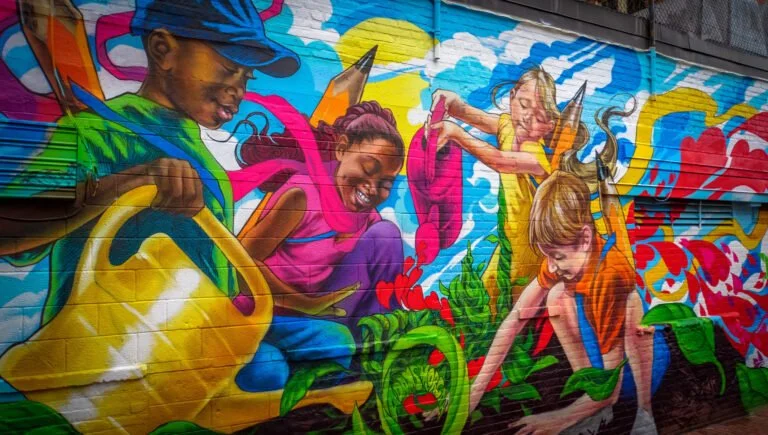
This article explores the evolution of murals from ancient cave paintings to modern digital advocacy, highlighting their role as a vital tool for social resistance and cultural preservation. Through this lens, the public wall is revealed as a primary battleground for community identity and the right to protest in the 21st century.
AI-Powered Robots in the Art World: Applications in Contemporary Art and Museums
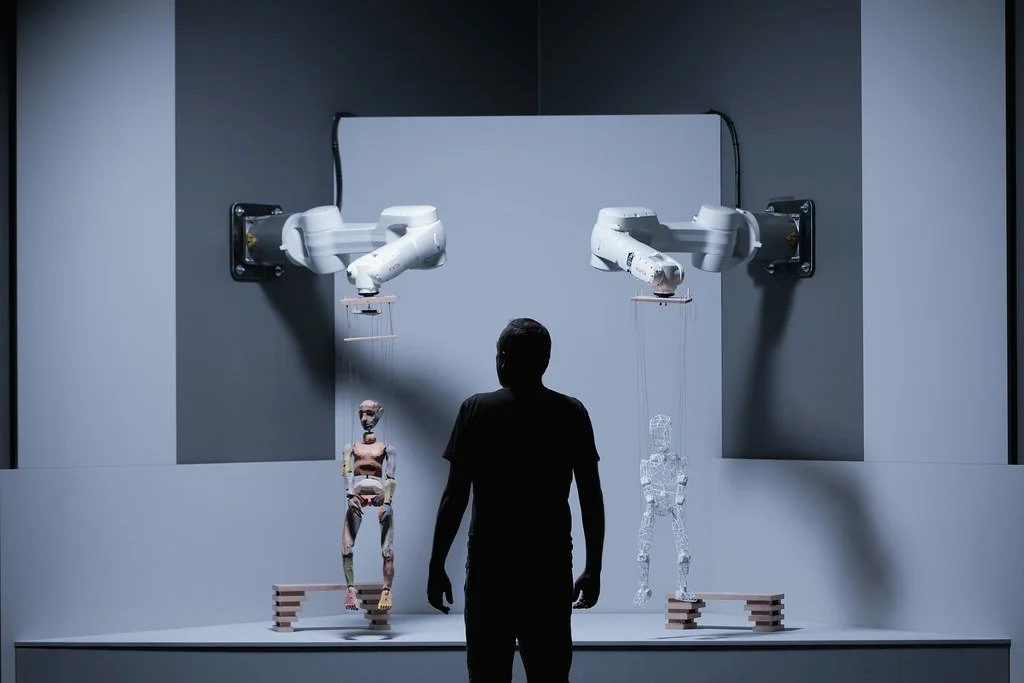
From algorithmic computation to human-machine collaboration, the Fourth Industrial Revolution is reshaping how society produces knowledge and imagines the future. AI-powered robots are now appearing not only in factories but also in art studios, galleries, and museums, signaling a crucial cultural shift, transforming technology from a tool of production to an active participant in artistic creation and curatorial practice.
This article explores the dual applications of AI-powered robots in contemporary art and museum settings, analyzing how they function as creative agents and cultural ambassadors in diverse global contexts. It argues that these intelligent systems challenge traditional concepts of creativity while redefining how cultural institutions think about the relationship between humans and machines in the new era.
Building Digital Guardrails: Toward a Privacy-First Framework for Immersive Safety
As immersive technologies merge with AI-driven platforms, the boundaries between physical and digital life are rapidly dissolving - bringing new ethical, legal, and safety challenges into focus. This article examines the history of virtual harm in online and XR environments, from early text-based worlds to contemporary VR gaming and performance spaces, and argues for a privacy-first framework as the foundation for immersive safety. By analyzing legal gaps, platform accountability, and global policy efforts, it proposes digital “guardrails” that prioritize user dignity, data protection, and well-being as core design principles rather than afterthoughts.
Blockchains or Pawprints? Furries as a case-study for understanding digital art provenance through NFTs and community governance
This article explores the intersection of digital art, NFTs, and community governance through the lens of the furry fandom, a decentralized community of artists and enthusiasts. With the rise of NFTs, the ability to authenticate digital art and protect creators' work has become a critical concern. The study examines the resistance within the furry community to adopt NFTs, highlighting their reliance on community-based trust and governance over "trustless" blockchain systems. While some see potential in NFTs to safeguard intellectual property, many furries are skeptical, valuing social trust and ethics over commercialization. By studying the furry subculture's approach to art ownership and the challenges they face, the article poses larger questions about the future of NFTs and blockchain technology in creative spaces.
The Future is Now: Our Most-Read Articles and Most-Downloaded Podcasts of the Year
As technology continues to reshape the arts and entertainment landscape, our readers and listeners have shown a clear appetite for understanding these transformations. From AI's role in creative processes to the evolution of virtual reality and streaming, this year's most popular content reveals the questions on everyone's minds.
Behind the LED Wall: Technology, Labor, and Economics in Virtual Production
This article explores the rise of virtual production (VP) and its impact on contemporary filmmaking through the use of large-scale LED volumes that merge physical sets with real-time digital environments. Using high-profile productions such as The Mandalorian and 1899 as case studies, it examines how VP reshapes creative workflows across departments, redistributes labor rather than eliminating it, and demands new hybrid skill sets from designers, location managers, and technicians. The piece also addresses the role of labor unions and training programs in adapting to emerging technologies, alongside the economic challenges of scalability, access, and high upfront costs. Ultimately, the article positions virtual production as a transformative - yet uneven - evolution in the entertainment industry, emphasizing the need for equitable training and infrastructure as VP becomes a lasting mode of production.
Extending Reality in Actor Training: Benefits, Repercussions, & Legal Implications
This article explores how extended reality (XR) - including augmented, mixed, and virtual reality - is reshaping acting training by layering immersive technologies onto long-established methods like Stanislavski-based technique and the Method. Drawing on examples from Basrah to Juilliard and Odin Teatret, the piece shows how XR can deepen character work, expand dramaturgical research, and personalize feedback through data-driven simulations. At the same time, it raises urgent legal, ethical, and social questions around biometric data, FERPA and HIPAA protections, digital Blackface, and harassment in virtual spaces. Rather than treating XR as a magic solution, the article argues that thoughtful pedagogy, clear institutional policies, and equity-minded design are essential if these tools are to support - not replace - human-centered theatre education.
Frameworks for Understanding Cultural Policy: Lessons from the Irish Model
This article analyzes Ireland’s emerging position as a global cultural policy case study, focusing on the Basic Income for the Arts (BIA) program and its place within the national framework Culture 2025. While Ireland’s consensus-driven political system, strong arts advocacy networks, and history of support for artist income have enabled an ambitious, research-oriented basic income pilot, the article highlights deeper tensions within cultural policymaking. Drawing on Stephen Hadley’s concept of “cultural policy realism,” it argues that Ireland’s policies—despite their novelty—remain rooted in traditional, instrumentalist views of culture as an economic engine and national branding tool. By contrasting democratization of culture with cultural democracy, the piece situates Ireland’s model between innovation and reversion, emphasizing the need for sustained experimentation, critical evaluation, and more genuinely democratic approaches to cultural support.
Part II - The Role of AI in Evolving Game Ecosystems and Player Dynamics
This study advances Part II by translating Scopely’s strategy into an execution plan across three tracks - NPC innovation, intelligent monetization, and ethical LiveOps - supported by new evidence from a 1,159-response consumer survey, nine expert interviews (developers, influencers, and experiential professionals), and secondary industry research. Part I established the market context for AI’s disruptive potential and identified three priorities: live operations evolution, commerce optimization, and advanced player analytics. The goal of this phase is to pinpoint the highest-leverage AI applications that deepen gameplay engagement, convert payment resistance through demonstrated value, and safeguard community trust. Accordingly, Part II outlines actionable playbooks (context-aware NPCs and adaptive narratives), platform tactics (purchase-aligned mobile personalization and cross-play integration), and operational models (behavior-based matchmaking and transparency protocols) designed to drive scalable, technology-led growth while preserving the integrity of shared human play.
Part I - Beyond the Screen: The Role of AI in Evolving Game Ecosystems and Player Dynamics
This study provides a comprehensive analysis for Scopely to enhance its position as a leader in interactive and mobile gaming, focusing on AI integration in live operations, in-game commerce, and player analytics. The research reveals the urgent need for gaming companies to navigate accelerated AI adoption and evolving player expectations for personalized experiences. The goal is to identify the most impactful AI applications over the next three years and strategies that maximize engagement and monetization while maintaining player trust. Significant to this goal is balancing innovation with ethical considerations, including data privacy and transparency, while recognizing AI's potential to enhance storytelling and create immersive experiences. Employing a mixed-methods approach with industry interviews, a survey of over 1,000 U.S. gamers, and secondary research, Part I establishes the foundation for understanding AI's transformative impact - setting the stage for Part II's empirical findings and strategic recommendations.
Byte-Sized Culture: The Art of Stealing
A daylight robbery at the Musée du Louvre in mid-October resulted in the theft of eight priceless pieces from the French Crown Jewels housed in the Galerie d’Apollon. The incident now serves as an in-depth analysis for arts leaders globally to confront not only external threats, like highly organized professional thieves, but also the complex, internal risk of compromised staff and the urgent need to re-evaluate their security posture, technological investment, and institutional accountability.
The Use of Immersive Technology in Live Music: Vocaloid, Digital Concerts and XR Implementation
As immersive technologies redefine the live concert experience, artists and virtual idols alike are transforming how audiences engage with music. From Hatsune Miku’s “holographic” performances powered by projection and LED technologies to VR concerts by creators like BlackGryph0n and Gorillaz, extended reality (XR) is blurring the lines between physical and digital performance. This article explores the evolution of Vocaloid software, the artistry behind digital concerts, and the growing influence of augmented and virtual reality in live music. As AR and VR become more accessible, musicians and fans alike are discovering new ways to connect—reshaping what it means to perform, attend, and experience music in the digital age.
Extending Reach with Extended Reality: Live Theatre Performance and XR
This article examines how extended reality (XR) technologies are expanding theatre’s reach beyond the physical venue. Building on proshots’ successes and shortcomings, it maps liveness through four components—temporality, exclusivity, spatiality, and interaction—and tests them across emerging formats: immersive dome screenings (Cosm), phone-based AR experiments (All Kinds of Limbo, The Tempest), and avatar-led VR productions (Tender Claws, Adventure Lab). XR’s promise is real—richer presence, audience participation, and radical portability—but so are the hurdles of motion capture quality, cost, technical literacy, and scale. Rather than replacing stagecraft, XR functions as a flexible toolkit that opens new creative and accessible pathways for live performance.
Remixing the Music Industry: Strategies for 21st Century Record Labels, PART II
This study provides a comprehensive strategy for Shaboom Records to enhance its status as an independent music label in a highly competitive market, focusing on three key areas: revenue growth, digital service provider (DSP) strategies, and fan engagement. The supportive research reveals the need for companies to effectively navigate changes in the music industry, such as globalization and the rise of streaming. The goal of this research is to identify the most effective revenue streams for U.S. independent labels expanding into emerging global markets and the digital engagement strategies that yield the highest conversion rates and retention metrics for Gen Z and Gen Alpha listeners. Significant to this goal is the recognition that DSP optimization is largely based on securing relationships with playlist curators. Furthermore, social media has democratized the music industry, giving artists control over their narrative and the ability to connect with fans.
Remixing the Music Industry: Strategies for 21st Century Record Labels, PART I
This study provides a comprehensive strategy for Shaboom Records to enhance its status as an independent music label in a highly competitive market, focusing on three key areas: revenue growth, digital service provider (DSP) strategies, and fan engagement. The supportive research reveals the need for companies to effectively navigate changes in the music industry, such as globalization and the rise of streaming. The goal of this research is to identify the most effective revenue streams for U.S. independent labels expanding into emerging global markets and the digital engagement strategies that yield the highest conversion rates and retention metrics for Gen Z and Gen Alpha listeners. Significant to this goal is the recognition that DSP optimization is largely based on securing relationships with playlist curators. Furthermore, social media has democratized the music industry, giving artists control over their narrative and the ability to connect with fans.
The Politics of Portrayal: Motherhood Narratives on Television During Policy Transformation
Between 2017 and 2024, portrayals of motherhood on American television evolved alongside seismic shifts in reproductive rights policy. As streaming platforms expanded creative freedom, shows depicted increasingly diverse maternal experiences—grappling with infertility, childcare, abortion, and the pressures of “good motherhood.” At the same time, landmark legal changes, including the 2022 Dobbs v. Jackson decision, reshaped the national conversation about reproductive agency. This article explores how television both reflected and anticipated these political transformations, revealing the cultural narratives that influence—and are influenced by—the legal realities of parenting in America.