
By Damon Condon, Azmayeen Fayque Rhythm, Canyon Johnson, Yutong Liu, Mengyi Yang
In Part II, this study builds on the industry context established in Part I by shifting from macro-level analysis to audience-centered insights. While Part I identified independent adult animation as a growing global opportunity shaped by evolving production ecosystems and market conditions, Part II examines how these trends translate into audience behavior and engagement. Drawing on survey data from audiences ages 18–35 and interviews with industry professionals, this section explores what viewers are seeking from independent animated films, the factors that drive discovery and theatrical attendance, and the key elements that contribute to commercial and critical success. In doing so, Part II connects broader industry dynamics to actionable insights that inform strategic decision-making for distributors such as NEON.
Research Questions
This research addresses the following questions through our research:
What factors contribute to commercial success for independent animated films, both adult-oriented and four-quadrant?
What are the ways to make producing independent animated films affordable (partners, co-productions, etc.)?
Methodology
This study employed a mixed-methods approach, combining primary and secondary research to analyze the challenges and opportunities for NEON in entering the adult independent animation space. Primary research included a survey and interviews with leading industry professionals. Interviewees include Cameron Bailey (CEO, Toronto International Film Festival), Justin Johnson (British Film Festival Programmer), Ferrell Barron (Adult Animation Producer, Netflix), Missy Laney (Director of Development at Adult Swim), Yiyang Sun (Estonia-based animator), Kristen Figeriod (Director, International Sales and Distribution, NEON) and Kevin Iwashina (President, Iwashina Corporation). These interviews provided insights into market trends, distribution strategies, and audience preferences, offering a practical perspective on the adult animation and overall animation sector.
The second-hand research is based on published studies, including NEON’s State of the Brand (2022), UCLA’s Teens & Screens Report (2024), and Harvard Shorenstein Center’s US Independent Film Audience and Landscape Study (2024). NEON’s State of the Brand provides a foundation for understanding the studio’s current market positioning, brand affinity, and audience demographics, which are critical for identifying alignment with adult animation audiences. UCLA’s report offers insights into adolescent media consumption, particularly their preference for fantasy genres and theatrical experiences, which are relevant to NEON’s target audience. The Harvard Shorenstein Center’s study highlights the challenges and opportunities in the independent film market, including the fragmentation of streaming platforms and the untapped potential of arthouse cinema. Together, these sources provide a comprehensive understanding of the current landscape and suggest actionable strategies for NEON’s expansion into adult animation.
Limitations
Some limitations of this study stem from the absence of specific audience data regarding the theatrical release, survey response number, the usage of tax incentives, and the breakdown of production budget. Furthermore, given the limited quantitative and qualitative research on both domestic and international non-studio animated films, the capstone recognizes the lack of prior studies that support a thorough survey of the adult independent animated films sector.
Industry Interviews
To better understand the evolving landscape of the adult animated theatrical market, we interviewed industry leaders, including animation producers, theatrical distribution executives, film festival programmers, and creatives. A critical finding emerged: global co-production partnerships are essential for overcoming financing barriers in independent animation. Europe and Asia serve as key hubs where animation is valued as high art, offering access to skilled talent, production infrastructure, government subsidies (particularly in France, Canada, and Japan), and favorable economic conditions. Industry experts emphasized the importance of establishing these relationships strategically and understanding international business practices.
Strategic positioning requires targeted narrative and genre focus. Some of the industry leaders highlighted the importance of character depth, universal storytelling, and stylistic innovation as differentiators. The preferred genres align with audience preferences for speculative and identity-driven content: science fiction, horror, action, fantasy, and thriller. Additionally, film festivals, such as Annecy and Berlinale, function as crucial launchpads for prestige adult animation, providing visibility and validation essential for wider distribution. Parallel distribution channels, including transactional VOD, have become critical revenue streams as consumption habits shift.
Overall, adult animation is experiencing a sustained growth in audience demand, signaling a broader market trend. Over the past ten years, a significant cultural shift has been observed, with viewership of adult animation rising while that of children's animation has fallen. This trend further reveals a fundamental preference for sophisticated, visually rich storytelling. The key challenge for the market is to effectively identify and connect with adult animation fans who are currently underserved by major releases. Combining research and interviews underscores that success in this area will depend on overlapping strategies that include utilizing festival circuits, strategic theatrical placement, and targeted discovery initiatives.
Independent Adult Animated Film Survey
We conducted an online survey via Qualtrics to measure moviegoing habits, animated film preferences, and attitudes toward emerging technologies, focusing specifically on adult independent animated films. We targeted Gen Z and Millennials (ages 18-34), who represent NEON’s core demographic of interest for independent theatrical releases. The survey launched on February 5, 2025, to March 5, 2025, and was distributed through social media (LinkedIn, Instagram, Facebook, TikTok, Discord), personal networks (friends and family), academic channels (NYU and Boston University film students), and film student alumni networks like the American Pavilion.
Participant Summary
We received 273 responses, primarily from our target demographic (81.4% aged 18-34). Several limitations affected our results, including distribution bias. Due to our distribution methods, a majority of respondents (75.3%) had a bachelor’s degree or higher education level. Additionally, the sample included a high proportion of film professionals and film students, with 62 out of the total respondents having attended at least one film festival, which may influence their familiarity with and appreciation for independent animation. Despite these limitations, the survey provides valuable insights to our study.
Key Findings
Theatrical Experience Remains Viable
Our survey shows that 26% of respondents attend theatrical screenings at least once weekly, while 57% attend at least once a month. Additionally, 76% of respondents have viewed at least one animated film in theaters during the past year, with more than a quarter (26%) having seen more than six animated theatrical releases within the same period. When questioned about their preferred platforms for animated film consumption, 71% selected theatrical moviegoing as a preferred viewing method.
Strong Animation Fanbase with Diverse Preferences
Regarding attitudes toward animated films, 43% of respondents "love animated films and seek them out.” UCLA research shows that among adolescents (aged 10-24), fantasy remains the preferred film genre, with 36.2% expressing a preference for this category (Burrus et al., 2024). Our findings for animated film viewers align with these results: 44% identified fantasy among their top three preferred animated genres. This finding also aligns with Barron’s insights on Netflix prioritizing fantasy as one of the genres preferred by a wide group of audiences (F. Barron, personal communication, February 28, 2025). The success of the Oscar-winning feature Flow (2024), a fantasy, further suggests this market demand. Comedy and family films are the first and third most popular genres. Figure 1 demonstrates the animated genres that audiences are most interested in.
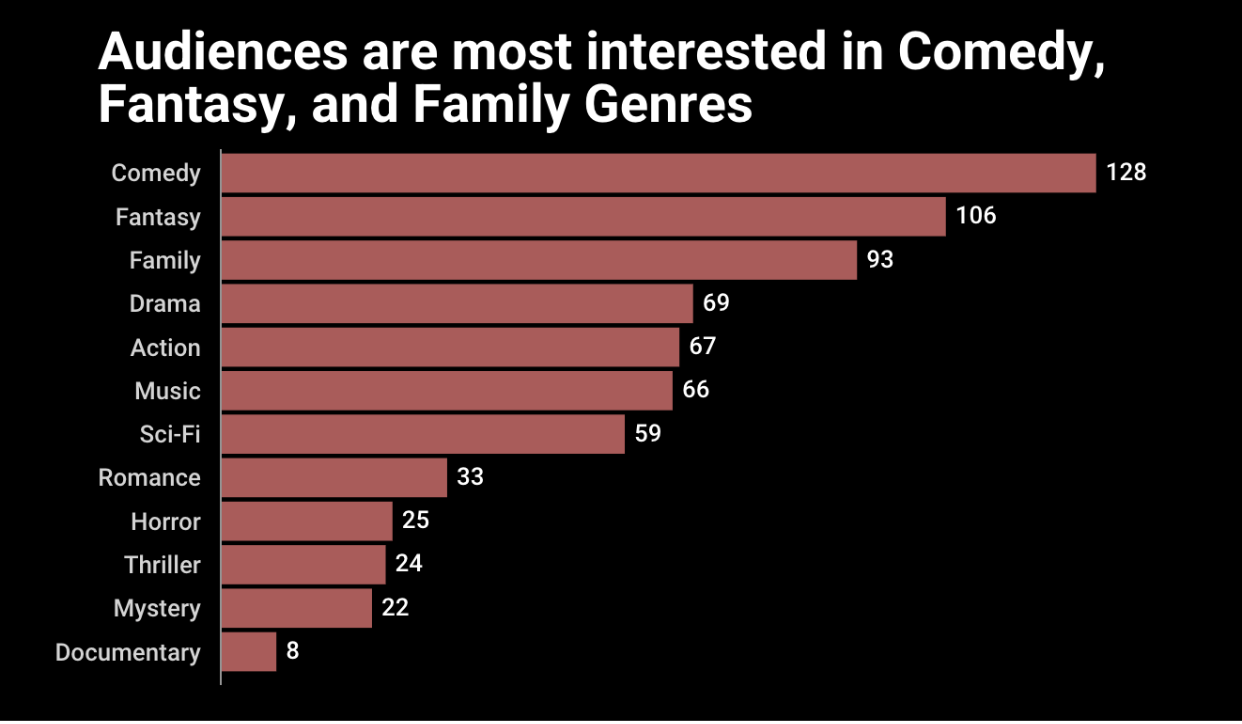
Figure 1: Audiences’ genres of interest. Source: Data from the author’s survey, “Audiences’ Genres of Interests” (2025), N=273
However, by researching successful animated films and cross-comparing their genres, themes, award contention, and box office results, we concluded that audiences are driven more by themes than genres in animated films. For example, Coraline (2009), the film with the highest viewership in the survey, encompasses the drama, family, and fantasy genres but is more distinctly defined and gains popularity through its theme of self-discovery. Thus, it seems necessary to explore the importance and influence of animated themes when making decisions.
Figure 2 illustrates the audience's preferences for animated themes.
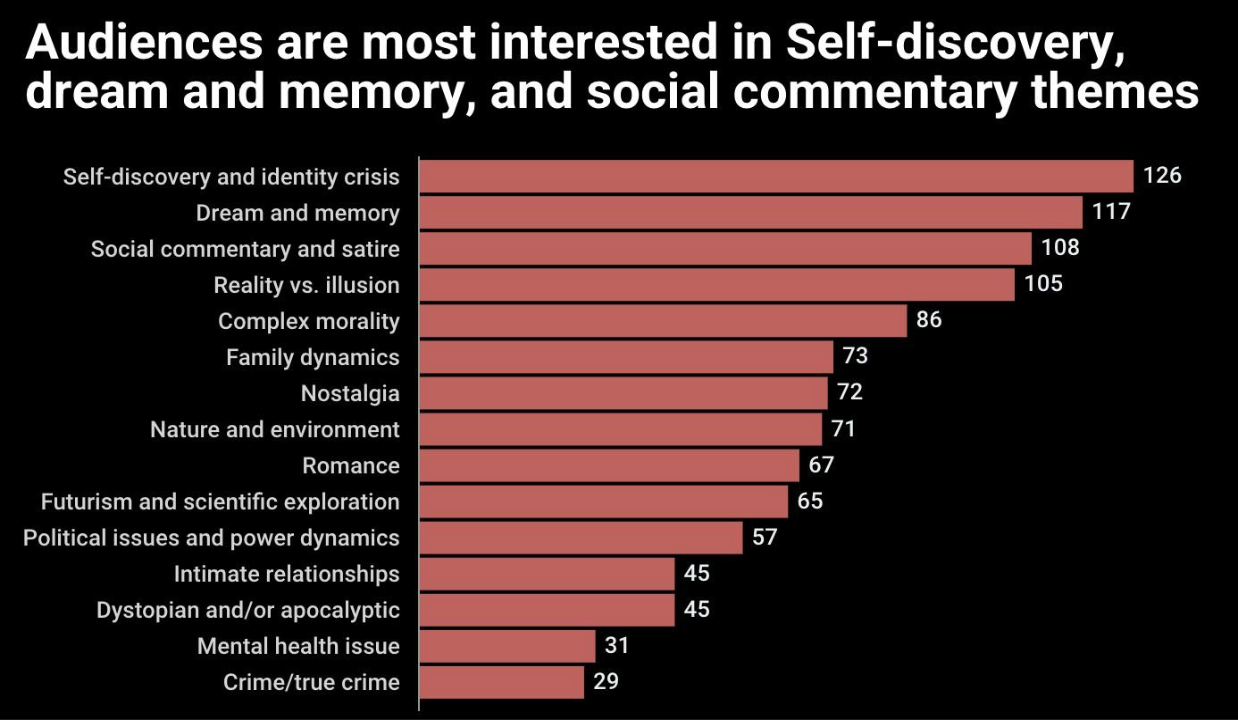
Figure 2: Audiences’ themes of interest. Source: Data from the author’s survey, “Audiences’ Themes of Interest” (2025), N=273
Notably, as seen in Figure 3, audiences aged 18-24 showed greater interest in the themes of self-discovery and identity crisis than audiences aged 25-34. One outcome from this data could be to develop animated stories on this theme to tap into that younger audience group.
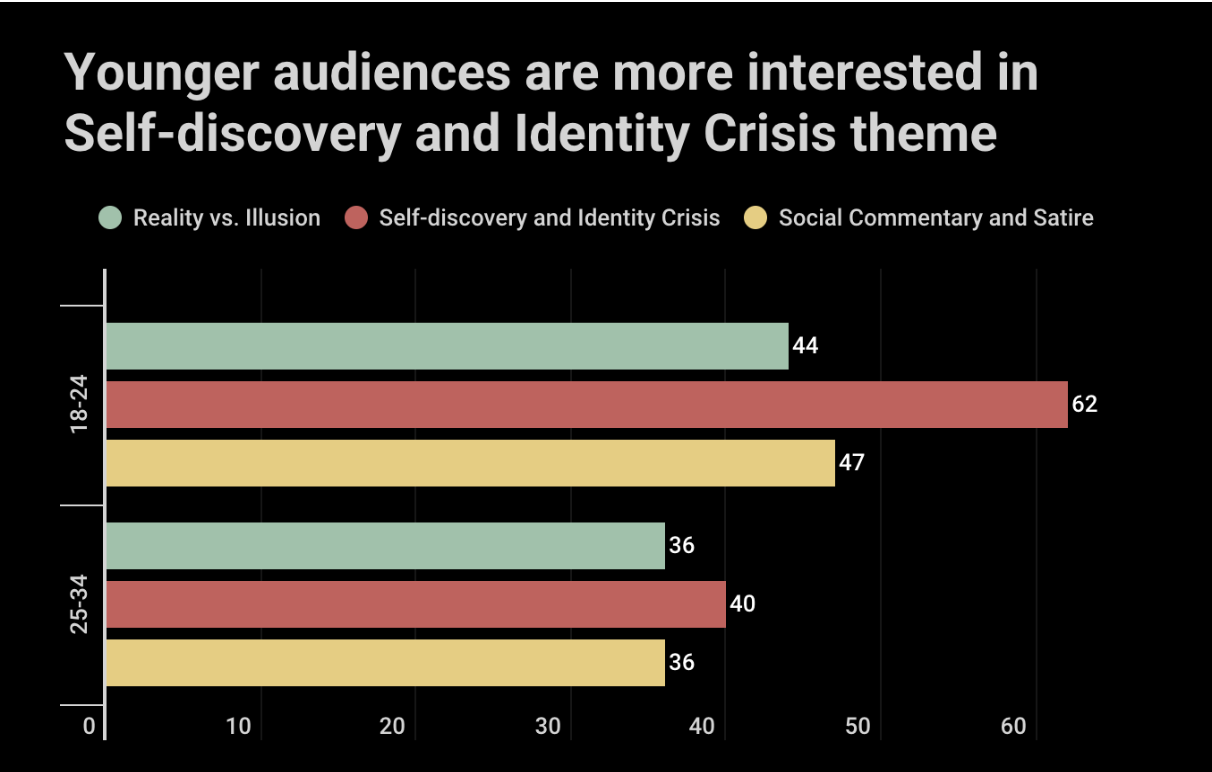
Figure 3: Audiences’ preferences on themes broken down by ages. Source: Data from the author’s survey, “Audiences’ Themes of Interests” (2025), N=273
Acclaimed Directors and International Appeal
Per the survey results, 62% of respondents have viewed at least one listed independent animated film in theaters. A trend toward embracing international productions emerged, which is a finding that aligns with Iwashina’s perception of the animation landscape being more open to international content (K. Iwashina, personal communication, November 22, 2024). According to Cameron Bailey, the CEO of Toronto International Film Festival, the rising popularity of adult animated films stems from the long history of festivals showing artistically ambitious animated films with complex storytelling from international independent production companies (C. Bailey, personal communication, March 6, 2025). Our survey results highlight the significant viewership potential for non-Hollywood animated productions despite limited theatrical availability in the United States, resulting from financial challenges faced by local exhibitors presenting independent films (Cohen, 2024). Figure 4 illustrates the breakdown of audience viewership on independent animated films per continent.
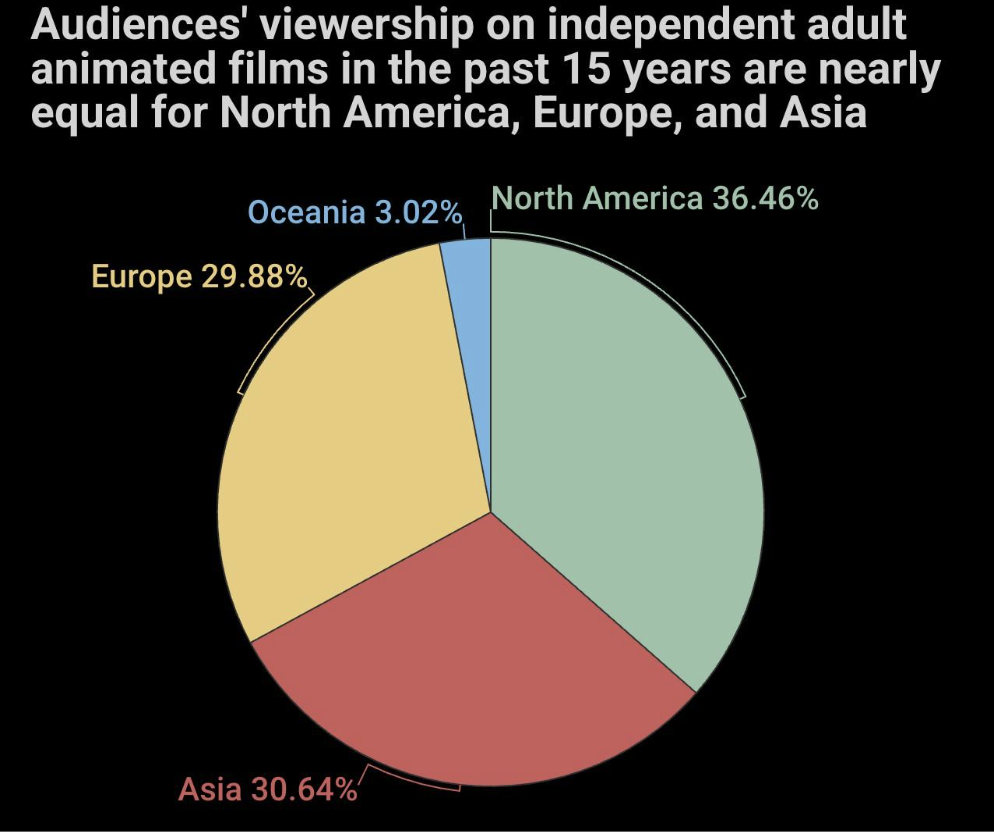
Figure 4: Independent adult animated films viewership broken down by continents. Source: Data from the author’s survey, “Independent adult animated films viewership broken down by continents” (2025), N=273
Survey results show that content originating from Asia and Europe garners comparable levels of popularity to that of content originating from North America.
Informal Channels Drive Viewership For Animated Films
When asked how they stay informed about upcoming animated releases, respondents identified traditional advertising, such as billboards and theatrical trailers (77%), word-of-mouth from friends, family, and colleagues (76%), and social media accounts of animation studios, directors, or distributors (57%) as the three leading factors. Only 10% of respondents obtain information from animation-specific news outlets (e.g., Cartoon Brew, Animation Scoop) or email newsletters and subscriptions (both 10%). Our research suggests that informal channels are more effective than formal ones, an argument supported by the Shorenstein Study, which asserts the significance of exhibitors leveraging social media that generates more word of mouth than press junkets or traditional ads (Putnam, 2024). In her study, Putnam also emphasizes the importance of social marketing, providing examples of A24 increasing demand for their films by leveraging engaging social marketing strategies (2024). The most significant factors influencing animated film viewership include visual style and animation quality, personal recommendations from trusted sources, genre, and critical reviews/ratings. Notably, recommendations from personal connections outweigh considerations of genre, talent, theatrical audiovisual experience, and critical acclaim, suggesting that animation enthusiasts place considerable value on information exchanges within their community.
Resistance To AI
The rise of AI-powered tools like Wonder Desk and Adobe have expanded creative possibilities in animation productions (Spangler, 2024). Despite these technological advancements, industry reports suggest animated films' appeal remains deeply rooted in human craftsmanship and artistry (Idelson, 2024). Audience preferences align with Iwashina’s perception of investors prioritizing content and style over technology (K. Iwashina, personal communication, November 22, 2024). Survey results reveal that 70% of respondents disagree with the statement: "I would be interested in watching a feature-length animated film entirely generated by artificial intelligence," with 46% expressing strong disagreement. Furthermore, 79% of respondents expressed negative attitudes toward using AI as an assistance in the animation creative process, with 41% strongly opposing AI due to perceived compromises to artistic integrity and value. Less than half of the respondents (38%) were skeptical about the quality of AI-generated animation, yet they remained curious about the results. Discussing a balancing act to preserve technological innovation and creative integrity has been a heated topic. Bailey compared the detrimental use of AI to the speculation regarding the legitimacy of 3D computer animation 30 years ago to advocate for the evolving perceptions of fast-changing audiences. However, he also stresses that “AI won’t be respected if written stories and character development are not solid” (C. Bailey, personal communication, March 6, 2025).
The survey results and interviews provided key insights into the animation landscape, highlighting what audiences want to watch, what artists want to create, and the various ways animation films can be distributed.
Case Study: Key Factors For Independent Animation Theatrical Success
According to our findings, theatrical success within the independent adult animation landscape is uncommon, with most films eventually recouping their investments through licensing to streamers. The financial success of independent adult animated films is deeply connected with prestige and awards. When assessing films that have performed well theatrically, our research indicates that three factors contribute to their success: distributor support, effective marketing, and awards recognition. The findings from our key interviews and survey analysis are exemplified in the following case study. Two films, Loving Vincent (2017) and Flow (2024), ranked high among those previously seen by our respondents; received critical acclaim for their artistic styles, and attained financial success during their initial theatrical release or subsequent distribution channels. They serve as excellent examples of what our industry experts indicate audiences desire – films that provide visual innovation, compelling narratives, strong characters, and universal themes. A complete matrix of all films studied is located in Appendix E.
One of the most financially successful independent adult animated features of the last decade by a director without a pre-established brand is Loving Vincent (2017), the world’s first entirely hand-painted film. The movie earned $42.19 million worldwide in theatrical revenues on a budget of $5.5 million (Loving Vincent, n.d.). Upon its release, Loving Vincent garnered favorable press for its unconventional animation methods and recreation of Vincent Van Gogh’s celebrated paintings. Its distributors were able to capitalize on the overwhelmingly enthusiastic reception, allowing them to market the movie on a higher level than standard independent animated fare (Wecel, 2019). The combination of marketing, along with its successful festival run, garnered the film major awards, resulting in wins for Best Animated Feature at the 30th European Film Awards and a nomination for Best Animated Film at the 2018 Academy Awards (Loving Vincent - Production & Contact Info, n.d.). Comscore senior media analyst Paul Dergarabedian stated that a significant increase in box office revenue after an Oscars nomination depends on how long a film has been in theaters and “how much untapped audience” there is left for a nominated film (Clark, n.d., para. 11). Loving Vincent accomplished that, finding an audience and experiencing a post-nomination box office boost that helped carry it to its impressive total (Loving Vincent, n.d.).
Flow (2024), has earned over $36 million worldwide, making it the most financially successful independent animated film in recent history, aside from the extreme outlier of The Boy and the Heron (Keslassy, 2025). Commenting on its crossover success, the film’s director, Gints Zilbalodis says, “because there's no dialogue, that makes it more universal,” going on to say, “it really transcends any cultural boundaries, which means that everyone can understand it. I think that's something really cool about animation, that it can be understood by pretty much everyone” (Smart, 2025, para. 5). Flow was heavily marketed by its distributors upon its acquisition after its debut at the Cannes Film Festival (Dunn, 2024). The robust marketing campaign, paired with its critical acclaim and awards recognitions, including winning Best Motion Picture: Animated at the 2025 Golden Globes and Best Animated Feature Film at the 2025 Academy Awards, helped the film find longevity and success overseas theatrically (Flow, n.d.). Flow may be the best example of how faith from a distributor, a solid, widespread marketing campaign, and awards recognition can create theatrical success with a film that otherwise could have been easily overlooked.
Recommendations
This study has revealed a growing demand for animation appealing to an adult market.
Furthermore, building, captivating, and retaining an audience dedicated to independent animation bolsters the chances of theatrical success. Studios should assume their target adult audience is part of a broader animation and movie-loving fandom, and it’s imperative that they tap into the value this can create. These fans tend to stay aware of the latest releases, engage in communities, and are willing to spend on merchandise related to their fandoms (Schomer, 2024). Cameron Bailey, CEO of Toronto International Film Festival, says it’s important to talk to the audience before and after the movie, capitalizing on the community that animation lovers find themselves in (C. Bailey, Personal communication, March 6, 2025).
Summary
International co-production partnerships are crucial for independent animated films, as they help reduce costs and mitigate risk. Europe presents particularly good opportunities for collaboration, offering significant tax incentives, typically ranging from 32% to 40%. Additionally, the presence of EU-backed funds and established co-production treaties further supports and simplifies the process of creating cinema projects with European studios that have strong production track records.
Audiences for independent animation appreciate unique creative voices, and successful films are often marked by recognizable directorial styles. Film festivals such as Annecy and Berlinale play a vital role in discovering new talent, while also connecting producers to essential co-production networks and facilitating presales. Consequently, the industry places a high value on artist-centered development.
The rapid growth of adult animated television, exemplified by series with strong fan bases like Hazbin Hotel, demonstrates its commercial viability. Furthermore, the massive worldwide success of films such as Demon Slayer: Mugen Train, which grossed over $500 million, proves that television viewers readily translate into theatrical audiences. This connection supports a multi-platform intellectual property (IP) development strategy, allowing concepts to be tested and built up before a major theatrical release.
Future Opportunities
Independent adult animation studios can adopt a multi-platform development strategy, utilizing television to both test concepts and cultivate an audience, ultimately lowering the risk for a later theatrical film adaptation. To enhance financial viability, producers should seek international co-production opportunities, leveraging incentives like tax breaks and EU funds. Partnering with established international studios also mitigates risk. And, for sustainable talent development, studios should focus on scouting at film festivals to identify distinctive new voices in animation, rather than solely pursuing established trends or celebrity directors.
-
Accessing UK Tax Reliefs. “British Film Commission.” February 7, 2024. https://britishfilmcommission.org.uk/plan-your-production/accessing-uk-tax-reliefs/.
Accueil. “Indefilms.” Accessed April 5, 2025. https://www.indefilms.fr/.
Amidi, Amid. “A New California Bill Is Proposing a 35% Subsidy for Animated Features, Series, and Shorts.” Cartoon Brew, April 2, 2025. https://www.cartoonbrew.com/law/a-new-california-bill-is-proposing-a-35-subsidy-for-animated-features-series-and-shorts-246637.html.
Animation Career Review. “10 Top Animation Film Festivals around the Globe.” May 24, 2021. https://www.animationcareerreview.com/articles/10-top-animation-film-festivals-around-globe.
“Animation Outsourcing Market Size & Share Analysis—Growth Trends & Forecasts (2025–2030).” Mordor Intelligence. Accessed April 28, 2025. https://www.mordorintelligence.com/industry-reports/animation-outsourcing-market.
Atomic Cartoons Inc. “An Artist-Driven Animation Studio.” Accessed April 5, 2025. https://www.atomiccartoons.com/.
Blender. “Free Software Never Looked This Awesome.” Accessed April 5, 2025. https://www.blender.org/features/.
“Box Office Mojo.” “Flow.” Accessed February 27, 2025. https://www.boxofficemojo.com/title/tt4772188/.
“Loving Vincent.” Accessed February 27, 2025. https://www.boxofficemojo.com/title/tt3262342/.
“The Secret of Kells.” Accessed February 27, 2025. https://www.boxofficemojo.com/title/tt0485601/.
Brown Bag Films. Accessed April 5, 2025. https://www.brownbagfilms.com.
Burrus, A., S. Rivas-Lara, A. Hines, and Y. T. Uhls. CSS Teens & Screens 2024. Center for Scholars & Storytellers, 2024. https://www.scholarsandstorytellers.com/teens-screens-24.
Cartoon Saloon. Accessed April 5, 2025. https://www.cartoonsaloon.ie/.
Chin, Dennis. “How America Met Miyazaki and Studio Ghibli.” The Ringer, December 8, 2023. https://www.theringer.com/2023/12/08/movies/hayao-miyazaki-studio-ghibli-global-popularity-us-gkids-max.
Clark, Travis. “A Box-Office Analyst Explains How the Oscars Impact a Movie’s Earnings.” Business Insider, February 2, 2020. https://www.businessinsider.com/how-oscars-affect-box-office-earnings-bump-movie-analyst-2020-1.
Cohen, Karl. “Why Is the Nature of Animation in Europe So Different from What Is Being Created in the U.S.?” Animation World Network, February 15, 2024. https://www.awn.com/animationworld/why-nature-animation-europe-so-different-what-being-created-us.
Council of Europe. “Eurimages: Co-Production Support.” Accessed April 5, 2025. https://www.coe.int/en/web/eurimages/coproduction.
“Full List – Treaty Office.” Accessed April 27, 2025. https://www.coe.int/en/web/conventions/full-list.
Deegan, Gordon. “Streaming Content Boosts Revenues at Cartoon Saloon.” RTÉ, January 4, 2023. https://www.rte.ie/news/business/2023/0104/1344900-streaming-content-boosts-revenues-at-cartoon-saloon/.
Dunn, Jack. “Sideshow and Janus Films Acquire North American Rights to ‘Flow.’” Variety, May 22, 2024. https://variety.com/2024/film/news/sideshow-janus-films-flow-cannes-1236013312/.
Entertainment Partners. “Curious about Co-Productions? What Producers Need to Know.” Accessed April 7, 2025. https://www.ep.com/blog/curious-about-co-productions-what-you-need-to-know/.
“Latvia.” Accessed April 5, 2025. https://www.ep.com/production-incentives/europe/latvia/.
Failes, Ian. “Tomm Moore on His Distinctive Style of Animated Filmmaking.” Befores & Afters, September 17, 2020. https://beforesandafters.com/2020/09/14/tomm-moore-on-his-distinctive-style-of-animated-filmmaking/.
Falvey, Eleanor. “Situating Netflix’s Original Adult Animation.” Animation 15, no. 2 (2020): 116–129. https://doi.org/10.1177/1746847720933791.
“Fiction: Creative Co-Production.” Screen Ireland, February 4, 2025. https://www.screenireland.ie/funding/production-loans/fiction-creative-co-production.
“Flow.” IMDb. Accessed April 27, 2025. https://www.imdb.com/title/tt4772188/.
Gagarin, Julia. “The Immersive Realism of Studio Ghibli.” Medium, September 28, 2024. https://medium.com/@designerintransit/the-immersive-realism-of-studio-ghibli-a-storytelling-guide-for-brands-b9833da814eb.
Gaur, Rishabh. “Independent Animation Producers Share Tips.” Cartoon Brew, June 19, 2023. https://www.cartoonbrew.com/festivals/indie-animation-film-tv-production-panel-annecy-229849.html.
Gerlach, Jennifer. “The Film Flow Is Exactly What Our World Needs Right Now.” Psychology Today, March 5, 2025. https://www.psychologytoday.com/us/blog/beyond-mental-health/202503/the-film-flow-is-exactly-what-our-world-needs-right-now.
Gilchrist, Matthew. “Ghibli’s World of Repeating Themes.” The Bruin Post, November 16, 2021. https://thebruinpost.org/2295/arts-and-entertainment/ghiblis-world-of-repeating-themes.
Goldsmith, Jill. “‘Ne Zha 2’s Unusual Third Week in Top Ten…’” Deadline, March 2, 2025. https://deadline.com/2025/03/indie-film-box-office-ne-zha-2-oscar-nominated-shorts-best-picture-hopefuls-1236307048/.
Grobar, Matt. “‘Wolfwalkers’ Directors Complete Oscar Nominations Hat Trick.” Deadline, March 15, 2021. https://deadline.com/2021/03/wolfwalkers-directors-tomm-moore-ross-stewart-oscars-best-animated-feature-nomination-1234714582/.
Guru Studio. Accessed April 5, 2025. https://gurustudio.com/.
Hazbin Hotel. IMDb. Accessed April 27, 2025. https://www.imdb.com/title/tt7216636/.
Hazbin Hotel (Amazon Prime Video). Parrot Analytics. Accessed March 3, 2025. https://tv.parrotanalytics.com/US/hazbin-hotel-amazon-prime-video.
Home. Aardman. Accessed April 5, 2025. https://www.aardman.com/.
Home. Les Armateurs. Accessed April 5, 2025. https://lesarmateurs-lesite.fr/.
Home. The SPA Studios. Accessed April 5, 2025. https://thespastudios.com/en/.
“How Much Does 3D Animation Cost per Minute? (2025 Guide).” Rocket Brush. Accessed January 27, 2025. https://rocketbrush.com/blog/how-much-does-3d-animation-cost-per-minute-in-2025-rates-and-budget-management-tips.
Idelson, Karen. “Animated Features Rely on Artists…” Variety, November 4, 2024. https://variety.com/2024/film/focus/animated-features-machine-learning-ai-1236191504/.
“Ireland’s 32% Tax Credit.” Screen Ireland. Accessed April 5, 2025. https://www.screenireland.ie/filming/section-481.
Jolin, Dan. “Cartoon Saloon Founders Talk ‘Wolfwalkers’…” Screen Daily, February 4, 2021. https://www.screendaily.com/features/cartoon-saloon-founders-talk-wolfwalkers-future-plans-were-not-interested-in-being-giants/5156725.article.
Keslassy, Elsa. “Oscar-Winning ‘Flow’ Embraced Worldwide…” Variety, March 20, 2025. https://variety.com/2025/film/box-office/flow-box-office-oscar-more-than-36-million-worldwide-1236342334/.
Krasovitski, Mark. “What Happened to Adult Animation?” Toronto Star. Accessed April 27, 2025. https://www.magzter.com/stories/newspaper/Toronto-Star/WHAT-HAPPENED-TO-ADULT-ANIMATION.
Lang, Jamie. “Oscar Nominee ‘Flow’ Passes $20 Million…” Variety, February 13, 2025. https://variety.com/2025/film/global/flow-global-box-office-passes-20-million-1236306430/.
“No ‘Flow’ Sequel Plans…” Variety, January 8, 2025. https://variety.com/2025/film/awards/flow-director-gints-zilbalodis-interview-1236269649/.
Linares, Oscar. “Computer Graphics 2015…” International Journal of Innovative Research in Computer and Communication Engineering, 2020. https://www.semanticscholar.org/.
Lupus Films. Accessed April 5, 2025. https://www.lupusfilms.com.
Mansky, Jackie. “How the Creators of Loving Vincent…” Smithsonian Magazine, February 8, 2018. https://www.smithsonianmag.com/arts-culture/how-creators-loving-vincent-brought-first-fully-painted-animated-film-life-180968210/.
Marich, Robert. “Indie Neon Becomes a Staple…” Marketing Movies, September 7, 2024. https://marketingmovies.net/2024/neon-film-distribution/.
Mondello, Bob. “Flow Review: A Cat’s-Eye View of a Flooded World.” NPR, November 21, 2024. https://www.npr.org/2024/11/21/nx-s1-5196686/flow-movie-review.
NEON. “Films.” Accessed January 27, 2025. https://neonrated.com/films.
ONE Animation. Accessed April 5, 2025. https://oneanimation.in/.
Pedersen, Lise. “Adult Animation Could Help Lure Audiences…” Variety, May 23, 2022. https://variety.com/2022/film/global/adult-animation-cannes-1235275067/.
Putnam, Kelsey. US Independent Film Audience and Landscape Study. Harvard Kennedy School, 2024. https://www.indiefilmlandscape.org/.
Rogin, Ali, Courtney Mufson, and Mary Boulter. “What’s Behind the Growing Popularity…” PBS NewsHour, 2024. https://www.pbs.org/newshour/show/whats-behind-the-growing-popularity-of-japanese-comics-and-animations-in-u-s.
Roxborough, Scott. “How NEON Flipped Movie Marketing…” The Hollywood Reporter, November 6, 2024. https://www.hollywoodreporter.com/movies/movie-features/longlegs-neon-movie-marketing-indie-hit-2024-1236053966/.
Sarto, Dan. “‘Chicken for Linda!’ Takes Top Awards…” Animation World Network, June 17, 2023. https://www.awn.com/news/chicken-linda-and-27-take-top-awards-annecy-2023.
Smart, James. “How ‘Flow’ Is Upending the Awards Race.” Yahoo Entertainment, January 5, 2025. https://www.yahoo.com/entertainment/flow-latvian-animated-movie-no-163000634.html.
Spangler, Todd. “Wonder Dynamics Acquired by Autodesk.” Variety, May 22, 2024. https://variety.com/2024/digital/news/tye-sheridan-wonder-dynamics-autodesk-1236013358/.