The relationship between technological innovation and copyright law has always been uneasy. The inventions of the printing press, phonograph, photocopier, and the internet have all forced legislators and courts to redefine the boundaries of creative ownership. Each time, the law has eventually adjusted, though rarely without conflict, and almost always at the expense of those who depend on the old order.
Generative artificial intelligence represents the latest and perhaps the most disruptive innovation. AI systems learn on a massive scale from creative works, absorbing the styles, techniques, and expressions of human artists to generate new content that directly competes with the originals. Whether this constitutes infringement, adaptation, or is entirely without legal permission has become one of the most aggressive issues in contemporary intellectual property law.
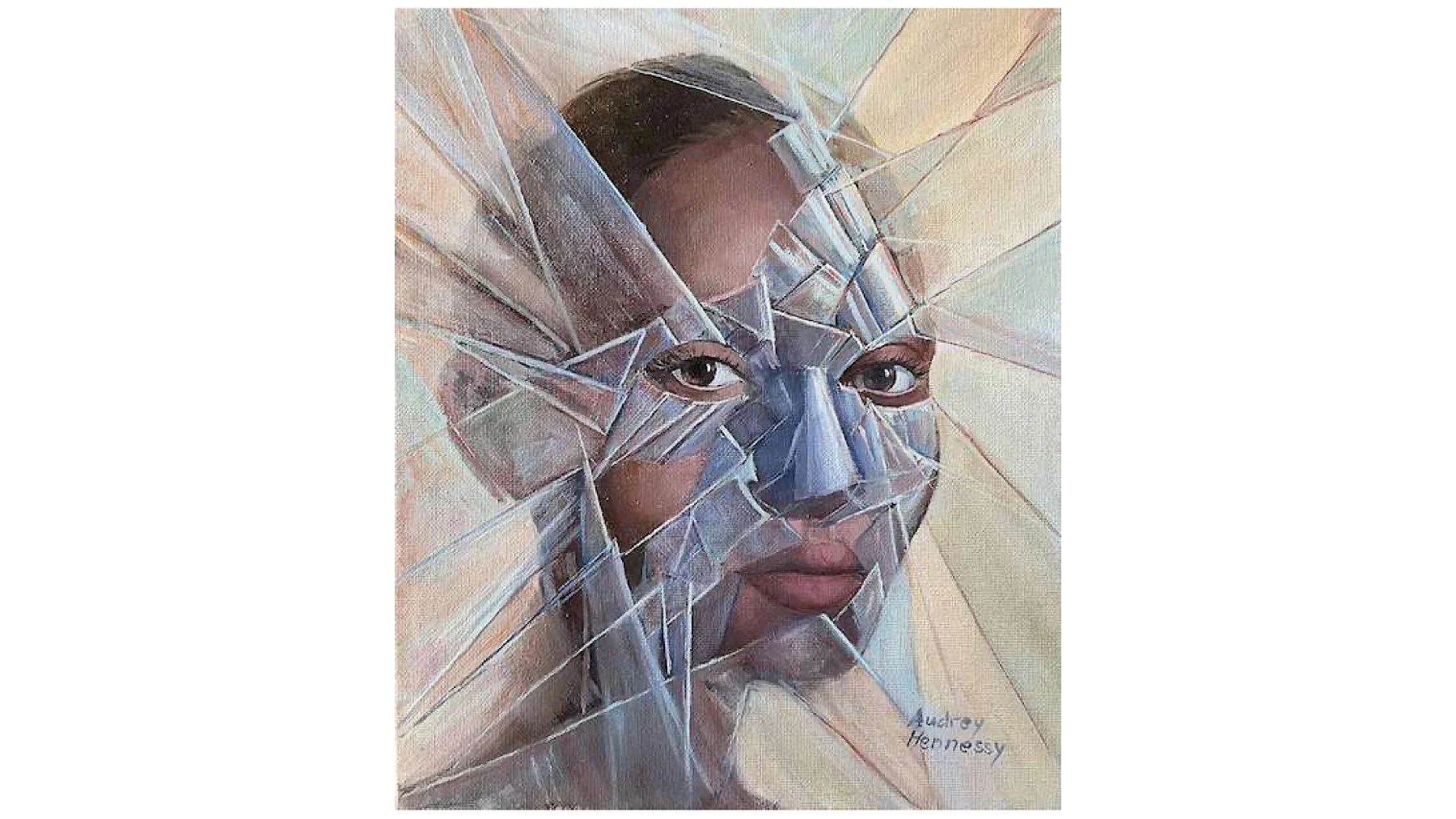
For visual artists, this is an urgent change: a matter of life and death. AI image generators, trained on billions of scraped artworks, can now generate commercial illustrations, conceptual art, and graphic designs just in seconds at a fraction of the cost of hiring a human artist. Many artists are unaware that their work is being used directly to train large language models. The legal system has also failed to keep pace with this change, resulting in insufficient protection for creators and unclear rules in the art world. This article explains some fundamental concepts under copyright law for visual artists and analyzes the interaction of AI-generated artwork and artists, summarizes the current legal landscape, and identifies areas that require further investigation.
“Generative A.I. art is vampirical, feasting on past generations of artwork even as it sucks the lifeblood from living artists. Over time, this will impoverish our visual culture.”
The Legal Framework: Intellectual Property and Copyright Law
Intellectual property (IP) is a broad concept, and it refers to exclusive rights held by rights holders to protect creations of the mind. It protects innovation within a certain period.
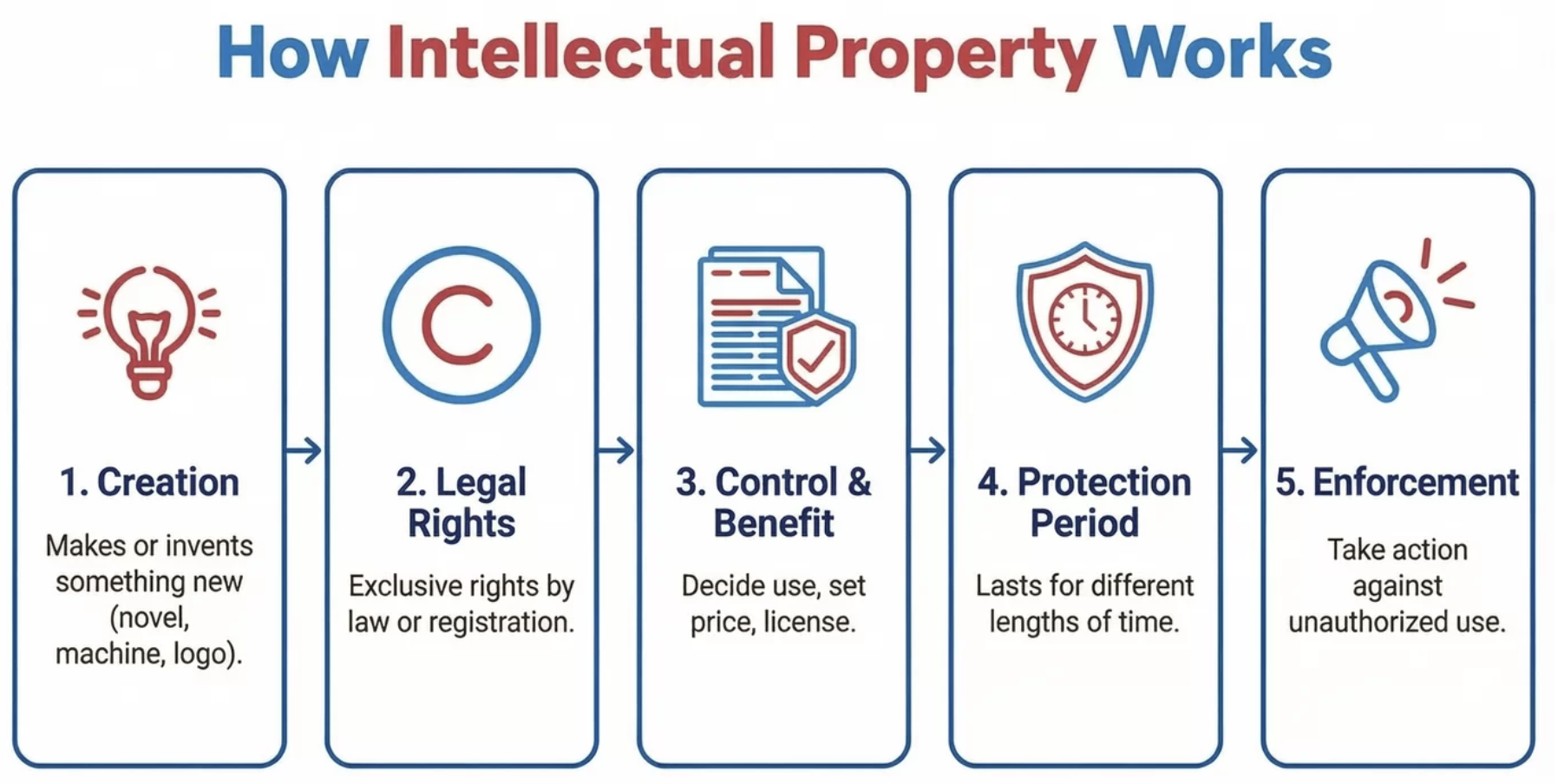
Figure 1: How Intellectual Property Works. Source: Metida
The best-known types of intellectual property laws are copyrights, trademarks, patents, and trade secrets.
Copyright: Rights and Duration
Copyright is a legal right that grants creators of original works authorship once an original work is fixed in a tangible medium of expression. It’s an exclusive right that the holder can reproduce, adapt, distribute, perform, and display the work. No registration is required at the first stage, but registration does benefit creators when they need to pursue legal claims. To qualify for protection, a work must meet two essential criteria: originality and fixation. Originality means the work must be independently created and have at least a minimal “spark” of creativity, as the Supreme Court says. Things that are not creative: titles, names, short phrases, slogans, simple symbols, etc. Fixation can be explained as “a work is fixed when it is captured in a sufficiently permanent medium such that the work can be perceived, reproduced, or communicated for more than a short time”. In addition, copyright protects expression but not ideas. For example, a painting of a sunset may get protected, but the concept of painting sunsets is not.
Copyright protection is temporary, lasting for a certain period. Generally, in the United States, the duration is the life of the author plus 70 years, 95 years from the date of publication, or 120 years from the date of creation. After this period, the work enters the public domain, making it freely available for public use and copying. This time limit is designed to maintain a legal balance: promoting creativity by safeguarding creators' rights while simultaneously fostering cultural growth through the public sharing of knowledge.
Copyright law defines three categories of authorship: sole authorship, joint authorship, and "work made for hire" (employer authorship). This means a copyrighted work can originate from an individual, a collaborating group, or be created as a result of employment circumstances. Generally speaking, for the “work made for hire”, the copyright is typically held by the employer, not the employee.
Infringement
When any exclusive right (reproduction, distribution, performance, public display, or creation of a derivative work) is breached without the copyright owner's permission, infringement occurs. Infringement does not require intent, even an unknowing use of a protected work could be considered as infringement. Historically, visual artists faced familiar forms of copyright infringement, such as unauthorized reproduction of paintings, unlicensed use of photographs, or creating unpermitted derivative works. However, the rise of generative AI has fundamentally changed the scale and mechanism of potential infringement nowadays.
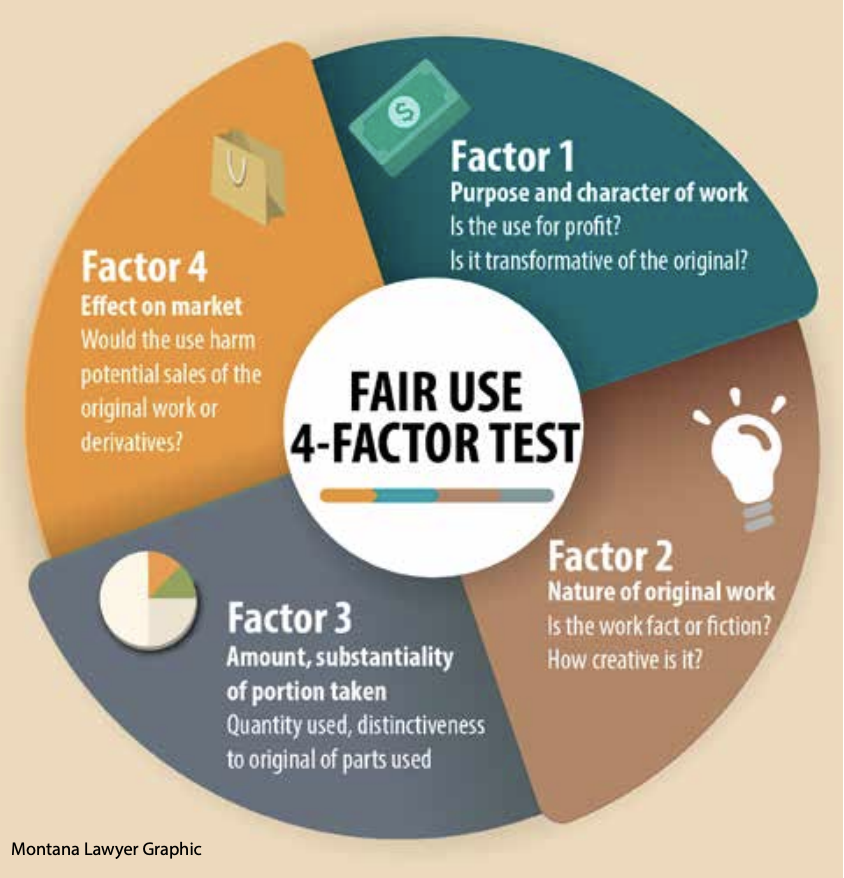
Figure 2: Fair Use 4-factor test. Source: Montana Lawyer Graphic
Fair Use
The most significant legal defense against an infringement claim is the Fair Use doctrine, codified in Section 107 of the Copyright Act of 1976. "Fair Use" permits the restricted use of copyrighted material without requiring permission from the copyright holder. This is based on the idea that the public benefit derived from certain types of creative reuse is significant enough to override the copyright owner's exclusive control over the work. In the art world, using artwork images for academic research by museums or for illustration in art criticism articles are examples of potential "Fair Use." However, the direct reproduction of artworks by galleries for commercial purposes, like posters, would likely not qualify as "Fair Use." When evaluating claims of fair use, courts typically consider a "four-factor test". Judges must collectively weigh these four factors because there is no single decisive factor, and the judgment always depends on the specific facts of the case.
For over 300 years, copyright law in the United States has continually adapted to new technological challenges. Though the world’s first copyright statute, the Statute of Anne, was enacted in England in 1710, this review primarily traces the development of U.S. copyright law, which forms the central legal context of this analysis. This journey, from its inception to the current complexities of the AI era, will be listed briefly in the following timeline.
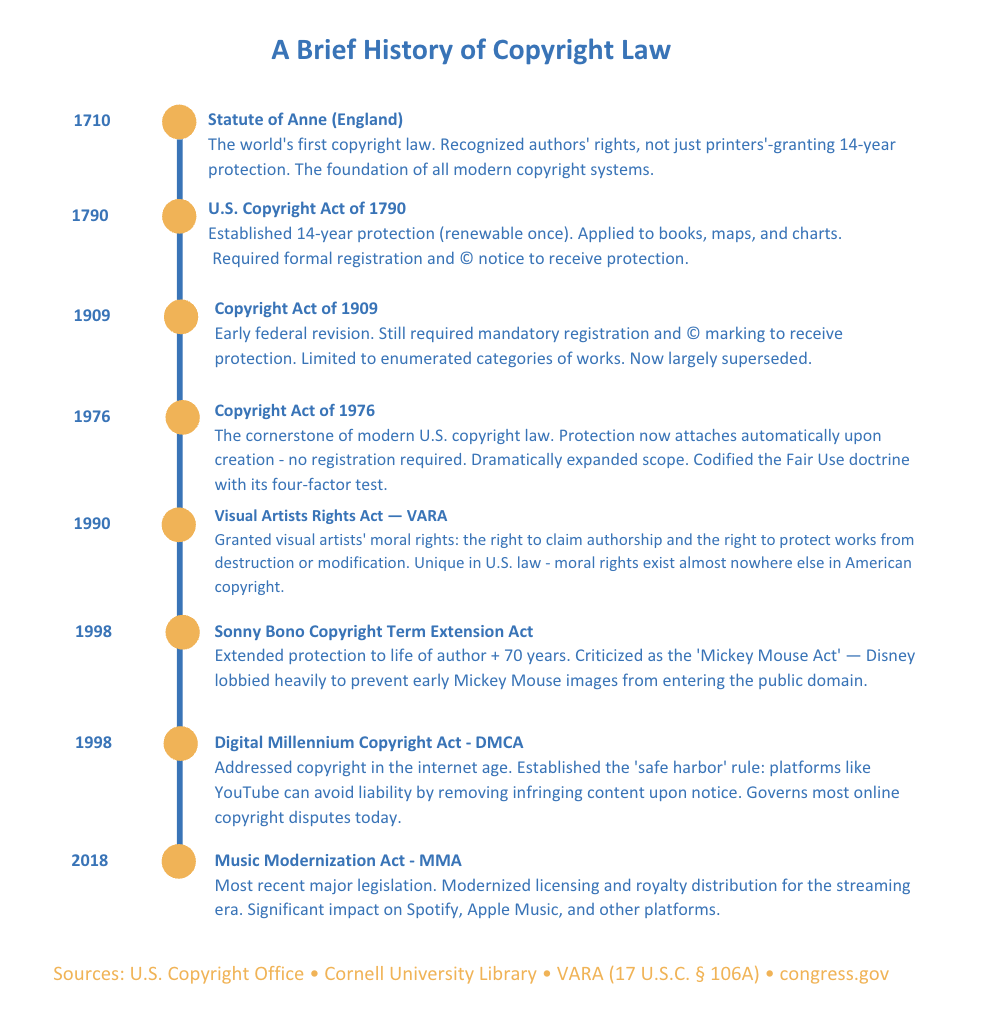
Figure 3: A brief history of Copyright Law. Source: Created by the author through Canva
Trademark: Protecting Brand Identity
Trademark is a word, phrase, logo, or symbol used in commerce by manufacturers or sellers to distinguish their goods and services from others. The fundamental function of a trademark is to inform consumers of the origin of a specific product or service. For example, the name of “MoMA” immediately signifies to consumers that the item originates from the Museum of Modern Art in New York and not from other entities. Ultimately, a trademark establishes a bond of trust between the source and the brand. In the United States, a trademark can last indefinitely as long as it is actively used in commerce. To maintain protection, the owner must file periodic renewals with the U.S. Patent and Trademark Office.
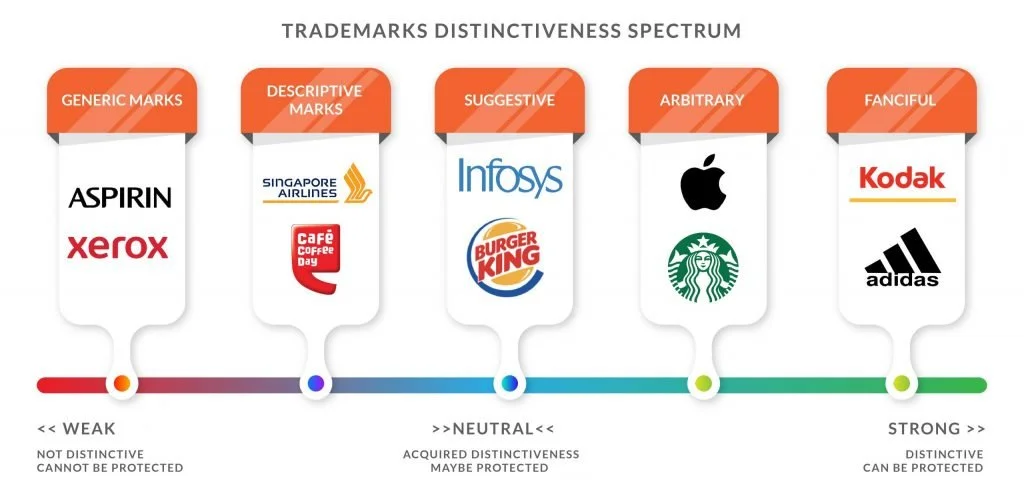
Figure 4: trademark spectrums. Source: Selvams
Patent and Trade Secret: A Brief Explanation
Patents are legal rights granted by the federal government that allow inventors to exclude others from making, using, marketing, or selling an invention for a limited period of time. To qualify for patent protection in the United States, an invention must be novel (new and not previously made or disclosed), useful (having a practical application rather than being purely theoretical), and non-obvious (not an evident improvement that a person skilled in the field could easily conceive). Patents protect inventions and discoveries, including new devices, processes, and pharmaceutical compositions.
Trade secrets, on the other hand, protect confidential business information that derives independent economic value from not being publicly known. This can include formulas, drawings, patterns, compilations such as customer lists, programs, devices, methods, techniques, or processes. Unlike patents, trade secrets do not require public disclosure and can last indefinitely as long as the information remains secret. A well-known example is the formula for Coca-Cola, which has been protected as a trade secret for over a century rather than being patented.
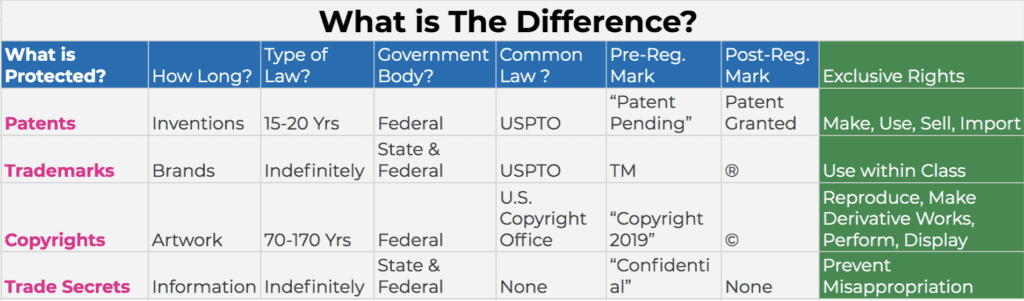
Figure 5: The difference among patents, trademarks, copyrights, and trade secrets. Source: Bold IP
For visual artists, copyright serves as the primary legal instrument, as it directly safeguards their original artistic expressions. Trademark rights become particularly crucial when an artist's brand image or identity is at risk, whereas the scope of patent law application within the realm of visual arts is relatively limited.
The Rise of AI-Generated Art and the Artist's Dilemma
Art is the expression of ideas and emotions through a tangible form, like sculptures, films, or even a random sketch drawn on a napkin. Everyone has the capacity to create art; it only requires an appreciation of beauty and the ability to express that perception. Technological development is transforming the creation of art from a purely human creator into a process of human-machine interaction. Modern AI-image generators like Stable Diffusion, Midjourney, and DALL-E, and popular AI assistants like ChatGPT, Claude, and Gemini, are now capable of producing visuals from simple text prompts. These technologies can generate commercial illustrations, concept art, portrait photography, and fine art compositions in seconds. The financial cost for most consumers is almost zero, compared with hiring human artists. To a certain extent, this technological advancement has raised concerns among some artists regarding their future survival. And the question this raises is not only about economics.
It is a question the law has struggled to answer for decades and has not yet resolved: who is the author of a work produced by a machine? Surprisingly, the Copyright Act §101 does not provide a clear definition of “author”, even though the “Name of Author” is required for copyright registration with the U.S. Copyright Office. This gap seems inconsequential for most of the law's history, but has become the central topic in every AI copyright dispute today. If the Copyright Act were clearly written to state that an “author” must be a human being, we would not be facing so many copyright disputes today.
The most recent illustration of this legal void is Thaler v. Perlmutter. On March 2, 2026, the U.S. Supreme Court declined to hear the case, leaving intact the D.C. Circuit's ruling that AI cannot qualify as an author under the Copyright Act. Computer scientist Stephen Thaler applied for copyright registration in 2018 for A Recent Entrance to Paradise, a visual artwork generated entirely and autonomously by his AI system DABUS, with no human prompting or editing involved. The Copyright Office denied his application because they think the work lacked human authorship, a decision upheld by a federal judge in 2023 and again by the D.C. Circuit in 2025. By refusing to hear the case without comment, the Supreme Court did not resolve the question; it simply declined to answer it. Thaler's lawyers warned that the decision will have "irreversibly and negatively impacted AI development and use in the creative industry during critically important years." The Court's silence is telling: the highest legal authority in the United States chose to look away from one of the most pressing copyright questions of the AI era.
This legal void has provided generative AI companies the opportunity to argue that AI tools themselves could qualify as authors. Consequently, courts are forced to apply precedents from the 1970s to resolve the sophisticated technological challenges emerging in the 2020s.
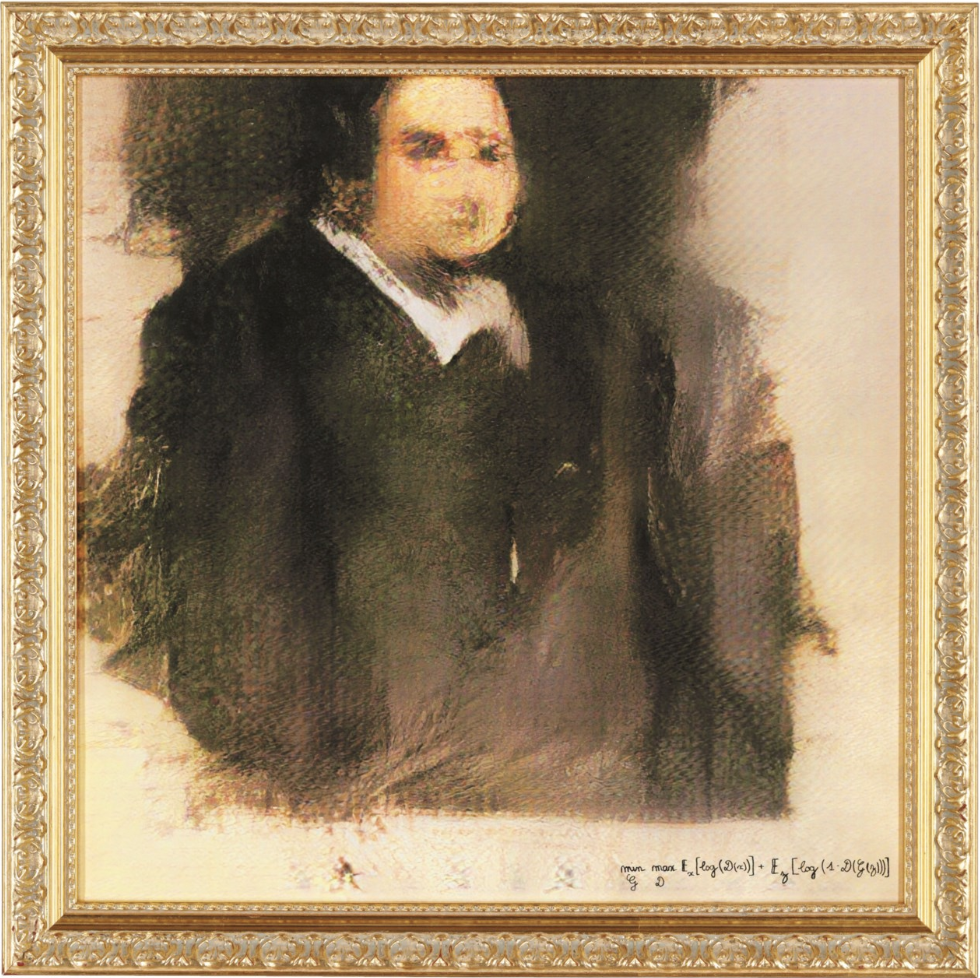
Figure 6: Portrait of Edmond Belamy, 2018. Source: Christies

Figure 7: AI Art Market Forecast. Source: The Business Research Company
While critics, scholars, artists, and AI companies are engaged in a contentious debate, the art market has already started responding to AI-generated art. In 2018, Christie's auctioned Portrait of Edmond de Belamy (generated entirely by an AI algorithm) was sold for $432,500, showing the arrival of AI art on the world auction stage. The AI art market is experiencing rapid growth, with projections indicating a 42% expansion by 2029, resulting in an estimated market size exceeding $2.5 billion. AI art is no longer a philosophical curiosity; it is a commercial reality.
Perspectives
Existing academic research has clearly outlined this issue. The U.S. Copyright Office has stated that human authorship is still required for copyright protection, while also recognizing the need for more guidance. Scholars and legal experts, either from institutions such as the Brookings Institution or the Harvard International Law Journal, generally agree on the problem: the law has not kept up with rapid technological change, and artists are facing the consequences. However, current research has not yet fully explained how courts actually handle these cases in practice. For example, it remains unclear which of the four fair use factors judges emphasize, how U.S. decisions compare with those in the UK, the EU, and China, and whether a consistent legal framework is starting to emerge across different regions.
These questions form the foundation for a deeper analysis that will examine key cases across multiple jurisdictions and evaluate what these decisions reveal about the future direction of copyright law in the age of generative AI.
-
Chat GPT Is Eating the World. “Updated Infographic on All AI Copyright Lawsuits in World (July 7, 2025).” July 8, 2025. https://chatgptiseatingtheworld.com/2025/07/08/updated-infographic-on-all-ai-copyright-lawsuits-in-world-july-7-2025/.
Chat GPT Is Eating the World. “U.S Map of Copyright Suits v. AI Cos. Total = 81 (Feb. 14, 2026).” February 15, 2026. https://chatgptiseatingtheworld.com/2026/02/15/u-s-map-of-copyright-suits-v-ai-cos-total-81-feb-14-2026/.
Chat GPT Is Eating the World. “World Map of Copyright Suits v. AI cos. Total =107 (Feb. 15, 2026) Only 7 decisions on AI training so far.” February 15, 2026. https://chatgptiseatingtheworld.com/2026/02/15/world-map-of-copyright-suits-v-ai-cos-total-107-feb-15-2026-only-7-decision-on-ai-training-so-far/.
Columbia Undergraduate Law Review. “Who Owns Ideas? Humans versus AI in Intellectual Property.” February 16, 2026. https://www.culawreview.org/current-events-2/who-owns-ideas-humans-versus-ai-in-intellectual-property.
Elsakr, Hannah. “Adobe Partners with Artists to Power the New Era of Media & Entertainment with Firefly Foundry.” Adobe Blog, January 22, 2026. https://blog.adobe.com/en/publish/2026/01/22/adobe-partners-artists-power-new-era-media-entertainment-firefly-foundry.
Hutson, James. “Copyright and Legal Frameworks in Art and Scholarship.” In Art History in the Age of Artificial Intelligence. 2025; Springer Nature Switzerland, n.d. https://doi.org/10.1007/978-3-032-02920-1_4.
“India’s First Smell Mark: Sumitomo Rose-Scented Tires.” Accessed February 17, 2026. https://www.wipo.int/en/web/wipo-magazine/article-details/?assetRef=89623&title=indias-first-smell-mark-sumitomo-rose-scented-tires.
Kim, Rachel. “Top Noteworthy Copyright Stories from January 2026.” Copyright Alliance, February 3, 2026. https://copyrightalliance.org/copyright-news-january-2026/.
Li, Xingxing, Youshui Lu, Rui Li, et al. “DNACP: A Method of Copyright Protection for Works of Art.” In Blockchain and Trustworthy Systems, edited by Jianguo Chen, Xiaonan Luo, and Yuanlong Yu. Springer Nature, 2026. https://doi.org/10.1007/978-981-95-3477-7_30.
Peter B. Hirtle. “Copyright: Copyright Term and the Public Domain.” Cornell University Library. Accessed February 13, 2026. https://guides.library.cornell.edu/copyright/publicdomain.
Randy Krum. “How Artificial Intelligence Is Changing Art.” Cool Infographics, February 25, 2019. https://coolinfographics.com/blog/2019/2/25/how-artificial-intelligence-is-changing-art.
Sarah Cascone. “San Diego Comic-Con Bans A.I. Art Following Backlash.” Art & Tech. Artnet News, January 22, 2026. https://news.artnet.com/art-world/san-diego-comic-con-bans-ai-art-2739389.
United States Patent and Trademark Office. “What Is a Trademark?” Trademarks. March 31, 2021. https://www.uspto.gov/trademarks/basics/what-trademark.
Walter, Giulia. Art and Copyright Law: An Interdisciplinary Study on Interpictoriality. Taylor & Francis Group, 2025. http://ebookcentral.proquest.com/lib/cm/detail.action?docID=31911328.
Washington Post staff. “2025 in Visual Storytelling.” The Washington Post, December 24, 2025. https://www.washingtonpost.com/nation/interactive/2025/washington-post-favorite-visual-stories/.
“Why humans matter most in the age of AI: Jacob Taylor on collaboration, vibe teaming, and the rise of collective intelligence.” Brookings, n.d. Accessed February 23, 2026. https://www.brookings.edu/articles/jacob-taylor-on-ai-collective-intelligence-vibe-teaming/.