

By: Ritika Gokhale, Pranay Raj Peddareddy, Nick Robinson, Peter Shireman, Abigail Whitehurst
This study provides a foundational analysis of how live-service game models and transmedia strategies are reshaping the contemporary video game industry, with a particular focus on Games as a Service (GaaS), player engagement, and franchise longevity. As gaming continues to outpace film and television as the world’s most lucrative entertainment sector, publishers face growing pressure to sustain player communities, balance monetization with satisfaction, and extend intellectual property beyond the game itself. Part I examines the historical evolution of GaaS and game adaptations, situating SEGA’s legacy within today’s competitive landscape. Drawing on existing literature, industry reports, and market context, this section frames the central research questions and methodological approach that guide the study. By establishing the strategic challenges and opportunities facing live-service games and transmedia franchises, Part I of this study lays the conceptual groundwork for the data-driven analysis and recommendations presented in Part II to be published next week.
Why GaaS and Transmedia Matter Now
Sega is a storied name in the video games industry, a sector of entertainment that dwarfs film box office and television streaming revenue, and is projected to be worth $346.71 billion by 2028 (Bain & Company, 2024). With its rich history of beloved characters and iconic franchises, including Sonic the Hedgehog (1991), Like a Dragon (2005), Crazy Taxi (1999), and Shinobi (1987), along with a strong market presence since the beginnings of home video games in the late 1980s and early 1990s. Sega has always offered consumers uniquely innovative experiences and maintained a robust fanbase, and is working to reinvigorate its legacy titles in a rapidly changing media world (Doolan, 2023).
Consumer spending on gaming subscriptions has increased year-over-year in the 2020s, positioning Sega to revitalize its older franchises, attract new audiences, and bolster loyalty from existing fans (Mordor Intelligence, 2025). Additionally, adapting video game properties into different media has become an increasingly lucrative vertical for publishers. With their blockbuster Sonic the Hedgehog movie trilogy, Sega has already generated over a billion dollars at the global box office, opening the door for more exciting adaptations of Sega’s IP (BoxOfficeMojo, 2025).
In the past decade, the traditional purchasing model of video games has been challenged by the emergence of the Games as a Service model (GaaS), where games are monetized post-launch through continuous updates, subscriptions, or in-game purchases. GaaS’s importance lies in sustaining long-term player engagement and profitability for developers while offering players evolving content. Due to the disruption in the gaming market caused by the rise of GaaS models and the increasing importance of transmedia, Sega has begun planning to revitalize its older franchises using these new business models (Dubois and Weststar, 2021).
This research study explored the intricacies of sustaining video game franchises through GaaS models and transmedia. We focused on identifying the key factors contributing to the success of GaaS titles and exploring how transmedia can enhance the franchise experience.
Definition of Terms
1. Content Updates - Additions to a video game after its initial release via patches, updates, etc.; they differ from downloadable content (DLC) in that DLC is typically purchased separately, while content updates are part of a live service game’s base cost (Larksuite, 2024).
2. Games as a Service (GaaS) - A continuous revenue model in which games are either free to play with optional transactions, or paid subscriptions for content and server access, as opposed to one-time purchases (Larksuite, 2024).
3. In-Game Purchases - Transactions made within a game after initial purchase, generally for perks, items, cosmetics, or in-game currency in exchange for real-world currency (Larksuite, 2024).
4. Live Service Games - Video games that receive regular content updates, a type of GaaS (Larksuite, 2024).
5. Microtransactions - Optional in-game purchases made online that enhance the player’s experience after downloading or purchasing (Larksuite, 2024).
6. Player Engagement - The extent to which a user is actively involved in the game experience (Larksuite, 2024).
7. Transmedia - Storytelling across multiple platforms or mediums; film and television adaptations of video games are prime examples of transmedia storytelling (Flew, 2024).
8. User Retention - A game’s ability to keep players active and engaged over time (Larksuite, 2024).
The Genesis of SEGA: A Legacy in Pixels
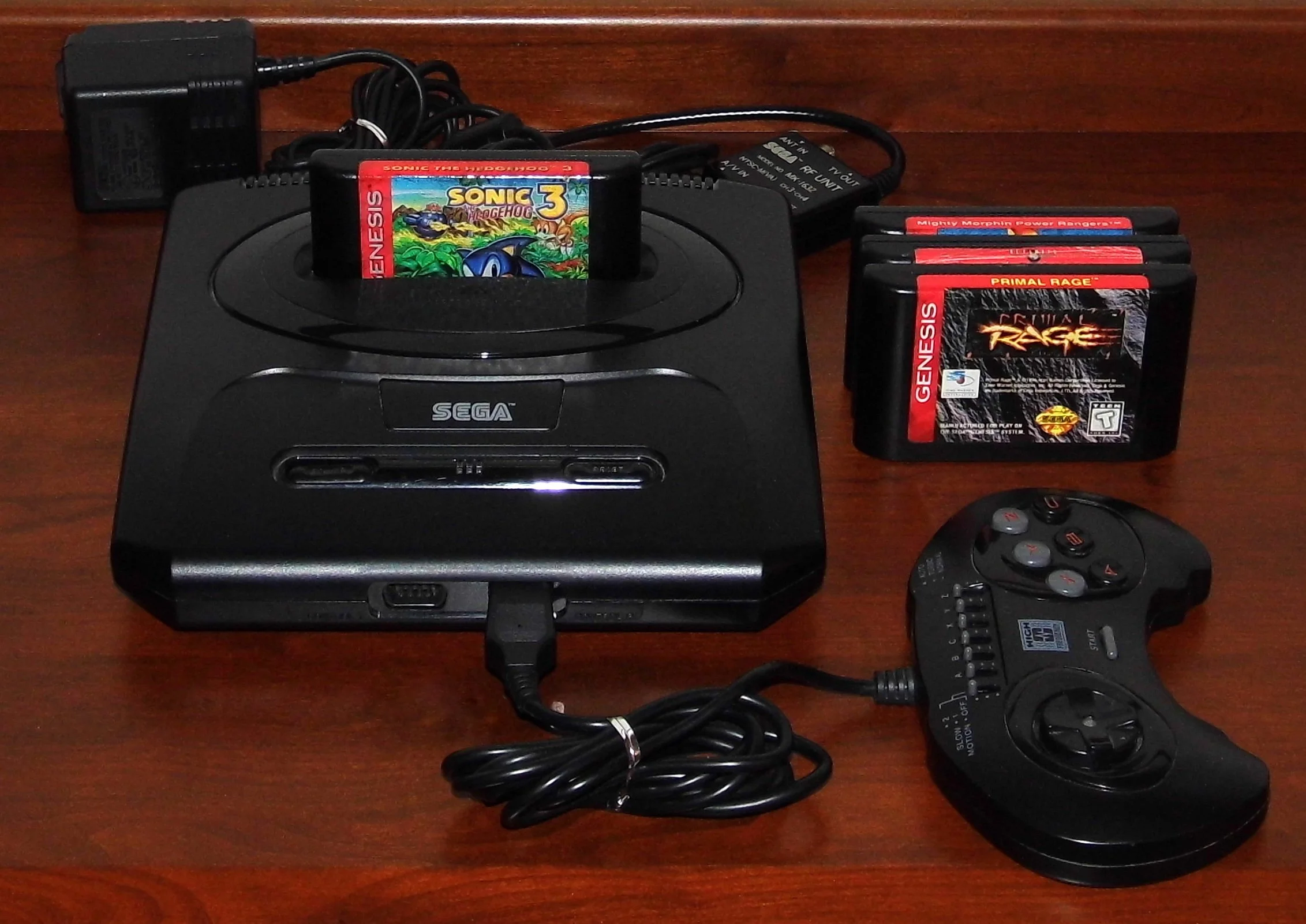
Figure 1: SEGA’s Early Hardware Legacy. Source: Flickr
Founded in 1940, Sega entered the video game industry in the 1960s by manufacturing arcade consoles, before transitioning to home consoles in the 1980s and 1990s with systems like the Sega Genesis and Dreamcast (Britannica Money, 2025). Sega is a prominent video game publisher renowned for its iconic franchises, including Sonic the Hedgehog, the Persona series, and the Yakuza series, also known as Like a Dragon. Due to its extensive history in home consoles, the company owns a substantial amount of intellectual property (IP), many of which have remained dormant (McFerran, 2024). The company has also successfully created transmedia adaptations of its video game IP, as shown by the success of the Sonic the Hedgehog film franchise, which has grossed over $1 billion at the box office (BoxOfficeMojo, 2025).
The Service Game: How GaaS Took Over
The idea of video games creating continuous revenue is not a new one, but the 2004 release of World of Warcraft (WoW) marked a turning point, reshaping the industry's trajectory. Blizzard Entertainment, now known as Activision Blizzard, launched the game in 2004, a high-fantasy massively multiplayer online role-playing game (MMORPG) set in the Warcraft universe, an established series of real-time strategy games. It is one of the most popular games globally, with millions of active players (activeplayer, 2025). Players pay a monthly subscription to access the servers, with one-time payments for new game versions. New content generated 15 million dollars a month at its peak in 2010 (Raisbeck, 2024). Naturally, others sought to emulate the success of this model, and aspects of WoW were incorporated into franchises such as Diablo, The Elder Scrolls Online, and Final Fantasy until the early 2010s. As MMORPGs became the norm, a new type of video game, free-to-play live-service games, emerged in the late 2010s (Harding-Rolls, 2024). These were often fast-paced shooters, such as Fortnite, released in 2017. Unlike MMORPGs, where users must pay monthly fees, players are not required to pay to play. The focus was more on microtransactions for in-game cosmetics that would not change the experience. This pay-to-express model proved successful, and since the late 2010s, video game companies have shifted their focus to developing their own versions of Fortnite.
Game to Screen: A Brief History of Adaptation
Many people consider the 1982 movie Tron a video game adaptation, and while video games inspired it in general in the late 1970s, the movie came before the arcade game and subsequent games and sequels (Rigou, 2023). Just a couple of years later, The Last Starfighter (1984) was released in theaters with a message in the end credits that promised an Atari release based on the fictional arcade game in the film. Although this game was never actually released, comics and home console games were eventually developed. Film adaptations of specific games started with the 1993 Super Mario Bros. movie. The movie received poor critical reviews, a 4.2 out of 10 on IMDB, and only grossed $39 million against a $49 million budget (IMDB, 2025). This set the tone for the relationship between video games and Hollywood for decades. From the 1990s through the 2010s, video game adaptations continued to flop, often attributed to a lack of vision, misunderstanding of the core game, misjudging audience expectations, and a cash-grab mentality (Gohardani, 2016). Audience expectations were low, and often, announcements for new video game adaptations were met with concern. Gamers felt that the movies and shows based on their favorite games were not made with them in mind, even as recently as the early 2020s (Houvouras, 2022).
Live, But Not Always Well: GaaS in 2025
The industry, jealous of the success of long-standing GaaS games like Fortnite, invested billions of dollars into developing their own versions of this ultra-lucrative model (Taylor-Hill, 2023). In 2024, gamers witnessed the failures of games like Sony’s Concord, which cost $400 million to develop and took 8 years, only to be shut down within 11 days (Bailey 2024). Other games, such as Bioware’s Anthem, Ubisoft’s Skull and Bones, and Rocksteady’s Suicide Squad: Kill the Justice League were also abandoned, cementing the fact that gamers are no longer looking for the typical GaaS gaming experience (Nachwalter, 2024). While quality has always been a point of contention, GaaS games also require a significant investment of time and money. Gamers have been vocal about too many options and insufficient time to get into these new games (Phillips, 2024). In 2023, the preferred games for GaaS experiences were over six years old, with 60% of gamers preferring older titles in which they had invested their time (Benfell, 2024). Balancing a successful business model, compelling game design, and player satisfaction is more challenging than ever.
The Golden Age of Game Adaptations: Transmedia in 2025

Figure 2: Promotional image from the Sonic the Hedgehog film franchise, exemplifying successful video game–to–film transmedia adaptation. Source: Deviantart
Unlike in the past few decades, video game adaptations are now celebrated as the next wave of superhero franchises, ready to surpass them in popularity (Bharanidharan, 2024). Since 2023, video game adaptations have generated an estimated $2.7 billion for transmedia leaders such as Universal, Nintendo, Sega, and Sony at the global box office. Shows like The Last of Us are critically acclaimed, and film adaptations rake in box office profits; The Super Mario Bros. Movie, for example, grossed $1.3 billion globally (Lammers, 2024). These successful adaptations have led to a surge in video game IP acquisitions by major studios and streaming platforms, and have increased sales for adapted games, such as The Last of Us or Fallout (Peters, 2024; Veloci, 2024). A primary reason often cited is the high level of respect that the creatives have for the original IP. In The Last of Us, showrunner Craig Mazin explicitly stated he wanted to craft these adaptations as a fan of the video game (Osborn, 2024). Films like Five Nights at Freddy’s involved the creator collaborating on the script with the development team (Marsh, 2023). Tim Cain, the original creator of Fallout, remarked that the show “feels like Fallout,” a stark contrast to how video game developers felt about films decades prior (Lyles, 2024).
Unlocking SEGA’s Future
In 2025, the most successful video game developers at the forefront of the industry utilized both GaaS models and transmedia adaptations to reach a broader audience and extend the shelf life of their products. However, there is no guaranteed method for success. Regarding transmedia adaptations, different types of games require different approaches; however, the best adaptations have teams behind them that thoroughly understand their subject material. Movie and TV adaptations of beloved titles are always on the horizon, and with the recent successes of The Super Mario Bros. Movie, Fallout, The Last of Us, Five Nights at Freddy’s, and A Minecraft Movie, it is a very crowded market (Bankhurst, 2025). The same applies to GaaS titles, which offer numerous options across every genre and style of live service. Viewer and player expectations, and whether they are met, play considerable roles in both adaptations and live services. Anticipating these expectations appears to be crucial (Alexander, 2020).
Summary
The video game industry is relatively young compared to the television and film markets, but that does not change the fact that live-service games and transmedia adaptations are challenging fields to break into, especially without the resources to make informed decisions. Understanding what makes specific titles stand out and how to apply those success factors to one’s transmedia and live service development projects is more important than ever in crowded markets. The following chapter explores our survey and interview findings.
-
Alexander, Bryan. 2020. “How Sonic the Hedgehog Avoided Death by Twitter with a Dramatic, Game-Saving Redesign.” USA Today, February 13.
https://www.usatoday.com/story/entertainment/movies/2020/02/13/sonic-the-hedgehog-movie-redesign-how-backlash-made-character-better/4730593002/.An, Xiaoyan, Yifan Peng, Zhicheng Dai, Yu Wang, Zhijie Zhou, and Xiaoyan Zeng. 2024. “Buying Game Derivative Products Is Different from In-Game Purchases: A Mixed-Method Approach.” Behavioral Sciences 14 (8): Article 652.
https://www.mdpi.com/2076-328X/14/8/652.Bailey, Kat. 2024. “Concord’s Initial Development Deal Was $200 Million, But It Wound Up Costing Sony Much More—Report.” IGN, October 30.
https://www.ign.com/articles/concords-initial-development-deal-was-200-million-but-it-wound-up-costing-sony-much-more-report.Bankhurst, Adam. 2025. “Upcoming New Video Game Movies and TV Shows: 2025 Release Dates and Beyond.” IGN, January 9.
https://www.ign.com/articles/upcoming-video-game-movies-and-tv-shows.Barder, Ollie. 2024. “The Crisis of Massive Budgets in Gaming Is Still a Very Current Issue.” Forbes, November 22.
https://www.forbes.com/sites/olliebarder/2024/11/22/the-crisis-of-massive-budgets-in-gaming-is-still-a-very-current-issue/.Batchelor, James. 2024. “Fallout Shelter’s Daily Revenue Rockets to $80,000 After TV Show Debut.” GamesIndustry.biz, April 16.
https://www.gamesindustry.biz/fallout-shelters-daily-revenue-rockets-to-80000-after-tv-show-debut.Batchelor, James, and Chris Dring. 2024. “How Video Games Conquered Hollywood.” GamesIndustry.biz Microcast (podcast), October.
https://open.spotify.com/episode/5FggzBFcWV3u2OIvsmlRdY.Benfell, Grace. n.d. “60% of All Playtime in 2023 Was Spent on Live-Service Games More Than Six Years Old.” GameSpot. Accessed February 1, 2025.
https://www.gamespot.com/articles/60-of-all-playtime-in-2023-was-spent-on-live-service-games-more-than-six-years-old/1100-6522366/.Bharanidharan, Shobana. 2024. “Video Game Adaptations Primed to Overtake Comic Book IPs.” Kidscreen, April 10.
https://kidscreen.com/2024/04/10/report-video-game-adaptations-primed-to-overtake-comic-book-ips/.Birk, Max V., Regan L. Mandryk, and Cheryl Atkins. 2016. “The Effects of Avatar-Based Customization on Player Identification.” In Proceedings of the 2016 CHI Conference on Human Factors in Computing Systems, 694–704.
https://doi.org/10.1145/2858036.2858062.Britannica Editors. 2025. “Sega Corporation.” Encyclopedia Britannica. April 5.
https://www.britannica.com/money/Sega-Corporation.Byshonkov, Dmitry. 2024. “Game Market Overview: The Most Important Reports Published in November 2024.” devtodev, December 2.
https://www.devtodev.com/resources/articles/game-market-overview-the-most-important-reports-published-in-november-2024.Cai, Xueming, Jorge Cebollada, and Monica Cortiñas. 2022. “A Grounded Theory Approach to Understanding In-Game Goods Purchase.” PLOS ONE 17 (1): e0262998.
https://journals.plos.org/plosone/article?id=10.1371/journal.pone.0262998.Campaign Experience Awards. n.d. “Arcane – Netflix Global Experiential Launch.” Accessed February 27, 2025.
https://www.campaignexperienceawards.com/finalists/arcane-netflix-global-experiential-launchd0004.Chan, Sheryl. 2021. “The Median Price of In-App Purchases Has Grown 50% Since 2017 on iOS.” Sensor Tower, March.
https://sensortower.com/blog/app-store-iap-median-price.Christofferson, Anders, Anders Videbaek, Andrew Egan, Tom Rowland, and Mike Madden. 2024. “Gamer Survey: Young Players Reshape the Industry.” Bain & Company, August 28.
https://www.bain.com/insights/gamer-survey-young-players-reshape-the-industry-gaming-report-2024/.Clement, J. n.d. “Global Video Game Subscription Market Value 2020–2025.” Statista.
https://www.statista.com/statistics/1240333/consumer-spending-video-game-subscriptions/.Deadline News. 2025. “eSports Merch in 2024: Gamers Are Buying More Than Just Skins.” February 20.
https://www.deadlinenews.co.uk/2025/02/20/esports-merch-in-2024-gamers-are-buying-more-than-just-skins/.Dubois, L.-E., and J. Weststar. 2021. “Games-as-a-Service: Conflicted Identities on the New Front-Line of Video Game Development.” New Media & Society 24 (10): 2332–2353.
https://doi.org/10.1177/1461444821995815.Flew, Terry. 2025. “Media Convergence.” Encyclopedia Britannica, February 4.
https://www.britannica.com/topic/media-convergence.Fragen, Jordan. 2023. “HBO’s The Last of Us Sets New Bar for Game-to-TV Adaptations.” VentureBeat, March 14.
https://venturebeat.com/games/hbos-the-last-of-us-sets-new-bar-for-game-to-tv-adaptations/.Gibson, Ellie, Mark D. Griffiths, Filipa Calado, and Adrian Harris. 2023. “Videogame Player Experiences with Microtransactions.” Computers in Human Behavior 140: 107622.
https://www.sciencedirect.com/science/article/pii/S0747563223001176.Glazebrook, Luke. 2023. “TV Is the Future of Video Game Adaptations, Not Movies.” ScreenRant, February 5.
https://screenrant.com/video-game-adaptations-tv-better-than-movies/.Hennig, Martin. 2015. “Why Some Worlds Fail.” IMAGE: Journal of Interdisciplinary Image Science 11 (1): 17–33.
http://dx.doi.org/10.25969/mediarep/16505.Osborn, Gregory E. 2024. “Why Are Film & TV Adaptations of Games Good Now?” Video Games Industry Memo, November 15.
https://www.videogamesindustrymemo.com/p/why-are-film-and-tv-adaptations-of.Peters, Jay. 2023. “HBO’s The Last of Us TV Show Is Pushing the Game Up the Sales Charts.” The Verge, February 13.
https://www.theverge.com/2023/2/13/23597863/hbo-the-last-of-us-tv-show-game-part-i-sales-npd-group.Taylor-Hill, G. 2023. “Sony Investing $2.1B in Gaming R&D, Focusing on Live Service.” Insider Gaming, July 12.
https://insider-gaming.com/sony-live-service-games-investment/.Unity Technologies. 2023. Mobile Growth and Monetization 2023. Unity.
https://create.unity.com/mobile-growth-monetization-2023.Velocci, Carli. 2024. “Fallout Games See Big Player Influx After TV Show Debut.” Polygon, April 24.
https://www.polygon.com/24131018/fallout-games-steam-player-count-bethesda-tv-show.