Fundraising

Digital Fundraising with Text Messaging, Part 2 of 5

Digital Fundraising with Text Messaging, Part 2 of 5

According to the 2018 Global NGO Technology Report, over "15% of non-governmental organizations (NGOs) worldwide regularly send text messages to donors and supporters." In addition, "43% of those NGOs use a Text To Give service for SMS fundraising." These trends continue in the United States, with the mGive Foundation's 2015 Text Donation Study finding "that for 46% of donors, giving via text is a preferred method." The most popular SMS campaigns tend to favor urgent crises, with over 65% of donors giving via text supporting disaster relief organizations, followed by health institutions and human services organizations. This particular study also referenced a "Giving Gap" where people who responded that they strongly favored using text as a method of donation rarely followed through with that wish. This led mGive to conclude that "it is likely that many donors are not being given ample opportunity to make text donations."

Given this evidence, there is a want from donors for text-based giving that is not being fulfilled. Here’s how your organization can learn to meet this demand.

Emerging Technology for Fundraising: Part 1 of 5

Emerging Technology for Fundraising: Part 1 of 5

Fundraising is a critical component of almost every nonprofit arts enterprise.  This spring, the Arts Management and Technology Lab commissioned a national benchmarking analysis and survey of arts organizations on four emerging digital fundraising pathways:  Text message / SMS giving, peer-to-peer portals, Facebook nonprofit tools, and mobile auction apps.   The following kicks off a 5 part series that highlights the findings.  This article offers specific statistics on fundraising with subsequent pieces providing details on the individual pathways and a summary of the national survey's findings.

Nonprofit Technology Conference #18NTC

Nonprofit Technology Conference #18NTC

NTEN's annual conference is always a special treat. Vendors and attendees all focused on making the world a better place while investigating the appropriate role technology plays in that transformation.  With 144 sessions plus keynotes, Birds of a Feather lunch tables, Ignite talks and pre-conference workshops, to say the conference is robust is an understatement.  The following are my main take-away from the conference, but if you are curious for more, be sure to check out their social channels with hashtag #18NTC.

How Do You Compare in Digital Fundraising?

How Do You Compare in Digital Fundraising?

AMT Lab is researching emerging digital fundraising tools so that arts organizations can, hopefully, take a bigger part of the 14% increase in online giving. With $380 billion dollars of giving in the USA in 2017 and more people than ever giving online, the future of fundraising is changing before us.  And don't be fooled -- the majority of the online donors were older than 49 years old.  To understand how the arts can maximize current and emerging fundraising opportunities, a benchmark of what is happening in the field today is underway.

Highlights of 2017 and a mini-preview of what is to come

Highlights of 2017 and a mini-preview of what is to come

2017 took AMT Lab researchers into the worlds of robots, smart cities, augmented reality, bias reducing technologies, digital advocacy, and so much more.  The following offers a highlight and a small preview of what's to come in the 2018.

Going Beyond Google: Data Sources and Visualization

Going Beyond Google: Data Sources and Visualization

Finding data and analyzing it takes time, something in short supply for most arts managers.  But without taking the time to collect and analyze data, arts managers are making decisions without knowledge. Here are two tools and one source to consider as you move forward in your work.

New Publication: Silicon Valley Struggle

New Publication: Silicon Valley Struggle

In the 21st century, wealth is beginning to concentrate in new fields like technology as opposed to traditional industries. With this in mind, how can arts organizations go about soliciting financial support from this new class of wealthy-elite? This white paper by Jennifer Moreci answers this question by looking at current patterns in philanthropy and specific strategies for engaging donors in Silicon Valley. Read the full report here.

The Giving Pledge: A Start to Engage Tech Philanthropy

The Giving Pledge: A Start to Engage Tech Philanthropy

To understand why arts organizations have struggled to capture funds from tech billionaires, arts managers and development professionals would do well to recognize what philanthropic sectors they are losing these dollars to, and why.  Armed with these insights, arts professionals can then adjust their strategies to better appeal to this new and growing donor segment.

Research Update: Crowd-Funding through Google

Research Update: Crowd-Funding through Google

With the development of crowd-funding programs through companies such as Kickstarter, Indiegogo, and Patreon, artists have many new ways to generate both funding and visibility.  Arts and culture organizations have a harder time competing with individual artists on these platforms.  In an effort to assist these organizations as they try to change the world, Google now offers its own crowd-funding platform for nonprofit organizations: Google’s One Today.

Opportunities Abound: Starting a Peer-to-Peer Fundraising Campaign

Opportunities Abound: Starting a Peer-to-Peer Fundraising Campaign

While technology may not cure every arts management need, it has created significant opportunities for connecting people already passionate about your organization to people likely to be. These peer-to-peer connections can fuel both sides of the institutional development coin – patrons and donors.

Cross-Sector Partnerships in the Arts: Fendi and the Trevi Fountain

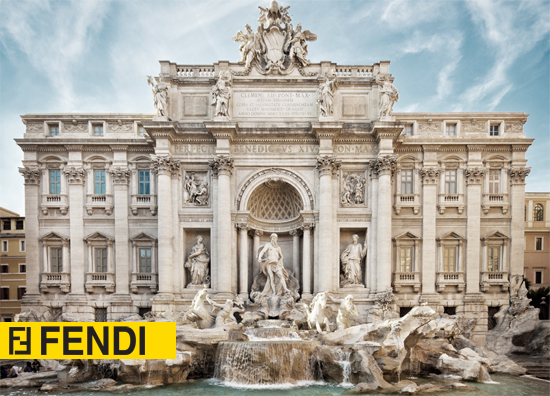
At a press conference on Monday, Fendi designers announced the fashion house will finance the restoration of two fountains in Rome, the Quattro Fontane and the iconic Fontana di Trevi, or Trevi Fountain (built between 1732 and 1762). The US$2.9 million (€2.18 million), 20-month project will be completed in phases, as explained by Fendi designers Karl Lagerfeld and Silvia Venturini Fendi. These phases will include the re-waterproofing of the main basin, the cleaning of the façade and marble statues, and restoration of the gilded inscriptions. The Trevi Fountain will remain open to tourists throughout the restoration process (fear not tourists, fear not). This announcement comes at a time when the funding for and preservation of cultural heritage sites in Italy is uncertain. Fendi, however, is not the first big-brand fashion name to take action in the preservation of Italy’s cultural heritage. Tod’s, an Italian company producing leather shoes and bags, is currently financing the restoration of the Coliseum for US$34 million (€25 million). Further north in Venice, Diesel, an Italian fashion company, is funding the restoration of the Rialto Bridge for US$6.7 million (€5 million).

Of course, these generous donations do not go without recognition. For Tod’s, the funding agreement provides the company the rights to the Coliseum’s logo for 15 years, as well as branding Coliseum tickets with the company logo. Fendi’s sponsorship of Rome’s grandest fountain will be recognized by a small plaque to be placed near the fountain for four years.

The city council and Mayor Gianni Alemanno of Rome are hopeful these interventions will continue, as the preservation of the country’s past is in peril. Alemanno said, “Without similar initiatives, we won’t be able to save the cultural memory of our country.” Though council members are supportive of the private sector’s involvement in the preservation of Italy’s cultural heritage, some conservators are wary. They fear private-public partnerships will commercialize monuments of national pride, turning sites of inherent meaning and cultural significance into fashion advertisements.

The private-public partnership between Fendi and the Trevi Fountain is just one of many examples of a paradigm shift in the cultural sector regarding what Alemanno says is, “a new system of cultural patronage.”

25 Best Kickstarter Tips for Creative Students

While blockbuster Kickstarter projects receive a lot of attention, it's important to remember that small projects have more success on the website than these massive funding campaigns. We talk a lot about the best ways for organizations and artists to utilize Kickstarter, but what about students who haven't entered the field yet? Fortunately a Tech in the Arts reader pointed us to this article on BachelorDegreesOnline.com's blog with 25 Best Kickstarter Tips for Creative Students. It's got some great tips that every Kickstarter project could benefit from. One of my favorite tips on the list is number 24:

24. Engage your audience

A neglected Kickstarter page is one that will likely go unfunded. Be careful not to simply set up shop and walk away. Rather, you've got to stick around, posting updates, answering questions, and interacting with the people who have put their faith and money into your project. Your backers want to be a part of what you're doing, and you've got to make an effort to let them do that.

After all, isn't engagement the ultimate goal of web 2.0? To read the rest of the tips, click here.


Up for Debate: What is the Best Way to Fund the Arts in America?

It is a topic that we have covered extensively here at Tech in the Arts over the past couple of months: what is the best way to fund the arts in America? With the National Endowment for the Arts seeing budget cuts, Kickstarter growing in popularity, and increased austerity measures around the world forcing large cuts to the arts, the topic has received a fair amount of attention in recent months. Last week, the New York Times, as part of its perennial “Room for Debate” series, asked the question I mentioned above, along with some others: What can we do to stabilize funding? Can we learn from the experiences of other countries? What can be done to improve effectiveness?

The Times gathered eight individuals from the artistic, non-profit, and political sectors, asking them what they believed were the best ways to fund the arts. Their answers might surprise you.

The eight respondents in the series tended to gravitate towards two positions: either the government needs to do more to fund the arts and various programs, or the government needs to get out of the way and the responsibility should rest on individuals instead. Like most policy debates, the question naturally comes back to what role the government should play; while some would argue too little is spent on funding (for example, the NEA received $147 million last year, a tiny, tiny fraction of the overall federal budget), others would say that instead of the government using taxpayer dollars to fund programs, it’s better left to the private sector and individuals to decide what programs should be funded.

Going through the eight responses, it was interesting to see how each person eventually gravitated towards one of these two areas. Some were more explicit and forward than others, but it’s this tug of war between more government investment and less government involvement that always seems to come up when debating any kind of public policy. The arts are no exception.

I encourage everyone to read the entire discussion, but I will summarize the eight viewpoints below.

Beth Nathanson, director of development at Playwrights Horizon, is quick to point out America’s “culture of philanthropy,” and says the following:

“It is a misconception that corporate or government support has ever provided the majority of arts funding. Each United States citizen pays about the cost of one postage stamp in taxes to support national arts and arts education programs. And those corporations that fund the arts primarily fund prominent organizations serving a high number of people. The real stars of arts giving are individual donors. They provide the lion’s share of support across the country, and on average, give more to arts than corporations and government entities combined.”

Nathanson points out that the arts are a fundamental part of our daily lives, and encourages individual investment in the arts, instead of government involvement. She, and many others, point to the Brazil model, which is a sort of public-private partnership that raises funding for the arts through payroll taxes. Everyone can certainly agree that “the arts should be an integral part of our lives,” the question becomes, in the end, how is that managed and developed? While taxes are certainly one way, personal responsibility, through giving, is another possibility as well.

David Boaz, of the Cato Institute, a libertarian think tank based in Washington, takes the individual model a bit further, and says that all arts funding needs to be separated from the government, because the government has too much control over where the money is spent. Better to let individuals and the private sector handle the responsibility instead, Boaz writes:

“People should not be forced to contribute money to artistic endeavors that they may not approve, nor should artists be forced to trim their sails to meet government standards.”

Boaz goes on to mention Kickstarter, an outlet for individuals to direct money to programs they explicitly support. This approach, Boaz argues, is preferable to the NEA’s approach, which is to take money from all taxpayers and then direct it to programs the agency support.

Robert Lynch, CEO of Americans for the Arts, disagrees. Instead of spending less on the arts at the federal level, we should be spending more, and seek to start a “national dialogue” on the importance of arts funding. Lynch writes:

“Last month, 800 advocates were in Washington to defend to Congress the 47 cents per person that America spends on the National Endowment for the Arts. This amount should be much more but despite its seemingly small percentage, government support leverages billions in matching dollars, increases access — especially for the underserved — and encourages new voices, ideas and expressive endeavors that have kept the U.S. at the vanguard of creativity and innovation.”

Lynch writes about America needing to have the “creative will” to move past the issue of why funding is so important and start talking about how we should do it. Lynch, and many others, believe government revenue is the best way to do that.

Sergio Munoz Sarmiento, an artist and arts lawyer, takes issue with “mandatory funding,” the idea that everyone contribute to the same pot and those funds have to be spent each year:

“Arts funding should be encouraged, yet voluntary. Mandating government and corporate subsidies for the arts raises a few concerns for me. Will mandated art subsidies affect the quality of artistic production? Will this type of funding encourage a passive artistic community? And finally, will it create a curatorial practice on behalf of granting institutions?”

In other words, a program where funding is guaranteed does a disservice to artists, who will not be as entrepreneurial or imaginative if funding is a certainty. Better to have more competition and uncertainty, which will lead artists to become more daring, creative, and/or original in their works.

Clyde Valentin and Kamilah Forbes, of the Hip-Hop Theater Festival, focus on the reliability of arts funding, and maintain that a stronger commitment to the arts will encourage more collaboration and certainty among artists and arts groups:

“The experience of the Hip-Hop Theater Festival is that where our funding is most reliable, our programs have the most impact. In Washington, for example, our partnership with the D.C. Commission on the Arts and Humanities has enabled our organization to produce the D.C. Festival for little or no direct cost to the public. The festival draws an unprecedented audience annually to some of D.C.’s most prestigious arts institutions, reaching thousands who get to experience art they would never otherwise have an opportunity to see.”

Michael Royce, executive director of the New York Foundation for the Arts, is another defender of federal funding for the arts. In addition to greater federal funding, he encourages greater incentives, through federal tax policy, for individuals to donate to the arts as well:

“The U.S. model has traditionally given incentives for private support, usually through tax deductible donations. Likely the most efficient method of increasing private funds is to strengthen those incentives. For example, the current cap on tax-deductible contributions is 10 percent of taxable income and could be raised for arts contributions, perhaps to 15 percent. Smaller companies, through cash grants or in-kind donations, can make vital and targeted contributions to specific artists' projects. On the individual level, tax forms could allow for earmarked donations to the arts.”

Royce, and many others, agree that the problem is that there simply isn’t enough funding for the arts at this time. Through greater federal investment, and tax incentives, Royce argues for a new model.

Finally, Stacy Palmer, editor of the Chronicle of Philanthropy, talks about how little of the money donated to charitable causes in 2010 went to the arts community: only five percent. The majority of the money went to places like universities, religious groups, and hospitals. She also points out the myth that most arts funding is donated by the wealthy:

“It's a myth that the rich are keeping the arts alive; while many are to be commended for their huge donations, America's millionaires and billionaires provide a small portion of the money that flows to cultural causes.”

Palmer points out that it is time to “rethink” how everyone, including the public and private sectors, individuals, and arts organizations steer money towards the arts, which is something I think all of us can agree on.

Taken together, the New York Times series was a fascinating look at the different perspectives towards how arts should be funded in the U.S. All of us can agree on the problem: the arts need more funding. The question, going forward, is how to best do so.

Whether it is continued federal support towards groups like the National Endowment for the Arts, more of a focus on private alternatives, like Kickstarter, or some kind of combination of the two, the debate is sure to continue.

After reading the different responses, where do you stand? How should funding for the arts be developed in the United States, and what steps can we take to get there?

Some Additional Thoughts on Kickstarter and Arts Funding

Last Friday we had the pleasure of welcoming Stephanie Pereira, Art Program Director for Kickstarter, a site that we have profiled, examined and analyzed a number of times here on the blog, to Carnegie Mellon for a speaker series event for our Master of Arts Management program. Her presentation and Q&A session talked about how projects are started, the rules for the site, and a look at some of the more interesting projects the site has seen as of late. As a policy student, I am always fascinated by numbers and what trends are driving the dynamic changes we are seeing in the arts community. Before I go back to my usual beat of looking at how the worlds of art, technology and policy intersect, I wanted to pause this week and examine some of the statistics that were presented at Friday’s event, and what they say about the nature of giving in the art world.

As anyone who is familiar with Kickstarter can tell you, their growth in recent years has been nothing short of astounding. I recently looked at how their estimated funding level for 2012 is set to eclipse the entire annual funding for the National Endowment for the Arts (NEA), a federally funded arts program. That kind of grassroots energy, passion and dollar commitment is a testament to a real market for substantive funding for art projects at the national level.

Why has it taken this long for large scale arts funding to reach the national stage? Technology would certainly be one answer, as the world of social media has opened up other industries to new funding mechanisms and audience participation. And while there are other excellent crowdfunding resources on the web, Kickstarter remains the most visible, offering artists the best potential opportunity to ultimately create their projects.

Anytime you have a site like Kickstarter that changes the way the arts are funded here in the U.S., a look behind the curtain at some of the statistics is a welcome way of analyzing what exactly is responsible for its success.

One important stat to point out about Kickstarter: while the recent projects that eclipsed the $1 million mark receive most of the attention, the vast majority of successful projects fall in the $1,000-$5,000 range. The rewards offered for these projects pale in comparison to those of the more ambitious projects, but having such a low threshold naturally entices more people to commit dollars in the hope that a project they admire and want to see is successful.

Another important stat to point out: the average pledge amount is not, as I would have expected, in the $10-20 range. According to Kickstarter, it is actually $71, which shows people who are pledging money to these projects are donating more than a couple cups of coffee: these are real dollars being committed here, and it is of little surprise that with the thousands of projects being featured on the main page of the site over any given week, that so much money is being pledged to the wide variety of projects on display.

Perhaps the most interesting statistic, however, is what Kickstarter refers to as the “tipping point” for project success: once a project reaches pledges totaling 30 percent of its funding goal, it has about a 90 percent chance of reaching its target. This puts a lot of pressure on artists and project leaders to get their main support system at the outset (i.e., their friends and family) to commit funds in an effort to pass that threshold. While not a guarantee, it is fascinating to see how often projects reach their end goals when they pass a common threshold.

Finally, it may surprise you to learn that the three categories that receive the most pledges do not include paintings, or public art pieces, or video games: the top three categories consist of film, music, and design (with film being the winner by a large margin; dozens of films are now being released each year that were funded through Kickstarter, with many of them debuting at SXSW a few weeks ago).

These are just a few of the hundreds of statistics that Kickstarter has provided over the years. Their blog is a great resource for a look at the trends and figures that help explain the quantitative success behind the site, and is definitely worth bookmarking.

We love writing about Kickstarter here at Tech in the Arts, and as the site continues to grow in future years and brings to life thousands of art projects, we can’t wait to see what kind of ideas and projects come our way.

Mobile Fundraising Applications: The Apple policy over one year later

Apple banned fundraising apps for the iPhone, iPad, and iPod over a year ago (to much controversy) just as the first fundraising app hit the market through eBay/MissionFish.  The field of software for fundraising as a result of the ban is anemic. Until this policy is removed it seems unlikely that major fundraising will take place via mobile applications.  As the iPhone is the number one smart phone on the market developers have much less incentive to build software for fundraising purposes.  It can be extrapolated that once the ban is lifted the fund-raising/development world will be playing catch-up for years.

Here are two notable successes/efforts to do fundraising through mobile apps over the last year:

eBay and Missionfish are on the verge of offering donation capabilities through eBay's mobile application for Android (it was originally intended for the iPhone).  These donations should be relatively easy to put through and involves the user downloading the mobile eBay application and then searching for your cause.  On the organization's end the donation item has to be set up as well as the account which will interface with paypal.

In the UK a group called Marie Curie Cancer Care managed to get around the ban by setting up an app that allows users to request donations from friends through text messaging.  The application itself doesn't collect the funds but is party to gathering them.

If you want to take action, you can sign the current petition to overturn the ban here.


TechSoup launches Annual Digital Storytelling contest!

Whether they know it or not, every organization has a story to tell. But sometimes, it just so happens that this story is lost amid the frenetic activities of day-to-day work, and soon finds itself sitting quietly in the old forgotten folder of organizational history. Well, the month of February is the time to retrieve that story and subject it to some digital editing. This is because TechSoup, an organization that enables non profits to achieve their mission through technological solutions, has decided that some stories are best told digitally!

Recently, TechSoup launched its Annual Digital Storytelling contest which, “combines professional instruction and friendly competition into a hands-on media-making project.” Over the month of February,“TechSoup Global will host a series of interactive events including Twitter Chats, live webinars, and trainings designed to help nonprofits produce a one-minute video or five-picture Flickr slideshow that tells the story of its organization.” Yes, a minute or five pictures is all you have!

http://www.youtube.com/watch?v=ccCwQeAo4l4

TechSoup will accept submissions through February 29th, and in March, a panel of judges will select the organizations with the very best videos and “take their digital storytelling to the next level.” Another interesting and fun aspect is the Audience Choice Award, where “winning and notable submissions will be screened in San Francisco and live-streamed online through SecondLife as a special “red carpet” event on March 28, 2012.”

TechSoup’s competition is beneficial to not-for-profit organizations because stories are one of the most engaging ways to raise awareness and gather support. If an organization has a compelling story, people will listen. Better yet, if an organization can narrate it digitally, people will not only listen but they will also share it! And if the vast and ever expanding YouTube community is pleased, it might just go viral!

So non profits, make haste! You have a month and at most, a minute!