


With the increase in digital-based media, digital drawing apps offer a unique opportunity for museums to provide interactive audience engagement experiences to visitors.

This article analyzes Ireland’s emerging position as a global cultural policy case study, focusing on the Basic Income for the Arts (BIA) program and its place within the national framework Culture 2025. While Ireland’s consensus-driven political system, strong arts advocacy networks, and history of support for artist income have enabled an ambitious, research-oriented basic income pilot, the article highlights deeper tensions within cultural policymaking. Drawing on Stephen Hadley’s concept of “cultural policy realism,” it argues that Ireland’s policies—despite their novelty—remain rooted in traditional, instrumentalist views of culture as an economic engine and national branding tool. By contrasting democratization of culture with cultural democracy, the piece situates Ireland’s model between innovation and reversion, emphasizing the need for sustained experimentation, critical evaluation, and more genuinely democratic approaches to cultural support.
This study advances Part II by translating Scopely’s strategy into an execution plan across three tracks - NPC innovation, intelligent monetization, and ethical LiveOps - supported by new evidence from a 1,159-response consumer survey, nine expert interviews (developers, influencers, and experiential professionals), and secondary industry research. Part I established the market context for AI’s disruptive potential and identified three priorities: live operations evolution, commerce optimization, and advanced player analytics. The goal of this phase is to pinpoint the highest-leverage AI applications that deepen gameplay engagement, convert payment resistance through demonstrated value, and safeguard community trust. Accordingly, Part II outlines actionable playbooks (context-aware NPCs and adaptive narratives), platform tactics (purchase-aligned mobile personalization and cross-play integration), and operational models (behavior-based matchmaking and transparency protocols) designed to drive scalable, technology-led growth while preserving the integrity of shared human play.
This study provides a comprehensive analysis for Scopely to enhance its position as a leader in interactive and mobile gaming, focusing on AI integration in live operations, in-game commerce, and player analytics. The research reveals the urgent need for gaming companies to navigate accelerated AI adoption and evolving player expectations for personalized experiences. The goal is to identify the most impactful AI applications over the next three years and strategies that maximize engagement and monetization while maintaining player trust. Significant to this goal is balancing innovation with ethical considerations, including data privacy and transparency, while recognizing AI's potential to enhance storytelling and create immersive experiences. Employing a mixed-methods approach with industry interviews, a survey of over 1,000 U.S. gamers, and secondary research, Part I establishes the foundation for understanding AI's transformative impact - setting the stage for Part II's empirical findings and strategic recommendations.
A daylight robbery at the Musée du Louvre in mid-October resulted in the theft of eight priceless pieces from the French Crown Jewels housed in the Galerie d’Apollon. The incident now serves as an in-depth analysis for arts leaders globally to confront not only external threats, like highly organized professional thieves, but also the complex, internal risk of compromised staff and the urgent need to re-evaluate their security posture, technological investment, and institutional accountability.
As immersive technologies redefine the live concert experience, artists and virtual idols alike are transforming how audiences engage with music. From Hatsune Miku’s “holographic” performances powered by projection and LED technologies to VR concerts by creators like BlackGryph0n and Gorillaz, extended reality (XR) is blurring the lines between physical and digital performance. This article explores the evolution of Vocaloid software, the artistry behind digital concerts, and the growing influence of augmented and virtual reality in live music. As AR and VR become more accessible, musicians and fans alike are discovering new ways to connect—reshaping what it means to perform, attend, and experience music in the digital age.
As new technologies emerge in the market, museums are able to enhance visitor experiences through innovative tools, allowing for increased accessibility and interaction with the visitors.
Here are five exciting technologies that are upending traditional notions at many museums across the world, and changing the way museums can present their exhibitions and in-gallery experiences.
When you need a book, you no longer jump in a car and drive to a bookstore. Instead, with just a few clicks on the computer, your book will be waiting at your front door in two days or instantly online. E-Commerce has become a natural and regular part of people’s lives, and nonprofits should evaluate this trend when managing their revenue sources.
How are marketing departments at large American Opera institutions using their data? This new Whitepaper by AMT-Lab Contributor Kevin O'Hora uses four case studies to paint a picture of how companies are using data acquired by their website. Full of insights for marketing departments across disciplines, this publication includes software recommendations as well as general strategies and best practices applicable to any arts marketer.
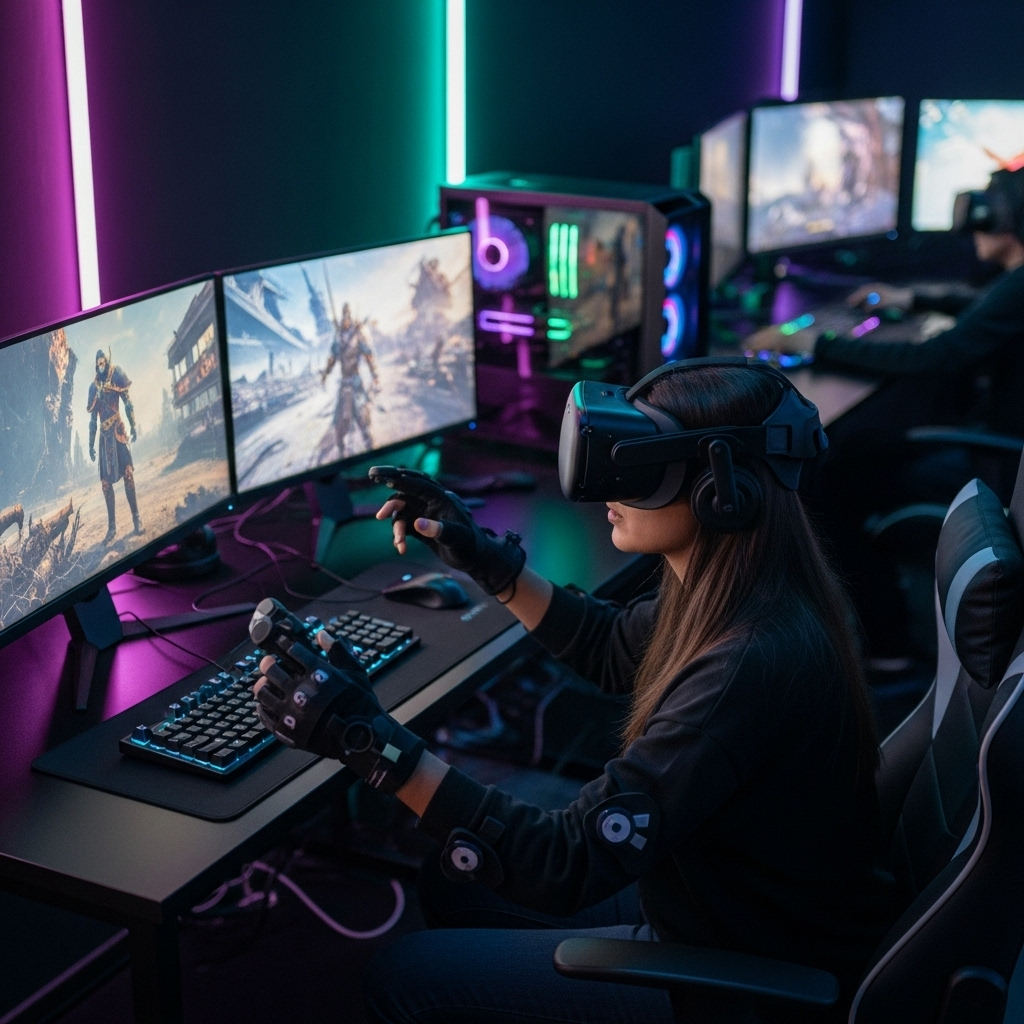
Virtual Reality has helped researchers make significant advancements in treating burn patients, phobias, PTSD, and learning disabilities. As the technology moves into museums, it presents an exciting opportunity for improved accessibility initiatives, potentially allowing visitors with autism and sensory-learning disabilities to enjoy a customizable museum experience in a safe, controlled environment.
This semester, several AMT-Lab contributors are exploring the potential uses of virtual reality in the arts. Virtual reality technology provides a new perspective for audiences that is easily accessible, requiring equipment sometimes as simple as a smartphone. Because of emerging virtual reality technology, not only do artists have different ways to explore their work, but they also have a new way to engage and interact with their audience. Here is a selection of recent articles that explore how virtual reality technology is transforming the arts.
Despite the development of technologies that allow businesses to operate more efficiently and transparently, it remains difficult for an outsider to see and understand the way in which the music industry pays its artists. The cash flow is becoming more convoluted with an increased diversity of options for consuming music, making it more difficult for artists—even those in the industry—to track how their royalties are calculated. AMT Lab Contributor Colin Baylor explores some potential solutions for this broken system.
In this new publication, AMT Lab Contributor Wanqi Peng shares her research on the current state of arts education in Massive Open Online Courses (MOOCs). Included in the report is an overview of the field, a summary of trends in digital arts courses, and a course study following a pioneer of online arts education. Download the full report here.
Are you curious about beacon technology? Perhaps you're wondering how you should go about choosing a beacon hardware provider. Or maybe you are considering how you would use this technology in your performing arts organization. AMT Lab Contributor Kate Martin has created an infographic to get you started answering these questions.
Customer Relationship Management systems (CRM) are a vital element at the heart of many arts organizations. Databases can provide invaluable information to marketers, fundraisers, and box office staff alike. This week’s throwback takes a look at some of AMT Lab’s more popular interviews and features concerning CRM systems.
Though often used to analyze traffic and commerce, Google Analytics is a powerful tool whose applications are near-limitless. In this new handbook, AMT Lab contributor Kathleen Grennan illustrates a number of ways in which arts managers of all types can use Google Analytics to make data-driven decisions in operational settings. From obtaining new audiences to bolstering fundraising efforts, this is a good introduction to this flexible tool. Click here to find the full report.
What is the difference between a Data Analyst and a Data Scientist? What is the most demanded programming language for data workers entering the cultural field? And what skills are most important for those interested in working with data? AMT-Lab contributor Julia Lewis recently attended a panel which addressed these questions and more. Read her thoughts here.
The collection and analysis of consumer data is a practice that grows more ubiquitous and complex everyday. However, the dangers of mass data collection are self-apparent, and it appears that consumers might be reaching a tipping point when it comes to companies using their personal information. New evidence from the Pew Research Center suggests that growing numbers of consumers are often confused, impatient, and discouraged when it comes to how companies use their data.
Arts managers in the 21st century must go further than producing work that engages their audience. They must carefully strategize and monitor the platforms through which their audience is engaging. The San Francisco Opera’s "Tweet Seats" program is a prime of example of an arts organization not only encouraging discussion, but successfully managing the discussion around their work.
AMT-Lab contributors are always looking at all sorts of new technologies in the world of 3D. With the increasing popularity of technologies such as 3D printing, the possibilities continue to emerge. These new technologies and their uses in the art world keep us interested in how the intersection of art and technology impact our world.
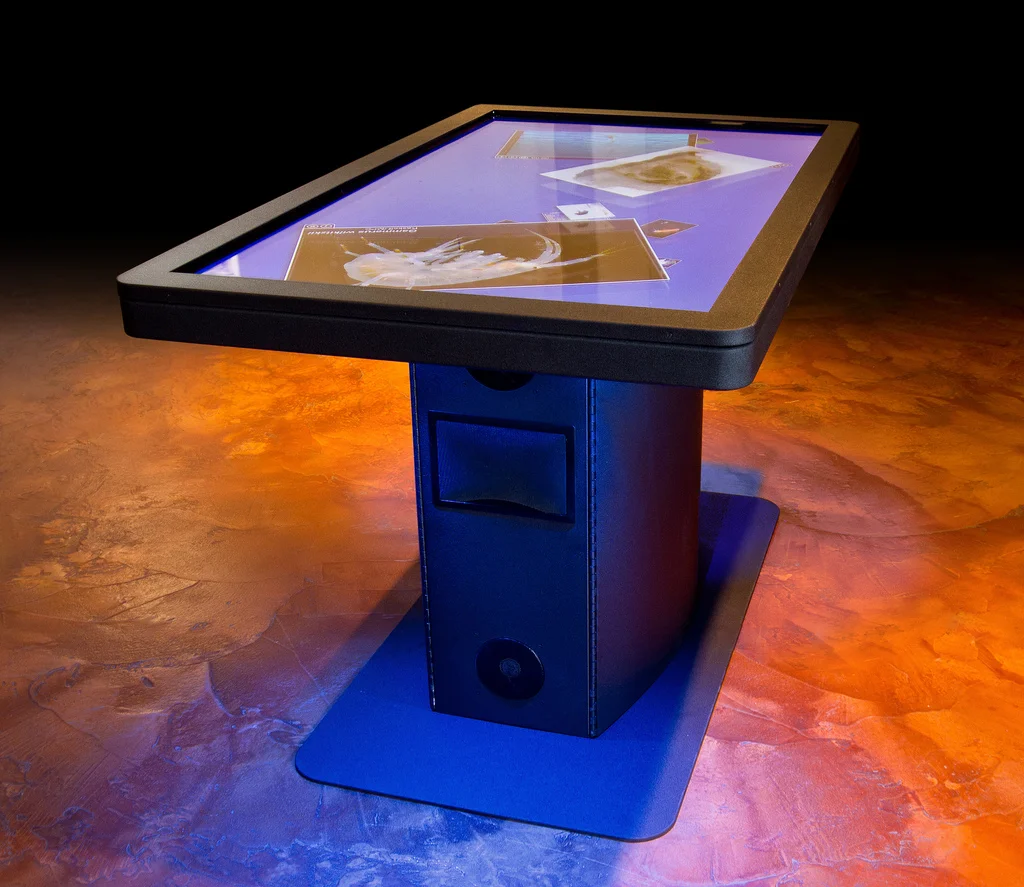
Multi-touch technology may be easy to use, but how it works is far more complex. While several technologies support multi-touch functions, museums may find that certain ones suit an exhibition’s needs better than others. Choosing the right multi-touch platform is the first step in creating an interactive and personal experience for visitors.