

By: Amy Glazer
What is Vocaloid?
Vocaloid is a software originally developed and released in 2003 by Yamaha, the brand notable for selling pianos. Vocaloid is a software, but the word has become ubiquitous with the music that is made by using the software. The software itself is a singing voice synthesizer. Voice artists (VA) will start by handing over their voices to create a digital voicebank (or vocaloid library). To do so, the VAs will record thousands of individual sound fragments, or phonemes. The Vocaloid software then synthesizes the phonemes of the Vocaloid library into words, uploaded by artists as lyrics. Pitches and melodies are later implemented to create a fully realized piece. Since the singer is digital, there are differences between the ‘artist’ and the Vocaloid, which is where the multi-use of the term comes from. “Both the voicebank and the corresponding animated avatar are given the same character name, making them easily marketable and recognizable” (Ng Man Chuen, 2025). Many Vocaloid voicebanks have taken on personalities and designs and are commonly referred to as Vocaloid Idols – one of the most well-known being that of Hatsune Miku.

Figure 1: Hatsune Miku. Source: hatsunemikublog
Hatsune Miku is a vocaloid idol, depicted as a 15-year-old Japanese girl with large blue pigtails and a cute, music-themed aesthetic. Miku’s voice actor is Japanese voice actress Saki Fujita (藤田咲). Fujita lent her voice to the Vocaloid voice bank in 2007, and her work as the voice of Hatsune Miku led to the growth of Fujita’s career in voice acting. The character of Hatsune Miku was created in 2007 by Crypton Future Media (CFM), a Japanese technology brand that deals with music-making technology. Miku was the lovechild of CFM and the ever-popular anime and manga industry in Japan. She currently sits in the cross section of art and music, with communities creating fan art, music, videos in her likeness. Miku was an attempt to create a virtual Japanese Idol, which are younger Japanese girls that are entertainers, typically in singing and dancing groups (CotoAcademy, 2023). Miku was made to draw people into using CFM technology and the Vocaloid software by using her status as a virtual idol (Nadal, 2018).
Vocaloid is an interesting software – anyone can use the digital voicebanks that have been uploaded, but for a price. An artist can purchase Miku’s voice bank for under $150 U.S. dollars and use that to create as many songs as they’d like (BigFish, 2025). The idolization of Hatsune Miku worked, and she currently has over 100,000 songs to her name, with the catalogue continuing to grow. Hatsune Miku has even collaborated with artists such as Lady Gaga, Pharrell Williams, and Zedd (de Koning 2024). Miku has even gone on to perform at Coachella and has toured around the world. But how does Miku perform live when she, well…isn’t?
How Do Vocaloid Concerts Work?
Vocaloid idols are, of course, not real. Not real in the sense that they have no corporeal form and are locked into the digital landscape. The hundreds of thousands of people who purchase tickets to see Hatsune Miku perform, however, know this and embrace it. What the audience sees when Miku performs live is an immersive technological marvel that only continues to expand into other forms of MR, or mixed reality technologies (Ng Man Chuen, 2025). The concert space has been toying with AR (augmented reality), VR (virtual reality), and immersive technologies for years now, using ‘hologram’ or projection technology to bring back artists who have passed. Tupac was the first, with to perform once again (Fernandes, 2025). Vocaloid, while using ‘hologram’ technology, shifts away from the ethical issues that are involved with posthumous concerts and instead creates a world where a beloved 2D character can perform on stage in ‘real life.’ The technologies implemented to bring Hatsune Miku to life are associated with Virtual Reality (VR) but are actually closer to Augmented Reality (AR), where a virtual object (Miku, in this case) is superimposed onto a ‘living’ backdrop or onto a real-life situation. Unlike VR, in which everything is created virtually, AR still contains a piece of ‘real life’ that fans are able to connect to.
When vocaloid idols perform, there is a mix of technology and live performance arts on stage. Idols are animated, music video style, to each song they perform, many times being performed with live DJs or bands. They are then projected onto screens on stage, using specific technology that emulates holograms. Hologram technology isn’t exactly true to the idea of ‘holograms’ as holograms are depicted in media. An actual hologram is a 3D still image, and it’s created by laser technology (Veltman, 2024). Instead, the faux-hologram look is created by multiple high-tech projectors and panes of glass. The visuals are projected onto see-through panels at a 45-degree angle to create an effect likened to ‘Pepper’s Ghost,’ an illusion-based parlour-trick coined by John Henry Pepper in the late 1800s (McGuinness, 2024). The effect gives a ghost-like quality to the projections, making them both look life-like and transparent. This effect is the ‘augmented’ portion of immersive technology that gives Vocaloid concerts such a unique experience.
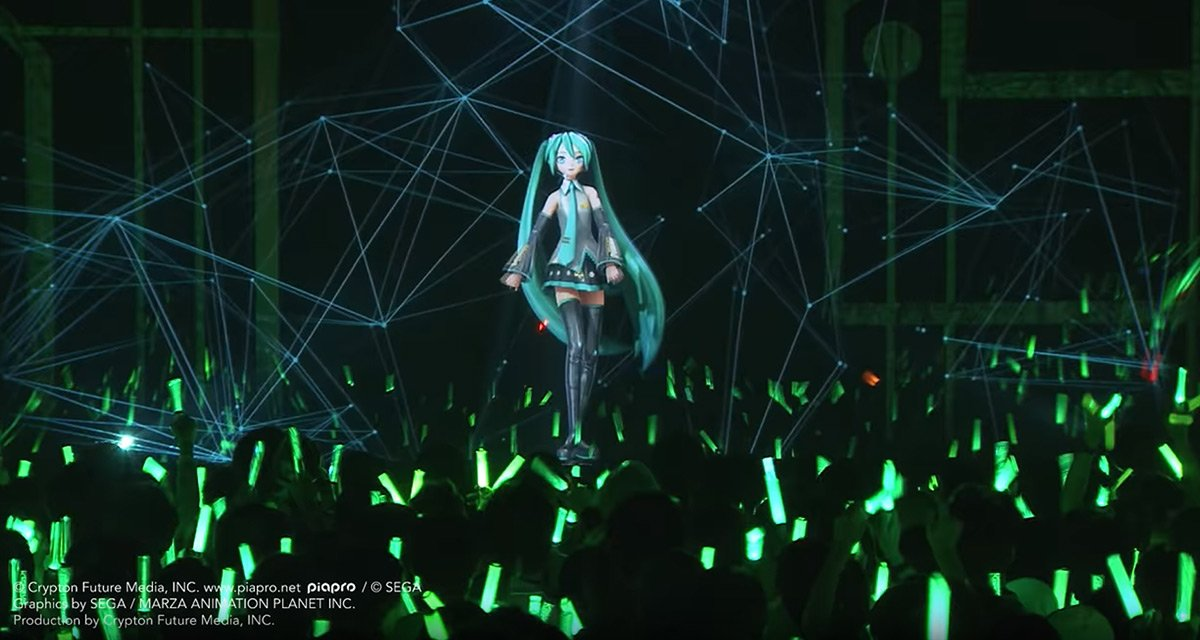
Figure 2: Hatsune Miku performing at Miku Expo London 2018 using glass-pane projection technology. Source: JROCK NEWS
In 2024, there was activity on many vocaloid forums surrounding the 2024 Miku Expo and her first tour since 2016, citing that the production team used a different type of projections (Hodgkins 2024). Miku was projected onto a large LED screen during Miku Expo 2024, instead of the method explained above, even bringing the screen back for Miku’s Coachella 2024 performance. The usage of LED screens created discourse, with fans wanting the ‘holographic’ technology re-implemented, stating that the concerts are billed as ‘hologram performances’ (Hodgkins 2024). A line on the tour website read, “The trilingual, holographic Miku has long sold out arenas in her native Japan…” which had subsequently been removed. The reason for this shift to LED technology has not been stated by CFM or Crunchyroll, but fans are not amused in any case, likening the screen and concert to a TV. Many other venues that house Miku during her 2024 tour also put up notices that they would be using LED screens. The switch to LED screens could be for many reasons, including cost, space availability, and safety. It is much safer and more accessible for smaller venues to use LED screens over glass panels. However, new technology is still being developed to bring virtual artists to life in concert format.
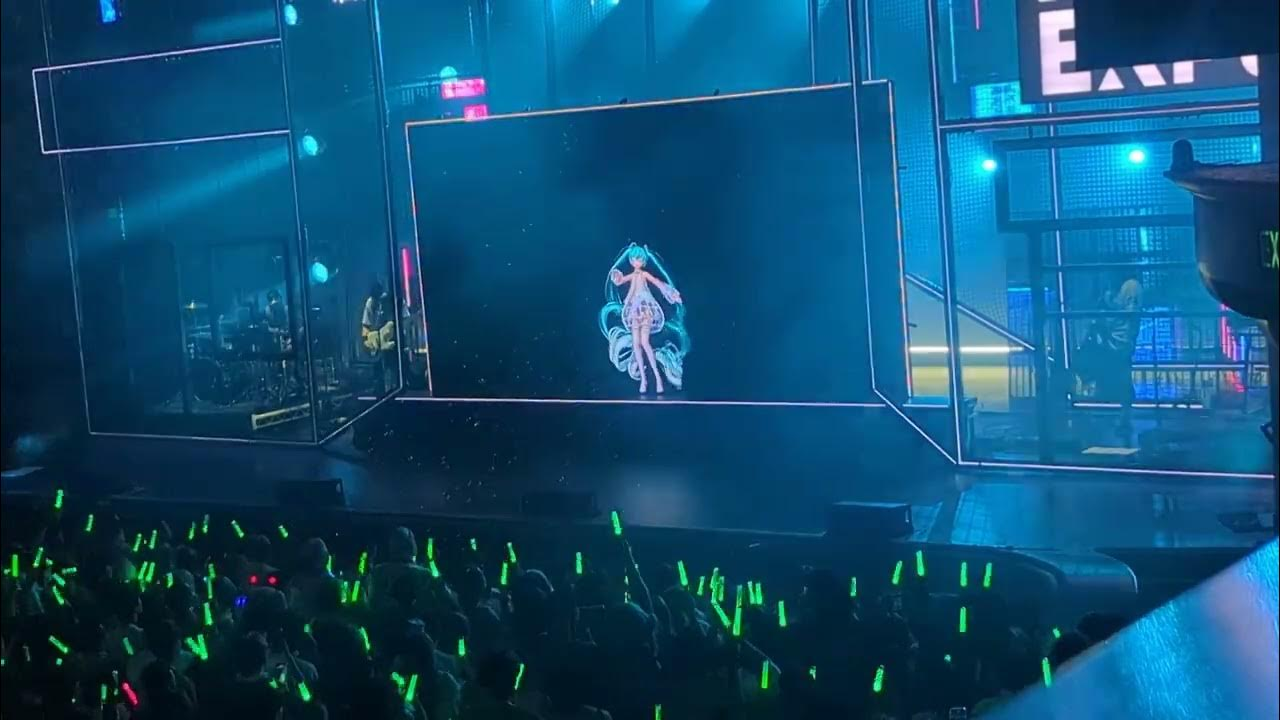
Figure 3: Hatsune Miku performing during Miku Expo 2024 in Newark, New Jersey, 5/7/24, using LED screen projection technology. Source: YouTube
One AR-assisted product that could be implemented in future use is Polid Screen Technology. Polid Screen technology was created in 2013 by Niconico Video and is a freestanding transparent screen that can be projected onto, like the glass planes used in the original ‘hologram’ technology. However, Polid Screens are created using multiple projectors and two sheets of polyethylene – their projections can be two-sided, making the characters or text projected onto the screen seem even more immersive and life-like (Dennison, 2016). While this technology has been available for some time, there is much room to grow. It is quite affordable and can be created in an array of sizes. With this technology, even combined with the use of LED screens, Hatsune Miku could perform in a fan’s home.
Other Uses of XR in Concert Spaces
As noted earlier! AR it’s not new to the concert space, but there are artists who continue to push the boundaries by including other types of XR into the concert space. In 2025, music artists and YouTuber duo BlackGryph0n (Gabriel Brown, singer) and Baasik (Nate Brown, producer), streamed a virtual reality concert using the beta version of Wave’s new VR app for Quest 3/3S. The Brown brothers have been creating music together since the early days of YouTube and are known for Gabriel’s impressions and their music based off of video games and animated TV series.
The concert, streamed on the beta version of Wave, featured both brothers as VR avatars, with Gabriel singing and Nate DJ’ing. They performed ‘live’; none of the songs were pre-recorded, but instead sung as though in a real concert space. The duo performed some of their famous catalog and had the show set up so they could see the VR audience’s comments on the main stage, floating above their avatars. They even took suggestions from the comments of which songs to play next. The duo has uploaded the livestreams of their concerts onto YouTube, where listeners can watch their performances without using VR.
Currently, VR is used in congruence with VR headsets, some connecting to phones for their digital display, and others (like the Meta Quest headset) having built-in display screens and surround sound. BlackGryph0n’s concert experience used Wave’s VR beta app. Wave is known for their ability to overlay visuals onto live performances using AR technology but have delved into the world of full VR (prodbydenn, 2024). The beta version of the app is free, and audience members with VR headsets were able to download the app, log in, and connect to the concert.
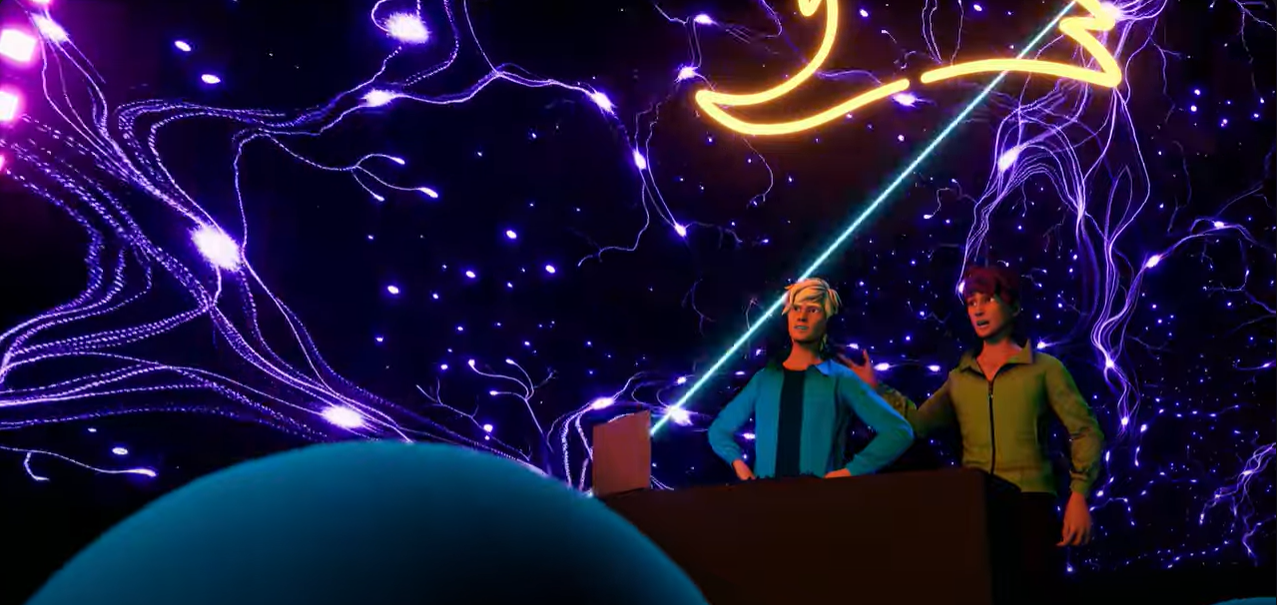
Figure 4: Virtual avatars of Gabriel Brown (BlackGryph0n) and Nate Brown (Baasik) performing in WaveXR’s virtual reality concert environment. Source: YouTube
VR concerts aren’t a new either. In 2022, Gorillaz came out with an entire app to release their new VR music video/concert series. Gorillaz is a virtual band created by musician Damon Albarn and artist Jamie Hewlett in 1998. The band is known to perform live, using LED screens and ‘hologram’ technology to appear live on stage, sometimes with their creators and voice actors. The Gorillaz has expanded further into its XR use, with the help of Google. “The result is “Gorillaz Presents”… an experience that sees the band revolutionize the concept of a music video with a world-scale immersive performance that will allow fans to gather together to witness Gorillaz play in larger-than-life AR” (Silva, 2022). The app let fans in Times Square and Piccadilly Circus display the band integrated into the city, with them also appearing on screens scattered around, and gave an incredibly immersive concert experience for their single ‘Skinny Ape.’ Gorillaz have been using AR and VR technology since they started touring, even coming out with an AR app in 2017 that transported viewers into the ‘Spirit House’ Mansion, one of the locations in their never-ending lore.
Other VR concerts of note include rapper Travis Scott’s 2020 live VR performance within the game Fortnite. VR concerts are quite new, and the technology is quite widespread, with other artists like Bjorn creating a VR experience for her album Vulnicura, which lets audience members experience her music in a 360-degree space.
Reflections on What’s Next for XR in Live Music
As XR technologies expand rapidly, there are many avenues for artists and concert producers alike to go down. AR will continue to be implemented within the concert space, hopefully creating further innovation with its connection to gamification, as well as the community connection AR can bring. Within the Vocaloid realm, perhaps there will be an implementation of AR within the concert space apart from the actual portrayal of the Vocaloid, as seen with Gorillaz’ Spirit House app. Community is a large part of Vocaloid, so perhaps the community at events could even design avatars of themselves, and using AR technology, they could see themselves up on stage performing with Miku through their phones. There are many possibilities for AR use in live music for community involvement as well as technological necessities for digital idols.
Within the Vocaloid realm, we can expect to see further use of AR and even VR technologies implemented – bringing more Vocaloid experiences to audiences. With superstars like Hatsune Miku being a completely virtual being, it’s not a far step to assume that her next concerts will be in the VR space. Miku even has multiple VR games, including ‘Hatsune Miku VR,’ the ‘Hatsune Miku: Project DIVA’ series, and more. Currently VR is mainly used for gamification, but as technology continues to evolve, we can expect to see more Vocaloid VR concerts as well as Vocaloid VR-based games.
For non-Vocaloid artists with a corporeal form, we can also see them continue to branch into the VR space. While VR headsets themselves can be on the expensive side, creating and performing as a VR avatar is widely accessible and quite cheap. With an upload to a site like YouTube and a streamed VR concert, the accessibility of these concert spaces flies through the roof. We can expect more use of this in the near future, as avatars, motion graphics, and motion capture technologies continue to evolve. Immersive technology has a major place in concert venues, and the world will be watching for what comes next.
-
Anime News Network. 2024. “Crunchyroll, Crypton Future Media Criticized After New Hatsune Miku Concerts Forgo Transparent Displays.” Anime News Network, April 15. https://www.animenewsnetwork.com/interest/2024-04-15/crunchyroll-crypton-future-media-criticized-after-new-hatsune-miku-concerts-forgo-transparent-/.209816.
AV Magazine. n.d. “J-Pop Fans Demand Refunds after LED ‘TV’ Replaces Hologram.” https://www.avinteractive.com/territories-news/us-canada/j-pop-fans-demand-refunds-after-led-tv-replaces-hologram-11-04-2024/.
Beats by Den. 2024. “Discover the Future of Live Music with VR and AR Technology.” https://beatsden.com/discover-the-future-of-live-music-with-vr-and-ar-technology/#:~:text=The%20Rise%20of%20VR%20and%20AR%20Concerts,%E2%80%9Cmeet%E2%80%9D%20virtual%20avatars%20of%20their%20favorite%20artists.
Believing Beyond Co., Ltd. n.d. “Polid Screen.” http://www.believing-beyond.com/media/polid-screen/.
Big Fish Audio. n.d. “Hatsune Miku V4 English.” https://www.bigfishaudio.com/Hatsune-Miku-V4-English.html.
Black Gryph0n, director. 2025. Black Gryph0n LIVE Concert – Fan Favorites in Virtual Reality | WaveXR. Video. YouTube. https://www.youtube.com/watch?v=b5CYqtpapK0.
Coto Japanese Language School. 2023. “Japanese Idols and Celebrities Culture: A Deeper Look.” Coto Japanese Academy, November 15. https://cotoacademy.com/japanese-idols-and-celebrities-culture-a-deeper-look/.
Crunchyroll. 2016. “Hatsune Miku Looks Realer Than Ever with Polid Screen Technology.” https://www.crunchyroll.com/news/latest/2016/11/6/hatsune-mike-looks-realer-than-ever-with-polid-screen-technology?srsltid=AfmBOoqvQ4-xIfanx-l0wjTDis3bBq6GO0-_6p6YmXmb7qKCnjs4EDO3.
Crunchyroll News. n.d. “Anime News, Top Stories & In-Depth Anime Insights.” https://www.crunchyroll.com/news.
Fernandes, Adalberto. 2025. “Posthumous Events: How Audiences Experience Post-Mortem Digital Concerts.” Journal of Tourism Futures (Bingley, United Kingdom) 11 (2): 203. https://doi.org/10.1108/JTF-08-2024-0179.
Google. 2022. “Gorillaz Turn the World into a Stage with Augmented Reality.” Google Blog, December 14. https://blog.google/products/google-ar-vr/gorillaz-maps-music-video/.
Gorillaz Wiki. 2025. “Mixed Reality App.” Fandom, October 6. https://gorillaz.fandom.com/wiki/Mixed_Reality_App.
Hartogensis, Penelope. 2024. “The Dazzling World of Vocaloid Concerts.” Astray, September 30. https://astray.com.au/the-dazzling-world-of-vocaloid-concerts/.
Hatsune Miku Blog. n.d. “About Hatsune Miku.” https://hatsunemikublog.com/about-hatsune-miku/.
“How the Music Industry Has Changed in the First Quarter of This Century.” 2025. Morning Edition (Washington, D.C., United States), March 17. https://www.proquest.com/docview/3178313017/citation/8B6426FEBA284952PQ/1.
Hypebeast. 2022. “Gorillaz Concert, Powered by Google, Debuts Potential of Augmented Reality.” Hypebeast, December 22. https://hypebeast.com/2022/12/gorillaz-concert-powered-by-google-debuts-potential-of-augmented-reality.
Koning, Dylan de. 2024. “Hatsune Miku: The Not-So-Living Proof of AI’s Creative Potential.” Voquent, June 6. https://www.voquent.com/blog/hatsune-miku-the-not-so-living-proof-of-ais-creative-potential/.
“The Making of Vocaloid.” n.d. Red Bull Music Academy Daily. https://daily.redbullmusicacademy.com/2014/11/vocaloid-feature.
March, Lucy. 2023. “‘Wrap You Up in My Blue Hair’: Vocaloid, Hyperpop, and Identity in ‘Ashnikko Feat. Hatsune Miku – Daisy 2.0.’” Television & New Media 24 (8): 894–910. https://doi.org/10.1177/15274764221093599.
Michaud, Alyssa. 2022. “Locating Liveness in Holographic Performances: Technological Anxiety and Participatory Fandom at Vocaloid Concerts.” Popular Music (Cambridge, United Kingdom) 41 (1): 1–19. https://doi.org/10.1017/S0261143021000660.
Nadal, Magnum C. 2018. “Real Virtuality: An Examination of Digital Identity and the Ethical Boundaries and Benefits of Appropriation in ‘Real’: Concerto for Vocaloid.” Master’s thesis, California State University, Long Beach. https://www.proquest.com/docview/2088897827/abstract/C75FD12CD9F14982PQ/1.
NBT. 2019. “Report: Hatsune Miku’s Sold-out Show in London Captivates Massive Crowd!” JROCK NEWS, March 5. https://jrocknews.com/2019/03/live-report-hatsune-miku-sold-out-show-in-london.html.
Ng Man Chuen, Caitlyn. 2025. “Girl-Instrument: Posthumanism, Producers, and Virtual Performers in Japanese Music.” International Journal of Cultural Studies 28 (2): 481–96. https://doi.org/10.1177/13678779241273459.
Stark, Alicia. 2018. “Virtual Pop: Gender, Ethnicity, and Identity in Virtual Bands and Vocaloid.” PhD diss., Cardiff University (United Kingdom). https://www.proquest.com/docview/2189036728/98EFB4258F114FF1PQ/20.
Tomkinson, Sian. 2024. “‘This Kind of Life Has No Meaning’: Neru’s Vocaloid Album CYNICISM.” M/C Journal 27 (2). https://doi.org/10.5204/mcj.3037.
Veltman, Chloe. 2024. “What’s behind the so-Called ‘Hologram’ Celebrity Concerts.” NPR, March 17. https://www.npr.org/2024/03/17/1239078698/whats-behind-the-so-called-hologram-celebrity-concerts.
Yamada, Keisuke. 2017. “Supercell’s Supercell Featuring Hatsune Miku.” Bloomsbury Music and Sound. http://www.bloomsburymusicandsound.com/bmusicol/monograph.
Yin, Yiyi. 2018. “Vocaloid in China: Cosmopolitan Music, Cultural Expression, and Multilayer Identity.” Global Media and China 3 (1): 51–66. https://doi.org/10.1177/2059436418778600.
Young, Chris. n.d. “How It Works: 13 Famous People Brought Back to Life as Holograms.” Interesting Engineering. https://interestingengineering.com/innovation/how-it-works-13-famous-people-brought-back-to-life-as-holograms.
Yuan, Jingyan Elaine. 2025. “Making Virtual Celebrity: Platformization and Intermediation in Digital Cultural Production.” International Journal of Cultural Studies 28 (1): 316–31. https://doi.org/10.1177/13678779241230564.
Zhao, Yujia, Mingzhi Yang, Yujia Lin, et al. 2025. “AI-Enabled Text-to-Music Generation: A Comprehensive Review of Methods, Frameworks, and Future Directions.” Electronics (Basel, Switzerland) 14 (6): 1197. https://doi.org/10.3390/electronics14061197.