

Tumblr Is Headed For The Creative Community, Should Arts Organizations Follow?

A vast repository of pop culture memes & internet humor, the blogging service Tumblr has grown significantly since its launch in 2007. With over 12 million blogs and with the recent raising of $30 million in funding, some see Tumblr's future as taking on blogging services like WordPress and Blogger. The site’s hallmarks are its streamlined posting dashboard and reblogging feature. Add on likes and short replies, and this gives the site a familiar feel to social networks like Flickr, Facebook and Twitter.

So this is all well and good, but how does Tumblr relate to the arts? As mentioned on mashable.com recently, Tumblr is going to focus more on developing the growing creative communities on the site.  As Tumblr’s founder David Karp stated:

“You look in fashion, creative writing, photography, music, so many of these creative circles,” said Karp, “and we have these really substantial communities that now live on Tumblr.”

Should arts organizations take advantage of Tumblr’s new direction and add it to their group of social networks? Before getting into that, take a look at Tumblr’s differences when compared to blogging platforms like WordPress or Blogger. I’ve used tumblr myself for a personal blog and here are a few of the features that stood out to me and made it feel more like a social media site:
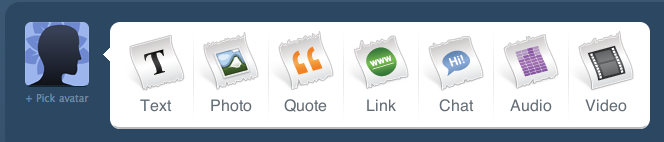
The posting dashboard. Image via tumblr.com

  • The Dashboard Streamlined for different types of media, the dashboard contains buttons that takes bloggers to posting forms customized for the content. This speeds up the posting process and makes posting media content such as audio, video and photos, a lot faster than traditional blog platforms.
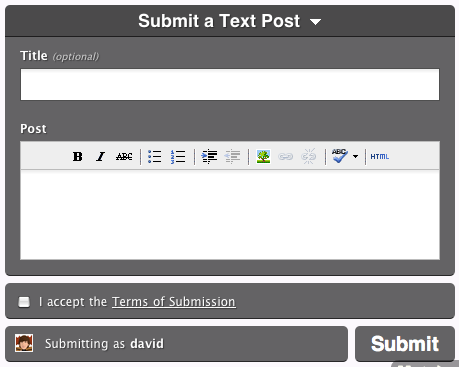
A typical submission form on tumblr. Image via tumblr.com

A typical submission form on tumblr. Image via tumblr.com

    • The Submission Feature: This feature is especially driven towards community-oriented blogs, where the author can invite his community to write and contribute their own content. Posts can be submitted by followers to their favorite blog through a built-in form and since the posts are automatically formatted, all the author of has to do is hit publish. This is probably the feature I feel would be most attractive to arts organizations, since it asks the constituents to not only read and comment on the organization's blog, but be a driver of content as well. x
    • Reblogging: Probably my favorite feature of Tumblr. This works almost the exact same way that a re-tweet does on Twitter. Pressing the reblog button will instantly re-post someone’s post onto your blog. The feature is impulsive and probably the number one reason content spreads so quickly through the site.x
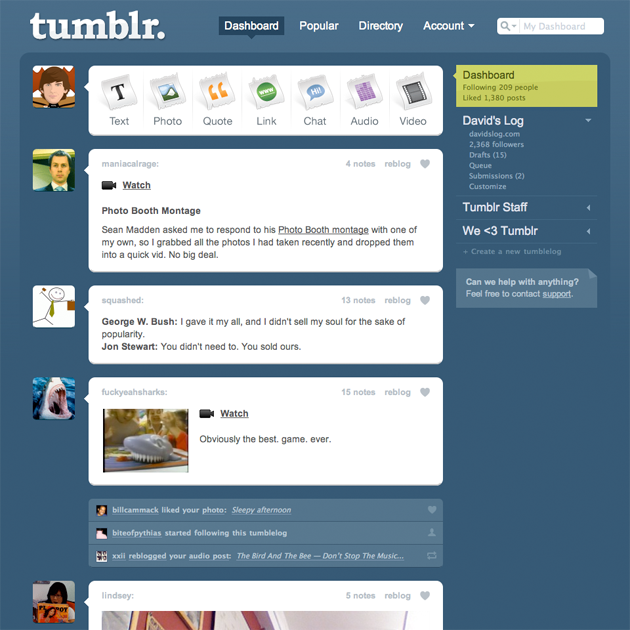
    An example of the tumblr dashboard. via tumblr.com
    An example of the tumblr dashboard and update feed. Image via tumblr.com

    • The Update Feed Imagine the feed of updates on Facebook or Blogger, Tumblr operates in the same way, aggregating all the Tumblr blogs you follow into one stream. All of the posts appear in a uniform format with the options to like, short reply or reblog.

    Tumblr’s features make it easy and accessible for the individual blogger, but that doesn’t necessarily make it great for organizations. Here are a few issues I saw with how the site operates that might be irritating for some arts organizations:

    • Tumblr is a Clique: While a Tumblr blog can be viewed by anyone, features like reblogging and replies are only available (and visible) to someone signed into a Tumblr account. This is true of many social networks, but since Tumblr is essentially a blogging platform, there is an expectation that the level of engagement should be available for all visitors. Organizations can lose out on connecting with non-Tumblr visitors who cannot “like” or comment on a post that really engages them. x
    • Kept Out of the Conversation: Another problem for engagement on the site is the system for comments - it's extremely difficult to create a conversation. Tumblr users can leave short replies, but there are no systems in place to let authors and other bloggers reply to that comment. What follows is a mess of reblogs and screen captures of comments in an effort to make a threaded conversation. Some Tumblr bloggers have tried to solve this problem using a service like Disqus, but then a problem is created for the Tumblr community. Visitors outside Tumblr can engage, but the comments will not show up in the regular feed or be accessible for Tumblr users through their accounts, and the two communities remain disconnected from one another. x
    • Customization on the site can be tough: The options are limited and those options change completely based on which theme you have installed. Some themes severely limit your options for color choice and background image, making branding difficult. Other themes do not allow for visitors to have a reply option, even within Tumblr. x
    • Remember all those reblogs, short replies, and likes? While these show up in your update feed, there is no built-in way to track them. It’s an exciting experience to see a post go viral and get re-blogged multiple times, but tracking that effect through Tumblr over time is extremely difficult. x
    • Managing the Archive: Managing past posts is difficult and while a mass editor exists, this just gives a visual overview of your posts over time. It’s hard to track a post from more than a few months back and there is no way to export your archives.

    So should an arts organization take advantage of Tumblr anyway? If you have an existing, integrated social media strategy and primary blog in place, it may be worth a shot. Tumblr has a fairly clean interface with Facebook and Twitter, and could be a good way to provide content to an ever-growing community of bloggers.

    If your organization is thinking of making this their main blog, I would hold off since it will be harder to manage in the long run and success metrics would be a pain. It will be interesting to see how Tumblr is going to improve the site to focus on the creative community and what effect it may have on how people interact with blogs in the future.

    Want to Reach [insert ethnic minority group here]? Try Being Relevant

    Perhaps one of the most difficult and sensitive topics in the arts community is that of building audience diversity. As national celebrations like Black History month approach, artists, arts managers and arts organizations often brainstorm for ways to reach out to and include minority communities in their organizations, especially if there is special programming during these celebrations. As the Pew Research Study indicates,  minority groups do have a strong presence on Twitter, with 13% African  American and 18% Hispanic. There are also a host of groups within the LinkedIn and Meetup platforms that are exclusively for minority professionals. Many arts marketers are concerned that targeting groups of people based upon their ethnic background can come across as unethical or forced.

    An example of one such social media marketing tactic popped up in my Inbox earlier this week courtesy of Thomas Cott's clipping-service "You've Cott Mail."  In this Clickz article, Giovanni Rodriguez suggests that using hashtags is an effective way to reach the Latino population on Twitter.  While the article appears on a website with general marketing advice that is not necessarily specific to the arts,  its inclusion in an arts-related clipping service suggests that this practice should be considered by arts managers.

    The screen shot below shows one of these hashtag-driven discussions in action.

    Hashtags in Action

    The bottom of the screenshot shows a promotion for the Broadway musical Women on the Verge of a Nervous Breakdown using the hashtag "#latism."  An important thing to note is that the user promoting this event is NOT the Belasco Theater or the musical's production company, it is another person promoting Latino Events in general. While this musical is certainly relevant to the Latino community, the message is especially relevant coming from a community insider.

    As an African American female who frequently uses Twitter to discover cultural events in which I may be interested, I can see how "community insiders" could either be offended or altogether ignore this type of "hashtag marketing" from someone outside of their community.  A random #Black or #BlackHistory tag from an organization I'm not familiar with would probably be ignored.

    Reaching out to a key influencer or community-recognized group is a more genuine and relevant approach for social media campaigns.  One possible workflow might be:

    1. Define the target audience (young professionals, African American women, Hispanic youth, etc.)
    2. Pick an appropriate social media platform (Twitter, LinkedIn, Meetup)
    3. Find and connect with a key influencer on the platform (for example: @LatinoEvents or @ElementsofJazz on Twitter)
    4. Find and connect with relevant niche groups on the platform (for example: minority professional networking groups on LinkedIn and Meetup.
    5. Offer Value.  A great example of this is to host a special pre- or post-event gathering exclusively for these new community members whom you targeted.

    This type of strategy boosts an organization's credibility within the communities to which they want to develop connections. It is also a more genuine way to build relationships.  As my colleague Amelia Northrup pointed out in a previous article on this topic:

    At long last, the diversity question has come around to the classic “old vs. new” debate.  When faced with declining arts attendance, is it better to “pick the low-hanging fruit” and focus on maintaining and growing our existing audience demographics (”the more return on investment for less energy” approach) or make a long-term investment in trying to attract new groups of people to our performances?

    Cultivating new audiences may be a daunting and often challenging task, but it is one of the most worthwhile investments that any organization can make.  A relevant and genuine outreach campaign is the first step in this important process.

    Technology Adoption and Implementation in Arts Organizations

    ArtsIT

    Technology in the Arts has just published the results of a  survey regarding technology adoption and implementation in the arts and cultural field. (Access the PDF publication here).

    In order to uncover emerging trends and differences in the use of technology amongst arts and cultural organizations, we asked arts managers to provide us with baseline information as well as a self-assessment of the role of technology in their organizations.  Respondents shared information about where they are now, which technologies they hope to adopt in the coming year, and how they find the resources they need to implement and maintain technology.

    This report, which includes responses across a broad spectrum of arts and cultural organizations representing a variety of disciplines in the United States and Canada, reveals a snapshot of how the field approaches technology.

    What did we discover?  Here is a small sampling of the findings that emerged:

    • Over three-quarters of organizations with annual budgets of less than $500,000 spent under $5000 on technology in the past year, while half of organizations with budgets of $5 million or more spent over $100,000.
    • Nearly half of organizations with budgets between $2.5 million and $5 million have no full-time technology staff, and that figure jumps to 82% for organizations with annual budgets of less than $500,000.
    • Organizations with annual budgets of less than $500,000 currently use static websites at a higher rate than dynamic websites, while all larger organizations are more likely to have already moved away from static websites.
    • A large percentage of respondents, regardless of organizational budget size, did not respond with any specific technology plans for the next year--which may indicate an overall lack of planning for future technology.

    Want to find out more?  Check out our report and see how your organization compares.

    Social Media Spotlight: The ToonSeum

    Welcome to the fifth installment of the Social Media Spotlight, our monthly feature focusing on arts organizations’ social media strategies.

    How to allocate time and money towards both social media engagement and online marketing is different for every arts organization. To get a different perspective Technology in the Arts decided to talk with a smaller organization, the ToonSeum, about how they achieve their social media and online marketing goals with a limited staff. I had a chance to chat with Joe Wos, Executive Director of the ToonSeum, about his approach:

    joespic

    So Joe, what is the ToonSeum?

    The ToonSeum is Pittsburgh’s Museum of Cartoon Art. It is one of only three museums in the country dedicated to the cartoon and comic arts. We offer rotating exhibitions covering all aspects of cartoons and comics, from animation and anime, to comic strips, comic books, editorial cartoons, illustration and much more. We also offer ongoing workshops, screenings and lectures.

    It really is one of the most unique museums in Pittsburgh. Every city may have a version of a children’s museum or traditional art museum, but there are only three cartoon art museums! New York, San Francisco and Pittsburgh. We take great pride in our unique place in Pittsburgh.

    What kind of marketing and PR challenges does the ToonSeum face?

    Our number one challenge as with any small non-profit is budget. We are a small museum up against juggernauts! We are up to the challenge.  If anything, budget limitations have led to creative thinking. You aren’t going to see us investing a lot in “traditional” advertising.  Being a smaller museum also eliminates a lot of the fear of change you see from larger venues. We don’t have a huge investment in outmoded technology or ideas, so we are more inclined to let go and move forward to embrace new ideas in both marketing and tech.

    We have been very lucky, the media both locally and nationally has been very supportive.  Part of that attention is because of our approach to marketing. We use online marketing to create interest in “real world” experiences. We innovate new ways of reaching out. How many museums can say they had their own beer? Illustration Ale was a great success. We didn’t mail out postcards we used facebook.

    In February we will launch our own themed hotel room in partnership with the Wyndham Grande downtown. It’s all about immersive experiences, translating virtual experiences we enjoy in gaming and through cartoons into the real world. That’s the kind of creative thinking we embrace.

    A limited budget forces truly creative thinking.

    Why did you choose to go with social networks/online marketing as a solution?

    We are a fan-based museum. It’s a new approach to museum management, marketing and even exhibitions. Comic and cartoons by their very nature, are a fan-based medium. We embrace that. Just look at San Diego Comic Con, why is every major movie launching there? Because of the power fans have via social networks. We tap into those same fans. We are a geek museum, and proud of it. Our audience is very tech savvy, early adopters who can market virally better than anyone.

    We know that the ToonSeum is a real world extension of a fan based virtual world. We are a museum of characters, icons and avatars. We want to become a real hub for comic and cartoon fans, and the only way to do that now, is through creating online connections and then inviting them to join us at the ToonSeum. Once we get them here, we know, they will tell their friends, strangers, tweet, blog, post, and tell the world about us.

    We also recognize that it can’t be just virtual, you have to take it to the fans! We have booths at major Comic Cons, from San Diego to New York. We also host Blogger events and Tweet Parties at the ToonSeum. If we can get the word out to them about our exhibits and programs they will help us spread the word.

    Beyond the standard social media efforts, such as a Facebook page and a twitter account, what other types of online efforts are the ToonSeum trying?

    I worked for twenty years with a museum that had a real aversion to technology, it took a decade for them to come around. The ToonSeum is the opposite. We want to be the first. We were the first museum in Pittsburgh to have an I-Phone App. We may still be the only one! MailChimp, EventBrite, every new social marketing tool that comes out we give it a try. We were among the first to participate in KickStarter (we were even featured in the New York Times in an article about it.) I attend the Consumer Electronic Show in Las Vegas just because I know we need to stay at pace with the public. The technology in most museums is outdated, kids can do more advance and exciting interactions at home. So we reach out, we are a Beta Test museum. We put ourselves out there to new technology and say, let us try this out first!

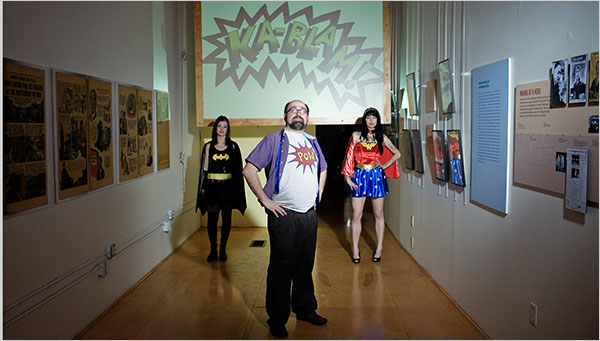
    Image via the New York Times

    We have an ipad docent at the entrance. Any guests who wants to experience more online while in the gallery can use it as a tool.

    For light up night we launched lights in our windows that can be controlled from the outside via an iphone. The guest has control over their experience before they even enter the door.

    I am a self-professed geek and nerd, I attend the Consumer Electronic Show in Vegas every other year, I attend the Toy Fair in New York. I bring those innovations and ideas back to the ToonSeum and find ways to integrate them. So the ToonSeum has a giant screen projection in the center of our ceiling that loops cartoons. It is of course blu-ray 3d as well.

    We have worked with Behar-Fingal to integrate QR codes into all our exhibitions. This allows guest with smartphones to link to additional content online. Whether it is a wikipage entry on the artists, or video we provide of the cartoonist at work. This is a great tool to take our exhibits beyond our walls and is also cost effective. People are walking around with access to all the information they need. In the future museums won’t need placard after placard of explanatory text. They will just need to provide a link. Their curiosity will take them beyond your walls. Each and every work of art is a potential jumping off point to a world of discovery in the world wide virtual museum.

    We know that the traffic has to flow in both directions. A museum should be a destination from those on the web looking for real world experiences, but a museum must also be a gateway to curiosity that can be infinitely explored in new and exciting ways online.

    Despite our using technology in so many ways, the ToonSeum is still ultimately about art on the walls. Because we have integrated ways to put the technology in your hands we don’t have to use a lot of monitors and computers. It makes it an individual experience, which is something we learned from social marketing. Everyone wants to interact on their own terms.

    I know you operate on a small staff, how does this affect how you manage your various online efforts?

    We have a social marketing intern whose only job is to tweet and post. That’s a must! The museum has to have a presence online that allows for immediate interaction. So we respond to every tweet that mentions us, every facebook post. It’s time consuming but it is the most important aspect of social marketing… being social!

    All of our staff also has access to post to our various accounts. So we are updating daily. More important though is the fact that our fans are out there, retweeting and posting everything for us. It gives us a much bigger presence.

    They also know to speak with the ToonSeums voice. It’s always connected to our mission and not personal. I have seen top-notch museums whose official facebook page has post about their kids getting the flu! Unless there is an epidemic of every kid visiting your venue getting the flu, how does a museum have kids that get sick? It doesn’t. Your venue has to have a virtual identity, a voice that your fans can interact with and it has to be consistent.

    This is all easier to accomplish with a small staff. There are no committees, no approval process, no budget meeting, we identify what needs done and do it!

    Does your staff size affect how you track the success of all of your online projects?

    Every guest that comes in is asked how they heard about us, and their zipcode. We track every single opened email and clicked link. That data is all placed into a matrix we use to measure our success. It doesn’t take a big marketing firm, it just takes a commitment of a few minutes each day.

    Can we talk about the Bloggers Blast? What is the event and why focus on bloggers?

    I was at the Consumer Electronics Show in Vegas and attended about 5 after parties. What impressed me was they were all geared toward bloggers and social media. I knew this was something the ToonSeum had to do in Pittsburgh.

    Traditional press is great, we love them! But today even they are pulling content from bloggers. Bloggers have fans, just like we do. It comes back to embracing a fan-based culture. So we wanted to let those bloggers get a sneak preview at our upcoming exhibitions and programs for 2011. We have special guests, a preview of the art, prizes and every single blogger will get a flash drive filled with all our press releases, promo art and more. If you are reading this and are a blogger, contact joe@toonseum.com for your invite.

    We will be following this with tweet parties, where everyone is admitted free if they tweet about the exhibits.

    You have mentioned that the ToonSeum was one of the first Pittsburgh museums to develop an iPhone app. What does the app do and what was the development process like? Has there been a good response?

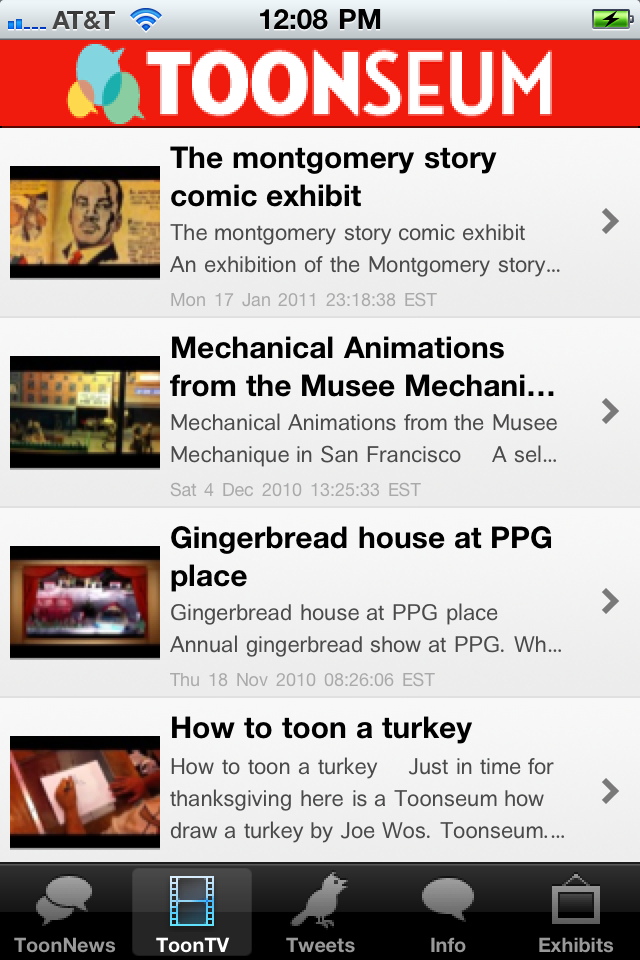
    A screen shot of the ToonSeum App

    Going to back to my previous experience with another museum, I was often frustrated by the phrase “we’ll look into it.” I began to realize that phrase meant, we don’t know how to do it and aren’t willing to learn. Forget the yellow pages, the phone book is dead. It’s all about web and apps. We knew we needed an iphone app. It provides immediate access to enhance the guest experience. It also goes a long way to legitimizing you to tourist. It’s one of the first things I do when I visit a venue in a new city, I check them out online and then download their app.

    Creating an app can be an expensive prospect, thousands of dollars. That was out of the question for our budget. So, I just learned to do it myself. I applied for an apple developer license, found a great site that would allow me total control over the creation of the app, submitted it for approval and that was it. Total process took about five hours, not counting waiting for approvals, which took three weeks. I used rss feeds so that info on our hours and events could be changed on the fly. I created a framework that would allow our youtube videos to be viewed from within the application. As a cartoonist it was easy to do most of the graphic design work myself and there you go. It’s done. Our social marketing intern can update it from anywhere. I can even update from my iphone when I am out of town.

    If I am going to run a museum I should know how to do every job. I better know how to market, run the register, curate an exhibition and even mop the floors. I can then have a better understanding of how difficult a task is and more important I can lend a hand when it is needed.

    I am working on an android app right now and we are doing a complete web overhaul in spring.

    We are geeks, we love this stuff.

    Rise of the Masters

    As the controversy surrounding internet piracy continues brewing, music industry officials and musicians continue to find new ways to promote and profit from their work. Digital downloads are one tool that make it easier for musicians to connect with and cultivate a fan base globally. The Recording Industry of America reports that there are more than 400 authorized digital music services worldwide offering more than 12 million songs. Digital sales compromise nearly one half of total revenues for the music business in the United States.

    Digital downloads aren’t just for "current musicians", however. Apple’s recent acquisition of The Beatles music catalog resulted in 450,000 copies of Beatles albums and two million individual songs being sold in the first week alone.

    Another exciting entry into the digital download market is Europe's leading digital label, X5. The label licenses music, acquires various catalogs and refines the material for high end products. This process has allowed them to form exclusive partnerships with and distribute music to companies like iTunes, Amazon, Rhapsody, Napster and Spotify. Since their formation in 2006, X5 has become the best selling classical label in the United States, with a product portfolio of over 200,000 titles. Spotify's principal owner, Northzone Ventures, is also investing 7 million Euro in the label.

    In December of 2010, the company launched their latest classical music series entitled Rise of the Masters. Rise of the Masters is unique in that it highlights the works of twelve of history’s greatest composers, including Mozart, Beethoven and Bach. The recordings feature some of the world’s greatest orchestras including the City of London Simfonia and the Amsterdam Sinfonietta as well as soloists Freddy Kempf, Torleif Thedeen and Monica Hugget. The downloads are available via the iTunes Store and all other major online retailers. X5 has also launched a Twitter account, Facebook page and iPhone app to promote the series.

    While digital downloads are certainly helping the music industry to regain a bit of financial ground, series like Rise of the Masters seeks to accomplish a more important goal. The music label aims to "animate the digital custom base and reinvent digital  music worldwide." X5's use of social media, modern artwork and mobile apps to promote the series are engaging a new generation of listeners and hopefully encouraging these new listeners to patronize their local arts organizations.

    Make your Voice Heard!

    Click to access the 2011 Ticketing Software Survey.

    Click here to take survey. Photo: Gyorgy Kovacs via Flickr.

    The 2011 Ticketing Software Satisfaction Survey is now live! Now in its second year, we designed this short survey to see how satisfied arts and cultural organizations are with the ticketing software products they are currently using. The survey will close on February 18, and results will be sent to survey participants in April 2011.

    Many ticketing software vendors have used the results of last year’s survey to find out what is important to arts and culture managers. This survey is your chance to tell them, and the field at large, how satisfied (or not) you are with your current system.

    If you are a box office manager or staff member, house manager, business manager, executive director, board member, marketing staff, or anyone else who has contact with a box office software system, then this survey is for you!

    Fill out the survey today!

    And please share with colleagues by clicking the "ShareThis" icon below.

    Changing The Way You See With Augmented Reality

    When looking ahead at what will be the most exciting technology for the arts in the coming year, augmented reality is bound to pop up in the conversation. You may be familiar with augmented reality already. The National Football League has taken advantage of this technology for years to project lines of scrimmage and game time information onto the field in real-time during television broadcasts. So what exactly is augmented reality (AR)? According to Wikipedia:

    Augmented reality (AR) is a term for a live direct or indirect view of a physical, real-world environment whose elements are augmented by computer-generated sensory input, such as sound or graphics.

    AR layers digital elements on top of our view of the everyday world. This overlay can be done in a number of ways: through the use of handheld devices like smartphones, through desktop computers with a webcam, by wearing specialized headsets, or by projecting a digital images/animations onto a real world location.

    Since AR has the possibility to create such a unique visual experience, it naturally has attracted adopters from the creative community. Here are just a few cool projects taking advantage of AR:

    DIY Day MoMA – Augmented Reality Art Invasion! On October 9th, 2010, Sander Veenhof and Mark Skwarek decided they would circumvent the traditional art world and host their own exhibition at the Museum of Modern Art using AR. The artists took advantage of the augmented reality viewer app Layar, currently available only on iPhone and Android devices, to create a virtual exhibition of digital works. By downloading the Layar app and loading the “AR Exhibition” layer, anyone with a camera-enabled smartphone or mobile device can view numerous digital artworks throughout MoMA. This includes both 2-D and 3-D images and animations and an additional 7th floor that only exists in the world of AR. The digital artworks have continued to be on display since DIY Day wrapped up in October.

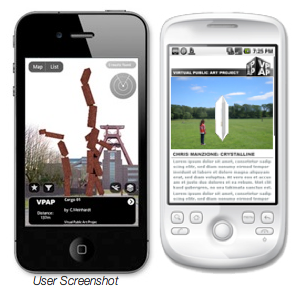
    A user view of the VPAP AR layer on both an iPhone and an Android. Image courtesy of VPAP.

    The Virtual Public Art Project Also utilizing the Layar app, the Virtual Public Art Project (VPAP) takes the idea of AR artworks one step further by placing pieces around the globe. The artworks can be viewed in the round and from multiple perspectives, just as you would be able to with a real piece of public art. Check out some of the current works on display on VPAP’s website . If you’re interested in creating your own piece of AR artwork for the public, VPAP puts out multiple calls for submissions.               

    The Macula Project – Mapping 600 years of history The Macula Project is comprised of a group of artists exploring the relationship between image, sound and the viewer. The city of Prague was searching for a way to celebrate the 600th anniversary of the astrological clock tower situated in the center of the city and turned to the Macula Project for a creative solution. The artists at the Macula Project turned to AR for the project and projected this stunning work that took the audience through the 600-year history of the clock tower.  Macula was able to achieve this by digitally mapping the building beforehand and tailoring their animation so when it ran through a digital projector, the perspective lined up perfectly with the real life clock tower.               

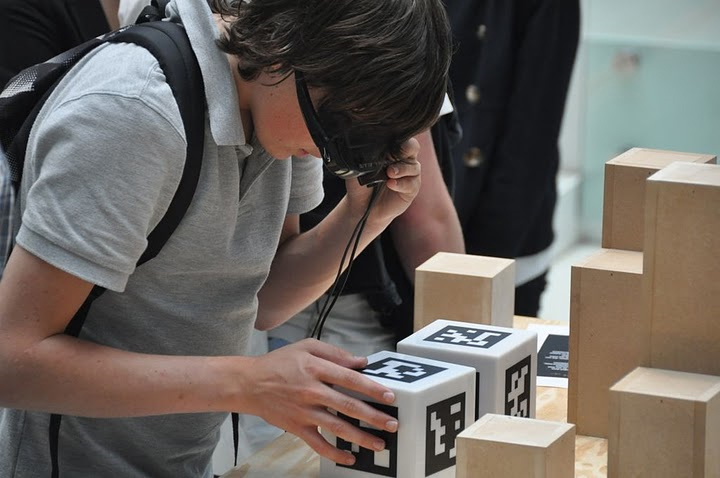
    The Getty Museum – Exploring the Augsburg Display Cabinet in 3-D If there is one frustrating roadblock shared across the gamut of art lovers, it’s the frustration over not being able to personally handle and explore a piece of art in a museum. The Getty Museum understood this burning desire and took advantage of AR technology to let their visitors have a more in-depth exploration of one of the pieces from their decorative arts collection. Using an online program launched within a web browser, a computer’s built-in webcam, and a printed out “AR tag”, an art lover can handle a 3-D model of a 17th century collector’s cabinet. By rotating and tilting the AR tag, the cabinet will spin 360 degrees and various doors can be opened and explored.                A student examines a box in the exhibition that is covered in AR tags. Image courtesy of the University of Groningen.

    The University of Gronigen – Giving students X-ray vision Part of a permanent exhibit in their Hall of the Bernouilliborg, the University of Gronigen teamed up with Science LinX and Nanopodium to create a unique science experience for their students. The exhibit is comprised of multiple boxes covered with AR tags. By wearing a special set of glasses containing display screens and a camera, the boxes’ walls suddenly disappear for the user. The user can then tilt and turn the now ‘hollow’ box that contains various types of 3-D science-related models, such as a model of a chain of molecules.

    The types of projects that are now possible with augmented reality are rapidly growing and the technology is some pretty exciting stuff to play with. But beyond the wow factor that comes with AR, what are some of the ways that arts organizations can use this technology in worthwhile and innovative ways? Can AR extend to projects beyond the visual arts? Are there ways that this technology can be used to engage with large audiences as well as the individual? I don’t think it is too far a stretch of the imagination to envision actors on stage reacting to digital props or musicians playing digitally created instruments. As with any new tech, it will be exciting to see how AR develops and continues to merge our reality with a digital one.

    Google Apps: Cost Effective Tools For Your Organization

    google_appsFor smaller arts organizations and individual artists, buying various types of management software packages and setting up services for data back-up and storage can really eat into what may already be a tight budget. But having these software and services are essential to efficient, day-to-day management. This is where Google Apps could be a great, free to low-cost solution.

    Google Apps is a suite of online software and storage tailored to the needs of organizations of different sizes. All of the apps (you can see a list of the core apps here) operate within your internet browser. This means that there is no software to be installed on your organization’s machines. This also means that updates and IT maintenance for the software will be handled for free by Google, though the service varies depending on which package you select.

    If there is a more specialized need such as CRM or photo editing, Google Apps for Business comes with its own app marketplace.  Similar to the app stores for iPhone and Android, the marketplace has a variety of free, more specialized applications to add to your Google account. All of the apps are desktop applications, but many of them work for both desktop and mobile devices.

    So using apps that run in an internet browser are nice, but where is the information saved? While you can save your information to a personal computer or device, data storage and back-up can also take place in cloud storage. One of the main advantages to cloud storage is that your data can be accessed from any computer with an internet connection. It is important to note that storage only comes with a Google Apps for Business account.

    I will admit that some of these Google apps do not have the same depth and power as other software packages, like the Microsoft Office Suite, but they definitely get the job done and fill the majority of the needs for most day-to-day operations. If the specific utility you need isn’t available in one of the core apps, you can usually find what you need in the marketplace.

    There are three different types of accounts :

    • Google Apps (up to 50 accounts) - This option is free and allows your organization to add up to 50 user accounts. Comes with the basic core of google apps, but lacks some of the more specialized business features and support as the other options.
    • Google Apps for Business - The business version comes with all of the amenities including apps, storage and support. The pricing of this version is based on how many users you have in your organization, each user added costs $50 per year.
    • Google Apps for Nonprofits - While this option does not come with storage, it is more robust than the free version, plus customer support is offered. Google grants discounts (40%) to larger non-profits, of 3,000 or more, for the business version and offers smaller non-profits the education version for free.

    So for many organizations that operate on smaller staffs and for individual artists, this is an extremely cost-effective way to get some quality management software and storage.

    Top Technology Trends: What’s Ahead for Arts Marketers in 2011

    This post also appears as a featured article on artsmarketing.org, hosted by Americans for the Arts.

    In this tough economy, most of us have encouraged ourselves and others to look ahead to brighter times. But, what exactly lies ahead in the next year for us? How can we make the most of our future?

    In 2010, technology influenced our field tremendously. Some predicted trends, like Google Wave and Google Buzz, failed to take off, and many unexpected trends, like group-manipulated pricing and Ask a Curator, flourished. The following are some major trends that have gathered momentum in the past year and/or are poised to take off in 2011:

    Group discounts and group-manipulated pricing Group discount sites exploded in popularity in 2010. While many organizations have a group sales manager or special deals for groups, these sites allow people to opt in to a deal that will only go live if enough people opt in, encouraging people to sell to their friends. Groupon now boasts 35 million subscribers and 18 million Groupons sold in North America. However, marketers question their ability to attract repeat visitors. Now that the initial novelty has worn off, hopefully the knowledge we’ve gained will result in smarter offers. I recently heard from a colleague about a ballet company that didn’t cap their Nutcracker offer and lost revenue on their offer.

    Since the advent of these group-buying applications, many variants have cropped up. For example, Uniqlo’s Lucky Counter makes clear to the consumer the advantage of group buying, by lowering the price on the offer in real-time as more people sign up. Arts organizations also started implementing dynamic pricing, similar to the way in which airlines price their tickets.

    iPhone sunset in the Andes by Gonzalo Baeza Hernández via Flickr.

    Go mobile or go home: mobile app development and mobile ticketing In 2010 Wired reported “The Web is Dead”, meaning that the way people use the Internet is moving away from web access on a desktop or laptop computer to mobile applications. Arts organizations have started asking themselves if their website is mobile friendly and, along with companies like InstantEncore and Pop Media, have started to develop apps.

    Pop Media has developed Cloudtix, which uses Tessitura to sell tickets in real time through mobile apps and download a scanable ticket to their phone.

    Bill Predmore of Pop Media compares the rise of mobile apps this year to website development in 1997.  “Arts orgs started out with a ‘brochure site’ and slowly began to evolve as they realized their capabilities. Things will happen a lot more quickly this time.”

    So if the web is dead, which is worth more investment: mobile websites or mobile apps? And if you are going to develop an app, which platform do you develop it for? While Apple’s iOS devices (including iPad, iPhone, and iPod) still outnumber Android devices, Android phones have overtaken iPhones in terms of market share.

    Predmore advises companies to begin to look into all three: iOS, Android and mobile websites. “Things are changing rapidly and it’s difficult to know what’s going to be there a year from now. For this reason, many organizations are reluctant to make an investment. But patrons are going to expect you to be there and if you’re not, there’s a problem.”

    Changing media consumption At the same time that Internet usage is shifting to mobile devices, the way audiences consume entertainment is changing. The introduction of tablet-style devices like the iPad  and 4G-capable phones running on Android means more people are consuming mobile entertainment, especially video , than ever before. iPad users are also more likely to complete video ads (63%) than desktop video viewers (53%).

    In the past several years, performing arts organizations have started taking their performances outside of the theater and concert hall with initiatives like the Met’s Live in HD, San Francisco Opera’s Opera in the Ballpark, and most recently, L.A. Phil Live. In 2010, we saw a shift to more online streaming video. Sites like Tendu TV and classicaltv aggregate video of performances. Streaming on platforms like Livestream has become more commonplace, notably Chris Elam’s efforts with Misnomer Dance Theatre.  Recently YouTube announced that it would offer live streaming to its content partners, several of which are arts organizations.

    Are you in the cloud? Photo: James Jordan via Flickr.

    The privacy debate Consumers are becoming increasingly aware of how they are being tracked by marketers. At the same time advertisers are under more pressure than ever monetize their online investments as they cut offline budgets. Last year was notable in that two major companies have made privacy faux pas: Facebook over profile information and Google over Buzz. These controversies as well as the rise in location-based apps and ever-nichified Facebook ads have made people more aware of exactly how much information marketers have about them. (If you want to know how much personal information marketers know about you, check out rapleaf.com .

    How does this apply to arts orgs? At the same time these privacy concerns have surfaced, arts organizations are being persuaded to move to shared service models, in which databases may be shared by multiple organizations, or have started using other platforms which use cloud computing (where the organization’s data is stored on outside servers). As patrons become more aware of where their information is stored, employees also worry about the security of cloud computing. At the same time, they wonder how secure their database was in the first place. Bottom line: arts organizations should remember that it is crucial to be transparent about their privacy policies to patrons.

    Rise of location-based social media No discussion of arts and technology in 2010 would be complete without mentioning location-based platforms like FourSquare, GoWalla, Facebook Places, and Google Latitude. Foursqaure was up 33.2 million users in 2010 from 12.3 million users in 2009.
    Arts organizations, most of which position themselves as serving local community, are starting to understand the potential for hyper-local platforms like this. Location-based applications are increasingly attracting young, urban influencers with disposable income—precisely the audience many arts organizations are trying to attract. People connect to geolocation apps primarily to “get informed” and “obtain promotions” rather than “to compete” to become mayor of their favorite locations.

    2011 will likely determine which “check-in” application will dominate. As of November 2010 Facebook Places had 7 times more users than FourSquare, but Places users utilize the service less frequently. So, which platform will win out? Independent companies like GoWalla and FourSquare, or platforms emerging from established networks and services like Facebook and Google?

    What do you think were the biggest trends in arts marketing in 2010? What do you see ahead for 2011?

    10 Arts and Culture Mobile Apps from 2010

    Merely half a day away from the end of the year, today is a great day to reflect on all the different happenings in 2010. One of the big things I have been looking back on is the growth of useful mobile apps for arts and culture audiences and managers. Here is a look at ten of these apps from the past year selected by the Technology in the Arts team and you, our lovely readers:

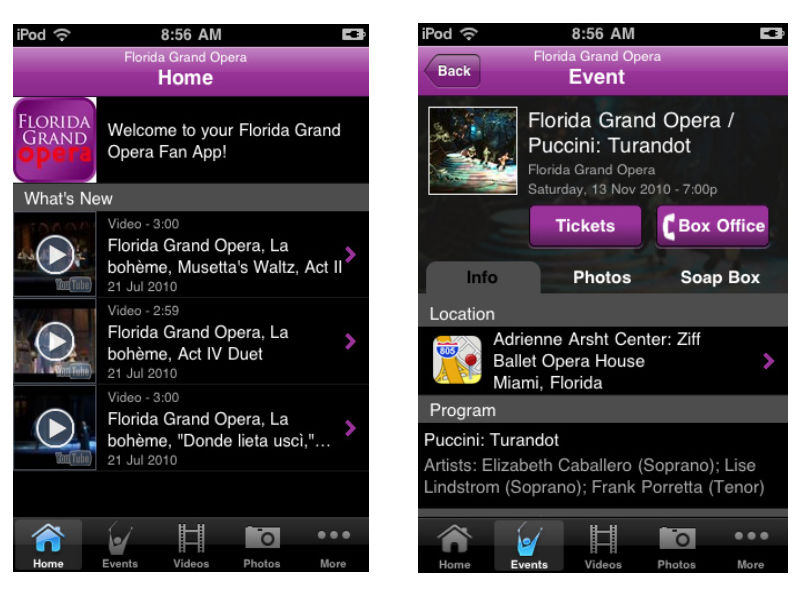
    The Florida Grand Opera | FREE

    Available for: iPhone, AndroidFGOThe Breakdown: A great app for the Opera lover in us all, the Florida Grand Opera app offers news about the company, events updates, listings of upcoming performances, and streaming audio of the 2010-2011 season. One aspect of the app I really enjoyed was the videos section, containing a multitude of interviews and performances from the FGO. The only real complaint I have about the app is the necessity to sign up for updates from FGO before being allowed access into the app.
    Google Goggles | FREE

    Available for: iPhone, Android

    goggles_artwork

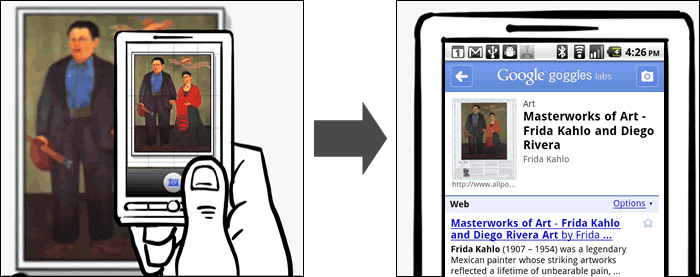
    The Breakdown: Google Goggles is a visual search engine built into a mobile app. It utilizes your smartphone's camera to capture and scan an image, object, or landmark and perform a search online to provide information on it. This is a very fun app to play around with and can be very helpful when trying to identify an artwork without a clear label or an unknown landmark. The app is still in beta though and cannot identify anything that is not already currently online in some form.

    The L.A. Phil | FREE

    Available for: iPhone, Android, & Blackberry

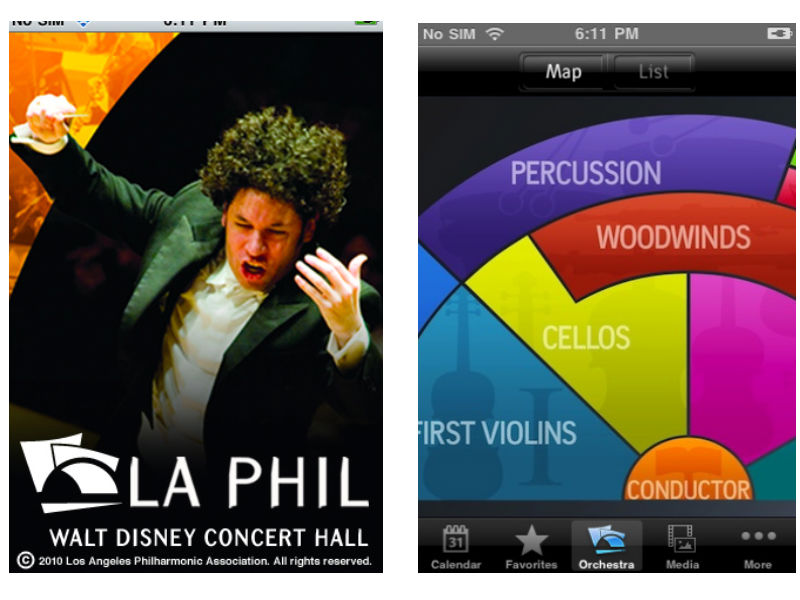
    laphilThe Breakdown: The LA Philharmonic app has a lot of same offerings as the Florida Grand Opera app in terms of news, media, and listings of events. What sets this app apart is the interactive Orchestra map, laying out the different groups of muscians in the LA Phil. When a user taps on a section of the orchestra, such as First Violins, they are directed to profiles of each musician with in-depth biographies. This app is packed full of great content and an excellent way to learn more about classical music and the people that perform it.
    AMNH Explorer | FREE

    Available for: iPhone

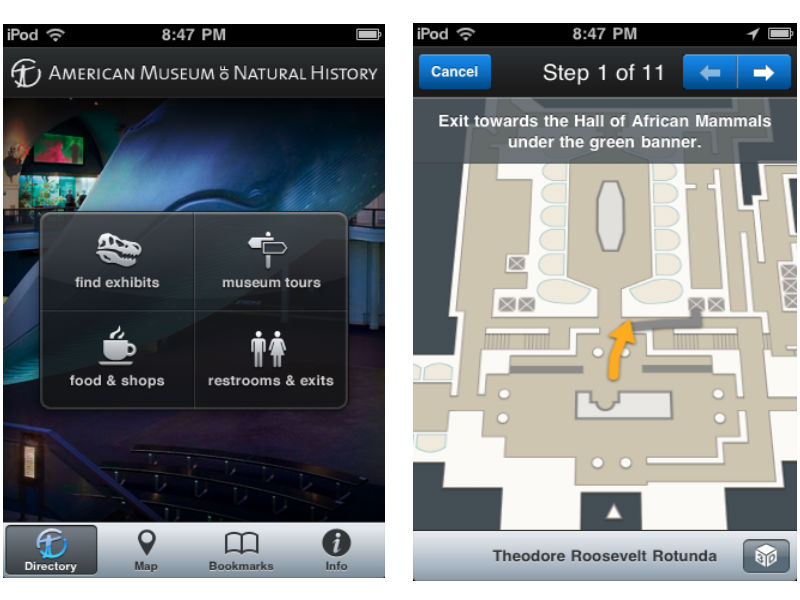
    AMNHThe Breakdown: The Explorer app from the American Museum of Natural History is a great guide for navigating a very large museum. The app acts as a personal in-museum GPS, finding your location and providing information on the exhibits within that area. The app can not only find your location, but provide turn-by-turn directions from one exhibit to the next. This may go against some museum purists love of getting lost within a museum, but on a busy day in a museum packed with visitors this app could be an incredible advantage.
    Is This Art? | FREE

    Available for: iPhone

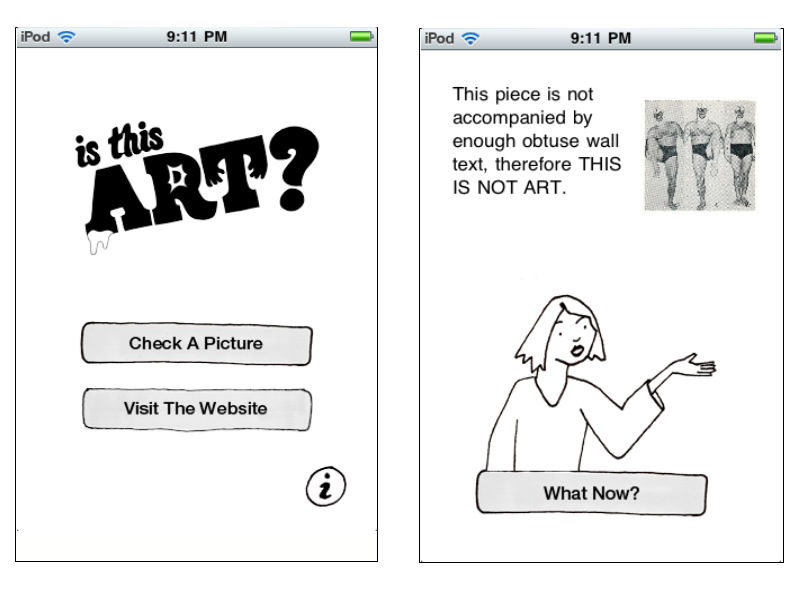
    IsThisArtThe Breakdown: A fun app from the folks at Deeplocal and the Mattress Factory, Is This Art? is one way to win those age old arguments about what is and isn’t art. Users snap a picture of the art in question and open it within the app to test its validity in the art world. The explanations the app gives are often hilarious such as, "This makes me feel intellectually inferior, therefore THIS IS ART" and, "This piece is not accompanied by enough obtuse wall text, therefore THIS IS NOT ART". All of the images users put to the test can be uploaded to the project's ongoing blog.
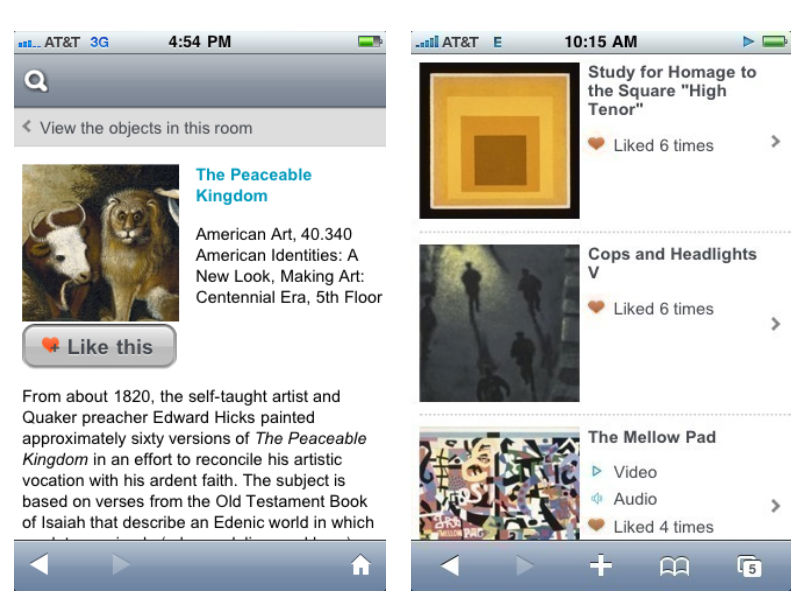
    Brooklyn Museum Mobile | FREE Available for: iPhone, Android, & Blackberry bklyn

    The Breakdown: Another great app for a large museum, Brooklyn Museum Mobile has less of a focus on navigation and more on community and interaction. The app brings in aspects from social media by inviting users to add descriptive tags and/or "like" artworks from the collection. This acts as a recommendation system for other visitors and encourages a more participatory experience. The aspect I like about Brooklyn Museum's offering is that the app runs off of a mobile website, meaning that it is not device exclusive and anyone with a web-enabled device can join in the fun.

    The Lighting Handbook | $4.99

    Available for: iPhone

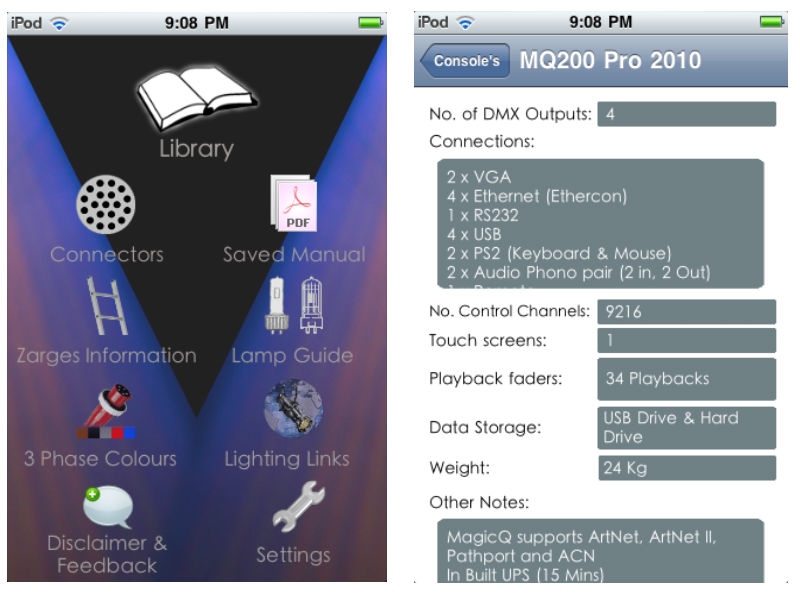
    LightHandBookThe Breakdown: This is a great app for all of you theater techies. The Lighting Handbook is exactly what it sounds like, an in-depth guide to all things lighting, conveniently in your pocket.
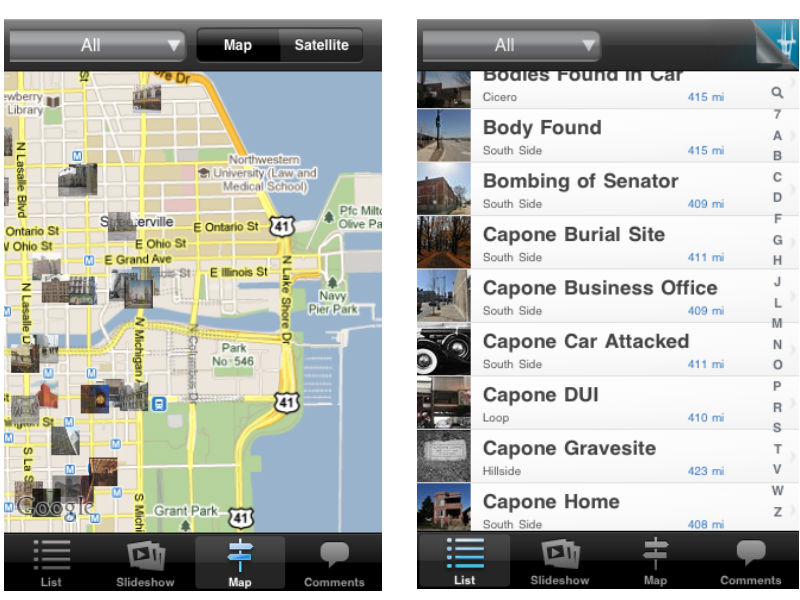
    Chicago Gangland Tour | $2.99

    Available for: iPhone

    Capone

    The Breakdown: Ever wanted to walk in the footsteps of famous gangster Al Capone? That's exactly what the Chicago Gangland Tour app helps you do, integrated with google maps to give users a handheld guide for a historical walkthrough of Chicago's mafia history. This app provides info on all the different sites historical relevance and invites users to add their own comments. My favorite aspect of the app is the drop-down menu where results can be sorted by subjects like murders, shootouts, and gangster hideouts.

    At The Booth | $0.99

    Available for: iPhone, Android

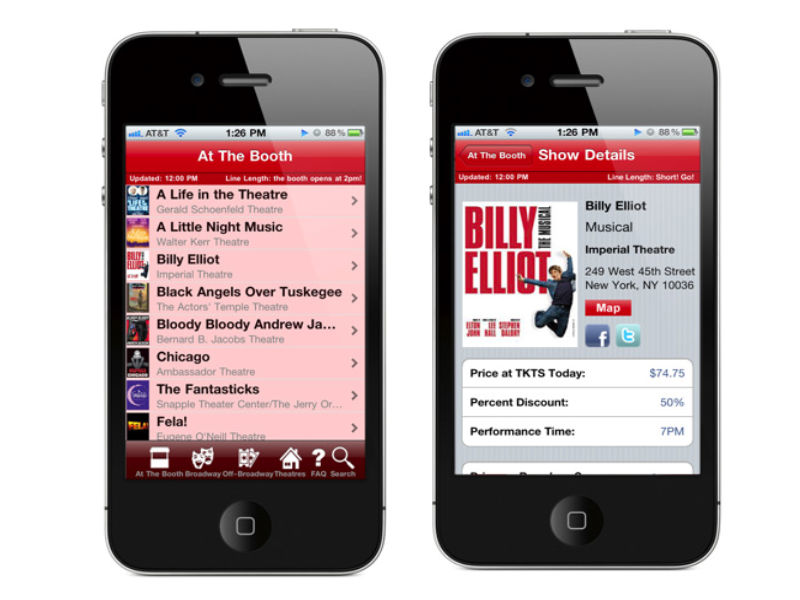
    atboothThe Breakdown: At The Booth is a full-service app for attendees of Broadway and Off-Broadway shows in New York City. The main page updates with every launch of the app and includes the latest shows and theater locations. For each show the app provides info on the showtimes, ticket prices, discounts, synopses, links to reviews and videos, and nearby restaurants. Listings will appear with a pink undertone to let users know if there are long lines at the theater. The only real complaint I have about the app is that the listings are only viewable in list form, whereas a map option would really assist in seeing all that is available in the immediate area.
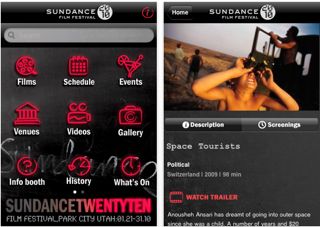
    The Sundance Festival 2010 | $4.99

    Available for: iPhone

    Sundance-iPhone-screenshot-small-738392

    The Breakdown: The Sundance Festival app acts as an online brochure for the annual film festival. In addition to offering videos and reviews on films being shown, the app gives festival attendees real-time updates as to what is happening with the film fest's various events and screenings. The one feature that this app lacks is a way to create custom schedules of screening times and events. This would be invaluable at a festival where multiple things are being offered at once and making the most of the your time requires a lot of planning.

    Best of Technology in the Arts 2010 -- David's Favorites

    As we move into 2011, it's time to take a look back at my favorite articles and podcast episodes from Technology in the Arts in 2010.

    My Top 10 TITA Articles (in chronological order)

    1. Building Audience Diversity Through Social Networking - Part 1, Part 2 and Part 3 -- Amelia investigates why arts organizations use certain social networking sites but not others (such as ethnically specific sites like Black Planet) and what impact this has on their ability to use social networking as a tool for building diverse audiences. [Okay, okay...I'm counting this three-part series as one really looooonnnggg article.]

    2. SEOoooo….what? Improving your organization’s search engine optimization. -- Corwin takes a look at search engine optimization: what it is; why it is important; and what you can do to optimize it for your website. [And it was published on my birthday, which makes it extra special.]

    3. Micro-donations: Proving Size Doesn’t Always Matter -- Joe highlights reasons and tips for starting a micro-donation campaign for your organization.

    4. Social Media Spotlight: Vancouver Opera -- Amelia kicks off our Social Media Spotlight series by interviewing Ling Chan, Social Media Manager for the Vancouver Opera, about her social media strategy and experiments.

    5. Online Group Discounts and the Arts - Tara unearths some of the buzz around the use of online group discount sites like Groupon and Living Social.

    6. Is your organization engaging older adults through social media? -- Molly questions our assumptions about social media sites as places to primarily engage younger audiences.

    7. Going Mobile - Websites vs Apps -- Reprinted from Americans for the Arts' Arts Marketing Blog Salon, I break down the differences between mobile apps and mobile websites with an eye toward where arts organizations should invest their time and money.

    8. The Handheld Guide: Experimenting with Mobile Technology in Museums -- Tom digs deeper into mobile apps by exploring how they are used by and within art museums.

    9. Social Media Spotlight: The Guggenheim and YouTube Play -- Thomas interviews Guggenheim Associate Curator Hanne Mugaas about YouTube Play, a biennial celebrating creative talent in the realm of online video.

    10. 7 steps to a Successful Facebook Ad Campaign -- Tara discusses the benefits of and best practices for creating Facebook Ads.

    My Top 4 Podcast Episodes (in chronological order)

    #66 – Google Wave, Google Buzz and the iPad -- A humorous (yet informative) conversation with Brad, Amelia and me wherein I make this ridiculous prediction that the iPad was not going to take off. LOL.

    #70 – Discussion of "Theatre & Social Media in 2009″ with Devon Smith -- Pat interviews Yale Repertory Theatre's Devon Smith about her research report “Theatre & Social Media in 2009.”

    #71 – Audience 2.0, Smartphone Apps and Tips for Working with Developers -- Brad, Jeff and I get into a rowdy conversation about everything from the NEA's Audience 2.0 report to smartphone apps for the arts.

    #78 – Seven Digital Trends and Their Implications for the Creative Sector -- My interview with thought leader and arts consultant Brian Newman about trends in the technology sector and what they (will) mean for the arts industry.

    Happy New Year to all of our fans, friends, readers and listeners! We'll see you on the flip side in 2011.

    Social Media Spotlight: SF Playhouse Pluggers

    Welcome to the fourth installment of the Social Media Spotlight, our monthly feature focusing on arts organizations’ social media strategies.

    sfplayhouse-1Earlier this year, the SF Playhouse invited Bay Area Twitter users to apply for the SF Playhouse Pluggers, a group of individuals invited to "plug in and Tweet during the performance in special 'tweet seats' where their thoughts will be instantly be shared with the Bay Area and the world." I recently had an opportunity to talk with Dan Meagher, Director of Marketing for SF Playhouse, about this controversial and highly debated social media program.

    What inspired the SF Playhouse to explore a Twitter program?

    When I came to the SF Playhouse as Director of Marketing, I wanted to devise a program that would be unique plus tap into social media. Since I had been using Twitter for quite some time and liked the "real-time" aspect of it, I saw the potential for using it in conjunction with a live performance. More importantly, it lets us give folks a voice for their criticism and instant thoughts of our shows. Twitter lives in the moment, just like theatre. We're creating our own critics. There couldn't be a better combination.

    How did you arrive at the program name?

    The name came about after thinking about what people were doing with this program. They are "plugging" into the show, into social media, and into the SF Playhouse. Plus, it's darn catchy!

    How does the program work? How do you find program participants? What are the criteria for participation?

    A few weeks before a Plugger event, we start advertising on our Facebook and Twitter pages. The requirements are: - Must be 18 years or older - Must be a Bay Area resident - Must have an active Twitter account - Must have a portable texting device that can last a least 90 minutes.

    Participants are selected on a first-applied basis and receive one complimentary ticket to the show, where they sit in the last row. We also extend to them a special ticket offer if they want to bring a friend (who won't be tweeting). We've had Pluggers use everything from cell phones to iPads! We accept 8-101 Pluggers for the event and usually end up with a wait list.

    Do they tweet for a single performance or are they invited to come back to tweet throughout the season?

    The Pluggers are initially invited for the one performance. Some love it..some find it challenging and not their thing. It's not a program for everyone. We have about a 70% rate of people asking to come back to plug for the next show, but it is important to me to have new people with us each session. We have one guy who has been with us for every Plugger session! It's great to see them arrive and become a group...they get each other's Twitter screen names and even start tweeting to each other during the performance. For that show, they become a community.

    Our Pluggers come from all over - different backgrounds, communities, jobs, you name it. We've had them as young as 18 and up to their 60s. Our average age in 30 -40.

    What rules (if any) govern the program?

    We have a few basic rules: must turn ringers/any sound elements off; all screens must be dimmed; no talking; and no photos or recording devices may be used (we're an Equity theatre). We do let them drink from their seats, which, with a laptop or iPhone, has caused a few spills!

    The biggest rule (well, not really a rule) we have is that we will not censor anything our Pluggers have to say. We retweet all of their messages about the show, whether they be good and bad. This has allowed us to gain a trust with our Pluggers and our audience, because they know that they are seeing all of the instant reactions - not just selected ones.

    Someone once asked me if this is bad, letting people possibly criticize your production. Actually, I see it as a good thing. Theatre must be able to take the good and the bad. It allows us to see things from another perspective. We've had some Pluggers be very direct about what they didn't like in a show.

    Is there a particular hashtag for the Pluggers’ tweets?

    #sfplay - We started using this hashtag during our last Pluggers session in the hopes of making the feed more streamlined. Also, in the past, we have crashed our Twitter page because of too many feeds going out at the same time. I have been in touch with the folks at Twitter to ask for their help in maintaining our feed, but they weren't very responsive.

    Do you post the hashtag feed on a screen in the lobby for your audience before the show, during intermission, and after the show?

    That's a great idea! Unfortunately, we don't have the capability to do that right now. We do mention at the start of the performance to the audience that they should go home and look at our Twitter page and see the live feed.

    What are your benchmarks for measuring the success of the program?

    I don't use any specific bench marks for the Playhouse Pluggers.  Since it's a very "organic" kind of program, I don't feel the need to throw in tickets codes or other marketing positions.  We know it works because we have people come to the SF Playhouse and mention that they read the Plugger feed from the last show.  We've also received much press coverage.

    What feedback has the program received from your on-site audience?

    It's funny.  When we first announced this program, we received emails from patrons unhappy with the idea.  Of course, we heard this before we even did a Pluggers night!  However, Executive Director Susi Damilano and Artistic Director Bill English were unwaivering in their support for trying this crazy new idea.  Without their support, this would have never gone forward.

    After our first session went off without a hitch, we didn't hear many complaints.  We have had audience members sitting right behind our Pluggers and, at the end of the show, say they didn't even know the Pluggers were there.  The non-Tweeting audience members wouldn't even know it was happening if we didn't tell them.  Now that people see that this isn't disruptive to the show, they seem to have embraced it.

    What type of response and interaction have the Pluggers’ received from the Twitter community?

    The Twitter community has been very supportive of the idea. I've heard from people all over the US and the world about how much they enjoy following the live feed.

    Twitter has also brought us some surprises.  During our last Pluggers session for the new musical Coraline, who should join in the tweeting but the author himself - Neil Gaiman!

    Another wonderful thing happened during our Plugger session for Cormac McCarthy's The Sunset Limited.  We were about 40 minutes into the show and suddenly, someone from Twitter-land sent one of our Pluggers a direct message asking them a question about something they just tweeted.  That was a first for us.  We now had Twitter users from other places asking questions of our Pluggers during the show!  It helped me realize the scope this program.  Those interactions took the Playhouse Plugger program to a whole new, unexpected level.

    Why do you think there has been so much controversy and debate about the program?

    Many theatre people are afraid of the "new."   Technology scares a lot of folks.  We're taught that theatre is a revered place where you come, sit, watch, and applaud.  Interaction is not allowed or encouraged.  So when you create something that breaks down a wall, people are going to jump up and say, "Not in my backyard!"  Here's the bottom line...the Playhouse Pluggers program is not going to end the world or change theatre as we know it.  This program will not cause thousands to run out and start tweeting during Romeo & Juliet.

    Theatre is about change...about evolution.  The basic nature of theatre requires us to adapt to the new, or else we would be going to see plays by Euripides on Broadway.  Theatre is a shared experience and this program is just a way to let the theatergoer have voice in the theatre going experience by sharing their thoughts.  That's it..it's a very simple concept.

    In an article earlier this year, Theatre Bay Area quoted Artistic Director Bill English as saying of the program, “It’s an experiment. We're trying to check out the balance between social media and theatre.”  Eight months into the experiment, what has SF Playhouse learned?

    We have learned that social media (Twitter, Facebook, YouTube, Skype, etc.) has become a major force in everyday life.  It's here to stay.  We've also learned that people love to discuss theatre using these platforms.  It can connect a theatre fan in England with a theater fan in the US instantly.  If anything, social media has opened up lines of instant communication that never existed before and encourage discussion.

    I'm happy to share my knowledge about this progam with all!  Feel free to contact me at Dan@SFPlayhouse.org

    This has lead to the creation of citizen critics. Everyone today has a voice and the ability to broadcast their thoughts. With the demise of print and media criticism, theatre needs to find and cultivate these new voices that will talk, criticize, and promote.

    Charitable Donations and the iPhone: What the App, Man?

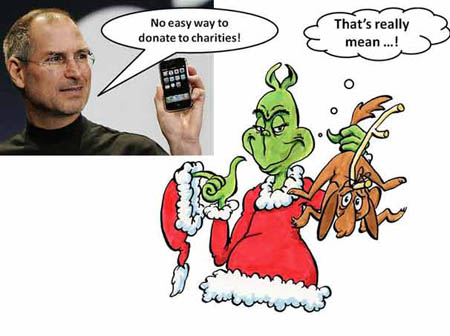
    As the year draws to a close and there is the last, big push for donations by non-profits, who wouldn’t love a one-click, donation button in their app on the iPhone? Well, Apple apparently. There has been some buzz lately over Apple’s policy towards charitable giving on the iPhone.

    Photo from PC World
    Photo from PC World

    Apple’s policy is that charitable donations cannot take place within an app or through Apple’s app store. If users wish to make a donation, they have to be directed out of the app, through their web browser and may have to contribute additional information. While this may not seem like a huge deal, it does kind of ruin that wonderful impulse that a nice, big red “DONATE NOW” button would have.

    So why hate on the big, red button? The answer from Apple has been that they do not want to be responsible for the charitable funds reaching their final destination. But as Jake Shapiro pointed out in a blog post on ars technica:

    The excuse that “Apple doesn't want to be held responsible for ensuring that the charitable funds make it to the final destination” is a cop-out. Google Grants has tackled this already, and organizations like TechSoup and Guidestar do a sophisticated job of authenticating nonprofits and charities worldwide.

    The  real reason may be that charitable donations are just of no interest to Apple. Apple receives 30 cents for every dollar spent in their app store and with a charitable donation, would only be able to claim a processing fee.

    While companies like Google and Microsoft have been quick to point out that these problems do not exist with their mobile software, I don’t think this is about finding the one mobile software that perfectly serves the non-profit community. This current stink with Apple more clearly shows the importance of not putting all your eggs in one basket when it comes to developing an organization’s mobile strategy. If you want to voice your displeasure with Apple's policy, an online petition has been started over at care2 and it will be very interesting to see if and how Apple responds.

    Where Can I Park for the Show? Now, There's an App for That

    ParkPGH-1As a denizen of downtown Pittsburgh, I am well aware of how difficult it can be to find a parking spot when I go to the theatre, a gallery crawl, or the symphony. You end up driving to various parking garages only to find a "Lot Full" sign at the entrance. In a brilliant bit of service to the arts organizations in the cultural district, the Pittsburgh Cultural Trust has created ParkPGH - a multi-platform service providing real-time parking availability information for eight garages in downtown Pittsburgh.

    Here are two key reasons why I find this to be a brilliant service:

    Addressing a community challenge: By creating ParkPGH, the Pittsburgh Cultural Trust has provided a solution for an issue impacting not just audience members for its own venues, but also audience members for a multitude of arts and cultural organizations not affiliated with the Trust, as well as employees and visitors for other businesses in the downtown cultural district.

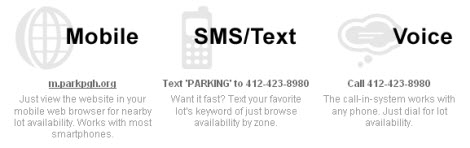
    Multiple ways of accessing information: The Cultural Trust worked with developers at Deep Local to create a multi-platform service, so that audiences have multiple ways of learning about available parking options.  In addition to the iPhone application, ParkPGH has a mobile website, a traditional website, and both text and voice option -- thereby offering the service to anyone with a phone or access to the Internet.

    ParkPGH-2

    Did I mention that the parking availability information is updated every minute? A key layer of the service developed in collaboration with Traffic 21,  a multi-disciplinary initiative of Carnegie Mellon University directed from within Heinz College, which provided research capabilities and back-end support for the ParkPGH project.

    So, thanks to the Pittsburgh Cultural Trust for making it easier and more convenient for me to find a parking spot in the cultural district! Hopefully, this idea will catch on in other cities.

    New Poll: What's Your Favorite App for the Arts?

    As 2010 rolls to a close, Technology in the Arts wants to know: What were your favorite arts-related mobile apps of the past year? Which apps this past year were the best? The wackiest? The most engaging? Take a second and click the link below to let us know. Enter the name of the app, the platform you use it on (iPhone/Android/etc.), and why you think it's the best of the best. We'll be taking the most popular app choices and including your comments in our year-end app wrap. logoCreated in 2005 as a grant-making and arts advocacy group based, United States Artists (USA) acts as an avenue for individual artists to find private funding for themselves and their projects.  Earlier this month, they entered into the foray of crowdfunding platforms with the launch of the USA Projects, a fund-raising engine that is specifically focused on funding individual artists and their projects through grassroots micro-donations.
    Part social network, part fund-raising vehicle, the USA Projects site combines many aspects of other popular crowdfunding sites like Kickstarter, RocketHub, and IndieGoGo.  While still in beta testing, the site has already garnered some major attention according to The New York Times:

    In testing, the Web site attracted roughly 36,000 unique visitors and raised a total of $210,000, with an average of $120 from each of 1,500 small donors, Ms. DeShaw said.

    Not bad at all for a recently launched crowdfunding platform for the arts. Still, there are some major differences between USA projects and the other crowdfunding sites out there. Here’s a look at some of the similarities and differences between USA Projects and its peers:

    Similarities

    • It’s all or nothing, baby – Like Kickstarter and Rockethub, USA Projects adheres to the “all or nothing policy” wherein projects must meet 100% of their stated fundraising goal, or the funds are returned to their respected donors.  Some people have seen this as a great motivator for their projects, while others claim it is a waste of time. This isn’t true of every platform though, IndieGoGo allows people to keep all funds contributed to their projects, even if the final fund-raising goal has not been met.
    • The final countdown – As is common on crowdfunding sites, artists on USA Projects have three months in which to raise the money for their projects.
    • Getting friendly – Most of the platforms out there have a social media element to them, and the USA Projects site is no exception. Users on the site can create profiles, follow artists and funders, send messages, leave comments, and view recent activity on the projects they have funded or have an interest in. This creates a more personalized experience as well as a stronger connection to the projects and the artists.
    • Incentivizin’ – Crowdfunding sites mirror traditional donor campaigns in that different donation levels come with various perks and rewards.  Since the perks and rewards are determined by the artists, the endless possibilities are limited only by the artists’ capacity to deliver.  Rewards might range from a personal note from the artist to prints or video downloads of the resulting artwork, from private studio visits to the chance to sing back-up on the artist’s CD, etc.

    Differences

    • At what cost? - In order to meet the bottom line, sites like Kickstarter and RocketHub will charge a percentage of the final funds and for the credit card processing fees. These fees can amount from 5-8% of a project’s total funds raised.  Since United States Artists is a not-for-profit organization, there is no fee attached to the projects.

      [Correction: According to an FAQ on the USA Projects Web site: "81% of every dollar pledged goes directly to the artist’s project, and 19% supports USA’s programs for artists and the site’s administration." So with this information, it appears that the percentage of funds received by US Artists is two or three times the percentage received by other crowdfunding sites. -- Hat tip to Justin Kazmark.]

    • Who gets to play in the sandbox? – Now we hit the major difference between USA crowdfunding and the other platforms out there: not just any artist can add a project to the site.  In order to appear on USA Projects, the artist in charge must have received a previous grant or award from a USA Project Partner or recognized organization.  Visit the main website here to view all of the recognized organizations and their award/grant programs.

    This requirement for artists to have been granted a USA grant, or equivalent from a partner organization, in the past in order to pilot a project raises some interesting questions about this model of crowdfunding:

    • Is the policy too exclusive? Requiring grants or awards in order to even start a project excludes a large number of artists right off the bat. And while there are a considerable number of organizations partnering with USA, they do not cover the full spectrum of creative professionals in the United States.
    • Does the grant/award requirement go against the spirit of crowdfunding? One of the exciting aspects of crowdfunding is that virtually anyone can start a project and find the funders to make it happen.  So what happens to all the first timers? The energetic artists with a great idea and the will to make it happen, but lacking the professional background to make it onto the site? It can be argued that much of the success individuals have had on sites like Kickstarter can be attributed to the strength of the idea behind the project, not necessarily their past accomplishments.
    • Will having “approved” artists act as an incentive for people to donate larger amounts? There is definitely a reassurance when donating to an artist who has had some previous success and support. But most existing crowdfunding platforms already have the reassurance of returned funds and set time limits, so how big of an impact will having pre-approved artists make?  Will USA’s stamp of approval result in more donations or larger donations for these artists?

    It will definitely be interesting to see how the USA Projects platform grows over time and if the requirements for projects will stay the same or evolve with that growth.  Additionally, how might this model for crowdfunding the arts affect other existing platforms?

    Planning for Engagement: Tech Strategy & the Visitor Experience

    PMuseum Earlier this week, the Pittsburgh Children’s Museum hosted a talk by Nina K. Simon, author of The Participatory Museum and the Museum 2.0 blog. Simon works with museums throughout the country to develop programs for improving visitor engagement.
    Simon brought up some great ideas about the ways in which museums could use programming to increase engagement and create meaningful experiences between visitors.  Might arts organizations be able to apply her ideas about museums when designing their own strategies with technology and social media?

    Here are a few of her ideas from the talk and how I think they might be applied:

    Museums should be seen as places for everyday use

    Simon argued that many museums are seen as tourist destinations that have a long-standing stereotype of being a place to be visited maybe only once a year. This is also true for many other types of arts organizations.  Many of us would like to see that change and for arts organizations to become places that people consider frequenting practically everyday. Social media could be a strong tool for stimulating this impression. Offering frequent, engaging content online and creating a personal connection with our organizations’ constituents can help counter the idea that arts organizations are aloof and impersonal tourist destinations.  Social media offers an opportunity to communicate the frequent, sometimes daily offerings of your organization.

    Museums should be trusted hosts for social experiences

    Simon spoke last night about the success some museums have had with programs that involve voting, encourage competition, and prioritize face-to-face interaction between visitors.  Arts organizations could apply this idea towards utilizing social event sites like meetup.com, where the end result is a real-life, social interaction. Or this idea could be applied towards using such tools as real time tagging of artworks from any discipline or mobile device voting systems as a way to create conversation and interaction between visitors. The Indianapolis Symphony Orchestra went the mobile voting route when they had audience members vote, via text, to choose which encore the symphony performed.

    Museums should be places for seeing and exploring as well as sharing and making

    Another great way to engage visitors in a meaningful way is to encourage them to share their experiences of the organization with their friends and to create their own content. Social networking sites are centered on this idea of sharing experiences online and many organizations have taken advantage of this by encouraging their visitors to share photos and stories on the organizations’ social networks. The Vancouver Opera has a flickr fashion page that gives visitors who have “dressed to the nines” a place to shine online. The Mattress Factory’s iConfess is a confessional booth for visitors to express their ideas about the museum and publish those ideas directly to YouTube. Photos and personal experiences are definitely visitor-created content, but current technology can push this idea of participation even further. The success the Guggenheim had with YouTube Play, an online exhibition of user-created videos, and online projects like The Johnny Cash Project, where users re-interpret a Johnny Cash video by drawing over each frame, are two great examples.

    As technology and social networks continue to expand and grow at a rapid rate, it’s hard to know which to develop programming for. These ideas presented at Ms. Simon’s talk can serve as great starting points to that conversation. As your organization moves forward developing technological programming, some questions should be asked, such as: Is the technology serving the end goal of bringing people to our institution? Is it helping to create a worthwhile experience for visitors, or is it just tech for tech’s sake? How varied of an audience can a particular technology or social network reach? Are there better, low-tech solutions to visitor engagement? New technology and advances in web 2.0 can offer powerful tools that can help expand audiences and increase visitor engagement, but remember to step back and look at which strategy best serves your organization's visitors and creates a meaningful experience.

    Learning to Lead (and Follow) from Any Position

    This article originally appeared in the Leading Creatively Blog Salon, a week-long exploration of leadership in the creative sector, hosted by the National Alliance for Media Arts and Culture.

    LeadingCreativelyWhen I first entered the workforce after graduate school, I believed that leadership originated at the top of the organizational pyramid and flowed downward. My first two jobs reinforced this belief: the senior leadership set the agenda for the organization, provided directives to the staff, and neither solicited nor desired the input of the junior staff. We were solely there to follow…or so I thought.

    In retrospect, I see that my professional life has always contained the simultaneous duality of leading and following. When I worked in entry-level positions, I followed my supervisor’s directives for actualizing the executive director’s vision in service of the mission. And I was happy to be doing it. Following the lead of the senior staff allowed me to learn a great deal about management and leadership in the arts. So where did I lead in those early days? In the organization’s blind spots.

    Small and mid-sized organizations in the creative sector are often faced with human resource capacity issues. Everyone on staff tends to wear numerous “hats.” Correspondingly, there are always areas within these organizations in need of attention and innovation. Turning these blind spots into areas of opportunity takes three key leadership traits: vision, initiative and persuasiveness.

    In my personal experience, the organizations that I worked with had significant blind spots in their technology infrastructures. Once I recognized this, I started envisioning ways in which the incorporation of new and/or different technologies could improve organizational efficiency, audience reach, depth of engagement, etc. Having the vision for change was not enough by itself, I had to take the initiative to approach the senior leadership and persuade them to pursue change via technology adoption.

    As I rose through the ranks, those three traits remained pivotal for leadership. Now as an executive director, I have tried to consciously foster a working environment wherein other members of the staff are encouraged to lead. Obviously, this requires me to follow. When I first took on the executive role, I wondered if I would be one of those executives who just could not follow someone else’s lead. I mean, I was hired to lead, right? Wouldn’t choosing to let someone else take the lead in an area be shirking my duties?

    Three years into the role, I know that the answer to this is “no.” We must embrace the duality of leading and following throughout our professional lives in order to foster and ensure the continuous development of our organizations and ourselves.

    Fill in the ________: A New, Social Entertainment Website

    myspace-logo-225MySpace, the original social networking site, has relaunched and re-branded itself as My_______ ,the world's first “Social entertainment” website.  The purpose of the website has shifted from a social networking site motivated by the slogan “a place for friends” to a site intent on “becoming the leading entertainment destination that is socially powered by the passions of fans and curators.” Essentially, the new My_______ focuses less on people and more on media and digital content sharing. The sleek new site combines the most popular features of Facebook, Twitter, Foursquare, and Youtube into a single media focused platform. Users can now follow artists and organizations on topic pages, similar to Facebook fan pages, while receiving real time updates on the music, videos and content being heard, viewed, or uploaded by them (very reminiscent of Twitter).

    In this way, members will be able to see what music their favorite opera company is listening to as well as what they are posting. Users will be shown the media that their friends are consuming, not just the media that their friends and topics are posting. It opens a new opportunity for media recommendations, community building, viral marketing, and content sharing.

    These updates appear on the new homepage now referred to as the dashboard which can be viewed in three modes: list, grid, or full screen.

    The list mode looks almost exactly like a Facebook news feed.  The grid view integrates watchable videos, playable songs, pictures, and micro-blogs in a chronological collage of media tiles, and the full screen mode allows users to experience their media updates in an interface similar to iTunes coverflow.

    Picture 3

    My_______ has combined multiple features from across the web  that have never been offered in tandem before - creating a unique media viewing and sharing experience.  Some of the other new features include: interactive games, karaoke (Opera?), free music playlists creation (competing with Pandora?), and media trending.

    The new interface and combination of features could prove very useful to cultural institutions and arts managers if the user base is willing to readopt a floundering platform.

    The largest obstacle for the new My______ is the old MySpace.  The relaunch comes after one of the worst years in the company's history.  MySpace lost 50% of its user base between 2009 and 2010, a critical hit for the organization and a terrible loss for its functional use as a communications tool and social network.  The new My________ is much more in line with Internet usage interests and behaviors of Millenials, but it is not yet clear if they will return to the site.

    Connect with FacebookIn order to make the transition smoother and help regain customers, My______ has paired with Facebook to create what they are calling a mashup, in which My_______ takes all of a user’s profile information, friends, and likes from Facebook and imports them into a My_______ page; making the process of setting up a new functioning account much quicker and helping users grasp the changes and full functionality of the site much faster.  This partnership bodes well for My_______ and provides a clear focus away from social networking and onto new media and digital content sharing.

    For arts organizations and non-profits that are currently tweeting links to content on Twitter, uploading videos to YouTube, and sharing pictures and events on Facebook, the new My_______ offers a single platform that will combine all three. A one-stop shop for all of your social entertainment and digital media needs. The ability for pictures and videos to appear directly in a news feed like Twitter but with a usable interface like Facebook is very desirable and something that I believe has huge potential.  Pairing the interface with the content and media focus allows for a more streamlined experience that is not diluted by the social aspect of Facebook and Twitter.  The New My_______ is definitely trying to steer away from content that does not surround music, media or artists in some way.

    The ability to create opera karaoke, post audio excerpts from a concert, or share video from a stage production or event that are instantly previewable and clickable in a media focused feed that is more graphic than Twitter, less convoluted than a YouTube subscription, and easier to deliver than Facebook is very enticing.  If users begin to adopt the new My_______, it seems only natural for organizations to follow. Only time will tell if this snazzy new facelift will take off, but the potential is definitely real.

    Tracking Direct Marketing with GURLs & PURLs

    Direct marketing campaigns are notoriously difficult to track in terms of ROI and effectiveness.  It’s hard to know which of your organization’s communications best reaches your audience, the artfully designed postcard and brochure or the large billboards and posters placed throughout your area. Organizations usually have to rely on methods such as surveys and historical estimates to track the effectiveness of their marketing campaigns. One possible solution to this tracking problem is to utilize customized URLs with your organization’s marketing efforts. When someone clicks on a custom URL, they are directed to a custom landing page seperate from your organization's main site and specific to your marketing campaign and can be individually noted using online analytics. There are two types of custom URLs currently available for marketing campaigns (and also great for puns): GURLs and PURLS

    PURLs or Personal URLs will include both a message specific to your marketing campaign and the recipient’s name inside the URL. They are totally custom and best fit for E-mail and direct mail campaigns. PURLS contain the recipient’s name generated from your organization’s mailing list and leads to a custom landing page that can offer content specifically tailored for that person. For example, if Technology in the Arts were to have a membership campaign, our PURL would look like this:

    www.ThomasHughes.JoinTechnologyInTheArtsToday.com

    GURLs or General URLs are the more generic version of a PURL, usually including just a campaign name, but offer the same advantage with tracking. The landing pages are also more generic and the ability to customize the offer based on who clicks the link is lost. GURLs are a better fit for marketing efforts like signage, billboards, and print advertisements. For instance, say I wanted to use a custom URL for a newspaper advertisement for our website’s membership campaign; the GURL would look like this:

    www.YourTechnologyInTheArtsMembership.com

    If your organization decides to try out utilizing either GURLs or PURLs, or both, in its next direct marketing campaign, here are a few things to consider when choosing a service:

    Cost – According to easypurl.info, the cost of a PURL can range from 4 cents to 12 cents per purl. The price varies based on the amount needed. For example, a campaign using about 10,000 PURLs can average about 10 cents per PURL.  This is a case when you might want to go with a less personal, but less expensive, GURL. For both PURLs and GURLs, there is usually a setup cost for both the template and landing pages to which the custom links are directed.

    Lifespan – These custom links won’t last forever, so this is an important question to ask when choosing a service. GURLs tend to have a longer lifespan that PURLs, which contributes to them being better for instances like billboard and signage where you are trying to reach a less specific audience.

    An example of the PURL analytics data taken from getsatisfaction.com
    An example of the PURL results and ROI tracking data taken from getsatisfaction.com

    Data – What kind of tracking abilities comes with the URL service? In a recent post, we discussed the advantages to using custom URLs for tracking a variety of metrics using Google Analytics. Check into the kind of metrics that are offered and how well you can import, export, and integrate the data into your current database.