Research Update #3: Best Practices of Twitter

Research Update #3: Best Practices of Twitter

According to statistics from Digitalbuzz, there are over 288 million monthly active users on Twitter, 60% of which access the social network from mobile.

Contributor Aoni Wang investigates some best practices for this growing platform by continuing her examination of the Met, Warhol, and Tate's social media strategies. Click here to read the full article.

How Museums Are Dealing With New Media Art: Part 2

How Museums Are Dealing With New Media Art: Part 2

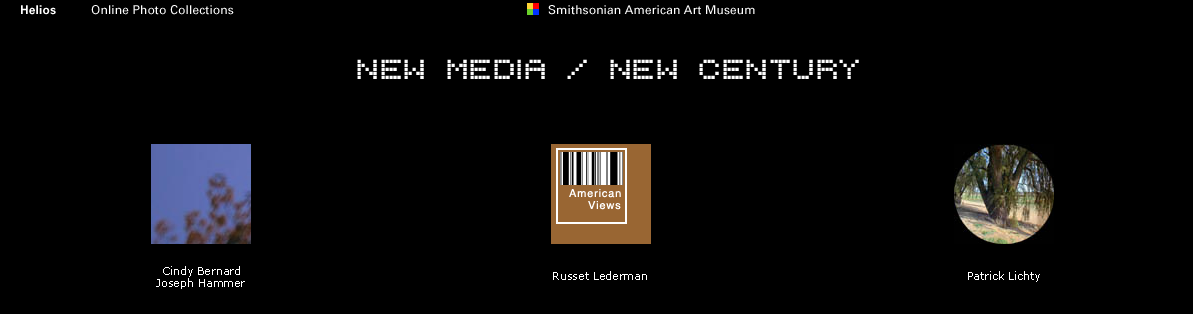
In 2000 the Washington DC based Smithsonian American Museum of Art announced the creation of the New Media/New Century Award.  The New Media/New Century Award became one of first projects to support  new art created for the Web. The museum accepted proposals for original Web-based projects that explored the subject of American landscape, and how the new medium of Web art affected the American landscape as a subject. 

Though the project is over 10 years old, it demonstrates the early and exceptional sensibility of the Smithsonian’s curators. They understood the growing relevance new media art and especially Web-art, and its impact not only on people’s everyday perceptions, but also on the art scene as a whole.

Research Update #2: Best Practices of Facebook

Research Update #2: Best Practices of Facebook

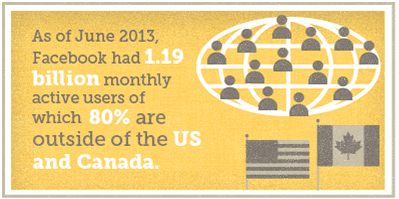
Per Moz.com Facebook had reached unprecedented levels of popularity, with “1.19 billion monthly active users”, and over 750 million monthly mobile users. These figures underscore why Facebook is such an important communication channel for arts organizations. However, different organizations will have different objectives when managing their Facebook pages. I covered some general best practices in my first research update, but channel specific best practices also exist. To demonstrate how tactics might differ between organizations, I will us three museums: The Met, the Warhol, and Tate to provide specific examples.

How Museums Are Dealing With New Media Art: Part 1

How Museums Are Dealing With New Media Art: Part 1

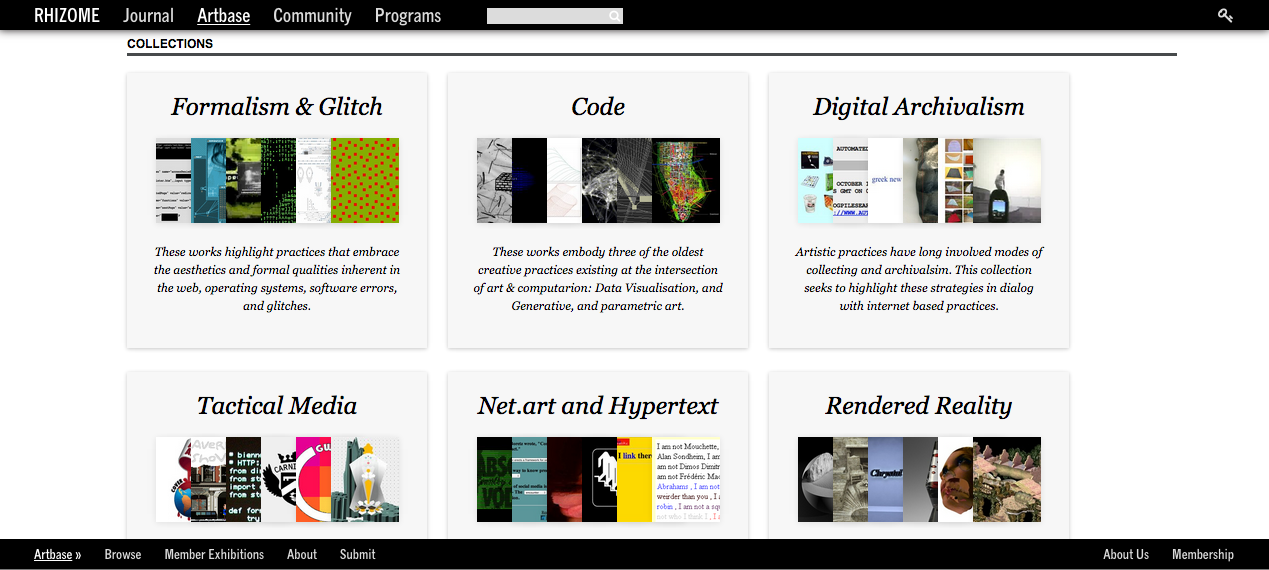
When talking about new media art, there is no single definition. According to a 2001 research study by the Rockefeller Foundation, media artworks can be defined according to nine common elements: fluidity, intangibility, liveness, variability, replicability, connectivity, interactivity, computability, and chance. New media art is a very general and broad category and includes many subcategories. Among these, net art, digital art and plurimedia art are the most common within the visual art field. Nevertheless, the meaning of new media is constantly evolving.

The App as a new artistic medium, and the future of the music industry

The App as a new artistic medium, and the future of the music industry

More than any other artistic discipline, musicians have had the fundamental business models of their art form changed through the advent of new technology. At the same time, and out of necessity, the music industry has adapted more rapidly to new technology than any other art form, embracing technological innovation when possible. In their search for more sustainable ways to produce, deliver and experience music, some of the most famous and research driven musicians are experimenting with one of the world’s most used technologic tools: the App.

A Case for Using Google Analytics’ Dashboards

A Case for Using Google Analytics’ Dashboards

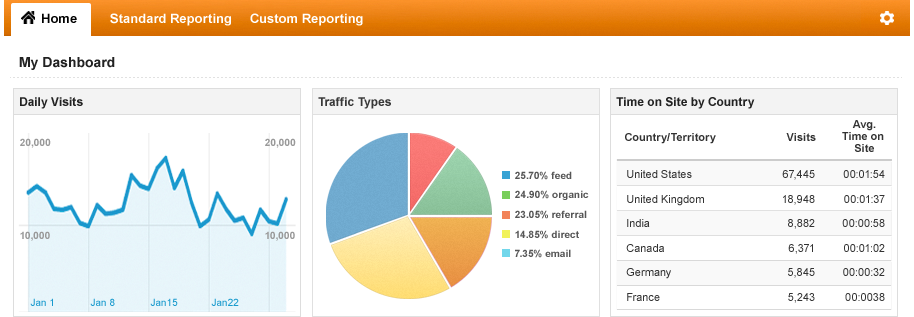
Google Analytics dashboards help users efficiently review important metrics and dimensions, like traffic sources or social media shares, quickly generate reporting tools, and create data-friendly cultures through easy sharing and visually storytelling. Learn about how dashboards can not only help managers process website information, but also how they can effectively communicate that information to a broader audience. 

Research Update: Best Practices of Social Media

Research Update:  Best Practices of Social Media

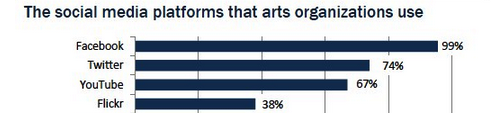
Social media use has become nearly universal among arts organizations. A 2012 social media study conducted by Pew Research Center demonstrated just how widespread social media usage was, with Facebook and Twitter as the most popular platforms by far. What best practices exist for social media use, and is managing more platforms necessarily better? 

Research Update: Crowd-Funding through Google

Research Update: Crowd-Funding through Google

With the development of crowd-funding programs through companies such as Kickstarter, Indiegogo, and Patreon, artists have many new ways to generate both funding and visibility.  Arts and culture organizations have a harder time competing with individual artists on these platforms.  In an effort to assist these organizations as they try to change the world, Google now offers its own crowd-funding platform for nonprofit organizations: Google’s One Today.

News Summary 10.2014

News Summary 10.2014

Every month, AMT Lab publishes a collection of recent arts management and technology news. This month, many articles focused on how the latest technologies, such as 3D printing, can be used to create art. Technology has had a profound impact on cultural industries, and as always we are deeply interested in following these trends.

Interweaving Social: Managing and implementing social media in artistic programming

Interweaving Social: Managing and implementing social media in artistic programming

In 2012, Dog & Pony DC, a small theatre company in Washington D.C., encouraged audiences to direct the plot of a show and influence characters using Twitter. In A Killing Game, audiences and actors stood side-by-side, immersing themselves in a collaborative artistic experience. In order to learn more about the company’s decision to utilize social media, and its approach to integrating the technology and management of its uses, AMT Lab’s Kristen Sorek West spoke to company director, Rachel Grossman. 

Promoting Digital Media Art through Digital Media tools

Promoting Digital Media Art through Digital Media tools

In our technology-stuffed world, the difficulties faced by video artists seem paradoxical. Due to high up-front costs, and the difficulty of handling and selling digital technologies, established institutions such as art galleries and museums often shun their work. Artists may look at the entertainment industry as an alternative, but find themselves unfulfilled, as musicians typically come first in these sorts of collaborations.

Research Update: Using Google Analytics to Derive Insights from Data

Research Update: Using Google Analytics to Derive Insights from Data

In November 2012, NTEN and Idealware released the results of a survey studying nonprofit’s data use. Surprisingly, “outreach” data, or data relating to marketing, fundraising, and general communication activities, was commonly collected but infrequently used to inform future decisions. For instance, NTEN and Idealware discovered that 71% of those surveyed tracked the number of people on their mailing lists, yet only 23% used that data to inform spending and budgeting decisions.

Research Update: Google for Nonprofit Arts

Research Update: Google for Nonprofit Arts

In today’s culture, Google is seen as one of the most innovative technology companies in the world.  From its search engine to the Android operating system, Google has permeated every aspect of our techno-centric lifestyles.  Beyond the scope of their technological accomplishments, Google strives to help nonprofit organizations around the world by providing them with free online tools and access to grant monies.  Follow the development of this research here.

News Summary 09.2014

News Summary 09.2014

Every month, AMTLab publishes a collection of recent news in the field of arts management and technology. After a summer hiatus, we’re back with a selection of articles showcasing some of the trends and highlights of September 2014. We’ve paid special attention to the heated discussion around net neutrality, how museums have integrated technology into their exhibits, and effective use of social media.

Welcome to AMT Lab!

Welcome to AMT Lab!

Hello readers!

As the new Chief Editor of AMT Lab, I wanted to take a minute to introduce myself. I’ve long inhabited the role so familiar to readers of our blog – that of the “accidental techie.” Whether in my personal or professional life, my enthusiasm for all things tech has given me ample experience solving both hardware and software issues, as well as a healthy appetite for tech news. Last year, AMT Lab allowed me to feed my dual passions of art and technology, and I’m honored and excited to be taking over as Chief Editor from the incredible Katherine Schouten.

Based on the results of our 2014 reader poll, I have worked with the staff to create our research areas for the year.  From these frameworks and our current contributor’s areas of interest, we’ve settled on a diverse set of material to serve your needs. Over the next few months, contributors will research their specific area of interest and share their insights as they progress.

Tips for Choosing a Grants Management System: Part 2

Tips for Choosing a Grants Management System: Part 2

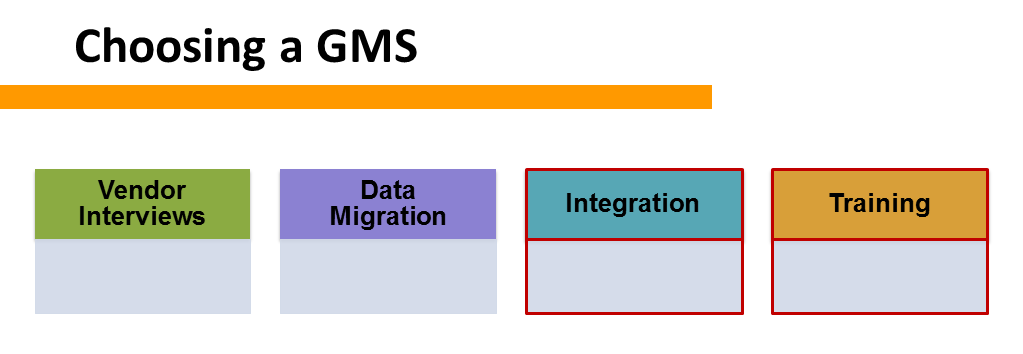
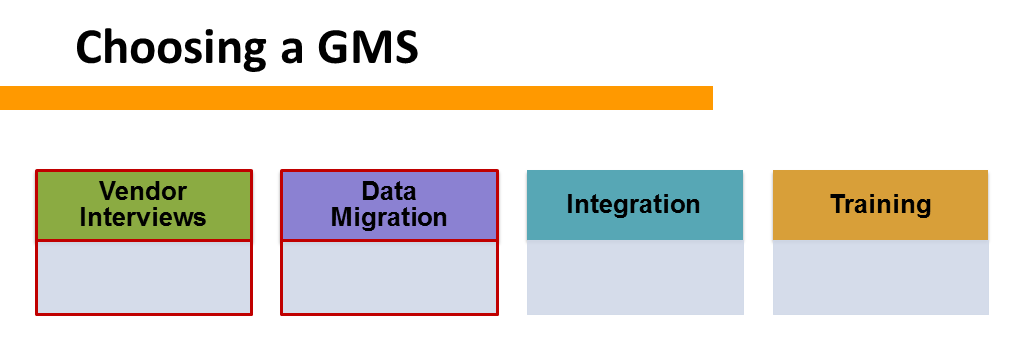
Throughout the process of selecting and implementing a grants management system (GMS), an arts organization must consider many factors in order to ensure positive results. These factors fall into four main categories: vendor interviews, data migration, integration, and training. All of equal importance, these categories must be weighed to find the optimum balance of system features and vendor characteristics.

Today we focus on the last two categories—integration and training. To read the first part of this two-part series, click here.

Tips for Choosing a Grants Management System: Part 1

Tips for Choosing a Grants Management System: Part 1

Throughout the process of selecting and implementing a grants management system (GMS), an arts organization must consider many factors in order to ensure positive results. These factors fall into four main categories: vendor interviews, data migration, integration, and training. All of equal importance, these categories must be weighed to find the optimum balance of system features and vendor characteristics.

Today we focus on the first two categories—vendor interviews and data migration.