Marketing

Developing Jazz and Classical Audiences with Technology

Technology in the Arts is pleased to present our new white paper Online Audience Engagement: Strategies for Developing Jazz and Classical Audiences, spearheaded by writer Tara George.

Many of you may remember critic Terry Teachout’s controversial Wall Street Journal article that asked if jazz could “be saved?” Teachout’s article, in response to the NEA’s 2008 Survey of Public Participation in the Arts, prompted a variety of reactions across the field. Despite much of the hostility directed at Teachout, his question and concerns seemed to be valid and worth exploring, especially since the survey indicatedthat audiences (particularly for jazz, classical and opera music) were shrinking and growing older at an alarming rate. An interesting twist came in 2010 with the release of the NEA’s Audience 2.0 survey. A key finding in this survey was that Americans who participate in the arts through technology and electronic media (television, Internet, handheld devices) were three times more likely to attend a live arts event. Much like Teachout’s initial article, this survey also prompted a round of discussion about correlation and causation. Despite the controversy and debate, it is undeniable that technology is one of the most promising tools that organizations can use to build a younger fan base.

This white paper explores the role that digital marketing is now playing in building audiences in the jazz and classical music realm. This report also highlights the work of several artists and organizations at the forefront of reaching and developing new audiences online. It’s important to note, however, that most of the organizations and artists here would classify their work and the music they present as a hybrid of multiple genres. Though that distinction falls outside the scope of this report, it’s an important trend to take note of that can have a direct impact on digital marketing. Finally, we have provided a concise 4-step guide as an example of how many organizations actually implement best practices.

Organizations Highlighted:

We hope that you find each case study in this report to be encouraging and inspiring! Here were a few of the organizations we featured:

  • Mobtown Modern: was founded by Brian Sacawa in 2008. This organization fills a void in Baltimore’s vibrant music scene and serves as a catalyst for musical innovation and the creation and presentation of the new music of our time.
  • New Amsterdam Records and New Amsterdam Presents: New Amsterdam Records is the for-profit record label subsidiary of New Amsterdam Presents, a presenting and artists’ service organization that supports the public’s engagement with new music by composers and performers whose work grows from the fertile ground between genres.
  • Revive Music Group: serves as New York’s leader in conceptual and never-before-experienced live music productions—for a jazz and hip-hop celebration giving a unique aural exhibition of the undercurrents connecting the genres and ultimately fans of multiple generations.
  • Search and Restore: is a New York-based organization dedicated to uniting and developing the audience for new jazz music.

Download this report today!

And please share with colleagues by clicking the "ShareThis" icon below.

10 Takeaways From the 2011 Emerging Practice Seminar

CultureLab, a partnership between an informal consortium of arts consultants and the Cultural Policy Center (CPC) at the University of Chicago, recently held an 'Emerging Practice Seminar' in April. The organization was formed to break down the silos of research, policy and practice, and create a new capacity and approach to tackling challenging issues. The topics at this year's seminar were:

  • Uses of technology in audience engagement
  • Revenue management and dynamic pricing

The seminar's website features all of the speakers' presentations (both videos and slides) and is an extremely helpful resource!

Here were my top 10 takeaways from the 'Use of Technology in Audience Engagement' portion of the seminar.

1. Embrace technological innovation, there's nothing to fear! Tim Roberts of ARTS Australia provided an introduction to the day's topics. Tim's introduction called attention to the unfortunate fact that any arts managers and organizations still view technology as something they are fighting against. He quoted NEA chairmen Rocco Landsman as saying "the arts are battling the technology invasion". Roberts argues that many also believed cable television to be the death of television and photography to be the death of painting and that technical innovation has not caused the death of an artform but has contributed to its spread and created new audiences.

Uses of Technology in Audience Engagement - Tim Roberts from Cultural Policy Center on Vimeo.

2. Engagement is an ongoing process: Technology is least effective when it's not used in a proper context of engagement. This process of engagement often begins prior to the audience coming through the doors. Likewise, the process shouldn't end after the performance or visit ends. Technology can help to provide context to a piece of art or performance, personalize the experience and even augment the experience. There are many options when it comes to sustaining a deeper level of audience engagement.

3. Layered Arts Experiences are cool! This type of technology has been extremely underutilized in the performing arts sector. Layered Arts Experiences offer audiences options for real-time assistance imperative during arts programs. They can come in the form of supertitles for opera and dance performances. The Columbus Symphony Orchestra had a device called the 'Concert Companion' which enabled patrons to read something about the piece they were hearing as they listened to the concert.

4. Museums continue to lead the way when it comes to adapting technology: Another common theme during the seminar was the overwhelming lack of technological innovation in performing arts organizations. Even though there were examples of organizations using layered arts experience tools and mobile interactions, it seemed as though they were few and far between and many had even stopped using these tools.

5. The verdict is still out on Tweet Seats: A 'Tweet Seat' is simply a seat reserved in a theater for Twitter users. Tweet Seats have many benefits, including: encouraging a younger audience demographic to get involved in the performance, having this demographic spread the word about the performance to their Twitter followers, and cutting down on distracting other audience members by blocking off a section for Twitter users. The question, however, remains whether or not people can truly become immersed in a performance if they are multi-tasking with other technological devices.

6. Mobile Interaction isn't just limited to QR Codes in Museums Ron Evans of Group of Minds had some great ideas about ways to engage audiences via mobile devices. Evans suggested placing a QR Code on tickets for previews of the show. Evans also suggested distributing digital keepsakes after shows. He also discussed the importance of using these mobile technologies in the proper context of audience engagement. Unfortunately, most technology has focused on the pre-performance and pre-sale with the sole intention of making the sale and increasing attendance. Engaging audiences should also involve increasing their understanding and appreciation of an artform. The 'during' and 'after' is just as important to leading people to the next experience.

Mobile Interaction: adding content and context - Ron Evans from Cultural Policy Center on Vimeo.

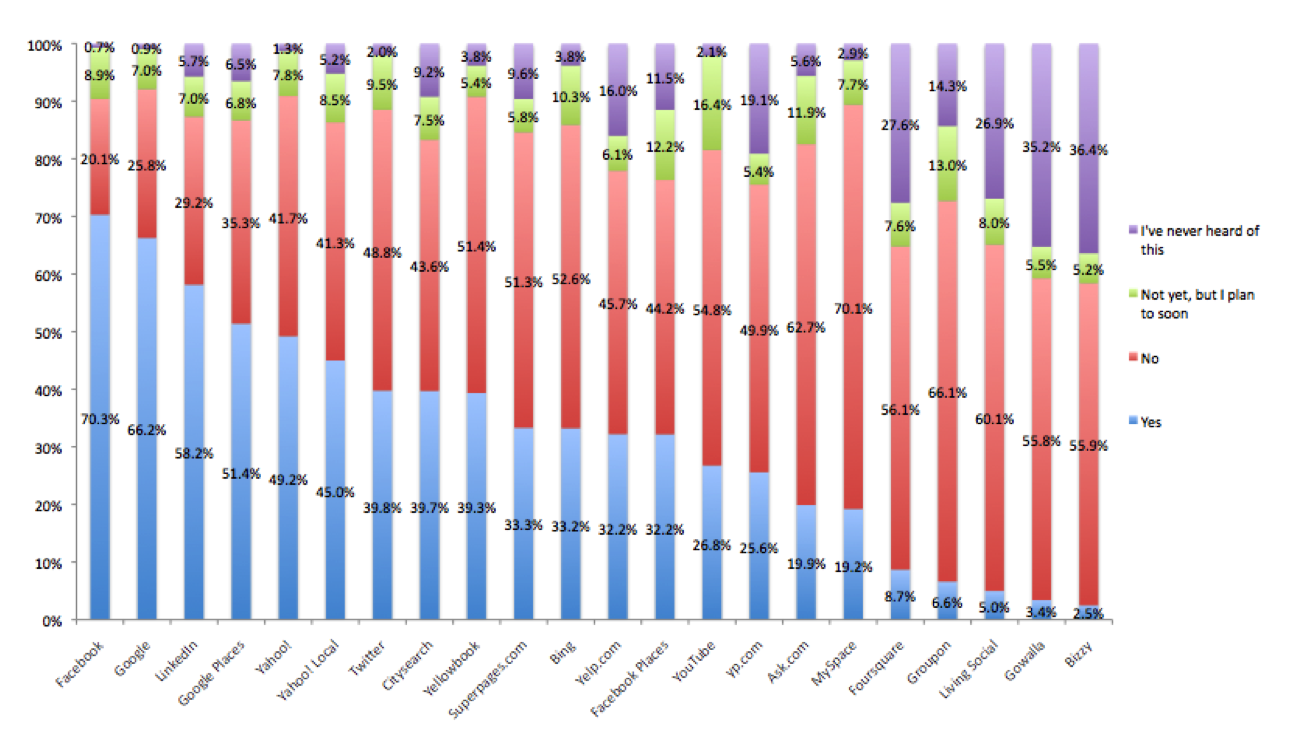
7. Location Based Servies has a long way to go: Devon Smith presented the findings of a research study she conducted on arts organizations using location based services. Location Based Service is simply a service that uses the geographical position of a mobile device (Foursquare, Yelp, Google Maps). Applications like Foursquare can be useful in providing real-time analytics on the demographic of those who are "checking in" to a venue. Smith's study found that only 36% of the 76 nonprofit theatres she tracked, had properly claimed their venues on Foursquare, yet 97% of the venues had a mayor. Even though claimed venues had 3% more activity, the real-time analytic information could be very useful to any organization.

8. Blogging Isn't Dead!: Thomas Wickell of Malmo Opera shared one of the most interesting case studies of the day. Wickell emphasized the importance of viewing the stage from the audience's perspective as opposed to looking out at the audience from the stage. With this key distinction in mind, Wickell and his team found that the audience they wanted to attract was not responsive to traditional channels of advertisement (newspapers, television, etc). Since most of their target audience were highly engaged online, the team created a blog that was centered around the life of a character in an upcoming opera. The blog became so popular, at one point in time, traffic to the blog surpassed that of the company's main website! The staff even invited readers to a ceremony for the character (since she does not survive) and over 100 people came to pay tribute to her life. The blog can still be found here!

9. Technological Innovation Often Requires a Culture Change Within an Organization : Linda Garrison and Thomas Weitz at Steppenwolf Theatre gave an overview of helpful practices for creating video content. An important theme during this presentation was the importance of finding allies when seeking to implement any changes. Whether designing a new video campaign or placing QR codes on marketing material, implementing new technology can often mean a culture change within an organization. Finding out who your champions, advocates and contributors are beforehand can make a world of difference when proposing any sort of change. It's also well worth your time to watch the Steppenwolf videos here.

10. Know Your Target! The Steppenwolf and Malmo case studies highlighted the importance of understanding who the target audience is prior to implementing any of the strategies and tools listed above. Steppenwolf researched and found their audience tended to be highly educated, comfortable with direct marketing and confined to a very specific geographic location. As a result, Steppenwolf decided that an online video campaign could be effective in engaging their audience. The Malmo Opera worked backward and began by envisioning what type of audience they wanted to attract. Either way, this process is extremely effective when the target audience is clearly defined.

The Art of Social Media Analytics, Part 3

Summer is the “off-season” for many of us in the arts world. Why not take this time to refresh your social media strategy? This is part 3 of our 3-part series on social media analytics tools. Check out Part 1 and Part 2.

blue_dataThe last part of our series concerns making management decisions based on data. Once you have the data, what do you do with it? As we come up with more sophisticated methods to track social media sentiment and reach, it becomes possible to track more accurately how people are responding to social media. This is especially important because social media can be a valuable part of your market research. It is like a 24-hour focus group, answering many of the questions you may have about your audience as well as the questions you didn’t think to ask.

As mentioned in Part 2, there are a variety of questions that you may have about your audience and a variety of tools that track different measures of success. Some tools are narrowly focused on one measure, while others give you a conglomeration of these measures. Some examples of the measurements of success include:

  • Sentiment: Are social media users referring to my organization positively, negatively, or neutrally?
  • Conversions: How many and which fans are buying online (or offline)?
  • Spikes in activity or “buzz”: How are social media users responding online to campaigns?
  • Impact: How many people is the message reaching and how much influence does the organization have? How many people are sharing posts?

When thinking about measurement tools and management decisions, the first question is often, when is it worth it to pay for analytic tools? As technology evolves to be able to track more specific and more valuable information, more paid analytics tools have come on to the market.  There are two basic instances where it’s worth it:

1) when you have a large customer base

2) when you need enterprise-level social media analytics

Firstly, if you have a large customer base or a large social media base (no hard and fast rule, but larger than 100,000) and you are literally having trouble monitoring comments on your brand, you need a tool that takes more of a summary view. Secondly, most paid tools are enterprise-level tools--tools that more than one person can manage or assign tasks to others and have other special features. If you feel you need this type of functionality, then paying for an analytics may be worth it.

Besides those two factors, a company should also consider the elusive “Holy Grail of Social Media,” return on investment, or ROI. Many organizations have found a “chicken and the egg” scenario of needing time and resources to show results (often, revenue), but needing results to convince upper management to spare the time and resources to devote to social media. This situation can be difficult; you might try proposing a pilot program or experiment with a cheap or free tool before proposing a larger investment.

One institution that has made a practice of using data to make decisions in social media (as well as investing in technology—check out their web and new media strategy) is the Smithsonian, under the guidance of tech guru Nancy Proctor. As one employee put it “why would you change anything without metrics and feedback?”

Once a company has the analytics tools in place it’s easy to observe your numbers of fans, interactions, and gauge the quality of those interactions. What’s more difficult is translating your observations into actionable decisions.

A simple example is that of David Horgan’s, eMarketing Specialist for Smithsonian Folkways Recordings. David had experimented with linking ads to their Facebook page and their homepage. “We found that the ads that direct people to our Facebook page (rather than to our homepage) were about 3x more effective on a cost per click basis.” Management Decision: Direct more ads to the Facebook page than the homepage.

Another example is the blogathon on the Smithsonian Collections Blog that Rachael Cristine Woody worked on for American Archives Month. According to Rachel:

Until that time we had almost solely focused on collections content.  In October we shifted to also cover our profession and offer a more behind-the-scenes look at what we do/deal with, every day.  These posts became the most popular posts we’ve published so far, numbering in the thousands for direct hits, and to this day still receive at least 100 hits a week.  It was at that time that I think the blog truly found its most invested and engaged audience, and it helped to call attention to us that we should be covering more on our profession.  Management Decision: In addition to giving the collections exposure, engage and influence the professional community by providing transparency, advice, and support.

The National Museum of American History combined traditional survey techniques with data from analytics tools (Google Analytics and WebTrends data, click metrics from HootSuite, etc.), comparing the results of four closely-related surveys on each of four major communication channels (their blog, email newsletter, Facebook page, and Twitter feed). Although more complex, the results allowed Dana Allen-Greil to make decisions regarding how the Smithsonian communicated with patrons:

At the National Museum of American History, we’ve long had a hunch that our Twitter feed should focus on conversational and educational content, rather than marketing in-person events. If our followers aren’t local, do they really want to hear about events they can’t come too? Click metrics from HootSuite plus data from a survey of our Twitter followers gave us solid footing to make the case against Twitter as a platform for driving foot traffic to the museum.  Less than 25% of responders reported planning a visit to the museum after seeing a message from us—this is compared with over 55% of email subscribers who said they did.  Even more to the point, less than 10% of Twitter followers reported attending an event compared with over 30% of our email readers.  We discovered a similar trend with our Facebook fans and have altered our content strategy accordingly. Management Decision: Use Email (not Twitter) to Promote Synchronous, Location-Specific Events.

More info on Dana's Twitter content strategy can be found here.

So there you have it. As much as social media can seem nebulous, there are specific things to measure, to think about and analyze, and then to make decisions that you can feel confident about. When you develop your social media strategy for your next season, mix things up a bit with some new questions about your audience, new tools, and a new perspective on the art of social media analytics.

Special Thanks to the following people for their contributions to this series: Michael Edson, Brian Hinrichs, Maggie Johnson, Katryn Geane, Kristin Garbarino, Devon Smith, Lindsay O’Leary, and Crystal Wallis.

The Dynamic Box Office

Modern Box Office Airlines have been doing it for years. Ticketmaster (in its latest incarnation) recently jumped on the bandwagon.

Dynamic or variable ticket pricing is the strategy of altering ticket prices based on different variables.  (As noted in the comments below, "Variable pricing is setting BASE prices according to differences in performances' time of day, day of week, etc as in paragraph 2 (a midweek evening may be less expensive than a Sunday matinee, for instance). Dynamic pricing, on the other hand, changes prices after the initial on-sale in response to changes in demand over the sales cycle."  I use the term "dynamic pricing" in this article to discuss changes made to prices once the tickets have already gone on sale, altering FROM the base price.  Thank you for pointing this out, Kara!) These can include everything from the number of seats already sold at the time of purchase, the proximity of the show date, alternative entertainment options on the show date, anticipated weather, and any number of factors that the host deems as having an impact on ticket prices. It is perhaps a more realistic and “fair” way to price tickets, allowing the cost of tickets to reflect the actual supply and demand of the market. This should result in minimized dead-weight loss, which benefits but the consumer and the supplier. For performing arts organizations, grappling with decreasing advance-ticket sales and discounting options that gouge profit margins, dynamic pricing might be “just the ticket.”

Unlike regular discounting or promotional pricing, the dynamic ticket model would enable organizations to price each production—and even each performance--strategically and, perhaps, more realistically. Instead of offering incentive discounts, both the organization and the audience would be able to gauge expectations for a show based on the ticket prices. Declining ticket sales and decreased subscription renewals lead marketers to worry and wonder about the most effective way to promote ticket sales. A common “solution” is discounting, which leads to a host of other problems. Ron wrote this piece for Group of Minds outlining what the major drawbacks to discounting. Rather than reiterate what he has already presented so well, I will simply say that I agree with his concerns about this eagerness to discount in order to get butts in seats.  Considering these issues may make dynamic pricing a more attractive option for some.

A great example of the potential for dynamic ticketing is its recent use outside of the airline industry-- the newest Ticketmaster/LiveNation partnership is exploring the efficacy of dynamic pricing for sporting events. Last year, an article in Sports Business Journal did a great job outlining the way that dynamic pricing works at the San Francisco Giants’ AT&T Park.

There are a couple of key sentences in this article that I wish to address as they pertain to the performing arts industry:

  • “Advanced software analyzes market conditions and determines a pricing recommendation that team executives can either accept, deny outright or tweak.” That’s the kicker: advanced software. I know that the biggest question is always: how can my organization do this? Non-profit performing arts organizations already face challenges being short on staff; the responsibility and complication of daily ticket price changes could be a full-time job in and of itself.

Analyzing the results of the 2011 Ticketing Software Satisfaction Survey, most respondents indicate that box office systems are either custom-built, cobbled together, or some of the solid, inexpensive options available to organizations. I went through and sent inquiries to the organizations listed in Amelia’s overview of the ticketing software survey results, as well as some others that respondents are using.

Unfortunately, at this time, nobody seems to have an easy-to-use “dynamic!” function in their software that makes it easy for an organization to alter prices without sending an actual staff member in to change them by hand each day. But the conversation is building in volume, and a few companies expressed that they can either design such a component for their clients, are looking into offering dynamic pricing in the future, or would like to know more about the demand for this function before they pursue including it in their products. (Just before posting this, I received the following from ProVenue: “We have no dynamic pricing customers in the UK as yet, however we do in the US. Please click on (this link) for details. We are looking to release in the UK sometime in the new year.” (I learned that ProVenue is part of the company that provides this model to the Giants. How accessible this component is for budgets that may be more modest than those of the Giants, however, is a question that I have yet to get a response to.)

  • “(S)hould a game get rained out, standard refund and exchange policies would apply. But if a fan pays a premium price to see a particular player, such as a starting pitcher, and that player doesn’t play, there is no refund.” This quotation makes me smile, because in the performing arts, understudies are just part of the game. It does beg the question, however: what if someone paid a price bump because of a certain headliner, and that artist’s understudy performs that night? Does the ticketholder get a refund of the difference? We are all familiar with understudies and what that can mean.
  • Perhaps the most universally applicable part of this article is the section “What’s the payoff?” As it outlines, “Dynamic pricing structures can provide significant cost savings for fans over original list prices for lower-demand games, and for teams, provide another means to help fill seats, generate additional concession revenue and potentially upsell that fan into a larger, future purchase. And for higher-demand games, dynamic pricing provides teams a revenue maximization tool to capitalize better on that heightened fan interest.” So actually, dynamic pricing could give us in the performing arts a real understanding of how our work is valued. We make a lot of guesses, some educated, some not, to try and figure out what the “best” price is for the work that we produce. Could dynamic pricing remove some of the mystery, and help us maximize both the number of tickets sold and the revenue generated?

Some may balk at the idea, as Diane Ragsdale does in this article on dynamic pricing in the non-profit sector. She quips, “Let’s call a spade a spade. Dynamic pricing is a method for maximizing profits….Suddenly increasing ticket prices in response to high demand, and selling ‘premium’ seats priced as high as people are willing to pay, strike me as questionable practices in a nonprofit organization.” What will it take for people to stop associating “non-profit” with “NO profit”? She likens dynamic pricing in the non-profit performing arts sector to soup kitchens charging for certain perks. What an unfortunate and offensive comparison. Non-profit arts organizations are businesses, regardless of their tax status or their primary sources of funding, and selling tickets is a fundamental component of what they do. Certainly, there are organizations whose missions might preclude them from dynamically pricing their tickets (e.g. “free art for all”), but there are others for which dynamic pricing could help generate more revenue (not a bad thing) and bring in more audience. As Lori Kleinerman of the Goodman Theatre remarks in her compelling talk on the Goodman’s use of variable and dynamic pricing, “We are aware of our civic responsibilities as a not-for-profit institution, so it’s important that we are accessible while still optimizing our income.”

There are many ways to apply dynamic pricing within the performing arts sector, and with more use some things may become evident.  It is possible that it is a practice best suited for venues that do not scale their houses, or best applied to the “nose-bleed” sections, or only effective for the blockbuster shows. Of course, the key word there is “possible.” As we lament the decline of ticket sales, the loss of revenue when we discount with programs like Groupon and LivingSocial, and the oh-so-onerous epidemic of last-minute-ticket-buyers, why not consider dynamic pricing as an alternative model for revenue generation?  After all, we may be “non-profits,” but that doesn’t mean that we aren’t subject to the supply and demand curves that drive for-profit business economics.

Using Google URL Builder to Track Your Website's Traffic [mini-nar]

Mininar
Mini-nar

Back in November, Tara took a look at Google URL Builder.  Given that some people learn better by watching someone else do it first, we decided that this would be a great topic for a mini-nar.

Here's David to walk you through how to use Google URL Builder to track the traffic being driven to your site through promotional campaigns, social media, e-mail marketing, and more.

Mini-nar - Google URL Builder from Technology in the Arts on Vimeo.

If you have topics that you'd like to see us cover in upcoming mini-nars, post a comment below or send us a message to let us know what you would like us to cover.

The Art of Social Media Analytics, Part 1

Summer is the “off-season” for many of us in the arts world. Why not take this time to refresh your social media strategy? This is part 1 of our three-part series on social media analytics tools.

Brain1
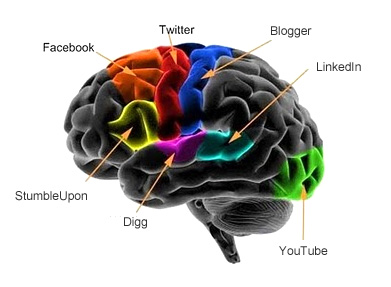
This is your brain on social media. Image from Your Social Move.

Social media marketing is an artistic endeavor as well as a scientific one. We use the right side of our brains to create the perfect message that will engage our audience and the left brain to crunch numbers on views, comments, etc. We know instinctively how to talk to our audiences, but we don’t always know how they are reacting to that message beyond a peripheral “feel” of the importance and sentiment behind the comment or action. There is often not an obvious way to categorize or quantify reactions to gain insights into your audience’s thoughts and feelings and to chart your own impact.

With the economic situation as it is right now, nonprofit employees are under more pressure than ever maximize their productivity and capacity. With technology, and social media in particular, as the most nebulous, mysterious, and constantly shifting elements of an organizations’ marketing/PR operation, it can be frustrating to track social media interactions and to gain resources from management for social media. Often initiatives face “death by delay” or end up being based on assumptions rather than data. At the Center for Arts Management and Technology, it’s one of the issues we talk about most often amongst ourselves and to clients.

It’s not just the arts, though.

In the non-profit arts world, we have the tendency to think that we are insulated and that our problems are due to a lack of time or resources. Some of these questions are ones that the social media field as a whole is trying to answer. While in the Masters of Arts Management program, I participated in a Social Media Analytics class where we had real-life clients. My team was working on the account of a major sportswear manufacturer. At first I thought that the questions that this company would have about social media would be very different than the ones that I worked on at the Center for Arts Management and Technology for our mostly non-profit arts clients. However, the more we worked with our client, the more similarities I noticed in the questions they asked about ROI, tracking, and analysis of social media initiatives.

Throughout the research that I’ve done and the conversations that I’ve had, I’ve heard social media right now described it as “the wild west”. Like web analytics was in its infancy, we are just now building the hallmarks and benchmarks for social media analytics. It’s an exciting time, and an extremely fast-paced one. If you have been keeping up with how businesses are using social media for the last five years or so, you’ve seen Facebook dominate MySpace, then Twitter edge its way in. As we moved to mobile, a slew of geo-location platforms arrived on the scene and now we’re trending toward game-based platforms.

As much as social media trends change, it is imperative to have a social media strategy, not just to spend your marketing dollars most effectively, but also to get to know your audience better. How do you get a social media strategy? You need information first. That’s where analytics come in. There is a wealth of information about your patrons hidden in their interactions on social media—like your own on-going focus group. But (A) how do you get to that information and (B) how do you draw conclusions from it?

A. As of today, what are your options for social media tracking? There are thousands of analytics tools out there and more being developed every day. Nonprofit arts organizations are faced with a dual bottom line: to serve the community and to create, present or preserve great art. Which tools are most useful to a nonprofit arts organization in gauging how they meeting the dual bottom line? In Part 2 of this series, we’ll take a look at some popular analytics tools and how to evaluate the tools out there given your organization’s more specific goals.

B. How can you use analytics data to make management decisions? There are many ways to slice and dice the data you might get from those tools. What are some strategies for using the current tools available? How can you make a confident decision about what is essentially a moving target? Given the tools and tactics in the above questions, when is it worth it to pay for analytic tools? In Part 3, we’ll address the problem of structuring your social media tracking efforts to find information relevant to your day-to-day decisions.

4 Tools for Creating Websites on the Fly

websiteRecently, I’ve been hearing about website creation platforms for artists, musicians, and designers. (They are also great for student portfolios!) These days, many people are starting to focus their efforts on mobile apps or websites, but still more may lack a functional, easy-to-use website in the first place or need a secondary site, like a company intranet or a micro-site for an exhibit or show. I’ve found four that are worth checking out if you’ve been thinking about creating a website. The interfaces for these website creation platforms are very easy to use, with no coding required. If you have all your copy ready and your songs or artwork prepped, you can create a professional-looking website in about an hour, hosted by the site. Many of them are cheap or even free. Here’s a four tools for creating a website on the fly: Wix.com: Individual artists and small organizations

One of the easiest, cheapest (free!) options I’ve seen out there is Wix.com. It produces great looking websites, with hundreds of free templates. Best for individuals or small groups, there are lots of options for photographers, designers, or artists here, and I also saw a few modeling/acting pages and a musician page with a music player for musicians or ensembles.

Wix is really good for people who just need something simple and don’t care too much about the site being particularly flexible. For example, I ran into problems posting lengthy text (like a full resume) in the page of the website, because the page sizes are set. Of course, you always have the option to link to an outside page or a PDF if this happens, but it’s important to be aware of the limitations. For this reason, I would recommend this tool to individual artists/ensembles or smaller organizations who just need something simple that they don’t necessarily want to deal with updating very often.

Another disadvantage is that Wix uses Flash, which means that the site cannot be viewed on iPhone, but for sites that will likely be viewed only on desktop/laptop computers or Android phones, Wix is fast, easy, and free.

Google Sites: A helpful collaboration tool

Google Sites (formerly Google Pages) also has some good options for individual artists, but what really impressed me was the templates built specifically for business collaboration. These sites may be useful for arts managers who are working on projects with outside companies or production managers who are trying to coordinate a design team who are working in 5 different cities in the initial planning phases of a production. Google also emphasizes that many businesses use Google Sites for company intranets or wikis.

There are a number of versatile templates, which you can play around with here.

Maestro WebBuilder: Classical Music Organizations, Ensembles and Artists

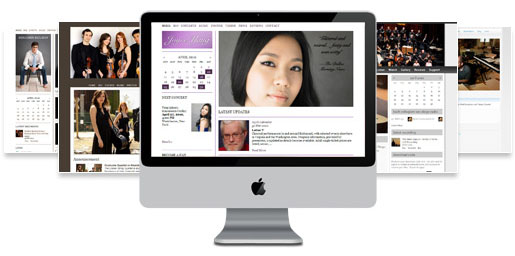
webbuilderFor those of you who are still hung up on the Flash-iPhone compatibility issue, I have two tools for you: InstantEncore’s Maestro WebBuilder and WordPress. Maestro WebBuilder is part of the InstantEncore suite of tools for classical music organizations and musical artists who primarily play classical music. (We had a fascinating interview with the COO of InstantEncore a few months ago--check it out.)

What’s great about Maestro WebBuilder is that, by building your website through InstantEncore, you are already set up to pull all the information into a mobile website or app. Maestro WebBuilder is a paid tool, but it's cheap, and it gives you the flexibility to easily convert content on your site into a mobile platform and makes it extremely easy to streamline all your social media presences into one system.

Wordpress: A tool for nearly everyone and everything

When you think of WordPress, you probably automatically think “blog”, but you can also build a nice-looking and functional website on the platform. Of course, it is the ideal choice if you want to fold a blog into your site. For example, the Technology in the Arts blog is run on WordPress. The front page is the most recent blog articles, of course, but we also have a number of “static” pages or pages that change less frequently with (shameless plug) resources for the arts field, publications we’ve produced, and webinars focused on ways that arts managers can use technology to meet their mission and goals.

With WordPress, there are thousands of templates out there, some of which are cheap and some of which are free. You can find a very professional-looking one without spending a lot of money. Ceci Dadisman of the Operagasm blog is a big advocate of WordPress as a way for arts organizations to save money.

It's also a good option if you are not a web expert, but want to/are willing to learn the basics of content management and HTML. It's easy to set up and maintain a basic site, but there's room to grow if you decide to get fancy. There are the thousands of WordPress plug-ins out there that you can download to jazz it up. For example, look at the top of this post. See the box with the number of times this article has been tweeted? That’s a WordPress plug-in! Scroll down to the comments section. Disqus pulls in comments from Twitter and Facebook. That’s also a WordPress plug-in! You have lots of options to connect your site with the greater community.

Choosing a Ticketing System in 5 Easy Steps

The following is extracted from one of our recent reports, the 2011 Ticketing Software Satisfaction Survey. Download the full report here.

Choosing a new ticketing system can be a daunting prospect! There are hundreds of systems out there which offer a variety of functions and features, and it's sometimes difficult to tell which would be best for your organization. In the following article, we have broken down this sometimes arduous process into five "easy" steps, including a list of subject areas to consider when embarking upon a ticketing purchase, as well as sample questions to ask.

2011 Ticketing Software Satisfaction Survey Promo from Technology in the Arts on Vimeo.

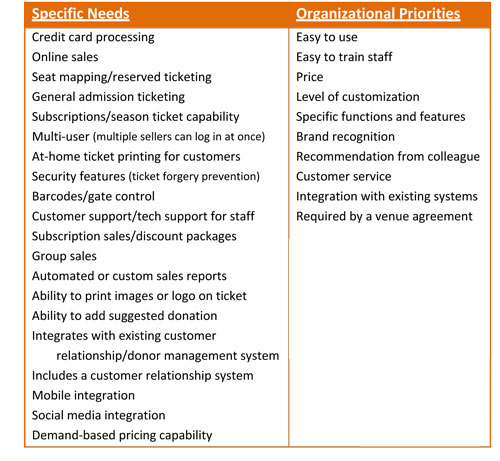
Step 1: Determine needs and priorities Because of the wide range of ticketing solutions available, determining your organization’s needs and priorities is the first step to choosing an appropriate software system. It is a good idea to seek input from every department you expect to use the system—not just ticket agents. The following is a list of common organizational needs and priorities:

Organizational needs and priorities

Step 2: Identify vendors

Your prioritized list of needs will help you begin to identify systems that are more likely to be a good fit your organization. A list of vendors included in this survey is also available on page 41 of the report. Visit their websites and research them to help you narrow your list to a few possibilities.

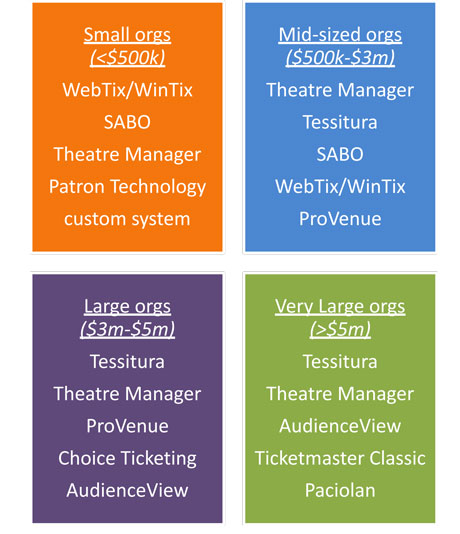
You might also start by looking at the systems commonly used by organizations in your budget category. The following systems were most commonly used by respondents to our survey:

Most-commonly-used

*Because respondents do not represent a true cross-section of the arts and culture community, this list cannot be used to infer market share.

Step 3: Contact vendors

Once you have narrowed your list to a few possible systems, begin to gather first-hand information from the service providers. You might do the following:

  • Ask if there are any hands-on demonstrations that let you experience the system for yourself.
  • Request a list of client references in your discipline and budget size, and ask those references about their experiences.
  • Request a list of client websites to get an idea of the customer’s experience of ticket purchasing and other transactions, such as donating online.

Technology in the Arts has also compiled a two-page list of questions to ask a ticketing software vendor, on subject areas like pricing, data integration, tech support, reports, and more! It's too long to include in this blog post, but see page 38 of the report for nearly every question you may need to ask a vendor before purchasing a ticketing system.

Step 4: Weighing Your Options and Making a Decision

Revisit your list of  priorities and, based on your findings from talking to vendors and organizations who use your system, rank your top choices. You might also seek input again at this point from people who will be using the system to see if your priorities are still in line with theirs.

Keep in mind that price is not always the best indicator of quality.  Even if price is your organization’s primary concern, it is still worth researching and evaluating other aspects of the system before making your final decision.

Step 5: Prepare for installation

Changing a ticket system is a major organizational change, but it doesn’t have to be difficult. Timelines for implementing the new system will vary from organization to organization, but here are some things to consider:

•    How long will it take to transfer your data from the current system to the new system?            •    How many years of data do you want to migrate            from your current system to the new system?            •     Will the data need to be “cleaned” or modified            in any way before transferring it? •    How long will it take to install any software on staff computers? •    How much time will it take to create usernames for staff and adjust their profiles so that they have access to the proper data? •    How long will it take to fully train staff on business-critical functions? •    How close are you to the starting a new season and how long will it take to build a season with the new software?

From these questions, you can determine the best time in your season to install your new system,  migrate any data from your current system, and start to train employees. Remember to inform your patrons of any new features that may interest them, like online subscription sales, choose-your-own-seat functions, or mobile integration.

If you enjoyed this article, you can find more information on ticketing systems in our report. Download the full report here.

New Questionnaire: Living Social, Groupon and the Arts

SurveyPhotoThe Living Social, Groupon and the Arts Questionnaire is now live! Has your organization offered deals through group discount sites like Groupon and Living Social?  Have you ever wondered about how other arts organizations are using online group discount services, and the successes and challenges they've faced along the way?

We were wondering, too.  So, we put together a short questionnaire to find out.

Please take a moment to fill out the Living Social, Groupon and the Arts Questionnaire and let us know about your own experience with either of these sites.  It will only take a few minutes and your answers will remain anonymous, unless you specifically tell us otherwise. The questionnaire closes on April 15, so click through and fill it out before you forget!

And as always, we'll share the results with all of you here on the blog.  Fill out the questionnaire today!

Need a new ticketing system?

Some folks have had difficulty opening the report within the Firefox browser. We are working to resolve the situation. In the meantime, you can right-click on the link and select "Save Link As" to download the report to your computer.  You can view the report without issue via Chrome, Safari or Internet Explorer. Thank you for your patience.

Click to access the 2011 Ticketing Software Survey.

Click here to download the survey report. Photo: Gyorgy Kovacs via Flickr.

The 2011 Ticketing Software Satisfaction Survey Report is now available! In it you can find information on the most popular ticketing systems for organizations of your size, rankings of popular features and functions, and a 5-step guide to choosing a ticketing system, complete with questions to ask vendors.

Based on feedback from last year's survey, we added several questions to this year's survey:

  • questions regarding new technological features, like mobile and social media integration
  • questions differentiating web-based vs. desktop software (hosted on the client’s computer or server)
  • question about ticket consortiums and outsourcing

Key Findings: There were several findings of interest that resulted from the study:

  • Universally, organizations choose online sales (91% of respondents) and credit card processing (90% of respondents) as the most critical ticketing system functions.
  • Approximately 1/3 of ticketing software users indicated that they had inherited their current ticketing system from a previous employee--they had no role in choosing the system they are using now.
  • About 30% of organizations outsourced or shared in a consortium at least one aspect of their box office operations, either for online sales, phone orders, walk-up sales, or discounts.
  • Organizations classified as "small" and "mid-sized" (budgets under $3 million) indicated the most important factors in their software choice were price and user-friendliness, while "large" and "very large" (budgets over $3 million) prioritized customization and specific functions and features.

If you are a ticket vendor, box office manager or staff member, house manager, business manager, executive director, board member, marketing staff, or anyone else who has contact with a box office ticketing software system, then this report is for you.

Download the survey report today!

And please share with colleagues by clicking the "ShareThis" icon below.

Changing Up The Check-in: Foursquare Updates Specials

Screen shot 2011-03-17 at 11.04.24 AM
Image via foursquare.com

Foursquare, the popular location-based social media platform, decided to shake things up a little at the annual South by Southwest festival last week. Rolling out their new 3.0 version, Foursquare has made some significant changes to their platform in the way it operates, most notably in the way it recommends venues and offers specials.

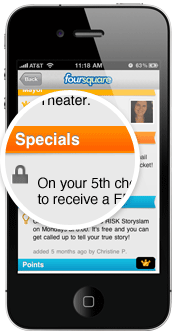
I'll be covering the changes to the recommendation engine in an upcoming post, but today I really want to talk about the new ways arts organizations can offer specials on Foursquare. A "Special" on the platform refers to an incentive that organizations and brands can attach to a venue that is unlocked when a Foursquare user "Checks In" and meets a certain criteria. Up until last week, these specials were limited to either the frequency a user checked in (1st time, 5th time, etc.) or if the user was the "Mayor", a title held by the user that checks in the most frequently at a particular venue.

While a great idea in concept, personally I felt the result was a little lackluster in practice. Becoming the Mayor of a venue is tough, requiring checking in at that venue a large amount of times to temporarily steal the title. While this may be easy to do for somewhere like a local coffeeshop, frequented everyday, it is unrealistic to offer this incentive for an arts organization. Then there is the average check in, some organizations have offered incentives like reduced ticket prices for having a certain amount of check ins, but this is often a one-time special. The hesitation to use a more tantalizing incentive may be the fact that organizations want a little more involvement than having a user hit a button on their cell phone once.

The game has changed with the release of Foursquare 3.0. More types of specials have been added and split up according to whether they are loyalty specials or customer acquisition specials. Plus, nearby specials now appear when a user hits the "Places" tab in Foursquare's mobile platforms, showing users which nearby venues are offering incentives for their foot traffic. Here's a look at how the new specials work:

Customer Aquisition

check-inThe Check-in Special - This is the run-of-the-mill, every-time-you-check-in kind of special. It allows organizations to attach an incentive that users can claim with every check-in and is the one most often seen on the platform. Many organizations may still want to take advantage of this by offering cheaper incentives, such as a dollar off admission, to encourage visitors to adopt Foursquare and take advantage of more rewarding specials in the future.

newbieThe Newbie Special - Most of the new specials say it right in the name and this is no exception, this rewards users only for their first time check-in. Organizations may want to take advantage of this for the same reason as the regular Check-in special, to encourage initial use of the platform.

flashThe Flash Special - Now we start to get into some of the more interesting specials. The Flash special works like a flash sale, once a certain number is reached the special expires. It is first come, first serve. For example, say your special events are dragging a little bit for the first few hours, on average. A Flash Special can be used to create some interest in showing up first, such as "First 10 people to check-in unlock a private meet and greet with ______ !".

swarmThe Swarm Special - Swarm specials are all about building a crowd. Swarm specials are only unlocked if a certain number of users, set by the organization,  check-in at that organization's venue within a set three hour period. This can be a great way to reward a large crowd with an incentive that would be more attractive for a group event than for an individual. For example, an organization could  have a special encore from a performer if that night's swarm special is unlocked.

friendsThe Friend Special - This is by far my favorite new special. Users can only unlock this special by having a certain number of their foursquare friends, not just users that happen to be at the venue already, check-in alongside them. When paired with a great reward, this can be a great way to incentivize people to bring their friends along to your venue. The number of friends required to unlock the special is completely up to the organization.

Rewarding Loyalty

mayorThe Mayor Special - Hey now, we can't forget about the Mayor! This special works the same way as the old special, it is unlocked by the current Mayor of the venue. The Mayor is determined by which user checks in the most times in the previous 60 days and the check-ins only count once per day towards mayorship. This is so a user cannot stand in your lobby and just hit the check-in button over and over again until they have the mayorship.

frequencyLoyalty Specials - A little bit like the regular check-in special, this special rewards frequent visitors who are regularly checking in. One version of a Loyalty special gives users a goal of total check-ins to unlock a reward. Since you can set the number, organizations may want to pair this with a sweet reward for that user who visits over 100 times. Again, only one check-in counts towards this special per day. Another parameter organizations can set with Loyalty specials is the time that user has to reach the set goal, such as having a goal of 10 check-ins for one month. This type of special could be paired up with a more temporary event like an exhibition or a performance series.

It will be interesting to see if and how arts organizations take advantage of these new specials that Foursquare has launched. The biggest advantage to the service is that it is one of the few social media platforms out there that require users to physically be in the space. Coming up in a future post, I will go into some of the other improvements Foursquare has made to its platform, including the ways their new recommendation engine will help direct users to your organization.

Instant Encore: Classical Music goes Mobile

Margo Drakos, co-founder and COO of InstantEncore
Margo Drakos, co-founder/COO of InstantEncore

Margo Drakos is a woman on a mission. The co-founder and COO of InstantEncore wants to take classical music directly to its audience via a host of online services, including a digital strategy package for powering custom websites for organizations, a website builder for artists and the development of mobile apps. Recently, the company has been busy building custom mobile apps for Android, iPad, iPhone and all smartphones. InstantEncore’s mobile apps have previously been featured on this blog in Tom’s article 10 Arts and Culture Mobile Apps from 2010.
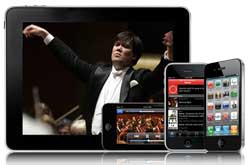
apple-interface-250wInstantEncore currently powers about 100 iPhone apps and 50 Android as well as hosting mobile web apps, which make an organization's website functional on a mobile phone. Their platform powers the app for the popular YouTube Symphony Orchestra, which, at over 125,000 downloads, and beats both the Taylor Swift and Linkin Park apps by about 90,000. Instant Encore also hosts the apps of notable organizations like the NY Philharmonic, Chamber Music Society of Lincoln Center, Cleveland Institute of Music and Houston Grand Opera.

I talked with Margo recently to catch up on Instant Encore's latest endeavors.

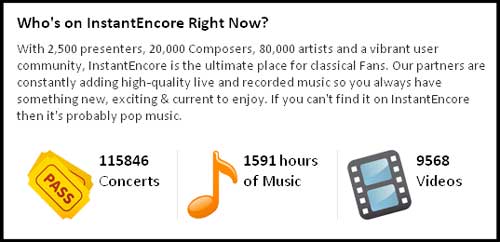
What is InstantEncore? InstantEncore.com is a classical music platform that enables artists and arts organization to harness the power of technology to connect with their fans anywhere, any time. We are the infrastructure! We have created the only classical music-specific digital asset management system that essentially allows our Partners from a broad spectrum of the performing arts world to enter digital content – event listings, ticket selling, audio recordings (streaming, download, public or private), video (live or on-demand), news, blogs, and photos - one time, and have all of their content published in real time to their own website, mobile apps, Facebook or Twitter accounts.
instantencore1 How did the idea for InstantEncore come about? Two things happened: I was playing cello for a living and I had sort of grown frustrated with the disconnect between musicians and the audience, where the field was going, and how technology was disrupting the traditional models. I felt passionate about re-personalizing the concert experience without losing artistic integrity.
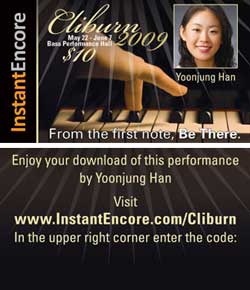
An InstantEncore concert card offering a music download.

An InstantEncore concert card offering a music download.

Meanwhile, I had the pleasure of meeting some wonderful engineers and they had a really powerful search engine specific for classical music that resulted in a high-end jukebox called Maestro. It had originally been created to help catalog vast CD collections, like that of our chairman/CEO. I was talking to them about how sometimes as a performer you would go to a live event and afterwards people would say “I loved the concert. How can I hear it again? How can I get a recording?” And of course I was always trying to sell some unrelated CD. So I talked to these engineers about this predicament that a lot of musicians always find themselves in, and so we actually created this concept of the “Instant Encore”—where you can take a card at the concert, go home, and download the content that you just heard.

How has InstantEncore evolved from the days of concert cards to now? Instant Encore started with a very powerful search engine that had organized and standardized all classical music meta data, and our objective was to build the tools that would enable fans to connect with the music and artists they love, in a personal, immediate way. We wanted to leverage technology to extend and enhance every aspect of the live concert experience. We are committed to providing the 21st century tools that will save organizations time and money by automatically or quickly powering their digital assets to connect with fans and engage sponsors.
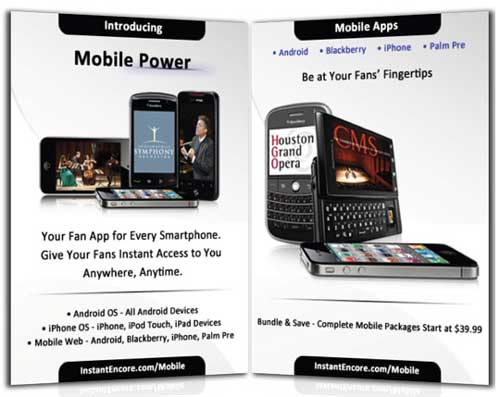
mobile_api_release-mobile-onlyw

How does the Instant Encore component fit in with an organization’s existing social media presences and organizational website? Our goal is to streamline redundancies and save resources. Right now, you have a lot of people that are trying to update their website, spending a great deal of time developing a content management system internally instead of spending development time and resources on the front end. Then there is the mobile space--if an organization does not have a good web-browsing experience from a smartphone, people will close the site. Then organizations are manually pushing content that is often a PR push to Facebook and then to Twitter as well. So there’s a great amount of time and effort in trying to maintain all these very necessary social network platforms.

Obviously details about classical music can be a nightmare to organize or for data entry. We have a very standardized way—unless it’s a world premiere, it’s all in our search engine’s system. For example, if you start to type in “Beethoven Symphony No. 5”, it’s going to have the opus number and the key and all the movements and you just click on that and it’s automatically transferred. So, you’re never entering all that information yourself, which is 1) time-saving and 2) tagged at the most specific level, which allows people that are not looking specifically for you to find you and you that already know you and want to find you to customize their experience.

Our system is set up so that you as a Partner can enter an event listing in moments in our secure Control Panel. By that one simple event creation in our content management system, it updates in your website with our webbuilder or more advanced API (Application Programming Interface—see the end of this entry for more information). posts to the partner’s social networks, mobile apps, etc. You can do a host of different things—tag your YouTube channel. You can manually upload music for streaming or download purchase. Or you can create a private download code campaign for donors or concertgoers. One of our most valuable features is this web crawler that goes through hundreds of RSS feeds and finds articles specific to arts organizations and tag any article from newspapers or blog. This can automatically appear in your app or website as the latest news, so you’re not having to physically manage your app or site but your content is current.
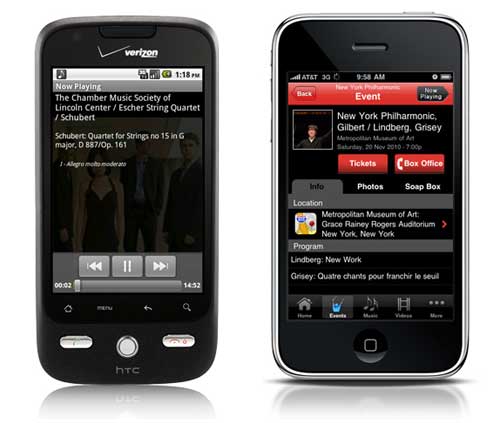
The music player feature on InstantEncore's Android app (left) and the events feature on InstantEncore's iPhone app (right).The music player feature on InstantEncore's Android app (left) and the events feature on InstantEncore's iPhone app (right).

So basically it’s just a one-stop shop. It’s a digital asset management system where you come to enter your content in one place and it goes to all the platforms that you’re using. We’re just an aggregator and publisher of that content… Our concept was that it should be something that a two-person organization can use our tools and manage and have a very robust, beautiful integrated social media presence or an organization with a budget over 10 million can use the same tool.

Regardless of all the features you offer, many organizations might have trouble getting the rights to use pieces of music or convincing players that a mobile app is somewhere the music should be. What are some of the arguments you can make to convince them that this is something worth doing? I come from the musician/recording side of things, am a current member of the AFM and as a child was a member of AFTRA and SAG, so I certainly appreciate where the musicians are coming from. What I think is important is that, fortunately or unfortunately (however you want to perceive it) we’re in a new period that is such disruptive change, brought on in part by technology and change is always painful. There are new great opportunities but the existing models and the days of residuals in the way that we used to know it, at least right now, are not there. I think it’s really important to actually be very upfront about this. Artists are highly intelligent people and creative people and have wonderful ideas to bring to the marketing and development side of the business. I think it is so important that everyone be a stakeholder charting this new world together.

I think part of this is taking a holistic approach and saying that there are certainly a group of people that are going to want a physical CD’s and there’s people that are going to want to download content. But there’s a certain group of people know who just want what they want, when they want it. We see from our stats that music or videos are increasingly having a very short shelf life. People will often want to hear a new live recording over and over and then they move on and that is it. I often say to my friends and colleagues that you have to have some faith and work together to try things. Every community and every audience is different, but if you don’t have the tools to even explore or try things, that’s very challenging. I think mobile is so essential. People will be accessing the internet via their mobile devices more than from a computer within the next few years. If you don’t have a good user experience to access your content via mobile or any content in it, in my opinion, I think it will be very, very challenging.

You mentioned that you are focusing your research efforts on return on investment in digital media and how orgs can get sponsorship for their technology initiatives. Can you tell me more? Why should anyone care about social media and an integrated digital strategy? Why should anyone care about having a mobile app? I’m a very “nuts and bolts”, frugal person. When I look at some of the organizations that I work with and see how much they’re spending on print material and yet they don’t want to spend a few thousand on a mobile presence, or want to wait a few years to see where this mobile thing goes, I think it is quite alarming. Showing people the return on investment is critical for them to care.
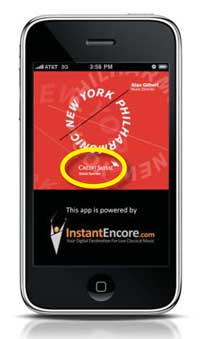
Many arts organizations' apps are sponsored by corporations or foundations.

Many arts organizations' apps are sponsored by corporations or foundations.

Many organizations we are working with have packaged a digital or mobile sponsorship package and in many cases, new donors or people who were not previously interested in sponsorship at a significant level, are excited to be part of new technology, sponsoring live video streaming on websites and mobile platforms and much more.

It’s built into our platforms—ways for people to feature sponsors, going through their audience to create new audiences, etc. What I’ve found is that I’ve been pushing organizations to think outside of their printed program with a printed logo and think, how can we think outside of the box and take the old ways that we used to monetize and seek corporate sponsors and take this into the digital space? Some organizations have come up with some fabulous things. Whether it’s embedded streaming announcements featuring sponsors, ad spots with sponsors, getting grants to cover new educational and audience development initiatives—various things. They’ve been able to monetize this in new ways, from new sponsors (not cutting out of other things).

I am very excited that Telstra, the telecom company in Australia, hired us to create a premium custom app for the Sydney Symphony that will include live video streaming of ten concerts in their mobile apps and website. This is a win-win for everyone.

How should arts organizations approach technology? There are so many platforms out there, there is so much information and everything’s changing so rapidly. I remember launching the app with the New York Phil and at that time, apps were still—people thought “what the heck is that?” So, the most important thing is to integrate digital media strategy into organizational strategy—into every aspect of decision-making across all departments. It involves PR, it involves marketing, it involves development, it involves operations, the audio recording department, musicians—absolutely everyone. I think that buy-in is essential. I think one of the most important things is just to start small and get permission to try something. If it doesn’t work, don’t let it validate that “this is never going to work” and if it’s a home-run, that doesn’t mean that it’s going to work the next time. It’s important to look at just getting started but with a clear, integrated strategy approach. And really, actually, there’s a lot of fear sometimes when it comes to technology and I think part of what’s been fun to see is that oftentimes, it’s a lot more fun than people necessarily anticipate and I think that that’s been a really rewarding part of what we’re doing.

When Thomas Hampson made his recital available for download and Performance Today, Minnesota Public Radio, and European Public Broadcasting Union announced it on air. We read the comments from people from around the world—from United Arab Emirates, to Germany to California to Wisconsin—about how that music impacted them and how grateful they were for that. I was very honored and proud that some of our tools could be helping to connect the power of his voice and his artistry globally in a way that’s never happened before. I think that’s really what it’s about and instead of feeling more protectionist, as scary as it feels, to embrace democratized access in this engaged age.

More info on Maestro API:
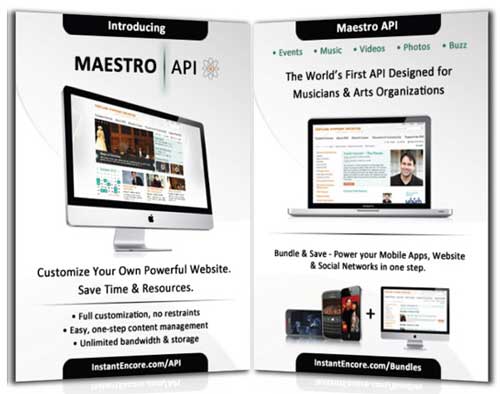
mobile_api_release-api-onlyw

A Guide to Mobile Marketing, Pt. 2: Check-In Platforms

In part 2 of this Mobile Marketing Series, let's examine the value of two mobile-based check-in platforms: Facebook and Foursquare. We'll take a look at how to properly set up your organization on these platforms and explore some creative ways to run check-in campaigns. Foursquare

As of December 2010, Foursquare reported over 5 million registered users worldwide. These users often use the platform to see what their friends are up to and discover nearby businesses and organizations that may interest them. Foursquare allows users to "check-in" via their mobile phones, collect points, let friends know where they are, and earn badges.

Foursquare Screenshot

Here's how to get your organization setup properly on Foursquare:

  • To register with Foursqaure, visit: http://www.foursquare.com/businesses.
  • Registering with Foursquare allows you to edit venue information, view analytics, activate and deactivate specials, and add employees.
  • One of the most valuable benefits to registering your organization is the ability for venue owners to view real-time stats like: total daily check-ins over time, your most recent visitors, your most frequent visitors, gender breakdown of your customers, what time of day people check in and the portion of your venue's check-ins that are broadcast to Twitter and Facebook
  • Bonus Tip: Just as with Google Places, your check-in campaign will be most effective if you ask customers to check-in. During the registration process, a business may request for Foursquare to mail them a free promotional sticker that invites users to check in.

Make sure to claim your FREE sticker when you register!

Facebook Places

Another popular mobile check-in platform is Facebook Places. A recent Merchant Circle survey (the largest online network of local businesses owners) suggested that Places is gaining popularity over other check-in services like Foursquare and Gowalla.

Facebook Places Screenshot

Here's how your organization can get setup in Facebook Places:

  • To claim your Place, search for your business name on Facebook via the normal Search bar.  If your business’s Place already exists on Facebook, click on it to  visit its page. At the bottom left side of your Place there will be a  link that says "Is this your business?" Click on the link and you will  be directed to a claiming flow.
  • By claiming your Facebook Place page, you can manage your place’s address, contact information, business hours, profile picture, admins and other settings.
  • Facebook also allows you to merge this Place page with any existing Facebook Fan Pages you may have. To do this, visit a place that you have successfully claimed, and scroll to the "Merge with existing Page" link in the left side navigation menu. Click this link, and a prompt will appear to walk you through the process.
  • Bonus Trip:  Facebook offers a fantastic resource on offering deals after you set up a Place page.

How Arts Orgs Are Using Check-In Platforms

Here are a few examples of how arts organizations are currently using check-in platforms:

  • Austin-based film and music festival South By Southwest decided to turn this process into a game.  The festival's website lists what types of badges users can compete for. In addition to competing for badges, points are also awarded to users who check in at unusual places or at early hours of the morning.
  • The Whitney Museum recently partnered with FourSquare on creating a custom badge. Users who unlock this badge can present their smartphones to the front desk and redeem a $5 admission to the museum. This is a great example of how organizations can offer deals to customers.
  • Brooklyn Museum      offers great incentives for customers who unlock the coveted 'Mayor' badge. Foursquare mayorships are awarded to customers with the most days checked into a venue over the last 60 days. If a customer is Mayor on their Target First Saturdays events, they can receive a 1st fans membership for one year. Brooklyn Museum's community page also utilizes      FourSquare's API to show who has recently checked in, what badges their customers are unlocking, and who has obtained the title of 'Mayor'.
  • These types of services could also be used for arts events like gallery crawls or for arts organizations to partner with local restaurants. A gallery crawl could provide a similar type of adventurous environment where users could compete for special badges and earn points based on how many organizations they check-in with during the span of the crawl.

So what about your organization? Are you registered with location-based social media sites?  If so, how are you using your presence there?  (Please, share your thoughts and experiences in the comments area below.)

In the upcoming parts of this series, we'll take a look at QR Codes, SMS, and mobile app creation!

Upcoming Webinar - Google Analytics - Boot Camp for Beginners

google-analyticsGoogle Analytics - Boot Camp for BeginnersTuesday, March 8, 2011 2:00pm - 3:30pm Eastern Register today for $25 Presenter: David Dombrosky

Google Analytics is by far the most widely used website analytics software, and it's free.  Yet many artists and arts managers pay little attention to what the analytics data is telling them about their websites.  Very few of us actually use the data to inform decisions about the design of our sites and the content that we post on our sites.

In this 90-minute webinar, we will:

  • Explore the various types of data captured by the Google Analytics service
  • Review methods for charting traffic to your site driven by your social media accounts
  • Discuss what the numbers actually mean and their implications for your site and your visitors
  • Articulate strategies for utilizing Google Analytics to make decisions regarding website design and content

David Dombrosky is the Executive Director of the Center for Arts Management and Technology (CAMT), an applied research center at Carnegie Mellon University investigating ways in which arts organizations can use online technology to more effectively meet their goals. He frequently presents technology and social media workshops for arts conferences – most recently for The Association of American Cultures, Performing Arts Exchange, Chorus America, Opera America, College Art Association, and Grantmakers in the Arts.

Do You Have Trust Issues? - Data Sharing and the Arts

This post also appears as a featured article on artsmarketing.org, hosted by Americans for the Arts.

TrustIssues

I recently had the privilege of facilitating a roundtable discussion in New York City focusing on issues related to data sharing among arts organizations. As Tiffany Bradley, Development and Marketing Specialist for Fractured Atlas, recently wrote:

As more organizations lead collaborative efforts, the implications of sharing data come to the forefront. Data sharing – whether for marketing, ticketing, fundraising purposes – raises a host of issues. Does pooling information about patrons lead to greater revenues for all parties? Or do organizations risk a negative response from patrons?

Hosted by Fractured Atlas as part of their “Issue Brunch “series and streamed live on the Internet via Ustream, the conversation featured the thoughts and voices of six arts professionals working with arts organizations, including NAMPRadio’s Maris Smith. While the roundtable covered a lot of ground surrounding the benefits and challenges of sharing data between arts organizations, the issue of trust emerged as the bonding force at the heart of all data sharing relationships.

Let’s face it. The idea of giving our data to someone else is anxiety-producing for most organizations. How do we know that they will abide by our agreement and use the data ethically? Yet, if we never place our trust in others, thereby initiating the relationship-building process, then we will never reap the benefits that may come from a data sharing relationship.

Now before someone out there becomes paralyzed with data sharing anxiety, relax. You already engage in data sharing relationships based upon trust. For example, many of us utilize Google Analytics to track visitor interactions with our websites. When we agreed to use Google’s service, we also agreed to share our data with Google. We acquiesce that Google will use our data to contribute to the web traffic data they have aggregated over time and for particular types of websites. However, we trust that Google will never give our websites’ specific data to anyone else without our permission.

Okay, I can hear some of you out there saying, “But that is an example from a service provider; it’s different to talk about sharing data with another arts organization.” No, it’s not. Data sharing relationships between arts organizations should have clearly articulated agreements detailing the data to be shared, the limits of what may be done with that data, and what contributors of the data will receive in return. Yes, these should be written agreements – or at least electronic agreements executed with digital signatures.

And just in case you skimmed over the last item of things to be detailed in data sharing relationships, I’ll rephrase myself. Data contributors should receive something in return for contributing their data. We are talking about data sharing relationships, not data giving relationships. Now, the quid pro quo of a data sharing agreement may simply be that the data collecting organization will provide contributors with overall or customized reports. That’s fine as long as the data contributors have a clear understanding of what they will receive in exchange for adding their data to the larger pool. Far too often, organizations may feel pressured to participate in data collection initiatives and surveys. One of the most important ways that you can maximize your data sharing relationships is to make certain that it is mutually understood by all parties what you will be receiving as a result of contributing your data.

While trust must be given, it must also be earned and respected in order for any data sharing relationship to grow. For example, Elliott Marketing Group has been working on two data sharing projects with numerous arts organizations in Pittsburgh, PA. In 2004, they worked with the Pittsburgh Cultural Trust to establish the SmArt database linking patron files for arts organizations in the city’s downtown cultural district for targeted marketing campaigns. In 2007, they partnered with the Greater Pittsburgh Arts Council to launch the STAR Direct Marketing Database, which allows smaller and mid-sized arts organizations in the Pittsburgh region to pool their patron data and utilize consulting services as well as “best prospect” lists for more efficient, targeted promotions.

The success of these data sharing programs did not happen overnight. The arts service organizations, the organizations contributing data, and the marketing group have spent years developing trust relationships with each other. Now, they have years of collaborative data, and the participating organizations clearly understand what they must contribute to the project and what they will receive in return. With each successive year, the data deepens. Correspondingly, the level of trust each of the contributing organizations has with the arts service organizations and the marketing group also deepens.

A final note on trust in data sharing relationships – don’t break it. Once trust is broken in any relationship, it rarely, if ever, regains its previous depths. For many of us, our data is a precious resource not to be taken lightly. So when a partner breaks our trust with them, our instinct is to take our data and end the relationship. When you negotiate the agreements for your data sharing relationships, always be certain to include an exit clause.

As I mentioned at the top of the article, the issue of trust is just one of many areas that we discussed during the roundtable on data sharing. To learn more about the roundtable, check out the preview video below or view the full discussion at Fractured U.

Livestream, Ustream, We all stream: A practical guide to streaming platforms

So many options...
With so many choices when it comes to streaming video, what's an arts organization to do?

A few weeks ago, I highlighted some emerging trends in arts marketing for 2011.  One of the trends was “changing media consumption”, part of which includes arts organizations streaming performances live, whether to ballparks or online.

So let’s say that your organization is interested in streaming a performance live as it is happening or streaming a pre-recorded performance at a scheduled time. What are your options as far as platforms for streaming that video? And which organizations are out there using these platforms?

YouTube: The Non-option for Live Streaming

YouTube is the big name for online video, but livestreaming on YouTube will only be available for content partners. YouTube has not announced when livestreaming capabilities will go live. Approved by YouTube, content partners are people and companies that post regularly to the site and so that they can monetize their content with ads and rentals, obtain better digital quality for their uploads, and use YouTube’s Insight analytics tools.

You can apply to become a YouTube content partner to gain the above benefits. They have a special program specifically for nonprofits that currently includes arts organizations like Anaheim Ballet, MOMA, and Pilobolus Dance.

So when should you use YouTube? As of now, it’s the most mainstream choice for video, and therefore the easiest platform on which to build a community. YouTube has also streamed major events involving the arts community, like the Guggenheim’s YouTube Play Event. You might use it to post clips of the streaming event after the event is over and to host videos long-term; but right now, don’t depend on YouTube to release streaming capability any time soon.

Brightcove/Ooyala: The Gold Standard

Brightcove is the high-end gold standard for streaming. Many major corporations use it, as well as arts organizations like San Francisco Ballet and the Royal Opera House. It’s best for larger companies with highly valuable and highly demanded content as well as companies who want to fully integrate their streaming efforts with other components of their technology portfolio, via APIs, SDKs and other programming tools. Ooyala has a similar high-end set up used by companies like TicketMaster and ElectronicArts. Brightcove and Ooyala are great for larger companies with a lot of resources at their disposal. However, the price may not be affordable for organizations likely to use livestreaming once a year and only intend to stream to computers or existing mobile platforms—as opposed to a projector that would require higher quality video or a customized mobile platform that would require extensive development.

Livestream, Ustream, and Justin.tv: The mainstream for livestreaming

You may be thinking, “Okay, Brightcove sounds great, but my organization is not nearly as big as the Royal Opera House.” The most popular choices for streaming video amongst American arts organizations are livestream.com and ustream.tv. Both platforms offer mobile integration, easy interfaces and most any other feature you would want. Livestream even offers monetization opportunities.

Justin.tv appears to be gaining market share, but fewer arts organizations are on it, and its audience tends to skew younger and more male than the other platforms. Organizations like Wolf Trap have streamed pre-recorded events on livestream, a necessity when subtitles must be entered. Last summer the organization’s opera company streamed a cabaret performance of two world premiere operas Bastianello by John Musto and Lucrezia by William Bolcom.

Lee Anne Myslewski, Administrative Director, described the opera’s choice to use Livestream. “We chose Livestream because the interface was the most intuitive and it seemed to work the most consistently on all platforms/browsers. (Intuitive is important!) We were also specifically looking for an integrated chat function so that the audience and the artists could interact in real time during the broadcast. The process was smooth – easy for even a non-video person to create. We did have some viewers struggle with the speed of the file and intermittent pauses, but that could have been due to any number of causes - file size, their connection speed, or traffic on the site. If we go forward with the project we’ll likely use them again.”

One of the most notable successes on Livestream was Misnomer Dance Theatre’s stream of a performance in April 2010, which reached 2,000 viewers in 19 countries. Organizations are not only using LiveStream and Ustream to broadcast perform footage, though. They are also using it for production diaries like Second Wind Productions, press conferences like the Detroit Symphony Orchestra and educational initiatives like the Orange County Public Schools Orchestra Programs.

DaCast: No fuss monetization

Increasingly, companies want to monetize online content, and a recent Pew study (good summary here by ReelSEO) shows that people will pay for it.  Monetizing content can basically be done in two ways: generating revenue through advertising, or having the consumer directly pay for online content (pay per view), which can be on a one-off or subscription basis.

LiveStream requires $350 a month for their premium service, which includes opportunities for monetization. However, if you want to monetize your content with less financial commitment up front, DaCast is a sensible option.

DaCast describes itself as self-service model. In a way, all streaming services are self-service, but DaCast allows companies to monetize their content in the same self-service way that you can upload a video to YouTube. The only fees that you pay are for bandwidth, with a minimum $5 commitment. (The first 10GB are free, too.) Most excitingly, DaCast has developed a plug-in for Flash which allows users to pay directly on their video screens, rather than clicking through to another page.

The question is: could a paid model be right for your organization? As DaCast CEO Stephane Roulland said, “This is an excellent question.” Aggregated sites like classicaltv.com and Ovation are already monetizing content. Classicaltv uses the pay-per-view model while Ovation uses the ad-based revenue model. The Metropolitan Opera’s Met Player might be one of the one of the only single-organization streaming sites. The key is figuring out if your organization will break even on the fees to secure the rights and the fees to stream.

More resources:

Data Sharing & Arts Organizations - Take Part in the Conversation

Data SharingOur friends at Fractured Atlas are relaunching their Issue Brunch series and have asked me to facilitate a discussion on the benefits and challenges of data sharing among arts organizations. As Tiffany Bradley, Development and Marketing Specialist for Fractured Atlas, recently wrote:

As more organizations lead collaborative efforts, the implications of sharing data come to the forefront. Data sharing - whether for marketing, ticketing, fundraising purposes - raises a host of issues. Does pooling information about patrons lead to greater revenues for all parties? Or do organizations risk a negative response from patrons? Integrating the range of software that arts organizations use is also a problem in its own right.

This panel discussion will be streamed live on February 11, 2011 at 1:15 pm EST via UStream at http://www.ustream.tv/channel/fracturedatlas. Online participants will be able to engage one another in discussion and submit questions for the panel.

Panel participants include:

  • Deborah M. Abramson - The Pew Charitable Trusts
  • Joe Harrell - Alliance for the Arts
  • Adam Huttler - Fractured Atlas
  • Barbara Janowitz - Theater Subdistrict Council/City of New York
  • Chrisopher J. Mackie, Ph.D - Open Health Tools
  • Maris Smith - Situation Interactive

So what has your experience been like with data sharing among arts organizations?  What benefits have you received?  How did you approach the organizational and technological challenges?  Leave a comment below and be sure to join us on Friday for what is certain to be an engaging conversation.

A Guide to Mobile Marketing, Part One

This is the first in a multi-part series of articles exploring various tools and tactics for promoting and marketing on the mobile web.

From museums and opera companies using QR Codes to festivals using Foursquare to launch a musical scavenger hunt, it's becoming apparent that designing a mobile marketing campaign can be one of the more challenging, creative and rewarding ways to engage customers.

Consider some of these recent findings:

  • Mobile campaigns are capturing an increasing level of consumers' attention across key metrics:  mobile ad awareness reached 31% in 2010, up from 14% in 2009 and 16% in 2008.

Smartphone Use On the Rise!

As smartphones increase in popularity, users are often utilizing this technology to discover local events and local businesses that may interest them. This has resulted in an increased demand for businesses wanting to implement effective mobile marketing campaigns. In this blog series, I want to examine what tools and strategies arts organizations can use to implement effective campaigns.

Location Based Tools

One of the most popular uses for smartphones is generating directions to and/or information about local businesses. Here are two tools that organizations can use to elevate their visibility to smartphone users.

1. Google Places:

With the recent launch of a Google Places App for both the iPhone and Android platforms as well as a scheduled Google Maps update for the Android smartphone, the importance of having an up-to-date listing in Google Places is extremely relevant for an effective mobile marketing campaign. Below is a screenshot of the Google Places app in action:

To ensure that your organization appears in a Google Places mobile search, you must first make sure that you register with Google Places online. Here's a quick overview of how to get started

  • Claim your business by verifying your listing
  • Add pictures and videos to make your Place Page more compelling
  • Review the Google Places Getting Started Guide for any other questions
  • Bonus Tip: If your organization receives a certain amount of positive reviews, Google will mail a window decal with a personalized QR Code. 200,000 businesses have already received these decals.
  • Bonus Tip #2: An easy way to boost your rankings in a Google Places Search is to make sure your business is properly listed in online directories like Yellow Pages and City Search. Google indexes these "citations" in order to determine what is most appropriate to a user's search query
  • Bonus Tip #3: According to a recent article on Mashable.com, Google Hotpot - recommendation engine and ratings/reviews system for places - has "officially gone worldwide."  Hotpot integrates with Google Places and also appears in Google search results.  Here's a brief overview of how Hotpot works:

2. Yelp Another popular app for smartphones is the local search platform, Yelp.  The company has reported that more than 41 million people visited Yelp within the past 30 days (as of December 2010). Yelp also reports that 27% of its searches come from its iPhone application. Businesses can setup free accounts to post pictures, special offers and send out messages to customers.

Just like Google Places, businesses owners must first register their organization on Yelp's website. Login to Yelp for Business Owners in order to create a listing for your business. One of the major challenges with maintaining a Yelp and Google Places profile is encouraging patrons to leave positive reviews. The easiest way to receive reviews, is simply to ask for them.

In upcoming posts, we will be examine: effective 'check-in' campaigns on services like FourSquare and Gowalla, how to set up QR codes, developing mobile applications, and how to run effective short code (SMS) campaigns.

Want to Reach [insert ethnic minority group here]? Try Being Relevant

Perhaps one of the most difficult and sensitive topics in the arts community is that of building audience diversity. As national celebrations like Black History month approach, artists, arts managers and arts organizations often brainstorm for ways to reach out to and include minority communities in their organizations, especially if there is special programming during these celebrations. As the Pew Research Study indicates,  minority groups do have a strong presence on Twitter, with 13% African  American and 18% Hispanic. There are also a host of groups within the LinkedIn and Meetup platforms that are exclusively for minority professionals. Many arts marketers are concerned that targeting groups of people based upon their ethnic background can come across as unethical or forced.

An example of one such social media marketing tactic popped up in my Inbox earlier this week courtesy of Thomas Cott's clipping-service "You've Cott Mail."  In this Clickz article, Giovanni Rodriguez suggests that using hashtags is an effective way to reach the Latino population on Twitter.  While the article appears on a website with general marketing advice that is not necessarily specific to the arts,  its inclusion in an arts-related clipping service suggests that this practice should be considered by arts managers.

The screen shot below shows one of these hashtag-driven discussions in action.

Hashtags in Action

The bottom of the screenshot shows a promotion for the Broadway musical Women on the Verge of a Nervous Breakdown using the hashtag "#latism."  An important thing to note is that the user promoting this event is NOT the Belasco Theater or the musical's production company, it is another person promoting Latino Events in general. While this musical is certainly relevant to the Latino community, the message is especially relevant coming from a community insider.

As an African American female who frequently uses Twitter to discover cultural events in which I may be interested, I can see how "community insiders" could either be offended or altogether ignore this type of "hashtag marketing" from someone outside of their community.  A random #Black or #BlackHistory tag from an organization I'm not familiar with would probably be ignored.

Reaching out to a key influencer or community-recognized group is a more genuine and relevant approach for social media campaigns.  One possible workflow might be:

  1. Define the target audience (young professionals, African American women, Hispanic youth, etc.)
  2. Pick an appropriate social media platform (Twitter, LinkedIn, Meetup)
  3. Find and connect with a key influencer on the platform (for example: @LatinoEvents or @ElementsofJazz on Twitter)
  4. Find and connect with relevant niche groups on the platform (for example: minority professional networking groups on LinkedIn and Meetup.
  5. Offer Value.  A great example of this is to host a special pre- or post-event gathering exclusively for these new community members whom you targeted.

This type of strategy boosts an organization's credibility within the communities to which they want to develop connections. It is also a more genuine way to build relationships.  As my colleague Amelia Northrup pointed out in a previous article on this topic:

At long last, the diversity question has come around to the classic “old vs. new” debate.  When faced with declining arts attendance, is it better to “pick the low-hanging fruit” and focus on maintaining and growing our existing audience demographics (”the more return on investment for less energy” approach) or make a long-term investment in trying to attract new groups of people to our performances?

Cultivating new audiences may be a daunting and often challenging task, but it is one of the most worthwhile investments that any organization can make.  A relevant and genuine outreach campaign is the first step in this important process.