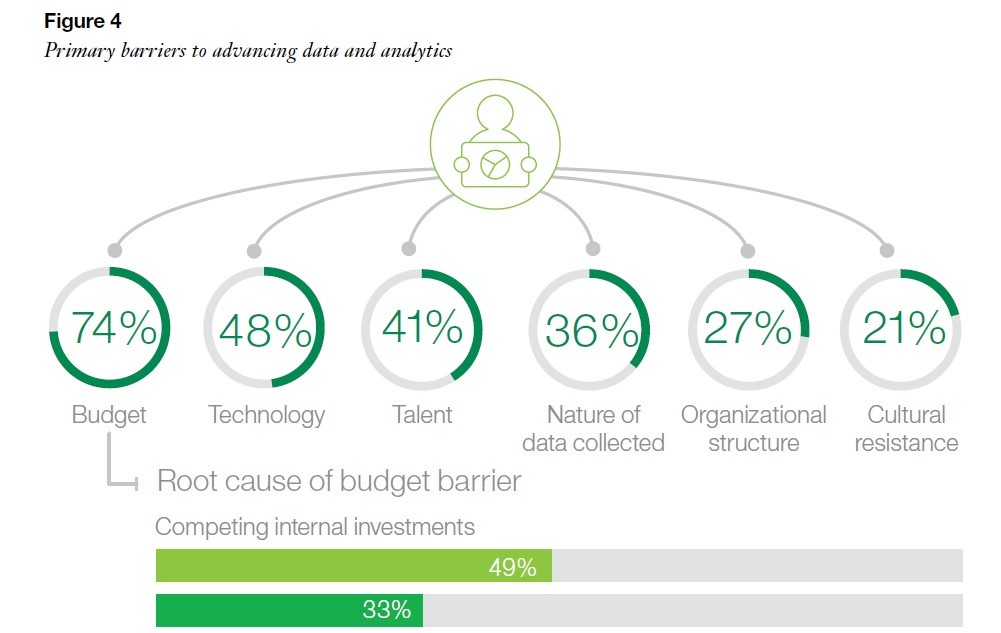
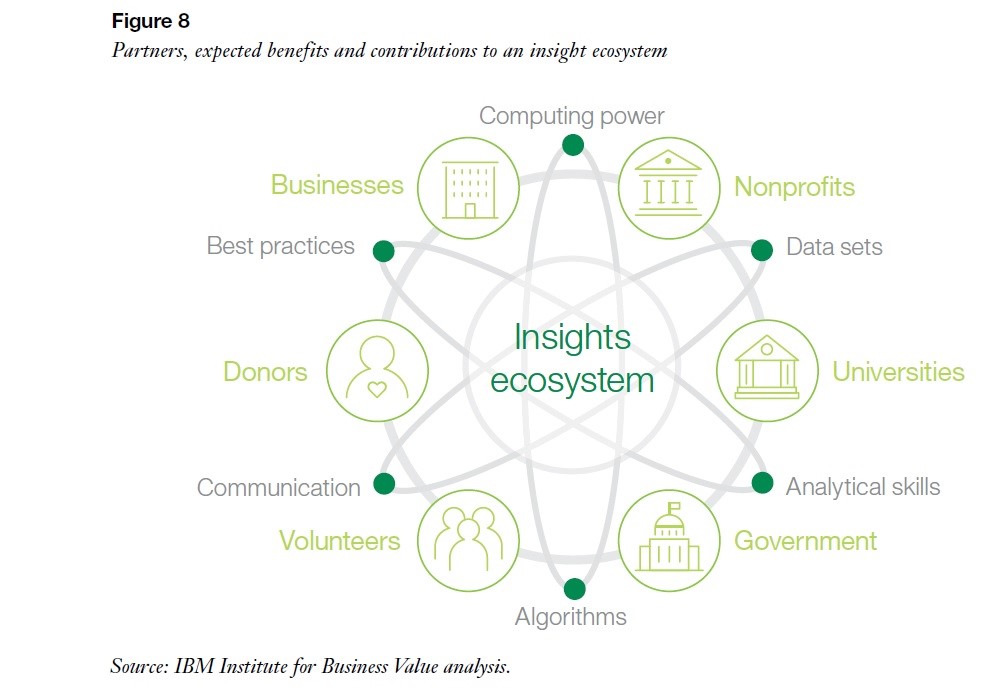
As demonstrated above, collaboration is actually a key component in the process to becoming a data-driven organization.
A clear strategic plan from a lead staff member concerning the critical nature of data in the arts/nonprofit sector is central to success. There must be a steadfast commitment to using data for major decision-making and a willingness to educate staff and other stakeholders about its benefits. Further, new data practices should align with the financial stipulations set forth by major funders and board members; data analytics must be presented in a way that buttresses the development of mission-based programming for real impact. In terms of internal staff, arts managers need to ensure that “actionable metrics” are defined and the organization invests in the necessary technology to measure said metrics. Data analysis can only be beneficial if the goals are defined and accessible through proper platforms. Consequently, data analytics best practices also require organizational leaders to inform staff of new data-focused operations and empower individuals to improve on their skills in the process. Outsourcing may not be necessary if staff members can be trained on new data software and have the desire to build on their current skillsets. Most important in the data analytics journey is that the emphasis on metrics will build or alter programming in a manner that furthers an arts organization’s mission, vision, and values. The metrics that show evidence of success should be analyzed on an ongoing basis, and should those metrics that show problematic trends should be via immediate changes in budget, programming, staff productivity, or which ever means seems appropriate. Behind all of these best practices lies an individual commitment to seek change; thus, the data analytics truly rests on the “human element” for real-world benefits to be had.
Conclusion
Arts organizations can no longer avoid the use of technology and digitized operational tools in preparing for long-term sustainability. Truly, data analysis is the best method for understanding, evaluating, and changing organizational practices: “Without data, it is impossible to measure financial and operational health, identify problems and measure organizational impact.”The most valuable aspect of data analytics that arts managers should realize is the ability to make relevant organization-wide improvements in alignment with the impact they hope to bring about from their mission statement. While data analysis can effectively aid in the acquisition of donors and retention of key audience segments, nonprofits can use these tools to decide which programming elements are bringing about the community benefits they are seeking (and which are not). Given that an organization’s mission, vision, and values reflect its identity in the community, it would be wise of arts leaders to implement data analytics and become advocates for data-driven decision making.
[1] IBM, “Leap before you lag,” (2017): 1.
[2] Ibid.
[3] Idealware, “The State of Nonprofit Data,” 2.
[4] Ibid., 11.
[5] Ibid., 7.
[6] Ibid., 2.
[7] Ibid., 13.
[8] IBM, “Leap before you lag,” (2017): 14.
[9] Ibid.
[10] Ibid.
[11] Ibid.
[12] Ibid.
[13] Ibid.
[14] Cardinal Path, “The State of Digital Data,” 10.
[15] Idealware, “The State of Nonprofit Data,” 3.