Gamification in the Arts, Part 3: Game Design

Gamification in the Arts, Part 3: Game Design

Game design is, unfortunately, something that not many people are skilled at.  The chances of being able to find and hire an experienced game designer in your area is slim.  This leaves two options: consultants, or the process of educated trial and error.  The iterative process:  create a game, try it out, go back to the drawing board and improve it, try again. Almost anyone can ultimately find success in designing a game layer for use with a marketing, development, or educational effort

A Digital Art Collection: LACMA and the Rijksmuseum

A Digital Art Collection: LACMA and the Rijksmuseum

There’s something neat about looking at your favorite work of art online. Services like the Google Art Project and Painting Portal allow users to view a multitude of works from around the world. You can zoom in way closer than you’d ever be allowed to be in a museum. You can return to the images online whenever you want, without paying an entry fee. And the latest trend we’re seeing, you can download the images for whatever you want.

So You Want to Be a Mobile Optimization Star?: 4 Lessons from the Kennedy Center

So You Want to Be a Mobile Optimization Star?: 4 Lessons from the Kennedy Center

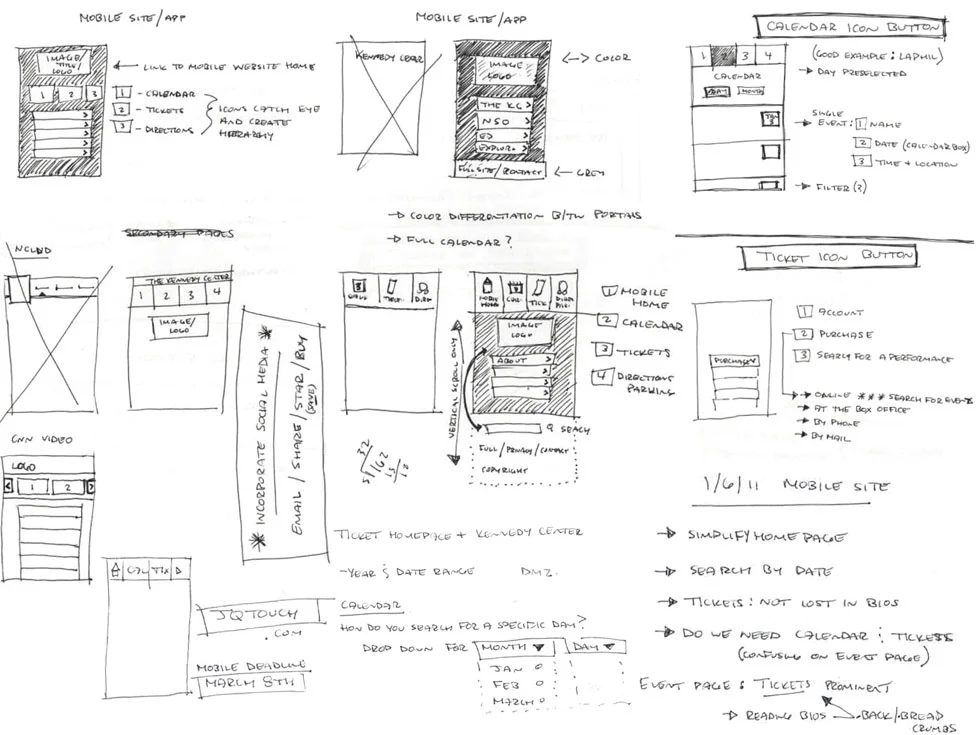
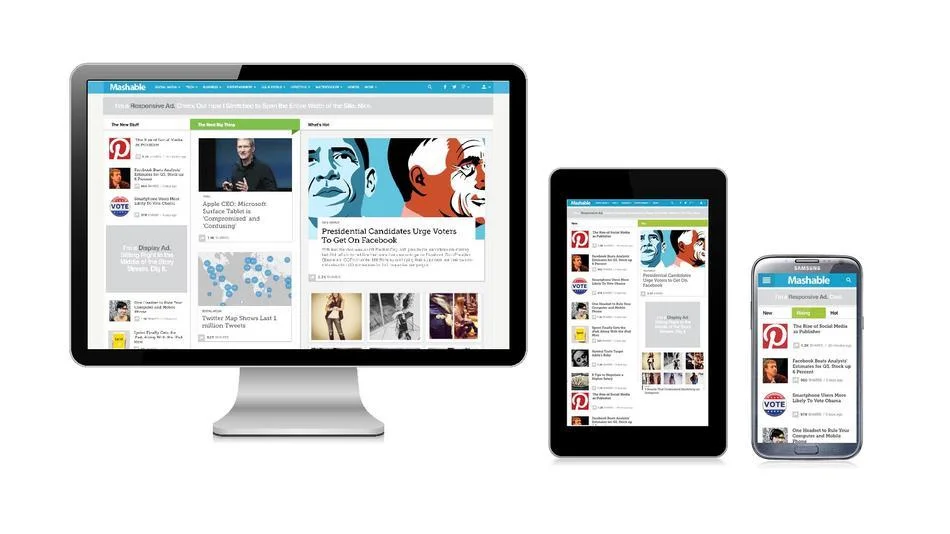
Focusing your resources on a great mobile website can often be a more cost-effective route than creating an app.  The Kennedy Center demonstrates the full potential of a mobile-optimized website with an efficient interface designed with patron usability in mind.  As long as mobile tech remains a relatively new outlet for reaching our constituents, there are countless things we can learn from their example, but here are 4 to get you started:

Want to succeed in social media marketing? Work with influencers!

Want to succeed in social media marketing? Work with influencers!

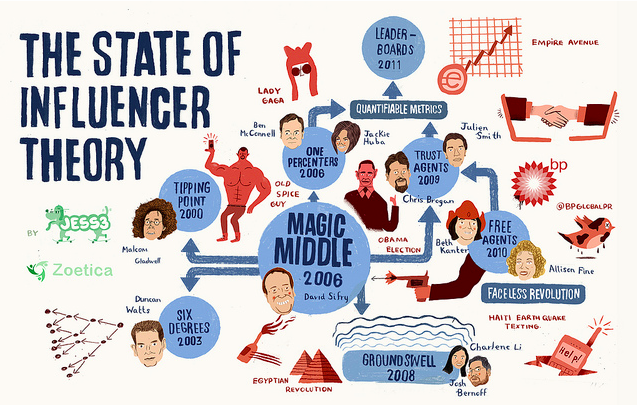
Are you the one who used to think the number of fans reflects the effectiveness of a social media campaign? According to a recent Technocrati study, Facebook likes ranked as the most important metric when evaluating a social marketing campaign. However, this changes when people are getting more sophisticated about using social media—they do not take seriously the “like” button anymore. Now, we need to realize that social influencers, who can spread a brand’s message effectively, considerably determine the success of a social media campaign.

Bringing Art and Discussion to a Computer Near You: Introducing Google Art Talks on Google+

Bringing Art and Discussion to a Computer Near You: Introducing Google Art Talks on Google+

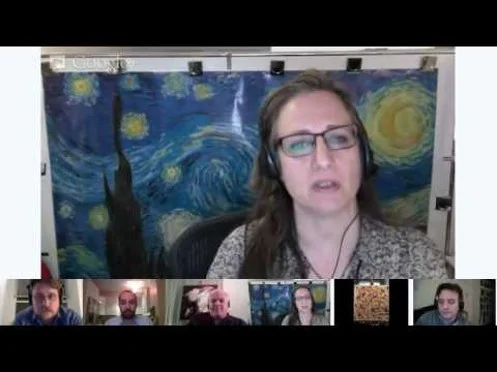
I am mildly obsessed with Google Cultural Institute. Why, you ask? It's two-fold. Firstly, Google has implemented its newest project to supplement the Google Art Project, Google Art Talks on Google+. As published on Google's Official Blog, "Each month, curators, museum directors, historians and educators from some of the world’s most renowned cultural institutions will reveal the hidden stories behind particular works, examine the curation process and provide insights into particular masterpieces or artists."

Is Computer-assisted Technology Killing Arts Designs?

Is Computer-assisted Technology Killing Arts Designs?

There is one unchanging feature about technology.  In a continuous process, the technology becomes ever smaller, faster, and cheaper. One of the examples lies in the jewelry industry.  The jewelry designers are rethinking their manufacturing practices, using state of the art computer software programs for designs that they would have done by hand previously. The reason why traditional methods are left behind is these computer-assisted designs can be produced faster and cause a proliferation in the market.

SXSW 2013: A Roundup of Topics and Trends... and Cats

SXSW 2013: A Roundup of Topics and Trends... and Cats

Carnegie Mellon University’s Heinz College, home to Technology in the Arts, recently hosted an official party for SXSW Interactive and Film 2013. The Austin, TX, conference/festival is often referred to as “Spring Break for Geeks,” because it offers technology industry professionals a chance to immerse themselves in the latest innovations while being served free alcohol every time they turn around.

Gamification in the Arts, Part 2: What games fit what demographics?

"Video games sit at the confluence of history, technology, and art in such a way that's found in no other medium  a place where influences from every creative field meet, mix, and recombine."  -Daniel D. Snyder, The Atlantic. When most people conjure the image of a gamer they generally think of the past:  a nerdy 18-25 year old male, probably white.  The face of gaming has changed significantly over the last twelve years and now both men and women, young and old, and people of all races are engaged in games on a regular basis.  Simply put, almost every conceivable group of people is now engaged in gaming, just not all groups are engaged in all types of gaming.

According to a report put out in 2012 by the Entertainment Software Association, the average American households have at least one dedicated gaming consul, PC, or smartphone and 49% of US households have an average of two.  Roughly a third of game players in the US  are over the age of 36, one third are between the ages of 19 and 35, and the remaining third are 18 and under (meaning that two thirds of gamers in the US are adults and that the average age of a game player in the US is 30!)  Also, gender wise game players are now split evenly with 47% of all electronic gamers being women.

"What we are seeing in games is art at a world class stage design that is almost unmatched anywhere else.  It has been very exciting to me to see so many ideas that integrate social good and efforts to make the world a better place through games."  -Al Gore, former Vice President of the United States

The way in which people are engaging with games is changing.  Console gaming (Microsoft X-Box, Sony Playstation, and Nintendo Wii) has been on the decline over the last couple of years while social media gaming and mobile device gaming has been on the increase.  Similarly board gaming has also been on the rise (according to the 2011 US Census section on Arts, Recreation, and Travel) for the last twelve years with the explosion of number and quality of titles and has drawn increasing numbers of 'board game geeks' who wish to connect with people in person in the face of an increasingly electronic world.

So who plays games?  What games do they play?  Electronic gaming wise, women tend to skew towards games like The Sims (which is the "World's Biggest-Selling Simulation Series", and "Best Selling PC Game of All Time"), dance and fitness games, and social media gaming.  Men tend towards first person shooters, strategy games, and sports games.  Both men and women tend to engage in role playing games in roughly equal numbers.  In the board gaming world less information is out there about consumption and engagement but it can be assumed, somewhat safely, that similar propensities exist throughout different platforms.

How can the arts harness this?  As arts groups such as The Tate, The Royal Opera, Jacob's Pillow, and other groups explore game like content and applications they can use this data to fine target the apps they create towards market segments.  As an industry, any arts group can use a game dynamic in order to drive deeper engagement in marketing or development.  Activities such as the Glass Hunt on the Oregon Coast have proven successful at driving interest in art through a game layer, in this case, a scavenger hunt.  Other groups such as 2am theatre have used applications such as scavengr to drive similar efforts in a combined physical and electronic fashion.  In the arts, a typical marketing campaign has a one way thrust:  "buy tickets, come see our show".  With games, can be enticed to have longer involvement time-frames and be induced to repeat engagement.

Has your organization explored the possibility of using a game dynamic?  Was it through social media, an app, or through an old school scavenger hunt?  What did you find successful?  What were your challenges?  This series will continue in two more weeks with an exploration of how to approach game design, test games, and implement them.  If you have questions regarding this topic or any others please ask them in the comments section!
Now Boarding on Platform One: Madrid’s Library Lending Machine

Now Boarding on Platform One: Madrid’s Library Lending Machine

Libro express (translation: Book express) is a new initiative and collaborative project between Madrid's libraries (las bibliotecas), the Community of Madrid (la Comunidad de Madrid), and Renfe (Spain’s state-owned train company). Libro express is the only library book lending machine of its kind in Spain and in Europe. 

Database Decisions for the Nano-Nonprofit: Part 1

Database Decisions for the Nano-Nonprofit: Part 1

Arts organizations of all sizes grapple with the question of how best to house information on the array of individuals with whom they interact. From ticket buyers to donors, members to volunteers, every arts organization builds a variety of relationships with a variety of constituents. Complicating matters, of course, is that many times these groups overlap. For the organization that wants to understand all the dimensions of its patron relationships, obtaining complete and nuanced profiles is often a challenge, time-consuming at best and impossible at worst. Recent years have seen a burgeoning of Constituent Relationship Management systems (CRMs), about which a wealth of literature is available.

If Van Gogh Had Google Glass...

According to Google executives, Google Glass, a new type of high tech glasses, will be released to the public at the end of this year. By bringing heads up display-style views into our daily life, Google’s Glass project will enable users to interact simultaneously with their surroundings and the internet in a dynamic and instant way. An engineer who had the opportunity to try out the Google Glass released a video showcasing how she will use Google Glass in the future:

[embed width="560" height="315"]http://youtu.be/9c6W4CCU9M4[/embed]

The tech giant has set up a competition on Twitter and Google+ to explore potential ways to use the new product and give some lucky winners the shot at owning a pair of Google's glasses. "We're looking for bold, creative individuals who want to join us and be a part of shaping the future of Glass" writes Google. If you don’t think Google Glass will impact Arts Management, you sure might after reading the following 10 interesting ideas posted @Twitter #ifihadglass :

  • I would use it to show people how I make it through life and do to work on my art,missing my right arm.
  • I'd treat the world as my canvas; I'd share the art that is the human experience, and rejoice in music, travel, life and love!
  • I would record the process start to finish as I make new pieces of art.
  • I would show the galleries and art exhibits for others to see the art if they don’t have time, and the art scene in San Francisco.
  • I'd give free guides to tourists explaining the history and meaning of obscure pieces of art.
  • I would like to use google glass in Art museums to pull up all information and references for each artwork I viewed
  • I would be excited to test potential uses for museums, immersive experiences and digital learning about art, culture, history.
  • Analytics and Art. Figuring out what parts of the day my brain drops from memory, where its focusing, and why.
  • Explore the combination of the virtual and the real through performance art. Collaborate with fellow artists through what I see.
  • If I had glass, I would redesign the way that we shoot videos and take photography, helping viewers immerse themselves in art.

One of the most amazing impacts of Google Glass would be that Google Glass  has the ability to offer a new perspective for audiences to appreciate art—from an artist’s perspective. Google Glass enables an artist to record and show the whole process of making an artwork, offering opportunities for audiences to watch every minute change the artist makes in the work. Imagine if Van Gogh had recorded his process from start to finish when he was painting "Sunflower," how amazing it would be if his audience saw how he mixed colors, sketched on canvas, drew lines, or grabbed a painting brush. Everyone is likely to think as an artist if he/she could watch the birth of an artwork from an artist’s eye. I believe that by appreciating artworks from an artist’s perspective, audiences will be moved and surprised by details that cannot be seen from the final artwork, or noticed from curators’ words, since the power of art lies in the creation process more than the final “product”.


Gamification in the Arts, Part 1: Assessing your organization and patrons

Gamification in the Arts, Part 1: Assessing your organization and patrons

In the next two months a multi-part series will be published on this blog outlining how to assess, develop, implement, refine, and measure gamification as a potential tool for your arts organization.   This first round of tools will allow you to better discern whether your organization is ready for the project, and if patrons would engage with a game project.

To App or Not to App: That is the Question

To App or Not to App: That is the Question

Arts marketing and communications blogger Marc van Bree (aka Dutch Perspective) proposes that apps may not always be an ideal mobile option for arts organizations.  Studies comparing web browsing and mobile apps are inconclusive regarding projected user popularity in coming years, leaving organizations with multiple possibilities for cultivating their mobile presence.

Technology Start-Up Links to Artists and EVERYBODY wins

Technology Start-Up Links to Artists and EVERYBODY wins

Dr. Gang Lu, the Founder & Chief Editor of TechNode.com, and independent China Internet business observer, researcher, and open-concept evangelist, firmly believes the Internet environment is still young in China and it is beginning to change and evolve. Far from slowing down, the past two years have brought a new challenge of entrepreneurship to Lu and his team after  launching Kuukie (pronounced “cookie”), a custom, digital card print house with a social media edge in 2010. After over four years as an “unprofessional, professional tech blogger” covering both Chinese Internet and tech industry news and analyses, Lu didn’t feel right offering up advice to entrepreneurs if he himself did not have start-up experience. With his background and passions, social marketing seemed the logical choice for him, but it was only the beginning.

Tweet Seats at the University Musical Society

Tweet Seats at the University Musical Society

There's been a lot of chatter lately about Tweet Seats. The NEA hosted a series of blog posts about #2TweetOrNot2Tweet, we brought up possible legal issues last week, and before I leave you all for the weekend, I'd like to point you towards a great post from ArtsFwd. If you, or anyone you know, is considering Tweet Seats, you should really read this post.

GPS Indoors: ByteLight's Indoor Positioning System at Boston's Museum of Science

GPS Indoors: ByteLight's Indoor Positioning System at Boston's Museum of Science

Who: Dan Ryan and Aaron Ganick, the founders of ByteLight, a Cambridge, Massachusetts start-up. What: A positioning system using LED lights enabled with the capacity to broadcast location data in indoor spaces, in real time, and without WiFi or GPS. Little satellites, if you will.

The Pew Research Center's Report on Arts and Technology

The Pew Research Center's Report on Arts and Technology

The Pew Research Center recently did a survey and report about how various arts organizations use technology including the internet, social media, and mobile technology.  The report confirms that the arts are adapting to the overwhelming saturation of technology, particularly the internet and social media, and are venturing into deeper levels of engagement such as blogs, podcasts, and educational content.