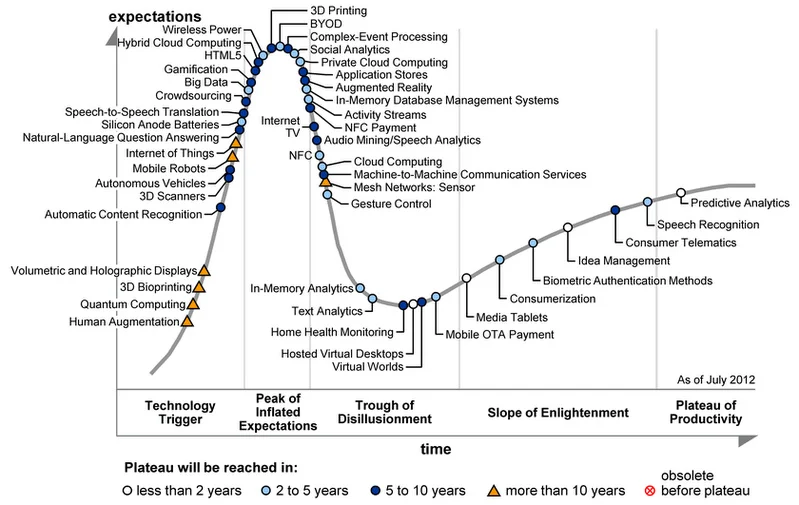
In the next two months a multi-part series will be published on this blog outlining how to assess, develop, implement, refine, and measure gamification as a potential tool for your arts organization. This first round of tools will allow you to better discern whether your organization is ready for the project, and if patrons would engage with a game project.
To App or Not to App: That is the Question
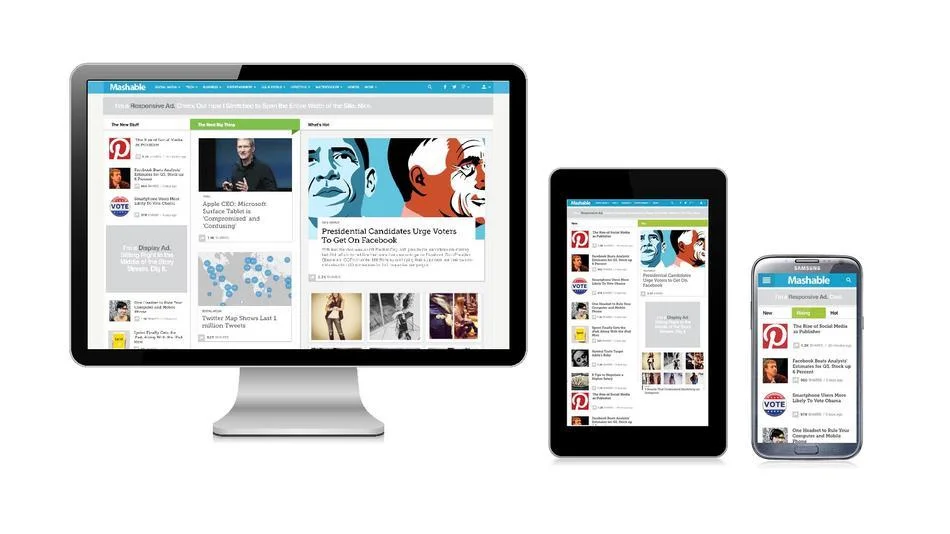
Arts marketing and communications blogger Marc van Bree (aka Dutch Perspective) proposes that apps may not always be an ideal mobile option for arts organizations. Studies comparing web browsing and mobile apps are inconclusive regarding projected user popularity in coming years, leaving organizations with multiple possibilities for cultivating their mobile presence.
All You Need Is #TechLove
Valentine's Day might have been invented by greeting card companies, but we don't mind! We've compiled a list of our favorite apps and even got some of our followers to chime in. We got all sorts of suggestions from Twitter from our friends using #techlove. Here's the technology we'd like to send some valentines to:
Technology Start-Up Links to Artists and EVERYBODY wins
Dr. Gang Lu, the Founder & Chief Editor of TechNode.com, and independent China Internet business observer, researcher, and open-concept evangelist, firmly believes the Internet environment is still young in China and it is beginning to change and evolve. Far from slowing down, the past two years have brought a new challenge of entrepreneurship to Lu and his team after launching Kuukie (pronounced “cookie”), a custom, digital card print house with a social media edge in 2010. After over four years as an “unprofessional, professional tech blogger” covering both Chinese Internet and tech industry news and analyses, Lu didn’t feel right offering up advice to entrepreneurs if he himself did not have start-up experience. With his background and passions, social marketing seemed the logical choice for him, but it was only the beginning.
Tweet Seats at the University Musical Society
There's been a lot of chatter lately about Tweet Seats. The NEA hosted a series of blog posts about #2TweetOrNot2Tweet, we brought up possible legal issues last week, and before I leave you all for the weekend, I'd like to point you towards a great post from ArtsFwd. If you, or anyone you know, is considering Tweet Seats, you should really read this post.
GPS Indoors: ByteLight's Indoor Positioning System at Boston's Museum of Science
Who: Dan Ryan and Aaron Ganick, the founders of ByteLight, a Cambridge, Massachusetts start-up. What: A positioning system using LED lights enabled with the capacity to broadcast location data in indoor spaces, in real time, and without WiFi or GPS. Little satellites, if you will.
The Pew Research Center's Report on Arts and Technology
The Pew Research Center recently did a survey and report about how various arts organizations use technology including the internet, social media, and mobile technology. The report confirms that the arts are adapting to the overwhelming saturation of technology, particularly the internet and social media, and are venturing into deeper levels of engagement such as blogs, podcasts, and educational content.
Cross-Sector Partnerships in the Arts: Fendi and the Trevi Fountain
At a press conference on Monday, Fendi designers announced the fashion house will finance the restoration of two fountains in Rome, the
Quattro Fontane and the iconic Fontana di Trevi, or Trevi Fountain (built between 1732 and 1762). The US$2.9 million (€2.18 million), 20-month project will be completed in phases, as explained by Fendi designers Karl Lagerfeld and Silvia Venturini Fendi. These phases will include the re-waterproofing of the main basin, the cleaning of the façade and marble statues, and restoration of the gilded inscriptions. The Trevi Fountain will remain open to tourists throughout the restoration process (fear not tourists, fear not).
This announcement comes at a time when the funding for and preservation of cultural heritage sites in Italy is uncertain. Fendi, however, is not the first big-brand fashion name to take action in the preservation of Italy’s cultural heritage. Tod’s, an Italian company producing leather shoes and bags, is currently financing the restoration of the Coliseum for US$34 million (€25 million). Further north in Venice, Diesel, an Italian fashion company, is funding the restoration of the Rialto Bridge for US$6.7 million (€5 million).
Of course, these generous donations do not go without recognition. For Tod’s, the funding agreement provides the company the rights to the Coliseum’s logo for 15 years, as well as branding Coliseum tickets with the company logo. Fendi’s sponsorship of Rome’s grandest fountain will be recognized by a small plaque to be placed near the fountain for four years.
The city council and Mayor Gianni Alemanno of Rome are hopeful these interventions will continue, as the preservation of the country’s past is in peril. Alemanno said, “Without similar initiatives, we won’t be able to save the cultural memory of our country.” Though council members are supportive of the private sector’s involvement in the preservation of Italy’s cultural heritage, some conservators are wary. They fear private-public partnerships will commercialize monuments of national pride, turning sites of inherent meaning and cultural significance into fashion advertisements.
The private-public partnership between Fendi and the Trevi Fountain is just one of many examples of a paradigm shift in the cultural sector regarding what Alemanno says is, “a new system of cultural patronage.”
The Peril of Tweet Seats
Stop me if you’ve heard this one – your local symphony has an upcoming production, and in order to draw in a younger crowd offer Tweet Seat tickets. The young kids come, spend the performance merrily on their phones, and head home. The next week, the symphony is slapped with a cease and desist – wait, what? I’ll start at the beginning. Tweet Seats are a new engagement tactic for performing arts organizations, utilizing social media and modern technology. The idea is that some seats in your house are reserved for people who wish to utilize their phone during the show. These patrons use Twitter or other social media to discuss and engage the performance at hand. Usually these seats are less expensive and in the back of the house, so as to not disturb the other patrons.
Some people (read: me) love the idea – others hate it, and the most thoughtful question its ability to truly increase engagement. Regardless, Tweet Seats are here to stay. Huffpo has written on them, Wolf Trap has used them, and now some troll claims to have successfully patented them.
The story dropped back in March, but it’s still very relevant to anyone considering using Tweet Seats in an upcoming production. Inselberg Interactive is the company holding the patent, whose language refers specifically to sporting events, but they have already demanded license fees from a nonprofit theatre in Connecticut. Ars Technica has the full story and analysis, but it basically boils down to this:
The company holding the patent doesn’t claim to have invented the smart phone technology or the social media apps Tweet Seats utilize. They claim to have invented the process of, I don’t know, tweeting at live events. Still with me? Good.
Patents, according to the US Patent and Trademark Office protect inventions and improvements to existing inventions. They also, according to my one semester of law class, must be novel and non-obvious. This patent was issued in 2005: Twitter didn’t exist and baby Facebook was just starting to let high school students in. At that time, this probably was a novel idea – but it was just an idea. Patents don’t usually apply well to ideas, they need a more tangible form.
Patents can be challenged and litigated against, but that costs time and legal fees. Given that this troll has turned their focus to the non-profit world, it’s unclear if those are available resources.
And when you consider that patents have a minimum shelf life of 14 years, I don’t think it’ll be going away unless someone smacks them down in court.
The Meaning of the Moment
On November 16, The New York Times published an essay by its music critic Anthony Tommasini reflecting on several of his favorite moments in classical and operatic repertoire. “I’m not talking about big climactic blasts or soaring melodies,” he writes, “but about some fleeting passage, an unexpected twist in a melodic line, a series of pungent chords, a short theme that reappears briefly in a new musical guise. Often these moments are subtle and quiet, almost stealthy.” He describes such moments as magical, fleeting, transcendent. Be it listening to a piece of music, sitting in a theater, watching a dance, or gazing at a piece of art, lovers of every art form surely know the sensation of which he writes—those split seconds where time seems to stand still and we are immersed in a realm beyond ourselves. As part of the project, Tommasini asked readers to share their own experiences of musical treasure. Overwhelmed by the response (to date, the query has received 875 replies and counting), what followed is a nine-part video and blog series in which Tommasini takes off the hat of critic and dons the role of teacher. Each video dissects one particular musical moment. Seated at his piano, Tommasini plays through the passage in question, simultaneously discussing its musical narrative and highlighting the particular nuances that cause it to grab the listener just so.
[embed width="560" height="315"]http://www.youtube.com/watch?feature=player_detailpage&v=AkeOC36Bmpo[/embed]
Like any fine instructor, Tommasini presents the subject matter with enthusiasm and knowledge. But unlike a lecture from an expert, the relevance of the session is derived as much from the audience as the teacher. Essentially the project asks devotees of an art form to reflect on their devotion. The subject is important not because an expert declares it so, but because the listener does. Tommasini comments in a follow-up essay on December 9 of the passion, intelligence, and clarity with which readers replied. Of the end of Debussy's Clair de Lune, one writer comments on the change of a single note, resulting in a "subtle change of harmony, like the instant of recognizing first love on a moonlit night." These moments, though brief, are deeply felt and moreover, personal.
As an engagement tactic, it’s a strikingly simple concept. Ask your current audience what moves them. Nudge them to remind themselves of their passion for what you do. In the process, create a forum for lively conversations to occur and then listen to what is shared. Tommasini’s “Musical Moments” project, of course, is able to utilize the human, financial, and technological resources contained at The New York Times. But with such a fundamental question driving it, we wonder if any arts organizations have taken on similar endeavors. To current arts managers who follow our blog, how does your organization garner feedback from the audience about their motivations for the art form you present? To arts patrons, have you participated in anything along the lines of the “Musical Moments” project? Would you want to?
Image Credit: Jillian Tamaki, Copyright 2012 The New York Times Company.
Jon Schwartz & The Kids Like Blues Band Program: How technology and music help children learn
“We’ve managed to incorporate tons of technology into our classroom. Over 90 % of my students have personal blogs. Through their individual blogs, the kids can keep their parents in the loop and show off their creative skills. I get instant email updates when they blog, and nothing is cooler than seeing one of my students post to their blog – over the weekend!- about guitars they wish they had! Oh how I can relate!”
------Jon Schwartz
Can you believe a six-year-old child is as proficient as you do in Photoshop and blogging? Yes! That is what’s happening at Garrison Elementary School located in Oceanside, California. Jon Schwartz, a blues guitarist and a second grade teacher, creatively uses the blues, blogs and Photoshop, as tools to educate kids. Jon’s teaching endeavors, creativity and energy seem highly relevant to arts engagement opportunities for organizations across the country.
The Kids Like Blues Band Program is about using blues music and lyrics as a springboard for teaching academic content standards in reading, writing, listening, speech, social studies, and the visual and performing arts. Based on a careful song selection, Jon chooses lyrics with the appropriate cadence, imagery, and kid-friendly content. Students then sing out the vocabulary given the rhythm, and in turn practice reading through repetitive and engaging activities. The kids themselves are encouraged to choreograph cool dance moves and motions to help them define and recall complicated vocabulary.
These activities provide children an encouraging and exciting environment that motivates them to learn new knowledge and unleash their creativities. Chuck Berry’s “Let it Rock” is one of the most popular tunes.
[embed width="560" height="315"]http://youtu.be/Nlg5n9GmpZE[/embed]
Students who are learning English, have speech difficulties or other learning disabilities, and just plain shy kids seem to develop more confidence as they learn the songs since the material presented to them is an engaging group practice, rather than them needing to talk by themselves in front of the whole class.
See how a Japanese girl benefits from the project:
[embed width="560" height="315"]http://youtu.be/8hCWFIPmD5Q[/embed]
Additionally, both high achieving and struggling students who have made tremendous gains tend to take leadership roles in their enthusiasm generating creative opportunities, such as designing dance moves, coaching others, blogging the artworks.
See how children create artworks through Photoshop and Blogging:
[embed width="560" height="315"]http://youtu.be/xt4AZ5XWQsM[/embed]
“Perhaps most importantly, my students’ self esteem is soaring and they are becoming passionate about lessons that would have otherwise been dull..”said Mr. Schwartz. These strong emotional responses to the arts are exactly what arts educators wants to generate in the children, what arts organizations want to generate in their audience, and what art wants to generate in the human soul. Mr. Schwartz’s model of creative participation and engagement can be translated to audience engagement models through online groups or onsite post-experience workshops. The opportunities abound for the arts to become as exciting to your audience as they are to these students.
Resource:
You will see all of the articles, TV features and 4 videos on their official website www.kidslikeblues.org
Last Call! Tech Challenges in the Arts Management World
We'll be closing our audience poll this Monday, January 21. Now is the time for you and all of your arts-oriented colleagues to tell us what tech challenges you face on a regular basis. Then check back for results! [polldaddy poll=6814063]
Did Black Friday Shopping Kill Social Media Advertising?
“Marketers looking to get more the most bang for their buck with […] advertising might skip social media altogether” – Lauren Gores (Mashable)
The words stopped my social media manager heart cold – Facebook barely contributed anything to Black Friday sales and I can already hear the complaints now: Black Friday is the biggest shopping day of the year. Everyone goes shopping on Black Friday. Everyone advertises on Facebook. If Everyone didn’t use Facebook to make purchasing decisions on Black Friday THEY NEVER WILL and we might as well give up now.
I could hear hypothetical red buttons being pushed as non-profits all over the country shut down their social media outreach. I was panicking. But were my fears entirely founded? Could non-profit organizations have a profit-driven relationship with social media, or is it strictly for community engagement?
This matter is irrelevant if non-profits are not using social media. Fortunately, the 2012 Nonprofit Social Network Benchmark Report indicates that nonprofits are extremely present on social media. Ninety-eight percent of the nonprofits surveyed reported they had a presence on Facebook, and 72% maintained a presence on Twitter. This is especially impressive when you consider only 66% of American adults online use Facebook (Brenner) and only 15% of online adults utilize Twitter (Smith). Additionally, nonprofits manage an average of 2.9 pages on Facebook and 1.43 accounts on Twitter (“2012 Nonprofit Social Network Benchmark Report”).
Why are these organizations so aggressively creating spaces for themselves in these realms? The organizations themselves identified marketing and fundraising as the top two purposes for maintaining a social media presence (“2012 Nonprofit Social Network Benchmark Report”). These purposes are separate and not equal, however, as 93% identified marketing as a purpose while only 55% identified fundraising. Most reported that the responsibility for their social media pages fell to the Marketing department in 2012. This was a departure from every previous year, when the task fell to Communications. It is pretty clear that nonprofits feel their social media presences are vital marketing tools in a digital age.
Of course, I should return to the original question – should we panic at the concept of using social media to hawk one’s wares because mega retailers couldn’t hack it on Black Friday? Maybe. IBM reported that Facebook generated only 0.68% of online sales on Black Friday – less than last year’s Black Friday and actually much less than the sales generated on the Friday the week before (a whooping 0.82%) (“IBM 2012 Holiday Benchmark Reports”). Twitter contributed a grand total of 0% of the revenue – that’s not rounding down. That’s just a 0. Additionally, the IBM report also notes that the conversion rate of shoppers was only 4.58%, meaning that less than 5% of Americans who visited a webpage actually purchased anything on Black Friday.
Before anyone actually gives up hope for internet commerce, let’s consider these mysterious Black Friday shoppers. Marketers would have you believe it is Everyone who shops on Black Friday, as a matter of American tradition. This falls a bit short of the truth. A Gallup poll conducted before the actual day shows that only 18% of respondents planned to do any shopping on Black Friday (Newport). The majority of these respondents, 95%, listed the good sales/cheap prices as an “important reason” for their decision to shop on Black Friday. This is consistent with such a low conversion rate – potential shoppers visited webpages to search for deals and if they could not find them, simply left. So the idea of social media advertising being a failure is less true than it first appears: only a small percentage of Americans shop on Black Friday, most who visit a webpage do not purchase anything, so social media could not play a huge role in these sales because there was no huge role for it to fill. Additionally, as a Mashable article on the story pointed out, social ads “are a part of a larger strategy” that move people off their computer and into stores (Mashable).
Which brings me back to the question of whether or not social media should be used to sell things. The non-profits arts community has been considering this question recently as well. The past National Arts Marketing Project Conference (NAMPC) featured a panel on the subject. “Meet Your Customers Where They Live: How to Harness the Sales Power of Facebook” generated a lot of buzz on Twitter as attendees livetweeted the core messages of the panel. Twitter user Katy Peace (@katymatic) suggested the panel “has finally made a compelling case for this FB ticketing app.” Nella Vera (@spinstripes) quoted panelist Lisa Middleton in her tweet, “Lisa Middleton: FB sales for arts will succeed for same reason it failed for other retailers. Buying tix to cultural event is SOCIAL. #NAMPC”. Reinforcing the social element, Facebook profile pictures appear in the seat the user has purchased, creating a holistic, engaging experience.
“Tickets purchased on Facebook show Facebook profile pics in the seats purchased by that person. Brilliant. #NAMPC” - @ASC_CathyB
For me, that’s the rub. Social networks are called “social” for a reason. Social media marketing creates engaged online communities, and engaged communities will support a nonprofit. Only one third of the nonprofits who use Facebook to fundraise utilize individual giving (“2012 Nonprofit Social Network Benchmark Report”). I think there is a real missed opportunity for non-profits to use social media as something more than marketing, and it lies with the few people who are willing to shop on Black Friday.
There is an interesting correlation between the users of social media and Black Friday shoppers. The largest group of respondents (34%) who indicated they would go shopping was ages 18 to 29 (Newport). Social media usage tends to skew towards younger users as well; half of Facebook and Twitter users fall between the ages of 18 and 35 (49% and 60% respectively) (Hampton). These users fall within the age range of the Millennial generation. Millennials know what they want and are interested in advancing a nonprofit’s mission. The majority (55%) prefer to learn about a non-profit organization through social media and even more (67%) have interacted with a non-profit on Facebook (“The Millennial Impact Report 2012”). Millennials prefer to give donations to non-profits, and an incredible 75% of them gave a financial gift to an organization in 2011.
In theory, this seems like a perfect recipe for success. We have a large population (the Millennials), who likes giving to organizations, and we know how/where they would like to send their contribution. And yet, only about half of non-profits actually fundraise on social media and these efforts are coming from Marketing, not the Development department (“2012 Nonprofit Social Network Benchmark Report”). Where’s the disconnect happening?
Perhaps it correlates to the size of the gifts: Millennials tend to give less than $100 to any single organization (“The Millennial Impact Report 2012”). Many small non-profits may not have the time or resources to invest in cultivating such small gifts. These organizations have to consider the future investment of these individuals, however. Seventy percent of Millennials did give online last year, they prefer to give online, and that probably won’t change any time soon.
At this time, a profit-driven approach to social media is still a fringe idea within the non-profit world. There are options for organizations who want to be on the cutting edge, like ticket sales and fundraising through social media platforms. These ideas, while nascent, have been used to a degree of success by the organizations brave enough to adopt them. For the rest of the non-profit community, utilizing social media as a marketing tool is still a good strategy. And, while it’s disheartening that social media contributed so very little to Black Friday sales, it probably is not relevant.
Crowd-Sourced Curating at the Brooklyn Museum
As the arts world continues to discuss and reconsider what it means to participate in the arts, the Brooklyn Museum is testing a new construct of audience engagement with its current exhibit GO: A Community-Curated Open Studio Project. GO combines two existing tactics: inviting the public into studios of working artists to see where and how artwork is made, and crowdsourcing the selection of that artwork through an open voting process. Unlike ArtPrize, an art competition in Grand Rapids, MI, that awards cash prizes to artists as determined by public vote (juried awards were added in 2012) and cited by the Brooklyn Museum as inspiration for the current exhibit, GO asks participants to nominate artists—rather than specific pieces—whose work they would like to see exhibited at the museum. The catch is that to be eligible to vote, participants must first visit at least five artist studios, which in turn requires that the museum be able to track where people go. The answer is a multiphase project begun this past September and culminating in an exhibit of Brooklyn artists, on display through February 24.
To participate, the museum first asked individuals to register on the GO community project website. Then, over a two-day open studio event involving nearly 1,800 artists in 46 Brooklyn neighborhoods, participants “checked-in” at each studio visited by way of a unique number displayed onsite. By sending that number to the museum either by text message, a free custom iPhone app, or the web, participants documented where they traveled. Those who checked-in at five or more studios received an email with instructions on how to vote, having earned the opportunity to nominate up to three artists. The museum tallied the results, sent two of its curators to review the work of the top ten nominated artists, and selected five to exhibit.
But GO didn’t stop when the voting was done. By asking participants to check-in, the museum was able to analyze how many people went where, when, and what platform they used to check-in, all of which was then shared in a series of posts on both the GO blog and through the Statistics section of the GO website. (Among those findings: Despite multiple mobile-friendly options designed especially for the event, nearly half of the 6,100+ participants chose to simply write down studio numbers throughout the day and check-in via the project website once back home, surprising project coordinators.) The website also provided a forum for participants to discuss (in real time and afterward) what they did and did not like about the process, share stories from their studio visits, learn about nominated artists, receive updates on the creation of the exhibit, and provide reactions to the final exhibit itself.
The exhibit has been criticized by some for not aptly representing the rich artistic quality Brooklyn holds, and is generating commentary on the age-old curatorial question of who should decide what constitutes “good” art. While a worthwhile debate, it seems to belie the larger point of the project: to expose people to the creative process, and ideally, to facilitate a better understanding of it. On that score, GO appears to have succeeded mightily. As project coordinators tagged entries in the Shared Stories section of the website, one of the most frequent themes to emerge was that of discovery. It seems that by opening studio doors, inviting people to participate in the curatorial process, and sharing reactions online, GO fostered meaningful interactions among artists, voters, volunteers, and museum staff, and in the process, created an innovative approach to engage audiences in the arts.
Time of Transition
Does something seem different? Did we get a haircut? New pair of glasses? Start working out? Can’t quite put your finger on it?
Technology in the Arts recently embarked on the beginning of a yearlong journey to assess our role in the world of arts management and technology. Externally, you may notice changes to the look of our site as we continue to update our WordPress infrastructure. Internally, we are engaging in a strategic planning process to reposition and rebrand Technology in the Arts to better serve our audiences.
Part of that effort is to learn more about YOU. Throughout the coming months we will be polling our users to find out what challenges, triumphs, needs, and desires are lurking in the professional niches you inhabit. We invite you to participate, submit comments, and check back to see what we’re finding. What types of content would be most helpful to you? What questions do you have? What excites you? Where do you see arts management and technology intersecting? Where don’t you?
Transitions are afoot. Let’s begin!
[polldaddy poll=6814063]
As You Consider a Web Page Redesign...
You might do well reading this article on museum website recent redesigns and considering the statistics from a recent patron study. http://www.artsjournal.com/realcleararts/2013/01/museum-websites-are-getting-better-but-i-have-two-pet-peeves.html
Happy New Year from Technology in the Arts!
Welcome to the new year! Technology in the Arts had an amazing 2012, and we're looking forward to an even stronger 2013! There's always room for improvement, and the staff was kind enough to share their tech resolutions for the coming year. Check them out on the right!
In 2013 I resolve to...stay off my sisters' Facebook accounts (maybe) and to make my daily photo blog an ACTUAL daily photo blog! - Elizabeth
In 2013, I resolve to use Facebook, Pinterest, Twitter, and Instagram more frequently than Chinese social media.I will develop a good habit to reply every important email within one day.I resolve to regularly read about latest technology.I will convoy my exciting new findings of the world to others via social media.- Vivi
I resolve that my 2 year old son doesn't start figuring out how to use a new tech tool before I do. - Kathryn
Publish an e-book on Gamification in the Arts, learn how to use my new smart phone (my first one oddly), and find an employer that loves technology and the arts as much as I do. - Andre
I will master preziI will be a better Facebook friendI will spread creativity at least once a dayAnd, of course,I will read, like, tweet and follow technology on the arts! - Brett
This year I develop concrete social media campaigns and finally upgrade to a new phone! - Rachael
We had many great articles here on Tech in the Arts in 2012 - here's but a small sampling of our fantastic pieces:
Data vs. Message: Which wins arts patrons?
Pinterest 101 for Arts Organizations
How Google Art Project Benefits the Public
Gaming or Gamification: A Tool for the Arts
Looking at the Land: The Crowdsourced, Digital Exhibition (Part 1) (Part 2)
Take off your fundraiser hat! Kickstarter Tips with Stephanie Pereira
Redefining Participation: Notes from the Newspaper Industry
Telemarketing is Dead - and I killed it
SFMOMA Families App Drives Away Gallery Fatigue
As 2013 begins, we can't help but be excited about the future. What technologies are you excited to learn or master in the coming year?
The Importance of Operating a Social Media Campaign
While readers of Technology in the Arts are likely active participants in social media and early adopters of all technology, the following guest post provides additional fodder for those still convincing their organization's leaders that social media is a necessary step for the organization. Guest Correspondent: Eric Taylor
Eric Taylor is a business developer and a writer for the Facebook ad campaign tool Qwaya, which focuses on building tools for social media marketing. Qwaya provides information, tools and up-to-date news about Facebook marketing strategies. The site aims to build a sophisticated tool with powerful features that are user-friendly and affordable for online advertisers and marketers world wide.
Social Media Campaign Opportunities
Have you considered creating a Facebook page yet? If not, you may already be behind the 8-ball in terms of brand awareness. The majority of new businesses today are focusing intently on social media marketing, and practically every popular brand across the globe has some sort of online presence.
There is a lot to gain from starting a social media campaign. Sure, a business or organization might be able to achieve success without developing an online social presence, but with the lay of the land today, there is really no reason to risk it.
Unless you reside under a rock or live in an area with total Internet blackout, you already know just how prevalent social media is in today’s culture. To not develop a campaign and an online presence would simply be foolish in your part.
Why Marketing in Social Media is a Must-Do
Constructing Channels of Communication
No matter at which point in history a business rose to prominence, communication has always played a role in the success. With social media, the options of communication are vast. Especially for those working with visual products, social media has opened an entire new way of communicating.
Take Brooklyn Museum for instance. Via their Facebook page, art enthusiasts around the globe can follow the production of exhibitions, watch videos and follow peoples’ discussion about the museum. This “content” is not just great for the fans, but also serves as a marketing channel.
Facebook as a marketing channel can be honed to an extremely narrow scope, communicating specifically with those more likely to purchase from your business, or you can use your social channels to carry out broad communication to boost your brand’s presence. Or both.
Using social media sites enables you to easily open up multiple channels of communication.
Keeping Your Base Satisfied
Not everyone who sees your updates will become a customer, but you can make people interested in what you do by consistently delivering high-quality material at a frequent rate. This ensures that your visitors are more likely to become fans, and that fans are more likely to become customers.
By using social media to communicate with customers and to operate an open, honest campaign, you’re also turning customers into long-term repeat customers. Your brand becomes interactive, and instead of acting as just a logo or a name behind a product or service, you put an authentic face to the business. This creates satisfaction across the board.
High Return on Investment
There are a few reasons why operating a successful social media campaign will offer you a higher return on your investment. First and foremost, you have to understand that you’re not investing nearly as much. Keeping up a social presence doesn’t cost a lot. You’re mostly investing your staff time with no advertising dollars spent.
Then there’s the fact that social media engagement rates are through the roof in 2012, especially on Facebook and specifically with quality content created with the target audience in mind. Fans and customers see more personality in the material and thus they’re more likely to click-through, sign-up, purchase, and most importantly, they’re more inclined to keep returning.
But engagement is even more important for businesses that are not (only) in it to make money. While, many traditional corporations still see most revenue from TV, billboards, magazines and other unsocial advertising formats.
For organizations with a mission, social marketing can be their biggest advertising format. Let’s look at Brooklyn Museum again.
Brooklyn Museum’s social fan base:
- Facebook: 71,000 fans
- Twitter:386,000 followers
- Instagram: 36,000 followers
So if the Museum would like to communicate something, they will instantly reach hundreds of thousands – people who have chosen to follow the museum online. In other words, they’re not random people but the perfect target group for social advertising.
These social-media efforts certainly help the campaign of getting people to donate money, which is presented in a Youtube video and is the first thing you see when entering the website. Getting this reach and these results through traditional marketing would be too expensive for a lot of businesses and organizations, especially when the fan base has very specific interests and is scattered all over the world.
If you haven’t started a social media campaign yet, whatever type of business you’re operating, there’s no better time than now to get started. You might not take off and become the most popular brand out there, but a light yet strategic social presence is better than no social presence.

Data vs. Message: Which wins arts patrons?
What’s more important, what you say or who you say it to? Some might argue that a precisely defined target market can trump the creative message or offer. Proponents of the “killer offer” believe the right compelling message will overcome an imperfect effort to define the “who” in the equation.
I’m convinced that data, not guesswork or intuition, must drive sales and contributed revenues. A perfectly crafted message sent to the wrong prospect or patron is not only a waste of money, but damaging to the relationship we are trying to foster with our patrons.
So, message doesn’t matter? Wrong.
Data is incredibly important –and has arrived as the Secret Sauce of winning supporters. But data alone cannot drive success.
In his brilliant book, The Power of Habit, New York Times staff reporter Charles Duhigg explores how habits guide our lives as citizens and consumers – especially consumers of brand name products. Brands become habits that are very hard to break. If you live in a Tide or Crest toothpaste household, it is almost impossible to change the habit of buying those specific products.
Enter retailing giant, Target.
Like major retailers everywhere, Target collects terabytes of information about consumers and their purchases. Their desire to exploit moments of potential brand fickleness prompted Target management to look at changing purchase patterns as a predictor of specific significant consumer readiness to buy.
“Pregnant women and new parents are the holy grail of retailing,” a Target analyst told Mr. Duhigg in an interview for his book, which was excerpted in New York Times Magazine. They have much to buy and are relatively price insensitive. And, new brand habits can last for decades. Predicting pregnancy could be worth millions from a small group of customers.
From data, Target learned that pregnant women buy more vitamins and specific minerals, unscented lotions and soaps, hand sanitizers and a few dozen other products. Their data analysts actually built a model to predict a due date for the baby.
Data wins, right? No. As Mr. Duhigg reports, it turns out that “hiding what you know is sometimes as important as knowing it.” Sending a likely pregnant mother coupon offers for diapers or discounts on maternity clothing may be good direct marketing but likely will be seen as a creepy intrusion into a customer’s private life.
For Target, the solution became one of messaging – meaning that they could successfully make expectant baby offers so long as the offer appeared to be random or non-specific to the pregnant woman. Diapers and lawn mowers. Vitamins and DVD players. If the offer appeared to be directed to everyone on the street, she would respond. Target sales to likely pregnant moms soared.
During the recent presidential campaign, Obama volunteers made millions of outbound telephone calls with scripts that included questions asking voters to visualize their behavior on Election Day. “What time of day will you vote?” “Will you drive or walk to your polling place?” “Which route will you take?” Such visualization techniques markedly improved the probability of the voter’s carrying through with the desired action – in this case, casting their ballot on Election Day.
Considerable research is emerging around the use of offers that rely on social or peer recommendation to encourage a positive action. The rise of Facebook, Twitter and other social media channels offers limitless opportunities to build virtual communities around any idea. When coupled with expansive data resources, the effectiveness of social media and other tools for creating new patrons and deepening existing relationship grows exponentially.
But data does not create relationships. Data is just an inert tool that allows conversation, cultivation and the building of relationship to occur in a much more efficient way. And ultimately, patron values only rise when a sense of relationship exists between people: patrons, artists and the art that is being created. Passion is an indispensable part of the equation. Obama campaign architect, David Plouffe offers,
If you want to "…build a grassroots campaign, ... it's not going to happen because there's a list or because you have the best technology. That's not how this works. They have to build up that kind of emotional appeal so that people are willing to go out there ... and spend the time and their resources and provide their talents ... But the reason those people got involved was because they believed in Barack Obama. It was a relationship between them and our candidate."
This concept has deep roots. Four decades ago, Danny Newman counseled arts organizations to host house parties that brought together friends from the country club, bridge club and PTA. His goal was to use peer community networks to get neighbors to encourage neighbors to “Subscribe Now” – to support the local ballet or symphony orchestra. And it worked.
As humans, we crave community and relationship. Tools like Facebook and predictive modeling allow arts organizations to tap into the DNA of our patrons and their communities – and do so in a very efficient way. Ultimately message trumps everything.
What have you learned from using data to craft your message?
Planning for When Things Fail
A recent article in Wired magazine by Robert Clapps focused on failure of things: helicopter parts to car tires. It is a good read and carries with it lessons. One of which is very important to the arts: failure can be costly and dangerous.
Every physical thing in an arts organization from the stage lights to the copier machine to the building itself will eventually fail or need maintenance. As technology is frequently outdated, technological failures can happen through breakage but also through communication incompatibilities, discontinuation of support from the manufacturer or author, and through failure of a connected system that enables the technology. There are several different aspects to failure and avoiding additional loss when it happens, indeed many large corporations have entire departments dedicated to failure and maintenance analysis, risk assessment, loss mitigation, and analysis of these issues.
Whether you are looking at a minor failure causing inconvenience or a major failure that endangers lives it is incumbent upon arts managers to minimize risk proportionate to the danger to people, operations, and physical collateral. Most of the arts sector has a replace it as we go mentality with a budget for facilities and equipment maintenance and replacement. Some organizations also rely on insurance to mitigate against catastrophic equipment failures. There are sometimes even departmental or organizational plans and schedules.
If not present already, incorporation of a regular organization-wide facility, technology, and equipment assessment should be a high priority for organizations of any size. These assessments can then be used to accurately determine how much risk and what type of risk is present and how likely failure will be to happen. Risk assessment should be given a monetary value that reflects the type and severity of the nature of the potential failure and assigned proportionate weight in budgets. For instance, a technological failure resulting in a breach of network security can lead to personal information of patrons being compromised and not only effect the finances of your organization but also those of your patrons.
It is not enough to rely on a vendor to determine risk in many situations. Software companies of all sizes test for security but it is notable how often failures occur. Vendors are frequently the authors of software, the testers for the products, as well as the salespeople and support staff. As such it can be difficult to get an unvarnished assessment of the true strength of software from vendor.
To combat this you need to do your research. When reviewing any new or existing piece of technology, hardware or software it is wise to take a multi-format approach. Read reviews and talk to colleagues in both your field who are using the product but also those in the software field. Often times there are chat boards that can also offer illuminating insight as to the strength of software based on or interfacing with another piece of software (such as Apache for databases). Any system is only as strong as its weakest component and, at an application level, you will be looking at not only the strength of the application but also the operating system that it was written for, their age, and their compatibility with other applications (including operating system based security, application based security, and network security.)
Finding a balance between planning for the future and available money can be a challenge but on the other hand planning for the future can also save your organization money, heartache, and increase efficiency over time. Nonprofit Technology Network and Idealware both have resources and education for technology planning and can help get you started. If you have additional resources that you would like for your colleagues to be aware of, please post them in the comments!