Arts & Technology

The Art of Social Media Analytics, Part 1

Summer is the “off-season” for many of us in the arts world. Why not take this time to refresh your social media strategy? This is part 1 of our three-part series on social media analytics tools.

Brain1
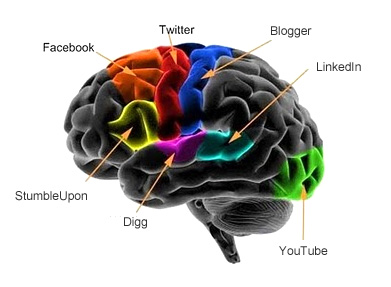
This is your brain on social media. Image from Your Social Move.

Social media marketing is an artistic endeavor as well as a scientific one. We use the right side of our brains to create the perfect message that will engage our audience and the left brain to crunch numbers on views, comments, etc. We know instinctively how to talk to our audiences, but we don’t always know how they are reacting to that message beyond a peripheral “feel” of the importance and sentiment behind the comment or action. There is often not an obvious way to categorize or quantify reactions to gain insights into your audience’s thoughts and feelings and to chart your own impact.

With the economic situation as it is right now, nonprofit employees are under more pressure than ever maximize their productivity and capacity. With technology, and social media in particular, as the most nebulous, mysterious, and constantly shifting elements of an organizations’ marketing/PR operation, it can be frustrating to track social media interactions and to gain resources from management for social media. Often initiatives face “death by delay” or end up being based on assumptions rather than data. At the Center for Arts Management and Technology, it’s one of the issues we talk about most often amongst ourselves and to clients.

It’s not just the arts, though.

In the non-profit arts world, we have the tendency to think that we are insulated and that our problems are due to a lack of time or resources. Some of these questions are ones that the social media field as a whole is trying to answer. While in the Masters of Arts Management program, I participated in a Social Media Analytics class where we had real-life clients. My team was working on the account of a major sportswear manufacturer. At first I thought that the questions that this company would have about social media would be very different than the ones that I worked on at the Center for Arts Management and Technology for our mostly non-profit arts clients. However, the more we worked with our client, the more similarities I noticed in the questions they asked about ROI, tracking, and analysis of social media initiatives.

Throughout the research that I’ve done and the conversations that I’ve had, I’ve heard social media right now described it as “the wild west”. Like web analytics was in its infancy, we are just now building the hallmarks and benchmarks for social media analytics. It’s an exciting time, and an extremely fast-paced one. If you have been keeping up with how businesses are using social media for the last five years or so, you’ve seen Facebook dominate MySpace, then Twitter edge its way in. As we moved to mobile, a slew of geo-location platforms arrived on the scene and now we’re trending toward game-based platforms.

As much as social media trends change, it is imperative to have a social media strategy, not just to spend your marketing dollars most effectively, but also to get to know your audience better. How do you get a social media strategy? You need information first. That’s where analytics come in. There is a wealth of information about your patrons hidden in their interactions on social media—like your own on-going focus group. But (A) how do you get to that information and (B) how do you draw conclusions from it?

A. As of today, what are your options for social media tracking? There are thousands of analytics tools out there and more being developed every day. Nonprofit arts organizations are faced with a dual bottom line: to serve the community and to create, present or preserve great art. Which tools are most useful to a nonprofit arts organization in gauging how they meeting the dual bottom line? In Part 2 of this series, we’ll take a look at some popular analytics tools and how to evaluate the tools out there given your organization’s more specific goals.

B. How can you use analytics data to make management decisions? There are many ways to slice and dice the data you might get from those tools. What are some strategies for using the current tools available? How can you make a confident decision about what is essentially a moving target? Given the tools and tactics in the above questions, when is it worth it to pay for analytic tools? In Part 3, we’ll address the problem of structuring your social media tracking efforts to find information relevant to your day-to-day decisions.

4 Tools for Creating Websites on the Fly

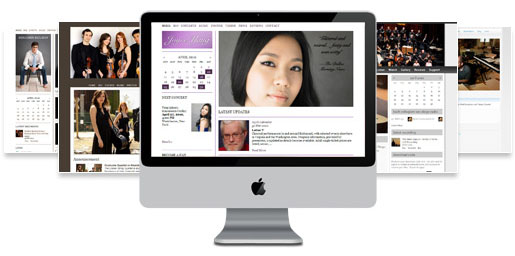
websiteRecently, I’ve been hearing about website creation platforms for artists, musicians, and designers. (They are also great for student portfolios!) These days, many people are starting to focus their efforts on mobile apps or websites, but still more may lack a functional, easy-to-use website in the first place or need a secondary site, like a company intranet or a micro-site for an exhibit or show. I’ve found four that are worth checking out if you’ve been thinking about creating a website. The interfaces for these website creation platforms are very easy to use, with no coding required. If you have all your copy ready and your songs or artwork prepped, you can create a professional-looking website in about an hour, hosted by the site. Many of them are cheap or even free. Here’s a four tools for creating a website on the fly: Wix.com: Individual artists and small organizations

One of the easiest, cheapest (free!) options I’ve seen out there is Wix.com. It produces great looking websites, with hundreds of free templates. Best for individuals or small groups, there are lots of options for photographers, designers, or artists here, and I also saw a few modeling/acting pages and a musician page with a music player for musicians or ensembles.

Wix is really good for people who just need something simple and don’t care too much about the site being particularly flexible. For example, I ran into problems posting lengthy text (like a full resume) in the page of the website, because the page sizes are set. Of course, you always have the option to link to an outside page or a PDF if this happens, but it’s important to be aware of the limitations. For this reason, I would recommend this tool to individual artists/ensembles or smaller organizations who just need something simple that they don’t necessarily want to deal with updating very often.

Another disadvantage is that Wix uses Flash, which means that the site cannot be viewed on iPhone, but for sites that will likely be viewed only on desktop/laptop computers or Android phones, Wix is fast, easy, and free.

Google Sites: A helpful collaboration tool

Google Sites (formerly Google Pages) also has some good options for individual artists, but what really impressed me was the templates built specifically for business collaboration. These sites may be useful for arts managers who are working on projects with outside companies or production managers who are trying to coordinate a design team who are working in 5 different cities in the initial planning phases of a production. Google also emphasizes that many businesses use Google Sites for company intranets or wikis.

There are a number of versatile templates, which you can play around with here.

Maestro WebBuilder: Classical Music Organizations, Ensembles and Artists

webbuilderFor those of you who are still hung up on the Flash-iPhone compatibility issue, I have two tools for you: InstantEncore’s Maestro WebBuilder and WordPress. Maestro WebBuilder is part of the InstantEncore suite of tools for classical music organizations and musical artists who primarily play classical music. (We had a fascinating interview with the COO of InstantEncore a few months ago--check it out.)

What’s great about Maestro WebBuilder is that, by building your website through InstantEncore, you are already set up to pull all the information into a mobile website or app. Maestro WebBuilder is a paid tool, but it's cheap, and it gives you the flexibility to easily convert content on your site into a mobile platform and makes it extremely easy to streamline all your social media presences into one system.

Wordpress: A tool for nearly everyone and everything

When you think of WordPress, you probably automatically think “blog”, but you can also build a nice-looking and functional website on the platform. Of course, it is the ideal choice if you want to fold a blog into your site. For example, the Technology in the Arts blog is run on WordPress. The front page is the most recent blog articles, of course, but we also have a number of “static” pages or pages that change less frequently with (shameless plug) resources for the arts field, publications we’ve produced, and webinars focused on ways that arts managers can use technology to meet their mission and goals.

With WordPress, there are thousands of templates out there, some of which are cheap and some of which are free. You can find a very professional-looking one without spending a lot of money. Ceci Dadisman of the Operagasm blog is a big advocate of WordPress as a way for arts organizations to save money.

It's also a good option if you are not a web expert, but want to/are willing to learn the basics of content management and HTML. It's easy to set up and maintain a basic site, but there's room to grow if you decide to get fancy. There are the thousands of WordPress plug-ins out there that you can download to jazz it up. For example, look at the top of this post. See the box with the number of times this article has been tweeted? That’s a WordPress plug-in! Scroll down to the comments section. Disqus pulls in comments from Twitter and Facebook. That’s also a WordPress plug-in! You have lots of options to connect your site with the greater community.

Upcoming Webinar – Inspiring Online Audiences: Jacob's Pillow Dance Interactive

The word "engage" gets thrown around a lot. But what does it really mean? Our upcoming webinar takes a look at how arts organizations can inspire their audiences through online platforms by focusing on a case study from Jacob's Pillow, which recently launched their own online exhibit.

Inspiring Online Audiences: Jacob's Pillow Dance Interactive May 9, 2011 2pm-3:30pm Eastern Register today ($25)

How can online engagement with arts audiences be meaningful, inspiring, and ultimately worth all the effort we put into the online space? Jacob's Pillow Dance Festival presents their recently launched online exhibit Dance Interactive, a collection of videos from 1930s dance pioneers to today's most visionary artists. Looking through the lens of crafting "inspiration", this webinar will help you define for your own organization what that catch-all term "engage" really means and the greater challenge of how to measure it.

Panelists:

Connie ChinConnie Chin is General Manager of Jacob’s Pillow, an international dance festival, school, archives, community programs, and National Historic Landmark, which recently was awarded the 2010 National Medal of Arts. At the Pillow, Connie’s special projects have included Virtual Pillow, the Nonprofit Finance Fund's Leading for the Future initiative funded by the Doris Duke Charitable Foundation, and the Wallace Foundation’s Leadership and Excellence in Arts Participation initiative. She has consulted as a Peer Advisor for the Massachusetts Cultural Council, and served on grants panels in Connecticut and Westchester. Prior to the Pillow, she was in brand management at Kraft and Ocean Spray; and has also worked at the San Francisco Ethnic Dance Festival and New York Foundation for the Arts. As a dancer she has performed with Bill T. Jones, Jawole Willa Jo Zollar, Muna Tseng, Sincha Hong, Ze'eva Cohen, and others. Connie holds a B.A. from Harvard College and an M.B.A from Yale School of Management.

th_LisaHeadshotBlueLisa Niedermeyer is an independent consultant currently managing digital projects for Jacob's Pillow, home to America's longest running international dance festival. Lisa also serves on the advisory board of Movement Media, a NYC-based organization that empowers dance artists as curators, creators, and strategists of media. Past project highlights include working with the online marketing team at Soundwalk, an international media firm specializing in sound art and iPhone audio tours, as well as collaborating with Jane Comfort and Company (with whom she performed for 7 years) as digital content director for the company's 30th anniversary rebuild of their website.

Changing Up The Check-in Pt. 2: Recommendation Engines

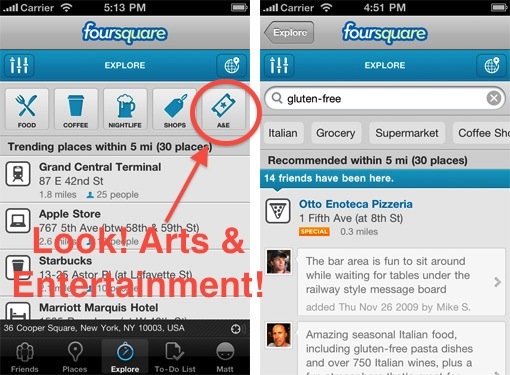
groupie_bigA few weeks ago I wrote a post on some of the latest updates to Foursquare's specials. To make the platform worthwhile beyond just a fun game for users, Foursquare has overhauled a lot of their services with version 3.0. This went beyond just specials, the location-based social network wanted to make using their platform a useful way for users to discover new places in their surroundings. Boom, new algorithms that form a better recommendation engine for you and me. What does that mean for us non-techies? It means the 'Explore' tab, a new service that takes info from your check-ins, your friends check-ins and presents you with search results of nearby venues that are more relevant to your interests.

Hit the explore tab, type in something like 'art' or 'mexican food' and Foursquare will take into account all your and your friends past check-ins to come up with the most relevant venue. So not only will it tell you where a venue is, but why you should want to go there. In addition to searching, there are also buttons along the top focused on common venue types people are looking for. You might already be familiar with how recommendation engines work, it is how music sites like Pandora and Last.fm are able to suggest relevant material for their users.

Image via blog.foursquare.com

So why should arts organizations care? Because this may be the simplest of all ways to participate in the location-based game. Claim your venue, add relevant information and start showing up in search results. Claiming a venue is free, gives you control over your brand, and will improve your search and recommendation results not only with Foursquare, but all of the apps and platforms out there using Foursquare's API (programming language and database) like Gowalla and hundreds of others.

While you're staking your claim with Foursquare, you may want to claim your venue on the two other big location-players - Facebook Places and Google Places. Google has some recommendation engines in the works and while Facebook doesn't offer one, claiming your venue there will still make you more visible to a very large group of users.

Claiming your venue on these three platforms is an easy and free way to take advantage of a fast-growing social media form. It's a simple step that may equal a return for your organization that a lot of other social networks can't offer - foot traffic.

  • Learn about claiming venues on Foursquare here.
  • Learn about claiming venues on Facebook Places here.
  • Learn about claiming venues on Google Places here.

What's the Big Idea? 5 Key Takeaways from the Museums and the Web Conference

In this post, I thought I’d try to “connect the dots” regarding some of the threads that seemed to come up frequently over the course of M&W2011.

Aluminum Foil Stage Curtains & Other Oddities

While cruising the net, trying to find the latest and greatest when it comes to arts management and technology, I tend to run across some pretty strange things. They often don't fit into the realm of the arts management focus of our blog, but dang it, they're just too awesome to keep to myself: I

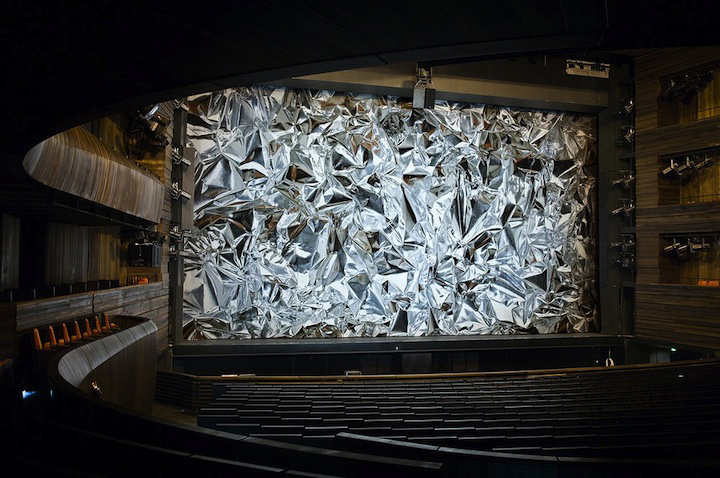
The most stunning stage curtain, ever.

Artist Pae White has created for the Oslo Opera House what could arguably be the craziest main stage curtain to ever grace a stage. White scanned a piece of crumpled aluminum foil and then used a computer aided loom to weave the curtain out of different colors of cotton, wool and polyester. When standing up close, one can see the individual threads, but stand even just a few feet back and well.....well, just look at the picture below:

Image via www.feelguide.com

I went to Barcelona, and all I got was this crappy mini replica of myself.

BlablabLAB's Be Your Own Souvenir is a far cry from some of the cheap junk that you'll find at most souvenir shops. The group hacked a few Kinects, and with the aid of a 3-D printer, gave tourists on Barcelona's La Rambla Street the chance to scan themselves and create their own miniture statuettes. Check out the video below to see some of the results:

I

Theater? We don't need no stinkin' theater!

Ok ok, I'm sure that was not the sentiment that Urbanscreen had when they set out to make WHAT IS UP?, a virtual site-specific theater piece. The piece is a pre-recorded performance, projected onto the wall of a typical dutch dwelling house in Enschede, Netherland. What makes this a projection a site specific piece, also called Lumentecture, is that the projection perfectly lines up with the architecture of the building. Using this technique, Urbanscreen creates an optical illusion of the building's walls giving way to a hidden theater within. Watch the trailer below to get the full effect:

Choosing a Ticketing System in 5 Easy Steps

The following is extracted from one of our recent reports, the 2011 Ticketing Software Satisfaction Survey. Download the full report here.

Choosing a new ticketing system can be a daunting prospect! There are hundreds of systems out there which offer a variety of functions and features, and it's sometimes difficult to tell which would be best for your organization. In the following article, we have broken down this sometimes arduous process into five "easy" steps, including a list of subject areas to consider when embarking upon a ticketing purchase, as well as sample questions to ask.

2011 Ticketing Software Satisfaction Survey Promo from Technology in the Arts on Vimeo.

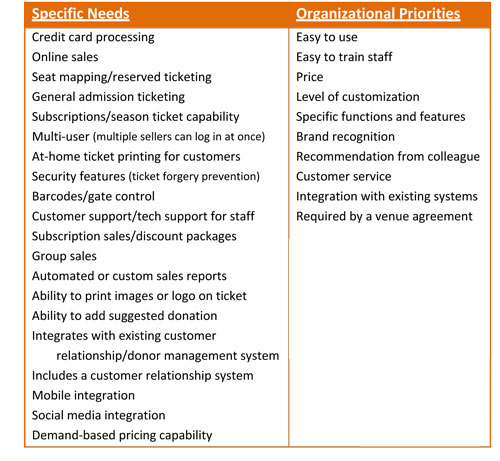
Step 1: Determine needs and priorities Because of the wide range of ticketing solutions available, determining your organization’s needs and priorities is the first step to choosing an appropriate software system. It is a good idea to seek input from every department you expect to use the system—not just ticket agents. The following is a list of common organizational needs and priorities:

Organizational needs and priorities

Step 2: Identify vendors

Your prioritized list of needs will help you begin to identify systems that are more likely to be a good fit your organization. A list of vendors included in this survey is also available on page 41 of the report. Visit their websites and research them to help you narrow your list to a few possibilities.

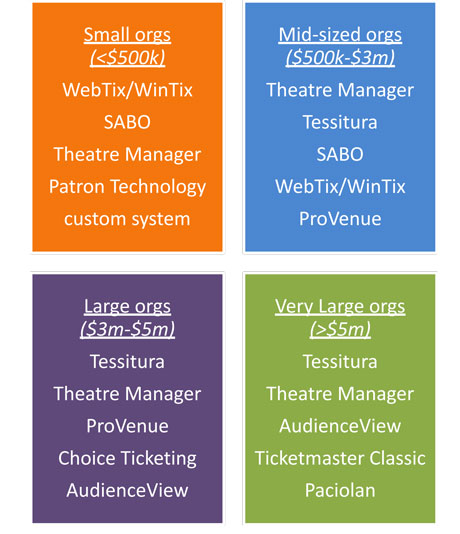
You might also start by looking at the systems commonly used by organizations in your budget category. The following systems were most commonly used by respondents to our survey:

Most-commonly-used

*Because respondents do not represent a true cross-section of the arts and culture community, this list cannot be used to infer market share.

Step 3: Contact vendors

Once you have narrowed your list to a few possible systems, begin to gather first-hand information from the service providers. You might do the following:

  • Ask if there are any hands-on demonstrations that let you experience the system for yourself.
  • Request a list of client references in your discipline and budget size, and ask those references about their experiences.
  • Request a list of client websites to get an idea of the customer’s experience of ticket purchasing and other transactions, such as donating online.

Technology in the Arts has also compiled a two-page list of questions to ask a ticketing software vendor, on subject areas like pricing, data integration, tech support, reports, and more! It's too long to include in this blog post, but see page 38 of the report for nearly every question you may need to ask a vendor before purchasing a ticketing system.

Step 4: Weighing Your Options and Making a Decision

Revisit your list of  priorities and, based on your findings from talking to vendors and organizations who use your system, rank your top choices. You might also seek input again at this point from people who will be using the system to see if your priorities are still in line with theirs.

Keep in mind that price is not always the best indicator of quality.  Even if price is your organization’s primary concern, it is still worth researching and evaluating other aspects of the system before making your final decision.

Step 5: Prepare for installation

Changing a ticket system is a major organizational change, but it doesn’t have to be difficult. Timelines for implementing the new system will vary from organization to organization, but here are some things to consider:

•    How long will it take to transfer your data from the current system to the new system?            •    How many years of data do you want to migrate            from your current system to the new system?            •     Will the data need to be “cleaned” or modified            in any way before transferring it? •    How long will it take to install any software on staff computers? •    How much time will it take to create usernames for staff and adjust their profiles so that they have access to the proper data? •    How long will it take to fully train staff on business-critical functions? •    How close are you to the starting a new season and how long will it take to build a season with the new software?

From these questions, you can determine the best time in your season to install your new system,  migrate any data from your current system, and start to train employees. Remember to inform your patrons of any new features that may interest them, like online subscription sales, choose-your-own-seat functions, or mobile integration.

If you enjoyed this article, you can find more information on ticketing systems in our report. Download the full report here.

QR Codes: What are they and how do you make one? [mini-nar]

minanar
Mini-nar

So, what is a QR code and how do you make one? Wonder no more. After watching this mini-nar (mini+webinar), you will have all the know-how you need to create a QR code and stick it... well, wherever you want, really.

Plus, it is explained to you by Tom... in pirate garb.

Technology in the Arts Mini-nar: QR Codes from Technology in the Arts on Vimeo.

Links from this Mini-nar:

bit.ly-bit.ly will not only create a QR code for you, but will also track it. (Note: You have to create an account to track QR codes.)

kaywa.com-kaywa.com will create a QR code not only for a URL, but also for text, a phone number, or for an SMS text message.

We are also looking for ideas for future mini-nars! If you have an idea for a subject that we could cover in about 5-10 minutes, please comment below or suggest one any time via Facebook or Twitter.

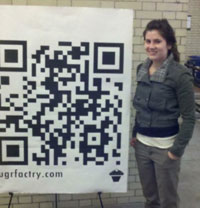
Update: For those of you wondering what the giant QR code that Tom referred to looked like, here it is: qrcode-croppedw

The Coming of the Mininar! (Mini + Webinar)

Technology in the Arts is proud to announce that we are starting a series of "mini-nars", short videos that tell you not only the basics on new tech trends, but also how to actually implement them yourself! Hear more about mini-nars here:

Mininar Preview from Technology in the Arts on Vimeo.

The first mini-nar will be released soon with info on what the heck a QR code is, how to make one, and how to track one. With screenshots! And costumes. Get excited.

We are looking for ideas for future mini-nars! If you have an idea for a subject that we could cover in about 5-10 minutes, please comment below or suggest one any time via Facebook or Twitter.

New Questionnaire: Living Social, Groupon and the Arts

SurveyPhotoThe Living Social, Groupon and the Arts Questionnaire is now live! Has your organization offered deals through group discount sites like Groupon and Living Social?  Have you ever wondered about how other arts organizations are using online group discount services, and the successes and challenges they've faced along the way?

We were wondering, too.  So, we put together a short questionnaire to find out.

Please take a moment to fill out the Living Social, Groupon and the Arts Questionnaire and let us know about your own experience with either of these sites.  It will only take a few minutes and your answers will remain anonymous, unless you specifically tell us otherwise. The questionnaire closes on April 15, so click through and fill it out before you forget!

And as always, we'll share the results with all of you here on the blog.  Fill out the questionnaire today!

Need a new ticketing system?

Some folks have had difficulty opening the report within the Firefox browser. We are working to resolve the situation. In the meantime, you can right-click on the link and select "Save Link As" to download the report to your computer.  You can view the report without issue via Chrome, Safari or Internet Explorer. Thank you for your patience.

Click to access the 2011 Ticketing Software Survey.

Click here to download the survey report. Photo: Gyorgy Kovacs via Flickr.

The 2011 Ticketing Software Satisfaction Survey Report is now available! In it you can find information on the most popular ticketing systems for organizations of your size, rankings of popular features and functions, and a 5-step guide to choosing a ticketing system, complete with questions to ask vendors.

Based on feedback from last year's survey, we added several questions to this year's survey:

  • questions regarding new technological features, like mobile and social media integration
  • questions differentiating web-based vs. desktop software (hosted on the client’s computer or server)
  • question about ticket consortiums and outsourcing

Key Findings: There were several findings of interest that resulted from the study:

  • Universally, organizations choose online sales (91% of respondents) and credit card processing (90% of respondents) as the most critical ticketing system functions.
  • Approximately 1/3 of ticketing software users indicated that they had inherited their current ticketing system from a previous employee--they had no role in choosing the system they are using now.
  • About 30% of organizations outsourced or shared in a consortium at least one aspect of their box office operations, either for online sales, phone orders, walk-up sales, or discounts.
  • Organizations classified as "small" and "mid-sized" (budgets under $3 million) indicated the most important factors in their software choice were price and user-friendliness, while "large" and "very large" (budgets over $3 million) prioritized customization and specific functions and features.

If you are a ticket vendor, box office manager or staff member, house manager, business manager, executive director, board member, marketing staff, or anyone else who has contact with a box office ticketing software system, then this report is for you.

Download the survey report today!

And please share with colleagues by clicking the "ShareThis" icon below.

Social Media Spotlight: Telling Your Story With Broadcastr

Welcome to the seventh installment of the Social Media Spotlight, our monthly feature focusing on arts organizations’ social media strategies.

Broadcastr co-founder Scott Lindenbaum

So having some tie to location seemed like a good idea. If you think about the way that media works on the internet and has worked historically, you’ve got three major things: you’ve got content, you’ve got connectivity, and now suddenly you have context.

So content we know, content is the things we make and connectivity is a massive part of our lives now, whether that be through Twitter or Facebook or anything else. But context is brand new, because context not only means what content you’re consuming and how you are consuming it, but where you are when you consume it. Then it seemed to make sense, because good stories are married inherently to place and always have been. Whether you look in religion where you have holy spaces and the idea of a trace that was left behind by someone that was once there or an experience that once happened in a certain location.

It made sense, then, to have stories that were indexed by place and once we had that, we had the foundation for what became Broadcastr. Which is a simple way for anyone to record a story and pin it to a location, so that anyone in the world can hear that story, understand that place, and have a deeper and more meaningful connection with another person.

I

I

I

So how does Broadcastr tie a story to a location? Do I need to be on a mobile phone in order for my audio to be pinned to that location?

Broadcastr is a way for anyone to tell their story, on any platform, web, android and iPhone, and then index it by location and category. You don’t have to be in a specific location in order to do that. So whether you tell your story into your phone or into your computer’s on-board microphone, you can place that story where it’s referencing in the world.

So for instance, if I told the story about going and getting my MFA in Brooklyn and studying with Michael Cunningham and that’s where I met Andy (Co-Founder of Broadcastr), I can then tell that story on any platform and actually pin it to Flatbush Avenue at Brooklyn College. It doesn’t have to be pinned at that exact moment.

And you may ask yourself, who is David Byrne? Image via cyclostat.bostonbiker.org

So we teamed up with them in order to take the aural remembrances from cops, fire fighters, and families of victims, first responders and residents of downtown Manhattan. We actually took those testimonies and put them back into the World Trade Center site and we’re doing that of course through Broadcastr. So that on the ten year anniversary of 9/11, when you go to the WTC site downtown, you’re going to be able to actually walk through the memorial and Broadcastr will be an invisible layer that is part of the memorial. You’ll be hearing these voices that connect you to the real experience and the history the way that the people who were there remember it.

What we’re hoping is that it will do a couple of things. One, it’s very powerful, I mean when we test this thing and walk around the site now it’s incredible because instead of looking at a hole in the ground and thinking “ I remember when that happened.” It’s tough to grasp what the tone of the country really was then, but I remember it was a very, very moving moment. Instead, you can be brought right there so that the people who had the most powerful experience that day are going to be talking to you about it.

That does two things: One, it brings that space to life for people. But two, it creates a precedent for how we can start talking about these things in a public social space. Then of course, because Broadcastr is a two-way street, if you hear a story about 9/11 it will prompt you to remember your own story. You can immediately add that to the aural history that is growing in that site. You can just take your phone, click record and record your story right there on the spot. Over time what we are going to be doing is building this collective kind of rememberance at sites.

And we’re doing that all over the world with different organizations. So for instance, at Auschwitz you can do the exact same thing since we are working with the Shoah foundation. So you’ll be able to walk through Orca now, which was a death camp and instead of seeing a field, you’re going to be actually hearing the Holocaust survivors that escaped 60 years before. And that’s going to be a massive, massive change in experience for people that are younger and too young to be connected to events like that. Also for people that are really interested in how events are represented and who gets to tell the story, which I think is a very important change that’s happened with the advent of social media. The story no longer comes from the top down; the story can now come from the bottom up. The telling of this story and the agency to tell can be put back in the hands of the people that have had the experiences.

I

I

I

In addition to listening to story as a user and contributing to Broadcastr as a storyteller, what are some of the additional ways that people can interact with audio posts?

Yeah, so you don’t have to be a passive listener or a active content creator in order to participate. You can actually be a curator or an aggregator of content. So for instance, let’s say you live in Milwaukee and there are 500 stories say right now in Milwaukee. And you’re like “Ok, these stories are pretty good, but you know what? There are ten of them that to me, really represent Milwaukee perfectly or represent my version of Milwaukee.”

You can take those ten stories, aggregate them into a separate playlist and I can share that playlist. So you can call from the collective, kind of dig in to the collective consciousness and pull out the little bits that you best feel represent some theme or some place. Then you can group those as a playlist and share that version of that place.  So you can imagine people creating definitive versions of different places by going through this aural record that we’re creating in real time.

broadcastr
Screenshot of the Broadcastr map and media player. Image via blog.bryantpark.org

Additionally you can share any item on Facebook and on Twitter and you can share it via e-mail. And you are going to be able in one week to embed it in a separate website, either as an individual item or as a little mini map that would be a subset collection of items. So  imagine, for instance, you’re writing a blog post about foreclosures in New Jersey. You can find five stories about people that have been foreclosed upon and actually embed their real voices into the blog post, just the same way you would embed a video from YouTube.

I

I

I

When a lot of other social media platforms started to take off, some organizations were hesitant to adopt them out of fear of inappropriate, negative or even copyrighted content being recorded and attached to their organization is a public way. What are some of the ways they would approach a problem like this if they wanted to start using Broadcastr?

There are a number of things: One, just like on Facebook or on Twitter or on YouTube, you control your own username. So no one else is ever going to be able to upload content under your specific username, just like your Twitter feed is your own to curate.

That said, people can be uploading things and be talking about your organization for sure. Something that someone said to me recently in Austin, Texas at South by SouthWest is probably relevant here. When you go to talk to an organization and you ask them if they are on Twitter and they say “No, no, we’re not on Twitter. We’re not sure how to approach that, so we’re not there, we don’t have a presence there. We don’t think we have to be.”

Well, all you have to say to that organization is to go to Twitter right now and search the name of your organization. Because you think you’re not on Twitter, but I promise you, you are in some form. As soon as they’ll put in the name of their organization, what they’ll find is hundreds, if not thousands, of individual pieces of opinion that are part of, right now, a one-sided conversation about their organization. So just because the organization wasn’t there to engage, it doesn’t mean no one is talking about them on these platforms, they absolutely are. To me, it seems that an organization needs to embrace the place where people concerned with their organization are having the conversation and get involved.

That’s kind of the high level answer, the particular answer is that you can flag content on Broadcastr. So if something is actually slanderous, or would be considered something like slander or libel or hate speech or pornography, it’s up to you the community to police your space. So if you think those things don’t accurately represent your neighborhood or your place on the map, then you should flag them. And if they haven’t been rated by anyone and they’re been flagged, they’ll automatically be pulled from the service. So that allows for a level of self-policing.

Now additionally, items can be rated on Broadcastr. So if you’re engaged in the conversation and you’re creating great content and promoting that content, then hopefully other users will feel the same way and will rate your items very well. On Broadcastr you’re always seeing the highest rated items first for any given place. So it’s kind of up to those organizations to get involved and create content that basically best represents them and is the kind of content that their audience wants to engage with. That content will flow to the top, if in fact their assumptions are correct. I think it is important to engage in that way and to be part of the conversation and to respond as opposed to ignoring the crowd and the community and the opinions of the community.

There are other things too, such as if organizations are interested in embedding content in their own website, that’s a way that they can have a custom curated space. They can embed only a selection of content that they feel best represents them and that is a way to use Broadcastr to create a multimedia community-driven experience on another website that is more curated and in a way more restricted.

It’s tough to answer that question, because I was at an Ivy league school recently and their social media guy said that the school would not let them make a official Facebook page for this institution. He said the irony of that is that there are twenty unofficial Facebook pages for that school. All of those Facebook pages are putting out fallacious information about the school. So just because there is no official page and because there is 750 million users on Facebook, there is more ways for those 750 users to get that information within the Facebook community. So there is something a little bit backwards about the thinking there.

I

I

I

On a more positive note, what are some of your favorite stories that have already been uploaded?

There is a bunch of great stuff. One of my favorite projects that we’ve been involved with is the Neo Futurists, which are a theatre performance troupe that originated in Chicago and now have a New York chapter. They have a show called Too Much Light Makes the Baby Go Blind and the show is 30 plays that get performed in 60 minutes. Every week they re-write a good portion of the show, so its been changing for however many the past few years that they have been doing it, but it always keeps the same format.

Image via waterdogmusic.com

They came to us early and said “We would love to do 30 plays in 30 blocks.” And Broadcastr, because it’s short form – a three minute maximum for most stories – is the perfect way for them to take their theater performance and use the world as their stage, as the saying goes. So if you go to second avenue in Manhattan, you can walk from Houston Street to 29th Street and experience 30 location specific, audio, interactive, pieces of content. Some of them are directing you to do things, some of them are little songs, some of them are plays with multiple voices, some of them reference the location very directly, some more overtly. But it’s a curated experience that happens out in the world. So that’s been very exciting to work with them.

Broadcastr is a fantastic way to make literal this idea that you hear all the time, especially when talking with mission and message driven organizations, of giving the community a voice. People talk about that abstractly a lot, like “How do we give the community a voice?” or “What is the voice of the community?”

In this instance, as long as the members of that community can get to a computer or to a phone, and that computer might be at the public library, it doesn’t have to be a computer at home. But as long as they can get access, they can actually put their voice back into their community, in a very literal way. I think that’s very powerful because in a sense, by publishing your opinion and your memories and your reflections to Broadcastr, you publishing those things for the whole world to be able to hear. You’re representing not just your social circle, as you do when you talk on Facebook, but you’re actually representing a physical place.

I think that if Broadcastr succeeds, what it’s going to do is it’s going to show a person that in this age of social media and mobile computing, place is just as important as people.


Mobile Audience Participation with Jonah Bokaer and the Ferst Center

Audience interaction has become a pretty major trend this year and arts organizations around the country are experimenting with different ways to engage their audiences. But how does one go about making their experience a participatory one? Artist Jonah Bokaer and the Ferst Center for the Arts at Georgia Tech decided to approach the issue using mobile technology. Jonah Bokaer is an award-winning choreographer and media artist participating in the Ferst Center's first ever year-long dance residency program, ARTech. Jonah worked closely with students from the Georgia Tech Music Technology Program to develop MassMobile, a smartphone app that acts as an interactive platform for audience members to participate by affecting the stage in different ways. On April 2nd, MassMobile will premier with Jonah's new work FILTER at the Ferst Center.

I had to opportunity to speak with Jonah as well as Stephen Garrett, one of the graduate students on the MassMobile development team, and dancer Adam Weinert, who can be seen in the sneak peek video at the end of this post.

XY Coordinate

Where did the idea to include the audience in the performance, through a mobile app, come from?

Jonah - Well, in 2004 I made a work called RSVP, which planted 12 cellular devices in the audience. We used those devices and their ringtones to create the music for the piece. And that was engineered from offstage by the composer. But, when doing some initial research down here and planning this production called FILTER, I wanted to put forward the idea or the proposal that there could be interaction or intervention even, with the show.  And maybe Stephen can take it from here, but we spoke with Jason Freeman and the Ferst Center and this relationship started.

Stephen – Yeah, and I think Jason’s idea, who is my advising professor on my master’s project, was to create a system that allowed for a rapid deployment of audience interaction devices through peoples’ mobile phones. So the idea came from Jason through some previous mobile development work and with several other projects, to create an iPhone and android application that will allow any type of input that the phones will allow. Whether that be an accelerometer, motion data, text messaging, touch data, drawing…anything that the phone will accept, to try and incorporate that into the performances in some way.

What are some of the direct ways that the audience is affecting the performance through MassMobile? Does it affect the lighting or are there sound elements that change?

Jonah - Well, one thing I just want to clarify is that this production will premier in it’s full form here in Atlanta on April 2nd. So we’ve had a six or seven day production period in Avignon France and we premiered the choreography, but MassMobile and these technological components have not yet been unveiled and actually this week we are holding a workshop with invited public to interact with it further.

So in terms of how the audience affects the performance? We’ve identified four ways for potential interaction. In particular I wrote in one section of the performance which is very much open-ended and is a 9 minute section which can basically be reconfigured a bit.  Specifically the lighting is influenced. We worked closely with Aaron Copp, who is my lighting designer, to integrate that into the performance.

Stephen – And certainly MassMobile itself, the way that the app can interact with a piece, is not set in stone. It’s a creative conversation that is always happening. But specifically for this piece, for one of the sections that involves interaction during the pre-show, the audience is quite literally plugged into the lighting board through their app.

The actual technical details of the connection is that the mobile app is connected through a client server relationship to one of our servers here at Georgia Tech. Then there is a laptop that sits in the lighting booth that constantly pulls for information. Based on what items people have selected in the app, the laptop is connected directly to the lighting board and will instantly turn lights on and off. You can change color palettes and things like that pretty much instantly.

Did you build MassMobile specifically for this performance or is this a platform that could be used for other performances/performers?

Jonah – I would almost say that it is still in progress. But, you know, Aaron Copp and I have known each other since 1999 and have been building work together for a long time and often in our creative discussions we would say, “Is there some way to interface or interact?” As opposed to working with just video or with sound, lighting is so integral to these performances that MassMobile seems like a natural fit. I think that for light and choreography I am working in very particular ways. For larger applications of MassMobile I know there are many options.

Stephen – So MassMobile itself is the platform and the app, and is still in pretty active development. Working with Jonah and his FILTER has been a great way to beta-test the app and see it grow to more of its current capacity. My professor Jason Freeman already had the plan to use the application in a live music notation work with saxophone where the audience could directly affect the notes that the performer is seeing onscreen. So there are other uses for MassMobile in the arts imaginable.

Could you speak to the importance, for you, of having participation from the audience?

Jonah – Well, I should say that my degree is not in choreography, it is in media and visual arts. For my thesis I focused on the myth of interactivity and focused on a lot of mid to late video work in the 1980’s and 1990’s. My sense was that there is a certain parallel between what we could call this myth with interactivity with video, but also with performance.  Just because it’s time based, it’s not necessarily interactive. This is one area of focus of mine in terms of creating performances.

I guess the impulse to say that an audience could interact, is still pretty much in progress. So far, at least in this stage in the piece, we’ve only had pre-show interaction. It’s kind of an open question.

I think some major conventions of theater are called into question, for example having the phones on during the show, the light of a cellular device on in the theatre. Some artists would consider this distracting, but in this case we are actually inviting it.  There are certainly questions of attention and attention span. We’re sort of walking into this project and saying that it is assumed that this will be unusually structured.

So why create such an unconventional performance? Well really, the participation is a part of why we wanted to open this out. Because instead of really disrupting or undermining a performance, we wanted people to be able to engage and help the author.

Stephen – The way we’ve enabled that interaction is a very direct and literal effect the audience can have with the lighting of different parts of the stage. [The pre-show] is an opportunity for people to come in and the curtain is open and they can see the initial set and it gives them a chance to explore. Our hope is that creates a deeper and more meaningful bong throughout the rest of the performance. That [the audience] has really explored the set and can experience it on a different level.

In addition to the interaction between the viewer and the stage, do you think that this program will cause the audience to interact with each other?

Jonah Bokaer (left) and Stephen Garrett (right) do a run-through of MassMobile

Jonah – The way that we piloted MassMobile was to have six mobile devices distributed internally to members of the creative team, producers and close colleagues over the course of a few days. I did note, on a couple of occasions, the social interactions that would occur person to person. Maybe Stephen would like to address any interactivity within the platform itself.

Stephen – We did see people that were using the app that were sitting next to each other sort of communicating in person and coordinating their efforts, but at this moment that’s not something we’re doing. [Interactivity within the platform] is something we are looking at in the future of MassMobile. More specifically looking at how do we enable or make sure that people have their own voice in their interactions with the performance.

From a performer’s perspective, what is it like working with something like MassMobile?

Adam – From a performer’s perspective, I think what excites me most about this kind of initiative is that as a performer we’re always looking for new ways to engage the audience and make each articulation of the performance event unique and special and fresh. I think that MassMobile can be a unique way to do that.

The other thing I really appreciate is how we’re using this mobile technology and multimedia to make more personal the performance. Which I think is rare and hard to accomplish.

If you live in the Atlanta area I highly recommend heading over to the Ferst Center for the premiere of FILTER on April 2nd. You can find more information about performance times and tickets at the Ferst Center's main website here. Until then, he is a sneak peak of dancer Adam Weinert and MassMobile.

MassMobile App Sneak Peak from Ferst Center on Vimeo.

Twitter by Example: Our Favorite Tweeps

Why are some Twitter users so effective at getting your attention while others fall flat?  What can you do to make your tweets stand out in a crowded feed?  By taking the time to reflect on some of the engagement techniques you see cropping up amongst your fellow Tweeps, you can invent your own ways to harness the power of Twitter for your organization. The Technology in the Arts team thought it might be fun to highlight a handful of our favorite Twitter users from the arts sector.   Check out these Twitter streams to see illustrations of successful, interesting, and unique ways to use the platform ...

My favorites:

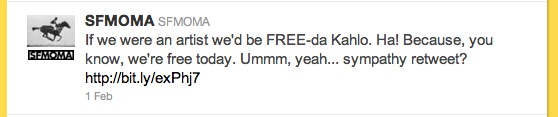
@SFMOMA I love the tone of San Francisco MOMA’s tweets – they do a great job of blending humor with behind-the-scenes photos, museum happenings, and random things like wacky art historical facts.  They actively participate in dialogue with not only other orgs but also their Twitter audience - and sometimes they even project their audience’s Tweets on their museum walls…now that’s some serious tweet integration.

SFMOMA3

@TheSoapFactory With a staff of only five people, this Minneapolis nonprofit gallery proves that small organizations can make a big impact via Twitter.  Their tweets are conversational, friendly and often funny – and they actively tweet their support & enthusiasm for local arts happenings and the artists they work with.  @TheSoapFactory loves shout outs, and always takes the time to publicly say “thank you” to volunteers and interns in their tweets.  Their warmth and graciousness on Twitter creates a personal connection with their audience – which goes a long way in the tweetosphere, despite their relatively small size.

Supporting Arts in the Community (MN Arts Advocacy Day)

@yokoono With nearly 1.9 million followers, Yoko’s got a worldwide Twitter audience, and she keeps them engaged in a variety of innovative ways that other artists and arts organizations can learn from.  Each week, she posts a series of responses to questions that are tweeted to her – showing that she really cares about engaging in dialogue with her fans.  Her own tweets are powerful in their simplicity and she’s always got a positive message to share.  She encourages followers to participate by creating their own positive messages, too: the Imagine Peace Tower, an art installation located in Iceland, lights up a few weeks each year with tweeted "wishes" related to peace and love.  So far, over 1.3 million wishes have been sent via @IPTower, and it's happening now through March 26.

YokoOno

Amelia's favorite:

@SUEtheTrex at Chicago's Field Museum.  "Hi. I'm Sue, I'm a Leo, I like meat, Chicago, the movie Jurassic Park, and what else? Oh yeah, I'm the world's greatest apex predator." This tagline says it all about Sue the T-Rex--she's sassy, hilarious, and about 2 million years old. That doesn't stop her from having conversations with present-day life forms, tweeting about current events--everything from Thanksgiving to Women's History Month--and educating about the T-Rex. A great example of employees personalizing an institution.

A little humor goes a long way...

David's favorites:

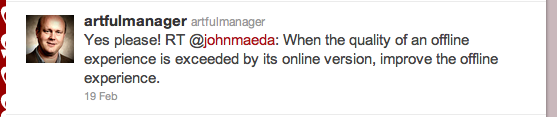
@artfulmanager Andrew Taylor, author of the Artful Manager blog and Director of University of Wisconsin’s MBA in Arts Administration, always provides great resources for arts managers.  His retweets tend to pull from sources that I may not be following – which opens me up to new content that I might not otherwise stumble upon.

The art of the retweet

@travisbedard Travis Bedard, Artistic Director of Austin’s Cambiare Productions theatre company, provides a great combination of humor and informative posts from the theatre community.

travisbedard1

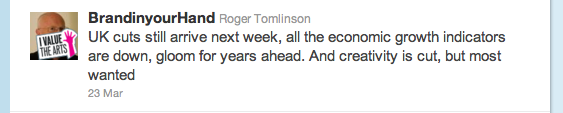
@Brandinyourhand International arts consultant Roger Tomlinson always offers thoughtful information and insights from across the Pond.

brandinyourhand

@JamesUrbaniak New York stage, screen and voice actor James Urbaniak is a subversive pleasure.  Witty, sarcastic and irreverent – a wonderful 140-characters-or-less chucklefest.

JamesUrabaniak

Tom's favorites:

@MuseumNext is one of my favorite sources for finding out not just what is going on with museums now, but in the future as well. Through their blog, publications and their conference, MuseumNext highlights the ways museums are using technology to become more participatory and engaging for audiences. Plus, these are the folks that brought us the wildly popular twitter campaigns Ask a Curator, Follow a Museum and most recently Picture a Museum Day.

MuseumNext1

@MuseumNerd Oh, the Museum Nerd. That Brooklyn-based lover of all things art. Museum Nerd is an anonymous persona who tweets about his/her experiences as they weave through different exhibits. Besides the color commentary, Museum Nerd is great at engaging both visitors and museums on Twitter while exploring exhibits and other art world happenings.

Live tweeting from events

@NancyProctor The Head of Mobile Strategy and Initiatives for the Smithsonian Institution, I feel like Nancy Proctor is the Queen of museum mobile tech on Twitter. I check her feed for the latest developments in museum mobile tech, thoughts on best practices and to find who is experimenting and how. You can usually find her dropping some mobile tech knowledge with the hashtags #mtogo and #simobile.

NancyProctor3

Tara's favorite:

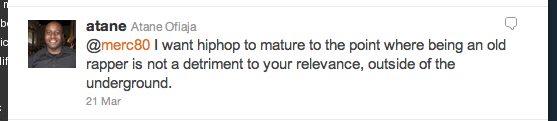
@atane Atane O. is one of my favorite music and audiophile nerds to follow on Twitter. He's currently a blogger for the Elements of Jazz blog, and always has cool pictures, videos and music clips to share via his Twitter stream. He also has an amazing vinyl collection (and great turntables!).

atane2

Now, it's your turn: who do YOU love on Twitter, and why?

Ticket Buying Comes to Facebook

Concert promoters, venue managers and artists are still reeling from the historic LiveNation-Ticketmaster merger. Many feared that the merger would result in a ticketing monopoly that would force venues to raise ticket prices and only use the Live Nation-Ticketmaster service if they wanted to book a Live Nation artist. Almost a year later, a recent Chicago Tribune article indicated that ticket prices have not yet skyrocketed and independent promoters are still thriving. While there is still a fear that the worst may be yet to come, the merger hasn’t deterred venues from pursuing other options when it comes to choosing a ticketing platform.

One of the more innovative platforms is Arizona-based company,  TicketForce, which describes itself as a ticketing solution for venues  and promoters of all sizes. The company designs fully customizable  ticketing applications that allow venues and promoters to effectively  build their own brands. They recently launched a Facebook app that will  allow clients to sell tickets directly from a Fan Page. This application  allows clients to add a ‘Buy Tickets’ tab on their Facebook Fan Pages  so that fans won’t have to leave Facebook.

The app has several benefits:

  • Once the purchase is completed, a custom notification is posted to your customers’ Facebook Wall or Twitter feed that tells all of their friends about their ticket purchase with an image and link to buy tickets, too.
  • Buyers are able to search for events in a specific area, choose seats, and securely purchase tickets without ever leaving Facebook.
  • All active events are pulled automatically from your Ticketing Home and sales are fully integrated into your existing web sales.
  • Customers are prompted to share their purchase with their Facebook friends as well as on their Twitter stream

As the company illustrates:  With 500 million Facebook users, more  than 600 tweets every second, and  665,000 blogs posted every day – social media is  your most powerful sales  tool. TicketForce's latest innovation is capitalizing on social media sales opportunities and making it easier for small and mid-sized venues to find viable Live-Nation/Ticketmaster alternatives.

Upcoming Webinar - Engaging Audiences Through the Mobile Web

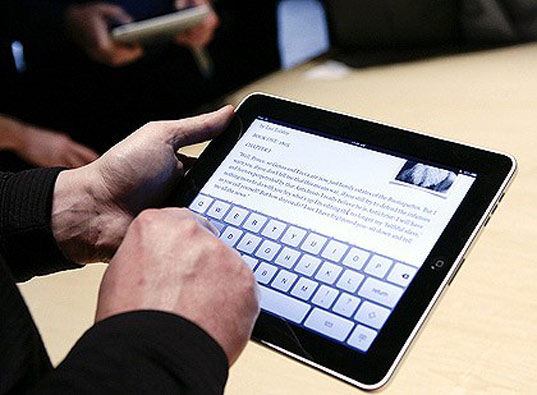
ipadMobilizing the Arts - Engaging Audiences Through the Mobile WebThursday, March 31, 2011 2:00pm - 3:30pm Eastern Register today for $25 Presenter: David Dombrosky
With the rapid adoption of web-enabled cell phones, smartphones and tablet computers, how are arts organizations adapting to the rise of the mobile Internet? What options are available to arts professionals who want to engage their audiences through mobile devices? What are the cost implications for these new technologies?

In this 90-minute webinar, we will:

  • Examine the need for engaging with arts audiences through mobile devices
  • Explore options for connecting with audiences via the mobile web
  • Discuss what factors may lead you to choose one mobile option over another
  • Take a look at the various ways in which arts organizations are using these tools to connect with their audiences

David Dombrosky is the Executive Director of the Center for Arts Management and Technology (CAMT), an applied research center at Carnegie Mellon University investigating ways in which arts organizations can use online technology to more effectively meet their goals. He frequently presents technology and social media workshops and webinars for arts managers – recently for The Association of American Cultures, Performing Arts Exchange, Chorus America, Opera America, College Art Association, and Grantmakers in the Arts.

Behind the Scenes: The Virtual Orchestra Project

Emmy-nominated, Canadian composer Glen Rhodes hopes to "bring the world together through music" with his groundbreaking Virtual Orchestra Project. Though you may be familiar with similar projects, like the Youtube Orchestra, Glen's Virtual Orchestra is one of the most unique and exciting examples of arts and technology collaborations to date. I recently had the opportunity to interview Glen about the virtual orchestra, and today we will get an exclusive sneak peek behind the scenes of the process.

How exactly does this work?

The Virtual Orchestra begins with musicians across the world.  Musicians play their individual parts of the same piece, follow the same conductor on-screen, record their part, and then submit the finished part.  Then, it's up to me to piece together the audio and visual elements.

The recording takes place in the personal home studio or office of each musician. Orchestra members do not play live with any other instrumentalists. The music for their instruments is available on a main "app" for download as a PDF file. After printing the score, the musician watches a conductor on screen while listening to a computer-generated rendition of the entire piece through headphones (in order to prevent the music from feeding back into the microphone). Once the video is complete, information is entered (in order for musicians to be properly credited), and URL to the YouTube upload is sent to me. That's right - all videos are going to be submitted to YouTube to make intelligent use of their conversion abilities, and bandwidth.

What got you interested in starting this project?

I started this project for three reasons.  One, I genuinely wanted to hear one of my works performed by a real orchestra.  Two, I saw a genuine opportunity, as both a composer and a software developer / author, to accomplish something that had never been done in this form before. There have been virtual concepts; the virtual choir, for example, but I wanted to see an entire orchestra playing my piece, so rather than the soprano, tenor, also and bass of a choir, this would be a piece consisting of 16 or more individual voices.  Third, as a working composer for television, I found it frustrating spending hours trying to "create" an orchestral sound, which is what the shows are all after, without actually having an orchestra. So I thought, "I wonder if this, once established as a 'musical network', could result in music being recorded in a beautiful and authentic way, no fake instruments, but a genuine orchestra. Something people just don't usually have access to.

But, there's another, major side to this that can't be viewed through technical goggles....

I didn’t know why, or perhaps, understand why I started this project until I started getting submissions. It wasn't until I started to hear the small pieces of my humble piece fit into place, and most of all, realized that each one was exactly correct, like pieces of a great puzzle. There have been contributions from Asia to South America and so many other places, yet each come together in a common virtual place.

This is not a piece I have heard performed a thousand times; nor is it a piece the world has heard a thousand times. It’s the first time, and it’s a global union, a project of peace and triumph. As a human I hear so many varied voices, and they’re all speaking the same language of music. As a composer, I am in awe and humbled to bring these pieces together in … perfect harmony.

I believe this project serves a purpose, and we all have yet to see what it will be.  Not because the music is profound, but because the human union is consummate.  It embodies the purity of energy in us all. The candid effort made by each musician is so sincere and contains a lifetime of practice, perfection, pain and satisfaction. I see it in their faces. Some with tears running down their faces as they play, and listen to the guide track.

With the energy put forth in the art, idealism is being created. An idealism of peace through universal connection. As long as the trio of the music, the conductor, and the musicians are balanced then all there can possibly be is harmony and complete anti-conflict.  Perhaps VOP is my voice... my Voice Of Peace.

What the conductor saw while looking around. The tripod is the base of the camera. All around the room, scattered pieces of paper indicate where the instruments are seated, so that he can cue and point to them in a spatially accurate manner.

How will people find out about this? Social Media? Traditional Advertising?

People are finding out about it through other people. That's the most amazing part! People are telling other people; who are telling other people - and word of mouth is spreading the message. Instrumentalists who want to play, listeners who want to hear; and simply the interested who want to know, are all taking interest, and spreading the word.  My inbox is inundated. Already, in two weeks, it has surpassed my expectations.  Now I'm just going to let it keep going; and see it play out. See its purpose unfold, so to speak.

What benchmarks will you use to keep track of "successes"?

The benchmarks of successes are changing rapidly. It was initially when the first sheet music was downloaded. Then it was when the messages and friends showed up and then subscribers. The big moment was the first 'submission' - from Taiwan, I heard my Flute 1 played beautifully. And it keeps accellerating from there; it's the bandwagon effect. Once people know that other people are interested, then they become interested. Nobody wanted to be 'first' - but then it happened, and now, it's steady.

So my personal goal was to hear even one single instrument play one single piece of sheet music from the piece; but that's now surpassed. The goal now, I suppose is the 'deadline', currently set at June 1st.  But I may reach an orchestral scope long before then, and then I may just keep going! Let it be the first 500 piece orchestra! It's striking a chord with people somehow.  (No pun intended.)

What have been some challenges along the way?

Initially, it was in the composition, which was composed for sound that computer could do well. Translating that to sheet music presented some challenges. But after consulting with some orchestrator and conductor friends, we found the voicing that split my five horn chords, for example, into a more even spread across the brass spectrum. And that's one example.

Then there was the entire aspect of programming the entire system that would automate the process for me. Assigning numbers to parts (piccolo=1, flute=2, etc.), using international IDs for countries (US, CA, MX, CZ, ZA, etc.); creating the conductor video, which all had to be made before a single aspect of this could be released.

Then, there was a learning process along the way. Originally I thought a simple description, a few posts on Facebook would get the whole thing rolling. I was wrong. People needed to have a reason to listen to me. So I listed some of my credentials (2 time Emmy nominee for music, composer for the Oprah Winfrey Show, Dr. Oz, etc.).  That increased the interest, but just the general, untargeted interest. I needed musicians.

So I took a two pronged approach.  First, I approached the music departments of almost every major college and university, and asked if they'd spread the word amongst their students. That was mixed, partially because I was missing the third piece of the puzzle ... a visual.  Despite the fact that I could not actually produce a video, I had the computer rendered song, and I had the conductor. So I found as many agreeable photo subjects as I could of instrumentalists, and created the final 'look' (which will definitely not be final, in the end).  But at least then people understood what a virtual orchestra was, how it would look, and, how it might sound.

Armed with the:

  1. Credentials - Here's why you should listen to me.
  2. Example - Here's what it will look like.
  3. Description - Here's what to basically expect the process to be like.

I finally got momentum. It's paradoxical; humans avoid 'effort' - but the more people who've done it, the more likely they are to make the effort.  So, at first I imagine many of the submissions didn't do it because they simply didn't want to go through the effort of setting up the camera, the sheet music, practicing a bit, recording, uploading.. But, as people are beginning to submit, the effort is becoming not so bad, and worth being part of the whole.

And I've had an unexpected help from the numbers of people who simple love the idea. Just the idea alone. Like the old Coke commercial from the 60's, they see the benefit of a world 'playing' together in perfect harmony - and want to be part of that experience. These are not my participants - these are my word-spreaders.

Technology in the Arts thanks Glen for his time and generosity in providing us with such an intriguing interview. Make sure you take a minute to subscribe to the Virtual Orchestra Project's Youtube Channel !

Museum crowd-curation and the way we live now

Split Second

Should more museums follow the Brooklyn Museum’s lead?

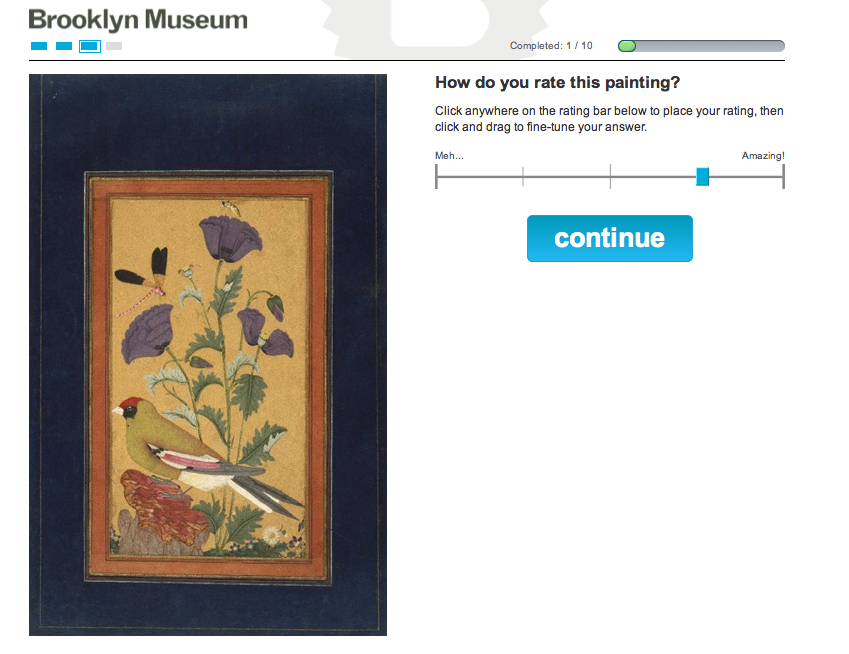
Recently, I helped curate Split-Second: Indian Paintings, a show for the Brooklyn Museum.  To do so, I simply visited their website and participated in an online activity.  It took me about ten minutes, and it involved briefly looking at images, clicking on those paintings that I found most intriguing and rating other paintings on a sliding scale.

My participation in this process got me thinking not only about Indian art, but also about how my own perceptions of art in general might be shaped, and how my aesthetic tastes might compare to the sensibilities of the general public.  Even more interesting to me was that this experiment in crowd-curation felt like the inevitable extension of the movement towards a more participatory culture.

What is it?

Museum crowd-curation enables the general public to become a part of the curatorial process by helping to determine, through an online platform, the artwork to be included in a physical exhibition displayed in a museum’s gallery.

The Brooklyn Museum pioneered crowd-curation three years ago with its photography exhibition Click! . First launched through an open call for artists to submit photos related to the theme of “The Changing Faces of Brooklyn”, the artwork was then made available online for anyone to curate.   Perhaps most interestingly, the Brooklyn Museum staff took a transparent and scientific approach to the experiment, publicly sharing data and thoughtful analysis every step of the way.  Check out Brad's Technology in the Arts podcast with Shelley Bernstein from 2008 to learn more about Click!

Selection of photographs from Click! by the Brooklyn Museum

Now, Bernstein and the folks at the Brooklyn Museum are offering a new spin on crowd-curation by injecting theories of connoisseurship to Split-Second: Indian Paintings. Based on ideas from the book Blink by Malcolm Gladwell, Split-Second seeks to explore how our first impressions might affect our perceptions of art as well as the production of a museum exhibition.  In the end, we’re left with an engaging viewer/curator experience that subtly mixes the professional with the amateur.

Why is crowd-curation so intriguing?

Increasingly, we are becoming a culture of curators, especially in the virtual world.  We spend our time organizing media according to preference, grouping our memories into online photo and video databanks, and “liking” and commenting on things that other people share.  What this means is that arts audiences are coming to the gallery with a newly emboldened sense of organizing and presenting content.  Arts organizations therefore need to play an active role by creating opportunities for meaningful engagement.

Screen shot of Split-Second's crowd-curation process by the Brooklyn Museum

Organizations that are at the forefront of online audience engagement are presenting ideas that go beyond simply offering information about programming.  Instead, they are experimenting with different ways that audiences can become co-creators of content, which can then lead to a sense of ownership in the institution.  But crowd-curation should not be simply a matter of presenting art works and having a voting contest in the sense of American Idol.  Rather, arts managers need to envision a place of meaningful dialogue between their organization and their audience.

Crowd-curation is exciting because it is a clear illustration of the changing dynamics of the audience/museum relationship.  It takes creative online participation and literally translates the collective online vision into physical space.  Along the way, it can stimulate creative thinking by:

  • Getting the participant/curator to think about her own internal perceptions of art, and perhaps inspire her to dig even deeper through self-reflection. What struck me most in my experience as a curator of Split-Second was how successful the exercise was in getting me to think about not only the art in the show but also my own understanding of visual culture.
  • Creating discussion, based upon the collective decisions of the audience, about big-picture questions, like: How is artistic value determined? Is general consensus achievable in determining artist merit?

By putting the internal and collective processes together, crowd-curation has the potential to achieve multiple levels of meaningful contemplation.  Of course, arts managers may feel like they are taking a significant risk.  They may fear that the artistic content chosen by the masses will not constitute a “quality” exhibition in the traditional sense.  And, perhaps worse, if crowd-curation IS able to produce a quality exhibition, then what is the point of having all of these professionals around?  However, as sites like Wikipedia or perhaps the “comments” section of any website have shown, opening up the production of content to crowds is precisely the time when professional, articulate viewpoints are needed most.

This is not to argue that crowd-curation methods should or will replace traditional curatorial models.  In fact, it doesn’t make sense for all art museums to try it (based on a number of factors such as the nature of the audience, resources available, the nature of the exhibit, etc.)  Even so, crowd-curation is an innovative approach to breaking down the barriers between art museum and audience, and it’s a fascinating reflection of the way we live now.