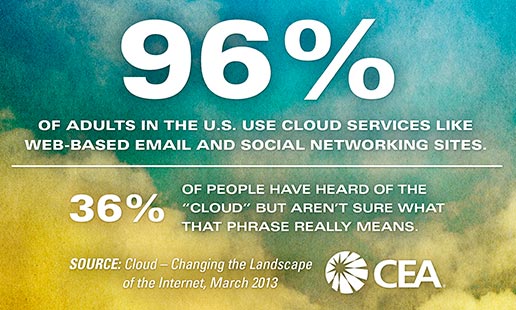
Just what is the cloud and what benefits might it hold for arts organizations? What makes a transition to cloud services worthwhile? And what cautions should be heeded when considering such a transition? This report from AMTLab contributor Stewart Urist introduces the basic categories of cloud services and discusses the potential benefits and risks they hold for arts organizations of various sizes. It's available now in AMTLab Publications.
Opportunities Abound: Starting a Peer-to-Peer Fundraising Campaign
Data-Driven Decisions for Arts Marketers
AMTLab contributor Christine Sajewski discusses strategic uses of internal arts marketing data, as illustrated through a hypothetical performing arts organization, the Ugly Duckling Ballet. Read the full report here.
Online Tools for Artists & Audiences: A Case Study of the Pittsburgh Artist Registry and Pittsburgh Art Places
2013 was a busy year for the Office of Public Art (OPA) here in Pittsburgh. Along with its regular duties of programming public art walking tours, organizing calls for entries, and facilitating webinars and artist lectures, OPA also re-edited its book Pittsburgh Art in Public Places, revamped the Pittsburgh Artist Registry, and created the Pittsburgh Art Places website.
The following article analyzes how this organization, a public-private partnership between the Greater Pittsburgh Arts Council and the City of Pittsburgh Department of City Planning, made management decisions that led to the update of the online artist registry and creation of Pittsburgh Art Places.
Research Update #3: Creating Online Audiences For Orchestras
In my last research update, I illustrated some of the most important opportunities and benefits associated with the creation of online audiences. But as arts managers consider how to create these online audiences, they should also be aware of a variety of challenges and potential risks associated with doing so. Here are a few:
Research Update: Making Data-Driven Decisions
Once arts organizations have identified data sets available to them internally (e.g., ticket sales, website analytics), it is important to recognize that these channels do not operate alone. How can marketers in arts organizations look at these multiple data sources, including new media channels, to conduct a more meaningful analysis? As a starting point, they can identify connections between their internal data sources and articulate goals for each relationship.
News Summary 11.2013
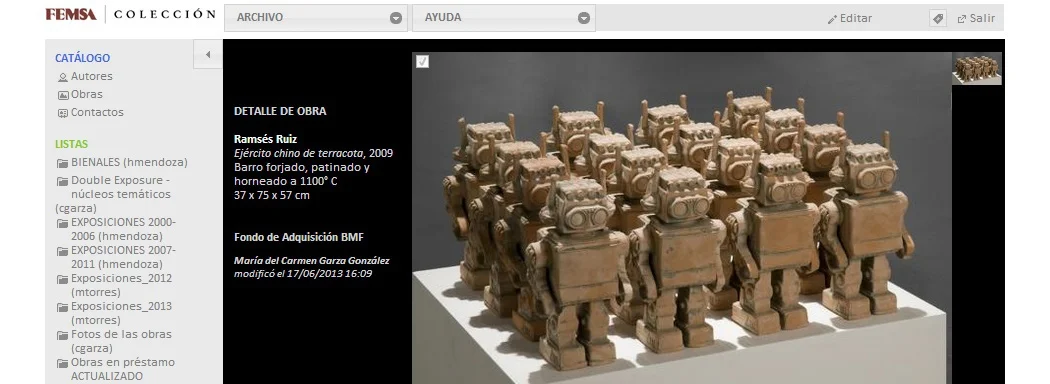
Implementing a New Collection Management Application: Colección FEMSA
Colección FEMSA specializes in travelling exhibitions for Mexican and international institutions. A nine-person team manages all aspects of planning, from building crates and preventive conservation to facilitating partnerships with museums and other cultural organizations, culminating in up to twelve different shows each year. While a relatively small collection, the management challenge for this organization is having artwork constantly on the move. This case study concentrates on how Colección FEMSA meets this challenge through the help of a collection management application, Spaces for Art.
Rainy Day? Typical Friday? Take this Quiz to Find Your New Favorite App
Research Update: Security and the Cloud
When it comes to the cloud, security is a widespread concern across sectors. According to a recent survey, conducted by Lockheed Martin and the Cyber Security Alliance, security was listed as the top concern by Government IT decision makers, despite overall increasing adoption of cloud technology. Security is a multifaceted issue, ranging from the above example concerning what rights are retained when information is uploaded to the cloud, to more classical issues involving data theft. The basic fact is that when organizations take their data into the cloud they are ceding day-to-day control of that data. Though they can access it and share it at will, they typically will have no idea in which physical datacenter, or even in which country, their files are currently stored. Users must rely on the provider to not just manage their data responsibly, and to prevent loss of their data through hardware failure, but to keep their data encrypted and inaccessible to unauthorized users.
Attracting New Crowds
An ongoing concern of performing arts managers is the impact of arts participation and engagement programs on creating new audiences. Specifically, arts organizations are concerned as to whether or not their efforts elicit new patrons to attend performances regularly. Concerns exist in particular about the overall impact of engagement programs like simulcasts, wondering if a new audience members are attending these events at all, or if the events are drawing the same group of people that come to staged performances. Furthermore, a growing discomfort exists that opera simulcasts might actually be “cannibalizing sales,” or in other words, reducing ticket sales at live opera performances.
Research Update: Using Spatial Data to Advance our Programming Missions – Where will I get the data?
As I continued to research how arts organizations can use spatial data to advance their programming missions, and looked at the volume of data already available, numerous scenarios come to mind. Spatial data can be used to evaluate a traveling exhibition proposal or a public art site, develop a grant-making or educational program, or identify potential partnerships.
Research Update: The Feasibility of Open Captioning
Research Update: Making Data-Driven Decisions
When moving toward making data-driven decisions, arts organizations can begin by recognizing many of the different data sets generated internally that contain valuable information about their audiences. Here is a brief look at four such data sets and the corresponding reports arts organizations can utilize from them.
News Summary 10.2013
Survey: Assistive Technology in Arts Organizations
In an attempt to better understand the current use of assistive technology across all genres of arts organizations (theatre, music, dance, visual art museums, regional arts councils, etc.), I have created a simple 10-question survey to establish the most commonly used assistive technology services and their current audience impact.
Research Update: Innovation Trauma—What It Is and Why Arts Organizations Should Care
A Virtual Orchestra
The Australian Chamber Orchestra (ACO) has teamed up with Sydney digital media company Mod Productions to produce a new interactive “virtual orchestra” that is breaking down audience barriers in the music world. The resulting audio-visual installation, “ACO Virtual,” has created the means to bring the Orchestra outside the concert hall and into spaces where the ACO may not perform.
Research Update #2: Creating Online Audiences for Orchestras
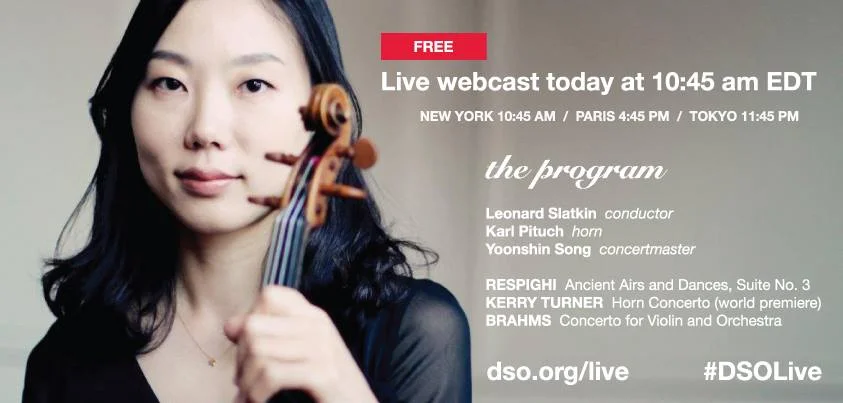
Last month, I introduced the Berlin Philharmonics’ Digital Concert Hall as a best-practice example of creating online audiences by a symphony orchestra. Indeed, we can find orchestras worldwide reaching out for audiences beyond the walls of a traditional concert hall. So let us inspect three of these orchestras—the Detroit Symphony Orchestra, the Sydney Symphony Orchestra, and the Philharmonia Orchestra (UK)—and have a closer look at some of the tools they use, how these tools are being implemented, and the resulting opportunities they create.
Research Update: Is IaaS Right for Everyone?
Last month I gave a general overview of the wide variety of services that fall under the umbrella of “the cloud.” Since then I’ve focused on Infrastructure as a Service, or IaaS, one of the three major cloud subcategories and a topic that can be rather intimidating, due to the plethora of technical specifications providers use to distinguish themselves from the competition. Looming larger than the question of which specific provider to use—a topic well-covered by many expert reviewers—is the question of whether undertaking a transition from a more traditional server infrastructure to an IaaS model is a good idea for arts organizations, especially when it comes to small organizations with limited resources.