




Haven’t you heard? Pinterest: Now Officially Better Than Yahoo and Bing* *Sort of.
The story dropped earlier this month: Pinterest referred more people to websites in August than Yahoo and Bing. What that means is that more people visited Website X by clicking on content (generated from Website X) that is on Pinterest, than people did by searching for Website X on Yahoo or Bing. Which is huge – the little-social-media-that-could topped industry giants, if only by a few decimal points.
The report came from Shareaholic, a social media tool for sharing websites, on just about every social media platform. They have tools for sharing pages from your browser, to putting buttons on your site to allow your visitors to share your content. The Shareaholic Analytics tool tracks who’s sharing your work, and how visitors are reaching you – which is where this report comes from. Shareaholic Analytics also points out that traffic from Pinterest has doubled in the past four months and “is now the fourth largest traffic source in the world”. Can that possibly be true?
Maybe. Search Engine Optimization is a tricky beast and there are a few drawbacks to the report. Shareaholic can only measure the websites currently using its tools – which is a network of 200,000 publishers, who reach 300 million people each month. While that sounds like a suitable sample size, it does depend on the makeup and content of each website, their level of SEO sophistication, etc, etc.
Of course, why am I telling you this? The arts community, while generally not on the bleeding edge, hasn’t been idle on the Pinterest front. The always-cool SFMOMA has boards upon boards of art. The Pittsburgh Irish and Classical Theatre boards give us a glimpse behind the scenes of their shows and soirees. Heck, the Milwaukee Symphony Orchestra pins everything from fanmail and music jokes to gorgeous music halls and their musicians. The fact is, Pinterest’s layout and content lends itself to arts organizations. (But for real people, you can pin videos – and I have yet to see a performances board!) Shareaholic says that Pinterest is one of the best ways to send people to your website. Why don’t you have one yet?
It could be time, it could be money, it's probably a mixture of both. Maybe, like skeptics of this report, you need more time to make an assessment. There are larger implications here: that “sharing” is greater than “searching,” visuals more important than text, and that your friends know what you should look at better than some algorithm. This was still just one report, using one social sharing service, for one month, however, and only time will tell if these trends continue – but maybe you and your organization should take a closer look at Pinterest. We have tools to help you set one up.





 The numerous civilizations of the past left behind numerous tangible traces of their heritage. Coveted or discarded, scattered or buried, broken or intact, these objects would soon become artifacts. Archeologists would study them, museums would acquire them, and the rest is none other than History. But what happens when the core activities of a civilization leave scarce amounts of tangibles? What happens when the pace of change is faster than that of preservation? We should start formulating a response, for this describes none other than the 21st century.
We live in an age of information, of which a substantial amount now exists online, but is constantly in flux. The Economist described this phenomenon in an article titled
The numerous civilizations of the past left behind numerous tangible traces of their heritage. Coveted or discarded, scattered or buried, broken or intact, these objects would soon become artifacts. Archeologists would study them, museums would acquire them, and the rest is none other than History. But what happens when the core activities of a civilization leave scarce amounts of tangibles? What happens when the pace of change is faster than that of preservation? We should start formulating a response, for this describes none other than the 21st century.
We live in an age of information, of which a substantial amount now exists online, but is constantly in flux. The Economist described this phenomenon in an article titled 
 The Arts Council England in partnership with the BBC created The Space as a way for people from all over the world to experience the country’s rich and dynamic arts scene. In effect, a summer of English arts to all! (Albeit without the English summer and its cool Constable Skies). So The Space is certainly something to look forward too because it will feature some of the UK’s best theatrical productions, dances, musical performances, art exhibits, poetry readings, along with content that has been specifically created for the platform.


 In 2011, the Nelson Mandela Centre of Memory partnered with Google to digitize and disseminate the archives of Nelson Mandela. The collaboration has resulted in a visually engaging timeline of Nelson Mandela’s life, populated with photographs, diary entries, letters, and excerpts from his autobiography. The site is worth a visit because it both explains and celebrates the enduring legacy of the South African statesman.
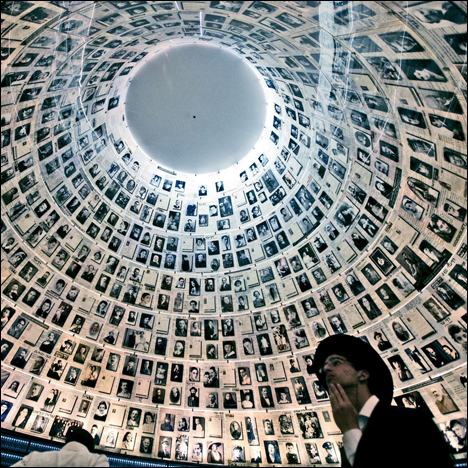 Google has helped digitize the vast archives of Yad Vashem, which is “the world center for documentation, research, education and commemoration of the Holocaust.” Through a technique called optical character recognition (OCR), Google has enabled families to search for both documents and images belonging to their relatives.
Here is an example given by Google: “To experience the new archive features yourself, try searching for the term [
Google has helped digitize the vast archives of Yad Vashem, which is “the world center for documentation, research, education and commemoration of the Holocaust.” Through a technique called optical character recognition (OCR), Google has enabled families to search for both documents and images belonging to their relatives.
Here is an example given by Google: “To experience the new archive features yourself, try searching for the term [