

By Katherine Schouten Rick Archbold recently published a piece in the Literary Review of Canada exploring the impact of self-publishing on the future of literature. The swift rise of print-on-demand technology (POD), which enables users to produce small print runs of titles through cost efficient means, has inaugurated a rush of unfettered works. Visual and textual, personal and professional, fictional and factual, literary and mundane, POD capabilities have empowered all those who possess the inclination to publish self-created goods.
As Archbold acknowledges, such access brings with it thorny issues, of which much conversation has been, and is being, had. (A thoughtful example from Christina Patterson can be found in The Independent.) But his argument brings the quandary around to the other side: what work that ought to be considered “literature” is being passed over precisely because it’s not from mainstream publishers? What might otherwise be considered “legitimate,” if not for the stamp of “vanity publishing” currently affixed by the industry to volumes precisely because they are printed by the very authors who wrote them? More urgently to Archbold, what works of literary art may society lose because self-publication is deemed vain?
Underscoring these conversations is the dualistic role the medium of a book, physical or electronic, plays, both as a vehicle for art (i.e., literature) and as a dynamic tool of communication. It remains one of our most fundamental technologies; how we access it, and whom we allow or enable to produce it, is rapidly changing. But could it be that with this technological evolution we might reinvigorate the book’s latter role, as a tool? If so, arts organizations—indeed, nonprofits of all varieties—stand to benefit. Books self-published using POD carry the potential to serve as an effective means of promotion and commemoration, a revenue stream in the form of merchandise, a powerful platform to aid applications for grant and foundation funding, and an enticing incentive for tiered giving. Most providers (Blurb, Lulu, etc.) are now compatible with Adobe InDesign, further aiding the integration process by enabling graphic designers to work in a preferred medium (rather than being limited to proprietary templates). They also now have ebook options, to deliver self-published goods to potential readers in their preferred format.
The conversations and concerns surrounding the implications of POD and self-publishing on the broader industry will no doubt continue. But the possibilities they hold for the nonprofit sector are palpable, vanity or not.
For a primer on self-publishing, see Alan Finder’s recent article in the New York Times, “The Joys and Hazards of Self-Publishing on the Web.”




 The numerous civilizations of the past left behind numerous tangible traces of their heritage. Coveted or discarded, scattered or buried, broken or intact, these objects would soon become artifacts. Archeologists would study them, museums would acquire them, and the rest is none other than History. But what happens when the core activities of a civilization leave scarce amounts of tangibles? What happens when the pace of change is faster than that of preservation? We should start formulating a response, for this describes none other than the 21st century.
We live in an age of information, of which a substantial amount now exists online, but is constantly in flux. The Economist described this phenomenon in an article titled
 The Arts Council England in partnership with the BBC created The Space as a way for people from all over the world to experience the country’s rich and dynamic arts scene. In effect, a summer of English arts to all! (Albeit without the English summer and its cool Constable Skies). So The Space is certainly something to look forward too because it will feature some of the UK’s best theatrical productions, dances, musical performances, art exhibits, poetry readings, along with content that has been specifically created for the platform.

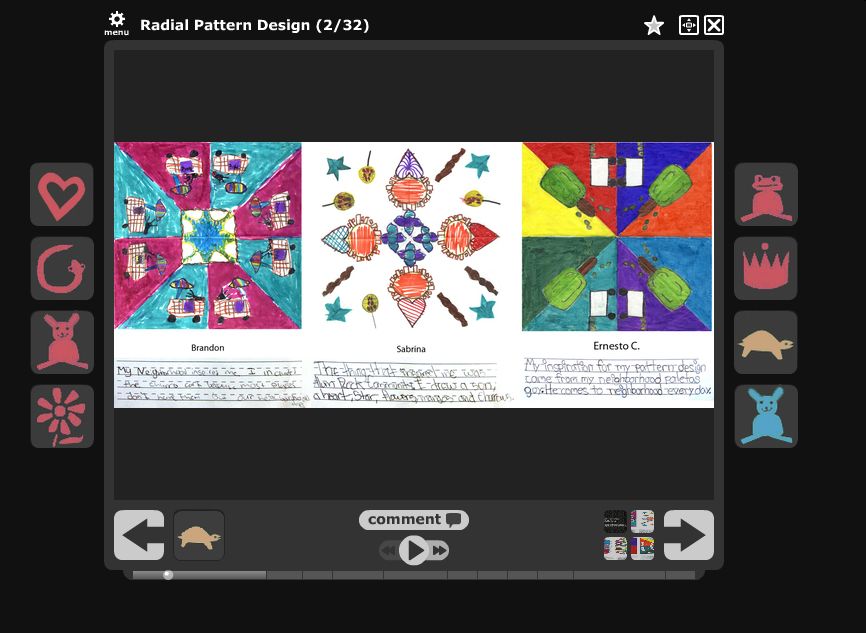


 In 2011, the Nelson Mandela Centre of Memory partnered with Google to digitize and disseminate the archives of Nelson Mandela. The collaboration has resulted in a visually engaging timeline of Nelson Mandela’s life, populated with photographs, diary entries, letters, and excerpts from his autobiography. The site is worth a visit because it both explains and celebrates the enduring legacy of the South African statesman.
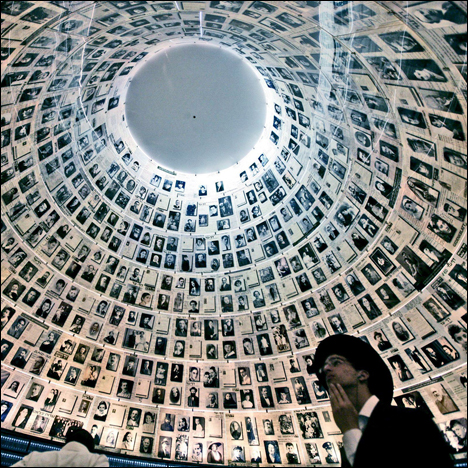 Google has helped digitize the vast archives of Yad Vashem, which is “the world center for documentation, research, education and commemoration of the Holocaust.” Through a technique called optical character recognition (OCR), Google has enabled families to search for both documents and images belonging to their relatives.
Here is an example given by Google: “To experience the new archive features yourself, try searching for the term [