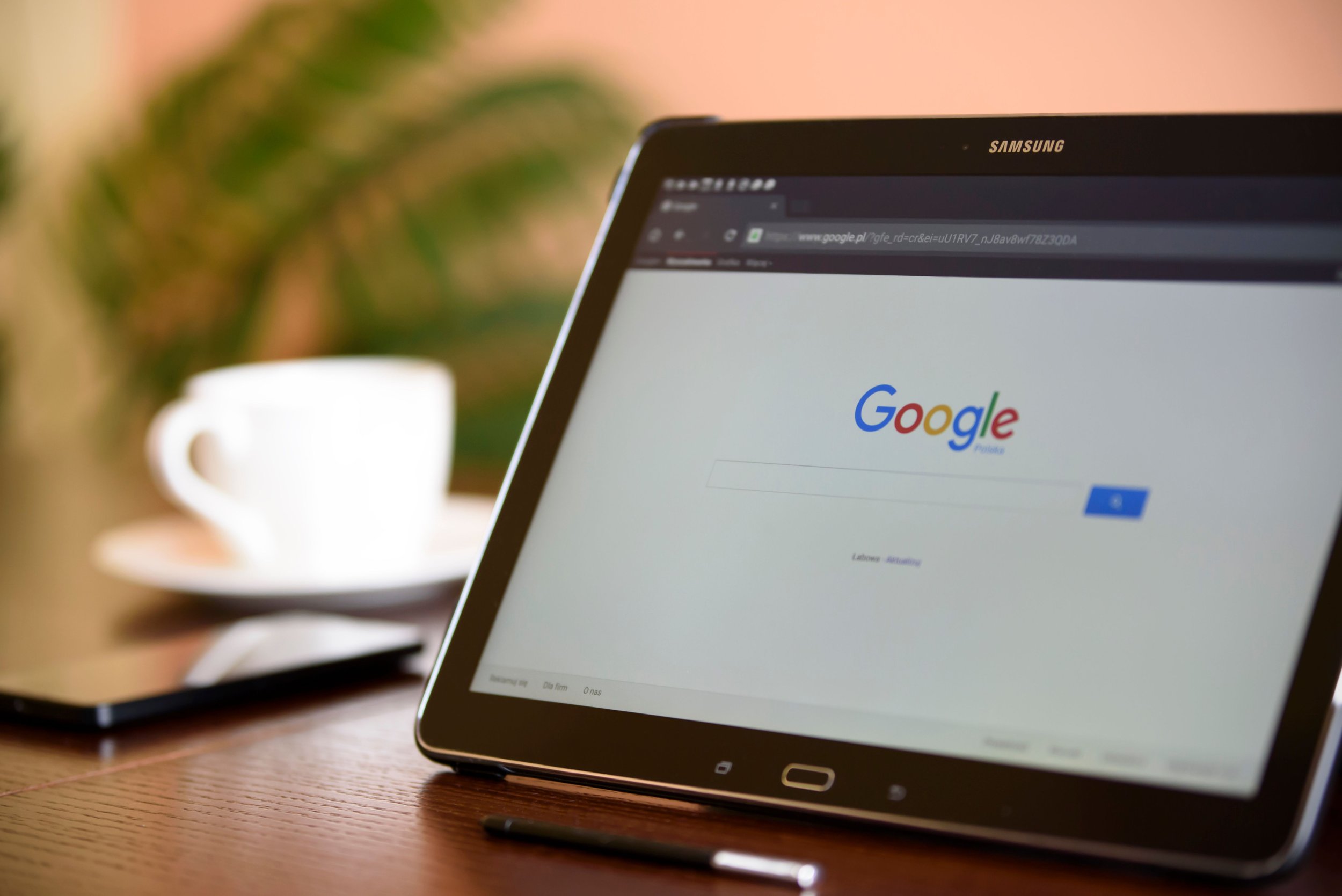
At some point last year, you probably went to make a quick Google search and discovered something quite different. The top few results appeared, and beneath them was an A.I. Overview. It summarized your search results and pointed you towards the answers you were looking for. You may have noticed it wasn’t quite accurate, but it was new. We all thought: ‘Surely in a year, they’ll have that figured out.’ You've already tested the waters with ChatGPT or Claude, but this was something else: an A.I. assistant you didn’t know you needed, one to help you through the first few pages of a regular Google search, making life just a little easier.
As this feature continued rolling out, it would change not only how we search, but also the results we see in any Google search. Search Engine Optimization (SEO) has been a key focus for website developers and administrators for quite some time. These strategies are used to push your website’s pages to the top of a user’s search. It's like a game, with every competing business aiming to be the first site you see. A.I. searches started to change everything, from how Google functions to how people search, and they all have an impact on what makes a website worthy of Google’s top spot in its AI Overview.
With many arts organizations and artists already feeling behind in their digital presence (‘Is it already time to update the website again?’), this additional change in search behavior might be baffling—not only because it's been adopted so quickly, but also because it feels unpredictable. My research into this shift has led me to identify strategies for boosting A.I. visibility, which made me wonder: how does advice compare with actual A.I. Overview results? It also led me to unpack how scammers use these same tools and determine the best advice to help your organization level the playing field so it shows up in A.I. searches.
How has Google search changed?
According to research from the Wharton School of Business, Google remains the number one search engine by a long shot, holding 90% of the global search market, mostly because users hardly give competitors a chance.
Even with this market hold, much has been said about the pervasive feeling that Google Search's quality has declined in recent years. According to computer science researcher Johanne Trippas, the decline in search quality has been a key topic of conversation at computer science conferences in recent years. Academic research backs this up, pointing to SEO spam as a key contributor. SEO spam is the use of tactics to artificially inflate a website's SEO ranking, most commonly found in the product review and comparison field (where affiliate product links can drive profit incentives). Some of these sites utilize payment for positive reviews or generate their content with A.I.
Since the early 2010s, searches on the user end have shifted from topic keywords (New York Theatre) to natural-language questions and sentences (What show is playing in New York next month?). Google was designed to pull up websites in search based on topics, not to answer direct questions. To help address this, Google issued its ‘Hidden Gems’ update in 2023, which sought to democratize the search results by prioritizing user-generated content, such as Reddit posts, Maps reviews, and LinkedIn updates. This change saw major ramifications for SEO.
In a 2024 interview with Fortune Magazine, Lily Ray, senior director of SEO for Amsive Digital, a marketing agency, says that the 2023 updates inadvertently allowed for companies to push their content up the SEO ranks using fraudulent strategies. By using affiliate links and content descriptions, anyone looking to improve their SEO can post on a user-generated forum and boost their website’s SEO ranking. This created the perfect storm for SEO spam to be pushed out to consumers via search engines.
GEO strategy Recommendations
Enter the A.I. Overview: a new way for questions to be answered by a natural language model. Below are Google’s recommendations to optimize your web content for A.I. search:
Follow EEAT: Google points to EEAT Principles (Expertise, Experience, Authoritativeness, and Trustworthiness) as being key to being understood by AI, and they mention that unique, non-commodity content is best at connecting people with an answer that they are searching for.
Prioritize Page Experience: Google recommends that you make sure that website visitors can easily find the content they're looking for. By decluttering, optimizing the experience across devices, and keeping the main page content easy to find, you make the experience smoother for both users and AI systems.
Indexable and Accessible: Google has laid out specific technical requirements that ensure its classic and AI search tools can crawl, index, and interpret information on your webpages. Ensure that the page works (Google receives an HTTP 200 (success) status code), Googlebot isn’t blocked, and the page has indexable content.
Beyond Google’s recommendations, independent researchers and generative engine optimization (GEO) platforms, such as Goodie AI, have shared their advice as well. These platforms allow paying users to track how they appear in A.I. searches and optimize their websites to keep up with the ongoing evolution of these searches. Many of these companies have blogs with GEO advice, which though never explicitly stated, demonstrate that multimodal blog content with original images, statistics, and cited sources helps a website rank more favorably in search results.
Additionally, any content on a page should be easy to understand and use an authoritative tone. Doing this allows not only customers to understand your content, but ensures that Large Language Models (LLMs) will be able to parse your website and believe you are an authority on the subject of your artistic discipline. A study from the Association for Computing Machinery, which introduced the term GEO, found that adding quotations and sources, improving fluency, and including technical terms and statistics increased the number of words used and the position of a webpage in search results.
It’s also important to understand where Google prioritizes sourcing. It appears that the shifts made during the Hidden Gems update have influenced the types of sources Google now prefers in A.I. Overviews. Research from A.I. marketing firm Profound, which focused on citation volume from June 2024 to August 2025, found that Reddit, YouTube, and Quora were among the top sources Google drew from, with more established news sources accounting for fewer of the cited results. This research suggests that websites cited by established entities and users on social media could increase your site’s chance of being mentioned in an A.I. overview, even if the citation won’t lead directly back to your website.
On the more technical side, a recent article from Search Engine Land recommends structuring your website to achieve clear entity authority. A.I. search tools are looking beyond keywords to understand how a branded entity fits into a broader ecosystem. It is important that A.I. understands the hierarchy of your entity and how it is mentioned across the internet. Using structural data fields recommended by schema.org, such as sameAs and @id properties, you can verify to A.I. systems how events, spaces, and products are a part of your company.
Another method that came up, ethically similar to SEO spam strategies, would be to use strategic text sequences to boost your A.I. appearance. These sequences, generated by LLMs, are unintelligible to us but make the A.I. think that a page or product is more applicable than it is to certain queries. According to a Harvard study, they boosted product recommendations by 40%, even when the product did not actually meet the user's needs.
How are Arts Organizations Showing up in search?
To analyze if the broader advice on GEO works, I conducted an experiment by making four search queries on the 6 of the top artistically vibrant cities (SMU DataArts, 2025) in the country (3 major cities and 3 mid-sized). Each question targeted a different artistic medium, with one aiming to represent the search of someone looking to rent a performance venue. Most questions, with the except for one, returned an A.I. Overview. For the question that did not return an overview, I used A.I. Mode to force a Google search A.I. response. This generally led to a more thorough and well-cited output.
Theatre and Music performance searches always listed as many or more results than the number of citations. In these instances, either a blog or a local publication listing venues was cited for multiple results, or a single venue’s website was cited multiple times for upcoming performances. Suggestions for museums usually correlated directly to a source, while the venue search pulled in many sources to fill out details for each venue.
Chart 1: Source vs. Results by Discipline in the Arts. Data from SMU DataArts 2025.
The results of sources varied quite drastically between artistic disciplines. Searches for fine arts museums and galleries prioritized user-generated content from platforms such as YouTube and Reddit far more than other disciplines do. Theatre and music venues do a far better job of getting direct links to their websites embedded into the text of the overview. Regional websites, such as santafe.org or sanfrancisco.net, appear frequently in almost all searches. For theatres, Industry websites (Broadway.org and Boston Theater), which are usually also regional-specific, take the place of these sites.
Chart 2: Source Type by Discipline (average in all cities) from SMU DataArts 2025.
Still, especially in the case of the large cities I studied, only a handful of results are getting picked. San Francisco has 114 active theatre companies, according to Theatre Bay Area, and while not all of them had performances last month, only 10 performances got referenced in the overview. This doesn’t necessarily mean that it's tougher for small art organizations either. 10 of the 24 questions produced an A.I. result that specifically gave space for organizations with ‘Intimate’, ‘Niche’, and/or ‘Experimental’ offerings.
How Customers Are Led Astray by a.i. search results
During my research, I found that a number of ticketing websites and fake blogs could potentially lead customers astray. An upcoming performance of Wicked in Boston was referenced in the A.I. overview, even though it was 6 months beyond the search criteria. Neither the venue nor the official tour website was linked, and instead, Wicked Boston Opera House Tickets, a third-party ticketing website operated by ticket broker BigStub, was cited. It doesn’t appear that official tickets are available anywhere else. This website doesn’t follow much of the prescribed A.I. guidance, yet it somehow shows up in search results regardless of the query, and which means that potential ticket buyers might go there first.
In my search for SF performance venues, a blog for a parking spot marketplace startup appeared. The blog post contains information related to the search, but it appears to be entirely AI-generated, and it has no relevance to the startup's business. This blog post meets a few of the recommended criteria (authoritative, detailed, and easy to read), but it unfortunately takes people farther away from the listed arts organizations' websites (no links or sources are provided in the post). Three other AI-generated sources appeared in search results, mostly as blog posts. Google has said that it does not penalize AI-generated content, as long as it follows EEAT principles.
Additionally, well-made pages about niche topics were cited in searches, despite their cities being distant from the city named in the search. This usually occurs when an institution focuses on a niche subject/art form but doesn’t provide a clear explanation of that subject on its website, leading the A.I. to look elsewhere for an explanation.
How to get your customers to you with a.i. search
Comparing Google’s search recommendations to my results, we can see where some general advice may be less prescient to Arts Organizations. Below is supplemental EEAT advice for Arts Orgs: CUB (Cross-references, Users, Blogs).
Cross-References: Being cross-referenced across local publications, businesses, and lists can be essential for being recognized by A.I .search. Local news sources can give you the credibility you need, such as a source for a 2019 award from Boston Magazine that helped Huntington Theatre Company be referenced as a ‘must-see theatre’ in a Boston search. Additionally, many businesses, such as hotels, offer webpages listing activities for their guests to do while in town. These were referenced frequently, and many include links that let users and A.I. engines jump to your webpage. These are likely easy to get in on through partnerships and offers.
User Content: User-generated content is another essential element in the age of Google’s Hidden Gems. Especially for Museums and Music venues, having shoutouts on YouTube, Instagram, and Yelp can really help prove your organization is a must-see in your area. A YouTube Short from Austin Klar, with only 113 impressions, helped the new Fnnch Pop-up Museum in SF appear as a ‘niche museum’ in search results.
Blogs: This doesn’t necessarily mean that you need to start a proper ‘blog’. Websites such as SF Playhouse have added blog-like pages to their About menu. These pages cover ‘Things to do in San Francisco’ and ‘Musicals in SF’, allowing an A.I. to draw a connection between possible user search terms and that institution, the same way a blog would typically function in supporting GEO.
A.I. search optimization is as necessary for reaching audiences today as SEO optimization for Google has been for the last decade. While the strategies and tactics that can help you the most are still evolving as the tech rolls out, the growth of the A.I. search shows no signs of slowing down. Testing out the methods that work best for your organization can only help you continue to reach the most people who might be interested.
-
Aggarwal, Benu. “Why Entity Authority Is the Foundation of AI Search Visibility.” Search Engine Land, March 16, 2026. https://searchengineland.com/entity-authority-ai-search-visibility-471619.
Aggarwal, Pranjal, Vishvak Murahari, Tanmay Rajpurohit, Ashwin Kalyan, Karthik Narasimhan, and Ameet Deshpande. “GEO: Generative Engine Optimization.” Proceedings of the 30th ACM SIGKDD Conference on Knowledge Discovery and Data Mining (New York, NY, USA), KDD ’24, August 24, 2024, 5–16. https://doi.org/10.1145/3637528.3671900.
Akram, Muhammad, Imran Sohail, Sikandar Hayat, M. Imran Shafi, and Umer Saeed. “Search Engine Optimization Techniques Practiced in Organizations: A Study of Four Organizations.” arXiv:1006.4558. Preprint, arXiv, June 23, 2010. https://doi.org/10.48550/arXiv.1006.4558.
Axelsen, Emily. “AI Search Optimization Guide for Brand Visibility.” Goodie Blog, September 19, 2025. https://higoodie.com/blog/ai-search-visibility-optimization.
Bevendorff, Janek, Matti Wiegmann, Martin Potthast, and Benno Stein. “Is Google Getting Worse? A Longitudinal Investigation of SEO Spam in Search Engines.” In Advances in Information Retrieval, edited by Nazli Goharian, Nicola Tonellotto, Yulan He, et al. Springer Nature Switzerland, 2024. https://doi.org/10.1007/978-3-031-56063-7_4.
Chapekis, Athena, and Anna Lieb. “Do People Click on Links in Google AI Summaries?” Artificial Intelligence. Pew Research Center, July 22, 2025. https://www.pewresearch.org/short-reads/2025/07/22/google-users-are-less-likely-to-click-on-links-when-an-ai-summary-appears-in-the-results/.
Cohen, Zach. “How Generative Engine Optimization (GEO) Rewrites the Rules of Search.” Andreessen Horowitz, May 28, 2025. https://a16z.com/geo-over-seo/.
Confino, Paolo. “‘It’s the Worst Quality Results on Google I’ve Seen in My 14-Year Career’: Web Search Exec Breaks down How ‘SEO Parasites’ and AI-Enabled Spam Are Breaking the Internet.” Fortune. Accessed February 10, 2026. https://fortune.com/2024/01/18/why-is-google-search-so-bad-spam-links-seo-ai-algorithm/.
DataArts. “Arts Vibrancy Index 2025 - Executive Summary. DataArts.” Accessed April 21, 2026. https://culturaldata.org/arts-vibrancy-2025/executive-summary/.
Ferraro, William. “The Multi-Billion Dollar Illusion: How Fake Reviews Are Written: From Review Farms to AI.” Medium, May 22, 2025. https://medium.com/@wrferraro/the-multi-billion-dollar-illusion-how-fake-reviews-are-written-from-review-farms-to-ai-4f016c77971d.
Goodwin, Danny. “Google AI Overviews Cut Search Clicks 42%: Report.” Search Engine Land, March 12, 2026. https://searchengineland.com/google-ai-overviews-cut-search-clicks-report-471497.
Goodwin, Danny. “There Is a Growing Spam Problem in Google AI Overviews.” Search Engine Land, May 14, 2025. https://searchengineland.com/google-ai-overviews-growing-spam-problem-455402.
“Google Search Technical Requirements | Google Search Central | Documentation | Google for Developers.” Accessed April 16, 2026. https://developers.google.com/search/docs/essentials/technical.
GZ Module Pages. “Directories - Default - Theatre Bay Area.” Accessed April 16, 2026. https://members.theatrebayarea.org/theatredirectory.
Hickey, James. “Gartner: Only One-Third of Consumers Say GenAI Rivals Search Engines.” Demand Gen Report, January 26, 2026. https://www.demandgenreport.com/industry-news/news-brief/gartner-only-one-third-of-consumers-say-genai-rivals-search-engines/51530/.
Honan, Mat. “I Tried OpenAI’s New Atlas Browser but I Still Don’t Know What It’s for.” MIT Technology Review, October 27, 2025. https://www.technologyreview.com/2025/10/27/1126673/openai-new-atlas-browser/.
Khromova, Yevheniia. “ChatGPT vs Perplexity vs Google vs Bing: AI Search Engine Comparison.” SE Ranking Blog, April 2, 2025. https://seranking.com/blog/chatgpt-vs-perplexity-vs-google-vs-bing-comparison-research/.
Kumar, Aounon, and Himabindu Lakkaraju. “Manipulating Large Language Models to Increase Product Visibility.” arXiv:2404.07981. Preprint, arXiv, September 2, 2024. https://doi.org/10.48550/arXiv.2404.07981.
Lafferty, Nick. “AI Platform Citation Patterns: How ChatGPT, Google AI Overviews, and Perplexity Source Information.” Profound, June 5, 2025. https://www.tryprofound.com/blog/ai-platform-citation-patterns.
Mueller, John, and Google Search Relations. “Top Ways to Ensure Your Content Performs Well in Google’s AI Experiences on Search | Google Search Central Blog.” Google Search Central Blog. Accessed February 12, 2026. https://developers.google.com/search/blog/2025/05/succeeding-in-ai-search.
Nifong, Casey. “Prompt Research: The next Layer of SEO and GEO Strategy.” Search Engine Land, March 12, 2026. https://searchengineland.com/prompt-research-seo-geo-strategy-471399.
Olivas, Julia. “What’s GEO? The Beginner’s Generative Search Optimization Guide | Goodie AI.” June 4, 2025. https://higoodie.com/blog/whats-geo-the-beginners-generative-search-optimization-guide.
Paul, Andrew. “Study: Google’s AI Overviews Show Millions of Wrong Answers Every Hour.” Popular Science, April 8, 2026. https://www.popsci.com/technology/ai-overview-inaccuracy-google/.
Phiddian, Ellen. “Sick of AI Search Engines? How to Take an ‘off Ramp’ to the Rest of the Web.” ABC News AU, May 13, 2025. https://www.abc.net.au/news/science/2025-05-14/search-engine-quality-google-ai-bing-information-internet/105273824.
Prajapati, Manisha Ramacharan, and Meghraj Nandanwar. “Black Hat SEO Poisoning Search Engine Results For AI.” Zscaler Blog, June 24, 2025. https://www.zscaler.com/blogs/security-research/black-hat-seo-poisoning-search-engine-results-ai-distribute-malware.
Sharma, Simple, Supriya P. Panda, and Seema Verma. “Role and Analysis of Various SEO Strategies to Improve Website Ranking.” 2022 International Conference on Machine Learning, Big Data, Cloud and Parallel Computing (COM-IT-CON) 1 (May 2022): 639–48. https://doi.org/10.1109/COM-IT-CON54601.2022.9850597.
Sullivan, Danny, and Chris Nelson. “Google Search’s Guidance about AI-Generated Content | Google Search Central Blog.” Google Search Central Blog. Accessed February 12, 2026. https://developers.google.com/search/blog/2023/02/google-search-and-ai-content.
Tabeling, Jason. “Black Hat GEO Is Real – Here’s Why You Should Pay Attention.” Search Engine Land, October 23, 2025. https://searchengineland.com/black-hat-geo-pay-attention-463684.
Website Analytics for Nonprofits: 5 Metrics That Will Help You Build Success – Impact SEO. n.d. Accessed March 10, 2026. https://impactseo.co/resources/website-analytics-for-nonprofits-5-metrics-that-will-help-you-build-success/.
“Why Google Dominates the Search Engine Market.” Knowledge at Wharton, n.d. Accessed April 5, 2026.https://knowledge.wharton.upenn.edu/article/why-google-dominates-the-search-engine-market/.