
By: Kerry Huang, Kripa Jain, Christine Lee, Jack Rooney, Natalie Schmidt, Rebeca Varela
This study was completed as part of a Capstone Project for the Master of Entertainment Industry Management program at Carnegie Mellon University.
This study addresses the growing immersive entertainment sector, projected to reach nearly $500 billion by 2030, by researching how location-based entertainment can develop sustainable business models. This research was conducted to solve the problems persisting in the immersive entertainment industry, namely the lack of consensus regarding model distinctions, undefined success metrics, and unclear pathways for scaling projects.
The immersive entertainment industry is rapidly expanding, with a projected market growth from $133.6 billion in 2024 to $473.9 billion by 2030 (“Immersive Entertainment Business,” 2025). The following research, investigates how creators and investors measure success within the immersive space. Being in its adolescence, this industry currently has no widely accepted metrics for assessing the financial viability of a potential project, unlike adjacent industries such as film (Nelson et al., 2025). The lack of consensus creates some hesitancy among investors despite rising interest.
An Emerging Need for Industry Norms
The following research was conducted on behalf of Gensler, the largest global design and architecture firm. Gensler operates at the intersection of architecture, real estate, technology, entertainment, and culture. Their positioning drives an opportunity for leadership at the forefront of immersive entertainment, and as a result, they have been exploring business models to evaluate and deliver sustainable, successful immersive projects. Their co-authored 2025 Evolving Immersive Report asserted that the industry is in an “awkward teenage” phase (p. 5) of model refinement, where immersive creators, developers, and investors are questioning the types of experiences that can successfully deliver both emotional resonance and long-term financial viability (Nelson et al., 2025).
An immersive entertainment experience optimally evokes all five senses, invites active participation, and is driven by a strong narrative, transforming visitors by absorbing them in distinct worlds (Johnson et al., 2024). As the industry scales, questions continue to arise about what constitutes success in the space. This capstone project, undertaken for Gensler, seeks to identify financially sustainable business models in the immersive entertainment industry by examining how creators, developers, and investors measure success.
The broader entertainment landscape is shifting from passive to participatory formats, driven by evolving consumer behavior. The shift is typified by the decline in traditional movie theatres, where attendance has decreased 28% in the US since 2019 (“Movie Theater Business,” 2025). In contrast, interactive theatre (within immersive entertainment) has grown, with rising demand, attendance, and revenue (“Immersive Theatre,” 2025). Millennials and Gen Z increasingly prioritize spending on experiences rather than traditional consumer goods, a key driver of immersive entertainment. In this current environment, presence, personalization, and multisensory engagement increasingly take precedence over product ownership (Walsh, n.d.).
The market is witnessing significant capital deployment into permanent real estate dedicated to immersive entertainment. For example, Cosm is an immersive entertainment and technology company operating multiple shared-reality venues. Using Light-Emitting Diode (LED) domes, Cosm blends physical and virtual worlds to offer multi-programming experiences across a diverse portfolio of live sports, art, and film (“What Is Cosm?,” n.d.). The company’s success has led to plans for two new venues in 2026, with each targeting an estimated annual revenue of $150-200 million (M) per location (Sherman, 2025).
Similarly, AREA15 is an entertainment complex in Las Vegas that combines art installations, interactive attractions, and experiential retail. With over 15 million visitors since its 2020 inception (961 Interactive, 2025), AREA15 has since expanded into an estimated 40-acre entertainment district. The expansion introduces multiple new experiences, including the year-round horror attraction Universal Horror Unleashed, to encourage repeat visits through varied programming (“AREA15,” 2025). Disney, too, has pledged $60 B over 10 years to turbocharge Disney Experiences (Frank, 2023).
Despite these increased investments, 57% of immersive professionals surveyed in the “Evolving Immersive Report” (Nelson et al, 2025) reported relying on self-funding for their projects. According to that data, financiers and real estate developers interested in immersive entertainment are hesitant to provide funding largely due to the lack of successful business models, which is the focus of this study. Many such investors have also deemed immersive entertainment a “hits-based business” (Nelson et al., p. 12) vulnerable to shifting audience tastes, industry trends, and broader macroeconomic factors. The report demonstrates that developers and investors are seeking turnkey tenants, quantifiable returns, and scalable business models.
Designing A Framework for Immersive Entertainment Models
Our research for this project is designed to establish a shared framework for success that extends beyond standard financial metrics such as attendance and ticket sales. Our goal is to support creative and business decision-makers by offering a formula that assesses the viability and risk factors of successful immersive projects. Therefore, the two research questions guiding this project are:
What non-financial metrics, such as design, content, experience, etc., best indicate financial viability across immersive entertainment models?
To what extent are these metrics universal or model-specific?
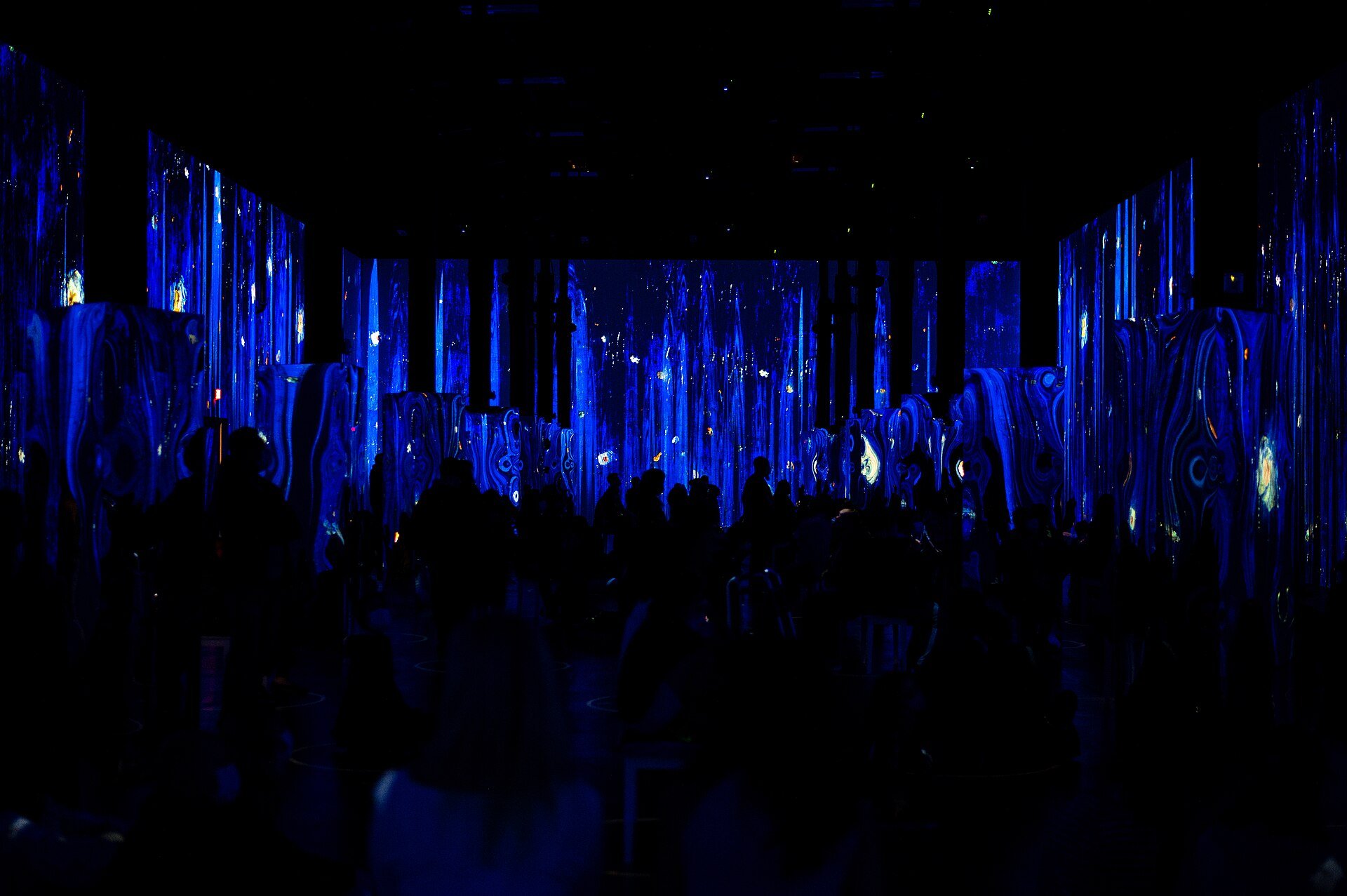
Our research team chose to categorize and focus on three core models: Destination, Rotating, and Touring. “Destination models” are those built around a physical, permanent location, offering a fixed, repeatable experience that remains largely unchanged for an extended period. An early example is the Museum of Ice Cream, an interactive museum composed of ice-cream-themed installations, where visitors explore whimsical rooms and engage in playful, Instagram-friendly exhibits (“Museum of Ice Cream,” n.d.). “Rotating models” are also anchored to a fixed physical location; however, they offer varying experiences or programming, with content that changes periodically. An example is Cosm’s dome experience. “Touring models” are mobile, traveling between cities or regions, offering audiences curated, time-limited programming. A financially successful example is Van Gogh: The Immersive Experience, a large-format projection-based exhibition often paired with virtual reality (VR) capabilities that has been presented in 77 cities (Van Gogh Exhibition, n.d.).
Definition of Terms
The list below includes model terms identified within our research, as well as terms coined by our industry expert interviewees.
Destination Model: An immersive venue built around a physical, permanent location, offering a fixed, repeatable experience that remains largely unchanged.
Experiential Density: A metric that measures the richness of emotional, cognitive, and sensory engagement within a given time and place (Schlappig, 2026).
Money Value of Time (MVT): A measurement of how much an audience member pays per unit of time for an experience (Pine, 2020).
Return on Experience (ROX): A measurement of customer and practitioner satisfaction that reflects the relationship between incremental increases in revenue over the cost associated with bringing an experience to fruition, minus the admissions fee (Pine, 2020).
Rotating Model: An immersive venue using a fixed physical location with varied programming that changes periodically.
Touring Model: An immersive venue characterized by mobility as the experience travels between cities or regions and offers audiences curated, time-limited programming.
History of the immersive entertainment industry
There are two industry reports foundational to our study. Gensler’s immersive entertainment report (2024) highlights the primary challenges currently facing the immersive industry. The practitioner and audience surveys included in that report are particularly important, as they informed the design and structure for our own consumer survey that had a focus on the audience perception of immersive experiences. (Nelson et al., 2024). Additionally, AECOM’s global attractions attendance report, published in 2023 and updated in 2024, indicated that theme parks have globally recovered from the COVID-19 pandemic, partly driven by an increased offering of immersive experiences and limited-time events (Theme Index, 2023).
In addition, our research team used the 2011 edition of The Experience Economy by B. Joseph Pine and James H. Gilmore to inform our theoretical foundation. Originally published in 1999, both the authors and the book are widely regarded as pioneers in the study of immersive and experience-driven entertainment. They were among the first to identify the shift in consumer behavior toward prioritizing experiences over goods and services (Pine & Gilmore, 2011). The concept they coined in 1998, "Experience Economy,” remains a central framework within the immersive entertainment industry. To further contextualize these ideas, our team interviewed Joseph Pine regarding how the framework has evolved since the book’s publication.
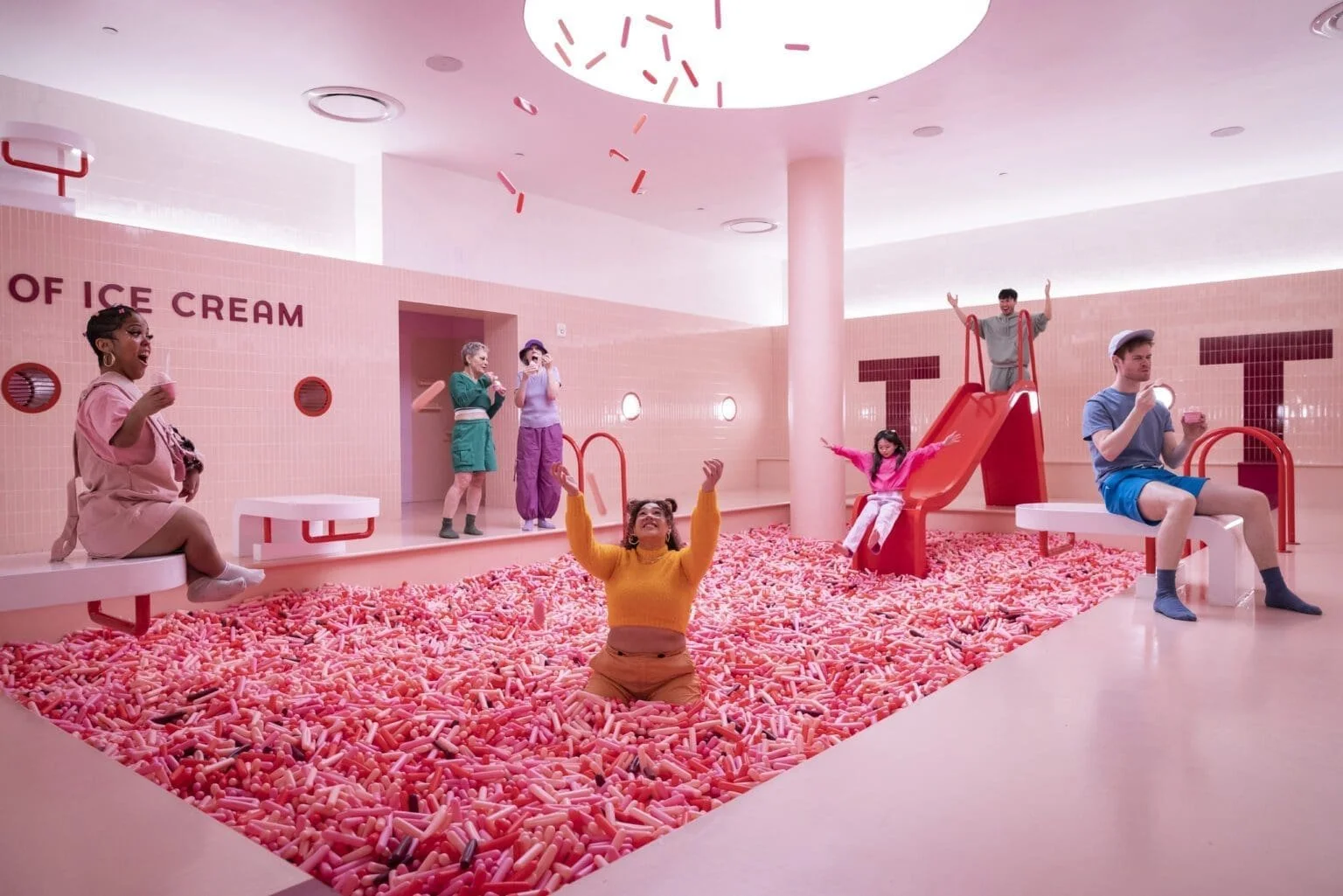
Source: Museum of Ice Cream
An Industry in Search of Consensus
As immersive experiences continue to evolve, there remains a lack of consensus on terminology, success metrics, and model distinctions. The three sources each defined success metrics differently, further necessitating this study’s investigation into whether any such metrics can be considered universal. While the available reports clearly outlined case studies of both successful and faltering immersive experience formats, there still existed a need to clearly discuss and define non-financial metrics that can be more broadly applied. Additionally, they primarily focused on the perspectives of industry professionals, tracking practitioner behavior, concerns, and changes as the industry evolved.
The AECOM report measured an attraction’s success by combining high absolute attendance, year-over-year attendance growth, and the sustainability of operational models. If attendance drives revenue, the report also acknowledged that "per capita spending has been steadily increasing" and that this is an important metric when attendance fails to be a significant indicator (Theme Index, 2023, p. 24). While the AECOM report prioritized high attendance as a measure of success, the Gensler report recognized that the diversity of immersive projects and their creation production processes make a one-size-fits-all metric inappropriate.
Although an inherent asymmetry exists between artistic vision, audience demand, and commercial scalability, the study defined success as a combination of practitioner and audience satisfaction and income stream stability (Nelson et al., 2024). Examining practitioner satisfaction more closely, Gensler’s survey indicated that practitioners value creativity, audience satisfaction, and sustainability over profit (p. 43). Practitioners also believe that a successful project is defined by consistent client flow, fair wages, and team fulfillment.
Differentiating from corporate-sanctioned reports that observe how the industry currently operates, Pine presented multiple theories that can be tangibly applied in the field. Many of his published works established the Money Value of Time (MVT) as a unit of measurement for evaluating a project’s success (Pine & Gilmore, 2011). This concept recognizes that the money customers willingly spend for an experience is proportional to the value they derive from the time spent at the experience (“Competing for Customer Time,” 2021). Pine also expanded on the idea of Return on Experience (ROX), a more holistic measure of customer and practitioner satisfaction that expands beyond financial returns to include emotional and strategic returns (Pine, 2020). Although these metrics do not provide an absolute measure of success, our research team further contextualized them using our consumer survey results and other qualitative study findings.
Our study identified three immersive entertainment models: Destination, Rotating, and Touring. These models were used to determine which non-financial success metrics were the greatest indicators of sustainability, and whether they could be applied across a variety of experience formats. Model distinctions are a commonly applied practice in the industry, given the diversity of experience types. However, their use has been inconsistent across different published works and reports. The AECOM Theme Index focused on attractions: their distinctions being Amusement/Theme Parks, Water Parks, and Museums, while reports remain divided based on geographical region (Theme Index, 2023). The Gensler report defined distinctive models according to duration, with markers for Short-Term, Medium-Term, and Long-Term (Nelson et al., 2024).
The Experience Economy was innovative in defining the 4Es that compose an immersive experience: Entertainment, Educational, Esthetic, and Escapist (Pine & Gilmore, 2011). Using the two axes of passive versus active and absorption versus immersion, each category has a distinct characteristic. Entertainment formats like movies involve passive absorption, whereas Educational formats like lectures involve active absorption. Esthetic formats, such as walking around a museum, are passive immersion, whereas Escapist formats, defined by Pine to include tourism, are active immersion (Pine & Gilmore, 2011). Overall, these distinctions can guide practitioners and investors in developing successful immersive projects, but the absence of consistency may lead to confusion in the processes.
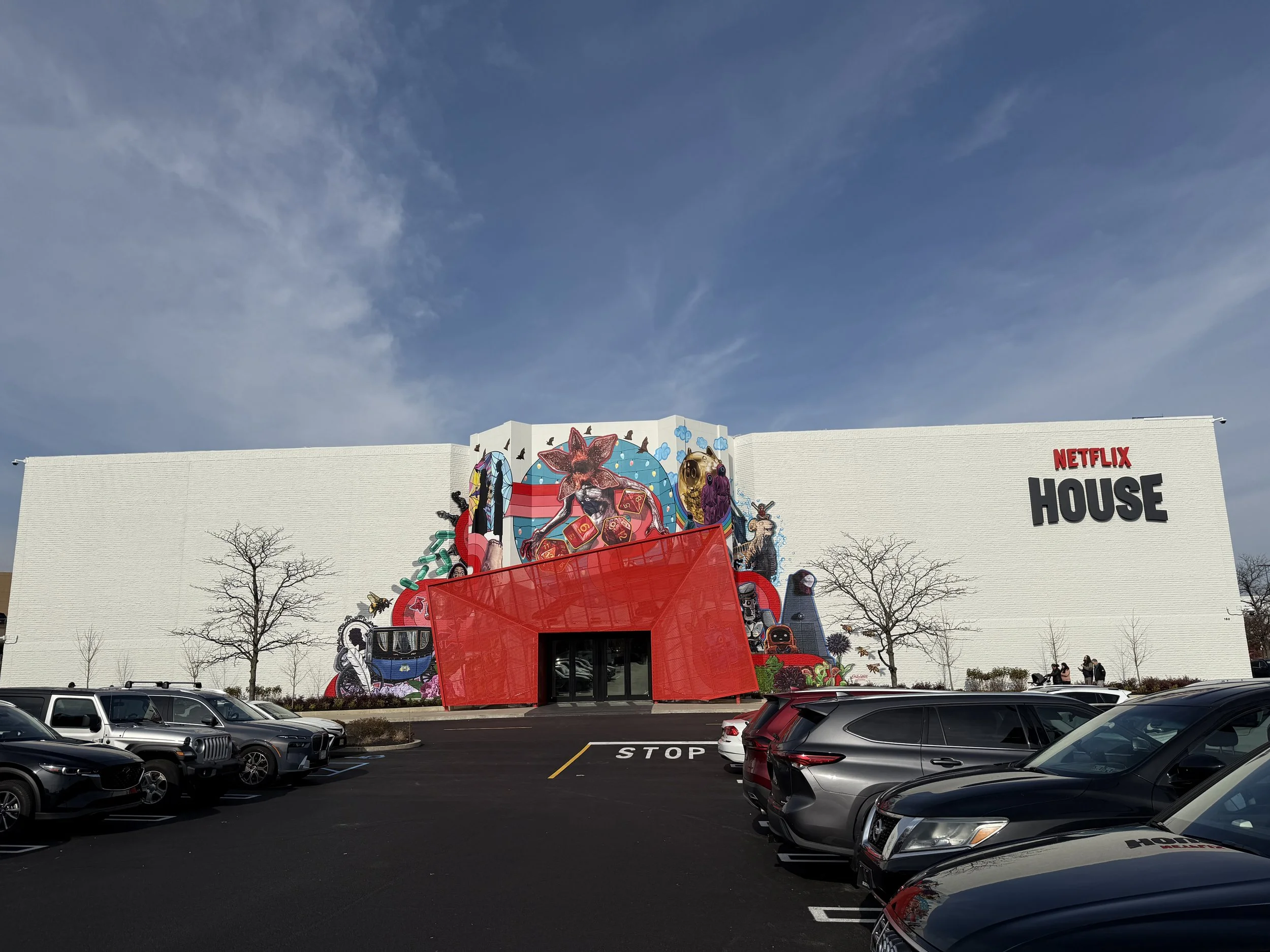
Netflix House at King of Prussia Mall by Dough4872, Licensed under CC BY-SA 4.0
Financial Challenges Posed by a Fractured Industry
The lack of consensus within the industry has made it difficult to identify generalizations about success, which in turn represents a key challenge for immersive experience creators: financial sustainability. The market for immersive experiences is clearly growing, with estimated revenues reaching $3.9 B in 2024 and an annual growth rate of 21% since 2019 (Nelson et al., 2024, p. 18). Still, immersive creators and investors alike continue to struggle to calculate and manage risk, making funding often difficult to secure.
As a result, creators and investors have become misaligned on financial expectations, favoring predictability and turnkey solutions. While many practitioners argue that immersive experiences have been around for decades (including themed attractions, immersive theater, and expanded cinema), some realtors and other investors still consider them a relatively novel entertainment format. Furthermore, immersive experiences have grown in the last decade through the addition of advanced technologies such as augmented reality (AR), VR, spatial audio, and more, into branded physical spaces at a scale not seen before, marking a new era of expansion and experimentation. However, this growth means models are still emerging and are highly susceptible to rapidly shifting trends (Nelson et al., 2024).
Consequently, some investors view immersive as too novel and nebulous a business in contrast to traditional real estate market evaluations. For smaller, independent productions in particular, investors have instead adopted a wary “wait and see” approach, pressuring immersive creators to pursue riskier sources of funding (p. 12). Several notable exceptions exist, including Meow Wolf and Cosm, larger businesses that have each raised hundreds of millions of dollars in private capital, but the same cannot be said for dozens of other immersive businesses in the industry. These findings clearly indicated a need to develop a set of industry-wide metrics for measuring risk and success, enabling practitioners and investors alike to more accurately anticipate and understand financial sustainability.
By Erik Drost - Immersive Van Gogh Cleveland, CC BY 2.0
As to expansion, self-financing can only go so far: those 57% small-scale, independent creators are likely to quickly reach their growth threshold, particularly if they heavily rely on ticket sales to fund future scaling (Nelson et al., 2024). This barrier is in stark contrast to the already-large corporate and institution-backed projects like Universal’s Halloween Horror Nights and Netflix House. Such ventures have profited from significant reinvestment campaigns and “succeeded in regaining market share while managing to increase per-capita spending” (Theme Index, 2023, p. 13).
In 2024, more than half (56.8%) of surveyed respondents cited “Revenue/Funding/Budgets” as their top challenge, followed by “Scaling/Growth” (Nelson et al., 2024, p. 48). To address the uncertainty of traditional financial metrics, creators have turned to non-financial metrics to signal sustainability. For example, they have emphasized the importance of operational longevity, specifically the number of years operated alongside other duration-based measurements as a possible success metric for semi-permanent and long-term immersive models (Nelson et al.).
In 2019, pre-COVID industry reports such as Brigante and colleagues’ (2020) noted that “creators who once thrived off critical success and rave audience reviews are burning out over the struggle to translate those passion projects into viable long-term businesses” (p. 8). Most recently, Nelson et al.'s (2024) report highlighted a similar frustration: the largest number of practitioners surveyed (42.6%) had no active immersive projects from 2023, while only 21.7% had one continuing project (p. 54). Practitioners have struggled to identify universal business models, making longevity and growth into higher revenue brackets difficult.
Additional financial data from Nelson et al.’s 2024 report demonstrated these ongoing challenges with scaling smaller productions; the largest bracket for estimated gross revenue in 2024 was under $10,000. Furthermore, the number of respondents reporting gross revenue between $10,000 and $100,000 was “lower than expected” overall (p. 56). Without financiers’ confidence and widely applicable metrics, most creators continue to struggle to grow and sustain revenues. Ultimately, the relative novelty of the immersive entertainment industry business has left much in flux, forcing creators to either forge a path into the unknown or rely on small-scale, less-profitable productions.
Summary
The immersive entertainment industry faces several core challenges in its adolescent stage: (1) a lack of consensus regarding model distinctions, (2) undefined success metrics, and (3) unclear pathways for scaling projects. These issues increase perceived risk for both creators and investors, making funding difficult to secure. Keeping these aspects in mind, our framework targeted bridging the gap between practitioners and audiences. The Gensler report’s detailed investor perspective, Pine’s economic take on non-financial metrics (such as MVT), and AECOM’s evidence of success for larger-scale themed attractions provided essential context for industry-side operators. However, our research challenged practitioner-specific data through a primary focus on audience perspectives and behavior. In Part II, our research team shares insights from our consumer-facing survey and expert interviews, and how this information informed the creation of a framework to address inconsistencies in the immersive entertainment industry.
-
961 Interactive. (2025, October 14). Discover AREA15: Las Vegas' immersive playground hub. AREA15. https://area15.com/discover-area15-las-vegas-immersive-playground-hub/
AREA15 surpasses 15 million visitors, debuts new expansion—Nevada Business Magazine. (2025, August 26). Nevada Business Magazine. https://nevadabusiness.com/2025/08/area15-surpasses-15-million-visitors-prepares-for-aug-14-expansion-debut/
Campbell, M. (2026, January 9). Behind the buzzwords: What "immersive" actually means. Just Honest Experiential Agency. https://www.justhonestevents.com/post/behind-the-buzzwords-what-immersive-actually-means
Candytopia. (n.d.). https://candytopia.com/
Competing for customer time. (2021, September 1). Duke Corporate Education.https://www.dukece.com/insights/competing-for-customer-time/
Cosm. (2021, January 1). Shared Reality – The “Reality Technology” of the future, today. Cosm. https://www.cosm.com/news/shared-reality-the-reality-technology-of-the-future-today
David. (2025, January 16). LED (light-emitting diode) explained. Soldered Electronics. https://soldered.com/learn/led-light-emitting-diode-explained/
Dolby. (n.d.). What is spatial audio? How it works and how to use it. https://www.dolby.com/experience/home-entertainment/articles/what-is-spatial-audio/
Dreamscape Immersive. (n.d.). Dreamscape - a virtual reality experience like no other. Dreamscape Immersive. https://dreamscapeimmersive.com/
Fernando, J. (2026, February 18). What is return on investment (ROI) and how to calculate it.
Investopedia. https://www.investopedia.com/terms/r/returnoninvestment.asp
Frank. (2023, September 19). Disney plans to expand parks investment, doubling capital expenditures over 10 years. The Walt Disney Company. https://thewaltdisneycompany.com/disney-plans-to-expand-investment-in-parks-business/
Fritz, B. (2017, September 26). Virtual Reality Installations to Start Arriving at AMC Movie Theaters Next Year. The Wall Street Journal . https://www.wsj.com/articles/virtual-reality-installations-to-start-arriving-at-amc-movie-theaters-next-year-1506430801
Genovese, S. (2023, September 20). Marketing communications: What is B2B marketing?
Marketing Communications | West Virginia University. https://marketingcommunications.wvu.edu/professional-development/marketing-communications-today/marketing-communications-today-blog/2023/09/20/what-is-b2b-marketing
Hayes, A. (2025, September 26). Understanding word-of-mouth marketing: Strategies and benefits for businesses. Investopedia. https://www.investopedia.com/terms/w/word-of-mouth-marketing.asp
Hayes, M., & Downie, A. (2025, November 17). What is augmented reality? IBM. https://www.ibm.com/think/topics/augmented-reality
Hayner, Chris. “Theme Parks Are Turning Into Real-Life Video Games, And Minion Land At Universal Studios Is The Next Step.” GameSpot, August 24, 2023. https://www.gamespot.com/articles/theme-parks-are-turning-into-real-life-video-games-and-minions-land-at-universal-studios-is-the-next-step/1100-6517195/.
Immersive entertainment business analysis report 2025: Global market to grow by over $340 billion during 2024-2030, increasing consumer demand for hyper-realistic experiences drives growth—ResearchAndMarkets.com. (2025, April 16). Business Wire. https://www.businesswire.com/news/home/20250416220291/en/Immersive-Entertainment-Business-Analysis-Report-2025-Global-Market-to-Grow-by-Over-%24340-Billion-During-2024-2030-Increasing-Consumer-Demand-for-Hyper-Realistic-Experiences-Drives-Growth---ResearchAndMarkets.com
Immersive entertainment market size | Industry report, 2030. (n.d.). Grand View Research. Retrieved November 2, 2025, from https://www.grandviewresearch.com/industry-analysis/immersive-entertainment-market-report
Immersive exhibitions based on artists such as Van Gogh and Dali derided as "money grab" | Art | The Guardian. (2024, January 24). The Guardian. https://www.theguardian.com/artanddesign/2024/jan/24/immersive-exhibitions-based-on-artists-such-as-van-gogh-and-dali-derided-as-money-grab
Immersive Nutcracker. (n.d.). A Winter Miracle. Immersive Nutcracker. https://immersive-nutcracker.com/
Immersive theatre: A response to the demands of the contemporary audience—LetsGo. (n.d.). LetsGo. https://www.letsgocompany.com/immersive-theatre-a-response-to-the-demands-of-the-contemporary-audience/
Immersive Van Gogh exhibit owner, Lighthouse Immersive, files for bankruptcy—Bloomberg. (2023, July 27). Bloomberg. https://www.bloomberg.com/news/articles/2023-07-27/company-behind-immersive-van-gogh-exhibit-files-for-bankruptcy
Johnson, A. M., & Ashton, G. (2024). The 5 attributes that define an immersive experience. Gensler. https://www.gensler.com/blog/the-5-attributes-that-define-an-immersive-experience
Lamb, R. (2023). Virtual reality - an overview. In International encyclopedia of education (4th ed.). ScienceDirect. https://www.sciencedirect.com/topics/social-sciences/virtual-reality
Larsen, J. (2026). What does "immersive experiences" even mean? [LinkedIn page]. LinkedIn. Retrieved April 5, 2026, from https://www.linkedin.com/pulse/what-does-immersive-experiences-even-mean-jonas-larsen-clo9c/
Movie theater attendance statistics: ZipDo education reports 2025. (2025, May 30). ZipDo. https://zipdo.co/movie-theater-attendance-statistics/
Museum of Ice Cream. (n.d.). Altieri. https://www.altieri.llc/project/museum-of-ice-cream/
Museum of Ice Cream. (2026, March 27). Visit the Museum of Ice Cream: Fun interactive museum. https://www.museumoficecream.com/
National Air and Space Museum. (n.d.). Homepage. https://airandspace.si.edu/
Nelson, N., Brigante, R., Chin, J., Elger, S., Fechtor, K., Johnson, A. M., & Yu, K. E. (2025).
Evolving immersive: The 2025 immersive entertainment & culture industry report.
Netflix. (n.d.). Netflix House – Netflix just got real. https://www.netflix.com/house
Pine, B. J., II, & Gilmore, J. H. (2011). The experience economy, updated edition. Harvard Business Review Press.
Pine, B. J., II. (2020, January 30). The new experience economy [Webinar]. Harvard Business Review. https://hbr.org/webinar/2020/01/the-new-experience-economy
Santos, J. C., Sejfia, A., Corrello, T., Gadenkanahalli, S., & Mirakhorli, M. (2019). Achilles' heel of plug-and-play software architectures: A grounded theory based approach. Proceedings of the 2019 27th ACM Joint Meeting on European Software Engineering Conference and Symposium on the Foundations of Software Engineering, 671–682. https://doi.org/10.1145/3338906.3338969
Schlappig, B. (2026, January 10). Experience density travel: Why fewer locations are delivering deeper personal transformation. 500 x 136. https://www.lifeblogs.org/travel/experience-density-travel-why-fewer-locations-are-delivering-deeper-personal-transformation.html
Schur, M., & Olson, S. (n.d.). Trends to watch shaping the future of wellness. Gensler. Retrieved November 21, 2025, from https://www.gensler.com/blog/trends-to-watch-shaping-the-future-of-wellness
Sherman, A. (2025, February 5). Immersive sports firm Cosm eyes international expansion, funding round. CNBC. https://www.cnbc.com/2025/02/05/immersive-sports-firm-cosm-eyes-international-expansion-funding-round.html
Sphere Entertainment Co. - The Wizard of Oz at Sphere reaches more than 1 million total tickets sold and over $130 million in ticket sales. (n.d.). Sphere Entertainment Co. Retrieved November 22, 2025, from https://investor.sphereentertainmentco.com/press-releases/news-details/2025/The-Wizard-of-Oz-at-Sphere-Reaches-More-Than-1-Million-Total-Tickets-Sold-and-Over-130-Million-in-Ticket-Sales/default.aspx
TCG releases 44th annual research report: Theatre Facts 2023. (n.d.). Theatre Communications Group. Retrieved November 21, 2025, from https://tcg.org/Web/Web/News/Press-Releases/TCG-Releases-44th-Annual-Research-Report--Theatre-Facts-2023.aspx
Theme Index. (n.d.). AECOM. Retrieved November 21, 2025, from https://aecom.com/theme-index/
Universal Horror Unleashed. (n.d.). https://www.universalhorrorunleashed.com/en/us
Van Gogh Exhibition: The Immersive Experience. (n.d.). Retrieved November 21, 2025, from https://vangoghexpo.com/
Universal Studios Hollywood. “Mario KartTM: Bowser’s Challenge.” April 29, 2026. https://www.universalstudioshollywood.com/web/en/us/things-to-do/rides-and-attractions/mario-kart-bowsers-challenge.
Walsh, G. (n.d.). Gen Z spending habits: The trends marketers need to know in 2025. GWI. Retrieved November 21, 2025, from https://www.gwi.com/blog/gen-z-spending-habits
What is Cosm? (n.d.). Cosm Help Center. Retrieved November 21, 2025, from https://help.cosm.com/en/articles/8850594-what-is-cosm
Whitler, K. A. (2014, July 17). Why word of mouth marketing is the most important social media. Forbes. https://www.forbes.com/sites/kimberlywhitler/2014/07/17/why-word-of-mouth-marketing-is-the-most-important-social-media/
WIPO. (n.d.). What is intellectual property (IP)? https://www.wipo.int/en/web/about-ip
Will Habit. (2019, September 9). Dreamscape Immersive. YouTube. https://www.youtube.com/watch?v=IJjtEvT9JFk
Zeitchik, S. (2017, September 27). Hoping to bring VR to the multiplex, AMC joins Spielberg in backing Culver City Startup. Los Angeles Times. https://www.latimes.com/entertainment/movies/la-fi-ct-dreamscape-amc-vr-20170926-story.html
Zhang, Z. (2021, August 5). “Harry Potter” VR experiences launch at Harry Potter New York. KIWI design. https://www.kiwidesign.com/blogs/news-1/harry-potter-vr-experiences-launch-at-harry-potter-new-york?srsltid=AfmBOop28I-OAXOPAmo1K6vQVfMwMxIhRvo1y_XLskg1_J0lkj0wZNfp