
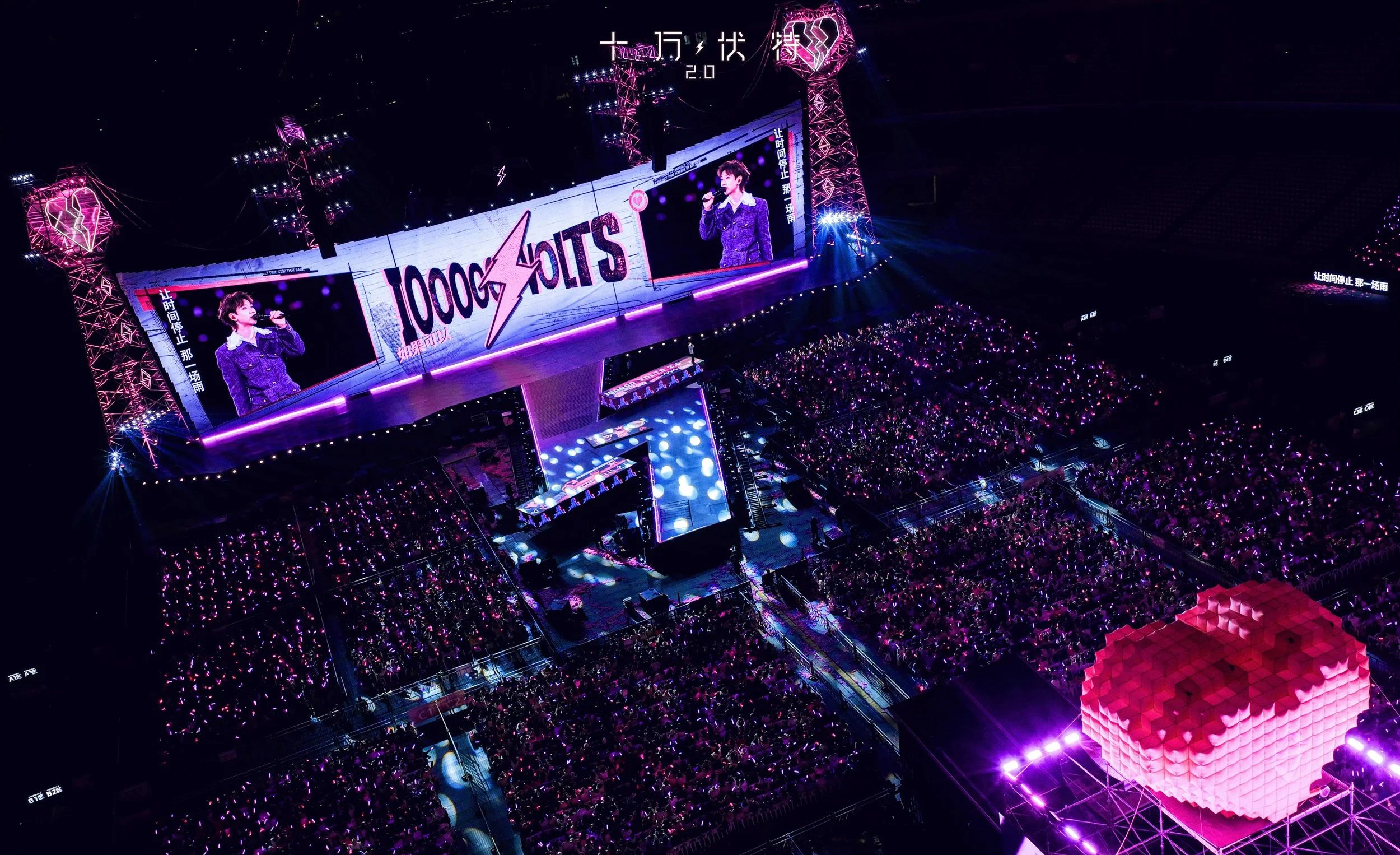
In the first part of this research, we explored how live music concerts are evolving beyond mere performances into expansive, immersive storyworlds, using Silence Wang’s One Hundred Thousand Volts tour and its fictional setting of “Romance City” as a pioneering case study. By adapting world-building frameworks traditionally found in film, literature, and gaming—specifically the core principles of invention, completeness, and consistency—Wang transformed his stage into a dynamic socio-ecological system where the audience's emotional participation actively powered the narrative environment. Building upon this foundation of visual and spatial storytelling, this article will delve into the auditory and transmedia expansions of Romance City, examining the strategic role of sound and musical arrangement, the development of one of the world's first XR interactive concert films, and the unique integration of a "Concert Artbook" to deepen audience immersion and IP expansion.
Contextualization and the Role of Sound
Sonic elements play a crucial role in world-building. The process for “adaptation into sound” or “turning something into a sound” is named Auralization (Wolf, 2014), with its ability to “surround the listener in space, providing atmosphere and evoking emotional responses.”(Wolf, 2014) Past examples include The Lord of the Rings and Star Wars radio plays, both of which put “heavy dependence on the spoken word (particularly character dialogue) with sound effects filling in narrative information.”(Wolf, 2014) Nonetheless, these cases focus on radio adaptation of textual narrative. A concert, by contrast, already operates with sound as its default medium and music as its subject, which may naturally drive its narrative approach to be more symbolic and abstract, simultaneously tied to the music, rather than concrete in the way spoken voices are layered with specific sound effects.
The Auralization and rearrangement of music in Romance City explored in this article, therefore, focus on notable musical adaptations closely tied to the narrative context of specific scenes. While musical rearrangement for live performances is not uncommon, consistently weaving these elements together and integrating them across multiple dimensions of world-building makes Silence Wang’s concert a particularly distinctive example.
In the final few shows of the tour leading up to the conclusion of the theme, a “monster character parade” is incorporated during the pre-show audience entry period, featuring a dedicated pathway along the inner circuit of the venue for the characters to interact with audiences on both sides. The concept of a character parade originates from Disney, designed to “celebrate magical moments from several classic Disney stories [and] highlight the moments of magic that changed the characters’ lives.” Within Romance City, these small “monster” characters are inhabitants of this fictional city who “summon musical energy,”(Wang, 2025) which can be understood in a similar way to the Disney parade – bringing celebratory highlights and emotionally uplifting moments to this imaginary world, rendering it a place worthy of collective joy.
Notably, Disney character parades features two original songs composed specifically for the parade, including one specially for the grand finale that “includes musical nods to past Disney entertainment productions that have special meaning to [the] show director,” and is simultaneously “heavily influenced by today's pop culture” in order to mix the contemporary elements within the actual world audiences living in with Disney’s classical heritage.
In contrast, Silence Wang adopts an inverted strategy. For the monster parade segment of the tour’s concluding performances (the concert‘s finale in its narrative framework), he rearranged two of his own “musical nods,” which are his most recognizable and well-known songs, Gravitation (万有引力) and A Little Sweet (有点甜), into instrumental symphonic pieces with orchestral arrangements. Where Disney weaves pop culture into a traditionally themed parade, Silence Wang weaves orchestral, Disney-inflected production values into his own pop legacy. Just as Disney audiences experience an immersive transition into Disney’s imaginary world through the collision of Disney’s own history and contemporary musical culture, Silence Wang similarly invites his audience to celebrate and revel within his own narrative context.
Video from Monster Characters Parade. Source: Weibo. @娱情舆理. January 1, 2026
Also during these final performances, Silence Wang himself incorporated a float parade that circled the entire venue into his concert. One of the songs during this section, We Are Friends(神奇伙伴), featured a similarly adapted approach. The original lyrics referenced small animals and other subjects, and were replaced with the names of his monster characters. This mirrors a common Disney technique of enhancing immersion through protagonist-centered songs that either use the character’s name explicitly or strongly indicate their role and goals within the story. For example, in I Am Moana, the protagonist’s inner voice and sense of calling are conveyed through the journey from “Who am I” to “I am Moana,” establishing her self-consciousness through the first-person perspective that “everyone can relate to,” allowing audiences to follow Moana's “journey of finding herself” and resonate with her powerfulness. Another example is “We Don't Talk About Bruno,” in which the line “Bruno, no, no,” blends “music, lyrics, and subject that all came together” to make the song specially catchy.(Gass, 2022)
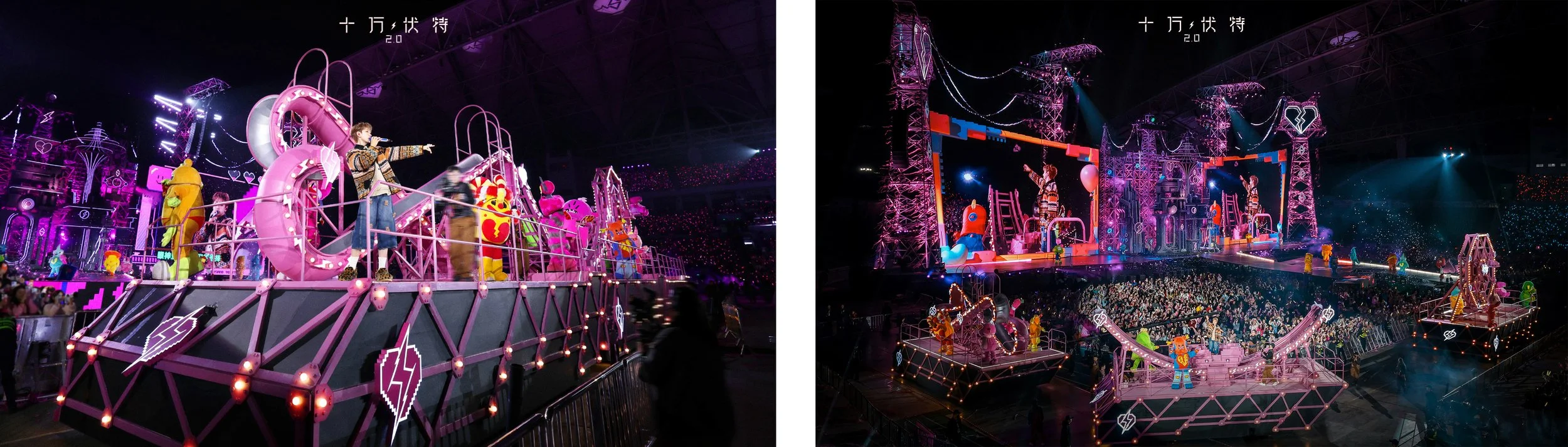
Float parade during the concert. Image Source: @Silence Wang studio. Weibo. January 1, 2026
We Are Friends by Silence Wang also shares the same Western symphonic orchestral style with the two monster character parade songs mentioned earlier. As Matthew Hodge notes, “symphonic orchestral instruments such as harp, strings, and oboe are regular pillars of European and American film scores,”— an approach that music theorist Frank Lehman similarly characterizes as “‘Hollywood-style’ tonality and elements,” describing the traditional Hollywood style to be where we can find “the dazzling fanfares, the luscious string themes, and other sounds still associated with…enjoyable momentousness [and] the ‘epic.’”
We Are Friends, in particular, features several ornamental figures in its instrumental passages. Harp glissandos, for instance, are commonly used in traditional Hollywood scoring to evoke “‘flashback’ or ‘dream’ sequence conventions.” (Day-O'Connell, 2007) In this context, the woodwind trills and glissandos found throughout the song can serve as a parallel as well. Subsequently, when lower bass instruments are gradually introduced, layering beneath higher-pitched woodwinds, serves as a technique to “create theatrical cinema-style musical passages” and “mallet ‘hit’ moments in climatic fashion.” (Hodge, 2018) The song also utilizes “upward-arching melodies,” most notably in the outro, where phrases move through a sequential variation, which is not strict transposition but a gradual shift to higher keys. This kind of tonality has been described in Hollywood music as “speaking a rhetoric of culmination and arrival,” which can be perceived as depicting the characters’ journey.
Together, these adaptations and strategies work to immerse the audience in the imaginary world of Romance City not just visually or narratively, but sonically and even beyond the existing music pieces. The Hollywood-style orchestral language carries an emotional weight that lets audiences instinctively associate it with cinematic storytelling. This is particularly notable given that visual language serves as the core medium in cinematic storytelling, whereas a concert’s core focus remains the music itself, with visual elements only as supplements. Within this comparatively constrained narrative format, Silence Wang still manages to incorporate signals that, particularly within this segment of the concert, foster collective participation in the fictional world designed to feel epic and celebratory.
IP expansion: Artbook and XR Film
Beyond the concert itself, Silence Wang’s team, Beijing Image Music Co., Ltd, expanded its IP with a new business line to extend the post-concert experience: Romance City – The Awakening Project, which also marks the world’s first XR-Based Interactive Concert Film, in collaboration with Hangzhou Wujie Stroll Culture Technology Co., Ltd, and PICO Technology.
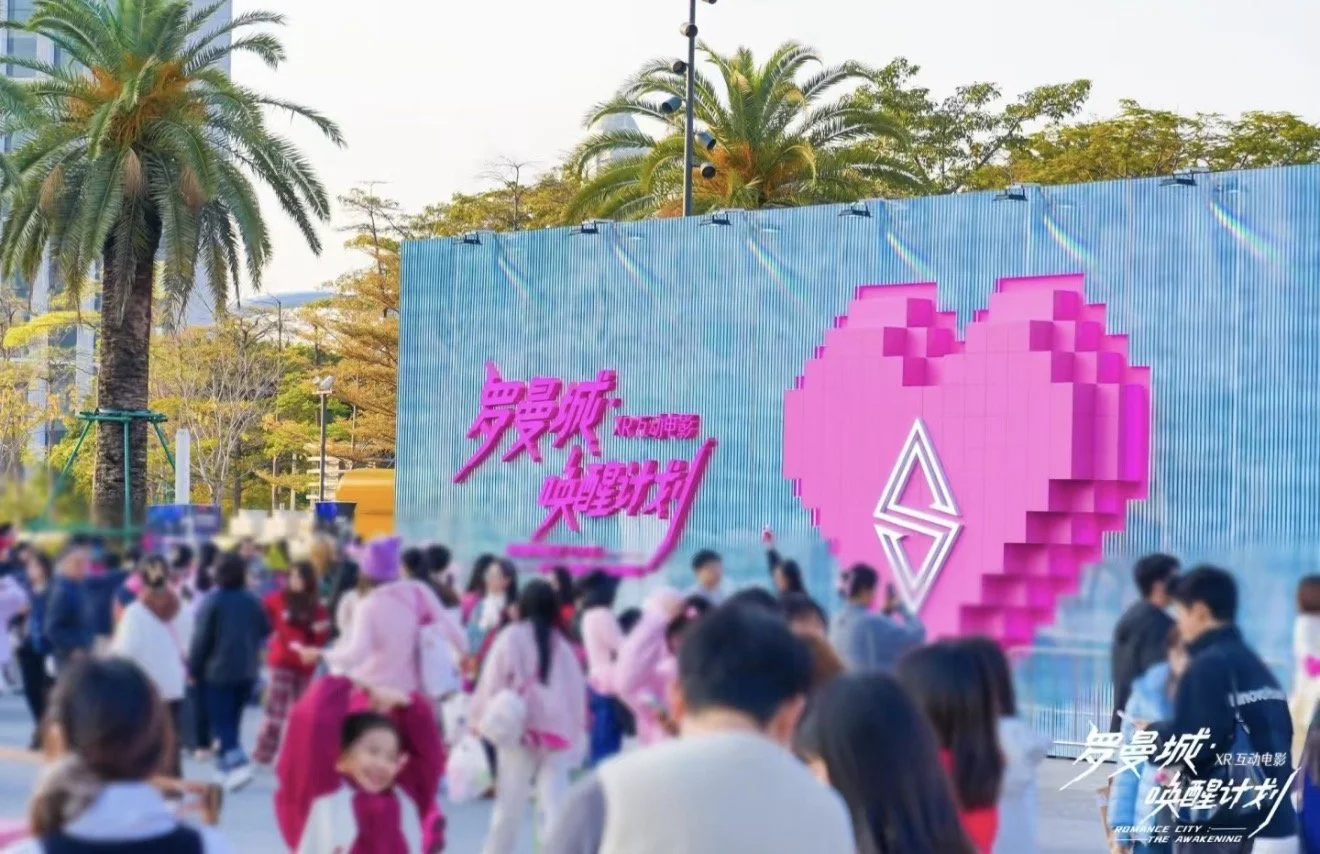
First stop for “Awakening Project,”on the spot. Image Source: @罗曼城唤醒计划 (Romance City: The Awakening), RedNote. January 4, 2026
Also as mentioned above, Silence Wang is the first music artist who introduced Concert Artbook within the context of Chinese-language popular culture.
While IP expansion has long been a strategy in global entertainment industries, it has more commonly emerged from narrative-driven media such as film, literature, and video games. Franchises such as Harry Potter and imaginary environments such as Disneyland demonstrate how storyworlds are extended across multiple channels, including theme parks, merchandise, and publications, which reinforces audience immersion and long-term engagement. Doing this in a live concert tour effort offers a unique business opportunity.
XR-Based Interactive Concert Film
Following the conclusion of a nearly two-year tour, the first stop for the “Awakening Project” XR pop-up landed in Guangzhou, China, where his tour concluded. Building upon the ending of the concert’s narrative pivot, the project reimagines “Romance City” as a “re-enterable immersive space through an XR interactive experience. This allows audiences to extend the emotions and memories of the concert into the real world and fill in the story’s missing pieces through interactive engagement.”
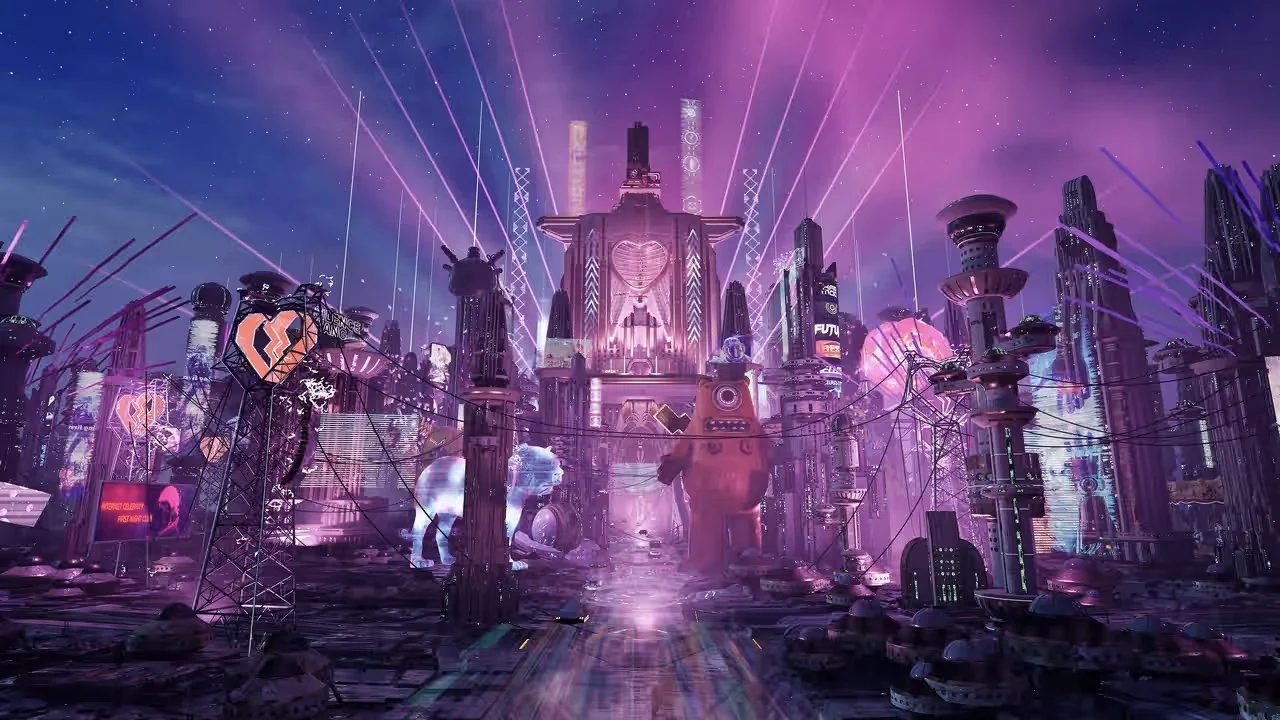
The “Romance City: Awakening Project” features a gamified experience that includes watching excerpts from the concert, the song “Black Dream” up close on stage with direct eye contact with the artist, as well as multiple game levels that drive the narrative forward. All elements included in the XR experience are closely tied to the concert and the core concept of Romance City, such as a bird’s-eye view of the Romance City’s panorama, collecting musical energy to reactivate the city, and exploring the artists’ dressing rooms, ultimately completing the narrative loop of “awakening Romance City.”
At the same time, it successfully references the concept of world-building, reinforcing the fictional world by offering viewers the opportunity to hold “dual citizenship in both Primary and Secondary worlds possible,” a concept that exists “only within fiction itself.” (Wolf, 2014) Upon completing the XR experience, each participant receives a physical “Romance City Monster ID,” reinforcing audiences as an inhabitant of the fictional world. Rather than functioning merely as an event souvenir, the card turns what had previously been a conceptual identity into something tangible and able to be personally owned. Wolf has identified such “objects” from mediated content as “windows on the world,” which signify information “about the cultures and world from which they come.” (Wolf, 2014) In doing so, it allows the fictional universe to extend and embed itself into the participant’s everyday reality.
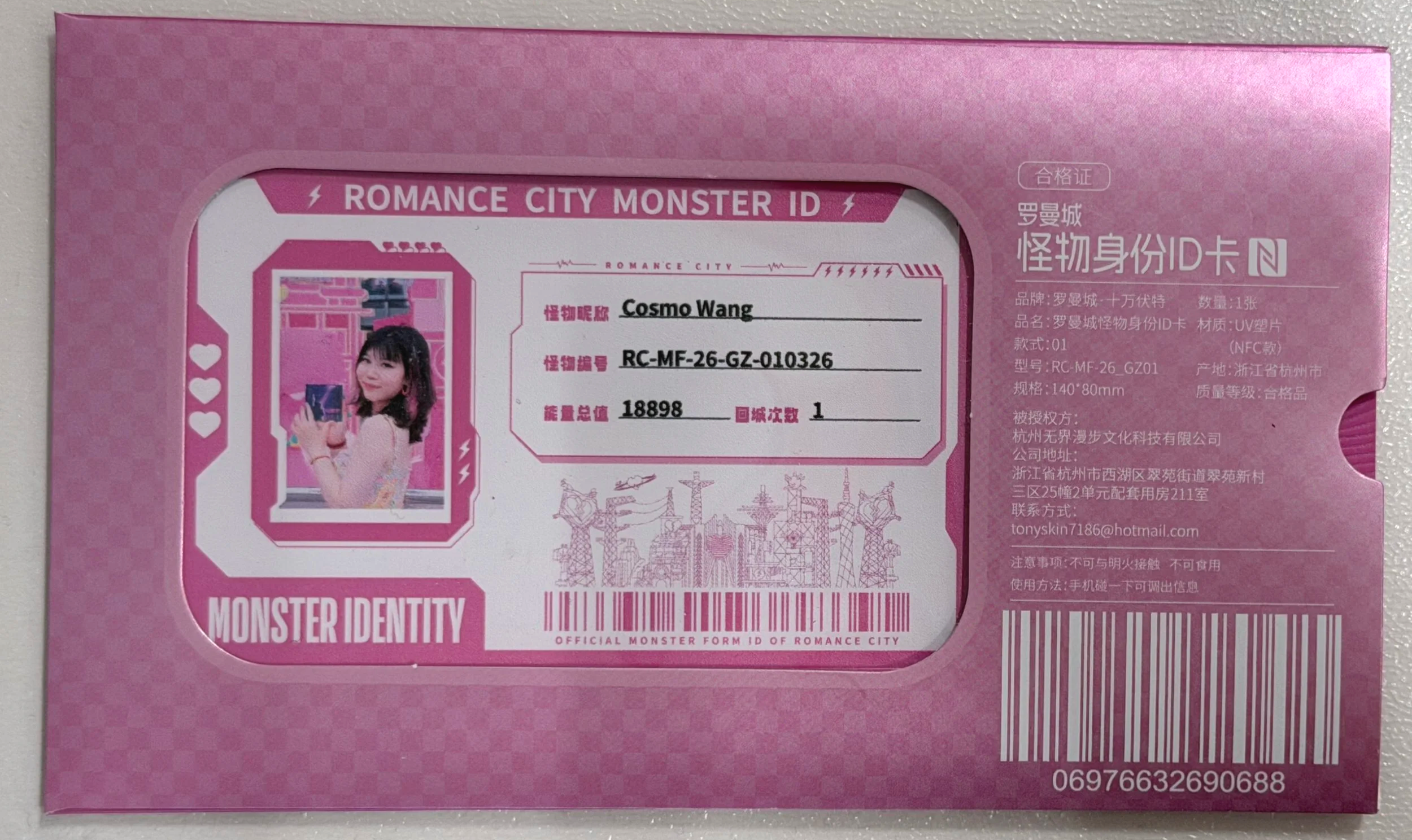
Romance City Monster ID, obtained after the “Romance City: Awakening Project” XR experience. Image from the author. January 7, 2026
Art Book
The artbook can be read as a design ideation and production process showcase, in analogy with how Disney released a booklet in 1958, similar to an exhibition catalog, documenting the exhibition“The Art of Animation,” which the exhibition and the booklet demonstrate different parts “corresponding to different stages of the Disney production.” (Holian, 2024) To the audience, it serves as “a permanent record of the show, capable of disseminating its content and agenda to individuals and institutions long after its conclusion.” Because the exhibition itself aimed to feature behind-the-scenes in Disney production, the book simultaneously deepen the audience’s understanding of the Disney studio while expanding its cultural reach, including how it’s utilized by individuals and institutions for “entertaining” and “educational” reason with an “appeal to young and old alike,” (The Daily Mail, 1959) as well as being employed for educational and research purposes. (Holian, 2024)
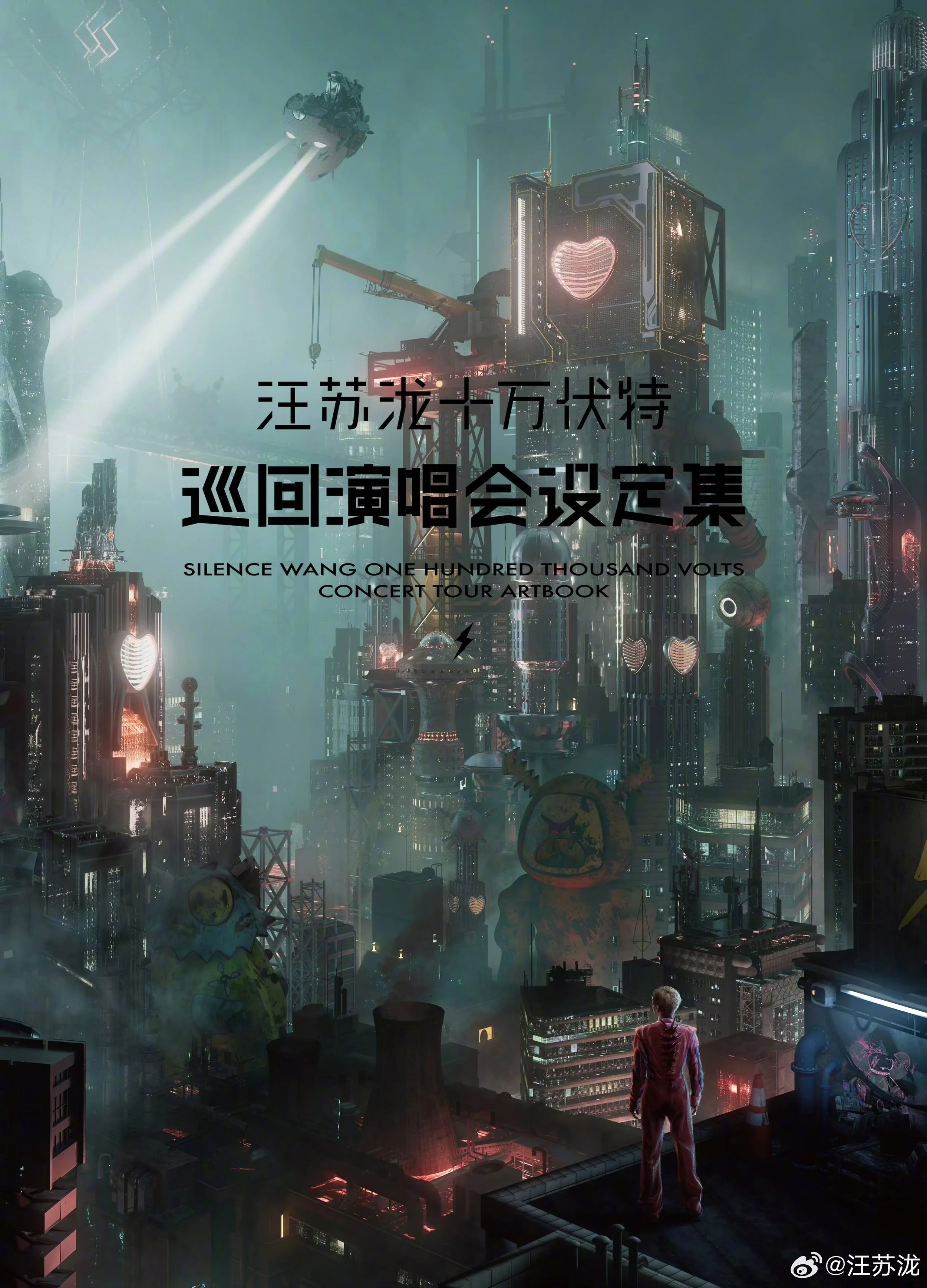
Artbook cover. Source: @Silence Wang, Weibo. June 2025.
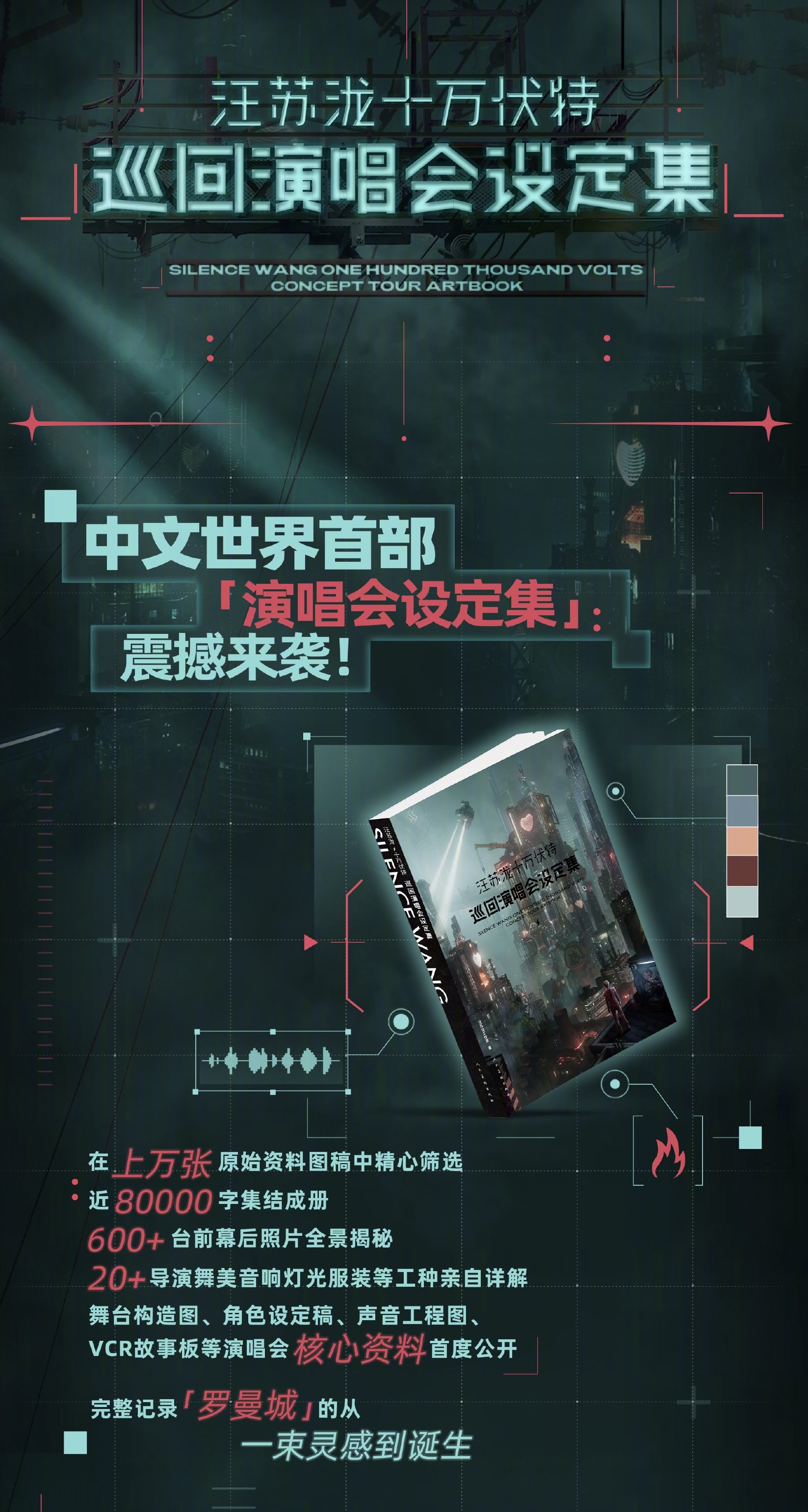
Art Book Information (excerpt). Source: @Silence Wang, Weibo. June 2025.
In a nutshell, Silence Wang’s Concert Tour Artbook features each monster character and even Castellan’s different stage outfits as “Role Archives;” storyboard and stage design plot maps as “City Archives,” while the performance rundown and logistics as “City Power-up Plan.” (Silence Wang Studio, 2025)
Both mediums function as a “world growth,” (Wolf, 2014), which is a “move of a story from one platform to another by necessity involves change.” (Fast and Örnebring, 2017) Historically, examples of such transmedia worldbuilding primarily stem from media forms that inherently require a fully developed storyline and visual representation, such as film. For instance, The Shadows (film first launched in 1958) can be described as a “transmedia property” in which the characters appeared in pulp magazines, radio, short films, feature films and a film series…, [as well as] comics.”
IP expansion also contributes to world-building. As Wolf notes, “a world may even become something of a brand name or franchise, with new stories, locations, and characters continually being added.” (Wolf, 2014) After all, “only a fraction of the ‘world’ may be shown on the screen but the world is implied to exist and have a history as well as future continuity independent of the part that is shown.” (Hills, 2002) Echoing the perspective suggested by Karin Fast and Henrik Örnebring, audiences need more imaginary plots to “share a mental image of the ‘worldness’ (a number of distinguishing features of its universe) (Fast and Örnebring, 2017).”
In the collapse of the heart-shaped crystal in Romance City in its “open-ended and work-in-progress nature” (Wolf, 2014), Wang successfully made it a topic widely discussed by audiences across mainstream social media platforms in China, where audiences speculated and anticipated the future development of this unfinished story.
However, what distinguishes Silence Wang’s “Romance City” is that its worldbuilding originated from the concept of music albums. In this case, IP expansion unfolds through a combination of concert performance, artbook publication, and XR gaming experiences—forming a transmedia ecosystem in which the channels are not only mutually parallel to each other, but also reconfigure existing models of franchise development. Wang’s case suggests a new possibility in IP expansion, where music-based worldbuilding can function as a primary narrative engine, with the addition of new IP lines as an extended storytelling dimension beyond the concert.
Conclusion and Insights For the Future of Live Concerts
By examining how worldbuilding and narrative construction is applied on the One Hundred Thousand Volts concert tour and expanded IP, it becomes evident that the business models and technology opportunities for concerts are adapting to our increasingly participatory and digitally driven world.
This article, in combination with Part I, has examined the properties and applications of worldbuilding across multiple realms, including literature, screen media, visual arts, sonic, and transmedia. The One Hundred Thousand Volts concert tour perfectly incorporates such elements as components of a unified world logic, each reinforcing the other, creating a new paradigm that proves a concert can go beyond being simply a live event, but can become a coherent fictional world constructed beyond a conventional concert experience, while actively inviting audience participation. On this basis, music-based IP can function as part of the fictional universe, with the concert itself as the original point of narrative driving force.
Within this era when “intimate moments” through participatory events proved to be essential for audiences’ desire for connection (Baym, 2018), modern events signify a “shift from the age of aloof rock stars to the everyday connections of the socially mediated musician.” (Baym, 2018) Even when reflecting on Silence Wang’s original intent behind the concept of “Romance City,” he emphasized that connections between people are particularly crucial in the contemporary era. Audiences’ desire for more captivating experiences that offer interactivity, personalization, and deep engagement has also proven to be a global trend. (Mobility Insights, 2026) The U.S. immersive entertainment market is projected to grow from USD 40.15 billion in 2024 to USD 281.05 billion by 2033, (Grand View Research, 2024) with the music and concerts segment expected to play an indispensable part. In the Asia market, the immersive entertainment sector is forecast to expand from USD 14.2 billion in 2025 to USD 68.7 billion by 2032. (Mobility Insights, 2026)
With this in mind, the One Hundred Thousand Volts concert tour suggests several actionable directions that respond to this shift; First of all, for artists who already have a relatively solid fan base, their proven ability to produce concerts and launch new business streams serves as a foundational condition for worldbuilding. This provides them with a channel to leverage fans’ existing emotional investment and willingness to engage beyond the performance itself. The key lies in transforming the concert experience and concepts into an emotional realm where fans can immerse themselves, offering them a lasting touchpoint and a shared identity tied to the concert.
In other words, the real point in concert world-building is not a scale comparable to Silence Wang’s production or the advanced technology that supports all the storytelling mediums, but internal consistency. A fictional logic, however minimal, is pivotal as long as it remains coherent across the concert’s visual, sonic, and physical elements, which elevates a themed concert into a storyworld. For example, merchandise, lightsticks, and pre-show materials – often already embedded as part of the concert experience – can serve as low-cost entry points for world-building signals.
Similarly, extending audience access to IP-related activities can potentially reshape the concert business model. Where IP expansion is feasible, additional platforms such as a publication, a digital experience, or an interactive post-concert project can significantly extend the narrative depth and longevity of the world beyond the concert itself. From a business perspective, this approach can successfully “extend the commercial lifecycle of a single concert, diversify revenue streams, and achieve a win-win situation for all parties involved in the IP ecosystem.” (ThePaper, 2026)
The full report is also available in our reports section, containing a more thorough breakdown of world-building concepts and detailed sources.
-
Baym, Nancy K. Playing to the Crowd: Musicians, Audiences, and the Intimate Work of Connection. Postmillennial Pop 14. New York: New York University Press, 2018.
Bell, Alice, and Marie-Laure Ryan, eds. Possible Worlds Theory and Contemporary Narratology. Lincoln: University of Nebraska Press, 2019. https://doi.org/10.2307/j.ctv8xng0c.
Breuleux, Yan, Bruno De Coninck, and Simon Therrien. “The World Building Framework for Immersive Storytelling Projects.” SHS Web of Conferences 64 (2019): 00003. https://doi.org/10.1051/shsconf/20196400003.
Brown, Kristen. “Why The Name Bruno Is Used In Both Disney's Encanto & Pixar's Luca.” Screen Rant, February 19, 2022. https://screenrant.com/pixar-bruno-name-encanto-luca-use-meaning-reason/.
Day-O’Connell, Jeremy. Pentatonicism from the Eighteenth Century to Debussy. Rochester: University of Rochester Press, 2007. ProQuest Ebook Central.
Dietz, Betty A. “Art Institute Gives Key to Disney's Mickey Mouse.” Dayton Daily News, June 28, 1959, 30.
Disney Wiki. “Arendelle.” Accessed March 22, 2026. https://disney.fandom.com/wiki/Arendelle
Disney Wiki. “Cars” Accessed March 22, 2026. https://disney.fandom.com/wiki/Cars#:~:text=Directed%20by,More
Fairy, Ticket. “Game On: AR and Gamification Strategies to Engage Venue Audiences in 2026.” Ticket Fairy Promoter Blog, January 22, 2026. https://www.ticketfairy.com/blog/game-on-ar-and-gamification-strategies-to-engage-venue-audiences-in-2026.
Fast, Karin, and Henrik Örnebring. “Transmedia World-Building: The Shadow (1931–Present) and Transformers (1984–Present).” International Journal of Cultural Studies 20, no. 6 (2017): 636–52. https://doi.org/10.1177/1367877915605887.
Fernandes, Melanie, Nicole Mallmann, and Sangwoo Shin. “The Rise of Augmented Reality in Live Music Events: The Cases of Snapchat and Gorillaz.” Business Communication Research and Practice 7, no. 1 (2024): 58–63. https://doi.org/10.22682/bcrp.2024.7.1.58.
“从‘引进演出’到‘周边运营’:一场演唱会之外的‘IP生意’ (From ‘Bringing in Performances’ to ‘Merchandise Operations’: The ‘IP Business’ Beyond a Single Concert).” 澎湃新闻 (The Paper), April 10, 2026. https://www.thepaper.cn/newsDetail_forward_32934219.
Gass, Zach. “10 Disney Characters Made Famous By A Song.” Screen Rant, September 30, 2022. https://screenrant.com/disney-characters-made-famous-by-a-song/.
Green, Ben. “Splendour XR: Place, Experience and Liveness at a Virtual Music Festival.” Leisure Sciences 47, no. 5 (2025): 958–75. https://doi.org/10.1080/01490400.2023.2171519.
Herman, David. Basic Elements of Narrative. Malden, MA: Wiley-Blackwell, 2009.
Hill, Clareese. “Speculative Black Feminist Epistemologies of Worldbuilding for XR.” Frontiers in Communication 9 (May 2024): 1371081. https://doi.org/10.3389/fcomm.2024.1371081.
Hobbs, Harry, Philip Hayward, and Robert Motum. “Cyber Micronations and Digital Sovereignty.” Digital Society 2, no. 3 (2023): 44. https://doi.org/10.1007/s44206-023-00069-9.
Hodge, Matthew. “Disney ‘World’: The Westernization of World Music in EPCOT’s ‘IllumiNations: Reflections of Earth.’” Social Sciences 7, no. 8 (2018): 136. https://doi.org/10.3390/socsci7080136.
Holian, Heather Lynn. “‘Becoming a Fine Art’: Walt Disney and The Art of Animation Exhibition, 1958–1966.” The Journal of American Culture 47, no. 2 (2024): 143–57. https://doi.org/10.1111/jacc.13560.
“iF Design - About iF Design.” Accessed February 10, 2026. https://ifdesign.com/en/about.
“iF Design - Silence Wang: ONE HUNDRED THOUSAND VOLTS 2.0 Tour.” Accessed February 10, 2026. https://ifdesign.com/en/winner-ranking/project/silence-wang-one-hundred-thousand-volts-20-tour/739375.
Jiang, Jinli, and Prakaikavin Srijinda. “Semiotics Analysis of Music Communication in Disney’s Animated Films.” 2024.
Julian, Brian. “I Am Moana!” Thinking in the Light, December 1, 2020. https://www.thinkinginthelight.com/i-am-moana/.
Kaufman, J.B. “The Heir Apparent.” In Funny Pictures: Animation and Comedy in Studio-Era Hollywood, edited by Daniel Goldmark and Charlie Keil, 51–68. California: University of California Press, 2011.
Lehman, Frank. Hollywood Harmony: Musical Wonder and the Sound of Cinema. Oxford: Oxford University Press, 2018.
Miller, Richard K., and Kelli Washington. Consumer Behavior 2026. RKMA Market Research Handbook Series, 19th ed. Loganville, GA: Richard K. Miller & Associates, 2026.
Morin, J.S. “Worldbuilding in Harry Potter.” September 29, 2015. https://www.jsmorin.com/2015/09/worldbuilding-harry-potter/.
NPR. “‘Moana’ Actress Grew Up With The Polynesian Myth That Inspired The Movie.” November 23, 2016. https://www.npr.org/transcripts/503066811.
Peña, Ernesto, and Kedrick James. “A Framework of Transmediation.” Convergence: The International Journal of Research into New Media Technologies 30, no. 5 (2024): 1610–24. https://doi.org/10.1177/13548565231220325.
Pisaturo, Sue. “‘Magic Happens’ Parade at Disneyland Park Fact Sheet.” Small World Vacations, February 2, 2024. https://smallworldvacations.com/magic-happens-parade-at-disneyland-park-fact-sheet/.
Raser, John R. Simulation and Society: An Exploration of Scientific Gaming. Boston: Allyn and Bacon, 1971.
Ryan, Marie-Laure. Possible Worlds, Artificial Intelligence, and Narrative Theory. Bloomington: Indiana University Press, 1991.
Silence Wang Studio (@汪苏泷Studio). “十万伏特最终站「广州」向你投递了一则「发电战报」💞…” Weibo, January 13, 2026. https://weibo.com/5523180767/5254626468954445.
Silence Wang Studio. Silence Wang One Hundred Thousand Volts Concert Tour Artbook. Beijing: People’s Fine Arts Publishing House, 2025.
Stripple, Johannes, Alexandra Nikoleris, and Roger Hildingsson. “Carbon Ruins: Engaging with Post-Fossil Transitions through Participatory World-Building.” Politics and Governance 9, no. 2 (2021): 87–99. https://doi.org/10.17645/pag.v9i2.3816.
Tencent Music. “21世纪罗曼史 (21st Century Romance).” Album information for Silence Wang. Tencent Music, October 28, 2022.
Top Music Charts (@TOP音樂風雲榜). “【2024腾讯娱乐白皮书】年度明星演唱会门票秒光榜…” Weibo, December 25, 2024. https://weibo.com/1695976033/P6CbplAmF.
VR陀螺. “《消失的法老》之后的超级爆款, PICO视频揭秘《罗曼城·唤醒计划》背后的技术魔法.” 知乎 (Zhihu), January 20, 2026. https://zhuanlan.zhihu.com/p/1997262959475450684.
Wang, Silence. One Hundred Thousand Volts 2.0 Tour. Live performance, Guangzhou University Town Stadium, Guangzhou, China, January 2, 2026.
Weibo and Sina Entertainment. 2024微博娱乐白皮书 (2024 Weibo Entertainment White Book). 2025.
Weibo and Sina Entertainment. 2025微博娱乐白皮书 (2025 Weibo Entertainment White Book). 2026.
Weines, Jørn, and Melania Borit. “Better Game Worlds by Design: The GAS Framework for Designing and Analyzing Games Based on Socio-Ecological Systems Thinking, Demonstrated on Nusfjord (2017).” Games and Culture 17, no. 2 (2022): 262–83. https://doi.org/10.1177/15554120211027109.
White, Daniel. “‘A Magic Beyond All We Do Here’: Musical and Sonic Worldbuilding at Harry Potter Tourist Attractions.” InMedia: The French Journal of Media Studies, no. 9.1 (January 2021). https://doi.org/10.4000/inmedia.2799.
Wolf, Mark J.P. Building Imaginary Worlds. New York: Routledge, 2014.
Wu, Yongmeng, Leshao Zhang, Nick Bryan-Kinns, and Mathieu Barthet. “Open Symphony: Creative Participation for Audiences of Live Music Performances.” IEEE MultiMedia 24, no. 1 (2017): 48–62. https://doi.org/10.1109/MMUL.2017.19.
Young, Jacob, Stephen Thompson, Holly Downer, et al. “TeleFest: Augmented Virtual Teleportation for Live Concerts.” ACM International Conference on Interactive Media Experiences, June 21, 2022, 69–78. https://doi.org/10.1145/3505284.3529968.
Zeller, Matthew. “Klangfarbenmelodie in 1911: Timbre's Functional Roles in Webern’s Opp. 9 and 10.” Music Theory Online 28, no. 1 (2022). https://mtosmt.org/issues/mto.22.28.1/mto.22.28.1.zeller.html.
@Depressed Essendon Fan. “Cars: out town.” YouTube. April 17, 2019. https://www.youtube.com/watch?v=1XfBJ0dFuuw
@LiveMusic现场. “汪苏泷「十万伏特」正式收官,横跨两年23座城市72场300万人…” Weibo, January 4, 2026. https://weibo.com/2099868183/5251384511302744.
@洪波. “罗曼城💖…” RedNote. January 2, 2026. http://xhslink.com/o/2znD8LTUN5n
@罗曼城唤醒计划 (Romance City: The Awakening). “【罗曼城·唤醒计划】Romos已抵达广州塔!...” RedNote. January 4, 2026. http://xhslink.com/o/5a6OfOjEQlS
@晴佚. “恭喜 @汪苏泷…” Weibo, January 9, 2026. https://weibo.com/7720846104/5253272948444148.
@娱情舆理. “谁家演唱会开场有小怪物巡游啊!泷圈有了自己的‘迪士尼’...”. Weibo. January 1, 2026. https://weibo.com/5785520323/5250348546524511