Artificial intelligence (A.I.) continues to advance, impacting the multitude of technological and cultural corners of the arts, from music to arts funding to exhibition design. As A.I. gains traction in the arts, adaptations are needed to account for the potential risks and opportunities its wider use may create. Legislation, funding for arts and technology research, and ethical museum-centric practices present view on a future for how artists and organizations will navigate these significant changes to the industry.
Music generation and streaming in the age of A.I.
Credit: Jerson Vargas Source: Pexels
The impacts of A.I. on the music industry have begun to change the way that music listening platforms operate. A.I. music generators such as Suno have the ability to compile songs that may later go on to be posted on music listening platforms and rank on the Billboard charts. While the interaction between music and A.I. continues to become more common, many music artists are concerned about maintaining rights to their sound and differentiating their art from A.I. as generators can be trained pulling from licensed music. Suno and other music generation platforms offer the opportunity to generate songs to the general public for free or a small fee while until recently music streaming services had little to no regulation that could differentiate generated and non-generated songs.
According to Suno, more than 100 million people use its A.I. music generation services, and those numbers do not even begin to include the large population of listeners consuming the generated music across Spotify, YouTube and other services. Suno was the top downloaded app on the Apple store in April of this year, and is estimated to be valued at over $5 billion dollars. As usage of services such as Suno increases, the output to streaming services has been increasing as well. SubmitHub, a music promotion platform for small artists, published findings in August of 2026 that detected A.I. in almost 40% of music released world-wide over the course of a month, while Apple Music reported that more than a third of monthly uploads were A.I. generated. SubmitHub recently launched an A.I. detection tool for music, and aims to increase transparency around the use of A.I. in new music. Some creators using A.I. music generating tools have found major success, such as Bill Stiteler who achieved millions of streams and views of his generated songs.
With all of the financial and social success that these generated songs bring comes a myriad of legal issues. Major music labels such as Sony and Warner have sued Suno for copyright infringement. Many A.I. music tools train their models using copyrighted content from the labels, however Suno defends this usage under the principle of fair use. This battle between labels, artists, and A.I. music generators tests the definitions within this principle and will require significant problem-solving going forward. Warner has engaged in conversations with Suno regarding opportunities for artists to opt in to A.I. remixing, while some individual artists and producers such as the Weeknd have expressed openness to the inclusion of their music on such platforms.
ARTIST OPINIONS
Some artists have not been so receptive to the use of their music in the training of A.I. generators. Beyond using songs to train generators, many artists (alive and deceased) have needed to combat fraudulent content, likely generated by A.I., uploaded to their own artist profiles on services such as Spotify. In 2025 Spotify set out to regulate and reduce this occurrence; however A.I. tracks continue to appear on profiles even in 2026. Regulation can be challenging, as there is a risk of misidentifying tracks that include no A.I. at all. However, music streaming platforms have begun to take on the challenge. Spotify now includes disclosure options and human-creator identification badges, while Apple Music has also adopted similar strategies. Beyond labeling and disclosure, some platforms have stricter policies. Tidal and Qobuz have policies in place that severely restrict uploads of A.I. music, and do not monetize A.I. generated songs. Although each platform has taken a slightly different approach to managing the increase in popularity of A.I. tracks, the conversations surrounding best practices and fair use policy are set to continue to develop in the near future.
the emergence of arts AND A.I. fellowships
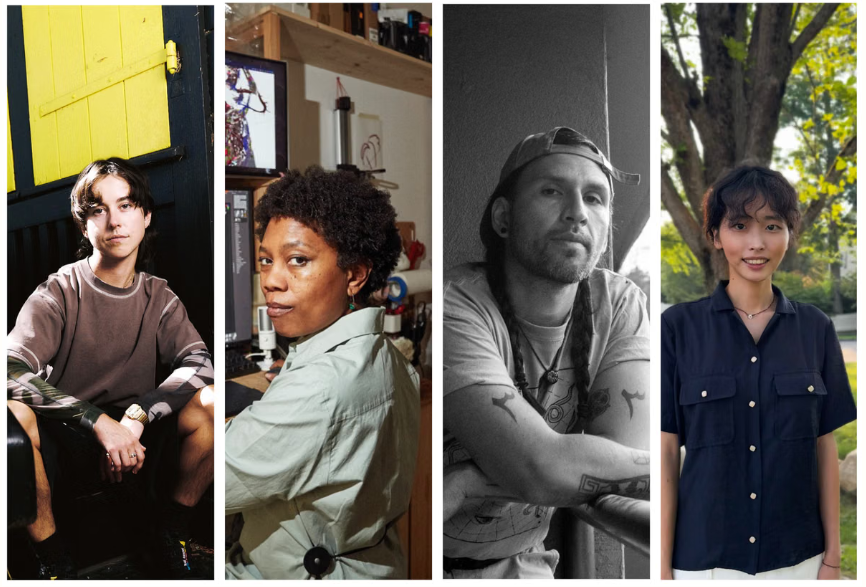
From left to right: Alice Bucknell , Auriea Harvey , Alfredo Salazar-Caro and Reina Mun Source: Serpentine
As strategies and regulations surrounding A.I. have continued to be developed, so have fellowships encouraging artists to engage with A.I. and technology in their works. Most recently, Serpentine Galleries, two contemporary galleries based in London, announced the first ever four recipients of the Future Art Ecosystems Research and Development Fellowship (FAE R&D) this September. The fellowship aims to encourage pioneering across arts, culture and technology, bringing the four recipients together to engage in a six-month program. Financial support, mentorship, and a tailored hybrid format are designed to support the participants' research of how A.I. is reshaping culture and arts.
Recipients Alice Bucknell, Auriea Harvey, Alfredo Salazar-Caro and Reina Mun come from a variety of different backgrounds across arts and culture. Bucknell is a Los Angeles-based artist and will be focused on researching A.I. systems that predict future outcomes, while Harvey, an Italian sculptor, investigates craft under the modern age of algorithmic production. Salazar-Caro, the Creative Director of DiMoDA (The Digital Museum of Digital Art), will focus on artistic experimentation and worldbuilding, and Mun, a doctoral researcher at Harvard, will research how A.I. enhancement is defined. Though each of them will be focusing on their own project, in conjunction they will be working to help inter-development between technology and arts, instead of pitting them against one another.
With a history of supporting the union of art and technology, Serpentine Galleries is known for spurring research related to A.I., such as their Future Arts Ecosystem program. Their history, in addition to being backed by financial support from London-based charity Glass Castle, have led to the fellowship receiving substantial support for being one of the first of its kind. This support reinforces the traction that technology and arts fellowships and grants have steadily gained over the past few years.
Similar investments in the arts and technology intersection include a new grant program presented by the Doris Duke Foundation (DDF) and the Ford Foundation announced in July of 2026 which focuses on supporting technology in the performing arts. Michigan Central Art and Newlab Detroit are in their third year of awarding the Art + Technology Fellowship Prize which hopes to connect artists to real-world problem-solving and engagement with the public. In August, the Thomas S. Kenan Institute for the Arts and the University of North Carolina School of the Arts hosted the Arts and Emerging Technology Residency. This event brought together artists and technology to engage in conversation and debate surrounding how new technologies and A.I. have begun to impact the arts.
As the relationship between the arts and new technologies, especially A.I., continues to develop, the emergence of fellowships such as that presented by Serpentine, along with similar opportunities across the industry, shows how conversation and innovation continue to develop alongside that technology.
A.I. as an arts exploration tool
Source: The Cleveland Museum of Art
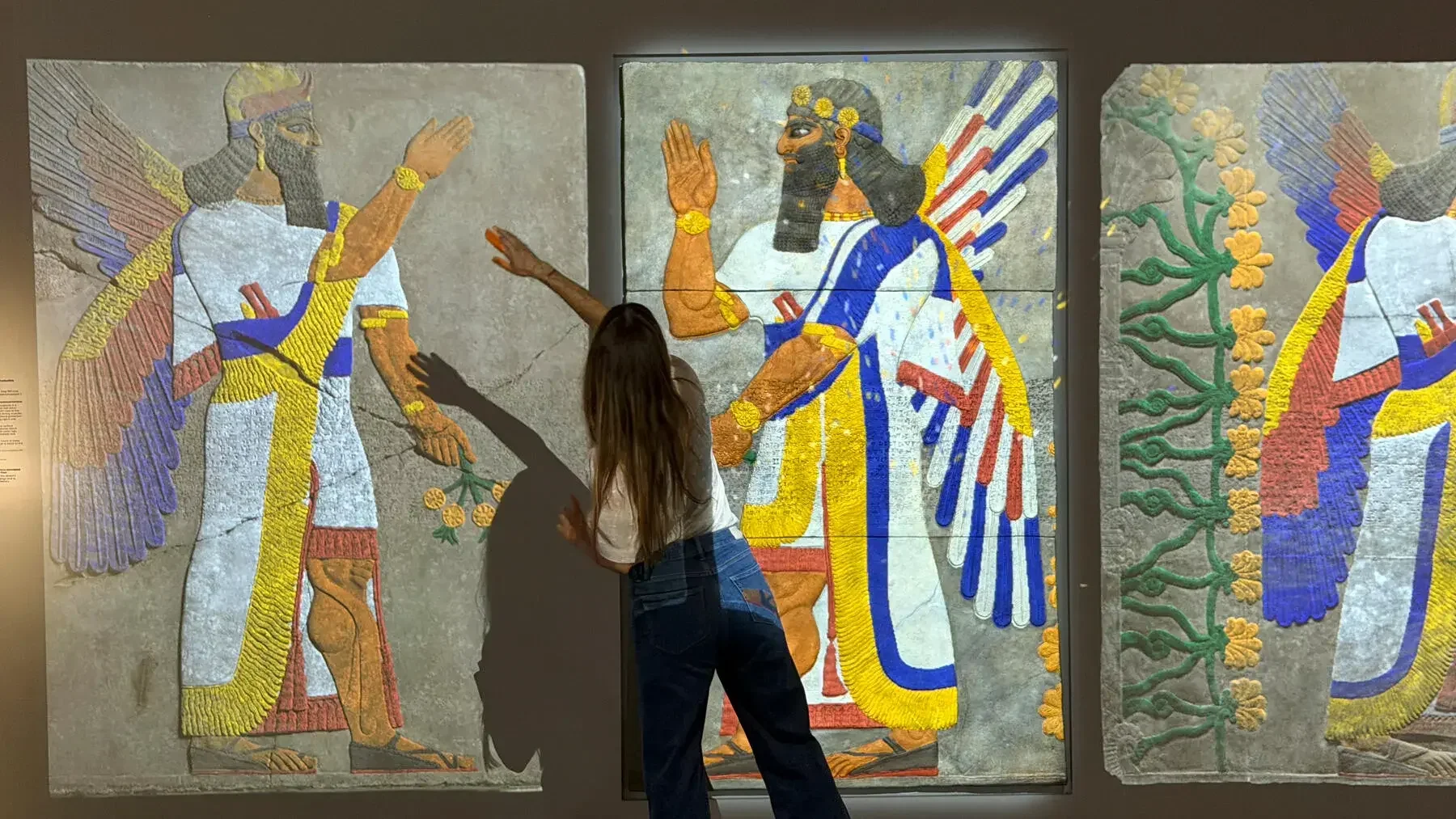
The Cleveland Museum of Art’s reopening of ArtLens serves as a strong example of the use of A.I. in museums as an interpretation tool. ArtLense is the continuation of the museum’s Gallery One project which opened in 2012. This new era of the concept expands upon the museum’s mission to prioritise inclusivity and accessibility to art through technology. The gallery aims to provide an interactive learning and exploration-based experience for visitors, and functions in conjunction with the ArtLense app which offers audio visual descriptions of every item in the museum’s collection.
The gallery utilizes a range of technologies to immerse visitors in the art. Projected videos, motion-tracking artwork, A.I. powered conversation with pieces, and virtual art creation activities come in contact with every one of the visitor’s senses. Seven different interactives in the gallery use A.I. to personalize the visitor experience, including a community mural and the chance for visitors to collage select public domain artworks using Generative A.I.
The Cleveland Museum of Art has used A.I. since 2012 as a tool meant to create “new pathways into the collection, while preserving the human elements at the center of the museum experience,” according to the museum’s website. Jane Alexander, ArtLens leader and Chief Digital Information Officer of the CMA, highlights the closed model used by the museum and its ability to expand accessibility without overstepping the ethical concerns that A.I. use in museums can often generate.
Instances of A.I. use in museums as a means of connecting the audience more closely with the art have appeared in various forms over past years. The Cleveland Museum of Art used it in a separate fashion exhibition in January of 2026, projecting a video that featured the garments in the exhibit in motion without facing conservation risks. Other past examples of similar usage include the digital art installation Unsupervised at the MOMA in 2022-23 by artist Refik Anado, which used A.I. to transform and reinterpret past pieces from the museum’s collection. The Madison Museum of Contemporary Art is currently in the process of introducing an A.I. sculpture following a similar approach. The piece, Diffuse Control, will also pull from the museum's own collection to create an interactive art experience.
Although the introduction of A.I. into the museum space can often be controversial, as the Madison Museum of Contemporary Art has already needed to confront before Diffuse Control even opens, many of these museums have found ways to utilize A.I. as a tool in an ethical way. When it comes to accessibility, visitor experience, and the opportunity to interpret large collections of art, the presence of A.I. in the museum space is beginning to gain ground.
-
American Theatre Editors. “Duke Partners With Ford to Fund Performing Arts Tech Innovation.” American Theatre, July 6, 2026. https://www.americantheatre.org/2026/07/06/duke-partners-with-ford-to-fund-performing-arts-tech-innovation/.
Banno, Chloe. “Cleveland Museum of Art’s “ArtLens Reimagined” Makes Art More Accessible.” Cleveland Magazine, September 5, 2026. https://clevelandmagazine.com/articles/cleveland-museum-of-art-s-artlens-reimagined-makes-art-more-accessible/.
Christians, Lindsay. “Madison museum plans AI-generated sculpture, to artists’ dismay.” The Cap Times, September 2, 2026. https://captimes.com/entertainment/arts/madison-museum-plans-ai-generated-sculpture-to-artists-dismay/article_f8deb7f5-cc9a-44b6-aa1d-f96eafc86fe2.html.
Crane, Brent. “Thievery or Innovation? The Music Industry Grapples With A.I.” The New York Times, August 29, 2026. https://www.nytimes.com/2026/08/29/business/dealbook/ai-generated-music.html.
Harris, Garith. “Four artists explore AI's effect on culture as part of Serpentine's new art and technology fellowship.” The Art Newspaper, September 2, 2026. https://www.theartnewspaper.com/2026/09/02/four-artists-explore-ais-effect-on-culture-as-part-of-serpentines-new-art-and-technology-award.
Michigan Central. “Michigan Central Art and Newlab Detroit Opens Applications for its Expanded 2026 Creative Residency Program.” April 13, 2026. https://michigancentral.com/michigan-central-art-and-newlab-detroit-opens-applications-for-its-expanded-2026-creative-residency-program/.
Morona, Joey. “How the Cleveland Museum of Art is using AI to draw visitors into its collection.” Cleveland.com, January 9, 2026. https://www.cleveland.com/entertainment/2025/12/how-the-cleveland-museum-of-art-is-using-ai-to-draw-visitors-into-its-collection.html.
Museum of Modern Art (MoMA). “Refik Anadol: Unsupervised.” November 19, 2022–October 29, 2023. https://www.moma.org/calendar/exhibitions/5535.
News Desk. “Serpentine Announces First Participants in AI-Centric Art Tech Fellowship.” ARTFORUM, September 2, 2026. https://www.artforum.com/news/serpentine-participants-in-ai-centric-art-tech-fellowship-1234758696/.
Polk Jr., Mike. “Cleveland Museum of Art's new ArtLens exhibit puts a new high-tech spin on how visitors experience its collection.” WKYC Studios, August 19, 2026. https://www.wkyc.com/article/life/people/mike-polk-jr/cleveland-museum-of-art-artlens-exhibit-mike-polk-junior-interactive-exhibit-technology-interaction/95-381cc055-2d07-4930-bd33-ceacf5f6d64b.
Robinson, Kristin. “How Each Music Listening Platform Is Treating AI Music.” Billboard Pro, August 27, 2026. https://www.billboard.com/lists/how-each-music-listening-platform-treats-ai-music/apple-music/.
Serpentine. “Future Art Ecosystems R&D Fellowship: Art x Convergence.” 2026. https://www.serpentinegalleries.org/whats-on/future-art-ecosystems-rd-fellowship-art-x-convergence/.
Sisario, Ben. “An A.I. Giant Made an Enemy of Record Labels. Can It Play Nice?” The New York Times, September 9, 2026. https://www.nytimes.com/2026/09/09/arts/music/suno-new-ai-model-warner-music.html.
Skinner, Tom. “AI detected in 40 per cent of music released in July 2026, study reveals.” NME, August 19, 2026. https://www.nme.com/news/music/ai-detected-in-40-per-cent-of-music-released-in-july-2026-study-reveals-3963677.
The Cleveland Museum of Art (CMA). “ArtLens Reimagined.” July 28, 2026. https://www.clevelandart.org/exhibitions/artlens-reimagined-intersection-art-technology-and-innovation.
The University of Carolina School of Arts (UNCSA). “Kenan Arts and UNCSA to host Arts and Emerging Technology Residency, Aug. 29.” August 17, 2026. https://www.uncsa.edu/news/pr-20260817-arts-emerging-tech-residency.aspx.
Wilkins, Joe. “Spotify and YouTube Profiles of Legendary Jazz Musicians Hijacked by AI Waifu Spam.” Futurism, August 31, 2026. https://futurism.com/artificial-intelligence/spotify-youtube-music-jazz-musicians-ai-waifu.