Giving Thanks for Your Fans

Thursday marks that wonderful time of the year when we gather with friends and family, give thanks, and have a perfectly valid excuse to eat too much food and take a nap. So in this time of giving thanks, has your arts organization thought about how you give thanks for your online communities? Offering ways to thank and reward your organization’s online community is an important part of online social engagement. It reinforces for your followers how much you appreciate while giving them great incentives to spread your brand. These rewards can span from offering exclusive content only available to your online fan base to having something tangible like a specific event or rewards day at your organization focused on your online community.

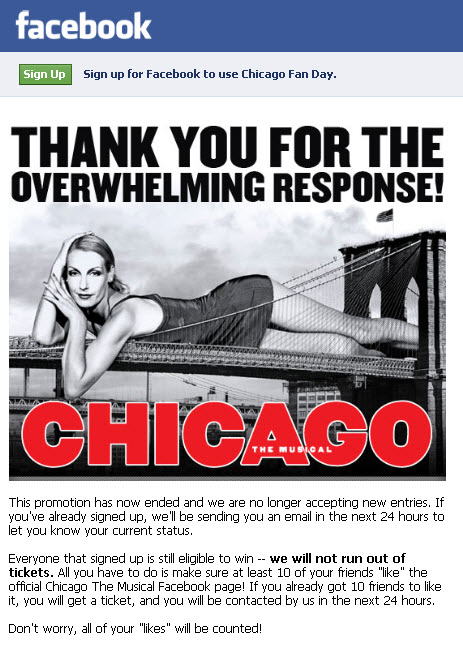
Take for example the recent move by Barry and Fran Weissler, producers of the musical Chicago, to reward their Facebook fans. On January 30, 2011, Facebook Fan Day will mark the first time that a Broadway show will fill its house exclusively with their Facebook fans -- for free.  Yes, the tickets were free, but they were not simply first come, first served. Tickets were distributed chronologically to those people who got ten of their friends to “Like” the Chicago Facebook page.

Facebook Fan Day generated quite a bit of buzz and interest in a production that has been running for 15 years.

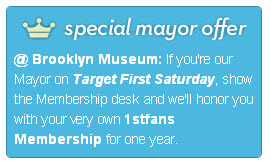
Brooklyn Museum's special offer on Foursquare

While an idea like Facebook Fan Day is a great way to reward and expand your organization’s online presence, it doesn’t necessarily need to be a one-time offering. The folks over at Brooklyn Museum have included an on-going rewards program for their Foursquare community. By becoming Brooklyn Museum’s "mayor" on Foursquare during their First Saturday social event, a visitor can receive a free one year membership for their 1stfans social event program. One advantage to using a location based platform is that it requires users to be present at the event in order to and claim the reward. Rewarding your social media fans can increase their loyalty to your organization, give them some incentives to get through the door and create more advocates to spread your brand.  What does (or could) your organization do to give thanks to members of your online communities?

Google URL Builder - Deeper Tracking for Your Analytics

Google Analytics has emerged as the industry's leading tool when it comes to web analytics.  The platform's easy installation process, in-depth reporting features  and user-friendly interface make it a marketer's best friend.  Among the many reporting features in Google Analytics is the ability to chart where your website's traffic is coming from. Google URL Builder is an often overlooked platform in the Google toolbox that can help organizations measure the effectiveness of their web presence. URL Builder is primarily tailored for tracking internet campaigns that fall outside of the pay-per-click or Adwords realm.

Here's a quick overview of URL Builder:

  • Works in conjunction with Google Analytics to provide advanced metrics for measuring the performance of a specific URL that you will “build”.
  • Allows you to  chart the traffic for particular pages within your website and determine which communications channels provide stronger traffic per page.
  • Allows you to enter tags for detailed tracking, particularly Campaign Source, Campaign Medium, and Campaign Name.
    • Campaign Source indicates the originating source of the traffic.  Does it come from your organization?  Is another organization promoting a web link on your behalf?
    • Campaign Medium is useful for charting how much of the campaign's traffic comes from different locations.  Did the traffic come from e-mail, web ad, Facebook, Twitter, etc.?
    • Campaign Name is a short description for the campaign - often one to three words and often a distillation of the link's page title.
    • Google processes this information and provides you with information about the performance of your unique URL including its bounce rate and conversion

For example, here's the information that we will assign to a URL campaign for the article you are currently reading:

  • Campaign Source: tita -- We use "tita" to indicate when Technology in the Arts is the originating source of the traffic.
  • Campaign Medium: twitter -- The medium area is where we indicate if a link will be shared on Twitter, in an e-mail, on our Facebook page, etc.
  • Campaign Name: GoogleURLBuilder -- Typically, we use a shortened version of our article titles as campaign names for analytics.

Let’s consider some practical applications:

Web Content: It could be very helpful to see how fans and followers on your social media profiles compare and contrast in terms of their interaction with your blog posts, event listings, etc. Simply build a URL for each campaign medium to which you distribute your web content links (Facebook, Twitter, LinkedIn, etc.) and see how your links perform across various sites.

Email Announcements and Newsletter Campaigns: Another useful application could be for tracking the performance of URLs in your email announcements and newsletter campaigns. You would simply enter ‘newsletter’ into the campaign source option. For smaller organizations or independent artists who do not utilize broadcast email service providers (like Constant Contact), Google URL builder could prove to be a viable alternative for tracking traffic deriving from e-mail communication.

Helping Others: When conducting an interview or mentioning another link on your blog or website, consider contacting that person and asking them if there is a specific URL you should use in your post (in case they have a campaign name established for that page). This will make it easier for them to track how much exposure their blog, website or the interview received based on your posting it.

If they do not have a customized URL for you to use, it is still a great idea to create your own.  Because the web page is being tracked within their Google Analytics data, the campaign data (source, medium, name, traffic information) will appear in their reports.  If you share multiple links from the same website, then using URL Builder for each link you share will allow the organization to see if particular links were more interesting to your communication recipients and site visitors.

Google URL Builder Best Practices

  • Always take time prior to setting up a campaign to consider your ultimate goals. Which sources and media will you need to track?
  • Reach out to other organizations and bloggers prior to posting a link to their information in your post.  They may provide you with a customized URL designed for their Google Analytics campaign reports.
  • Consider if any adjustments should be made in your email, social media and overall web campaigns as a result of the data you collect.
  • Spread the word! Share URL Builder with your colleagues to make sure that everyone on staff uses the correct URLs when sharing links.

Want to learn more? Check out our mini-nar:

Using Google URL Builder to Track Your Website's Traffic

.

NAMP 2010 - Day Three - Chip Conley and Providing the Peak Arts Experience

To conclude the 2010 National Arts Marketing Project Conference, Chip Conley delivered an inspired closing plenary to encourage arts organizations to provide "peak" experiences based upon their audience's hierarchy of needs. Conley is the author of Peak: How Great Companies Get Their Mojo from Maslow, an arts lover, as as the founder and CEO of the Joie de Vivre Hospitality. In his address, Conley shares his unique prescription for success based upon Maslow's classic Hierarchy of Needs. Conley illustrates how audiences are ultimately motivated by peak experiences and discusses how arts organizations can give those experiences to their audiences. Americans for the Arts streamed Conley's presentation live via Livestream. The recorded version is embedded below. (Skip to the 16 minute point to get to Conley's presentation.)

NAMP 2010 - Day Two - Recap Discussions

David, Corwin and Amelia report out on Day Two of the 2010 National Arts Marketing Project Conference. Items discussed: disembodied panelists, Vimeo analytics, the Audience Engagement Platform, the value of quantifying intrinsic impact, and more.

NAMP 2010 - Day One - Recap Discussions

David, Corwin and Amelia report out on Day One of the 2010 National Arts Marketing Project Conference. Items discussed: keynote by Chip Heath, breakout sessions (pros and cons), designing conferences for people with varied experience levels, social media rock stars, and more.

Arts & Technology Round-up

On the Way to San Jose & NAMP 2010

namp-2010Corwin, Amelia and I are heading out to San Jose for the National Arts Marketing Project (NAMP) Conference this weekend. In addition to presenting a panel on using performance video to motivate audiences and leading roundtables on Twitter and search engine optimization (SEO), we will be interviewing various presenters and arts marketing superstars for upcoming podcast episodes.

We will also be chatting with conference attendees to find out what useful information and experiences they will be acting upon when they go home.

If there are particular people whom you would like us to interview or particular questions you would like us to ask conference participants, then drop a note in the comments area below.

If you are on Twitter, you can read our thoughts about the conference by following TechInTheArts.  You can also follow the #NAMPC10 hashtag on Twitter to read the chats taking place during the conference.

Stay tuned for more from NAMP 2010 in San Jose!

Fair Use of Dance-Related Materials: A Discussion

In response to CAMT's "Social Media, Video Footage and the Law" white paper, Lisa Niedermeyer from Jacob's Pillow Dance Festival contacted us with a related video about fair use as it relates to dance-related materials. As the white paper mentions, fair use can be a nebulous concept as far as what, how, and how much copyrighted material can be legally used. The video is a more detailed discussion of The Dance Heritage Coalition's published statement "Best Practices in Fair Use of Dance-Related Materials". It features curators, archivists, documentary filmmakers, librarians and other collectors of dance-related materials discussing what they currently regard as reasonable application of the Copyright Act's fair use doctrine.

An Easier Way to Text-to-Pay

Recently, Obopay Inc., an online mobile payment company, and Benevity Social Ventures Inc., a company focusing on the social practices and giving habits of corporate America, partnered to create a new text-to-donate platform for non-profits.  This new easy-to-setup, easy-to-manage platform takes away many of the problems that have been associated with text-to-give in the past.

texting2

The new platform:

  • Is FREE for all registered organizations with active 501(c)3 status
  • Takes less than 24 hours to setup
  • Pays organizations within 30 days
  • E-mails tax receipts to donors immediately

Prior to this texting platform, setting up a text-to-give campaign took months and the providers that were available focused mainly on larger high profile clients (the Obama campaign and the Haitian relief effort are just two examples). Payment often took 60-90 days and there were a multitude of fees and charges associated with the products.

In an earlier post, I discussed the merits and benefits of micro-donation campaigns and ways they can best be implemented. Unfortunately, I did not have many suggestions on available products at that time. Many local non-profits and arts organizations simply did not have the budgets or profile to take on such campaigns.

This new text-to-give platform (which currently has no specific name) allows for easy setup and processing of text-to-give donations. A non-profit organization goes to the Obopay website, registers for a key word and the Benevity Corporation, in partnership with the American Endowment Foundation (AEF), creates the account and sets up the service on behalf of the non-profit. No extra work, no forms, no hassle.

When using this service:

  • Tax receipts are provided directly to the donor from Benevity via e-mail
  • Donations are received by the non-profit every 30 days
  • A 7% processing fee is collected from the donation by Benevity and AEF to process the transactions
  • The non-profit only receives 93% of the total donated amount
  • 100% of the donation is tax deductable (Benevity & AEF are also non-profits)

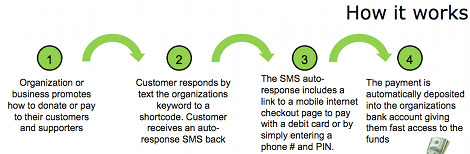
Picture 3Overall, this simplistic process combines Obopay’s easy text-to-pay platform with Benevity’s non-profit database and backend billing system, allowing for an easy-to-setup, easy-to-manage platform. A patron texts the organization's keyword to a short code (usually 5 numbers long) and immediately receives an SMS text in response. Potential donors are then prompted to enter a phone number and pin code to donate or they can use the mobile donation website which, on average, takes less than 90 seconds to complete.

Future expansion of this service will include corporate matching and a customizable database with a recommendation function. Benevity already has all registered US non-profits in their searchable database. Soon, the non-profits themselves will be able to be personalize their profiles, and a recommendation function for donors will be added.

Donors prefer push button solutions, mobile applications and ease of use. This new text-to-give solution by Benevity and Obopay opens the doors for arts organizations and other non-profits to provide cutting edge solutions to this problem.

Arts organizations across the country should be looking at this as a huge opportunity to expand micro-donation campaigns and reach new audiences. Patrons are most likely to give directly after or during an experience involving a non-profit. This quick and easy solution for instant giving provides a way for people to support organizations they care about while the experience is still fresh in their minds. Both companies recommend event based marketing for text-to-give donation campaigns.

Arts organizations should advertise how to donate via SMS text during intermissions, around galleries or surrounding specific events. It is a quick way for people to show their support and generally has little effect on their other giving habits. More importantly, the platform can provide a  new revenue stream that opens up giving to a wider range of people and secures multiple gifts from long time donors.

Social Media Spotlight: The Guggenheim and YouTube Play

Welcome to the third installment of the Social Media Spotlight, our monthly feature focusing on arts organizations’ social media strategies.

This month’s spotlight is the Guggenheim Museum’s strategy with YouTube Play, the recently debuted biennial celebrating creative talent in the realm of online video. The response leading up to Youtube play was massive, with over 23,000 video submissions and over 46,000 subscribers to the YouTube Play channel. The channel, to date, has been viewed over 23 million times. 25 videos were selected by an esteemed jury and celebrated on October 21st with an event at the Guggenheim in New York that was live streamed worldwide.

I recently had a chance to chat with Associate Curator Hanne Mugaas about YouTube Play:

Where did the idea originate for the Guggenheim to team up with a social media site like YouTube?

The Guggenheim had already collaborated with Google on Design It: A Shelter Competition, where on the occasion of the exhibitions Frank Lloyd Wright: From Within Outward and Learning By Doing, the Guggenheim and Google SketchUp invited amateur and professional designers from around the world to submit a 3-D shelter for any location in the world using Google SketchUp and Google Earth. Ideas for new collaborations originated from this project, and a celebration of online video became the next step.

Instead of using their existing YouTube channel, the Guggenheim decided to create an entirely new channel for YouTube Play. What drove that decision? Did it have a positive effect on your original channel?

Since the project is a collaboration between YouTube and the Guggenheim, we wanted a channel for Play content exclusively. The fact that it is a biennial (the project will continue every second year) is another reason why we wanted a separate platform. The project has certainly had a positive effect on the Guggenheim YouTube channel, and it has made it possible for us to reach new audiences.

Since its creation last May, the YouTube Play channel has gained over 46,000 subscribers. How did the Guggenheim cultivate such a large number of fans?

The project is unique in its global scope, which has generated extensive interest. We got 23,358 submissions, which is unheard of in a traditional art context. The pairing of YouTube and Guggenheim made people curious about the outcome. Most importantly, the shortlist and the top 25 videos have a diverse range of high quality works; videos that make you want to spend time on and revisit the channel.

In addition to YouTube, the Guggenheim also has a major presence on other social networks and social media sites like Facebook, Myspace, Twitter, & Flickr. What roles did these other sites play in your social media strategy with YouTube Play? Did the fact that YouTube Play culminated with a specific event affect your overall social media strategy?

The social media sites were important in getting the word out, and to drive submissions. We also started a blog, The Take, which contextualizes the project through writing by art, film, and Internet experts. We did frequent YouTube Play updates on Facebook and Twitter to keep people informed about the progression of the project. These were certainly important tools for the event, especially to make people aware of the live stream, and the external projections on the Guggenheim building in New York.

Speaking of events, the Guggenheim took full advantage of YouTube's new streaming service to live stream the YouTube Play event from the Guggenheim Museum in New York City.  How was your experience with streaming video?

The live stream was a very important element given the global scope of the biennial; this way, anyone anywhere could watch the event live. It was a successful experience for us, and the feedback has been very good.

What advice would you give to other, smaller arts organizations that want to experiment with live streaming their own events?

Streaming video is a great way to make your content available to a global audience, either it’s an event, a panel or a talk. To watch a live stream is special, and as a cultural producer, it is a great asset to know that people around the globe are watching.

Thanks again to Hanne Mugaas and the Guggenheim Museum. Visit the YouTube Play channel to check out the 25 selected videos from the exhibition and view selected clips from the live streamed event.

Is your organization doing exciting work in social media? Leave us a comment and let us know. We may feature you in an upcoming spotlight!

Internet Revived the Music Video Star

On August 1, 1981, America was introduced to the cultural phenomenon of Music Television. The television network revolutionized the world of music programming and would forever change the landscape of the music industry. In addition to promoting music through traditional radio, live performances and albums, musicians began to utilize the medium of television to promote their singles. Independent and underground musicians also took advantage of this new technology by shooting lower budget videos to distribute on local cable access shows that were similar to MTV. The cultural innovation of music videos has since evolved along with the rest of the music industry. One of the most interesting trends is the advent of interactive music videos on the internet. An increasing number of artists and arts organizations have begun examining the ways in which they can engage and connect with potential audience members and fans online. The dynamic, fast-paced nature of smart phones, social media and other technology has prompted this shift to interactivity and collaboration.

Here's a look at three of the most innovative videos on the web.

1:Arcade Fire’s “The Wilderness Downtown”

One of the most ambitious projects comes from the indie rock band sensation, Arcade Fire. The band designed a video that uses Google Chrome, Google Maps and HTML5 standard to immerse users into a unique, interactive experience. The music video (designed to work best with the Google Chrome browser) prompts users to enter the street address of their childhood homes and creates a custom video based on images taken from Google Maps’ Street View of your childhood home.

Wilderness Downtown Screenshot

Director, Chris Milk (who just produced another collaborative video for Johnny Cash's final studio recording ), has also worked on videos for Kanye West and Gnarls Barkley and is at the forefront of this revolution in music video production.

For more behind-the-scenes information on the shoot, check out Creativity Online's  article.

2. Andy Grammer’s “Keep Your Head Up”

Choose Your Own Adventure...

A slight variation on this theme comes from pop artist, Andy Grammer. The video for Grammer's song 'Keep Your Head Up' is a real life example of a 'Choose Your Own Adventure' story and users can choose what actions they want Andy to take in the video. In November, the most popular choices will be compiled into one video  and the result will be uploaded to Vevo.

While shooting the video scenes for each choice did not require any specialized equipment,  the process of stringing the different choices today required some cutting edge technology. So cutting edge, in fact, that Grammer's label has taken an equity stake in the company that developed it, according to a recent Wall Street Journal article.

Watch (and interact) with the full video, here.

3. The Cold War Kids’ “I’ve Seen Enough”

'I've Seen Enough' was directed by Sam Jones, who also directed a documentary about the band, Wilco. The video, developed in Flash 10, was nicely compressed to cut down on loading times. The interactive bars at the top allow users to mix and match different styles of the same song, from reggae to acoustic. Users can also click on individual band members to mute or unmute them.

Interactive Videos and the Arts...

While some of the technology utilized in the above experiments can be classified as cutting edge, artists and arts organizations shouldn't be deterred from dabbling in creating their own interactive video experiments. One of the most popular ways musicians have interacted with fans is by streaming concerts, informal jam sessions and interviews online via Ustream. Once logged into Ustream, users can interact with the artist and other fans in real-time. Musicians have also encouraged fans to create slideshows set to their music and upload them to sites like YouTube and Vimeo. As open source software and user collaboration becomes more popular, there's no doubt that more and more artists will be producing this type of content.

What you need to know about viral video and the law

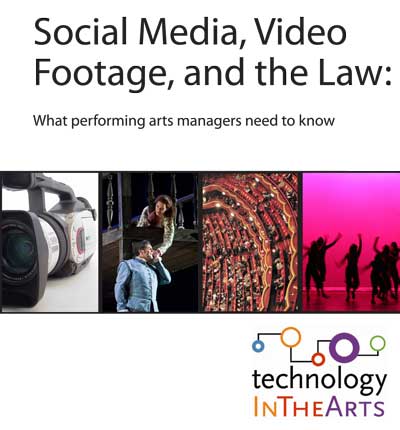
Social Media, Video Footage and the Law report from Technology in the ArtsTechnology in the Arts has just released a publication reviewing legal issues surrounding using video footage online. (Access the PDF publication here.) Whether you are in marketing, development, education or operations, chances are that you will encounter some kind of contract or legal issue involving performance footage, either online or offline.  This white paper serves as a survey of current industry trends and practices, as well as a guide to those exploring the ever-changing landscape of online media and the intellectual property and union issues associated with it. While nothing can replace the advice of a good lawyer on legal issues, this guide can alert you to potential problems while you are planning online media campaigns involving performance footage.

Do you have a story about issues you've had distributing performance footage online? Please share below.

Why the Arts Matter - Video Contest Winner

Earlier this year, Americans for the Arts launched an online video contest to encourage U.S. residents over the age of 13 to answer the question, "Why do the arts matter to you?" Congratulations to all of the winners!

Grand Prize Winner - Starting Artists, Inc.

Over 18 Winner - Student Advocates for the Arts

Under 18 Winner - Linzy Paige

Focus on the data: LSO's Digital Season Brochure

LSO brochure

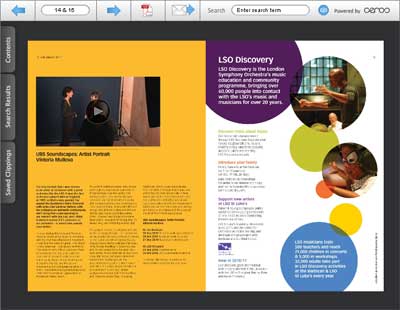
A page from the 10/11 LSO brochure. Click image to see the whole brochure.

Last year I wrote about the London Symphony Orchestra’s digital season brochure. As technology and environmental concerns cause more printed pieces to go online, the arts industry will see more season brochures go digital. According to a recent Technology in the Arts poll, 56% of arts organizations already have their season brochure online in some form (PDF or interactive).

Last season was the first that they made the brochure, launching it in February of 2009 with their season announcement. Based on its success, they have released another brochure this year with plans to distribute it more widely. Today I have a follow-up with Digital Marketing Manager Jo Johnson about the success of last year’s brochure.

The marketing team at the London Symphony Orchestra chose to make last year’s season brochure after deciding to plan the online and offline elements of our season campaign together.  Jo said, “we had produced films to illustrate the season's themes, but it was a few months after the season had first gone on sale, and so felt rather like an afterthought. Also we had decided that we were going to put our season on sale online before we opened to telephone booking, so turning to online channels (email, web and social networks) to send info out to the bookers felt natural. A digital brochure was the obvious choice.”

LSO brochure

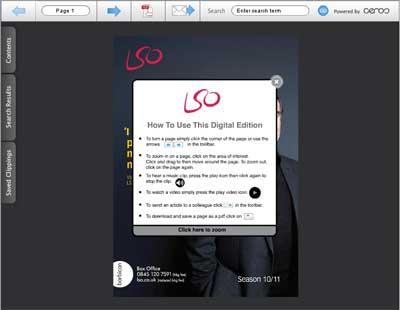
The first page of the brochure created by Ceros includes an instruction window for newcomers.

For newcomers to the digital brochure, it may be hard to know where to get the technology to make the brochure, as well as how much lead time to allow for it. This year symphony again used interactive publication platform Ceros to create their season brochure, complete with audio and video. Other platforms that were suggested in our poll included Issuu and Yudu.

According to Jo, after the art and copy was approved for the print brochure, the digital brochure only took about two additional weeks. “[The print version] needs to be made suitable for online readers (adding some buttons, changing some bits of text to make it obvious that their links, making the images 16:9 ratio so that you can embed a video over it). That's about a week. Then because I don't have Flash skills, the digital brochure company did all the Flash work for me. They were pretty quick, but leave time for changes, testing and sign off. That was about another week.”

Jo found that the brochure was driving traffic primarily to concert pages (where tickets can be purchased). “The top 20 clicked links are all to concerts, with the season opening concert on 20 September being the most clicked.” Using Google Analytics, Jo determined that roughly 1 in 5 viewers played a video, and viewing figures correspond to page numbers (i.e. the least viewed video is last in the brochure). Viewers stayed on the digital season brochure an average of about four minutes.  Overall, the 2009/10 digital brochure was viewed 10,870 times. Based on the data she pulled she concluded that the amount of revenue directly from the brochure covered its costs, but that the brochure “played a more of a role in decision making than direct purchasing." She said:

On the financial side, I could see purchases made on our website that had come directly from the digital brochure. Added up, the income was just over the figure it cost to make the brochure. But as with all marketing, I'm also interested in the purchases that were made as a result of someone having the digital brochure, but not directly. At the LSO we talk about multi-channel marketing and CRM, whereby we allow the customer to make his own decision on which method to use to make the final purchase. So although the brochure had embedded links back to the LSO website where tickets can be bought, a customer may have browsed the brochure, seen a concert they like, gone away to chat to a friend about going together, made a decision a week later, and then gone back directly to the website to make the purchase, or called the box office on the phone. In this case I would not have seen the income from his ticket in the analysis I did on the brochure; and this is what I meant when I said 'It's likely it plays more of a role in decision making than direct purchasing.'

When taking on these technological innovations, it’s difficult to know how to measure success. As Jo said in our conversation, “This is the challenge marketers face every day--how to track customers as they hop through our available channels.” Your outreach program or social media site may have paid for itself in tickets, but how do we measure things like brand recognition? Social marketing experts like Charlene Li and David Berkowitz have come out with suggestions, some of which go beyond mere revenue. Jo saw two huge benefits to producing the brochure, beyond its break-even point.

The very fact that we had produced one at all gave the LSO a huge amount of coverage. It was passed around as a 'novelty' item, which people enjoyed looking at, turning the pages, watching the videos, just to see what it did. This is the same kind of benefit as social media brings an organization--people talking about your group. They might be on the other side of the world, they might not come and buy a ticket, but the fact that you have come to their attention is almost as valuable as a ticket sale - in our case it may eventually assist in ticket sales when we go on tour, or on sales of our CDs (our own label). Unfortunately, the "buzz" isn't really trackable in any meaningful sense, other than clicks and views and Retweets. But it still counts.

Lastly, the digital brochure brought a small environmental benefit. We reduced the number of brochures we printed, since we sent it out to people on our database that had email addresses instead of the print in the post. We also used the digital brochure in the information we emailed out to journalists at the season launch, instead of posting them one. Our Managing Director likes to email the digital brochure to prospective festivals and venues abroad as our "flagship" publications, thus saving more paper and postage. I'm sure the effects are negligible in the bigger picture, but any boost to our green credentials helps!

So, is investing time and money worth it for your company? Here are Jo’s thoughts:

Probably the most useful thing I can offer is some thoughts into whether others should follow suit and produce a digital brochure. Here's some:

  • A digital brochure should never replace your printed one, but should be complementary to it. A good marketing campaign should have all the online and offline elements planned in together at the same time.
  • Personally I think the key to it is to have good content which makes it worthwhile - video content is the obvious one. There are plenty of free options for making a digital brochure out of your PDF, but mostly these don't offer the rich media content like embedded videos and soundclips.
  • Make sure you have the mechanisms and a plan in place to market the digital brochure - which can only really be done online. Social networks are ideal, but don't ignore your own website! There's no point in having one if you don't market it - people will not stumble upon it randomly.
  • Ideally the digital brochure should be designed with online usage in mind - and possibly independently from the print version. We weren't able to do this wholesale though because of the cost of the designers! We chose the route of adapting the printed version.

Firing Up Museums With Sparks! Ignition Grants

logoIMLSFrom digital archiving techniques to mobile websites, museums around the country are finding news ways to innovate in our current and rapidly changing information age. There is now an emphasis on experimentation and testing the boundaries of what traditionally defines a museum. The Institute of Museum and Library Services (IMLS) has initiated a new grant program with this emphasis in mind and is seeking proposals for the current fiscal year. The Sparks! Ignition grants can be up to $25,000, are available for a period of up to one year, and have no matching requirements. Yes, you read that correctly. No matching requirements.

The Sparks! Ignition program is intended for all eligible institutions that want to utilize innovative methods to address some of the current problems that museums and libraries in the U.S. are experiencing. For more information about the application and to find out if your institution meets the criteria for eligibility, visit the IMLS website .

On November 3rd, IMLS staff will be offering a webinar explaining the purpose of the grants, articulating the application process, and answering questions. Your organization will have to move quickly though, the application deadline for all Sparks! grants is November 15th, 2010.

Are You Getting the Most Out of Twitter? - November Webinar

twitterGetting the Most Out of Twitter

Thursday, November 18, 2010 2:00pm-3:30pm Eastern Register today for $25 Presenter: David Dombrosky

As the ninth most popular website in the world, Twitter has quickly grown into a formidable communications platform. But what can you really do with 140 characters or less? How can arts managers make the most of this increasingly useful tool?

In this webinar, you'll learn:

  • Who uses Twitter, and why they want to engage your organization.
  • What aspects of Twitter distinguish it from other social sites, how your organization can use these aspects to communicate more effectively.
  • The 70-20-10 rule for engagement, and how you can use it to your advantage.
  • Best practices for arts organizations using Twitter
  • What third party applications can arts managers use to share media, expand your reach, and much more.
  • What analytic tools exist to help you chart your Twitter success

dd_100pxDavid Dombrosky is the Executive Director of the Center for Arts Management and Technology (CAMT), an applied research center at Carnegie Mellon University investigating ways in which arts organizations can use online technology to more effectively meet their goals. He frequently presents technology and social media workshops for arts conferences – most recently for The Association of American Cultures, Performing Arts Exchange, Chorus America, Opera America, College Art Association, and Grantmakers in the Arts.

Future Focus: The Public Art Archive

Public Art Archive LogoSharing information and digital media about public art has never been an easy task for arts administrators. The Western States Arts Federation (WESTAF) seeks to change that when they launch the Public Art Archive - an online, searchable database for public art in the United States. A tool for both arts administrators and the general public, WESTAF’s vision is for the Archive to serve as an easy to use, central source of information about public art. I recently had a chance to speak with the creators of the Public Art Archive and take a guided tour through the site.

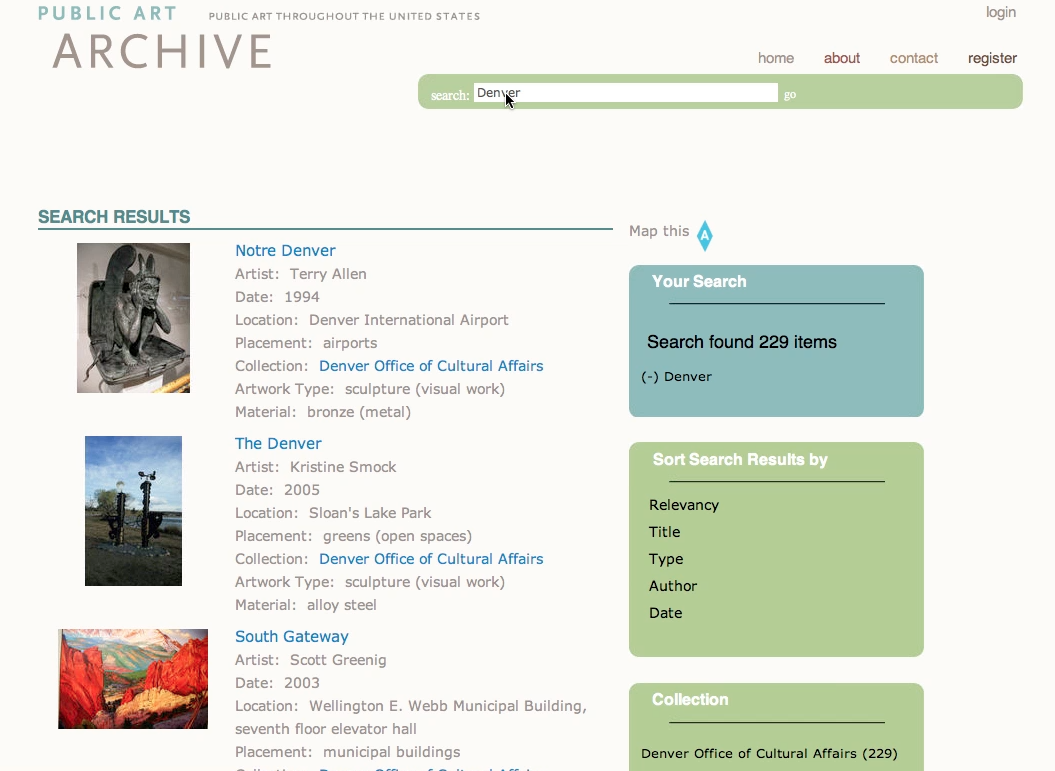
The Public Art Archive has a straightforward, user-friendly interface.  Entry to the Archive takes place through a simple search bar on the front page, powered by Solr, an open-source search platform from by the Apache Lucene project.  You may already be familiar with Solr, as it is the search engine used by both Etsy.com and FoodNetwork.com.

Solr allows you to refine simple searches on the Archive through multiple filters with a variety of search criteria such as artist, location, materials, collections and even nicknames. The search criteria and vocabulary for the site was built from the same standards as those used by reference websites like ARTstor and the digital library projects at Harvard.

Search Results PAA

Once they’ve found the artwork they are searching for, users are presented with a variety of information and media about the work. In addition to the artwork’s basic info, users can view pictures and video, download PDFs about the artwork, and listen to audio describing the piece.

While the capability for all this content is built in, individual administrators must submit all information and media for each artwork. The Archive has no limit on the amount of content that can be submitted for each work and submission of the content is free. At a minimum, the site requires a full description for each work, as well as its location, and one high quality image.

To enable use of the Archive when an individual is physically in front of a work of public art,  the Archive will be accessible from any web-enabled mobile device. No specific apps will be required, users just plug the main url for the Archive into their phone's web browser to access the full functionality of the site.

PAA_Map

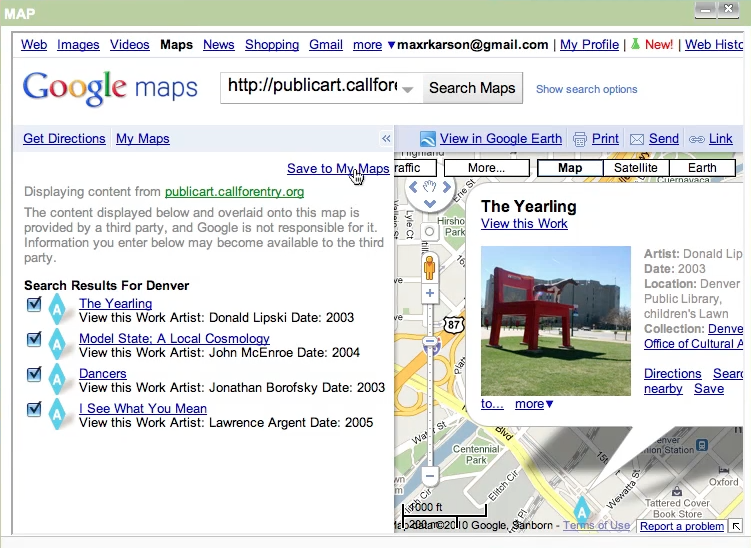
The Public Art Archive will also be fully integrated with Google Maps.  By clicking the site’s “Map This” icon, users will be able to view exactly where the artworks are located and build custom maps of artworks that can be shared with others or saved for later use.   Administrators can use the mapping function to create custom maps for use in tours of their collection, maintenance tasks, and advocacy initiatives.

The ability for organizations to create personalized pages so they can maintain their identity will be added as the Archive progresses. WESTAF also plans to have licenses available to give organizations access to the more administrative functions of the Archive.

The Public Art Archive will be launching in the near future, but until then visit westaf.org to check out some of WESTAF's other projects that offer technological solutions for arts administrators.

True Personalization: Don't Get Filtered

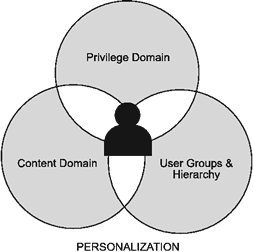
PersonalizationResearchers from Georgia Tech University recently published their first annual Future Media Outlook, an interactive online publication through nxtbook. Future Media Outlook tackles the concepts of information, technology and media in the future by focusing on "the trends that will fundamentally transform how content is created, distributed, and consumed..." The publication focuses on six main concepts, one of which (arguably the most interesting) is true personalization - the ability to manipulate, personalize and filter a personal data stream. These manipulations change the information that is available or presented to a person based upon their previous actions and settings. True personalization will affect our consumption of products and services as well as how we spend our ever shortening leisure time. The click of a button or the modification of a setting could alter advertising, attendance, and data distribution for companies and organizations in incredible ways.

Due to the Data Tsunami created by the vast amount of information in this projected future, personalization will be required to focus content and allow people to navigate their own networks. Recommendation engines that compile our habits with our preferences will tailor our shopping, leisure and social experiences. People will know what events are going on, what food is being served, where meetings are happening, and where they most likely want to be at the touch of a screen. While this technology will show them exactly what they want to see, it begs the question : will they care about the information they are not receiving?

FirewallFor arts organizations, this could lead to new levels of advertising, event management and customer service, but it will also require new levels of tech savvy and strategic media planning. Data is powerful and no organization wants to be on the wrong side of a filter.

Personalized recommendations, advertising, and marketing have already been implemented on sites like Google, Groupon, and Facebook. An individual's habits and data input affect the advertisements presented to them and the ways in which  services are provided. In the future, this technology will become even more sophisticated and less conspicuous. The digital wave of news and information will manifest itself in total customization and intuitively targeted marketing.

Data input and manipulation could become a new burden for many  institutions. In a world of customized lives and filtered data experiences, the arts will need to create their own space, partner with other industries and stake a claim in the entertainment and cultural markets. Being able to track events by location, recommend performances from purchasing habits and cultivate new donors from restaurant choices are wonderful concepts that could arise from this technology, but they will need to be created and managed by the arts institutions themselves.

A world with true personalization focuses on providing services to fill a customer’s needs. Having a clear understanding of the market, the service being provided and the correlations that must be made will be integral to navigating a world of filters and preferences. This new world of data will be based on research, correlations and the value of time and information.

Georgia Tech does a compelling job at forecasting the current trends and focusing on where technology is leading us. This trend is real, and I believe it will manifest itself in the not-so-distant future. A world where patrons require automatically updated calendars, events and performances synced with their Google calendars, and interactive donor plans is just around the corner. Recommendation engines, geolocation-based event maps and social event feeds are quickly moving from the future to the present. It will be interesting to see if these predictions become reality and how the arts and cultural sector reacts to this new world of filters and data.

Social Media Spotlight: New York Theatre Network

Welcome to the second installment of the Social Media Spotlight, our monthly feature focusing on arts organizations’ social media strategies.

The global trend of participation in social networks and social media is one to which arts managers have been paying a great deal of attention. With over 500 million active Facebook users, 55 million tweets being sent per day and over 133 million active bloggers in the United States alone, arts organizations and arts managers are growing increasingly interested in identifying ways to engage their audiences and connect to new audiences via social media.

One of the more recent example of the intersection of social media and audience development is the creation of the New York Theatre Network (NYTN). Launched on September 28, NYTN seeks to be “your hub for what’s happening on New York City Stages”. The network focuses specifically on theatre events in New York City, and while any theatre fan can check out the latest happenings, only member theatres are able to upload content about their organization onto the website.

NYTN is unique in that it was designed to be an interactive social network as opposed to a static directory and listing of information. Its Facebook Connect feature enables users to find out what their friends are ‘liking’,  ‘attending’ and/or ‘recommending’ and also allows users to make their own recommendations.

Theatres are also encouraged to interact with audiences as they are able to upload YouTube videos, their Twitter stream, blog posts and an event calendar onto their pages. A gracious sponsorship from Flip Video’s Spotlight For Good Program made it possible for member theatres to record video and upload this content onto their page.

NYTN is the result of a cooperative effort between The Alliance of Resident Theatres/ New York and theatre industry website Theater Mania.  A.R.T. New York Executive Director Virginia Louloudes was inspired by a keynote speech delivered by Diane Ragsdale of the Andrew Mellon Foundation two years ago in which she addressed the decline in arts participation and examined possible solutions for this dilemma. One suggestion was for arts organizations to consider becoming “arts concierges” and help consumers find shows and performances based on their individual tastes.

Louloudes saw an opportunity to create a site that would serve as a “one stop shop” for theatre fans,  encourage a new level of interaction between theatres and audiences, and introduce fans to new theatres and upcoming shows they may not have been aware of.  The project was an extensive one and called for outside funding, workshops with member theatres, and a partnership with Theater Mania for technological support. While such an ambitious project may not be feasible for all arts organizations, Louloudes hopes that the creation of NYTN will encourage arts managers to develop their own social media strategies, especially since most platforms are free.

Those interested in further reading on NYTN's marketing efforts should also consult the following blog articles from Devon Smith, who served as project manager for NYTN and frequently blogs about social media:

Advertising ROI: a case for Facebook Ads

New York Theatre Network: it's launch day!

The Handheld Guide: Experimenting with Mobile Technology in Museums

There has been a lot of buzz lately about mobile technology with the release of mobile apps by some major museums like MoMA, The Brooklyn Museum, and the Museum of Natural History. Reviews have been mixed, but the discussion about the way mobile technology should be used in museums has definitely picked up speed.

The popular view of mobile technology seems to be focused (a little too much?) on one main format - having a downloadable, mobile application. While developing your own app can be a good way to deliver content to your visitors, it is definitely not the only approach. I decided to take a look at four different ways that some museums have been experimenting and implementing mobile tech in their institutions.
tap_dual
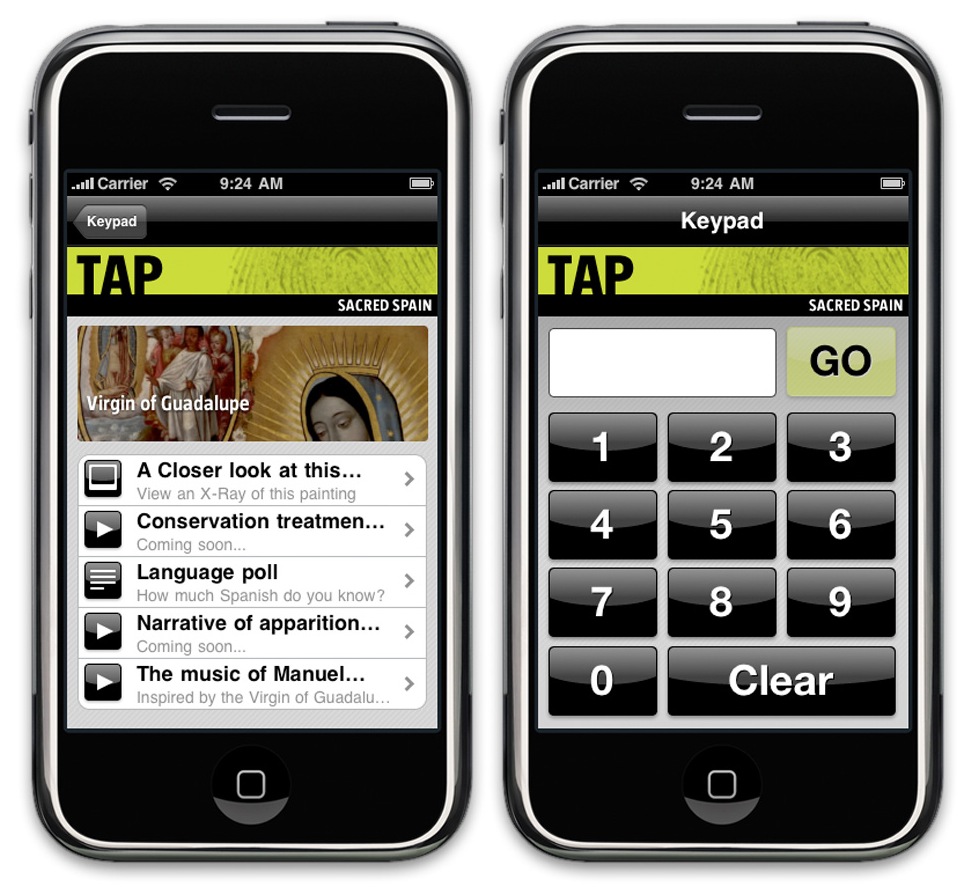
The TAP home screen and numeric input screen. via the Indianapolis Museum of Art blog


Providing not just an app, but also the device itself - TAP at The Indianapolis Museum of Art

The IMA wanted to include all their visitors in their mobile tech program, not just those who own a smartphone. So they took the extra step of providing gallery goers with an iPod Touch for the duration of their visit. By placing the device in the visitor’s hands, everyone has access to the digital content the IMA provides and no user is alienated for not owning or having an incorrect mobile device.

The iPods cost five dollars to rent and only contain the TAP app and an instructional video on how to use both the iPod and the app in tandem with the galleries. The app works on a numeric input system, a 3-digit code is associated with every piece in the tour that presents users with different content such as video interviews with artists, text files, pictures, and audio files explaining the artwork.

By sticking to one type of device, the IMA was able to tailor the user experience exactly the way they wanted, which was their main goal for developing a mobile program. This approach circumvents the need for an app store and allows for all content to be controlled in-house. The content management system is the same one used for their website and allows IMA to instantly edit and update their content without needing to go through a third-party developer.  The devices also have built-in polls and can provide both museum staff and TAP users with the real-time results.

Visit the IMA’s blog to check out the development process of the Tap Program and some of their ideas about developing a successful mobile standard for museums.

Integrating mobile websites and mobile apps: The Brooklyn Museum

A mobile website is the mobile-friendly version of an organization’s existing website. In a recent post, we examined the differences between mobile websites and mobile applications.

The Brooklyn Museum has developed a mobile website that is accessible from any web-enabled mobile device. In addition to sharing information about the institution, users are encouraged to get involved by recommending pieces of art work and apply descriptive tags through the Brknlynmuse and Gallery tag! features of the mobile website.
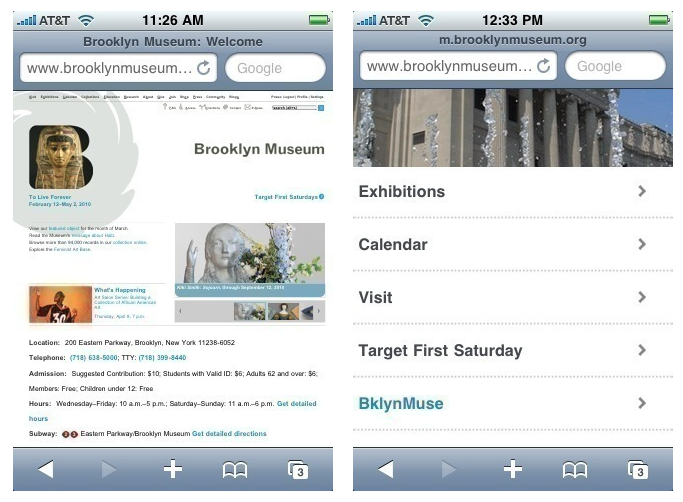
Brooklyn Museum's main website (left) and their mobile site (right). Via the Brooklyn Museum blog


To create a more accessible experience for those with more app-friendly devices, Brooklyn Museum also created downloadable apps for both iPhone and Android that simply wrap the current mobile website. The same functionality and features of the mobile site are there, the apps just act as a different port of entry. This has proven to be a more sustainable approach to their mobile strategy than building each app up from scratch.

You can find more info on Brooklyn Museum’s blog for their approach to their mobile website and their mobile applications.

Connecting to content with QR codes: The Mattress Factory
MatressQR

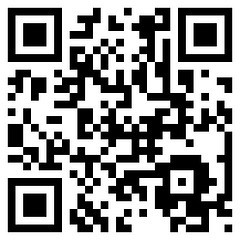
The Mattress Factory, an installation art museum in Pittsburgh, has been experimenting with implementing QR codes in their exhibits in an effort to reduce the number of brochures in their museum as part of a green initiative.  QR stands for “Quick Response”, connecting users to content within seconds of scanning the code with your phone. A QR code is a two-dimensional barcode that is readable by mobile devices with 3G access, a built-in camera and a barcode reading app.

A developer is not required to create QR codes; and with this method, a museum can start immediately experimenting with mobile technology.
MatressQR_2
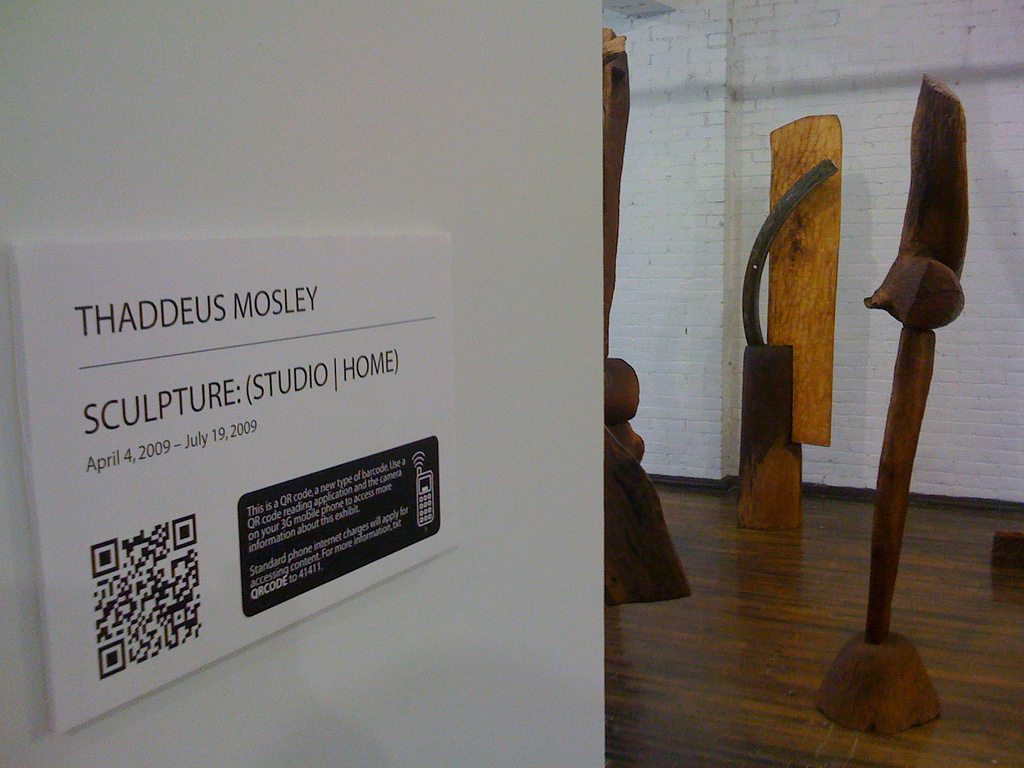
QR code placement in the Mattress Factory's exhibition space. via the Mattress Factory blog.


The codes are free to generate and contain text information. Once you generate a code online, it can be printed out and placed next to the piece in your collection. For more media based content such as pictures, audio and video, the content must be uploaded to sites like YouTube or Flickr. The QR code will link users directly to that content.

More info on the Mattress Factory’s use of QR codes can be found on the Mattress Factory blog.

Taking advantage of an existing app: Augmented Reality with the Andy Warhol Museum

Augmented Reality (AR) refers to using a mobile device to view digital images overlaid onto real locations.  AR apps use a smartphone’s built-in camera and GPS to identify where the user is and overlays the content for that location.
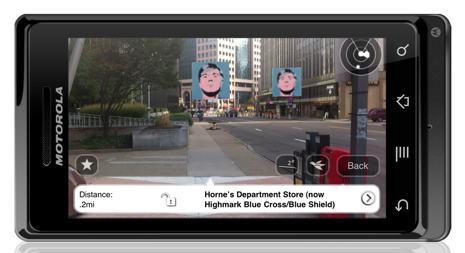
Warhol, Warhol, everywhere! A typical street view using Andy Warhol layer. Via the Andy Warhol Museum.

Warhol, Warhol, Everywhere! A typical street view using the Andy Warhol layer. Via the Andy Warhol Museum.


The Andy Warhol Museum’s AR layer places images of Andy Warhol’s face over real-world locations in Pittsburgh and New York that were historically relevant to his life. Touching each icon provides users with pictures of artwork and/or content associated with each location and the way it played a part in Warhol’s career.  The Andy Warhol AR project is not an app itself, but a filter layer that is installed on an existing AR app called Layar, available for Android devices and iPhones.

You can find some more info on the Andy Warhol AR project here and how to create your own AR layers here.

So where does your organization weigh in? We would love to see some your opinions in the comments section of what you feel are some of the advantages and disadvantages of these approaches. What would most influence your organization’s approach to mobile technology?

Related Posts: Museums and the Web 2011: Thomas's Recap The State of the Mobile: The 2011 Museum & Mobile Survey