




For most people in the Northern Hemisphere, summer ended last week. But for those who run artist training programs in the summer months, next summer has already begun. In case you are not in the artistic department of your org, newsflash: It’s audition season, folks!
Today I have an interview with Julie Baron, General Manager and one of the founders of YAP Tracker. For those readers not familiar with the field of opera, a "YAP" (Young Artist Program) is a training program for young singers, usually with a large opera company which hires the singers for the season and provides them with small roles in the opera, coachings with staff pianists, and the opportunity to perform in educational outreach programs. The singers have usually graduated fairly recently from a Masters or Artist Diploma program and are trying to launch their singing career.
Having left a career in technology solutions consulting and training to pursue her passion for the arts, Julie Baron earned her Master of Music degree in Vocal Performance from the Manhattan School of Music in 2004. She enjoyed a career as a mezzo-soprano singing with many companies throughout the United States and abroad, but her unusual affinity for both technology and the arts ultimately guided her to create the popular website YAP Tracker.
YAP Tracker was created in 2005 and has quickly garnered tremendous acclaim for its comprehensive, worldwide list of opportunities and online application service. We've talked about online application and review tools in the past on the Technology in the Arts blog, but YAP Tracker is truly unique in its industry specificity and the fact that it provides organizational features for singers, teachers and company administrators alike.
"We’re so grateful for the support that we’ve gotten from both companies and singers alike and we hope to be around for many years to come to help people find auditions," Julie said. Julie is also a frequent guest speaker at schools, programs and conferences on the use of technology in the arts, including the 2010 Opera America Conference.
How did you come up with the idea for YAP Tracker?
The site began in 2005; I was singing with the Opera Colorado Outreach ensemble and I competed in a competition there locally, the Denver Lyric Opera Guild competition, and placed well. I was really excited about it and I wanted to find other opportunities to compete. I started looking and I couldn't believe how much was out there—so much that it was difficult to keep track. So, the site was designed with this in mind. It was originally designed for me actually to use and my friends were incredulous that such a thing existed and so I became willing to sell it to them. So, now we have about 8,000 members worldwide and we list 2,500 auditions a year. They come from everywhere—I think we even have some singers in Guam and Congo—places that I wouldn’t have even realized that there was a need for the service, but apparently there is.
What experiences that you’ve had personally as a singer informed how you created the interface and how you do business as a company? That’s an interesting question. My background is sort of unusual because I have both a technology and a musical background. Before I went back to school for singing, I actually worked as a technology solutions consultant for PriceWaterhouseCoopers. It was important to me that the site be very user-friendly because generally the use of technology is frightening for everyone, so it was important for the site to be able to cater to every level of singer no matter what their technology background. I think that having a higher level of technology background was a good place to start from—to go from the ground up.
So, say I’m a singer and I’m looking for an audition. I find one that’s perfect for me, on YAP Tracker. Where do I go from there? Generally you start a few steps before that. When you subscribe to YAP Tracker, you receive alerts to let you know about new and interesting opportunities that are coming up. They’re interesting because the site is designed in such a way that you filter before you ever receive opportunities that you know will not be of interest to you. So, anything with a particular age limit, if you know that you’re not interested in doing competitions or auditioning in Europe, those opportunities are filtered out for you automatically. If you see something in the alerts that you do like, you go to the site, you click an icon to say "put this in my queue and remind me of all the important details about this opportunity." As the deadline approaches for that opportunity, you’ll receive additional alerts through the site and through our email alert system to let you know that things are coming up. Once you’ve actually sent your application, you click another icon to say “I’ve sent it; stop bothering me” and it goes into another queue. At that point, once you receive notification that you have an opportunity for an audition or that you don’t have an opportunity for an audition, you enter that information and that enters your audition queue. It sort of helps you through every step of the process to make sure that it’s on your mind, that you’re remembering the information that you sent in, and that you’re not surprised when the next date approaches.
You said that you had over 2500 listings. Do you cull the listings yourself or do organizations and competitions enter them or send them to you? Both—there are a lot of opportunities that I find and I contact the organization to let them know that we’ll post it or there are plenty of opportunities where the organization will write to us to say, "could you post this for me?" and they’ll send us the information. Then there are also organizations that have accounts with us and list the information themselves.
Auditioning can be an intimidating and exhausting process. How does YAP Tracker streamline that and take the mystery out of the audition process? Well, we can’t. It’s the one thing that we can’t do. We cannot make auditions themselves any easier for singers. It’s a difficult process, the preparation for auditioning. I will never regret that I’m not doing that anymore because that is the hardest thing that we, as singers, do. And singers do it forever, unless they’ve attained a certain level--which God love them, those who do. The one thing that we can do is make the rest of the process easier. One of the things that we say is “you sing well and we’ll take care of the rest.” We try to take the incredible ordeal out of keeping track of applications, which for many singers is a tremendous organizational feat. I remember when I was doing it myself before the existence of YAP Tracker, I would have this elaborate Excel spreadsheet to make sure that everything was lined up in date order so that I would send things in on time. Now we actually also offer an online application service, which some companies use, which makes the process even easier, so singers can apply to things with the click of a button. I think that if singer have confidence going into an audition knowing that they know what songs they’re going to sing, since they’ve kept that information in the site materials. They can refer to what they sang for that organization last year, because we never remove anything from the site. That’s the best we can do. Singers have to do the rest.
You said that you have artistic staff at opera companies using the program. Tell me a little more about that. Some organizations like to send us their audition information, but others prefer to list the information themselves. Companies can sign up for a free company account, which gives them access to list their opportunities. Other companies use the online application service, which is a fee-based option. Most companies still use a paper-based system; this is frustrating for singers in that it takes a long time to compile and combine and send it off. It can be very expensive to reproduce materials or FedEx, if you’re the type of person who does things at the last minute. They’re also a pain for organizations, when you’re dealing with 800 packets, as companies do, if there’s one headshot missing or if there’s a singer who’s missing a material, etc. A couple of years ago, we developed an online solution to help streamline the process, both for companies and singers alike. And the people who use it have been extremely positive about it, because it helps reduce their workload significantly.
What's one of the most popular features you would like to highlight? There’s so many good features—one of the most popular features that singers like is the section of the site geared towards accompanists, that allows for accompanists to indicate their availability to play for auditions. So, if you’re going to Cincinnati and you don’t happen to know anyone and you’re required to bring your own accompanist, there may actually be a pianist who’s indicated that they’re available to play, so that’s something that a lot of singers and accompanists are happy about. We also offer audition swapping functionality, which is great if you happen to not be available during the time that you’ve been given or if you’re a not a morning person and you’ve been given a 9:05 audition timeslot, there’s a place that you can go to change that. We also have a lot of new features that we’re looking forward to releasing soon, so I’m not going to talk about them until they’re ready, but we’re hopeful to have a new release on the site for 2011.


 So, the idea of a welcome series is that when somebody takes that step of raising their hand and saying, “I am interested in what it is that you have to offer” by giving you their email address, at that point you can’t just ignore them. You can’t just take it for granted and then immediately start asking them for money. Just like you would in a normal face-to-face relationship, you need to welcome that person to your community and you do that by seeking out some spaced email communications thanking the people for getting to know your organization and giving them some background information. Gradually, as you move down what we refer to as the relationship pathway, you give them more and more ways to become involved and to get more deeply embedded in the culture of the organization.
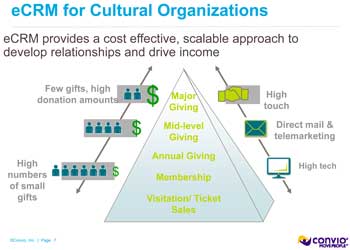 The database component an interesting new development for us. There are obviously a lot of vendors out there that sell databases to non-profit clients, but it became apparent to us that a lot of clients didn’t only want a set of on-line tools. They wanted a set of online tools, but they also wanted an entire CRM [Customer Relationship Management] system, where e


 As the Web & Social Media Assistant at the
  L. Corwin Christie graduated from Oberlin College before moving to Denver and founding a theatrical production company. Her work in development and marketing inspired her to attend Carnegie Mellon University's Arts Management graduate program. She recently worked as the Social Media Assistant at the Center for Arts Management and Technology, and is the current Marketing Director of
 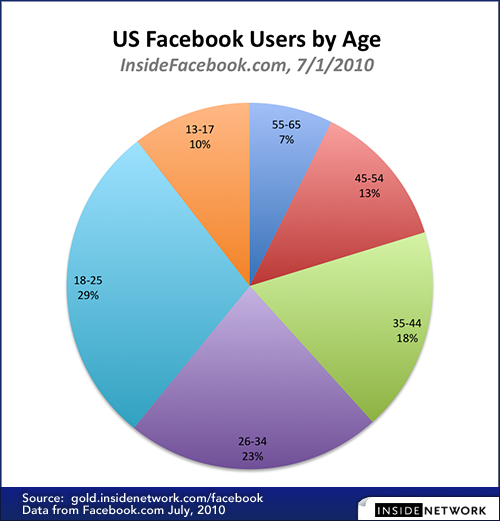 In 2010 educated adults over the age of 40 comprise the fastest growing demographic on Facebook, the age group 55+ grew by over 900%, and 40 million Facebook users in the US are now over the age of 40. This exposition of established professionals opens up the world of social networking even wider and begs the question: Are we properly using social media in the arts?
 No guards. Always open. And I assume you won't have any



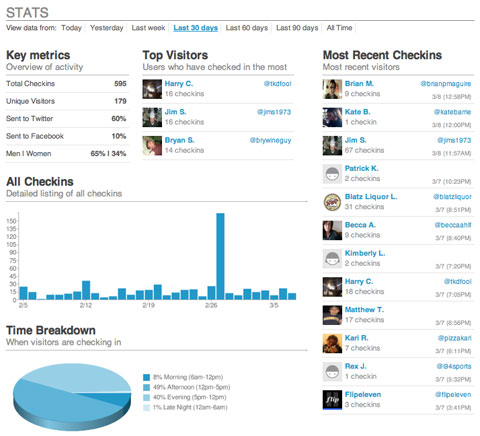
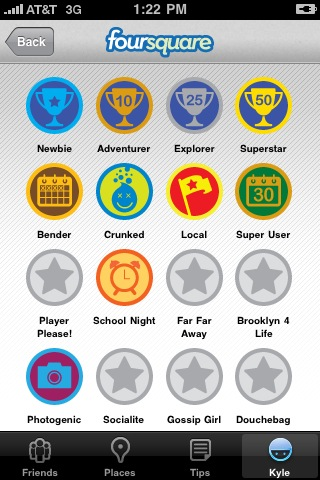 The game portion of Foursquare is what sets it apart from other applications that allow users to tag locations with their posts. In foursquare, a user gets points and earns badges for checking-in at different locations, the frequency of their check-ins and the uniqueness of where they travel. An example would be the Starbucks honorary barista badge. If someone checks into five different Starbucks locations, they become an honorary barista and earn the barista badge. Starbucks is tying this badge into their customer loyalty program and offering promotions and discounts to their honorary baristas.