Two things I know are true: That Rachael Wilkinson's impression of SNL's Drunk Uncle rivals Drunk Uncle himself and that Art.sy’s Fan page is the best source on Facebook for wonderfully distracting food-for-thought. I recently came across yet another dynamic infographic of sorts- the "Graph of Ideas." It presents a beautiful, interconnected and thready web of “Every Big Idea, Ever.” According to Suzanne LaBarre in an interview with map creator Brendan Griffen,
Each node represents one historical figure, and the nodes are color-coordinated to represent specific eras or fields of expertise (red for 19th- and 20th-century philosophers; orange for fiction authors; purple for comedians; and so on). Like-minded people are grouped together, and linked to all their influences, as well as everyone who has influenced them. The more influential a person, the bigger his or her node.
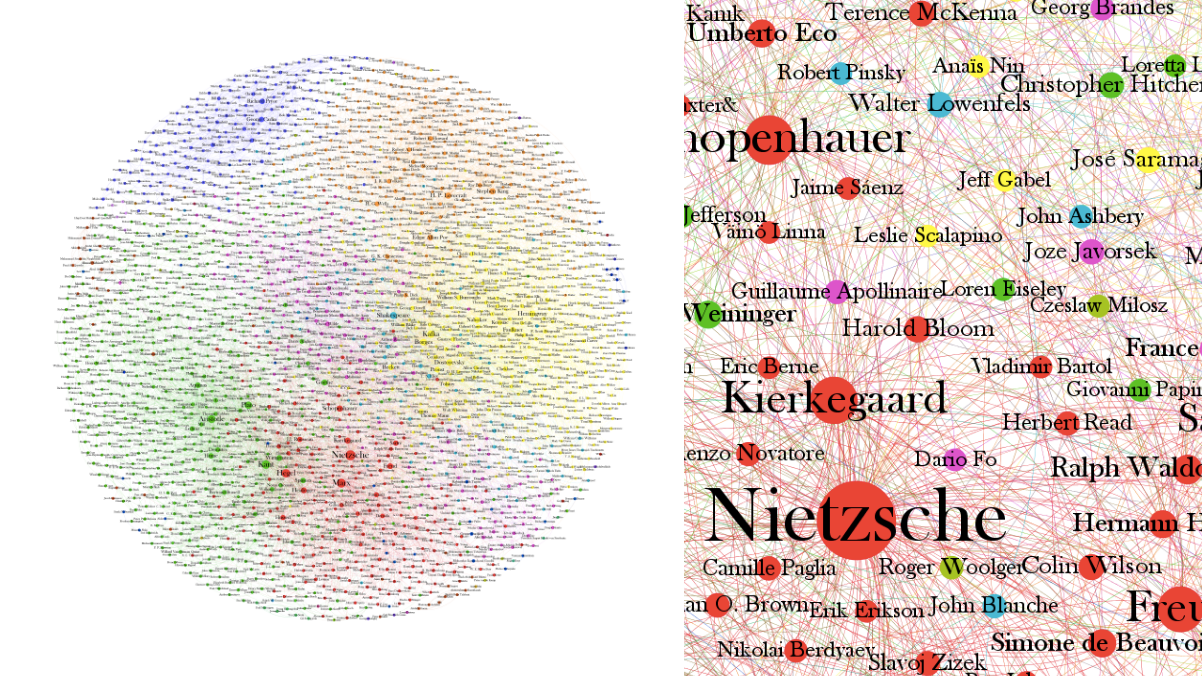
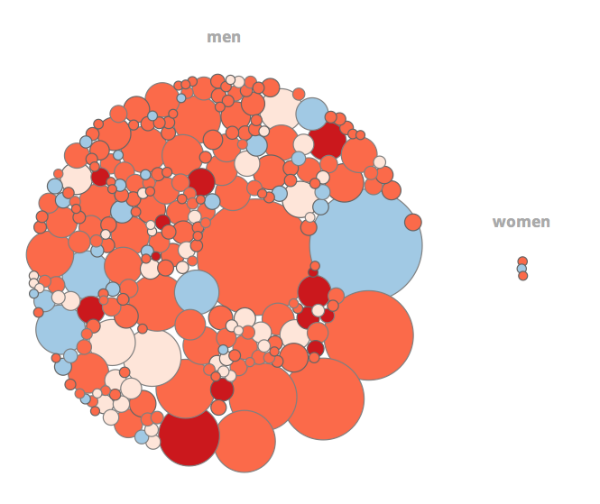
Griffen includes in the map every profile on Wikipedia that has an “influenced by” or “influences” field. Though the map is well-stocked, some great thinkers are absent (athletes and sculptors for example) from it. Griffen explains in the interview,
“I was limited [by] the dataset. Most of the people are philosophers and authors primarily because these are text-driven endeavors. Presumably fans of philosophy and books have entered in the information which sort of makes sense given their overrepresentation in the graph. Sports fans are unlikely to enter these into Wikipedia and so they are underrepresented. Similarly with artists but to a lesser extent.”
Basically, it is a map of the people Wikipedia contributors care about/care to write about. Though this may be the case, it is no less fascinating to explore just how interconnected these great thinkers are. Griffen's final message is inspirational, retrospective, and forward-thinking:
"Everyone is the collective sum of everyone else. We often think great thinkers, scientists, and authors sit in isolation in some cloister waiting for that eureka moment to come to them in a lightning storm. The truth is, the process of discovery forces us to consciously or unconsciously draw on all of our known, and perhaps more significantly, unknown antecedents of knowledge and wisdom to come up with new solutions to the problems we’re facing today."



 The numerous civilizations of the past left behind numerous tangible traces of their heritage. Coveted or discarded, scattered or buried, broken or intact, these objects would soon become artifacts. Archeologists would study them, museums would acquire them, and the rest is none other than History. But what happens when the core activities of a civilization leave scarce amounts of tangibles? What happens when the pace of change is faster than that of preservation? We should start formulating a response, for this describes none other than the 21st century.
We live in an age of information, of which a substantial amount now exists online, but is constantly in flux. The Economist described this phenomenon in an article titled
The numerous civilizations of the past left behind numerous tangible traces of their heritage. Coveted or discarded, scattered or buried, broken or intact, these objects would soon become artifacts. Archeologists would study them, museums would acquire them, and the rest is none other than History. But what happens when the core activities of a civilization leave scarce amounts of tangibles? What happens when the pace of change is faster than that of preservation? We should start formulating a response, for this describes none other than the 21st century.
We live in an age of information, of which a substantial amount now exists online, but is constantly in flux. The Economist described this phenomenon in an article titled 
 The Arts Council England in partnership with the BBC created The Space as a way for people from all over the world to experience the country’s rich and dynamic arts scene. In effect, a summer of English arts to all! (Albeit without the English summer and its cool Constable Skies). So The Space is certainly something to look forward too because it will feature some of the UK’s best theatrical productions, dances, musical performances, art exhibits, poetry readings, along with content that has been specifically created for the platform.
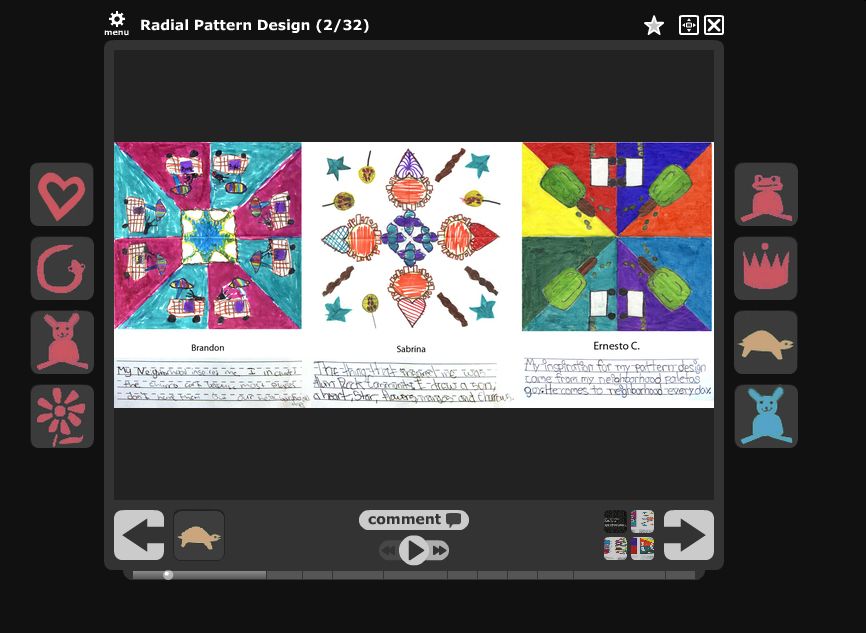


 In 2011, the Nelson Mandela Centre of Memory partnered with Google to digitize and disseminate the archives of Nelson Mandela. The collaboration has resulted in a visually engaging timeline of Nelson Mandela’s life, populated with photographs, diary entries, letters, and excerpts from his autobiography. The site is worth a visit because it both explains and celebrates the enduring legacy of the South African statesman.
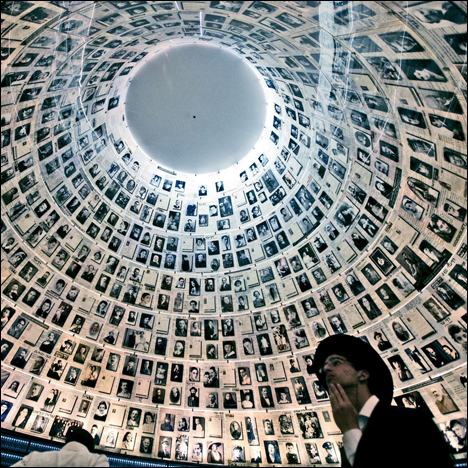 Google has helped digitize the vast archives of Yad Vashem, which is “the world center for documentation, research, education and commemoration of the Holocaust.” Through a technique called optical character recognition (OCR), Google has enabled families to search for both documents and images belonging to their relatives.
Here is an example given by Google: “To experience the new archive features yourself, try searching for the term [
Google has helped digitize the vast archives of Yad Vashem, which is “the world center for documentation, research, education and commemoration of the Holocaust.” Through a technique called optical character recognition (OCR), Google has enabled families to search for both documents and images belonging to their relatives.
Here is an example given by Google: “To experience the new archive features yourself, try searching for the term [