


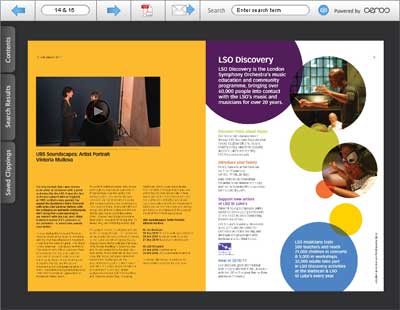
- A page from the 10/11 LSO brochure. Click image to see the whole brochure.
Last year I wrote about the London Symphony Orchestra’s digital season brochure. As technology and environmental concerns cause more printed pieces to go online, the arts industry will see more season brochures go digital. According to a recent Technology in the Arts poll, 56% of arts organizations already have their season brochure online in some form (PDF or interactive).
Last season was the first that they made the brochure, launching it in February of 2009 with their season announcement. Based on its success, they have released another brochure this year with plans to distribute it more widely. Today I have a follow-up with Digital Marketing Manager Jo Johnson about the success of last year’s brochure.
The marketing team at the London Symphony Orchestra chose to make last year’s season brochure after deciding to plan the online and offline elements of our season campaign together. Jo said, “we had produced films to illustrate the season's themes, but it was a few months after the season had first gone on sale, and so felt rather like an afterthought. Also we had decided that we were going to put our season on sale online before we opened to telephone booking, so turning to online channels (email, web and social networks) to send info out to the bookers felt natural. A digital brochure was the obvious choice.”
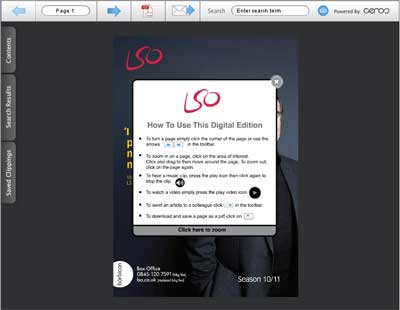
- The first page of the brochure created by Ceros includes an instruction window for newcomers.
For newcomers to the digital brochure, it may be hard to know where to get the technology to make the brochure, as well as how much lead time to allow for it. This year symphony again used interactive publication platform Ceros to create their season brochure, complete with audio and video. Other platforms that were suggested in our poll included Issuu and Yudu.
According to Jo, after the art and copy was approved for the print brochure, the digital brochure only took about two additional weeks. “[The print version] needs to be made suitable for online readers (adding some buttons, changing some bits of text to make it obvious that their links, making the images 16:9 ratio so that you can embed a video over it). That's about a week. Then because I don't have Flash skills, the digital brochure company did all the Flash work for me. They were pretty quick, but leave time for changes, testing and sign off. That was about another week.”
Jo found that the brochure was driving traffic primarily to concert pages (where tickets can be purchased). “The top 20 clicked links are all to concerts, with the season opening concert on 20 September being the most clicked.” Using Google Analytics, Jo determined that roughly 1 in 5 viewers played a video, and viewing figures correspond to page numbers (i.e. the least viewed video is last in the brochure). Viewers stayed on the digital season brochure an average of about four minutes. Overall, the 2009/10 digital brochure was viewed 10,870 times. Based on the data she pulled she concluded that the amount of revenue directly from the brochure covered its costs, but that the brochure “played a more of a role in decision making than direct purchasing." She said:
On the financial side, I could see purchases made on our website that had come directly from the digital brochure. Added up, the income was just over the figure it cost to make the brochure. But as with all marketing, I'm also interested in the purchases that were made as a result of someone having the digital brochure, but not directly. At the LSO we talk about multi-channel marketing and CRM, whereby we allow the customer to make his own decision on which method to use to make the final purchase. So although the brochure had embedded links back to the LSO website where tickets can be bought, a customer may have browsed the brochure, seen a concert they like, gone away to chat to a friend about going together, made a decision a week later, and then gone back directly to the website to make the purchase, or called the box office on the phone. In this case I would not have seen the income from his ticket in the analysis I did on the brochure; and this is what I meant when I said 'It's likely it plays more of a role in decision making than direct purchasing.'
When taking on these technological innovations, it’s difficult to know how to measure success. As Jo said in our conversation, “This is the challenge marketers face every day--how to track customers as they hop through our available channels.” Your outreach program or social media site may have paid for itself in tickets, but how do we measure things like brand recognition? Social marketing experts like Charlene Li and David Berkowitz have come out with suggestions, some of which go beyond mere revenue. Jo saw two huge benefits to producing the brochure, beyond its break-even point.
The very fact that we had produced one at all gave the LSO a huge amount of coverage. It was passed around as a 'novelty' item, which people enjoyed looking at, turning the pages, watching the videos, just to see what it did. This is the same kind of benefit as social media brings an organization--people talking about your group. They might be on the other side of the world, they might not come and buy a ticket, but the fact that you have come to their attention is almost as valuable as a ticket sale - in our case it may eventually assist in ticket sales when we go on tour, or on sales of our CDs (our own label). Unfortunately, the "buzz" isn't really trackable in any meaningful sense, other than clicks and views and Retweets. But it still counts.
Lastly, the digital brochure brought a small environmental benefit. We reduced the number of brochures we printed, since we sent it out to people on our database that had email addresses instead of the print in the post. We also used the digital brochure in the information we emailed out to journalists at the season launch, instead of posting them one. Our Managing Director likes to email the digital brochure to prospective festivals and venues abroad as our "flagship" publications, thus saving more paper and postage. I'm sure the effects are negligible in the bigger picture, but any boost to our green credentials helps!
So, is investing time and money worth it for your company? Here are Jo’s thoughts:
Probably the most useful thing I can offer is some thoughts into whether others should follow suit and produce a digital brochure. Here's some:
- A digital brochure should never replace your printed one, but should be complementary to it. A good marketing campaign should have all the online and offline elements planned in together at the same time.
- Personally I think the key to it is to have good content which makes it worthwhile - video content is the obvious one. There are plenty of free options for making a digital brochure out of your PDF, but mostly these don't offer the rich media content like embedded videos and soundclips.
- Make sure you have the mechanisms and a plan in place to market the digital brochure - which can only really be done online. Social networks are ideal, but don't ignore your own website! There's no point in having one if you don't market it - people will not stumble upon it randomly.
- Ideally the digital brochure should be designed with online usage in mind - and possibly independently from the print version. We weren't able to do this wholesale though because of the cost of the designers! We chose the route of adapting the printed version.
 From digital archiving techniques to mobile websites, museums around the country are finding news ways to innovate in our current and rapidly changing information age. There is now an emphasis on experimentation and testing the boundaries of what traditionally defines a museum.
The Institute of Museum and Library Services
 Getting the Most Out of Twitter
 David Dombrosky is the Executive Director of the
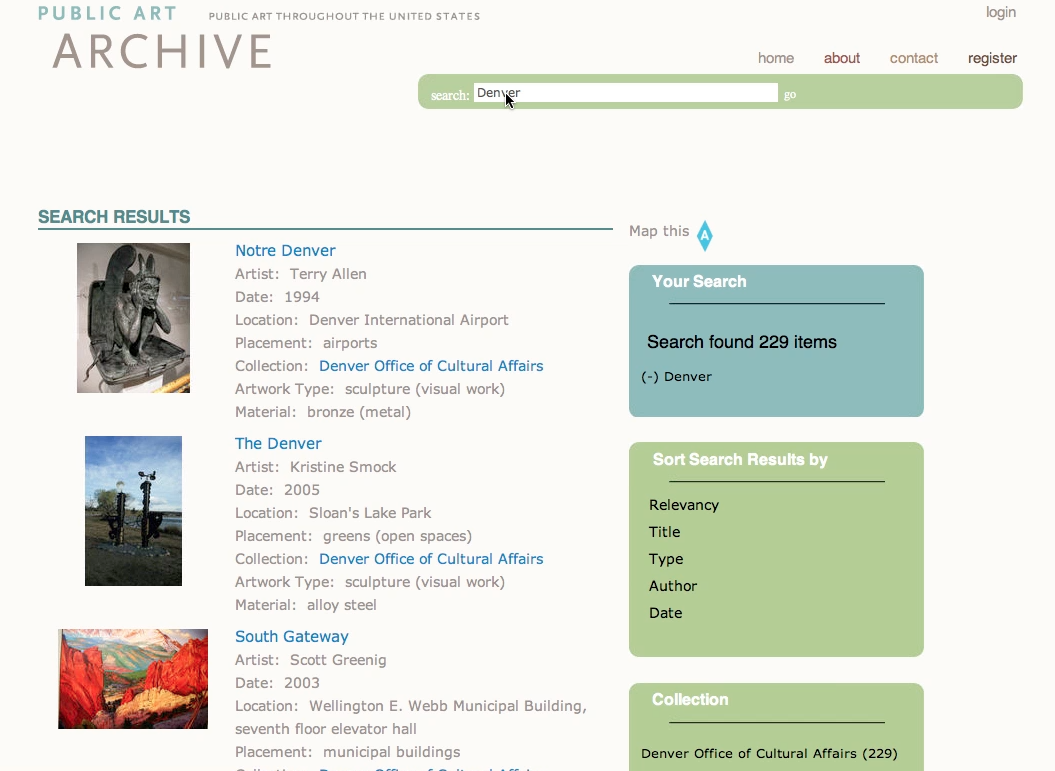
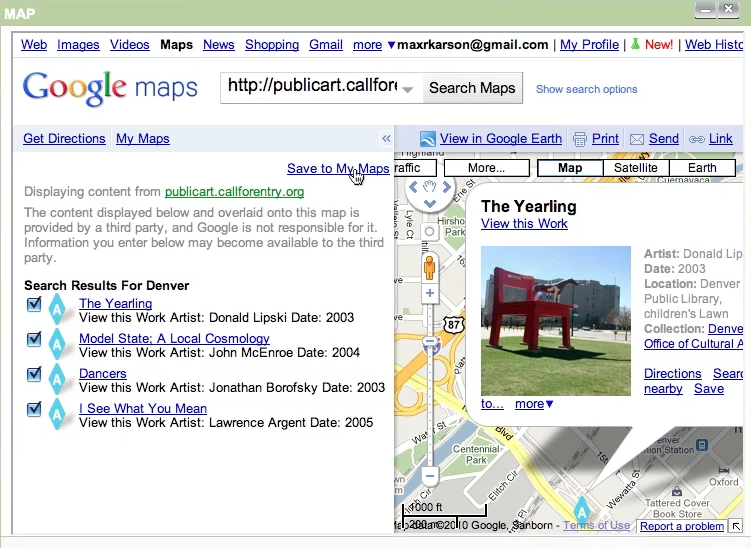
 Sharing information and digital media about public art has never been an easy task for arts administrators. The
 Researchers from Georgia Tech University recently published their first annual
 For arts organizations, this could lead to new levels of advertising, event management and customer service, but it will also require new levels of tech savvy and strategic media planning. Data is powerful and no organization wants to be on the wrong side of a filter.

 MARYANN DEVINE: At that time, the desire to reach a younger, new audience was usually the primary reason for branching out into social media. Most groups assumed that their older, traditional audience wasn't online, much less using social media, and that belief is still prevalent today. However, most groups didn't get that social media spaces demand a different voice -- more personal, more human -- than the marketing and advertising materials they were used to producing. They were reaching for a fun, hip tone; but in most cases, like your parents trying to be cool, they weren't very convincing.

 BRIAN REICH: The age of the audience has never mattered as much to me, and the people I advise. Everyone's lives are influenced by technology -- and now the Internet. Adoption was consistent across different age groups, but the usage patterns were very different, and that was where my focus has always been trained. Rather than look at younger audiences and their willingness to do certain things online, I wanted to identify what opportunities were available in terms of engaging any audience and then advise organizations on what that means to their work, online and offline.
 In preparation for next week's webinar
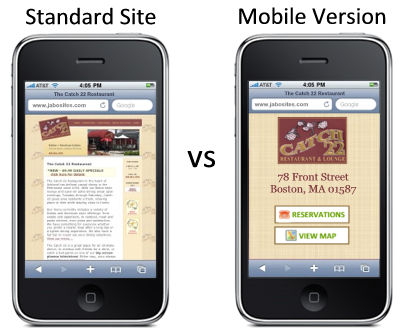
 The world of arts management is changing, as all industries are changing, with the proliferation of technology. Especially with the increasing popularity of online media, we as arts managers have had to reconsider the way we see our performances. Is online video footage merely a vessel for our product? Or is it, in fact, our product? Or, can it also be a means to an end?
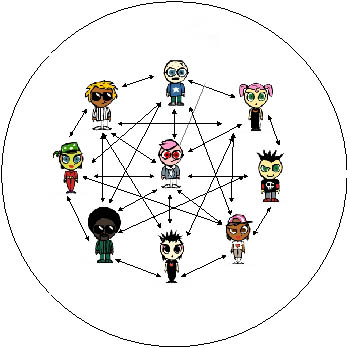 For years, I have heard the lament for the rise of “citizen critics” –individuals who use blogs, social networks and other social media tools to share their reviews of performances, exhibitions, films, etc. I have listened to a number of artists, directors, curators, and other arts managers bemoan the replacement of “true” cultural critics in traditional media with these self-published citizen critics. The complaints typically revolve around a perceived lack of credentials and lack of understanding for the discipline.

 In a world where we are bombarded with thousands of marketing messages every day, our society has grown hyper-aware (and hyper-wary) of advertising in all its mutated forms – from magazine ads to product placement in television shows, from celebrities dropping brand names during interviews to Facebook pages used solely to increase ticket sales. When it comes to using social media, motivation is a key factor in forecasting whether an organization’s efforts will succeed or fail.