




Making informed technology decisions means understanding the necessity, impact, and sustainability of the technology; the technology’s current 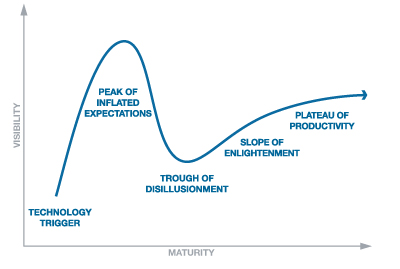 and future relevance to the industry; and how it supports the organization’s business goals.
When new technologies make bold promises, how do you discern the hype from what’s commercially viable? And when will such claims pay off, if at all? Gartner Hype Cycles provide a graphic representation of the maturity and adoption of technologies and applications, and how they are potentially relevant to solving real business problems and exploiting new opportunities.
With new technologies emerging overnight, early adopters tweeting about them by your morning coffee, and six beta invites in your inbox by your evening commute, deciding which technologies will pay off, which are relevant and which will last, is by no means a simple project. Gartner, Inc., a leading information technology research and advisory company, produces Hype Cycles to help clients differentiate the “hype” technologies from the viable technologies. These graphics, organized by industry and aggregated in the “Hype Cycle for Emerging Technologies,” provide clients with insight to the risk, opportunity, and viability of various technologies in specific industries.
"Hype Cycle for Emerging Technologies" targets strategic planning, innovation and emerging technology professionals by highlighting a set of technologies that will have broad-ranging impact across the business. It is the broadest aggregate Gartner Hype Cycle, featuring technologies that are the focus of attention because of particularly high levels of hype, or those that may not be broadly acknowledged but that Gartner believes have the potential for significant impact.-- Jackie Fenn, vice president and Gartner fellow, August 2011 Gartner press release
In the Hype Cycle, a technology’s life has five phases. These phases are (as defined by Garnter,Inc.):
Technology Trigger: A potential technology breakthrough kicks things off. Early proof-of-concept stories and media interest trigger significant publicity. Often no usable products exist and commercial viability is unproven.
Peak of Inflated Expectations: Early publicity produces a number of success stories—often accompanied by scores of failures. Some companies take action; many do not.
Trough of Disillusionment: Interest wanes as experiments and implementations fail to deliver. Producers of the technology shake out or fail. Investments continue only if the surviving providers improve their products to the satisfaction of early adopters.
Slope of Enlightenment: More instances of how the technology can benefit the enterprise start to crystallize and become more widely understood. Second- and third-generation products appear from technology providers. More enterprises fund pilots; conservative companies remain cautious.
Plateau of Productivity: Mainstream adoption starts to take off. Criteria for assessing provider viability are more clearly defined. The technology’s broad market applicability and relevance are clearly paying off.
Many Gartner clients use Hype Cycles as part of their technology-planning process, often drawing from multiple Hype Cycles, augmented with industry- or company-specific topics to create their own Hype Cycles and Priority Matrices. Technology providers use Hype Cycles as a way to understand the likely market reaction to their products and services based on the adopter community's expectations and attitudes. Investors watch for technologies that are on the rise in a Hype Cycle to try to catch them before the Peak of Inflated Expectations or at the beginning of the Slope of Enlightenment before they move into mainstream adoption. –Jackie Fenn
Gartner’s complete reports on technology trends and in-depth analyses of the Hype Cycles can be purchased online. But for now, take a look at the Hype Cycle for Emerging Technologies (as of July 2011):

To our followers across various industries--does or will this foresight affect your technology-planning strategy?

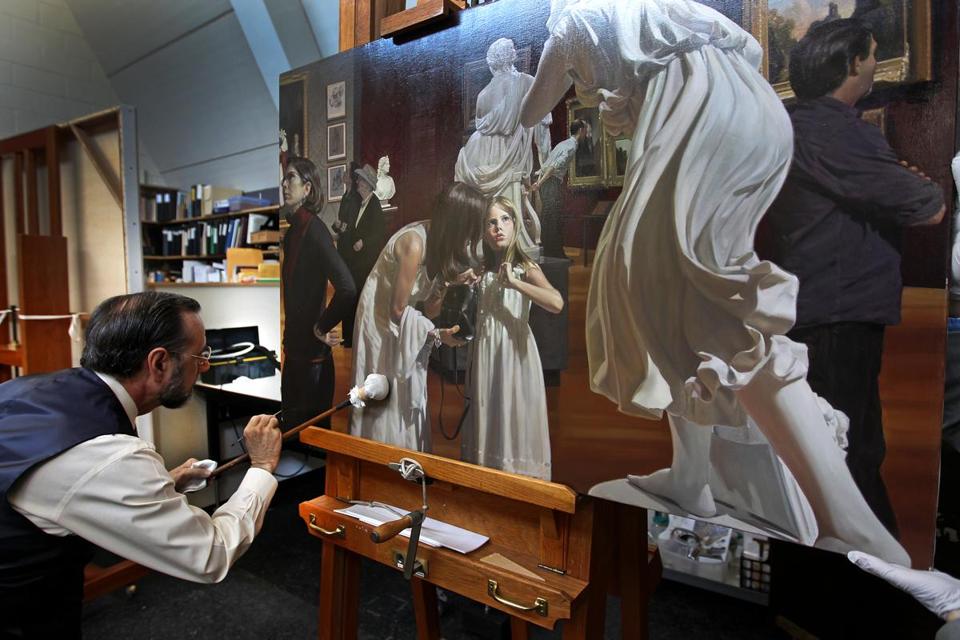
 The numerous civilizations of the past left behind numerous tangible traces of their heritage. Coveted or discarded, scattered or buried, broken or intact, these objects would soon become artifacts. Archeologists would study them, museums would acquire them, and the rest is none other than History. But what happens when the core activities of a civilization leave scarce amounts of tangibles? What happens when the pace of change is faster than that of preservation? We should start formulating a response, for this describes none other than the 21st century.
We live in an age of information, of which a substantial amount now exists online, but is constantly in flux. The Economist described this phenomenon in an article titled
The numerous civilizations of the past left behind numerous tangible traces of their heritage. Coveted or discarded, scattered or buried, broken or intact, these objects would soon become artifacts. Archeologists would study them, museums would acquire them, and the rest is none other than History. But what happens when the core activities of a civilization leave scarce amounts of tangibles? What happens when the pace of change is faster than that of preservation? We should start formulating a response, for this describes none other than the 21st century.
We live in an age of information, of which a substantial amount now exists online, but is constantly in flux. The Economist described this phenomenon in an article titled 
 The Arts Council England in partnership with the BBC created The Space as a way for people from all over the world to experience the country’s rich and dynamic arts scene. In effect, a summer of English arts to all! (Albeit without the English summer and its cool Constable Skies). So The Space is certainly something to look forward too because it will feature some of the UK’s best theatrical productions, dances, musical performances, art exhibits, poetry readings, along with content that has been specifically created for the platform.


 In 2011, the Nelson Mandela Centre of Memory partnered with Google to digitize and disseminate the archives of Nelson Mandela. The collaboration has resulted in a visually engaging timeline of Nelson Mandela’s life, populated with photographs, diary entries, letters, and excerpts from his autobiography. The site is worth a visit because it both explains and celebrates the enduring legacy of the South African statesman.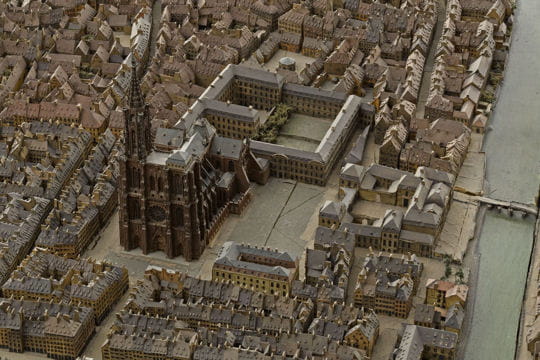
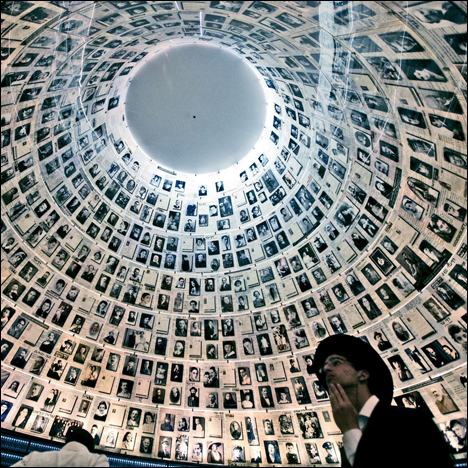 Google has helped digitize the vast archives of Yad Vashem, which is “the world center for documentation, research, education and commemoration of the Holocaust.” Through a technique called optical character recognition (OCR), Google has enabled families to search for both documents and images belonging to their relatives.
Here is an example given by Google: “To experience the new archive features yourself, try searching for the term [
Google has helped digitize the vast archives of Yad Vashem, which is “the world center for documentation, research, education and commemoration of the Holocaust.” Through a technique called optical character recognition (OCR), Google has enabled families to search for both documents and images belonging to their relatives.
Here is an example given by Google: “To experience the new archive features yourself, try searching for the term [



 The report also points to the possibilities of mobile giving with the introduction of Google Wallet and Card Case. Another fundraising initiative noted is Philanthroper, a start-up that helps raise funds for non profits via “an e-mail each day featuring a 501(c)(3) organization that subscribers can choose to support with donations of up to $10.”
 One of the examples noted in the report is