This article analyzes Ireland’s emerging position as a global cultural policy case study, focusing on the Basic Income for the Arts (BIA) program and its place within the national framework Culture 2025. While Ireland’s consensus-driven political system, strong arts advocacy networks, and history of support for artist income have enabled an ambitious, research-oriented basic income pilot, the article highlights deeper tensions within cultural policymaking. Drawing on Stephen Hadley’s concept of “cultural policy realism,” it argues that Ireland’s policies—despite their novelty—remain rooted in traditional, instrumentalist views of culture as an economic engine and national branding tool. By contrasting democratization of culture with cultural democracy, the piece situates Ireland’s model between innovation and reversion, emphasizing the need for sustained experimentation, critical evaluation, and more genuinely democratic approaches to cultural support.
This study advances Part II by translating Scopely’s strategy into an execution plan across three tracks - NPC innovation, intelligent monetization, and ethical LiveOps - supported by new evidence from a 1,159-response consumer survey, nine expert interviews (developers, influencers, and experiential professionals), and secondary industry research. Part I established the market context for AI’s disruptive potential and identified three priorities: live operations evolution, commerce optimization, and advanced player analytics. The goal of this phase is to pinpoint the highest-leverage AI applications that deepen gameplay engagement, convert payment resistance through demonstrated value, and safeguard community trust. Accordingly, Part II outlines actionable playbooks (context-aware NPCs and adaptive narratives), platform tactics (purchase-aligned mobile personalization and cross-play integration), and operational models (behavior-based matchmaking and transparency protocols) designed to drive scalable, technology-led growth while preserving the integrity of shared human play.
This study provides a comprehensive analysis for Scopely to enhance its position as a leader in interactive and mobile gaming, focusing on AI integration in live operations, in-game commerce, and player analytics. The research reveals the urgent need for gaming companies to navigate accelerated AI adoption and evolving player expectations for personalized experiences. The goal is to identify the most impactful AI applications over the next three years and strategies that maximize engagement and monetization while maintaining player trust. Significant to this goal is balancing innovation with ethical considerations, including data privacy and transparency, while recognizing AI's potential to enhance storytelling and create immersive experiences. Employing a mixed-methods approach with industry interviews, a survey of over 1,000 U.S. gamers, and secondary research, Part I establishes the foundation for understanding AI's transformative impact - setting the stage for Part II's empirical findings and strategic recommendations.
A daylight robbery at the Musée du Louvre in mid-October resulted in the theft of eight priceless pieces from the French Crown Jewels housed in the Galerie d’Apollon. The incident now serves as an in-depth analysis for arts leaders globally to confront not only external threats, like highly organized professional thieves, but also the complex, internal risk of compromised staff and the urgent need to re-evaluate their security posture, technological investment, and institutional accountability.
As immersive technologies redefine the live concert experience, artists and virtual idols alike are transforming how audiences engage with music. From Hatsune Miku’s “holographic” performances powered by projection and LED technologies to VR concerts by creators like BlackGryph0n and Gorillaz, extended reality (XR) is blurring the lines between physical and digital performance. This article explores the evolution of Vocaloid software, the artistry behind digital concerts, and the growing influence of augmented and virtual reality in live music. As AR and VR become more accessible, musicians and fans alike are discovering new ways to connect—reshaping what it means to perform, attend, and experience music in the digital age.
During last week's Arts Marketing Blog Salon, Mary Trudel advocated connecting with audiences via mobile technology. CTIA, the international association for the wireless telecommunications industry, recently revealed that mobile phone market penetration in the United States reached 93% for the nation’s total population in June 2010. With usage numbers like that, there is no doubt that arts organizations should be investing in mobile engagement.
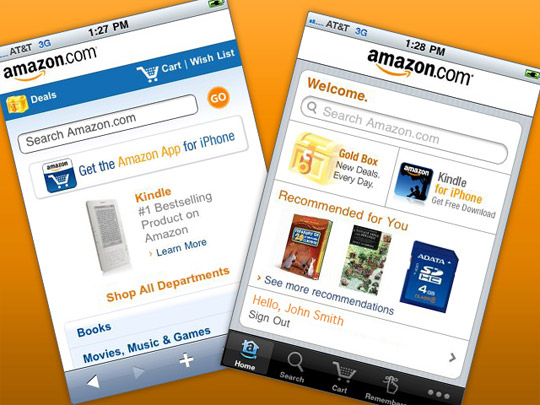
Amazon can afford to have both an app and a mobile site.
But which should you choose if your budget is more limited?
The dilemma lies in whether to invest in a mobile website or a mobile application. If your organization’s budget allows you to invest in both, then you need not read any further. Congrats! However, if your organization’s budget dictates that you choose between investing in a mobile website or a mobile app, then here are some things to consider.
User base: While 93% of U.S. residents have mobile phones, the U.S. market penetration for smartphones is 31%. This means that 62% of the U.S. population uses mobile phones for which they cannot download mobile applications.
Connectivity: Whereas mobile websites require users to be connected to the internet, many mobile applications do not require an internet connection once they have been downloaded to your smartphone. This may be important for patrons who are trying to engage with your organization but are in an area where wireless service is not available.
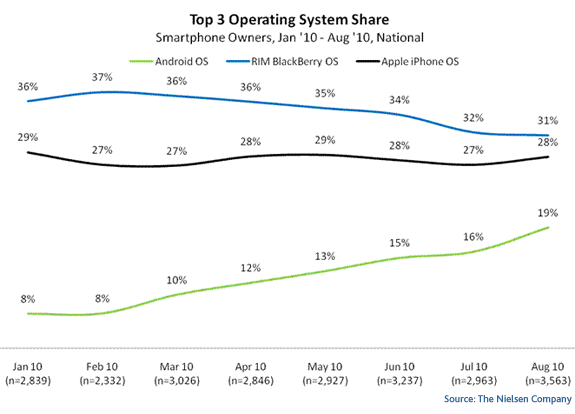
Platforms: Mobile websites are accessible from all types of mobile devices. Mobile apps, however, are tied to specific types of devices. For example, a patron with an Android smartphone cannot use a mobile app designed for an iPhone. Now, you may be saying to yourself, “Yes, but iPhones are the most popular smartphones on the market, so we should just design apps for iPhones.” If so, then you will be surprised to learn that Blackberry has 31% of the U.S. smartphone market share compared to the iPhone’s 28% and Android’s 19% according to The Nielsen Company.
Price: Mobile websites are less expensive than mobile apps, because they usually lack the design elements and functionality that make mobile apps interactive and appealing.
Expectations: What do your patrons want from their mobile experience? Have you asked them? If your patrons simply want information (hours, directions, descriptions of work, etc.), then a mobile website is entirely sufficient. If you are looking to provide your patrons with an interactive, one-of-a-kind mobile experience, then you’ll need an app for that.
In a recent New York Times article, Edward Rothstein took a look at a number of mobile apps developed by museums and concluded:
I have used museum apps to help me navigate museums. But I have generally felt used along the way, forced into rigid paths, looking at minimalist text bites, glimpsing possibilities while being thwarted by realities… It is best to consider all these apps flawed works in progress.
In a response to Rothstein’s article, Brooklyn Museum’s Chief Technology Officer Shelley Bernstein shared:
I had mixed feelings about the article – I mostly agree that these apps all leave much to be desired, but I disagree that we shouldn’t be trying. Experimentation without perfection is a good thing…Each and every visitor walking in our doors is likely to expect something different from an app, and every visitor is going to respond differently to what we provide. My point is that it is our responsibility, collectively, to try new approaches and provide as many entry points into content and the museum as possible.
So, mobile website or mobile app? Personally, I believe that a mobile website should be phase one in any arts organization’s mobile engagement plan. Okay, I hear you asking, “Why? Won’t the phone’s browser just show my desktop website?” The best way to answer that question is to try it.
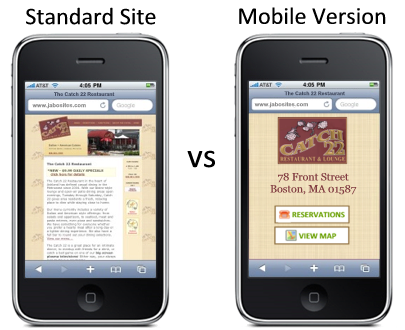
Go ahead. Take out your phone. Go to the menu, and select the internet option. At the prompt, enter your organization’s web address. Try it on several different devices. You will quickly notice that your standard website looks unusable on every phone. The one exception to this may be an iPhone, but even it will require the user to point, pinch and slide their way to your information.
Even if you have an iPhone, standard websites are not as easy to navigate as mobile sites.
Mobile websites are designed and optimized with the mobile user in mind. They cut to the chase and present content that is relevant for mobile users. They present the content in a way that is optimized for mobile phone screens. But most importantly, mobile websites allow your patrons to access pertinent web content from any mobile device – not just an iPhone.
Still not convinced that your arts organization needs a mobile website? Morgan Stanley’s global technology research team recently released a report projecting that mobile internet usage will surpass desktop internet usage in 2014. If you do not have a mobile website, then the steadily increasing number of internet users who attempt to access your information via mobile devices will get the wrong content, presented in the wrong order, with a slow and costly download, and with an ill-adapted layout.
Don’t let this happen to your patrons. Even if you do not have room in your budget for a custom-designed mobile site, there are a number of resources available for converting your current website into a mobile-friendly site.
The world of arts management is changing, as all industries are changing, with the proliferation of technology. Especially with the increasing popularity of online media, we as arts managers have had to reconsider the way we see our performances. Is online video footage merely a vessel for our product? Or is it, in fact, our product? Or, can it also be a means to an end?
Many see social media and its democratization of internet content as the tool that will restore relevance to the arts, which critics claim is no longer present.
In recent weeks, we’ve seen changes in the social media landscape that make the issues surrounding performance footage all the more relevant. Twitter is adding video embedding capability. YouTube will soon be able to handle streaming video for content partners. These are signals of a trend that is already in progress—a movement of online video footage becoming not only accepted, but commonplace. Like it or not, online video is here to stay.
It was for this reason that I assembled a panel of experts on the rise of streaming video, and its interaction with our union relationships to speak at the NAMP Conference this November. It will be an opportunity to talk about the challenges that we face, as an industry, when it comes to video footage.
As an employee of an arts service organization and an arts management student at Carnegie Mellon, I’m in a unique position to examine performance footage in social media. Instead of having a vested interest in what would be best financially for a given organization, I can look at what is best for the arts industry as a whole and where the industry stands on these issues.
Over the past year, I’ve been looking at intellectual property issues as they pertain to performance footage. This research will culminate in an upcoming white paper for the Center for Arts Management and Technology. I’ve talked to unions, I’ve talked to organizations, and I’ve talked to artists. It’s fascinating to listen to their positions and how they perceive “the other side.”
Artists sometimes view online distribution of performance footage as a sort of Pandora’s Box: releasing their performance footage means relinquishing control of it and monetization of the content. They see organizations as trying to take advantage of their skills, or reducing the value of their work. Although they understand that organizations are struggling, they are struggling, too.
Organizations, on the other hand, are struggling with the realities of the economic downturn, as well as a decrease in newspaper circulation and in the general effectiveness of advertising in traditional media. They see new media as a lifeline, and take it on in order to secure their organization’s future. Some perceive that artists don’t equate saving the organization with saving the artform and the artist’s own career. This assumption leaves them puzzled and unsure how to proceed.
Although these positions seem diametrically opposed, both artists and organizations have common interests. In choosing and chatting with my panelists, who come from all different disciplines and affiliations, it seemed like there might be some fundamental conflicts between them. However, during our first conference call, I was amazed at how willing we were to listen and how much we genuinely wanted to understand each other’s viewpoints.
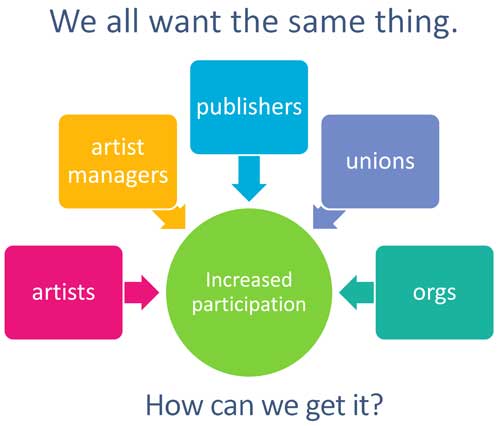
More often than not, I’ve found that we are all striving for the same thing—increased attendance, our own ensured success, and in turn, a bright future for the arts in America—we sometimes just have different ways of going about it.
This post originally also appears as part of the Arts Marketing Blog Salon hosted by Americans for the Arts.
For years, I have heard the lament for the rise of “citizen critics” –individuals who use blogs, social networks and other social media tools to share their reviews of performances, exhibitions, films, etc. I have listened to a number of artists, directors, curators, and other arts managers bemoan the replacement of “true” cultural critics in traditional media with these self-published citizen critics. The complaints typically revolve around a perceived lack of credentials and lack of understanding for the discipline.
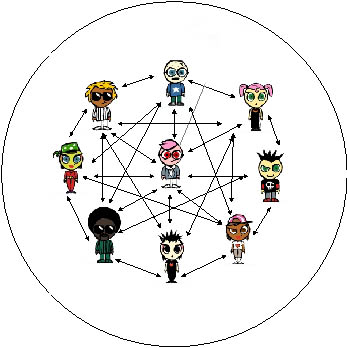
While I, too, bemoan the loss of criticism in much of today’s traditional media, I must point out that citizen critics are not new. In fact, they have been around for as long as there has been art about which to have an opinion. To be blunt, we are all citizen critics. Have you ever told someone your opinion about a work of art, a concert, a performance, etc.? Of course, you have. We all have. And more of us are sharing our opinions with each other (and the world) thanks to rise of the social Web.
In August, a brouhaha erupted online between two bloggers and an actor from Canada’s Teatro la Quindicina in Edmonton, Alberta after one of the bloggers wrote a critical review of a play in which the actor appeared. Aside from serving as a case study in how NOT to deal with citizen critics, this online fracas brought to the surface a disdain held by many artists and administrators.
The reality is that citizen critics are not going away. So rather than lash out at them or quietly complain about them, why don’t we identify ways in which our organizations can cultivate them?
Theatre blogging is a niche pursuit. But then going to sit in a darkened auditorium and watch people speak – or in the case of opera, sing – someone else’s words multiple times a month (or some times a week) is also a niche pursuit. The internet, in all its multifaceted joy, allows a niche to flourish. Like attracts like (or compels like). It not only cements tendencies (that of reading about theatre, of continuing going, of knowing more than you could ever keep in your head), it also allows tendencies to grow. Knowing there is a community of people out there doing the same thing – theatre-going is a tribe as much as anyone else. Of course not all repeat theatre goers blog but, in 2010 with the ease of Google, I’d be surprised to find a repeat theatre-goer (who wasn’t directly involved in the industry*) who had never read a theatre blog. These people – the people whose names might otherwise be simply one in a marketing database – should be hugely valued (and respected).
How can you embrace citizen critics? Here are a few initial ideas to consider:
Send press releases optimized for social media to citizen critics whom you’ve identified in your community.
Host “meet-ups” for local online critics, where they can interact with each other as well as directors, performers, writers, curators, etc. There are proponents of hosting these “meet-ups” prior to the artistic experience and others who prefer to host them as follow-up events.
Draw inspiration from programs like the Broward Center for the Performing Arts’ Teen Ambassadors and encourage young audience members in your community to write reviews and share them with their peers through online social networks?
During intermission, encourage the audience to pull out their mobile phones and send status updates or tweets with their impressions of the performance.
Consider using tools like Talkbackr to actively encourage your audience to provide you with feedback.
In a world where we are bombarded with thousands of marketing messages every day, our society has grown hyper-aware (and hyper-wary) of advertising in all its mutated forms – from magazine ads to product placement in television shows, from celebrities dropping brand names during interviews to Facebook pages used solely to increase ticket sales. When it comes to using social media, motivation is a key factor in forecasting whether an organization’s efforts will succeed or fail.
With motivation, I’m talking about the “why” not the “what.” Often we confuse the question “why are you using social media” with “what do you hope to achieve with social media.” Our answers tend to revolve around increases in attendance, ticket sales, registrations, donations, etc. Many of us mistakenly perceive our desired outcomes as the reasons motivating our social media participation.
I say “mistakenly,” but for some people there is no motivation for using social media beyond increasing the bottom line. Now, I know it is counterintuitive for me to proclaim this, but here goes. Social media sites are not marketing tools, they are engagement tools. (Wait! Don’t call me a heretic yet.) When social media sites are used with a motivation for engagement rather than self-promotion, they often lead to those desired marketing outcomes of increased sales and brand awareness.
When I think of social media superstars like the Brooklyn Museum, what stands out for me is the sincerity of their motivation. I truly believe that the Brooklyn Museum cares about community and the visitor experience. Why? Because they walk the walk. Very rarely do I receive blatant marketing messages from them through my social media accounts. Instead, I receive interesting content related to current exhibitions and the permanent collection, as well as opportunities for me to connect and interact with others who share my interests in the museum.
Okay, I’m as cynical as the next guy. So I know some of you might be thinking, “Yeah, right. Don’t be fooled, buddy. They want to increase the number of attendees as much as any other museum.” Of course they do, but that is not “why” they chose to pursue building and engaging audiences through social media. It is, however, an outcome of their efforts.
Online collective buying platforms Groupon and Living Social have taken the Internet and local markets by storm. Each day both companies feature deals on a wide variety of products and services across the country that consumers can opt-in to purchase. These daily deals are exclusive to certain areas and are not available in some local markets. Since both companies publicize their daily discounts and offers via extensive email lists, loyal Twitter followers, mobile phone apps and Facebook pages, there is an unprecedented opportunity for local businesses to reach and engage new audiences.
Groupon and Living Social have made quite an impact in the arts and cultural sector, as a wide array of organizations across the country have run online discount campaigns. Chicago’s prestigious Joffrey Ballet, Arlington Arts Center, the Carnegie Museum in Pittsburgh, Port Discovery Children’s Museum in Baltimore and the Pittsburgh CLO are only a few examples of such organizations.
The rising popularity of Groupon and Living Social among arts and cultural organizations raises a number of questions about incorporating these services into arts marketing strategies. While bloggers Chad Bauman and Drew McManus have both explored some of the benefits and drawbacks of using online discount services, I decided to pose a few questions to cultural organizations who have used these services.
Can this service be useful for reaching new audience members?
If so, how can organizations efficiently track these new customers?
What if current subscribers and regular audience members decide to take advantage of these lower ticket prices?
Or what if current subscribers resent that others purchased their subscriptions at a substantial discount?
Could online discounting actually backfire and decrease revenue?
Most of the arts and cultural organizations I approached with these questions evaluated their online discount campaigns to be successful. None reported a significant loss in revenue and most reported that the majority of their Groupon & Living Social customers were entirely new to their organizations. Those that had a positive outcome tended to carefully track customers by collecting their information during the ticket redemption process and entering this information into their database.
Mairin Petrone at the Pittsburgh Irish Festival reports that their recent Groupon campaign resulted in almost 700 people purchasing tickets for the festival.
The Pittsburgh Irish Festival initially decided to use Groupon because of the PR we would receive and because we love to get tickets sold before our festival even starts. When approached by Groupon, it seemed like we would be silly not to take advantage of an e-blast that would go out to almost 100,000 people in and around the city of Pittsburgh and cost us next to nothing. Our hope was that we would reach people who wouldn't have otherwise heard of the festival. I would evaluate our Groupon campaign as successful.
Similarly, Pittsburgh CLO's Cindy Opatick had positive feedback on using Groupon.
Since the CLO Cabaret only seats 250, it is hard to get word of mouth going on a new show and a title that may not be familiar in the marketplace. The Groupon offer has allowed us to get a larger audience in the first week of a show, which in turn helps with word of mouth for the run of the show.
Although most of the organizations I contacted reported using Groupon to run online discount campaigns, Living Social is proving more viable for organizations who want more flexibility in their marketing. Here is a quick comparison of both platforms:
Demographic Category
Groupon
Living Social
Gender
77% Female
60% Female
Age
68% 18-34
36% 18-34
Education
50% Bachelor’s Degree 30% Graduate Degree
44% Bachelor's Degree 15% Graduate Degree
Income
29% $100,000+ 19% $70K-$99K 21% $50K-$69K
32% $100,000+ 36% $60K-$100K
Groupon
Living Social
Exclusivity Clause
:
Can’t run any other deal on similar websites (Living Social) for 90 days
No exclusivity clause
:
Organizations are free to use other services while running a Living Social Campaign
Can’t change the fine print
:
Groupon employs a staff of 70 writers to create the text of all its group deals.
More Flexibility with ad content
:
Living Social is generally more flexible about what organizations can include in the fine print and ad content
Lower Revenue?
Since tickets are offered at a steep discount, it’s quite possible to lose money from people who might have paid full price.
Lower Revenue?
Generally the same drawbacks as using Groupon. Living Social typically only offers deals that are a minimum of 50% off the current price for a company’s services or products
Costly to Businesses?
Groupon takes a cut of all products or services sold although there are no upfront costs associated with running a campaign
Costly to Businesses?
Living Social also takes a percentage of all products or services sold. Also no upfront costs associated with running a campaign. Businesses receive a pre-paid check for all customers who bought 10 days after the promotion is finished
Even though both platforms have their drawbacks, there is overwhelming evidence to indicate both do a stellar job of reaching the ideal arts consumer demographic and compelling them to action. Jack Fishman, President and CEO at San Antonio Symphony, points out that traditional advertising channels like newspaper and radio are not nearly as effective as they once were in reaching and compelling arts consumers to action. In fact, 86% of Groupon's clients believe the service to be more effective than print advertising, while 94% evaluate it as more effective than broadcasting advertising.
Since online collective buying platforms are relative newcomers to the scene, it will be interesting to see if more arts and cultural organizations adopt these tools into their evolving marketing strategies and online mass discounts will contribute to sustainable audience growth over time.
With all of the buzz around Groupon lately and reports that Living Social is an up-and-coming alternative, we want to take a moment to find out which services our readers are using to promote discounts online for arts and cultural offerings?
How to Make the Most of Your Facebook PageTuesday, October 19, 2010
2:00pm-3:30pm Eastern
Register today for $25
Presenters: Maryann Devine and Jacquelyn Kittredge
You've probably heard a lot about Facebook in the media this past year, and you may have a lot of unanswered questions. You may be hesitating taking the plunge, for a variety of reasons -- it takes too much time or loss of brand control, for example.
In this webinar, you'll learn:
Why you should consider creating a Facebook presence for your arts organization, even you've already got a great web site or blog, even if you're using other social media tools like Twitter.
Why it DOES make a difference whether you create a personal profile, a group, or a page on Facebook.
Why your organization may be invisible even to fans of your Facebook page, and what to do about it.
Why it's important to engage with your Facebook fans -- beyond the usual clichés about 'conversation' -- and how to do it.
What is a 'landing tab' and why it gives you an advantage.
How it's possible for even the smallest organizations to use Facebook applications like contests and advertising without breaking the bank.
Maryann Devine is a teacher, blogger, and consultant who helps arts people and connect with their biggest fans. She was director of marketing and public relations at The Academy of Vocal Arts before starting her own company, smArts & Culture. There she has worked with arts organizations large and small, as well as individual artists, and created classes and e-courses especially for people in the arts who have little time to spare, but a passion to learn. She has taught audience development and technology courses for Drexel University's graduate program in arts administration.
Facebook maven Jacquelyn Kittredge created her company, e-bakery, to help small businesses mix social media into their marketing strategies. A consultant with a checkered past, Jacquelyn has been a programmer, corporate trainer, user documentation specialist, middle school teacher, and fundraising organizer (as well as a gift-wrapper and surf-shop chick!). Her teaching and training experience helps her keep the technical information people-friendly and easy to learn. To that end, she recently created the online course, "Facebook Contests for Arts Organizations." Formerly the Director of Marketing and the Chief Evangelist for a healthcare start-up company, VoiceCode.net, Jacquelyn lives in Alexandria, Virginia with her husband, one dog and their three (wild) boys.
Last week YouTube did a two-day test to preview streaming capability, a move that would place them directly in competition with streaming sites such as livestream, ustream, and justin.tv. Streaming capability was available to four select YouTube partners — Next New Networks, Howcast, Young Hollywood, and Rocketboom for two days. Like the existing streaming sites, YouTube will allow for real-time comments and, eventually, embedding in widgets and archiving old streams.
In all of YouTube’s communications , they only address giving this capability to their “content partners” anytime in the near future. YouTube content partners are people and companies that post regularly to the site and apply to YouTube in order to monetize their content with ads and rentals, obtain better quality for their uploads, and use YouTube’s Insight analytics tools. (Note: YouTube has a special program for non-profit partners. Check it out.)
Evan Rosenberg of Anaheim Ballet, a member of YouTube’s nonprofit program, produces the series “Anaheim Ballet: More Than Dance…” (See below for an excerpt.) He described the company’s hopes for its channel.
“YouTube has made it possible to not only showcase ourselves (Anaheim Ballet), but ballet in general to a global audience to the tune of over 24 million views. We look forward to using this additional tool (live streaming) in our continuing effort to spread the art of ballet across cultural, age, and economic boundaries.”
What are the implications for performing and performance arts organizations as streaming video becomes more and more ubiquitous? As a company or an artist, live performance is our product. Thus, we have faced issues with online video platforms since their rise in popularity:
We wonder if capturing that artistic product and distributing it online dilutes the aesthetic appeal.
We wonder if we should side with our artists and unions who deserve credit, payment, and a future in their industry, or with the insistent board member who says we must post video to capture the elusive younger market segment. We wonder if these interests are indeed in conflict.
We wonder if it cannibalizes box office revenues. And we wonder if we should give our audience members more credit; we know the difference between live performance and video, and so do they…right?
Online video is here to stay. This announcement is one more step in a long staircase of live streaming video becoming the norm. Fifteen years ago everyone had to have a website. Four years ago everyone had to have a Facebook page. Last year, everyone was going to mobile apps. With YouTube’s announcement, it’s easy to see performance footage moving from the movie theatre and the ballpark to laptops, phones, and iPads.
Amelia is working on a follow-up to her article from last year on the London Symphony Orchestra's use of their interactive, online season brochure. While her follow-up will focus on the success and challenges that the LSO faced with this pursuit, we wanted to check in with our readers to see how you are sharing your season brochure information with your online visitors. Please, take a moment to respond to the following poll:
Welcome to the first installment of the Social Media Spotlight, our monthly feature focusing on arts organizations’ social media strategies.
Vancouver Opera’s social media presence, headed by photography/fashion buff and technology maven Ling Chan, goes where few opera companies have gone before. In order to achieve their goal of increasing brand awareness and facilitating two way communications with their followers, the $9 million opera company has launched initiatives like manga (a traditionally Japanese style of comic) and an annual animation contest, for instance. Currently on the company’s blog is a serial feature written in the voice of the main character of their world premiere opera, Lillian Alling.
Vancouver Opera takes ideas that many non-profit arts companies might deem risky or unsustainable and, through a combination of sheer creativity, thorough execution and diligent tracking, have made the Vancouver Opera social media sites vibrant, interesting, and unique.
Social Media Manager Ling presented her work this summer at the Opera America Conference. I caught up with her to chat:
Everything in the Vancouver Opera social media presence looks so vibrant. When you first set out, what were your goals for your organization and your audience?
Thanks! Vancouver Opera is a vibrant and innovative company that loves to engage with our community. When we first started out with social media, our goal was to put a face on the organization as well as increase awareness of the art-form of opera through educating and entertaining our tech savvy, minimally to moderately engaged supporters.
Vancouver Opera was one of the first arts organizations to really use social media tools. From the start, we were committed to reaching the next generation of opera lovers using the media of the times and integrating it into our marketing/PR mix.
Your summer blog features keep your readers captivated during Vancouver Opera's off-season. Tell me about Opera Mania 101 and the other summer blog features.
During the summer months, we needed to come up with ways to keep our followers engaged, so we came up with some regular features for the blog.
• Operamania 101 is a feature I came up with and thought would be helpful for the opera-curious. It’s opera education from a pop culture perspective. Everyone’s heard snippets of opera in movies, TV shows, cartoons and commercials and yet people might think they don’t know opera. They are more familiar with opera than they think.
Some other blog features have included:
• Bizarre Opera Videos where we post odd, unusual, or notable performances of opera found on YouTube.
• Tuesday Trivia where we come up with opera themed quizzes.
• Top Ten Lists where we invite readers to vote for their #1 choice. For example: Top 10 Villains, Top 10 Opera Tearjerkers, Top 10 Fantasy Operas
• Other features: 20 Questions with an Artist, Everyone’s a Critic, Lunchtime Poll, Opera Props
Lego Carmen, one of the "Bizarre Opera Videos" posted by Vancouver Opera to keep interest in opera during the summer months
You have a background in photography. Was this the impetus for Flickr Fashion at the Opera? What are the goals of the program and what inspired you to create it?
I love taking pictures and I have always had a passion for fashion. I went to fashion design school years ago and worked as an assistant stylist on a couple of magazine and music video shoots.
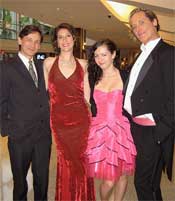
While working down at the theatre during Eugene Onegin in November 2008, I couldn’t help but notice how many young people went all out, dressing themselves “to the nines” for our operas. It wasn’t all just formal wear either. Our audiences mixed dressing up with elements of street, punk and preppy fashion, bringing a whole new flava to the world of opera.
The people who dressed up for our operas inspired me to come up with Fashion at the Opera, which you can find on our Flickr.
Describe Blogger Night at the Opera. How did it engage new audiences? Did it show an increase in sales?
Our very first Blogger Night at the Opera was in January 2009 for our Carmen opera. A prominent local blogger named Rebecca Bollwitt, aka Miss 604, came to our Eugene Onegin that previous fall and she ended up blogging about the experience on her own personal blog. We got to talking and she suggested we coordinate a blogger night, which we did and it has since became so wildly successful that other opera companies started calling us to find out how to set it up for themselves.
We invited bloggers who were opera newbies to join us, blogging pre-show and during intermission their thoughts on the opera and the whole experience of being at the opera. We gave them backstage tours and also invited them to mingle with cast, staff and guests at the post-show party on opening night.
We live streamed their web links on our VO blog, so that our readers can follow along in real time. This was great exposure for us and a way of getting the next generation interested in opera. Most of their readers have never been to the opera. But after reading about Blogger Night at the Opera, they became excited about our operas and what we’re doing with social media and bought tickets to the next performances. I had a few of them seek me out on the theatre floor to tell me they were here because of Blogger Night at the Opera.
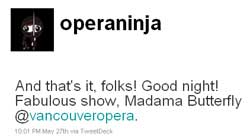
What's Opera Ninja and how did you come up with the idea? How do other people in the organization feel about giving control of their communications over to (basically) a volunteer?
Opera Ninja evolved from Blogger Night at the Opera. We had blogger night on Opening Night. What should we do for dress rehearsal? We came up with Opera Ninja March 2009 for our Rigoletto dress rehearsal.
It was inspired by Welsh National Opera when they tweeted 12 hours in the life of the Welsh National Opera's The Marriage of Figaro, including a live relaying of the performance (also translated into Welsh).
On our dress rehearsal nights, the Opera Ninja would live tweet. Followers were engaged with seeing an event unfold and have an insider view of what was going on behind-the-scenes. The tone of Opera Ninja is cheeky, fun, irreverent. We didn’t necessarily want it to be a play-by-play of what was happening on the stage. Instead it could be the Opera Ninja’s reactions to what was going on. Our followers have found this entertaining and fun. They would add comments and also re-tweet our tweets to their own followers.
I was the original Opera Ninja but have since invited our bloggers to take on the character in their own voices. I give a lot of freedom to our Opera Ninjas in what they tweet because I trust them. They are high-profile and active Twitter users. They know the etiquette, the advantages and the drawbacks of Twitter. They understand that they can have fun as the Opera Ninja but as they’re also representing VO for the night, they have to be professional too.
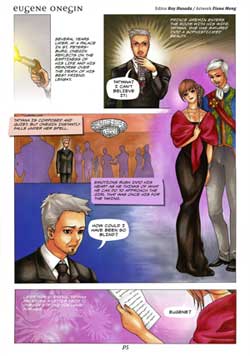
Vancouver Opera has started publishing manga, a comic book based on the opera. Manga is sort of an unusual foray for an opera company to take. What inspired you to take the stories of operas to this new medium?
It may sound like a strange combination but the partnering of opera and manga has worked extremely well for us. We were approached by Vancouver artist & editor Roy Husada of Rival Schools four seasons ago with the idea of “manga-nizing” our operas. It started out in black & white and written in Japanese, but has evolved into colorful mangas in English. The mangas are eye-catching and it helps give readers an idea of what the opera is about, thus sparking their interest in coming to the opera. Our mangas have proven to be very popular with our followers.
By my count you have at least four Twitter accounts for Vancouver Opera. Why? What are the advantages to have many accounts? And how do you track and get a good picture of your audience?
We have 4 Twitter accounts:
1. Vancouver Opera which is our main Twitter account where I tweet daily. It's the one with the most followers and the most activity, so it’s this account where I keep track and measure all our questions, responses and re-tweets.
2. Operabot which was started for our Operabot contest, an animation contest for our Golden Anniversary season. Professional and student animators were challenged to create animated shorts of one of the four productions last year. The tweets posted to Operabot related to updates on the contest, the submissions received and any fun or wacky robots related links.
3. Opera Ninja – We wanted a dedicated Twitter account just for our exclusive “behind the scenes” tweeting during dress rehearsals.
4. Where’s Lillian – For our upcoming world premiere, we wanted to introduce our Twitter followers to Lillian Alling as she makes her epic North American journey from Ellis Island to the wilds of British Columbia. She travels on foot in search of a man named Josef. We have someone taking on the persona of Lillian Alling and tweeting in their own voice the adventures and hardships that the real Lillian Alling might have encountered. From these tweets, we hope that followers will become intrigued with Lillian Alling and want to come to the opera.
Each Twitter account serves a different purpose and we wanted to have a dedicated account for the audience who wanted just Operabot updates or just Opera Ninja updates. Also it frees up our main VO Twitter stream by not bombarding our followers with too many tweets or random-sounding trains of thoughts.
What have been the results of all of these programs for Vancouver Opera? Many times it is difficult to track the effects of social media programs. How have you been tracking your initiatives at Vancouver Opera?
Our social media initiatives have garnered a lot of positive attention from newcomers to opera, opera lovers, our peers in the industry and the media.
I track and report data to measure the impact of our social media efforts in various ways:
• Blogger – Google analytics, Like This / Tweet This buttons
• Facebook – analytics
• I use the Bit.ly shortener for our tweets to see how many people click on our links
• Through promo codes in our Tessitura software, I can find out how many tickets were purchased whenever a sales offer was put forth on our social media channels.
Any initiatives for the 2010-2011 season that you'd like to preview for us?
I have some exciting things planned but it’s a surprise. Everyone will just have to stay tuned to Vancouver Opera.
Has the spark gone out of your relationship with your audience?
Thursday, September 2, 2010
2:00pm-3:30pm Eastern
The Quick and Dirty: Making a VideoPresenters: Amelia Northrup and Corwin Christie
Register today for $25
Video technology is a cost-effective way to promote your work and engage your current (and potential) audience through channels that are widely accessed and have a broad reach. Arts organizations can effectively harness this technology to improve their visibility, attract new audiences, and find exciting ways to tell their story. This webinar will help you identify ways in which a video might best be used by your organization and discuss the tools you will need to physically produce and promote your video.
In this 90 minute webinar, you will learn:
Strategies for using online video - identifying the message as well as your goals for using video.
How to produce online video content in an affordable manner - assessing the available hardware and software to identify the best tools to meet your needs.
Case studies and best practices - examples of arts organizations currently using online video to promote their work.
PresentersAs the Web & Social Media Assistant at the Center for Arts Management and Technology, Amelia Northrup writes for the Technology in the Arts blog and has been featured on numerous podcasts. She has worked on numerous social media and multimedia projects with Kansas City Repertory Theatre and Wolf Trap Opera Company. Amelia is currently researching a white paper about the legal issues involved in the use of video footage from performances.
L. Corwin Christie graduated from Oberlin College before moving to Denver and founding a theatrical production company. Her work in development and marketing inspired her to attend Carnegie Mellon University's Arts Management graduate program. She recently worked as the Social Media Assistant at the Center for Arts Management and Technology, and is the current Marketing Director of Future Tenant Artspace in Pittsburgh.
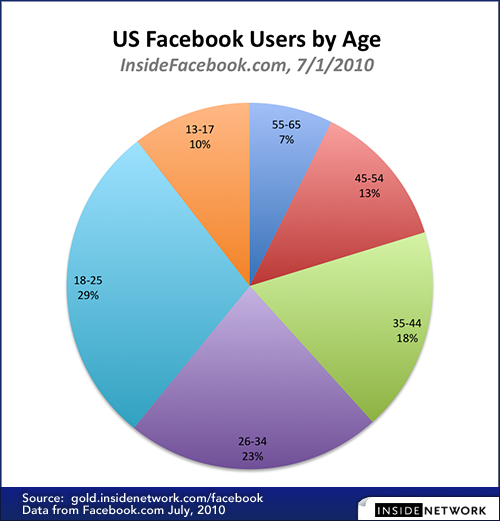
Reluctance to embrace social media as an appropriate avenue for reaching arts patrons has often been blamed on the demographics of the user base. Many people look at sites like Facebook and immediately write them off as platforms only representing a younger generation. Not any longer.
In 2010 educated adults over the age of 40 comprise the fastest growing demographic on Facebook, the age group 55+ grew by over 900%, and 40 million Facebook users in the US are now over the age of 40. This exposition of established professionals opens up the world of social networking even wider and begs the question: Are we properly using social media in the arts?
With 10 million Facebook users over the age of 55, Baby Boomers are staking their claim in the world of social media. This new demographic is college educated, professionally employed, and comprised of over 60% women. If that sounds familiar, you might be recalling the audience profile for the average arts patron in the U.S. The fastest growing segment on Facebook matches the traditional arts patron in the United States almost perfectly.
Other social media platforms have experienced similar growth outside of the traditional 18-34 age bracket. Currently users between 35 and 55 comprise the largest age bracket on Twitter. LinkedIn’s primary constituents are over 50 and MySpace continues its strong hold on original members now between the ages of 30 and 50.
These statistics along with the growing momentum around interactive websites, electronic outreach, and digital networking make social media the next frontier for audience development in the arts.
Innovations in social media within the arts have already sprouted around the country with great success:
Characters from plays now have their own Facebook accounts to entice theatre goers to interact with them before and after the show.
Interactive confession booths in galleries across the country load videos directly online for audiences to view and interact with.
Viral online marketing is playing a larger and larger role in making buzz around productions and increasing web traffic.
But is it enough?
We can look to Australia for a prediction. Australia adopted social media faster that the US, UK or mainland Europe, with the highest user rates per capita in the industrialized world and the highest percent of users over the age of 35. Arts organization in Australia use Social Media to interact with patrons before, during, and after performances/exhibitions.
In the article Geeks, tweets and bums on seats, Elissa Blake discusses the adoption of social media in Australia and its affects on the arts. In the article, she writes about a production of King Lear where a woman asked permission to tweet during the performance. When asked why she did so, her response was:
It's about sharing your emotions and your experience of the show. You might have a favourite scene or a line that you love and you want to share it instantly. I thought King Lear might be dry, but it was really interesting, and I wanted my friends to go and see it...
Many Australian arts organizations and artists see social media platforms as a way for audience members to interact with companies, individual artist and each other. This interaction builds new passions for attending live performances as friends that could not attend receive enticing updates through their Twitter feed. This free viral marketing increases audience participation and makes Australia a leader of innovation in social media for the arts.
Fee Plumey, the digital program officer at the Australia Council for the Arts stated:
If arts companies want to attract new audiences, they have to jump in and chat about the minutiae of what's going on, Audiences are not just interested in a celebrity on stage. They really want to know how the show works, how the set was made, how it was cast, who's doing the lighting and what goes wrong… [social media provides that outlet].
Australia is a great case study for how social media can affect the arts. Now it is time for the US to see how social media can be creatively applied in audience development within our own country.
Many arts organizations have experimented with using “trailers” to promote upcoming performances or exhibitions. But what if you don’t have the time, equipment, or expertise to film and edit a video? What if all you have are photos?
Enter Animoto, a free tool that lets you quickly create short videos using a combination of photos, text, and/or video clips of up to five seconds in length. You can choose background music from Animoto’s library or upload your own.
To try it out, I created this 30-second promotion for Misnomer Dance Theater's performance back at our 2008 conference. It took about 20 minutes, including the time I spent actually finding the photos on our Flickr account.
The process is a pretty straightforward drag-and-drop design. You can add text and choose particular images to “spotlight” with extra screen time. Once your elements are arranged, one click mixes them together into a flashy 30-second video.
Other than changing the order of your elements, though, you don’t have a lot of control over the final product. Because Animoto automatically mixes the elements together for you, there’s no opportunity to fine-tune individual transitions. This is great if you’re looking for something quick and easy, but it can be a real downside for the more detail-oriented user.
Throughout the process, there is a strong push to upgrade your account, which can get a little annoying. If you’re with a 501(c)3 organization, you can request a free Pro account (normally $250/year), which allows you to make full-length, high resolution videos that are downloadable. The Pro account also includes a commercial-use license.
What have you created with Animoto? Do you have other favorite video tools?
Check out Part I for an overview of the NEA’s recent report Audience 2.0: How Technology Influences Arts Participation
While Audience 2.0 gives some useful statistics on technology and media participation in the arts, the report does not provide the answers or the data that I am looking for regarding arts participation and technology.
How does arts participation through one technology affect participation in other technologies? For example, how does participating through television affect web participation?
What impact has social media had on arts participation?
How do people participate in the arts digitally and online? What are they doing on the web when they are participating?
Has participation in the arts via technology affected online giving to arts organizations?
Audience 2.0 draws into question the timeliness of national arts research, the vehicle being used to conduct this research, and the understanding of where arts audiences are heading in the future. This report was a useful audience analysis for 2008, but the survey upon which Audience 2.0 bases its analysis lacked a sense of forward motion as well as the ability to predict future arts participation through rapidly changing technologies.
The data used in Audience 2.0 was gathered three years ago before many current technologies were available and before many new technology users had invaded the digital market. In his blog post Back To The Future, onDanceusa.org,Marc Kirshner states that:
Since the beginning of the 2007 survey period [for the 2008 report]:
Four generations of iPhones have been released [and the Android network has been launched]
Facebook’s user base has grown from 20 million to 400 million users
The entire book publishing industry has been turned upside down by e-readers, such as the Kindle, Nook and iPad
Millions of set-top boxes, Blu-ray DVD and home theater PCs have connected televisions to broadband Internet
Hulu launched its online video service to the public
More than 300,000 people viewed simulcasts and encores of the Metropolitan Opera’s Carmen
The first 3-D network began broadcasting
The three year time gap between data collection and report publication created a lack of focus on many forms of new media and social networking platforms currently leading many technology discussions in the nonprofit arts industry today. Correspondingly, the relevance of the report in our current environment is brought into question, and we must remember that the reportrepresents a snapshot in time more than a study of current habits. Due to the speed with which technology advances and its usage changes, traditional forms of data collection and publication no longer appear as useful for tracking these trends.
The survey asks about participation in the arts through technology, but Audience 2.0 does not provide answers about specific actions and their effects. The survey does not ask participants if electronic and digital media makes them more or less likely to attend a live event, but the report draws based upon a perceived correlation in the participation data. Without causality data, this correlation leaves us with a “chicken or the egg” dilemma. Does electronic/digital/online participation in the arts lead to an increase in live participation, or are participants in live arts events simply more likely to participate in electronic/digital/online arts events?
I would like to see more direct questions being asked of people who responded that they participated in the arts through electronic and digital media. Obtaining this next level of understanding will provide us with a deeper understanding of the effects of electronic and digital media on arts participation.
Audience 2.0 raises more questions than it provides answers, but it does show a commitment on the federal level to assess the impact of technology on the arts. I am hopeful that future reports will delve deeper into the seemingly symbiotic relationship between technology and arts participation by focusing more specifically on the digital/online arts participant.
Foursquare is one of the newest social media platforms to be embraced in the last year and one of the most promising new applications for businesses. According to the website, foursquare is “a mobile application that is a cross between a friend-finder, a social city-guide, and a game that encourages users to explore their neighborhoods and rewards them for doing so.” The point of the application is to help users explore their surroundings, discover new things and share their experiences with others.
Foursquare uses micro-blogging similar to twitter and interfaces all of the check-ins (posts) with a virtual map. In doing this, users tag locations, businesses and events that they are currently attending for their friends to see and read about. It is a way to share knowledge, play a game and receive promotions and rewards from businesses simultaneously. Due to the mobile aspect of the application, most Foursquare users interact with the site through smart phone applications.
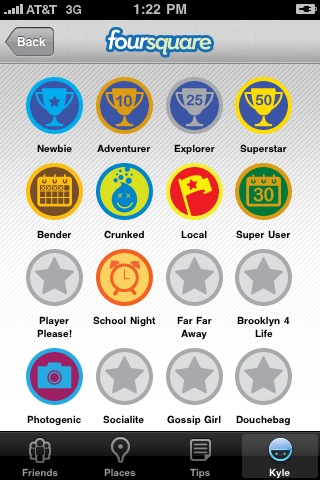
The game portion of Foursquare is what sets it apart from other applications that allow users to tag locations with their posts. In foursquare, a user gets points and earns badges for checking-in at different locations, the frequency of their check-ins and the uniqueness of where they travel. An example would be the Starbucks honorary barista badge. If someone checks into five different Starbucks locations, they become an honorary barista and earn the barista badge. Starbucks is tying this badge into their customer loyalty program and offering promotions and discounts to their honorary baristas.
Collecting badges has become very trendy in many urban settings and adds a fun aspect of competition to social media. Badges are just one option that Foursquare is offering for businesses to promote themselves on the site.
Many businesses are using:
Mayoral specials – specials unlocked by foursquare to the person who has checked-in most frequently over the past 60 days
Frequency specials – specials that are unlocked by foursquare to users every ‘X’ number of check-ins
Check-in specials – a one time special unlocked by foursquare after ‘X’ number of check-ins or for checking-in at a specific time or date
Wildcard specials – not managed by foursquare, but verified by the businesses staff
Once a business sets up an account with Foursquare and tags its location on the Foursquare map, users can click on the location to receive a brief description and a To-Do list. The To-Do list is a list of recommendation that the business and other user have provided for the location. A museum might add an exhibit, event or activity to their to do list along with whatever recommendations other users have added. This along with check-in based promotions adds a new level to social media marketing and community building technology for arts organizations.
How businesses can utilize Foursquare:
Tag the location and business on the Foursquare map
Add a brief description of the location to the map
Link twitter account to Foursquare to increase activity
Add items and recommendation to the To-Do list of the location
Integrate check-in and badge based promotions
Use Foursquare as a part of a customer/patron loyalty program
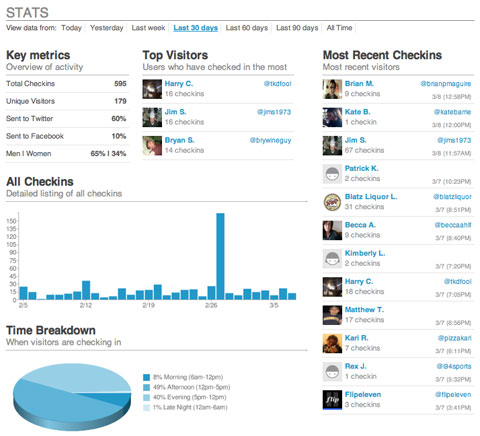
Foursquare is also providing an analytics system for businesses. Foursquare analytics has a personalized dashboard for each business that shows which users are checking-in at their locations most often, what time the location has the most Foursquare traffic, and how many check-ins are being linked to other social media plat forms. It gives a demographic breakdown of their Foursquare patrons and provides information such as total check-ins, total unique check-ins, and statistics based on daily, weekly, monthly and annual traffic. This type of data is priceless to organizations and adds a way to track profitability, return on investment, and patron use.
Foursquare is less than two years old and already has over 500,000 users. The integration of social media, entertainment and business prowess makes this company a very promising investment for the arts community. Foursquare has shown enormous potential and incredible growth. It has the possibility of becoming the next Twitter and is offering much greater potential for businesses to harness the power of social media while creating a new outlet for promotions, marketing, and community building.
Every good castle needs an opera company, or so the Savonlinna Opera Festival of Finland would lead you to believe. They have been performing at St. Olaf’s Castle in Savolinna, Finland since 1912. The festival took a 50-year Hyades between 1917 and 1967, but since its re-inception in the 60’s has been known for its cutting edge works and operatic premiers. Starting in their 2010 season they have decided to push the envelope of innovation even further.
The Savolinna Opera Festival is crowdsourcing an opera for its 2012 season through a new project: Opera By You 2012
They are asking the public to write an opera from beginning to end for their 2012 season. They want the world to create everything from the story, set design and costume design to the music and libretto. Savolinna is providing the performers, the crew, and an orchestra; the public is providing the opera.
To my knowledge this has never been done before in Opera and certainly not to this extent. The Savolinna Opera Festival is taking advantage of wreckamovie.com to host their crowdsourcing forum. The site was originally set up for crowdsourcing movies, but also seems to be working well for opera. The only major problem I could find was the lack of music sharing technology on the site. It is still not clear how the composers will collaborate on the score for the opera.
Currently, members are working on the plot synopsis for the opera within the online forum. There are ideas ranging from aliens to sea monsters and insurance salesman to princesses, a true amalgamation of creativity. The opera is still in its early stages of creation and nothing has been set in stone yet.
I was a little frustrated that I could not find any information on how they are going to decide which ideas to use. It is not clear from the website if the management is making those decisions or if the public is going to vote. I am personally a fan of putting as much ownership on the collaborators and public creators as possible. The idea that an opera company would forgo control and perform whatever the public wants to see is very exciting.
Opera By You 2012 has the potential to change the world of opera and set a new benchmark for the use of technology in the ‘high arts’. This project is breaking many of the stereotypes typically associated with this art form and opening opera to a much wider audience. Opera By You 2012 is not about tradition or ‘the classics’, it is about making new art and opening up an opportunity for the masses to interact with opera.
Technology is helping this arts organization reach out to the world and break down some of the barriers that keep many people away from the classical music realm. Crowdsourcing taps the collective creativity of everyone involved and creates a product that is not only designed for an audience, but by them. This type of innovation is what keeps the arts current in our society. It will be very interesting to see how this opera materializes and the impacts that it will have on the world of opera.
Roving arts management reporter, reporting for duty! I’m taking a brief break from my summer gig at Wolf Trap Opera Company to resume my TitA duties and re-cap the delights of the Opera America Conference this week in Los Angeles. Conferences are great places to exchange ideas. I always come away with a list of things to check out.
Here are a few great free tools on my list:
Box.net—Simple online file sharing. Can be used instead of a share drive, OR as a way to upload your season brochure for easy patron download.
Pitchengine.com-the social PR platform—Make fuss-free digital press releases with easy links to multimedia. No coding, no WYSIWYG editor screwing up what would otherwise be a reasonable task.
Twitalyzer.com- Does a slogan like “serious analytics for social relationships” take the fun out of Twitter? No way! Track your impact through hard data, not just anecdotal evidence.
Polleverywhere.com-create polls that audience members can answer via SMS text messages, Twitter, or the web. Some great advanced features for a little extra money, too!
[And I won’t assume you don’t know about Foursquare.com. If you’re not offering people who check in (or your “mayors”) something cool, look into it.]
And I must mention one that is not free (but cheap): Wildfireapp.com is ideal for setting up campaigns, coupons, and sweepstakes. Great way to capture data on your patrons.
Facebook’s privacy settings and the wave of controversy they caused have created a new level of user awareness when it comes to personal information on web-based technologies. The Palo Alto giant decided to roll out a new program where people were automatically opted in to share their personal information across the web that they had saved on Facebook. Facebook coupled this roll out with a poor explanation of what it was, who it was affecting, and how users could manage it. The convoluted privacy controls and constitutionality were hit hardest, but they were not the real problem in this case.
The actual problems here lie in communication and choice. I agree with Mark Zucherburger that a more open Internet is a better Internet and that the more people share, the more social the Internet will become. Unfortunately, sharing ones personal information needs to be a choice and users need to understand how and why they are sharing their information. “Because it’s good for you” is not an acceptable answer for most people.
Arts organizations in the US need to take this Facebook quagmire and use it as a case study for their own e-marketing and e-mailing policies. Communication and choice will lead to stronger web based support and a happier constituency.
Things arts organizations should keep in mind:
E-mail and e-marketing should almost always be opt in for supporters
Organization should explain why and how they will be contacting people
If possible, users should be able to customize what they receive
Opting in and opting out should be very easy and take little effort
Safety measures on how the organization will protect a users personal information and contact information should be clearly stated on the website and reiterated in the first e-contact
Opt in policies are generally the most effective and considered to be best practice. This is where Facebook made their fatal mistake and where arts organizations need to ensure they are excelling. Organizations only want people to receive information that want to receive it. By allowing people to opt in to programs, the organization is letting the individual take responsibility and targeting individuals who want more contact with the organization.
Once someone has opted in to e-marketing and/ joined the e-mail list for an organization, they should be able to choose what they want to receive information about. Maybe they only want information on ticket sales or a certain type of programming. Maybe they only want the annual report and education programming. Being able to customize what information they receive will help keep them more engaged with the organization and make them less likely to opt out or stop reading e-blasts.
Finally, people should feel safe giving an organization their e-mail address and personal information. With all of the information sharing, spamming and possibilities for profit, consumers are very wary of giving away any contact information these days. Post on your website and in the confirmation e-mail how you are protecting their identity and their personal information. These practices will help any organization build a strong e-mailing list and e-marketing campaign.
The Obama campaign, the Nelson Mandela Foundation, and The American Red Cross have all embraced electronic micro-donation campaigns as an effective tool in gathering financial and community support for their causes. The prominence of these cases and their rampant success provides the evidence necessary for arts organizations to begin adopting this new technology to enhance their current giving campaigns.
These organizations altered the traditional view of contributed income by looking at three hundred $10 donations as equal to and in many ways greater than one $3,000 donation. This logic has very little to do with the amount of money being given and much more to do with the amount of people giving it. Micro-donation campaigns are about involving as many people as possible and using their collective support to raise awareness as well as funds. They are not just about filling the coffers. They are about educating donors, building support, and cultivating future participation and giving.
A micro donation can be defined as a small gift usually given through electronic media and most often associated with the support of a cause, project, or individual. Point-and-click web based interfaces, e-mail, and SMS txt messaging are the most popular and effective platforms.
Reasons to start a micro-donation giving campaign:
Small time commitment from management
Little implementation cost leading to a large return on investment
Widening donor market segments
Generating new donors and interest
Creating ‘buzz’ and word-of-mouth support
Ease of social media integration
Building momentum, education, and visibility of the organization
Having acknowledged these benefits, micro-donation campaigns have notbeen proven effective for annual giving platforms, large gifts or operating funds. They have been proven effective in supporting specific projects, programs, campaigns, and Individuals.
A recent article written by Rich Mintz, the man behind both the Obama Campaign and the Haiti relief effort by the American Red Cross provided 5 big tips to help organizations set up a successful micro-donation campaigns and/or internet giving program.
Make it easy to give money and sign up online
Reward people who have just signed up with useful follow up contact and content
Communicate how much donations matter (even the very small ones)
Create online participation opportunities
Give people a sense of what’s going on backstage – and in your back offices.
To elaborate:
Micro donations should be the easiest way a person can give money to an organization. It should take less than three clicks on a website or the simple task of responding to an SMS txt message or e-mail.
Donors want to know more about an organization once the feel they have invested in it. Send an initial personalized e-mail or SMS text message to donors within 24 hours elaborating on what they are supporting and how they helped.
Every donor even one who only gives $5 should feel like they have made a difference and created impact. By framing their support this way, the organization is setting itself up for future involvement and donations.
Creating an online community and an interactive online space provides an outlet for people to be involved with the organization outside of the physical space.
A behind the scenes look at an organization shows transparency and provides a sense of community. It puts faces, personalities and people with the names, this is important when building support,
Technology has provided a new and proven opportunity for cultivating contributed income in the current economy. If adopted, these campaigns will soon be key in cultivating new donors, creating new support and sheering up funding for new and innovative projects in the cultural community.
Fan Page Analytics
This tool helps you learn more about your Facebook fans by seeing what other pages they like. This easy, fun, and free tool is a nice complement to Facebook’s simple analytics. Knowing what your fans like can help you build your case for potential sponsors. The site's map function shows you states or countries where the highest concentrations of your fans live. This information could help you to place more strategic Facebook ads – especially if you’re a touring artist or group. Try it for your organization, and let us know what you discover.
This robust set of metrics and reports creates a nice snapshot of your current Twitter usage. The Dashboard tool also gives you advice for improving metrics like impact. A recent write-up from Mashable directed an overwhelming amount of traffic to Twitalyzer’s servers yesterday – We’re looking forward to exploring more of the features when things calm down a bit.
Find out what posts coincide with your account gaining or losing followers. TweetEffect lists your recent posts, displaying the posts in green or red as you gained or lost followers. Interesting information, but don’t forget that correlation isn’t necessarily causation…
Enter your twitter account name, and Tweet Psych creates a “psychological profile” of your account. The profile shows how often your tweets fall into general categories, theoretically giving you insight into your online persona. According to our profile, TechInTheArts tweets most about learning and work. What a serious bunch we are!




 The world of arts management is changing, as all industries are changing, with the proliferation of technology. Especially with the increasing popularity of online media, we as arts managers have had to reconsider the way we see our performances. Is online video footage merely a vessel for our product? Or is it, in fact, our product? Or, can it also be a means to an end?
 For years, I have heard the lament for the rise of “citizen critics” –individuals who use blogs, social networks and other social media tools to share their reviews of performances, exhibitions, films, etc. I have listened to a number of artists, directors, curators, and other arts managers bemoan the replacement of “true” cultural critics in traditional media with these self-published citizen critics. The complaints typically revolve around a perceived lack of credentials and lack of understanding for the discipline.
 In a world where we are bombarded with thousands of marketing messages every day, our society has grown hyper-aware (and hyper-wary) of advertising in all its mutated forms – from magazine ads to product placement in television shows, from celebrities dropping brand names during interviews to Facebook pages used solely to increase ticket sales. When it comes to using social media, motivation is a key factor in forecasting whether an organization’s efforts will succeed or fail.

 As the Web & Social Media Assistant at the
  L. Corwin Christie graduated from Oberlin College before moving to Denver and founding a theatrical production company. Her work in development and marketing inspired her to attend Carnegie Mellon University's Arts Management graduate program. She recently worked as the Social Media Assistant at the Center for Arts Management and Technology, and is the current Marketing Director of
  In 2010 educated adults over the age of 40 comprise the fastest growing demographic on Facebook, the age group 55+ grew by over 900%, and 40 million Facebook users in the US are now over the age of 40. This exposition of established professionals opens up the world of social networking even wider and begs the question: Are we properly using social media in the arts?
 The game portion of Foursquare is what sets it apart from other applications that allow users to tag locations with their posts. In foursquare, a user gets points and earns badges for checking-in at different locations, the frequency of their check-ins and the uniqueness of where they travel. An example would be the Starbucks honorary barista badge. If someone checks into five different Starbucks locations, they become an honorary barista and earn the barista badge. Starbucks is tying this badge into their customer loyalty program and offering promotions and discounts to their honorary baristas.