

Arts & Technology

New Media Opportunities part 2

This time it's Personal
die-hard-2

Last Wednesday I touched upon four readily available social platforms that Arts Organizations can use to maintain relationships with their audiences.  Today we'll look at some more online tools that may have been overlooked.

Linked In:

LinkedIn is a professional social network that allows you to connect with peers in the field.  Much like Facebook, organizations are able to create a LinkedIn Group with the ability to post discussion topics and aggregate blog posts into the News Feed.  However, your audience within LinkedIn is generally different than your audience in Facebook.  This also means that the content and tone of your discussion posts should be differentiated as well.  Your Facebook fans will generally consist of audience members and people interested in your organization, where as LinkedIn will primarily consist of professionals in the field.  Discussion topics will be more focused on the day to day nuts and bolts of the organization, and it provides a good platform to ask questions like,

"I had a question for folks working within arts organizations.  What ticketing software are you using? Are you satisfied with your solution? Thanks!"

Google Alerts:

Depending upon the size of your organization, it may be a good idea to set up some Google Alerts that keyword search for articles about your organization, and artists or performances that you are presenting.  It is a really convenient method of gathering information about what is being said about your organization online, and alerts are available as an email or via an RSS Feed.

Flickr/Youtube:

These are a bit obvious, but some arts organizations still are not taking advantage of these two media sharing sites.  Keeping up with a Youtube channel can be quite a bit of work for an arts organization, especially if you are trying to maintain a constant stream of new videos to keep your audience engaged.  However, by releasing videos that revolve around a significant event such as a performance or opening it can be more of a one time thing.  There is a great article about the marketing power of video Here.  I feel like The Soap Factory in Minneapolis has done an excellent  job producing videos that grab the audience's attention without giving away too much.   Flickr is also a great way to present images of events and performances online, and allow your audience to tag and upload their images of your organization as well.

Last.fm:

Ok, so Last.fm, ILike, and Pandora are relatively in the same boat when it comes to social networked internet radio sites, but Last.fm seems to be the most popular (this week).  Users are able to create profiles that allow them to search for friends and groups that may have the same taste in music and create personalized "stations" and playlists that others can listen to and discover.

Orchestras are able to claim their profile on Last.fm, post basic information about the organization and upload music that listeners will be able to stream online.  Your organization will also be able to set up a group much in the same way as Facebook and LinkedIn, that will allow your fans to participate in discussion and comment about your organization.

This is also a great forum to post information about upcoming concerts and events.  Users are notified about events based on their proximity to the venue, and you can add direct links to ticketing sites.  This site isn't just for Orchestras and indi rock bands, if your arts organization hosts performances during openings and other events it may be a good idea to start a profile, and post event information about the artists that will be playing your event.

More More More:

This is by no means a comprehensive list of everything that is out there.  There are an innumerable amount of social networks cropping up specifically for artists.  For instance, Peter Vikstrom commented on Wednesday's post about Cultgrid, which I haven't had the chance to explore fully, but looks like an good performing arts social network.  There are Blogs such as the SITI group blog that are an excelent source for information pertaining to performing arts.  And this awesome thing called CrowdFire, that just boggles the mind.

If you have come across a valuable source of information or an interesting social network pertaining to the arts, please feel free to leave a link in the comments below.
Performing Arts' New Media Opportunities part 1 of 2

performingarts2007_traj_4 As traditional print media's coverage of performing arts and the arts in general continues to decline and audiences across the board start to adopt social networking sites, it may be time for your organization to strongly consider updating your website and starting to utilize a new set of tools to get the word out about your organization.

I realize that I may be preaching to the choir at this point, and other people have recently addressed this, mainly due to the release of Global Faces and Networked Places A Nielsen report on Social Networking’s New Global Footprint earlier this month.  The report shows that social networking has now surpassed Email usage, and is currently the fastest growing sector of online use.  This demonstrates how drastically the way that people are using the web is changing.  It is moving from an information based, Google search oriented "Super phone book" to more of a community that relies upon members for word of mouth updates about events and information.

This means that the reasons people are visiting your organization's website are shifting from trip planning (directions, hours of operation, finding a place to eat/hotel) to engagement and becoming involved with the real life community centered around your brick and mortar building.

So, everyone is utilizing these social networking platforms to stay informed about their day to day lives, which creates some opportunities to get your organization's message across above the din of traditional marketing and the other media that is out there.

I'm going to briefly outline a few of these tools and how your organization may be able to utilize them to inform your target audience, as well as maintain healthy relationships with your existing community.

Facebook:

I briefly touched on Facebook's updated Pages features Here, but it may be useful to give a brief overview.  Facebook is a social networking site that allows your organization to create a "Page."  The Page exists much like a user profile in that you can post basic information about your organization, send event invitations for upcoming performances and exhibitions to people who have become friends of your organization, and update your audience about current events and offerings.  It also has the ability for you to aggregate any blog feed that your organization may have, and update your fans when a new blog has been posted.

There is one very important issue that I cannot stress enough at this point.  Do not approach Facebook from a purely Marketing perspective. Audiences are quick to selectively tune out organizations that they feel are just trying to sell them something.  As an Arts Organization it is better to focus on audience engagement, informing people about upcoming events and cultural offerings like classes or discussions, and maintaining a dialogue about your organization.  Facebook audiences prefer to be informed about an event or offering, not to have it sold to them.

Blogs:

Should your organization have a blog, and if so what approach should your organization take?  Well, if your only reason is because Johnny Awesome's arts organization down the street is doing it, then probably not.  Nina Simon, author of the Museum 2.0 blog, breaks down the blogging conundrum in exquisite detail Here.  She breaks down the why and the how of an institutional blog.  Before allocating time and resources for  the production of a blog first think about it's relevancy to your readers.  Who will be reading this, and what is the desired outcome?  That question is the best place to start.

Twitter:

For as much as I have railed against Twitter, on an institutional level I recognize how useful it can be is.  Twitter is officially everywhere, and I'll admit to drinking the Kool-Aid.  We've posted time and again about Twitter and how arts organizations can be utilizing this tool to inform your followers of what is going on at the organization.  Recently though, I have been relying upon Twitter to stay abreast of current events among peers within the Arts Management field by following people such as:

Maryann Devine and Jeffrey @ the MF and the Brooklyn Museum

Yelp:

There is so much information available to us at any given moment that people are now relying upon social constructs and taste makers to filter what is out there.  Beyond asking friends on Facebook or on Twitter for help in finding something interesting to do, or a place to eat or go on a date, Yelp provides candid reviews of just about any business broken down by location.  This happens to include an entire Arts and Entertainment category, so depending upon the city, your audience may already be posting reviews about your organization online.  Yelp presents a good forum to address customer service issues by responding to negative comments, and it may be a good idea to upload some current photos and make sure that all of your information is correct.

Continued in part 2, I will present a few more tools that performing arts organizations should be aware of.

Friday fun Links

Here are some links that have been keeping me completely distracted from work today.

nielsen

The tangential path of online research does produce gems every once in a while. Even if it provides proof that I've been scooped.... Twice, that's what I get for not checking Google reader for a few days.

As an update to the reasons to own an iPhone blog post, the Brooklyn Museum is set to release an iPhone App which looks amazing. Look for it in the app store in the coming weeks, and while you're there download some interviews with Jeff Koons and Louise Bourgeois from the Tate's ITunes U.

In other news Shepard Fairey countersues the AP, and flie sharing gurus at the Pirate Bay are found guilty. Which makes this whole copyright mess even more complicated.

A more detailed post concerning Performing Arts and New Media is in the works... regardless of the aforementioned scooping so stay tuned.

Early Adopters: The Art world of Second Life

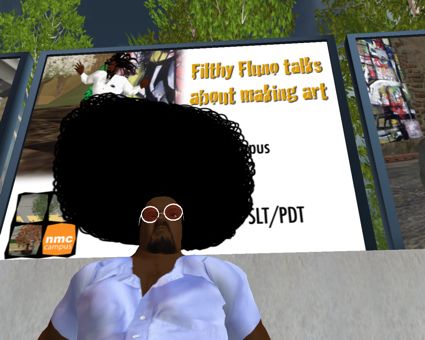
filthy_006 Second Life has been receiving a lot of press recently as an alternative Virtual Reality Art Market.  The New York Times recently released an interview with Painter and Second Life Art Star, Filthy Fluno that chronicled the artist's use of Second Life and how it helps him to sell his paintings in the real world.
By mirroring his real world gallery space in Second Life, Filthy Fluno, the avatar of artist Jeffrey Lipsky, is able to expand his viewing audience worldwide beyond the four walls of his real world gallery space.  Jeffrey creates his artwork in real life using oil paint and pastels on canvas, and is able to digitally insert his paintings into Second Life for exhibition.  He is capitalizing on the community within Second Life to market himself to potential customers and make connections within this virtual world with event promoters and party planners.

In a recent e-mail conversation, Mr Lipsky said,

"Second Life is allowing tech savvy artists to circumnavigate many of the RL challenges in getting their artworks in front of the right people and institutions...customers, galleries, peers, and international audiences. SL is also being used as a platform to create new forms of interactive cyberarts and live performance experiences. My Real Life artwork is inspired by online virtual world cultures, people, and events.  This is quite important aspect of why my artwork is able to blur the boundaries of "cyberart" and "traditional" art. "

The Second Life Art World is steadily increasing, with upwards of 600 confirmed art galleries as of March 2009, according to the Second life Art World Market Report. The PDF file available at the bottom of the Market Report page is an excellent source of information about the current state of the art world within Second Life.

The academic world has also begun to explore Second Life.  Nettrice Gaskins, an artist and educator at the Massachusetts College of Art and Design and on the board of the National Alliance for Media Arts and Culture points out a recent exhibition within Second Life at the 322 Mixed Reality Gallery where arts education students at Penn State University created a virtual exhibition as part of a visual culture and educational technology course.  She also brought up an interesting project entitled No Matter, where she is collaborating with Boston Arts Academy to create a interdisciplinary project for their engineering program.  25 builders and artists are commissioned to create art objects  in second life based upon "Imaginary Objects" such as The Time Machine or Schrödinger’s Cat, which are then re-created as 3-d paper models.  The objects exist both in the real world, as these paper models, and the virtual world within Second Life.

Along with visual arts, the performing arts have found a steady foothold within Second Life.  Music Island is quickly becoming a significant Second Life destination for classical and contemporary music performances.  Created by Linda Rogers and receiving around 2,000 visitors every month, Music Island provides a virtual performance venue for Second Life artists where avatars of the actual musicians perform on stage.

This is by no means the only music destination within Second Life.  The Royal Liverpool Philharmonic Orchestra built the art deco Liverpool Philharmonic Hall in Second Life and hosted its first concert there in September 2007.  Unlike Music Island, they are using recorded digital video instead of musician avatars for their performances.

In a recent conversation, Linda Rogers expressed that it is useful to think of the immersive environment of Second Life not as just a corner of the internet, but the next step in the evolution of electronic communication.  She stated that the real time, live and synchronous nature of a 3-D virtual environment allows for more audience interaction and creates a sense of occasion at gallery openings, concerts, and exhibits that just does not exist within the flat online world.  Avenues are being created to do everything from allowing artists to create virtual movie sets for machinama, to bringing together an international community of both artists and audiences that help to broaden artistic perspective and foster collaboration.

With the increase in the use of Second Life, I think that we may begin to see more and more alternative online three dimensional social environments crop up that are condusive to the production and exhibition of art, especially as processor speeds continue to increase and the prices for high end graphics cards start to fall.

Yet another reason to own an iPhone

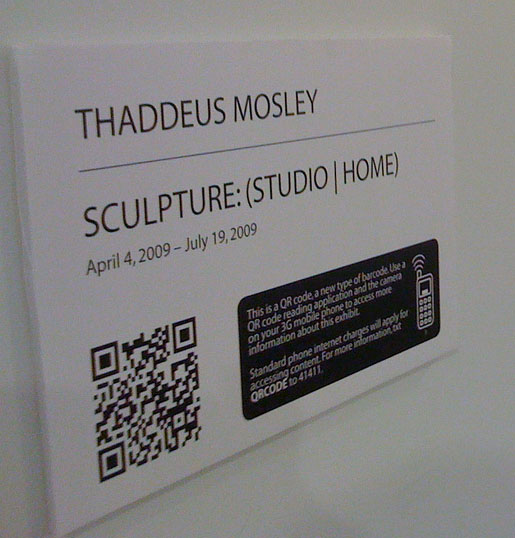
Quick Response bar code at the Mattress Factory If you have been to the Mattress Factory recently to see the new Thaddeus Mosley exhibition, you may have noticed that the title cards and some of the minimal signage have these intricate symbols on them. What you're seeing is a two dimensional bar code called a QR code that can be used to access information via your mobile internet enabled devices such as an iPhone or Blackberry.

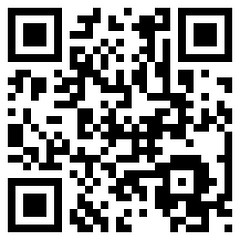
The code on the image above for instance, contains a link to a Youtube video of Thaddeus Mosley discussing the placement of large scale works within the gallery space.

Once you are in the gallery you can text QRCODE to 41411 to receive a simple walk through that tests to see if your phone is compatible with the suggested reader. The BeeTagg reader supports over 50 types of mobile devices and is available as an iPhone application as well.

After you have the reader installed you can access information from signage posted throughout the gallery space. Much like the guide by cell program, there is no proprietary equipment for the museum to pay for beyond the fabrication of the signage and developing the web content. However unlike a guided tour, this allows visitors to explore the space and access information that they are interested in when they want to.

Director of PR + Social Media, Jeffrey Inscho was kind enough to give me a guided tour on Thursday and pointed out some of the kinks that he is still working out. While most of the QR codes bring up URLs on your mobile device, some of them are text only which makes the codes much more dense. This can make it more difficult to take an accurate enough picture for your phone to recognize and decode the data. The smallest that the QR codes can be printed and still be read by most of the camera-phones on the market is about 1.5" square. So the text only cards may end up being replaced with a URL of the text to help ensure that they can be read. Shadows also tend to cause some issues while taking pictures, so you have to watch where you stand.

For the recent Predrive event, before they had installed the signage in the gallery, the Mattress Factory included a QR tag on their advertisement in the City Paper and received around 72 hits, which was more than Jeffrey had expected. Over the course of the exhibition the Mattress Factory will be able to monitor which tags receive the most hits, and get a feel as to how people are using the signage when visiting the museum.

qr1

As of right now, the Mattress Factory is the only museum in the United States that is currently using QR tags within the exhibition space, but the Powerhouse Museum in Sydney Australia has been using them for a a while and have outlined many of the issues that have cropped up in an amazingly detailed step by step guide.

Jeffery stressed that this was an experiment and an effort to help reduce the amount of printed gallery guides they use. It is not a permanent replacement for the printed material, but as the technology becomes more prevalent the QR codes will provide more in depth interaction and information to the visitors.

As of right now the Mattress Factory plans on continuing to use this new technology for future exhibitions and already has some just flat out amazing ideas on how to incorporate it into their Annual Garden Party but I don't want to spoil the surprise.

Best arguement thus far as to why I should update my phone from the bottom of the line Nokia I'm using.

I just dont Twitterstand

Today I keep catching myself freaking out about living in the future.  I'm honestly intimidated by the amount of information that is available to me at any given time, and I'm having a bit of future shock about how social networking may be changing society, group dynamics and how people communicate with one another.

Case in point

Between researching how artists are using Second Life, (yes artists use Second Life) and how new Smartphone applications are allowing us to access more and more information no matter where you are, I feel like it is becoming increasingly difficult to unplug.  The word Smartphone for instance brings up visions of a "Logan's Run-esque" dystopian future in my mind, but that could be because I watched a lot of Sunday afternoon science fiction growing up.

As arts professionals we need to remember that all of these new technologies should function as tools, either for communication or research, or even to help in the production of art.  It can be pretty easy to become inundated with learning the minutia of a new tool, or even seduced by the bright new shininess of it, but we can't all become slaves to the Facebook, or become so fixated that we Twitter our lives away without getting anything done.

Facebook is leading the charge of a societal change much in the same way that the cell phone did way back in the mid 90's (post Zack Morris phone, pre Razr).  It has gotten to the point that it is almost a necessity.  As Farhad Manjoo, the technology columnist at Slate, pointed out, "The site has crossed a threshold—it is now so widely trafficked that it's fast becoming a routine aide to social interaction, like e-mail and antiperspirant. It's only the most recent of many new technologies that have crossed over this stage."

We are just beginning to see how society is changing because of these new online applications, and the art world is no exception. So over the next week I'll be exploring how artists have carved out an alternative space for exhibition and performance art in Second Life, and showing you what your Smartphone can do for you next time you visit a museum.

So until then, try to go outisde while it is still nice.  If you're here in Pittsburgh, it's one of the 15 sunny days we get a year so you don't want to waste it.

Youtube Symphony Orchestra

picture-7Back in December, Brad posted an article about the call for entries for the Youtube Symphony Orchestra I'd like to post an update.

Google held an open call for musicians from around the world where users were asked to upload video auditions to be judged by a jury of professional musicians from the London Symphony and the Berlin Philharmonic.  This short list of musicians was then opened up for Youtube viewers to vote on to decide the winners.

Well, the votes are in, and on April 15th over 90 musicians from 30 different countries will be flown to New York City to perform at Carnegie Hall for the first ever crowd sourced symphony orchestra, that will be conducted by Michael Tilson Thomas, music director of the San Francisco Symphony.

The Youtube Symphony Orchestra will be playing “Internet Symphony No. 1, Eroica,” by composer Tan Dun (of Crouching Tiger, Hidden Dragon and Hero fame). Tan Dun has been providing continuing online video master classes to help prepare the musicians for their upcoming performance, including video of him silently conducting each section of the orchestra and staring directly into the camera.

The project has drawn an amazing amount of interest from participants.  After being announced on December 1st nearly 3,000 auditions had been uploaded from 71 countries by February.  This seems like a really interesting way to get younger people involved and interested in classical music, as well as pointing out what can be accomplished as technology continues to shrink the size of the globe.

Blogging on the Shoulders of Giants

Creative Commons licenses provide the ability to modify the terms of the copyright on your intellectual property.

Some times Copyright can be too restrictive when you would like to share your work with the world.

For those of you who are unfamiliar with Creative Commons licensing, this video helps to explain some of the ways in which it allows someone to publish their work somewhere in between All rights reserved and No rights reserved. This method of copyright allows the creator of the work to decide how it can be used by others, if it can be used commercially, sampled, remixed, or built upon.  By using a Creative Commons License creators are able to maintain some rights while allowing others greater access to the work than the regular Copyright would allow.

FairShare is a free online application that allows you to track the usage of your creative commons licensed intellectual property, making it possible for people all around the world to reuse content while still attributing it back to the original creator.  Currently FairShare works for any text based content that is available to the public via RSS feeds.  This means any blog posts, essays, cookbooks, and anything as long as it is text and available as via RSS.  According to Plagiarism Today's Jonathan Bailey, FairShare Developer Attributor is also gauging interest in a FairShare for photos and videos as a possibility for a future service that would allow users to track the use of images and other media beyond just text content.

FairShare begins by asking you to choose from a list of available Creative Commons Licenses.

  • Attribution
  • Attribution Non-Commercial
  • Attribution No Derivatives
  • Attribution Share Alike
  • Attribution Non-Commercial No Derivatives
  • Attribution Non-Commercial Share Alike

Once you've registered your blog or other RSS feed, FairShare searches to find instances of your content on other sites, and then displays the different pages that have reused your work and how that reuse of your content compares to your license conditions.  The sites using your content are displayed in your FairShare feed that can then be accessed through a feed reader such as Google Reader, or any number of other RSS readers.

This is an amazing new tool that will allow anyone who is concerned about how their intellectual property is being used to track and influence how that content is being shared.

As we go into the weekend, I leave you with this awesome Video Mashup, "The Mother of all Funk Chords"  that was created entirely from clips available on Youtube.

Democratizing Independent Film distribution

From Here to Awesome I know that this festival has been around for a little over a year, but I still find myself visiting their homepage.

From Here to Awesome is presenting a new method of movie distribution that relies upon online viewer votes to decide which movies will be distributed.  The festival has no submission fees, the filmmakers retain all rights to their film and filmmakers make money directly.  This film festival is bypassing a lot of the industry gatekeepers to help distribute films that audiences want to see by using a simple online social platform.

I think that it is a really amazing way for independent filmmakers to get instant feedback from their audiences as well as to talk about some of the advances in the field that are creating higher production levels on lower budgets.

Filmmaker Fritz Donnelly, creator of the movie "To the Hills 2," describes the current state of the film making industry and points out many of the problems inherent in the system on From Here to Awesome's Festival Blog.  The Q&A session focuses on the possible technological utopia of film making and distribution of the future, and the hope that it brings.

This festival seems to have been a great success, considering that by July 26th, the festival's 22 selected showcase films will be available online on Amazon, Vudu, Netflix, IndieFlix.com, Hereticfilms.com, Hulu, Joost, Cacchi, and Vuze.  Recent theatrical screenings have also taken place in San Francisco, Boston, and London, as well as over 25 guerrilla drive-in screening events.

I can see that the future of independent and documentary film distribution will have the tendancy to become more democratized as festivals like From Here to Awesome create more of an online marketplace, and the costs of quality production start to come down.  The prices of cameras and editing software are reaching a point where they are accessable to more and more people with a story to tell.

Social Media as Alternative Exhibiton Space

Elis Wooten by Matt Held Myspace has long been a mecca for musicians who are looking to get the word out and start a following,  but until recently visual artists have not capitalized on the aspects social networking with the same fervor.

This is beginning to change as visual artists are now using this new medium as a way around established gatekeepers, creating open alternative arts spaces online. Ever since discovering Miranda July's Learning to Love You More in undergrad I've been interested in crowd sourced art projects, and with new social mediums like Facebook and Twitter, artists are now able to easily create a community that is interested and involved in their artwork.

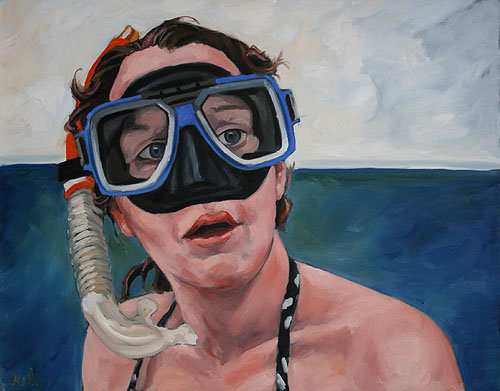
Matt Held, a Brooklyn based painter, started a Facebook group in order to create a pool of images to paint from by utilizing his friends' profile pictures.  His Facebook group, "I'll have my Facebook portrait painted by Matt Held" has sense grown exponentially.

Matt explained, "I have always painted from photos and was having a complete painters block. I needed an exercise in skin tone and did one of my wife from her profile. We put the group up and I thought maybe if 50 people joined, I would be able to work through the block. People liked it and as I said, this quick communication has proved true, there are nearly 3,400 people in the group now. It's been a really great tool, really great!"

Matt has recently completed his 37th portrait in the four months since beginning this project, and is looking forward to exhibiting all 200.  Social media is quickly creating a rich creative playground for visual artists to explore, and Matt is realizing how large the demand is for creative projects online.

"It's a perfect vehicle to combine mediums with technology and connect with other artists, gallery owners, curators, critics, editors, etc. very quickly. Facebook is set up so perfectly for that and now as other sites like Twitter broaden their user base, this level of instant communication with people around the world - not via the news, but from the mouths of people - it's just an inexhaustible resource."

baplogomas-logo

Outside of the standard Facebook/Myspace/Twitter sites, artists are creating their own networks.   Myartspace and the Brooklyn Arts Project are both new social networks for creative artists that capitalize on the accessability of the internet, and the networking opportunities that can be created for artists.

These sites both have an ongoing blog of current events, as well as user submitted blogs.  Curators are invited to post calls for artists, and on the Brooklyn Arts Project site there is an online store where you can purchase framed art prints of featured artwork. These cites are creating a depth of relevant content as well as a definitive sense of community that is important to any group of artists.

Some galleries are also using their websites as interesting alternative exhibition spaces.  20X200 is a small gallery space on Manhattan's Lower East Side that releases limited edition art prints at incredibly low prices.  Jen Bekman has made a name for herself by making art available to everyone.

(limited editions × low prices) + the internet = art for everyone

The site introduces two new artworks every week, one photograph and one work on paper.  They are available in three sizes that vary in price from $20 for a small print, to $200 for the largest size.

In the days/weeks/years to come, visual artists will continue to find new ways of utilizing the web to create interactive and crowd sourced projects as well as to venture beyond the pristine white walls of the gallery and create new avenues for audience engagement.

I agree with Matt Held when he said "One of the things I have noticed in the past few weeks are more and more artists doing different things. One artist updated her status every 60 seconds for 16 hours as a means of opening dialogue about self exposure, narcissism, social controls, etc. Another is trying to put together a large group, 500 people, to do a massive tweet at the same time with super secret instructions. I am quite certain that we are just seeing the beginnings of the exploration on the creative use of social networks as an artistic platform."

Going Facebook Crazy

modern-times If you haven’t noticed, Facebook has changed its homepage layout, and a lot of the features available to user profiles are now also available for Pages.

I've spent the better part of this week fooling around with the new layout and features that Facebook has made available on their Pages, and trying to make heads or tails out of what is being communicated to our "fans," when it is being communicated, and how. The biggest change to Pages has been the new Wall and Stream tabs as well as the ability to send Status Updates from your page.

So, Yay for all the new toys…now what do we do with them?

The Wall allows users to post comments, just like on a profile, and ends up being the home for a large portion of user generated content for your Page.  The Stream tab similarly aggregates any changes that you've made to the page such as adding blog postings, links, events, etc..  Fans of your page are then notified when you update or change anything on the profile automatically.  There in lies a problem.  It's not THE problem, but it's one of them.  I understand that it is good to update fans when changes are made to the Page, it has the potential to create a lot more active discussion and real-time interaction, but it also has the ability to overwhelmingly spam users about our Page.  Will users really want to know about every single time we upload a new picture, or post an interesting link?

Some of the same issues arise when it comes to the Status Update feature.  In a lot of ways the Status Update is similar to a Twitter feed, so how do we keep the communication relevant and engaging without being perceived as a pest?  Since updates are being shared real-time with users, it is becoming more and more important to keep the communication on a level that creates interest without turning fans off with too much information.

The new tabbed layout also presents some interesting questions.  The tabs generally consist of the wall, an info tab, a discussion tab, and a Boxes tab, but the Boxes tab seems to be a catch all for applications that don't seem to fit anywhere else, it could very easily be called "other" or "stuff."  Even in Facebook's example page of their product guide, the Boxes tab doesn't seem to be fleshed out.  So this leaves me wondering how to best use available applications to relate to our users, or if this tab will end up being the neglected big box of stuff that nobody cares about tab.

Because these changes are new, it is still uncertain how either organizations or fans will react and start to use these new tools to communicate.  It seems that no matter what, facebook will continue to occupy way too much of my time online.  And now I need to hunt down a decent podcast application for facebook to fill up that Boxes tab.

All the news that's fit to Tweet

It seems that over the past week Twitter has made it into the headlines for both being an amazing new communication tool, and how ridiculously it is being used.  This past Monday on the Daily Show John Stewart pointed out some of the effects that Twitter has on our perception of both the news media and congress.  While many members of Congress were Twittering through Obama’s most recent speech, the inane messages seemed to detract from the gravity of the event. As John Stewart said, “..these messages don’t enlighten or inform, it’s a gimmick that actually lessens the credibility of institutions in desperate need of authority." Regardless of the method of communication, why should we care unless you have something meaningful to say. Both the London Times and The Washington Post have tried to address the question as to why we twitter, only to come to the conclusion that we have a terribly underdeveloped sense of self and need to be reassured that we exist. From the London Times...

The clinical psychologist Oliver James has his reservations. "Twittering stems from a lack of identity. It's a constant update of who you are, what you are, where you are. Nobody would Twitter if they had a strong sense of identity."

"We are the most narcissistic age ever," agrees Dr David Lewis, a cognitive neuropsychologist and director of research based at the University of Sussex. "Using Twitter suggests a level of insecurity whereby, unless people recognise you, you cease to exist. It may stave off insecurity in the short term, but it won't cure it."

This is generally why I can't stand most Twitter feeds.  Yes it is a new and powerful means of communication, but it seems to me that right now it is primarily being used as a posturing mechanism to help aging organizations appear youthful and with it.  The majority of the Twitter feeds out there are either devoid of content, incredibly trivial or mundane.  They only communicate that someone exists and not much more.

That being said, there are some really amazing ways that Twitter is being used.  Organizations that understand the importance of real time communication with their audiences are pushing the boundaries with Twitter and capitalizing on the unique ways that they can receive audience feedback.

The Twitter Art feed at the Brooklyn Museum is part their new 1stfans program, and allows members access to tweets by contemporary artists every month, and has featured works by artists such as Mary Temple and An Xiao that utilize the social feedback aspect of Twitter.   An Xiao's piece was about Morse code and the history of instant communication in which 1st fans were asked to feed to tweet using Morse code, while Mary Temple's piece Currency provides a daily link to a drawing made from current news articles about important world leaders in the media.

Conferences are also beginning to utilize Twitter Back Channels to allow their audiences to discuss the content of a presentation in real time without disrupting the event.  This is in essence what we tend to get scolded for in school, passing notes, making fun of a presenter's overuse of the word "nascent," and whispering to a neighbor about the content of the presentation.  More often than not, these conversations are being spurred on by the speaker, and Twitter is creating a real-time avenue for discussion that is centered around the speaker's presentation.  This is creating a non-invasive avenue for audience participation and places the focus of these events back on the community of people attending instead of just sitting at the feet of the keynote speaker.

These organizations are utilizing Twitter feeds for audience engagement and a way for inducing a flattened level of communication.   The Brooklyn Museum also seems to be using the Twitter feed as an interesting source of revenue, as 1stfans membership costs $20 a year.

I can't help to think that it might be useful way to get instant feedback on the progress of projects and tasks at work, especially if certain employees are telecommuting or out of the office.  And the fact that updates can be sent by phone, allows updates to happen when access to a computer is limited.

Share what you think about Twitter, and some of the possible real world applications of using Twitter for audience (or employee) engagement in the comments below.

No Comment - Bloggers Should Let Their Readers Respond

The other day, a colleague shared with me a link to a post on Lee Rosenbaum's CultureGrrl blog speaking out against the recent the call for a U.S. "culture czar."  While I see where she is coming from, I wanted to share with her and my fellow readers some thoughts regarding the issue.  Imagine my surprise when I discovered that there is no place to post a comment.  The only option is to engage Ms. Rosenbaum in private discourse via e-mail.  Here is an entire blog post devoted to providing a counterpoint to other online voices, and yet the author provides no opportunity for her readers to engage her and her readers in a public discussion. As my fellow texters might scribe, "WTF?" Okay, I'm gonna get up on my soapbox here for minute.  We've all heard about Web 2.0 and the cuture of sharing, etc.  We drank the Kool-Aid and started blogging, podcasting, social networking, posting social media, creating wikis - experimenting with a variety of forms for sharing content with each other.  For many of us, there is an understanding that this online sharing is of a reciprocal nature.  If you throw your content out into the universe, then you cannot truly engage with anyone until you allow them to respond.  And for the record, a private e-mail doesn't cut it.

What if someone doesn't agree with you? That's okay. We frequently encounter people who do not agree with us, but that doesn't stop us from engaging in conversation. In fact, disagreement is not necessarily a negative thing. When approached from an inquisitive stance, disagreement may lead to clarification, exploration, and possible consensus.

And if someone out there on the Web responds to you in an insulting or derisive manner, you have three options: 1. Respond to them. 2. Take the "high road," and let your readers respond to them. 3. Delete the comment.

Now, I am not saying that Ms. Rosenbaum deliberately does not want her readers to engage her and each other in public discussion of her ideas. Maybe she never considered the implications of not allowing comments to her blog.

Ironically, there is a "Share This" icon at the bottom of the posting - so that you can share the author's thoughts with all of your friends and colleagues. Wouldn't it be nice if she returned the favor?

2009 MUSE Awards Call for Entries

The AAM Media and Technology Committee announces the 20th annual MUSE awards competition. Presented to institutions or independent producers which use digital media to enhance the museum experience and engage new audiences, the MUSE awards celebrate scholarship, innovation, creativity and inclusivity. Projects must be produced by or for a museum, including websites, podcasts, multimedia installations, interactive kiosks in the museum, cell phone audio tours in a garden, etc. Winning projects for each category are chosen by an international group of museum media professionals and the awards will be presented at the AAM annual conference in Philadelphia, PA from April 30-May 4, 2009. museawardslogo

Online applications must be submitted January 31, 2009.  If you have any questions please contact Sarah Marcotte, MUSE Awards Chair.

Call for Session Proposals - 2009 Technology in the Arts: Canada

Proposals for sessions and workshops are currently being accepted for the 2009 Technology in the Arts: Canada Conference to be held in Waterloo & Stratford, Ontario from May 10-12, 2009. This year's conference is being held in conjunction with the Canada 3.0: Defining Canada's Digital Future Conference. The deadline for submitting your proposal is Monday, January 19, 2009.

The conference has two primary types of programming - Hands-On Training Workshops and Breakout Sessions.

  • Hands-On Training Workshops: Sunday, May 10th: Held in a computer lab environment on the University of Waterloo campus, Waterloo, Ontario, these workshops will provide "nuts & bolts" instruction to guide participants through technical processes toward concrete solutions to work-place challenges. Each hands-on workshop will last 2 hours and 30 minutes. Workshop leaders should anticipate using 25% of the time for informational lecture and the remaining 75% of the time for hands-on instruction.
  • Breakout Sessions: Monday, May 11th & Tuesday, May 12th: Held in breakout rooms at the Stratford Rotary Complex, Stratford, Ontario, conference sessions may use a number of possible formats to cover relevant issues relating to the use (or potential use) of technology in arts, heritage or cultural management and/or production. Breakout sessions will last 1 hour and 15 minutes.
  • Proposal Criteria: A panel of arts and technology practitioners will review all submitted proposals to select the final program in late January.  Sessions will be selected based on the following criteria:

  • Exploration of new or compelling ideas, technologies or practices
  • Speakers' expertise and/or experience with the topic
  • Session's relevance to the conference
  • In addition to the above criteria, the panel will be charged with selecting workshops and sessions with an eye toward providing a well-rounded program of topics and ideas for conference attendees that will include managers, staff and artistic/curatorial personnel from the arts, heritage and cultural sector, as well as individual artists.

    SUBMIT YOUR SESSION PROPOSAL ONLINE HERE

    Benefits for Presenters: Presenters will receive complimentary access to the conference for the day on which they present, and discounted registration for other days they wish to attend.  All session participants will be responsible for their own travel and hotel expenses.

    Proposal Components: To be considered, proposals must include the following information:

  • Session title
  • Session type - Hands-On Training Workshop or Breakout Session
  • Session format - For Breakout Session proposals only
  • Description of proposed session
  • Explanation of relevance to the conference
  • Contact information for session leader
  • Other potential presenters and what expertise they would add to the session
  • Not an expert? You don't have to be!  Here are some tips for putting together a session.

    Questions? Contact us.

    The 2009 Technology in the Arts: Canada Conference is a partnership between the Centre for Cultural Management at the University of Waterloo and the Center for Arts Management and Technology at Carnegie Mellon University.

    Want to Play at Carnegie Hall?

    How do you get to Carnegie Hall? Practice... or win a YouTube contest! (Insert rimshot here.) In what might be described as American Idol for the classical music crowd, YouTube yesterday announced YouTube Symphony Orchestra, a collaboration with several classical music organizations.

    The London Symphony Orchestra plays the Internet Symphony No. 1 "Eroica" - for YouTube, conducted by Tan Dun.

    Through January 28, 2009, musicians of any skill level can submit a video performance of a work by composer Tan Dun (Crouching Tiger, Hidden Dragon). The performances will be rated by judges and YouTube users, and the finalists will be invited to participate in April's YouTube Symphony Orchestra summit and perform at Carnegie Hall with conductor Michael Tilson Thomas.

    YouTube Symphony Orchestra also offers a collection of online tools for learning and rehearsing the new Dun piece.

    Rosin your bow, head on over to YouTube Symphony Orchestra and start practicing.

    Holiday Downtime? Brush Up on Tech

    While the holidays can sometimes seem very busy (especially if you're a dance company producing 'The Nutcracker'), there is typically a great deal of office downtime. Therefore, I'm issuing a challenge this holiday season: Pick one tech-related skill you'd like to learn and use any downtime to get cracking. It doesn't have to be anything particularly difficult. Maybe you work with Excel for budgeting, and you'd like to know more about advanced filtering options. Perhaps you'd like to learn some basic HTML so you can tackle your own Web updates rather than passing them off to sit in a queue.

    Whatever the skill you'd like to learn or refine, I'm here to help. Contact me with your holiday tech education wishes, and I'll send you some information and links to steer you in the right direction.

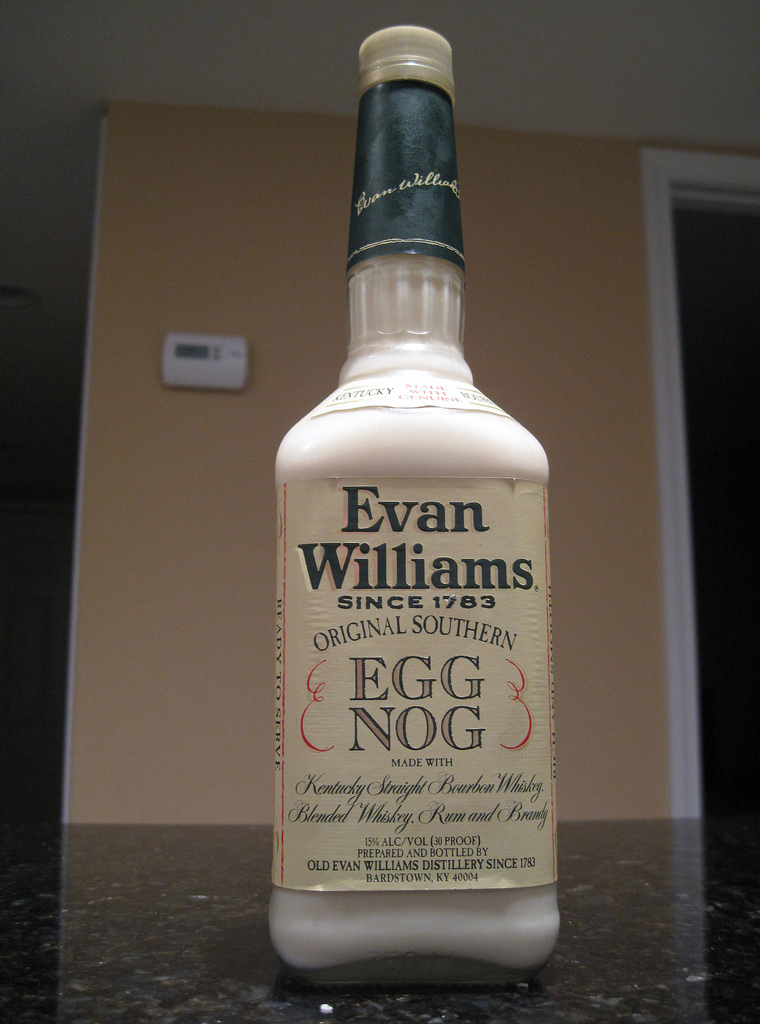
    Don't just sit around drinking eggnog and making garland hats this holiday season. Brush up on your tech skills!

    (Photo Credit: Scott Beale / Laughing Squid)

    Will You Go? New Patron Facebook Tool

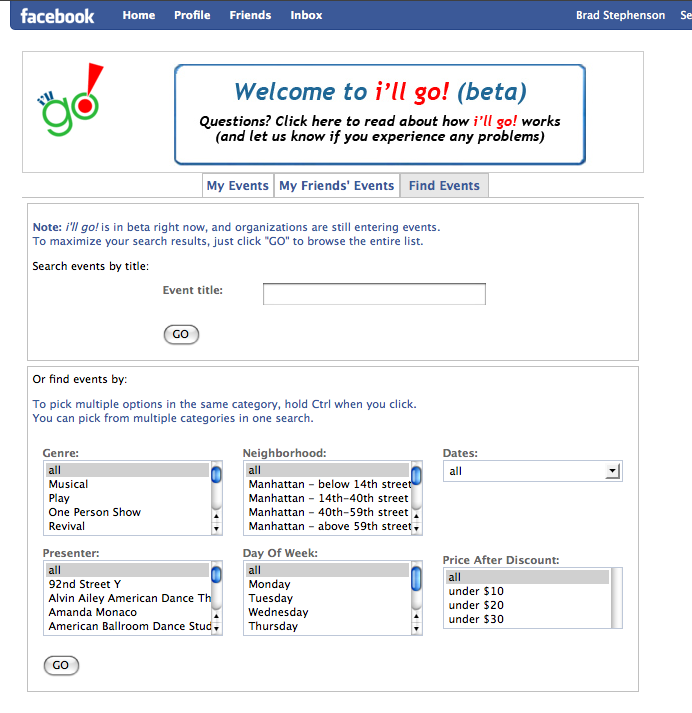
    Gene Carr, founder and president of Patron Technology, recently blogged about his company's new Facebook app for New York arts groups and audiences. The app, i'll go!, is a free downloadable tool that provides users a way to connect around events and organizations a way to encourage first-time attendance through Facebook-only discounts.

    See a screenshot of the event search interface after the jump.

    Searching for an event using the Facebook 'i'll go!' app.

    As this app is in beta, I'd strongly encourage New York organizations and audience members to install it and give it a go. If the app catches on, Carr says Patron will expand the tool to include other cities.

    Find our more about i'll go! at the app's Web site.

    Disposable Film Festival

    I'm wishing that I lived in NYC today; if I did, I would go see a screening of the Disposable Film Festival (DFF) tonight at 8:00 PM. The DFF is a film festival that showcases works created by artists and amateur artists using only "disposable" media, such as cell phones, point and shoot digital cameras (such as the Flip cam), webcams, and so on. These recording devices don't require (or allow you) to carefully control and adjust the white balance, f-stops, shutter speed, frame rate or all of those other technical things that come into play when using more traditional or complex film or video cameras.

    The results are quick and dirty film making at its best and worst. As the DFF mentions on their Web site, all you have to do is 'Point. Shoot. Cut.'

    You can check out the videos in the 2008 DFF online, which might be the ideal way to enjoy these works. I'd be curious to see what a live, projected screening would be like, given the quality of video produced by current 'disposable' video technology. We may be approaching a day where festivals like the DFF spring up more and more, as more and more people have access to quick, quality video capturing.