
Conferences

Post-NAMP 2009 Reflections

It's Wednesday in Pittsburgh, and the information-laden NAMP Conference is still fresh in my mind. I have been pondering the challenge of separating these closely-connected insights, and will do my best to craft them into individual blog entries. I will start here with a quick overview of NAMP 2009 themes, and then delve into how these pervasive truths can be utilized in your emails, in your social media interactions, on your website, and finally, as we work through broader ways to connect beyond our own organizations' networks.

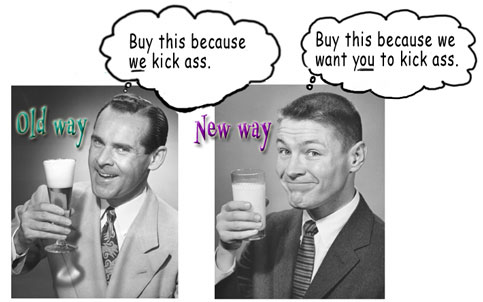
David Court's keynote emphasized that "Content is King" while the "Friendship 2.0" message "access is more important than content," highlighted the power of an organization's online content when controlled, in part, by its audience. Closely related was the undisputed tenet "Everybody wants to be an insider," Rich Mintz's much-tweeted quotation from Saturday's plenary lunch.

I believe that achieving this goal is one of the great strengths of social media well-used, a stance echoed in many of the sessions I attended. A social media strategy (as we have discussed in this blog and webinars) cannot be overemphasized--by establishing a place to start and a reason for so doing, you open up the possibility of experimentation, measuring success and failure, and cultivating a strong organizational identity and relationship with your "posse" (the term that Jeffrey Inscho of the Mattress Factory uses to designate online followers---without relegating them to being beneath and apart from the organization). The implications of embracing your audience and bringing them into the fold are far-reaching, and should color the consideration given to content, presentation, and accessibility. Is your organization asking for feedback and really listening, or simply proclaiming without engaging? Are you perceived as real and authentic, or dictatorial and closely controlling of the information and conversations being had about you? Are you afraid to hear what is really being said, and if so, are you ignoring critical feedback that could alter and improve programming?

Before my post on email marketing, I want to mention a couple of basic guidelines that came up time and again at the conference and which apply across the board.

  • Experimenting and failing (within the strategy your organization has defined) is better than not experimenting and going unnoticed. Increasingly, people's decisions are made in a split second based on what is in front of them, and you want to be a contender for their attention.
  • Testing, and taking note of what is and is not working (Haeben Kim of CAMT attended a session on ROI that she may guest-blog about in the future) will improve your organization's social media efficiency.
  • Authenticity is crucial--you are selling an experience, not just "art," and remembering who you are and who you serve will help you captivate your audience early and often.
  • Including your audience in the discussion is far more effective than talking at them. Yes, this means that you open up the channel for negative feedback as well, but remember: people will say negative things about you anyway, wouldn't you rather it be in a place where you can respond to it and facilitate a dialogue and reaction to it?

I hope that that overview, painted though it is in broad strokes, helps give you a sense of where the conversation will be headed for the next few NAMP-related posts. And if you were in attendance at NAMP, and have additional thoughts, suggestions, questions, or comments, I encourage you to share below!


Free Museum Computer Network Webinars

The Museum Computer Network, an org that specializes in sharing information about new museum technology and its most effective uses, is holding its annual conference next week in Portland, Oregon. This year’s theme: “Museum Information, Museum Efficiency: Doing More with Less!” The org is webcasting several of its sessions for free on Thursday, Nov. 12 and Friday, Nov. 13: (All times Pacific) Museum Data Exchange Thursday 12 November, 1:30-3:00 PST

Tweets to Sweeten Collaborations for Archives, Libraries, and Museums Thursday 12 November, 3:30-5:00 PST

Libraries, Archives, and Museums: From Collaboration to Convergence Friday 13 November, 11:15-12:45 PST

Ramping Up while Scaling Down: Strategic Innovation in Challenging Times Friday 13 November, 2:00-3:30 PST

2009 Conference Roundup Roundtable Friday 13 November, 4:00-5:30 PST

Instructions for accessing the webinars will appear at the MCN site on Wednesday, Nov. 11. MCN is encouraging Twittering during the session with hashtag #mcn09oL. You will be able to submit questions during the Q & A sessions via Twitter as well. More details at MCN.

The Future of Arts Journalism is Here... Maybe

Worried about your local arts critics being cut? How about the impending demise of your local paper? Don’t worry; the future is here! Last week the USC Annenberg School for Communication announced five projects that will present at The National Summit on Arts Journalism. The School put out an open call for projects that represent the future of arts journalism. The five winning projects will be announced at the conference on October 2 and another five made the cut to present:

  • Sophie: A new authoring tool for multimedia developed by the Institute for Multimedia Literacy that suggests new possibilities for presenting critical response.
  • The Indianapolis Museum of Art: With its Art Babble and Dashboard, the IMA is an example of a cultural institution extending its reach into areas that have traditionally been the province of journalism.
  • InstantEncore.com: An example of an aggregator attempting to gather up everything about an art form (in this case classical music) and making it accessible in one place.
  • NPR Music: An example of a traditional big media company that is reinventing itself across platforms. NPR Music blurs the lines between journalism, curation, presenting and producing.
  • Gazette Communications, Cedar Rapids Iowa: An example of a local media company trying to reinvent the idea of what it considers news and how it might be gathered and presented to a local community.

I, for one, find it incredibly encouraging that journalists are finding new paths to write about the arts in the face of the layoffs and budget cuts. As the newspaper industry struggles, the first cost-cutting measures always seem to involve pulling more things from the wire and less local reporting.  Many of us in the arts industry have felt the burn from the epidemic of local arts critic firings from major papers, or conversion to a part-time or freelance status. In turn, people find it less satisfying to read the paper as these local writers are cut and circulation decreases further as more people choose to go online to read wire reporting rather than pay for it in paper form. In an effort to save themselves, it seems as though the papers are cutting the very thing that makes them a viable business model.

So how does this decrease in arts journalism affect your local arts organizations? Arts orgs lose out in two major ways: 1) One of their advertising mainstays becomes less effective as less potential performance /exhibit-goers see the orgs' ad in print and 2) as more critics are cut from newspaper payrolls, coverage of arts events is decreased. Since reviews and articles are typically a great revenue generator, arts orgs find themselves hurting for objective reporting and distribution that their own blog doesn’t quite cover. But through the Summit, the search is on for the new model of profitability in this brave new paperless, everything-free-and-now world.

However, the Summit is tellingly vague on what that could mean. Especially interesting was the note about viable business models on the USC site:

"We had noted on the submission form that we were interested in viable business models. Admittedly, the definition of what constitutes a business model these days is unclear. Strictly speaking, an operation that relies on donated labor and sweat equity has yet to find a sustainable business model. A project that relies solely on philanthropic contributions also has no business model in a strict sense. What we're looking for, therefore, is not so much a commercial business plan but some indications of long-term operational viability."

I’d like to echo that question above-- what is a viable business model anymore? The situation with newspapers has gotten so desperate, some are saying non-profit status is the way to go.  But companies like Facebook are relying more on “ownership” of the social media market to determine their company’s value, rather than real revenue.  So what hope does that leave these start-ups? Can they hope to go national, or international? It seems like a near-impossible task to take “ownership” of the information of thousands of arts organizations. Unlike many other forms of journalism, arts journalism seems confined to being primarily local, because of the limitations of a performance or an exhibit. To report on a play, the writer has to be at a theatre at a specific time. There’s not really a good way to get around that. Because of this, many of the projects are confined to a specific city or state. The national sites face the additional problem of collecting these local voices into one comprehensive site (InstantEncore seems to do an impressive job with this).

No matter which sector of the arts you work in, this is definitely an area to keep an eye on. On October 2, you can stream a satellite summit live and participate via text or Twitter if you contact summitinfo@najp.org or register here.

Arts Video Site

Play Art Loud! ArtBabble.org

I've been wanting to write something about this site for a while now, but I've had a hard time figuring out what exactly to say about it beyond just describing what it is, who's involved, and what they do.

ArtBabble is more than just another collection of videos about art.  Each video comes with a sidebar of notes and more information that the viewer can dive into in order to explore more aspects of what the video is presenting.  At times this sidebar can be a distraction, and other times can lend more depth to something like an Art21 video about Jenny Holzer that you've seen a few times.

The bulk of the videos come from MoMA, SFMoMA, Art21, The Indianapolis Museum of Art, The Los Angeles County Museum of Art, The New York Public Library, and the Smithsonian.  By and large, the content is geared towards the art novice, but there are some incredibly poignant videos for arts managers on the site, like the Museums and the Web 2009 video posted below.

So far my favorite video series has been the Behind the Scenes at the MoMA, but all of the videos I've watched are really high quality and very informative.

In an Update, last night ArtBabble won a Gold Muse award from the AAM for best online presence.

2009 MUSE Awards Call for Entries

The AAM Media and Technology Committee announces the 20th annual MUSE awards competition. Presented to institutions or independent producers which use digital media to enhance the museum experience and engage new audiences, the MUSE awards celebrate scholarship, innovation, creativity and inclusivity. Projects must be produced by or for a museum, including websites, podcasts, multimedia installations, interactive kiosks in the museum, cell phone audio tours in a garden, etc. Winning projects for each category are chosen by an international group of museum media professionals and the awards will be presented at the AAM annual conference in Philadelphia, PA from April 30-May 4, 2009. museawardslogo

Online applications must be submitted January 31, 2009.  If you have any questions please contact Sarah Marcotte, MUSE Awards Chair.

Call for Session Proposals - 2009 Technology in the Arts: Canada

Proposals for sessions and workshops are currently being accepted for the 2009 Technology in the Arts: Canada Conference to be held in Waterloo & Stratford, Ontario from May 10-12, 2009. This year's conference is being held in conjunction with the Canada 3.0: Defining Canada's Digital Future Conference. The deadline for submitting your proposal is Monday, January 19, 2009.

The conference has two primary types of programming - Hands-On Training Workshops and Breakout Sessions.

  • Hands-On Training Workshops: Sunday, May 10th: Held in a computer lab environment on the University of Waterloo campus, Waterloo, Ontario, these workshops will provide "nuts & bolts" instruction to guide participants through technical processes toward concrete solutions to work-place challenges. Each hands-on workshop will last 2 hours and 30 minutes. Workshop leaders should anticipate using 25% of the time for informational lecture and the remaining 75% of the time for hands-on instruction.
  • Breakout Sessions: Monday, May 11th & Tuesday, May 12th: Held in breakout rooms at the Stratford Rotary Complex, Stratford, Ontario, conference sessions may use a number of possible formats to cover relevant issues relating to the use (or potential use) of technology in arts, heritage or cultural management and/or production. Breakout sessions will last 1 hour and 15 minutes.
  • Proposal Criteria: A panel of arts and technology practitioners will review all submitted proposals to select the final program in late January.  Sessions will be selected based on the following criteria:

  • Exploration of new or compelling ideas, technologies or practices
  • Speakers' expertise and/or experience with the topic
  • Session's relevance to the conference
  • In addition to the above criteria, the panel will be charged with selecting workshops and sessions with an eye toward providing a well-rounded program of topics and ideas for conference attendees that will include managers, staff and artistic/curatorial personnel from the arts, heritage and cultural sector, as well as individual artists.

    SUBMIT YOUR SESSION PROPOSAL ONLINE HERE

    Benefits for Presenters: Presenters will receive complimentary access to the conference for the day on which they present, and discounted registration for other days they wish to attend.  All session participants will be responsible for their own travel and hotel expenses.

    Proposal Components: To be considered, proposals must include the following information:

  • Session title
  • Session type - Hands-On Training Workshop or Breakout Session
  • Session format - For Breakout Session proposals only
  • Description of proposed session
  • Explanation of relevance to the conference
  • Contact information for session leader
  • Other potential presenters and what expertise they would add to the session
  • Not an expert? You don't have to be!  Here are some tips for putting together a session.

    Questions? Contact us.

    The 2009 Technology in the Arts: Canada Conference is a partnership between the Centre for Cultural Management at the University of Waterloo and the Center for Arts Management and Technology at Carnegie Mellon University.

    Technology in the Arts 2008 - Award Winners and Updates

    It's been almost a week since the kick-off of the 2008 Technology in the Arts Conference, and we have been busy:

    • Gathering feedback from our attendees on how we did this year. Emails were sent out with links to our post-conference survey. Please take a few minutes and let us know what you thought of the conference.
    • Putting together content from the conference for the blog. Our next podcast installment, loaded with interviews and insights from conference attendees and presenters, will be posted on Friday.
    • Traveling to a fair number of other arts conferences ourselves in the days following Technology in the Arts (blog posts on these conferences will be coming soon).

    In the meantime, we'd like to take this opportunity to recognize and congratulate the winners of the 2008 ArtsTech Awards.

    Dan Trueman - 2008 ArtsTech Award for Artists Dan Trueman's approach to working with technology reflects both a sensitivity to the native artistic capabilities of new technologies and a fierce drive to invent and reinvent that technology as needed. The Princeton Laptop Orchestra, for instance, relies on an unusual hemispherical speaker, designed by Trueman, that emulates the way acoustic instruments fill rooms with sound. These speakers profoundly affect not only the sound that is generated, but also the social context within which the performers play; this is a fundamental reimagination of how we as listeners, performers, and composers might live with electronic sound. His work seeks to preserve and transform traditional ways of making music - living-room jam sessions, chamber music rehearsals, orchestral performances - reflecting a belief that these are crucial and powerful ways that music lives within our culture.

    Minnesota Shubert Performing Arts and Education Center - 2008 ArtsTech Award for Arts Organizations Six years ago, in the initial phases of its development, the Minnesota Shubert Performing Arts and Education Center determined that a key piece of its mission would be to provide high-quality, accessible arts education resources through the use of technology prior to opening (scheduled for 2010). Their adapted/reinvented use of Internet videoconferencing technology to teach arts education - specifically dance education - to public school children enables artists at the Center to connect with K-12 classrooms throughout Minnesota and beyond. Now social studies classes are studying swing dancing and dance marathons as a way of understanding the depression era while physical education students learn about the history and culture of hip hop dancing while getting a great work out.

    TechSoup Global - 2008 ArtsTech Awards for Benefactors Founded in 1987 as CompuMentor, TechSoup Global is one of the most comprehensive nonprofit technology assistance providers in the world. In addition to providing educational resources and a vibrant online community, TechSoup Global provides nonprofit organizations with donations of the latest software and refurbished Green hardware for free with an administrative fee as little as 5% of retail cost. Since its founding, TechSoup Global has donated to 13,248 arts organizations from around the world, providing a total technology savings to the arts community of over 100 million dollars.

    Congratulations also go out to our Rock Band 2 rock-off contest winners. These folks kicked it with a tasty groove during our afternoon energizers.

    And, thank you to all of our conference attendees, presenters, and sponsors who helped make this year's conference possible.

    Web 2.0 Expo: Day Four

    Location-Based Content Delivery Today marks the close of the 2008 NYC Web 2.0 Expo, and the very last session I attended offered one of the most intriguing tools. Chad Stoller, head of marketing for Drop.io, and Conor Brady, creative director for Organic, Inc., presented the result of their collaborative efforts.

    Drop.io allows you to upload files to a secure online drop and share them with others. Combine the ease of Drop.io with the interactive marketing savvy of Organic, Inc. and you end up with Drop.io Location, which lets you drop a file and associate it with an area on a Web-based map. GPS-enabled mobile phone users can then download your files when they’re in the location you’ve specified.

    Drop.io Screen

    I know what you’re thinking. We’ve come so far with technology that we’ve essentially traveled full-circle. Sending files electronically is a modern convenience that’s worn out its welcome, so we’re now creating tools that require people to travel to retrieve files?

    True, you wouldn’t want to email your boss the following:

    “Hey Mr. Johnson, I’ve completed the 2008 Second Quarter Report. If you’d like to review it, go to the Starbuck’s at the corner of 8th and Walnut.”

    Mr. Johnson would probably tell you to pick up your pink slip at the corner of No Way Street and Suck It Avenue.

    But Stoller and Brady offered some thoughts on how Drop.io Location might have practical value, and I’ll translate their examples to befit the arts.

    Example 1: A local band has written some new songs exclusively for a theater company’s new production, and the only way for people to get those songs is to attend a performance of the play. The songs have been uploaded to Drop.io and associated with the theater’s address.

    Example 2: A city has launched a new public art exhibit and wants to offer site-specific content beyond the traditional audio guides. Files could be dropped based on the location of each art piece and visitors could use their mobile devices to retrieve the content.

    It’s a truly amazing tool, and it’s clear that Stoller and Brady are looking ahead. Location-based interactivity is the next major phase of marketing.

    Drop.io Location is currently in beta, and you can request an account here.

    Thought for the Day

    If I Google search your name and get no results, does that reflect poorly on you as a human being? I think it does. Shame on you.

    Web 2.0 Adventure

    As there were nearly 5,000 people in attendance at the Web 2.0 Expo, it wasn’t a simple feat to physically connect with people. Case in point - my meeting with Jason Fried and David Heinemeier Hansson of 37Signals.

    At about 4:30 PM yesterday, I received a text from Fried: “We’re at the keynote hall. Want to come our way?”

    Me: “Cool. Be right there.”

    As I arrived at the keynote hall, I received this from Fried: “Now we’re in the main lobby.”

    Me: “OK, Headed that way.”

    I rush to the main lobby only to receive: “Now we’re upstairs near registration.”

    By this point, I was hearing the theme music from 24, and I felt like Jack Bauer in a race to save the life of some random dignitary.

    Ultimately, I caught up with the 37Signals guys, and my interview with them will be featured on Technology in the Arts Podcast #51 next Friday, September 26.

    Web 2.0 Expo: Day Two

    The highlight of my day was interviewing Eileen Gittins, the founder, president and CEO of Blurb, an online publishing service that provides print on demand tools for the general public. With Blurb's book layout software, BookSmart, users can create books using their own text and images and upload them to the Blurb server for purchasing, printing and delivery. Like Lulu.com (see Josh Futrell's recent blog post), Blurb empowers writers, photographers, graphic designers, and other artists to control the publishing of their work.

    Gittins is a passionate entrepreneur who truly understands her client base. (She started Blurb based on her own frustrations with the publishing industry.) Blurb and the related project Photography.Book.Now exemplify what is truly phenomenal about the power of the Web.

    No more spoilers. You can listen to my interview with Gittins (and a few other Web 2.0 Expo players) on Technology in the Arts Podcast #51 on Friday, September 26. (Go ahead and subscribe already, you slouch!)

    I also digested this morning some tips on viral marketing during Jonah Peretti's Web 2.0 Expo session, Viral Marketing 2.0. Peretti, known throughout Web circles as a guerilla media guru, is the co-founder of HuffingtonPost.com and BuzzFeed.

    Peretti explained that, contrary to popular opinion, a message doesn't become viral because of influential users. Rather, a message spreads because of the network that supports it. For instance, he explained, a fire spreads when the conditions are perfect and not because the spark that ignited it was special.

    "Facebook created a network that would make the driest forest possible so the fires would spread," said Peretti.

    The network Peretti highlighted today is what he calls the "Bored at Work" network, which is a huge people-powered network comprised of distracted corporate employees. However, he explained that a big problem with trying to spread a viral message is the "radical unpredictability" of the Web. There is no way to know who will make something popular or what will become popular.

    So how can Peretti possibly offer any advice on delivering messages that will succeed in a viral way? He admitted that he didn't have a perfect answer. Still, considering his repeated success at gaining viral acclaim (see The Contagious Media Project for a list of his online exploits that have blown up), there is a great deal of cred behind the tips he offered.

    For instance, may absolute favorite of Peretti's techniques is one he dubs "The Mullet Strategy." As most people know, a mullet is a hair style that features a short, professional front-end with a long, flowing rear. Peretti compared this "business in the front, party in the back" approach to marketing. Since the most contagious media is often silly, fun and even shocking, it isn't always appropriate for that content to live on the front page of a Web site. However, if there is a "party in the back" and people are enjoying and sharing that party, it will most definitely drive traffic to the other areas of your site.

    Web 2.0 Expo: Day One

    Today was "workshop" day at the 2008 NYC Web 2.0 Expo, and while I enjoyed the two three-hour sessions I attended, I would not consider them workshops. I always expect a workshop to provide attendees an opportunity to put into practice some of the concepts discussed. I'd strongly encourage artists and arts organizations involved in the planning of a conference or professional development series to be cautious about the use of the word workshop. Any session that exceeds two hours should have some type of engagement activity or risk losing the attention of the laptop/iPhone-wielding audience.

    That being said, the leaders of both sessions I attended today managed to keep my attention. I was especially engaged during Josh Porter's presentation, "Designing for Community." Porter is the founder of bokardo design and author of the book, Designing for the Social Web.

    Toward the beginning of his talk, Porter mentioned two very important things. First, your message will get out into the world, and you can either choose to ignore the message or engage with users.

    An arts example: A theater company is getting negative reviews in the local newspaper for its current production, but audiences are greatly enjoying their experience with the show. Unfortunately, those audiences are shrinking because users are believing the newspaper's message. If the theater had created an online space for actively engaging its audience, it could allow the community - not the voice of a lone critic - to define its show's success.

    Second, Porter said that organizations probably already have communities, whether they know it or not. The idea is to "cultivate" that community. Often in the arts, an organization will try to artificially create a community rather than managing the one which already exists. In order to build a passionate online community, Porter says, an organization should "support an activity and make people better at the activity."

    So how do you make people "better" at being an arts audience? Well, that's a much larger discussion than I care to launch here, and the answer is different from one discipline to another. But the point is that an organization should work with and grow its existing community and should not try to manufacture one.

    "You want the people to identify themselves as a community," said Porter.

    Another great point Porter made - which has been mentioned in many forms on this blog and on our podcast - is that when an organization is considering which interactive features to add to its Web presence, it should simply "model the interactions that already exist." In other words, study how your users are already connecting (both online and offline), and provide tools that support those connections.

    Finally, according to Porter, most successful community-based Web sites comprise "objects" and "verbs." For instance, a YouTube page has objects (i.e., video pane, user profile, related videos, responses, etc.) and verbs (i.e., play, upload, respond, etc.).

    I'll leave you with the following image from the "Creating Passionate Users" blog, which Porter mentioned today.

    Web 2.0 Expo Updates

    Technology in the Arts blog and/or podcast subscribers know that I despise the buzzword "Web 2.0." So why this week am I attending the New York edition of the conference that officially launched that term into our tech lexicon? Because no matter what you call today's interactive, social online experience, the tools and applications that serve as the foundation for the modern Web are incredibly important.

    So I just arrived in Manhattan for the 2008 NYC Web 2.0 Expo, where I'll enjoy a full slate of sessions and workshops designed to "immerse" me in the concepts and practices that are shaping the "Internet Revolution." (Note: I forgot to bring my big red flag, so I hope I'm not left behind when we storm the digital Bastille.)

    I'll be blogging from the Web 2.0 Expo all week, so be sure to check in every day for my regular updates. Better yet, simply subscribe to our RSS feed (how?) to have my entries delivered to you as soon as I post them.

    Some of the sessions I'll be attending include:

    If you have specific questions about Web 2.0 or the NYC Expo, please feel free to send them to info@technologyinthearts.org.

    Also: Be sure to follow my Twitter feed for regular updates.

    Early Bird Extension and Other Conference Deadlines

    Believe it or not, the 2008 Technology in the Arts Conference is only a month away.  I know how fast the days and weeks have been flying for me, so I wanted to highlight upcoming deadlines for those of you planning to attend (or thinking about attending): September 10th - Extended Early Bird Registration Deadline We've heard your requests and will be extending the Early Bird Registration deadline to Wednesday, September 10th. As a reader of this blog, you are eligible to receive 25% off all conference registration fees.  When combined with the Early Bird discount rate, your total cost for registering for the 2008 Technology in the Arts Conference is only $187.50.

    To take advantage of this opportunity:

    • Go to https://www.acteva.com/go/TITA2008 to complete the online registration form.
    • In the box labeled "Activity Questionnaire," enter one of the following promotion codes.
      • If you have previously attended the Technology in the Arts Conference, enter TITA01.
      • If this will be your first Technology in the Arts Conference, enter TITA70.
      • Either code will deduct 25% from your registration costs during the online payment process.
    • This discount applies to the Hands-On Training Workshops as well as general conference registration.

    September 15th - Deadline to PA Residents to Apply for Conference Scholarships Thanks to the generous support from the Pennsylvania Council on the Arts, we are offering a limited number of registration and travel scholarships exclusively for artists and arts administrators living and working in Pennsylvania.  Click here to learn more and apply online!

    September 16th - Hotel Reservation Deadline for Discounted Conference Rate Call 1-800-445-8667 and give them the group code - CAM - to receive the conference rate of $129/night.

    OTHER CONFERENCE INFORMATION: Conference Schedule - Learn more about this year's conference lineup

    Scholarship Opportunities for Technology in the Arts 2008

    Thanks to the generous support from the Pennsylvania Council on the Arts, we will be offering a limited number of registration and travel scholarships exclusively for artists and arts administrators living and working in Pennsylvania.

    • Scholarships are available exclusively for artists and arts administrators living and working in Pennsylvania.
    • Two types of scholarships:
      • Full registration:
        • Covers registration expenses for the general conference as well as the hands-on training workshops
        • Eight of these scholarships will be awarded in 2008
        • Available to both previous and new conference attendees
      • Full registration plus travel expenses:
        • Covers registration expenses for the general conference as well as the hands-on training workshops
        • Also reimburses travel and lodging expenses up to $700
        • Allowed expenses include:  air or train fare, taxicab, car rental, gas, mileage, and hotel accommodations.
        • Five of these scholarships will be awarded in 2008
        • Available ONLY to new conference attendees
    • Applicants will be evaluated on their ability to articulate how attending the conference will assist them in their work and professional development.
    • Applications MUST be submitted online.
    • Applications MUST be submitted by Monday, September 15, 2008.
    • Applicants will be notified of their status by Friday, September 19th.

    Questions?  Contact David Dombrosky.

    Apply Online Now!

    Technology in the Arts Registration Now Open!

    Registration for the 2008 Technology in the Arts National Conference is now open. The Technology in the Arts Conference is a resource for the arts community, sparking dialog around the role of technology in our planning and programming, discussing best practices as well as lessons learned, and providing hands-on, practical skills where possible. Explore the conference schedule for breakout and hands-on session information.

    Click here to register now!

    CONFERENCE RATES

    General Registration: Early Bird Rate - $250 | Standard Rate - $300 | On-Site Rate - $350 General Registration fees cover all conference activities from Thursday evening’s Networking Reception through Saturday night’s Closing Party.

    Hands-On Training Workshops: Either One AM Workshop OR One PM Workshop - $30 Both One AM Workshop AND One PM Workshop - $50 Fees for Thursday’s six Hands-On Training Workshops are separate from the General Registration.  Due to their limited capacities, you will be asked to select the hands-on training workshop(s) you would like to attend during the registration process.

    Student Discount: College students with a valid student I.D. will receive an 80% discount on the conference and workshop registration fees.

    1. To receive this registration discount code, send an e-mail request with the subject line “Student Discount” to David Dombrosky.
    2. You will receive a reply message containing the discount code to use during the registration process.
    3. When you arrive at registration, you MUST present a valid student I.D.

    For more information, visit our Technology in the Arts National Conference resource area.

    A couple of arts consultants...

    I attended an arts consultant round table at the National Performing Arts Convention last month, and I wanted to provide contact information for a couple of my fellow attendees:

    • Lisa Mount - Lisa led the session, and her firm's Web site is www.ArtisticLogistics.org. Lisa offers a broad array of strategic management services.
    • Jane Hill (artSMART) - Jane brings more than thirty years experience as a professional arts manager to provide practical and successful approaches to the challenges faced by small and mid-sized arts organizations today. Contact Jane at hill.jane1913@sbcglobal.net.

    A reminder... the Center for Arts Management and Technology provides technology consulting for nonprofit arts organizations. Read more about our services.

    Note: CAMT does not endorse either of these consultants. All consultants in the session were given the opportunity to be listed here.

    Community Theatre Conference - July 10-11, 2008

    I will be visiting New York City later this week for the American Association of Community Theatre Conference. If you plan to attend, please visit me in exhibit hall room C. I'd be happy to spend some time chatting about your technology needs and providing a bit of free consulting.

    Nothing ever happens in Blaine. Nothing ever happens in Blaine.

    By the way, the image above is NOT meant to be offensive. I have acted in many a community theatre production, and I love every minute of it.

    If you're involved in theatre and you don't love Waiting for Guffman, then shame on you!

    2008 ArtsTech Awards - Call for Nominations

    Opens July 7, 2008 - Closes August 8, 2008

    The 2008 Technology in the Arts Conference convenes representatives from the full spectrum of arts community, from the local to national levels, to explore the intersection of the arts and technology.

    In honor of this exploration, the ArtsTech Awards recognize three categories of leaders in the arts and technology: artists, arts organizations and funding organizations.  For the 2008 ArtsTech Awards criteria, guidelines and nomination forms, visit the following category-specific links:

    Nominations must be submitted through our online nomination forms.  Nominations must be received by 11:59PM EST on August 8, 2008.

    The recipients of the 2008 ArtsTech Awards will be honored at the Technology in the Arts Conference during the Keynote and Awards Luncheon on October 10, 2008.

    If you have questions about the ArtsTech Awards or the nomination process, please contact David Dombrosky.

    What I Learned at the Americans for the Arts Convention...

    Remember those essays you had to write in elementary school - e.g. "What I did for summer vacation"?  That's sort of what this post feels like since Brad chastised me for being remiss in my blogging duties.  Of course, I fired him - again.  I do that a lot.  It just never seems to stick. AFTA held this year's convention in Philadelphia - the city of brotherly love (and sisterly affection).  The hotel sold out long before I climbed out of my procrastination long enough to book a room.  Thankfully, I found a room at a nearby hotel - directly across the street from where they were filming Transformers 2.  If only I hadn't gotten bored and walked out of Transformers, then I might have been more starry eyed.

    After three days in Philly with Americans for the Arts, I return to the Burgh with three essential take-aways:

    1.  Affirmation -- In a recent (soon to be published) environmental scan of the arts community conducted by Americans for the Arts, it has been determined that, "The influence of technology, unconstrained access, and the new immediacy of communication on traditional and new and evolving production/delivery mechanisms is not yet entirely understood."  While the influence of technology on production/delivery may not be fully understood, the impact of technology on the arts community has been seismic.  Between AFTA and the NPAC conventions this month, I come back to the Burgh knowing that our Technology in the Arts conference, blog, podcast, and site resources are truly useful tools for the field to assist them in navigating unfamiliar terrain.

    2.  Futurists Rock -  The Keynote Address was given by futurist Andrew Zolli, founder of Z+ Partners and organizer of the PopTech conference, in the manner that I've yearned for at all of the conferences I have attended throughout my professional life:  highly engaging, provocative and witty.  He touched on a multitude of issues - from innovation and "the tyranny of choice" to experiential economics, "the Long Tail" and "Citizen Brand." I think it was the first time that I went to a conference where the keynote speaker talked for 45 minutes, and I wanted to hear more!  For those of you who were not able to attend AFTA this year (or for those of you who just want to hear more of what Andrew has to say), check out these video clips on YouTube.

    3.  The RenGen is Here - On Friday, I had the pleasure of listening to Patricia Martin talk about the premise behind her book RenGen: Renaissance Generation - The Rise of the Cultural Consumer and What It Means to Your Business.  Here's a brief bit from Patricia about the event that inspired her to do the research for this book:

    I tried to run out to the AFTA bookstore to buy RenGen - but of course, it was already gone.  Amazon, here I come!

    My two favorite concepts that she talked about during her session are:

    • RenGen is a psychographic NOT a demographic. What characterizes this psychographic?
      • Lifelong learners
      • Time-starved idealists
      • Sensualists
      • Eco-conscious
      • Fusionists
      • Inner-directed creatives
    • Collective Creativity - a post on the concept from her blog.

    Okay, folks, I have blogged enough today to keep the Brad at bay.  I pinkie-swear to do better!

    Victory is... Not mine?

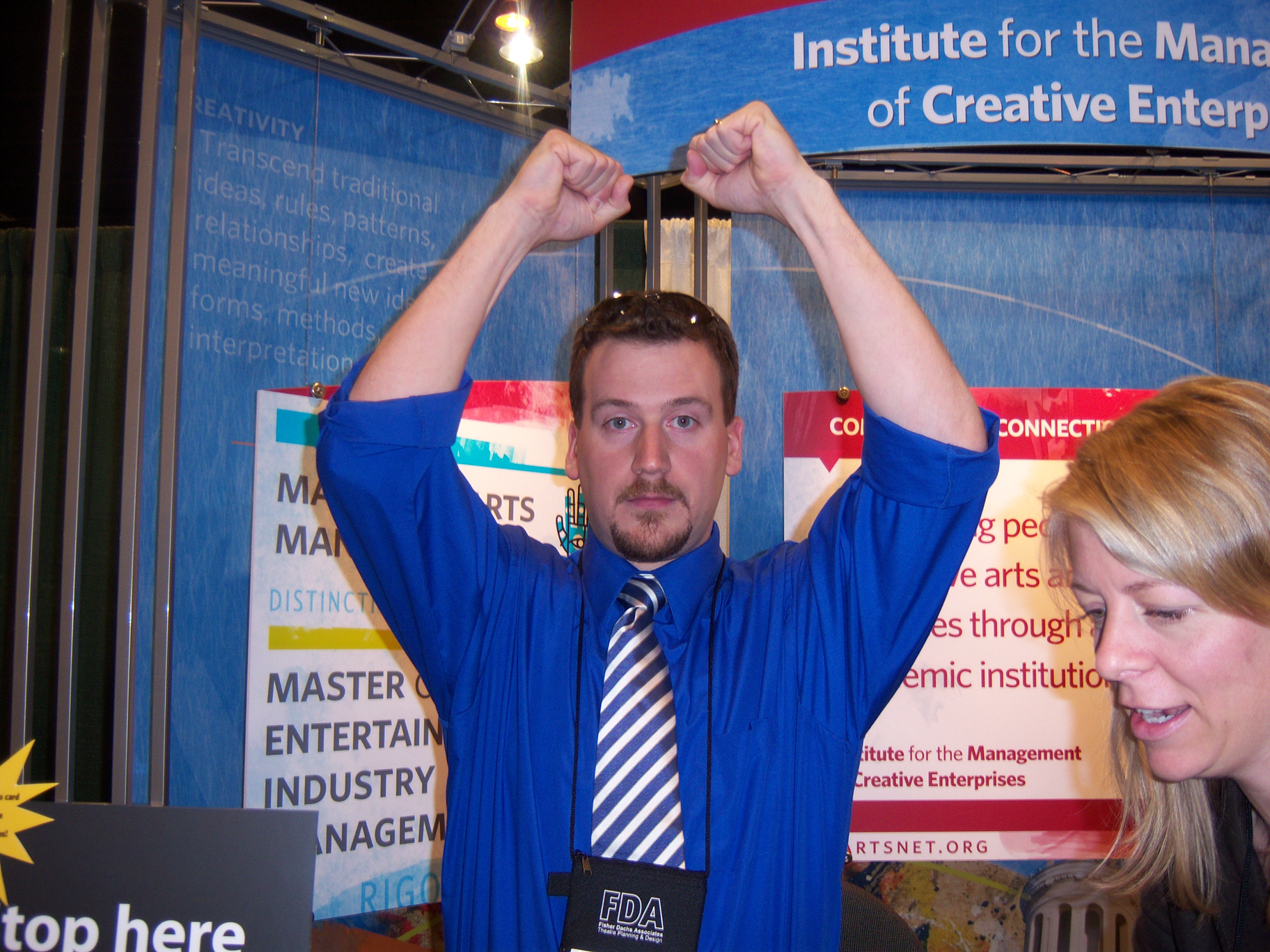
    Pop Arts Marketing held their own iPod giveaway last week for the National Performing Arts Convention in Denver. But their contest required a bit more skill than ours, as they set up an online game called Harpsichord Hero, which riffed on the popular Guitar Hero. For most of the Convention, I held the high score, but someone finally bested me on the last day of the event. On Friday, I got what I thought was a perfect score and celebrated a bit more than any reasonable adult should. Then when I looked at the leaderboard, I realized that my adversary was still slightly higher than me in the rankings.

    This is a photo of me in mid-celebration, before I was crushed by the realization of defeat:

    I look more terrified than happy, really.

    You can still play Harpsichord Hero and see my 2nd, 3rd and 4th place scores on the Pop Web site.

    Congratulations!

    Congratulations to the four winners of the Institue for the Management of Creative Enterprises iPod Nano giveaway. We collected business cards during the National Performing Arts Convention in Denver, CO, last week, and our winners were picked on Friday. The lucky quartet:

    • Jodi Schoenbrun Carter, Managing Director, Westport Country Playhouse
    • Julie Hawkins, Vice President of Public Policy, Greater Philadelphia Cultural Alliance
    • Conrad Kehn, Composer/Vocalist
    • Trevor Hunter, Technical Producer, Counterstream Radio

    To all of those who entered but did not win, please remember this quote from William Shakespeare: "Having nothing, nothing can he lose."