Cybersecurity has been on more people’s radars because of the recently exposed SolarWinds cyberattack, which impacted customers including the United States government. In this particular case, the breach was able to go undetected for months, indicating that even institutions with the highest levels of security can fall victim. As we begin the new year, arts organizations face a timely opportunity to consider their cybersecurity measures for remote work.
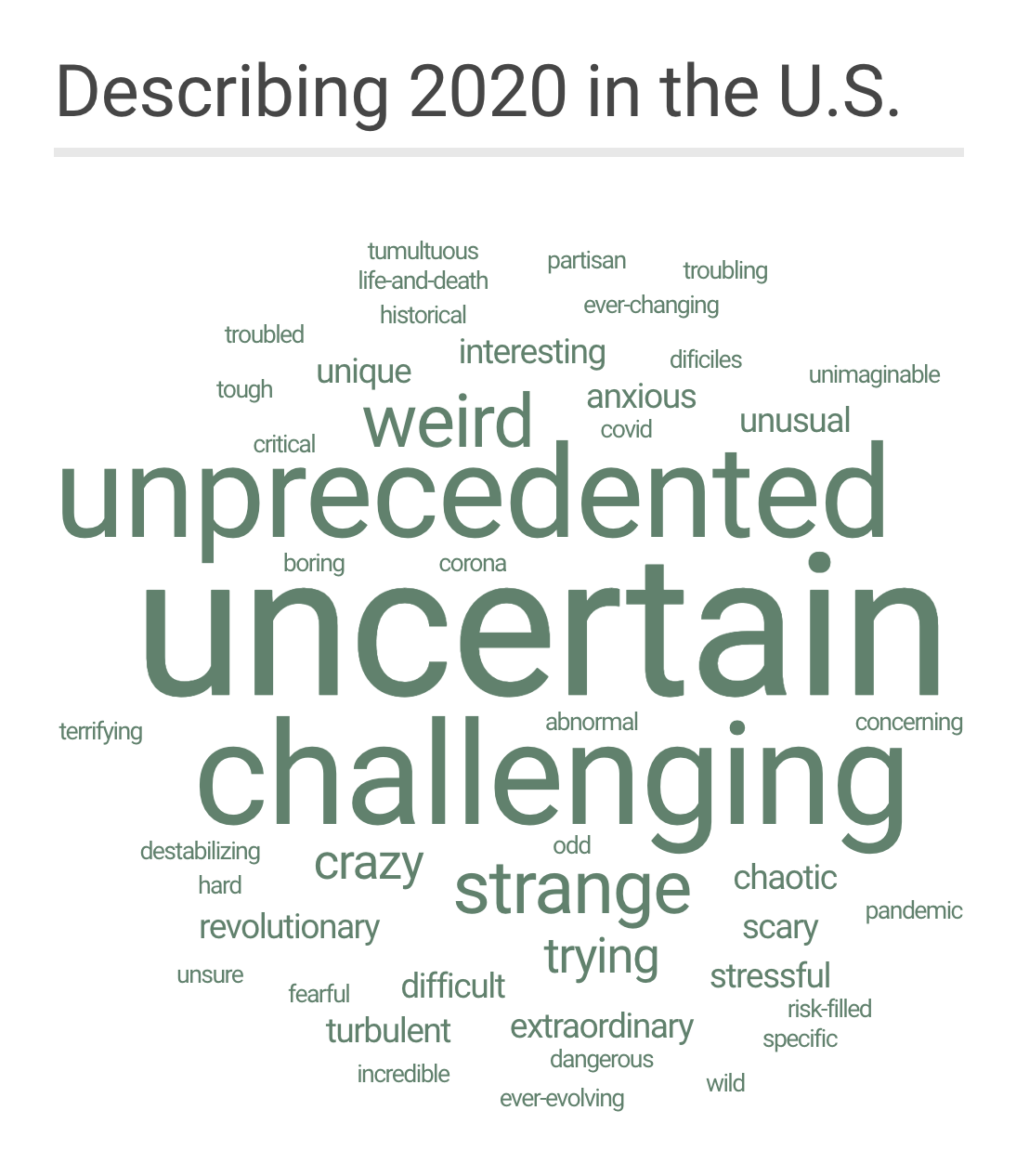
Letter from the Editor: 2020 in Words
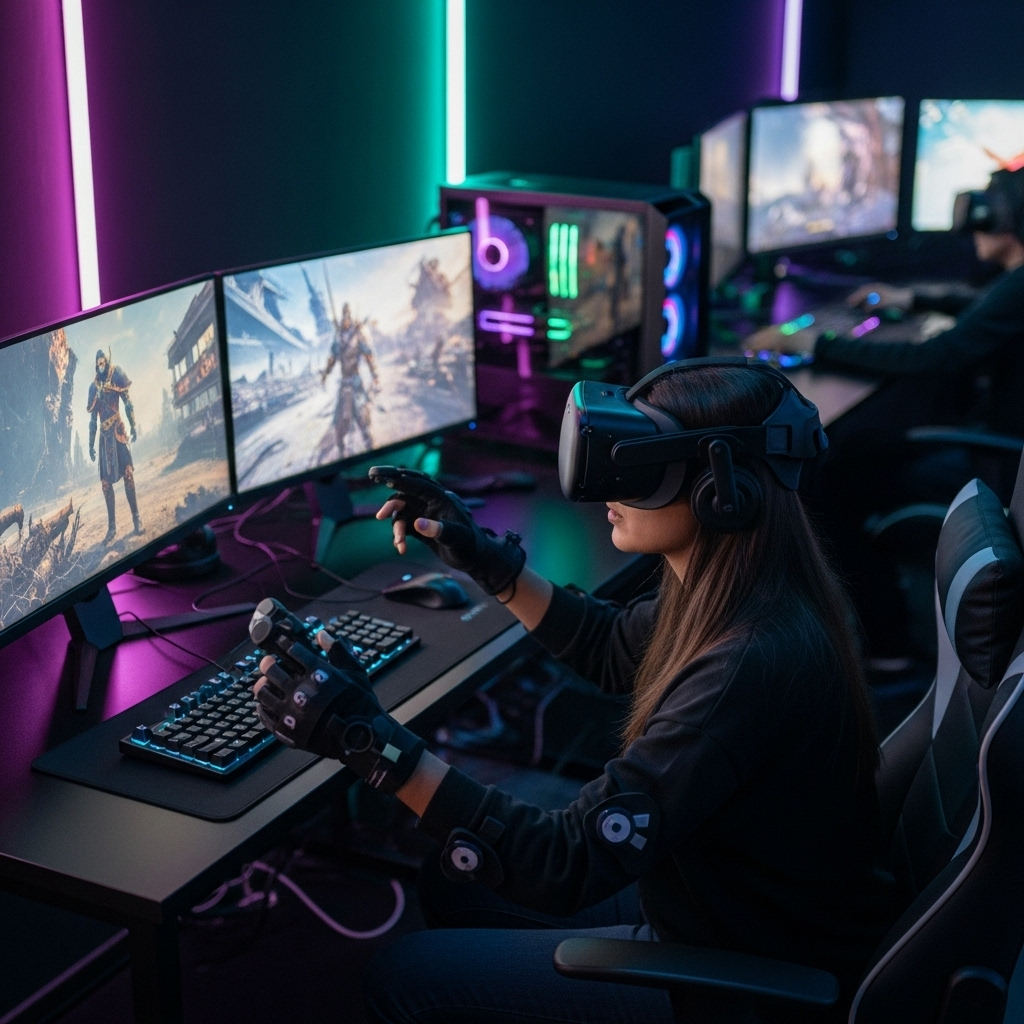
In the face of challenges and uncertainties, arts organizations were able to adapt in the form of VR operas, drive-in plays, virtual gallery tours, and in many other ways. While it was definitely a difficult year, hopefully we will also remember the strength with which we responded. Here’s to carrying that resilience into the new year and hoping for a less turbulent 2021.
Gifting and Giving for 2020 Holidays
Everything about this year has been different, and that includes how we show our appreciation for the people we love and the organizations we care about around the holiday season. Since in-person holiday gift exchanges aren’t possible, many people will be looking to the internet to send gifts to their loved ones near and far. We have compiled some trending gifts and resources to inspire your holiday gift giving. The end of the year also brings a rise in donations from end-of-year giving. We looked at some expected giving trends for this year and ways you can support artists and arts organizations.
An Investigation Into New Media Artists' Personal Preservation Practices
Relying on electronic devices and digital files, new media artworks are sensitive to technology’s constant upgrades and possible obsolescence. A single dysfunctional file may lead to the permanent loss of an artwork’s content. Aware of such vulnerabilities and urged by their duty to care for objects for future generations, museums have established various initiatives for collecting and preserving media art and have also started encouraging artists to adopt preservation practices themselves. Given all the different approaches, this article investigates major strategies and tactics adopted by artists who advocate for new media art preservation as part of artistic practices.
Artist Perspectives on Net Art and New Media
In less than three decades, the end of net art movement has been announced more times than its new beginning has been declared. The early 2000s brought a new group of net artists who saw utopian potential in the internet and began using it as a tool to demonstrate independence from traditional art markets. The net artists of today are more easily defined within the genre of new media art rather than net art since their work explores not only the technology of the internet but also the technologies employed on the internet and the socio-political contexts that it produces. Stereyl and Blas—two artists included in this post—reflect a sentiment of contemporary new media artists: the virtual ecosystem is not the same as it was a ten years ago. What defines new media art is a continuing analysis and reflection on this ecosystem.
The Streaming War During the Covid-19 Pandemic
The Covid-19 pandemic has drastically disrupted all business sectors, including the arts, culture, and entertainment industries. Unfortunately, the Covid-19 pandemic’s impacts are far more permanent for an audience-oriented industry that requires a high level of engagement. The business model might be fundamentally changed and there will certainly be a shift in how content is produced and consumed. While lockdowns and social distancing measures to contain the pandemic have had a huge impact on the traditional movie industry, the video streaming model seems to be the greatest beneficiary in this difficult time as people are isolated at home, which is the ideal condition for binge-watching. This white paper looks at the status of the streaming industry before and after the first Covid-19 outbreak.
For Theatres, Digital Experiences are Here to Stay
One of the biggest shifts that the theatre industry has seen as a result of the pandemic is the rise in virtual experiences. For millennia, theatre has been an art form that brings people together in the same space to share the buzz of excitement and thrill of emotion connected with live performances. However, Covid-19 has made this almost impossible. Over the past few months, institutions have been forced to make changes, but this has allowed for innovations in the field as well. The issue moving forward into the “new normal” is how to operate in terms of offering seasons as in-person or virtual experiences. I believe that theatres will choose to integrate both types of programming into their future season planning because of the developments made during the pandemic.
Orchestras' Post-Pandemic Digital Future
There is no use in waiting for the world to “go back to normal”: orchestras need to keep pushing forward and adjusting to the new reality. Covid-19 has proven, yet again, that people are interested in classical music, that it can and should have a stronger online presence, and that it has the power to bring peace—especially in times of uncertainty. Orchestras need to stake their place and assert their relevance in society. I envision a world where orchestras operate using “two stages”: one physical and one digital.
Case Study of China’s Entertainment Market under COVID-19
As we near the end of 2020, it is important to consider the emerging opportunities for live television as the world transitions through the global pandemic. Live performers sharing space is one aspect of a live broadcast. A second element is a live audience. The following case study focuses on how China restarted its entertainment industries and how other markets might adapt as well.
Tech for Enjoying the Holiday Weekend
Happy Thanksgiving weekend from all of us here at AMT Lab! Even if your celebration looked a bit different this year, we hope you were able to relax, connect with those you love, and reflect on the things that you still have to be thankful for in what has been an at times bleak year. Here are some ways technology has helped us celebrate Thanksgiving in new ways and more tech engagement opportunities for the weekend.
How Covid-19 Has Impacted Live Audience-Based TV Shows
One of the areas of the entertainment industry that has been hit the hardest by the Covid-19 pandemic is live audience-based TV. Not only is it difficult for show participants to film in person, but social distancing guidelines also prevent live audience members from attending normally. To investigate the effects of the pandemic on live audience-based TV, this post will look at the political, economic, social, and technological factors that are impacting live entertainment in the United States.
Third Place Theory and Virtual Platforms: How Arts Organizations Might Build Community Online
Arts organizations play important roles in their communities beyond providing access to art itself. Arts organizations are also valued venues for human connection. In LaPlaca Cohen’s Culture Track 2017, 68% of respondents indicated “interacting with others” as a draw for cultural participation, and about half of respondents in LaPlaca Cohen’s 2020 study, Culture and Community in a Time of Crisis, revealed desires for cultural organizations to communities “stay connected” during this time. These data points demonstrate that audiences look to arts organizations to not only foster connections through art, but also nurture communities beyond the art. One way to do this is by creating virtual third places. While arts organizations are unlikely to build entire VR-based worlds for their patrons, arts administrators might consider how to adapt existing platforms to help reproduce some if not all of the socially-leveling, conversation-focused environments they’ve worked to cultivate in their physical spaces.
Boosting Cybersecurity for Remote Work in the Arts
Remote work generally poses greater security threats to organizations than in-person work since, for example, employees use home networks and access organizational information on personal devices. Even before the Covid-19 pandemic, cybersecurity was becoming a bigger threat for smaller organizations and nonprofits. It may seem fatalistic to ask arts organizations to prepare for the worst cyberattack situation—one that might seem unlikely—but managers should think of cybersecurity as another aspect of making their organization stronger, just like ensuring patrons’ physical safety and protecting the organization’s financial health. Now that the pandemic has forced many aspects of arts organizations’ operations online, managers can use this opportunity to survey their organization’s digital landscape and potentially open the door for more remote work opportunities in normal times.
From the Hollywood Bowl to Drive-In Concerts: Live Music During Covid
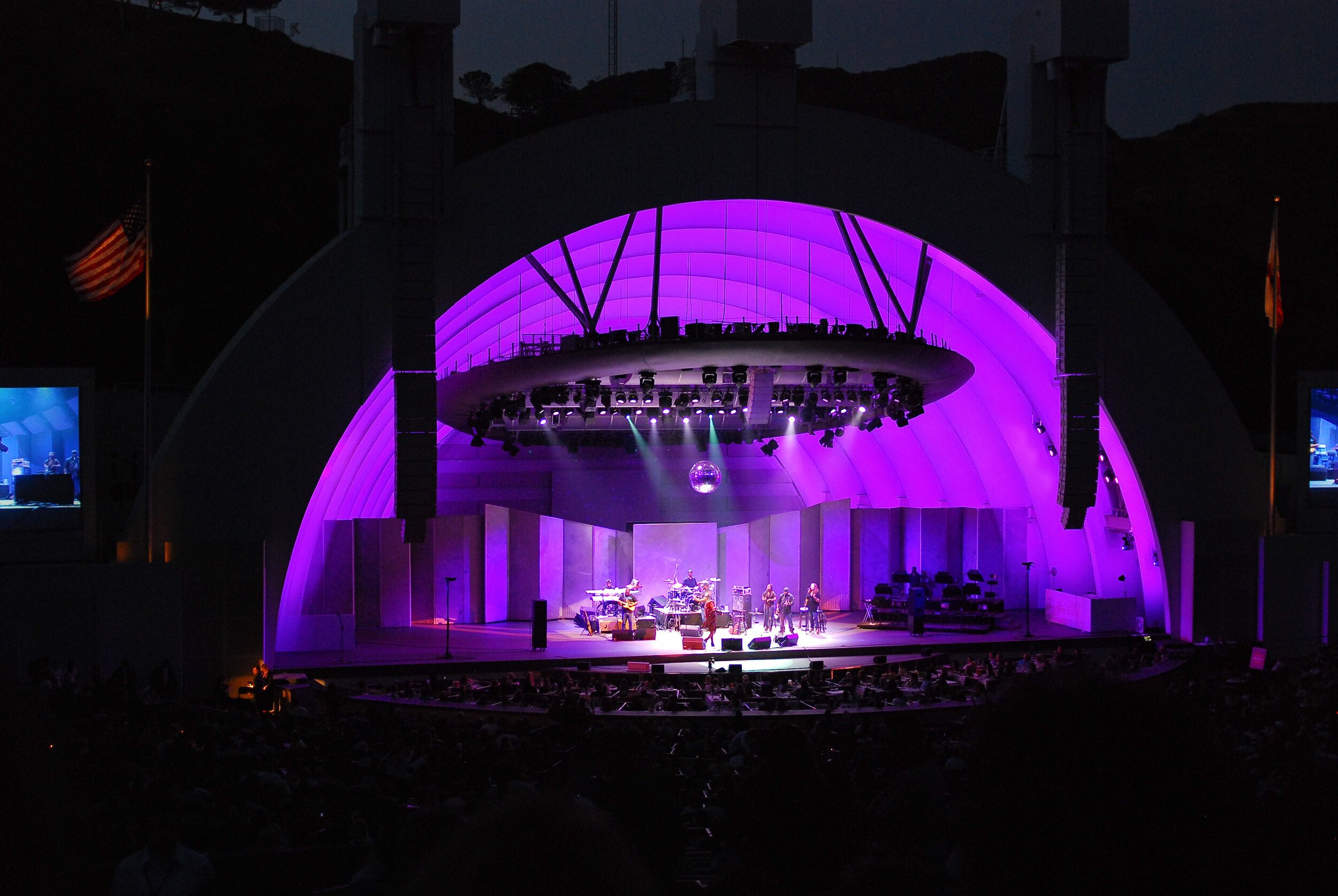
Live music venues—from large to small—have had to look for alternative ways to stay afloat and engage audiences while the pandemic prevents people from gathering en masse. Many places have turned to technology for solutions, frequently in the form of live streamed concerts. The following three cases provide a breadth of examples for how venues are innovating in the face of adversity and planning to implement technological solutions before and after reopening. The Hollywood Bowl is an example of a large, outdoor venue that could benefit from using software to map out what seats could safely be filled. As a small, independent venue, Mr. Smalls Theatre exemplifies how to use technology to remain connected with the community. A trend among artists and performing arts organizations across the United States is the repurposing of the drive-in model. We will look at how that can provide a safe, live complement to digital offerings.
Adapting to the Pandemic: The Enterprise Center and Wolf Trap
To investigate how the Covid-19 pandemic is affecting the live music industry, we will look to case studies of venues that normally host concerts. In this first set of case studies, we will look at the Enterprise Center and the Wolf Trap Foundation for the Performing Arts. The Enterprise Center is a 22,000 capacity (for concerts) arena in St. Louis, Missouri. Located in Northern Virginia, Wolf Trap Foundation for the Performing Arts was the first National Park dedicated to the performing arts. Performances take place at the Filene Center, The Barns, and Children’s Theatre-in-the-Woods, and the foundation also operates the Wolf Trap Opera Company. Because it is currently not safe for either of these venues to operate at full capacity, these case studies will investigate technology-based alternatives.
How Technology is Helping the Live Music Industry Respond to Covid
The music industry in the United States has been a thriving industry since the success of publishers selling sheet music in “Tin Pan Alley” in the late 19th century. Over time, with technological advances, the music industry has blossomed into the multi-billion dollar industry it is today. As you are probably aware, however, the live music industry has been hit hard by the pandemic. The music industry is very familiar with disruptions, but Covid-19 has posed a new set of challenges for it to recover from. This post introduces live music performance as part of the arts and entertainment ecosystem. Throughout the upcoming case studies, we will explore the different types of technology that are being utilized in live entertainment to assist in reopening and the technology that is allowing the public to be entertained.
Virtual Production in Television and Beyond
As discussed in Part I of this series, virtual production (VP) is the unique intersection of physical and digital filmmaking that blends video game technology with filmmaking techniques into the pre-production and production process. VP is not just the technology that allows the integration of digital and traditional techniques, but also the methods through which it is used. If implemented in the TV industry, VP could lead to reduced costs since it allows for increased efficiency in the production process. Many other industries could also learn from this streamlined process, including live entertainment and the arts.
An Introduction to Virtual Production and Its Use in the Entertainment Industry
Virtual production (VP) is “a broad term referring to a spectrum of computer-aided production and visualization filmmaking methods.” It is not just the technology itself, but also the methods through which it is used. In Parts I and II of this series, we are investigating the technology as well as the methodologies of VP in the broadest definition. The types of VP we will discuss in this post are visualization, performance capture, and LED walls. While VP has benefited the film industry specifically, as innovation with the technology continues, other fields of entertainment—such as live entertainment, fashion, and news reporting—are also leveraging virtual production’s capabilities. The arts and entertainment sector could benefit from learning more about these methods and considering how they could apply these technologies to create engaging virtual experiences.
Opportunity or Challenge? Artificial Intelligence for Museum Audience Engagement
To improve museum operations, museum management is increasingly taking advantage of artificial intelligence (AI) technology to understand their collection data, their visitors, and their exhibitions. Audience engagement is one of the most significant factors that museums need to consider in their operations: it is an implicit element that connects people to collections and should be achieved based on a deep understanding of visitors, collections, and exhibitions. Within the past few years, AI technologies have shown their potential to bring previously inaccessible insights to museums based in three main areas: machine learning, chatbots, and neural networks.
Preserving AI-Powered Art as Time-Based Media and Computer-Based Art
As innovation with using artificial intelligence in art making continues, museums’ conservation practices must also evolve. Continuing my research on AI art preservation, this article will narrow down the subjects to AI-powered art since it deviates further from what traditional conservation practices apply to. Unlike static digital artworks printed on canvas, AI-powered art always has temporal attributes, presents constant variation through an algorithm, and relies on digital files and equipment that runs continually. Although current studies have not focused on AI-powered art, it is worthwhile to see how ideas and practices of digital art preservation—such as those at the Guggenheim—are transforming in ways that could help preserve AI art in the future. Since manufacturers' innovation will quickly outdate museums’ technology supporting such art and it will be hard to tell when the doomed obsoletion will happen, being proactive is essential.