

David, Corwin and Amelia report out on Day Two of the 2010 National Arts Marketing Project Conference. Items discussed: disembodied panelists, Vimeo analytics, the Audience Engagement Platform, the value of quantifying intrinsic impact, and more.
NAMP 2010 - Day One - Recap Discussions
David, Corwin and Amelia report out on Day One of the 2010 National Arts Marketing Project Conference. Items discussed: keynote by Chip Heath, breakout sessions (pros and cons), designing conferences for people with varied experience levels, social media rock stars, and more.
True Personalization: Don't Get Filtered
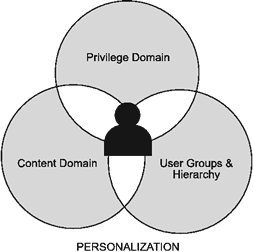 Researchers from Georgia Tech University recently published their first annual Future Media Outlook, an interactive online publication through nxtbook. Future Media Outlook tackles the concepts of information, technology and media in the future by focusing on "the trends that will fundamentally transform how content is created, distributed, and consumed..."
The publication focuses on six main concepts, one of which (arguably the most interesting) is true personalization - the ability to manipulate, personalize and filter a personal data stream. These manipulations change the information that is available or presented to a person based upon their previous actions and settings. True personalization will affect our consumption of products and services as well as how we spend our ever shortening leisure time. The click of a button or the modification of a setting could alter advertising, attendance, and data distribution for companies and organizations in incredible ways.
Researchers from Georgia Tech University recently published their first annual Future Media Outlook, an interactive online publication through nxtbook. Future Media Outlook tackles the concepts of information, technology and media in the future by focusing on "the trends that will fundamentally transform how content is created, distributed, and consumed..."
The publication focuses on six main concepts, one of which (arguably the most interesting) is true personalization - the ability to manipulate, personalize and filter a personal data stream. These manipulations change the information that is available or presented to a person based upon their previous actions and settings. True personalization will affect our consumption of products and services as well as how we spend our ever shortening leisure time. The click of a button or the modification of a setting could alter advertising, attendance, and data distribution for companies and organizations in incredible ways.
Due to the Data Tsunami created by the vast amount of information in this projected future, personalization will be required to focus content and allow people to navigate their own networks. Recommendation engines that compile our habits with our preferences will tailor our shopping, leisure and social experiences. People will know what events are going on, what food is being served, where meetings are happening, and where they most likely want to be at the touch of a screen. While this technology will show them exactly what they want to see, it begs the question : will they care about the information they are not receiving?
 For arts organizations, this could lead to new levels of advertising, event management and customer service, but it will also require new levels of tech savvy and strategic media planning. Data is powerful and no organization wants to be on the wrong side of a filter.
Personalized recommendations, advertising, and marketing have already been implemented on sites like Google, Groupon, and Facebook. An individual's habits and data input affect the advertisements presented to them and the ways in which services are provided. In the future, this technology will become even more sophisticated and less conspicuous. The digital wave of news and information will manifest itself in total customization and intuitively targeted marketing.
Data input and manipulation could become a new burden for many institutions. In a world of customized lives and filtered data experiences, the arts will need to create their own space, partner with other industries and stake a claim in the entertainment and cultural markets. Being able to track events by location, recommend performances from purchasing habits and cultivate new donors from restaurant choices are wonderful concepts that could arise from this technology, but they will need to be created and managed by the arts institutions themselves.
A world with true personalization focuses on providing services to fill a customer’s needs. Having a clear understanding of the market, the service being provided and the correlations that must be made will be integral to navigating a world of filters and preferences. This new world of data will be based on research, correlations and the value of time and information.
Georgia Tech does a compelling job at forecasting the current trends and focusing on where technology is leading us. This trend is real, and I believe it will manifest itself in the not-so-distant future. A world where patrons require automatically updated calendars, events and performances synced with their Google calendars, and interactive donor plans is just around the corner. Recommendation engines, geolocation-based event maps and social event feeds are quickly moving from the future to the present. It will be interesting to see if these predictions become reality and how the arts and cultural sector reacts to this new world of filters and data.
Older Adults and Social Media, Part II: Talking with the Experts
In my last post, I asked you to think about the ways in which your organization’s social media strategies might be affected by the growing number of users over age 50. While age diversity is just one of many factors to consider when thinking about your organization’s online audience, it can be used as a point of departure in order to examine broader ideas about how to foster audience engagement through social media. To learn more, I asked three experts to answer five questions about what the rise of older adults using social media might mean for arts organizations. Below, you'll find insight from Ron Evans, Principal of Groupofminds.com Arts Marketing Consultants, Brian Reich, Managing Director of little m media and editor of thinkingaboutmedia.com, and Maryann Devine, founder of smArts & Culture and a host of tomorrow's webinar, "How to Make the Most of Your Facebook Page".
When you first began advising arts organizations in their social media strategies, how strong was the tendency to appeal to specifically younger audiences? How did that translate into the content and tone of an organization’s social media identity?
 MARYANN DEVINE: At that time, the desire to reach a younger, new audience was usually the primary reason for branching out into social media. Most groups assumed that their older, traditional audience wasn't online, much less using social media, and that belief is still prevalent today. However, most groups didn't get that social media spaces demand a different voice -- more personal, more human -- than the marketing and advertising materials they were used to producing. They were reaching for a fun, hip tone; but in most cases, like your parents trying to be cool, they weren't very convincing.

RON EVANS: Reaching younger audiences has always been the initial main focus for the arts organizations I've come in contact with. I can't say that organizations were specifically writing content in a style to reach a younger audience (although that would be interesting). For the most part, the content I see today is not age-specific at all. And oftentimes the tone is still very institutional, where it should be conversational. David Dombrosky just had a great quote over at the arts marketing blog salon that I agree with: “When social media sites are used with a motivation for engagement rather than self-promotion, they often lead to those desired marketing outcomes of increased sales and brand awareness.”
 BRIAN REICH: The age of the audience has never mattered as much to me, and the people I advise. Everyone's lives are influenced by technology -- and now the Internet. Adoption was consistent across different age groups, but the usage patterns were very different, and that was where my focus has always been trained. Rather than look at younger audiences and their willingness to do certain things online, I wanted to identify what opportunities were available in terms of engaging any audience and then advise organizations on what that means to their work, online and offline.
Do you find that organizations are beginning to understand the implications of strong social media engagement across demographics, or does it continue to be largely seen as a way to reach younger audiences?
B.R.: Yes and no. I think there is significantly more willingness to experiment and explore what is possible online, and through social media, but most organizations still lack a deep commitment to what is required to fully engage and fully leverage what is possible. Using the tools is not enough -- its how you use them that's important. Most organizations still don't share enough. More organizations still don't listen enough, or well enough. Most organizations don't engage enough. We have seen organizations integrate social media into their marketing and communications mix without changing the way they operate, organize, their staffing, etc. I would argue that we need to shift and reset the way we do everything to make the kind of advances that are possible.
R.E.: Only now am I seeing that they are realizing that there are other segments who are using Facebook. The often-quoted statistic is that the fastest-growing segment on Facebook is women over 60. That's probably true -- Facebook is where all the photos from the grandkids and such are located now. But that may be all the people are doing -- they may not be playing Facebook games, writing on the walls of arts organizations, or even updating their own status. The statistics are still being gathered about their true activity, but since that age range has traditionally been great at supporting the arts, it makes sense for arts organizations to start talking to them too.
M.D.: My experience has been that most arts organizations, whose traditional audience skews older, still assume that they're not using social media. We haven't been effective in communicating to them research findings to the contrary. The Pew Internet & American Life project found that social media use by U.S. seniors doubled last year, and 13% of people 65 and older log onto a social networking site on a typical day.
Do you find that different age groups have different needs and wants from social media?
R.E.: If you take email as the main form of communication as the base, you can look outside of that to see what people are doing. Email is still the primary way of communicating for business purposes. Some folks are just using it for that (sending an occasional email) and are mainly using Facebook for all peer-to-peer communications. Some people use Twitter for that as well, but of course, your messages tend to be much shorter.
M.D.: I think the one desire that unites people of all ages using social media is connection. Younger people are more likely to be creating and publishing original content online, and that likelihood goes down with age. Across the board, the people Forrester Research calls joiners -- those who join social networks, for example -- and spectators -- people who read blogs but don't comment, for instance -- are most prevalent.
B.R.: I think different people have different wants and needs from media generally, online and more traditional forms -- but it goes beyond age. When looking at different audience groups there are four things that help to determine, from my perspective, what people want and need. Demographics (which includes age), psychographics (what people read, watch on TV, the car they drive, etc.), technographics (their comfort with different types of technology or expectations when using a particular platform or channel) and behavioral info -- specifically what they have done in a certain context before. Yes, age does impact how people get/share information and what they expect, but there are other factors that help to create a more complete and more interesting profile of an audience that we can use to consider how an organization might communicate.
Have you found that certain social media techniques are more effective for users of different ages?
M.D.: Sure. As I said, different age groups use social media in different ways, so, for instance, it might be effective to connect to your boomer audience through Facebook or get them to join a private social network because they're likely to be joiners. But getting them to post comments, photos, or come up with a creative entry to a contest might be a stretch because on the whole, they're not big on creating and publishing original content.
R.E.: Currently, I know of no arts organization that segments to different age groups, because Facebook and Twitter do not make it easy to do this. You could set up multiple accounts of course, but that's pretty cumbersome to manage. I think this capability will be coming though...
B.R.: I don't think it’s about the technique, but rather how the target audience gets/shares information, what their expectations are in a particular situation, etc. The same techniques will work, or not work, on the same audience depending on what the conversation is about, or the time of day or location of the interaction. Its common for organizations to look to the tactics, or the tools, as the solution to a communications challenge - but that is a mistake. The tools and tactics are what facilitates the engagement - and they are flexible enough to adapt to any situation. What organizations need to really understand are their goals (and how to measure their desired outcomes/impact) and the strategy for meeting those goals -- how they need to approach the challenge. What we do know is that every audience, in every situation, is fundamentally looking for the same thing: little m media... which I define as timely, relevant, compelling INFORMATION, meaningful EXPERIENCES that they want to share, talk to people about and similar, and/or STUFF that people value and want to have as a part of their lives. If you can provide good information, experiences and stuff, the mediums and tactics can always vary and you'll still find success.
Are there any tools or methods that can help us target our various demographic bases effectively? Any tips on how we can tailor our communication to specific audience segments while still maintaining brand consistency?
B.R.: Again, you have to look beyond just demographics and really start to appreciate the psychographic, technographic and behavioral information. There are lots of studies available, lots of free data that you can look at... and if you take different pieces and parts and mash it up you will find a pretty compelling profile of your audience form which will help you to make some choices about your communications efforts. Pay attention to how people act. Consider what people want. Ask questions. Build deeper profiles of your targets, and members and supporters, and everyone else, by collecting information and determining WHY someone took a certain action or favored a particular opportunity. If you can do that the rest will turn out to be much easier.
R.E.: Perhaps I can answer this best by telling you what's missing from Facebook. Facebook needs to offer a way to segment messages based on whatever grouping of people you want. As a patron, I should be able to be a part of different "clubs" that are connected to an organization's Facebook page, so I can segment myself into a club of my choosing. That club would have it's own status updates and leaders who would help the communication to happen around a shared sub-interest, such as "Opening Night Singles Club" or the "Matinee and Coffee" club. Right now, the one-size fits all of Facebook pages doesn't allow a whole lot of flexibility. I think this will get here eventually, and I think the capabilities to manage a social media presence inside an organization will also grow to be able to accommodate this new capability.
M.D.: Forrester Research makes a number of tools free and available on their site, including the Social Technographics Profile tool. I think that, in tailoring your communications to specific audience segments, you should picture yourself personally talking to real people in each of those segments in different situations. For instance, you'd use a different tone in talking to your grandmother than you would in talking to your daughter's college roommate, but you'd still sound like yourself. It's the same with the voice you use as an organization -- you can adjust for the context of the conversation while still sounding authentically like you.
Are You Making the 5 Biggest Facebook Mistakes?
 In preparation for next week's webinar How to Make the Most of Your Facebook Page, I asked Maryann Devine from smArts & Culture and Jacquelyn Kittredge from e-bakery social media to share with us the 5 biggest mistakes that arts organizations make on Facebook. Here is their reply:
1. Using Facebook as a broadcast channel rather than interacting with your fans. If your aim is to become invisible to your fans, this is the way to go. Facebook determines where you show up in your fans' default Top News stream based on the interactions of the fans and their friends with your page, and the kind of content you put up. Less interaction means your page is less visible to your fans -- the very people you want to reach.
In preparation for next week's webinar How to Make the Most of Your Facebook Page, I asked Maryann Devine from smArts & Culture and Jacquelyn Kittredge from e-bakery social media to share with us the 5 biggest mistakes that arts organizations make on Facebook. Here is their reply:
1. Using Facebook as a broadcast channel rather than interacting with your fans. If your aim is to become invisible to your fans, this is the way to go. Facebook determines where you show up in your fans' default Top News stream based on the interactions of the fans and their friends with your page, and the kind of content you put up. Less interaction means your page is less visible to your fans -- the very people you want to reach.
2. Using the same voice on Facebook (and other social media) as you do in your traditional marketing. Many arts managers have trouble making that leap, and it's understandable. They're used to communicating with their patrons in a particular style -- it's hard to shake that off. The reality is that using the same voice on Facebook as you do in your ad copy is just not going to work, and you'll likely be ignored. Social media spaces are more personal, like a backyard barbeque or the kitchen table, and you need to adjust your tone accordingly.
3. Forgetting that the page is for your fans, not for your organization. As Jacquelyn often points out, fan pages harken back to fan clubs. Fan clubs were all about giving special access and fan-club-only perks to the most loyal enthusiasts. Research shows that most people 'like' Facebook pages for discounts and special offers. Keep that in mind as your interacting with your group's fans.
4. Creating a personal profile or group for your arts organization rather than a fan page. Fan pages allow you to analyze stats on how people interact with your page AND the demographics of your fans. Personal profiles and groups can't do that. Fan pages can have an unlimited number of fans. Personal profiles are limited to 5,000 friends. Most importantly, Facebook is indexed by Google and your page can improve your Google ranking -- it may be easier to find your fan page through Google than your own web site.
5. Not having a Facebook Page at all because you already have a website. People are spending more time on social networks and less time on static websites, so Facebook allows you to meet your fans where they are already are.
In addition to addressing these common mistakes, Maryann and Jacquelyn's webinar will discuss:
The webinar is on Tuesday, October 19th from 2pm-3:30pm EST. Registration is $25. Click here to register today.
What should we adopt? How can we adapt?
This post also appears as part of the Arts Marketing Blog Salon hosted by Americans for the Arts.
While reading over the Arts Marketing Blog Salon entries this week, particularly David’s entry on the rise of the citizen critic and Ron Evans’ post on online reviews, I was reminded of an experience I had a few years ago when our local paper cut its classical music and dance critic. I had a meeting with many of the marketing directors in the city, who were understandably upset about the firing and convinced that their success was inextricably linked with newspaper coverage.
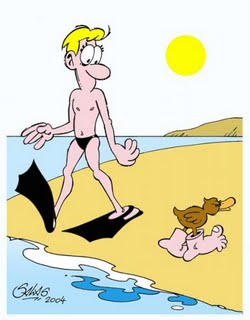
- Should we adapt to new technology before we adopt it for our own uses?
Many of these people had been in marketing for 30 years. When they first started out in the business, the primary marketing channels were TV, radio, and newspaper (and maybe billboard, telemarketing, or fax.) When a new medium was introduced, it might take a while to master, but that was fine. The learning curve was viewed as an investment because you knew that medium would still be around in five years.
Compare that to now. We have new, “must-have” technology platforms coming out nearly every 6 months to a year. Today, we are being pushed toward mobile apps for phones and iPads, geolocation social media like Foursquare, and more. We are not sure if these technologies will still be popular in three months, let alone five years down the road. Combined with the slow-but-steady demise of many of the “classic” marketing channels, it leaves us constantly wondering: how quickly should we adapt and adopt, when it comes to new technology?
Specifically relating to citizen critics, these two issues come head-to-head. Firstly, we have the citizen critics adopting new media platforms for distributing their reviews. Then, we as arts managers must decide if and how we will adapt to them—ignore them, embrace them, meet them on their own turf with a social media friendly press release, etc.? How do we decide?
When I studied communications technology in undergrad, one of the first things we talked about was Moore’s Law, the principle that the capacity of new technologies doubles every 18 months to two years. It applies not only to the memory size on a new laptop or the number of pixels in digital cameras, but it also describes the exponential rate of change we are experiencing as a society. I find myself thinking about this principle every time I hear that arts organizations “should be using” this new platform or that new tool.
Even though the capacity of the technology may have increased or the new platform may have reached critical mass in usage, my workload capacity typically has not increased nor has my motivation to take on one more task reached critical mass! Chloe Veltman’s post does a wonderful job in relating this back to arts managers, speaking to both a difficulty in adapting to the demands of social media (particularly Twitter) as well as a resistance towards adopting it as part of audience engagement.
So, typical of this age in which we are often left with more questions than answers, I leave you with two questions to mull over when planning your marketing strategy: What are the signifiers that it is time for your organization to adapt to a new technology? Which signifiers indicate that your organization should adopt the use of a new technology?
Online Video: We All Want The Same Thing
This post also appears as part of the Arts Marketing Blog Salon hosted by Americans for the Arts.
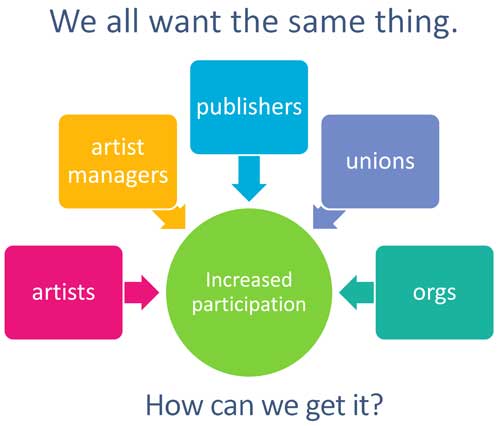 The world of arts management is changing, as all industries are changing, with the proliferation of technology. Especially with the increasing popularity of online media, we as arts managers have had to reconsider the way we see our performances. Is online video footage merely a vessel for our product? Or is it, in fact, our product? Or, can it also be a means to an end?
Many see social media and its democratization of internet content as the tool that will restore relevance to the arts, which critics claim is no longer present.
In recent weeks, we’ve seen changes in the social media landscape that make the issues surrounding performance footage all the more relevant. Twitter is adding video embedding capability. YouTube will soon be able to handle streaming video for content partners. These are signals of a trend that is already in progress—a movement of online video footage becoming not only accepted, but commonplace. Like it or not, online video is here to stay.
It was for this reason that I assembled a panel of experts on the rise of streaming video, and its interaction with our union relationships to speak at the NAMP Conference this November. It will be an opportunity to talk about the challenges that we face, as an industry, when it comes to video footage.
As an employee of an arts service organization and an arts management student at Carnegie Mellon, I’m in a unique position to examine performance footage in social media. Instead of having a vested interest in what would be best financially for a given organization, I can look at what is best for the arts industry as a whole and where the industry stands on these issues.
Over the past year, I’ve been looking at intellectual property issues as they pertain to performance footage. This research will culminate in an upcoming white paper for the Center for Arts Management and Technology. I’ve talked to unions, I’ve talked to organizations, and I’ve talked to artists. It’s fascinating to listen to their positions and how they perceive “the other side.”
Artists sometimes view online distribution of performance footage as a sort of Pandora’s Box: releasing their performance footage means relinquishing control of it and monetization of the content. They see organizations as trying to take advantage of their skills, or reducing the value of their work. Although they understand that organizations are struggling, they are struggling, too.
Organizations, on the other hand, are struggling with the realities of the economic downturn, as well as a decrease in newspaper circulation and in the general effectiveness of advertising in traditional media. They see new media as a lifeline, and take it on in order to secure their organization’s future. Some perceive that artists don’t equate saving the organization with saving the artform and the artist’s own career. This assumption leaves them puzzled and unsure how to proceed.
Although these positions seem diametrically opposed, both artists and organizations have common interests. In choosing and chatting with my panelists, who come from all different disciplines and affiliations, it seemed like there might be some fundamental conflicts between them. However, during our first conference call, I was amazed at how willing we were to listen and how much we genuinely wanted to understand each other’s viewpoints.
More often than not, I’ve found that we are all striving for the same thing—increased attendance, our own ensured success, and in turn, a bright future for the arts in America—we sometimes just have different ways of going about it.
Cultivating Citizen Critics
This post originally also appears as part of the Arts Marketing Blog Salon hosted by Americans for the Arts.
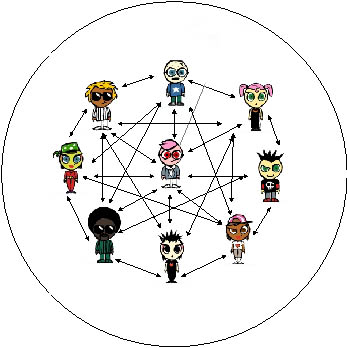 For years, I have heard the lament for the rise of “citizen critics” –individuals who use blogs, social networks and other social media tools to share their reviews of performances, exhibitions, films, etc. I have listened to a number of artists, directors, curators, and other arts managers bemoan the replacement of “true” cultural critics in traditional media with these self-published citizen critics. The complaints typically revolve around a perceived lack of credentials and lack of understanding for the discipline.
While I, too, bemoan the loss of criticism in much of today’s traditional media, I must point out that citizen critics are not new. In fact, they have been around for as long as there has been art about which to have an opinion. To be blunt, we are all citizen critics. Have you ever told someone your opinion about a work of art, a concert, a performance, etc.? Of course, you have. We all have. And more of us are sharing our opinions with each other (and the world) thanks to rise of the social Web.
In August, a brouhaha erupted online between two bloggers and an actor from Canada’s Teatro la Quindicina in Edmonton, Alberta after one of the bloggers wrote a critical review of a play in which the actor appeared. Aside from serving as a case study in how NOT to deal with citizen critics, this online fracas brought to the surface a disdain held by many artists and administrators.
The reality is that citizen critics are not going away. So rather than lash out at them or quietly complain about them, why don’t we identify ways in which our organizations can cultivate them?
Consider this perspective from *ahem* blogger Corinne at Blogging by the Numbers:
Theatre blogging is a niche pursuit. But then going to sit in a darkened auditorium and watch people speak – or in the case of opera, sing – someone else’s words multiple times a month (or some times a week) is also a niche pursuit. The internet, in all its multifaceted joy, allows a niche to flourish. Like attracts like (or compels like). It not only cements tendencies (that of reading about theatre, of continuing going, of knowing more than you could ever keep in your head), it also allows tendencies to grow. Knowing there is a community of people out there doing the same thing – theatre-going is a tribe as much as anyone else. Of course not all repeat theatre goers blog but, in 2010 with the ease of Google, I’d be surprised to find a repeat theatre-goer (who wasn’t directly involved in the industry*) who had never read a theatre blog. These people – the people whose names might otherwise be simply one in a marketing database – should be hugely valued (and respected).
How can you embrace citizen critics? Here are a few initial ideas to consider:
- Send press releases optimized for social media to citizen critics whom you’ve identified in your community.
- Host “meet-ups” for local online critics, where they can interact with each other as well as directors, performers, writers, curators, etc. There are proponents of hosting these “meet-ups” prior to the artistic experience and others who prefer to host them as follow-up events.
- Draw inspiration from programs like the Broward Center for the Performing Arts’ Teen Ambassadors and encourage young audience members in your community to write reviews and share them with their peers through online social networks?
- During intermission, encourage the audience to pull out their mobile phones and send status updates or tweets with their impressions of the performance.
- Consider using tools like Talkbackr to actively encourage your audience to provide you with feedback.
That’s enough out of me. What ideas do YOU have?
Where we are different, we are the same
This post also appears as part of the Arts Marketing Blog Salon hosted by Americans for the Arts.

- Silos belong on farms, not in arts organizations.
As a writer for the Technology in the Arts blog, I am constantly thinking about which topics will appeal to which artistic disciplines, which specialty, which skill level… and on and on. But the more I have to think about the segmentation of the arts management audience, the more I realize how broad many of the issues we discuss are.
A few months ago, I interviewed Alan Cooke of the e-fundraising company Convio, and we talked at length about the problem of organizational silos. In arts organizations, as in any company, conflicts often arise between different departments and may develop into an “us against them” mentality. As arts organizations become more prevalent in the social media space, it becomes easier to see which organizations have truly good internal communication between marketing, communications, box office and development departments.
We also tend to think that orchestra problems are unique to orchestras, theatre problems unique to theatres, and so on. For example, a few months ago I was at an opera conference listening to a presenter from another artistic discipline, when a colleague leaned over and whispered, “Ok, but what does this have to do with opera?” Unsure how to respond, I sort of nodded in agreement, but later, I couldn’t stop thinking about it. True, it didn’t have much to do with opera, but, I would argue, the point of the conference was to learn new things, not to be told about things we already know.
Working in the non-profit world, we usually don’t pay attention to discussions and proposed solutions going on in the corporate world. We don’t think that their solutions will work for us. I’m in a class right now entitled Social Media Analytics, where the students are split up into teams and assigned a major corporation as a client. At first, I expected that the corporations would have a pretty good handle on their social media presence, in terms of who they were reaching, who they were converting and how they were making money from their social media sites. What I found, however, was that the for-profit companies involved in the project are asking a lot of the same questions that I see posted by non-profit arts companies all the time. How do we track audience engagement? How do we convert brand awareness to sales?
Technology, especially social media, is an industry in high flux. It’s easy to think that there’s someone out there with all of the answers, but the truth is we’ve only begun to understand, let alone master the seismic shift in online behavior and the potential of these new tools. We still struggle to find tools that will accurately “read” sentiment from user comments and accurately extract what people are really saying about our brand. We question whether our tracking of sales due to social media is accurate. We wonder how much effort, which platforms, and which campaigns are really worth our time.
One of the things I am looking forward to most at the NAMP Conference is getting this broad perspective across artistic disciplines. Learning from each other is one of the most important things we can do, and I’m looking forward to seeing how arts marketing, as a specialty, has developed in the past year.
 In a world where we are bombarded with thousands of marketing messages every day, our society has grown hyper-aware (and hyper-wary) of advertising in all its mutated forms – from magazine ads to product placement in television shows, from celebrities dropping brand names during interviews to Facebook pages used solely to increase ticket sales. When it comes to using social media, motivation is a key factor in forecasting whether an organization’s efforts will succeed or fail.
Streaming, streaming everywhere
 Last week YouTube did a two-day test to preview streaming capability, a move that would place them directly in competition with streaming sites such as livestream, ustream, and justin.tv. Streaming capability was available to four select YouTube partners — Next New Networks, Howcast, Young Hollywood, and Rocketboom for two days. Like the existing streaming sites, YouTube will allow for real-time comments and, eventually, embedding in widgets and archiving old streams.
In all of YouTube’s communications , they only address giving this capability to their “content partners” anytime in the near future. YouTube content partners are people and companies that post regularly to the site and apply to YouTube in order to monetize their content with ads and rentals, obtain better quality for their uploads, and use YouTube’s Insight analytics tools. (Note: YouTube has a special program for non-profit partners. Check it out.)
Evan Rosenberg of Anaheim Ballet, a member of YouTube’s nonprofit program, produces the series “Anaheim Ballet: More Than Dance…” (See below for an excerpt.) He described the company’s hopes for its channel.
“YouTube has made it possible to not only showcase ourselves (Anaheim Ballet), but ballet in general to a global audience to the tune of over 24 million views. We look forward to using this additional tool (live streaming) in our continuing effort to spread the art of ballet across cultural, age, and economic boundaries.”
One of the videos on Anaheim Ballet's YouTube channel.
What are the implications for performing and performance arts organizations as streaming video becomes more and more ubiquitous? As a company or an artist, live performance is our product. Thus, we have faced issues with online video platforms since their rise in popularity:
We wonder if capturing that artistic product and distributing it online dilutes the aesthetic appeal.
We wonder if we should side with our artists and unions who deserve credit, payment, and a future in their industry, or with the insistent board member who says we must post video to capture the elusive younger market segment. We wonder if these interests are indeed in conflict.
We wonder if it cannibalizes box office revenues. And we wonder if we should give our audience members more credit; we know the difference between live performance and video, and so do they…right?
Online video is here to stay. This announcement is one more step in a long staircase of live streaming video becoming the norm. Fifteen years ago everyone had to have a website. Four years ago everyone had to have a Facebook page. Last year, everyone was going to mobile apps. With YouTube’s announcement, it’s easy to see performance footage moving from the movie theatre and the ballpark to laptops, phones, and iPads.
Speaking of new platforms for video, is everyone aware of the changes coming up for Twitter?
Tips for arts organizations working with web developers
What should arts organizations expect when working with web developers?
- Most web developers approach their work in a logic-driven, sequential manner. The structured nature of their work demands this of them. Correspondingly, developers will want to have all of the functionalities for a project locked-in prior to beginning the work. If changes are made after the start of the work, then the logic for the site may change, and the developer may be forced to redo all of his or her work.
- Arts organizations should expect their web developers to deliver the completed project as articulated in the project agreement. Be sure to walk through the project agreement verbally with the developer to make sure that you both have the same understanding of the deliverable.
- After your organization tests the deliverable, the developer should be willing to fix any errors in the code. These are often referred to as "bugs."
How do you know the difference between a bug and new work?
- When there is an error in the website’s code that prevents it from working, then the site has a bug. Most developers will fix bugs within six months of a project’s completion date. It is good practice to make certain that this is articulated in the development agreement. Since bugs can develop over time, it is also good practice to consider adding maintenance or ongoing support to the development agreement or as a separate annual agreement.
- If the website’s code is functioning properly but you would like for it to do something that wasn’t articulated within the development agreement, then this is likely to be considered “new work.”
- Many clients have difficulty understanding why their developer would charge them more money to make the project do what they want it to do. (And if everything is spelled out in detail, then the developer should not charge extra for making it work.) As mentioned above, making a change once the project has begun may require the developer to redo all of the work that they just completed.
- If you are vague or uncertain about what you want the final deliverable to do or how you want it to function, then you should brainstorm with the developer and hammer out these details prior to signing the agreement.
- If you have already signed an agreement and start asking questions that begin with phrases like “Would it be possible for it to …”, then you are most likely talking about new work.
- General rule of thumb: If it is broken or simply not working, then it is likely to be a bug. If you would like for the site to do something differently, then it is probably new work. This can be very frustrating for visually oriented people who have difficulty mapping everything out theoretically in advance and prefer to give feedback on something once it is “already up and running.” If you know that you will need to be able to give feedback and make changes (within reason) once a project is in the testing phase, then you should probably increase the budget for the project beyond the developer’s estimate by 20-30%.
How do you handle a situation when a developer stands behind the hours allotted to a project vs. standing behind the deliverable?
- Make certain that all of your development agreements are based upon deliverables and not estimated hours spent on the project.
- Pay no more than 50% of the project’s total cost prior to completion. This will give you more leverage in possible negotiations than if you pay for the majority of the work at the outset.
- Be certain that you haven’t changed the scope of work during the course of the project. If you did alter the scope of work, then you need to be flexible about the added burden placed upon the developer.
Audience 2.0, Part II: Thoughts for the Future
Check out Part I for an overview of the NEA’s recent report Audience 2.0: How Technology Influences Arts Participation While Audience 2.0 gives some useful statistics on technology and media participation in the arts, the report does not provide the answers or the data that I am looking for regarding arts participation and technology.
- How does arts participation through one technology affect participation in other technologies? For example, how does participating through television affect web participation?
- What impact has social media had on arts participation?
- How do people participate in the arts digitally and online? What are they doing on the web when they are participating?
- Has participation in the arts via technology affected online giving to arts organizations?
Audience 2.0 draws into question the timeliness of national arts research, the vehicle being used to conduct this research, and the understanding of where arts audiences are heading in the future. This report was a useful audience analysis for 2008, but the survey upon which Audience 2.0 bases its analysis lacked a sense of forward motion as well as the ability to predict future arts participation through rapidly changing technologies.
The data used in Audience 2.0 was gathered three years ago before many current technologies were available and before many new technology users had invaded the digital market. In his blog post Back To The Future, on Danceusa.org, Marc Kirshner states that:
Since the beginning of the 2007 survey period [for the 2008 report]:
- Four generations of iPhones have been released [and the Android network has been launched]
- Facebook’s user base has grown from 20 million to 400 million users
- The entire book publishing industry has been turned upside down by e-readers, such as the Kindle, Nook and iPad
- Millions of set-top boxes, Blu-ray DVD and home theater PCs have connected televisions to broadband Internet
- Hulu launched its online video service to the public
- More than 300,000 people viewed simulcasts and encores of the Metropolitan Opera’s Carmen
- The first 3-D network began broadcasting
The three year time gap between data collection and report publication created a lack of focus on many forms of new media and social networking platforms currently leading many technology discussions in the nonprofit arts industry today. Correspondingly, the relevance of the report in our current environment is brought into question, and we must remember that the report represents a snapshot in time more than a study of current habits. Due to the speed with which technology advances and its usage changes, traditional forms of data collection and publication no longer appear as useful for tracking these trends.
The survey asks about participation in the arts through technology, but Audience 2.0 does not provide answers about specific actions and their effects. The survey does not ask participants if electronic and digital media makes them more or less likely to attend a live event, but the report draws based upon a perceived correlation in the participation data. Without causality data, this correlation leaves us with a “chicken or the egg” dilemma. Does electronic/digital/online participation in the arts lead to an increase in live participation, or are participants in live arts events simply more likely to participate in electronic/digital/online arts events?
I would like to see more direct questions being asked of people who responded that they participated in the arts through electronic and digital media. Obtaining this next level of understanding will provide us with a deeper understanding of the effects of electronic and digital media on arts participation.
Audience 2.0 raises more questions than it provides answers, but it does show a commitment on the federal level to assess the impact of technology on the arts. I am hopeful that future reports will delve deeper into the seemingly symbiotic relationship between technology and arts participation by focusing more specifically on the digital/online arts participant.
The arts industry, beyond genres
 June is conference month for arts managers. We all know the drill: sit through sessions, hobnob, and think about trying to new things that you may or may have the guts to try when you get back to your desk.
I attended one of these conferences and have been listening to everyone’s feedback on the conferences they’ve attended and have come to the non-earth-shattering realization: we’re all having the same conversations.
June is conference month for arts managers. We all know the drill: sit through sessions, hobnob, and think about trying to new things that you may or may have the guts to try when you get back to your desk.
I attended one of these conferences and have been listening to everyone’s feedback on the conferences they’ve attended and have come to the non-earth-shattering realization: we’re all having the same conversations.
The conversations that I had and heard about social media at Opera America were nearly identical to conversations that I've had with my friends in the non-profit theatre and orchestra industry. Yet when we try to have cross-disciplinary conversations, people start putting up walls—“Well, he works in with an orchestra. Tell me how that research relates to MY patrons.” Many of our problems are shared, we just don't get together to talk about them. Although we have the technology to collaborate, find conversations and have discussions—many of us simply don’t.
In the same sense, conferences bring us together, but they also isolate us. They affirm labels and barriers in some cases, and in others, break them. When we stand strong as orchestra managers, are we still standing strong as arts advocates? When we are united as arts marketing professionals, are we still loyal to our own organizations?
One of the sessions from the Opera America stuck with me. The session, New and Unusual Opera (a play on words with “cruel and unusual”?) was about new ways to think about opera as an art form--thinking outside the boundaries of our industry. Opera industry vet John Conklin started the session by playing "Nessun Dorma" sung by none other than Aretha Franklin. (See below.) Of course, that got the expected chuckle from the audience. But Conklin went on to make the point that, for the majority of the American public, that’s opera. If people can embrace this music on their own terms, what are we doing putting up a barrier against their entry point? Why are we so against the crossover of pop music and opera, or opera market research and orchestra market research, or the marketing and development departments within our own organizations?
Challenge for this week: Have an experience in an industry outside your own. Subscribe to a development blog if you're a marketer. Follow an opera company if you work at a museum. New ideas spring from new experiences. Start having new conversations and start breaking down those barriers for yourself and for the arts industry.
Technology as competition for the arts
I recently watched Ben Cameron speak at the Emerging Leaders Conference at American University. He addressed the role of technology in the arts--that the internet was seen as the panacea for marketing but now it brings 6,000 competitors to our patrons' attention every day. (see below for similar address by him at the TEDx Conference) Ben Cameron at TEDx
In the Tech in the Arts blog, Corwin and I often talk about the ways technology can enhance and promote the arts. But we don't talk as much about the competition that arises from technology. As a field, arts professionals tout technology as the future of the business, and some of us embrace it. But as much as it is our friend, it is also our competitor.
I’m not suggesting that database software, mail-merge, and online information-capturing haven’t saved hundreds of hours of work and made life generally less tedious. But it has also made entertainment more accessible and available than ever before.
I've spent my first year in graduate school at Carnegie Mellon researching how arts professionals view and use video footage. There's much concern about video of performances competing the performances themselves, especially amongst the artists themselves. And I suppose there's a way to protect your organization against that--just don't produce video. And that's the route many smaller organizations take, when faced with musician's union fees or the reticence of an artistic director, or even just not being able to get a straight answer from the legal department. But then there’s competition from other arts companies, and entertainment industry. In many ways you can't protect your organization against the wider world.
People are getting used to consuming their entertainment in the comfort of their homes, or accessing it on the fly from mobile devices. They get it on demand. They get it personalized.
I still think the live arts add so much value to society—I wouldn’t be in the Master of Arts Management program or writing for this blog if I didn’t. I feel strongly that live arts have a lot on technology: the uniqueness of audience interaction, connection with large groups of people simultaneously, the shared experience of a story, and so much more.
I know I’m not the only one that feels that way in my generation. But I also feel like I’m in the minority. For every person like me who can recognize a Bach fugue or would much rather go see Il Trittico than Letters to Juliet, I know that there are probably 10, 25, maybe 100 other 26-year-olds out there who are happier consuming their entertainment solely via Glee on Hulu or playing Rock Band.
What is an Arts Organization's "Online Voice"?
On April 29th, Technology in the Arts will present the webinar "Finding Your Online Voice" featuring renown arts consultant Maryann Devine from smArts & Culture. We caught up with Maryann to talk about the idea of an arts organization's "online voice" and why it matters. What is an organization or individual’s “online voice”, and why is it important? By "online voice," I mean the tone and style of your encounters with people online. It should be an extension of the organizational voice you use elsewhere -- in your brochures, in your fundraising letters, in your advertising ... Unfortunately, most arts organizations use a bland, impersonal voice for their offline communications that's impossible to tell from their competitor down the street or across town. They mix in a little hype for the marketing writing, but so does everyone else, so everyone ends up sounding alike. How do you stand out?
Why is your online voice important? Because whether it's your web site, or your Facebook Fan Page, we're talking about spaces that have their own social norms and user behavior. It's like taking your board meeting voice into the cocktail party and then to the kitchen table at your neighbor's house. If you don't adjust your tone, people are going to look at you funny! You're not going to connect with people. And that's why you're online in the first place, isn't it?
How can we take stock of our online voice? You can take an inventory of all the places where your organization has an online presence. For example:
- your web site
- your email newsletter
- your blog
- your Twitter account(s)
- your Facebook Fan Page
- your custom social network
- forum spaces where your staff or volunteers participate in an official capacity
- blogs where your staff comments, on behalf of the organization
Then ask yourself:
- How do your online interactions sound next to your offline communications?
- Do they all sound like they're coming from the same organization, or do they seem wildly different?
- How do people online respond to them?
In the webinar, we'll talk about how to sound like YOU (the organization) and still strike the right tone for the online space.
How will this upcoming webinar help artists and arts managers to refine their online voice to better meet their goals? Getting closer with the people who love what you do -- that's a strategy that supports fundraising, ticket sales, awareness building -- just about any goal I can think of that might be on an artist or arts manager's agenda. A distinct and -- dare I say it? -- authentic online voice helps people find YOU and listen to you instead of tuning you out, like they do with most of the other organizations and businesses that are vying for their attention. When they know it's YOU, they'll WANT to pay attention.
April 29 -- 2:00pm-3:30pm Eastern -- "Finding Your Online Voice" -- Register today for $25
Technology in Arts Advocacy
Fellow TITA bloggers Corwin, David, and I attended Arts Advocacy Day yesterday in Washington, D.C. Americans for the Arts hosts this event every year. Over 500 arts professionals attended this year to learn about the issues and then lobby their Congresspeople. I thought I was a pretty good arts advocate. I always took the time to explain to people about the arts and how they change people's lives and enrich communities. But what struck me is how much I could have been doing this whole time that I hadn't been doing.
I assumed that you had to know ALL the facts, ALL the budget numbers, ALL the studies on the arts to be an effective advocate--or an advocate at all. But you don't. Facts help. Personal stories are even better. Simply taking action at all is the most important part, though.
Just because today is the day after Arts Advocacy Day doesn't mean it's too late to make an impact. (This is an excuse I'm ashamed to say I've used before.) There are going to be 364 more days after Arts Advocacy. While a designated day helps us focus everyone's efforts, our organizations, our funders, our artists and the cultural welfare of our nation need our voices continuously.
At its heart, this blog is about the ways that arts professionals and artists can use technology to create the future of art and culture. This may be as complex as building robots that make music. But it could also be as simple as one of the three ideas below.
Three simple ways you can speak for the arts today:
1. EASY: Write one paragraph about why the arts matter to you. Add a sentence encouraging an increase in NEA funding to $180 million this year. (more info here) Send it to your Congresspeople. (email form)
2. EASIER: Tweet a condensed version and tag with #arts. This was a trending topic yesterday and the tag is still pretty hot.
3. EASIEST: Join the Arts Action Fund (sponsored by Americans for the Arts). Click here, enter some info. It's free.
Wasn't that easier than building a music-making robot?
Does technology appeal to some sixth sense?
The iPad (insert hackneyed joke about the name here) may be the most powerful indicator of the new direction of our experience of museums and reception of art. Interestingly, the iPad coincides with the release of Nina Simon's book, The Participatory Museum. Worth a read, her book refines (and, in a sense, re-imagines) the institution of the museum, casting it as a changeable form that can relate and react to the visitors' experience. This got me thinking. As children we learned about our world through our senses, and an important sense was our sense of touch. Our understanding of our environment was shaped by the information that our tactile experiences relayed, and the power we did or did not have to change the physicality of our surroundings. Space was something that we inhabited, and in so doing, we left some sort of a tangible mark on the world.
Certainly it may be argued that our travels in cyberspace leave trails as well. But are our senses diluted when filtered through technology--and, as consequence, are we reinventing the role of art in our lives? As more and more people receive art from their computers, cell phones, digital devices, is some part of the artistic experience lost?
Certainly, there are many purists who will (and have) vehemently replied, "YES!" Have you ever heard the phrase "the smell of the greasepaint, the roar of the crowd"? Art, whether experiencing or producing art, is a multi-sensory experience. Although digitization of art enhances collaboration and enables the appreciation of a piece by a broader audience, does technology actual remove part of the essence of what it is to both create and receive the artistic experience? Or is the unique way in which the audience interacts with digitized art the new sixth sense?
As a student, I have become acutely aware of the manner in which I interact with my computer-based work compared to that which I can hold in my hand and mark up with pen or highlighter. I find that I am more present, and more focused, when it is not just me and my glowing computer screen. I don't care to read a book electronically, and though I have tried repeatedly to listen to audiobooks (so that I can, surprise!, mult-task), the book-experience is much less fulfilling when it does not involve a tangible, dog-earable, paper-and-ink product that I can hold in my hand.
Producers of today's art can, potentially, consider myriad factors involving reproduction, dissemination, and audience that change as rapidly as technology. The longevity of an artistic reproduction depends on the longevity of the media used to reproduce it. Watching the Met perform in high definition might, in some ways, be better than getting a nosebleed seat at the real thing--but is it as emotionally powerful as seeing the show live? How about appreciating the "Mona Lisa" daily as your desktop image, only to be startled by the appearance of the actual painting, which, in real life, may have hues you'd never seen? Even music pumped through headphones as you run on the treadmill or ride the subway--your other four senses (and likely your brain) are occupied by the business of existence: you are not a captive audience.
Is a diluted experience in order to reach more people a fair exchange? Are we willing to compromise (or perhaps I should say "accept a differently-imagined") artistic experience for the knowledge and understanding that the pixels reach further than the atoms of oil paint: if there are twice as many eyes or ears or minds receiving the art, does it matter that the collective attention of this audience may be only half as riveted as it would be experiencing the art live and in person?
What do you think?
Eric Whitacre dreams of his Virtual Choir Machine
This morning I had the pleasure of watching Eric Whitacre's latest virtual choir release (see video below). This effort, the composer's second, combined 185 individual singers from 12 countries recorded independently. Whitacre conducted the choir through a YouTube video. The videos were then combined together by producer Scottie Haines in a very familiar formation--the videos look like they are on risers, with Whitacre in the traditional conductor's position.
Whitacre has always been looked on as a sort of "rock star" composer in my peer group (I define them as "20-something music nerds"). My college choir was ecstatic to sing his pieces--they sounded new, modern, but with elements we could connect to both as musicians and listeners. They had cool titles, like Leonardo Dreams of his Flying Machine. (I mean, who writes choral pieces about Leonardo da Vinci's sketchbook?) And, of course, they contained those famous "shimmer" chords that we loved to sing. His "rock star" positioning is evident in his YouTube page. (check out the promotional photo that proclaims Marvel Comic/Criss Angel style "I. AM. ERIC!") Projects like this cement his reputation, and you have to admire him for it. Good music, marketed well.
Why is this project so fascinating? It's new, sure, but seeing the singers' heads, framed by their "natural surroundings" was especially compelling to me--more so than a simple video of a performance, like the YouTube Symphony Orchestra. Digitally created music presented in a digital medium rings true, more so than traditionally created music presented in a digital medium. It's the same reason why I've only been to one Met HD broadcast--I crave that feeling of "genuine-ness".
I've been doing a lot of research lately on video footage of the performing arts and have heard many different views on how video footage (especially streaming of entire performances) will either preserve or destroy the live performing arts industry. This debate exemplifies the inherent friction we sometimes find between the arts and new technologies. (There was a great speech given on this topic by Ben Cameron at the TEDx conference, if you haven't seen it yet.)
But I can't help coming back to my simple love of live performance. Nothing replaces it, in my mind. Maybe I'm atypical of my generation in that respect. Or maybe the fact that I get equally excited about Whitacre's 'Lux Aurumque' YouTube video and the Bach Sinfonia performing Bach's complete motets live in a concert hall shows that I am fundamentally and irrevocably a part of it.
Whitacre has always been looked on as a sort of "rock star" composer in my peer group (I define them as "20-something music nerds"). My college choir was ecstatic to sing his pieces--they sounded new, modern, but with elements we could connect to, and those famous "shimmer" chords that we loved to sing. His "rock star" positioning is evident in his <a href="http://www.youtube.com/user/EricWhitacresVrtlChr">YouTube page</a>. (check out the promotional photo that proclaims Marvel Comic/Criss Angel style "I. AM. ERIC!") Projects like this cement his reputation.
Upcoming Webinar - Putting Social Media Strategy Into Action
 March 23, 2010The Arts & Social Media, Part II: Turning Strategy Into Results
2:00pm-3:30pm Eastern
Presenter: Rebecca Krause-Hardie
Registration: $25.00
March 23, 2010The Arts & Social Media, Part II: Turning Strategy Into Results
2:00pm-3:30pm Eastern
Presenter: Rebecca Krause-Hardie
Registration: $25.00
You've dabbled with social media; you've got a general sense of how to think strategically; now what? In this session, we'll go beyond the jargon into the nitty-gritty and practical details of executing a successful social media plan. This is a highly interactive session. As the starting point, we'll explore your goals, questions and your projects and clarify the steps needed to turn them into reality.
In this engaging 90-minute session, you will:
Rebecca Krause-Hardie is a project manager, facilitator/trainer, social media strategist, & arts blogger, helping arts and non-profits use the web and social media effectively. Rebecca has over 20 yrs experience in new media, business, marketing, finance and project management. She developed and has been the Executive Producer of the award winning New York Philharmonic's Kidzone website, now in its 10th year. Representative clients include the Boston Symphony, NY Philharmonic, Detroit Symphony, MAPP International, Canadian Museum of Nature, NYS/Arts, Caring.com and the Paul Taylor Dance Company and Dance/USA.
Please Note: While this session builds upon ideas discussed in The Arts & Social Media, Part I: From Experiment to Strategy, this webinar is a stand-alone session appropriate for all artists and arts administrators.