Arts & Technology

Limited s[edition]

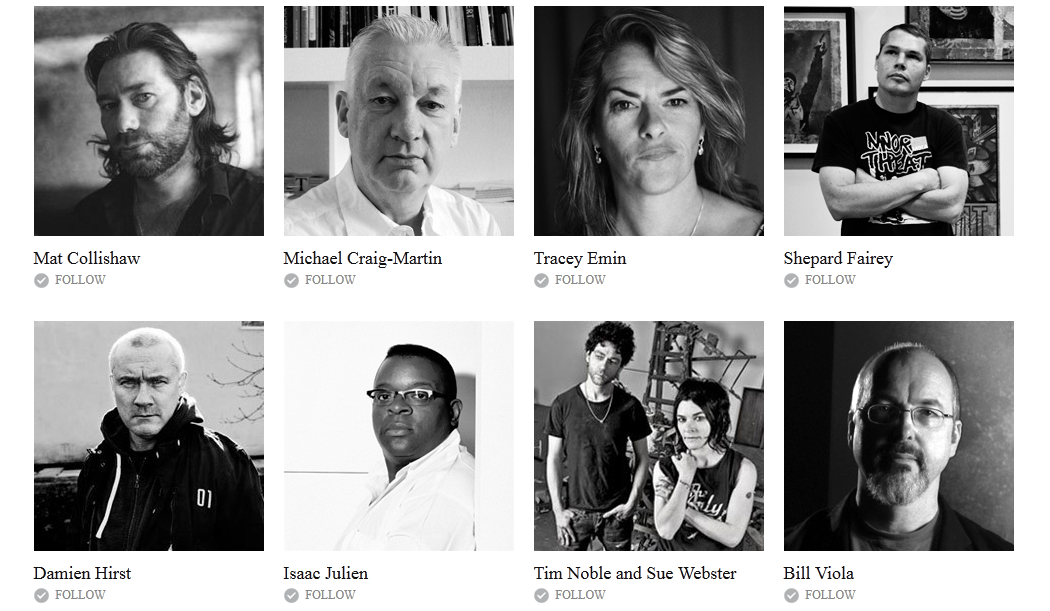
These past weeks, art newspapers and online publications have been aflood with articles such as “How to buy a Damien Hirst for £7.50” , “Would you spend £500 on pixelated art?”, and “Artists Join the Digital Revolution.” At the center of all this questioning and apparent disbelief is s[edition], possibly an artful manoeuvre of the word sedition, which means an insurrection or a rebellion. Nevertheless, true to the definition of their lexical namesake, s[edition] has decided to rebel against is the centuries old tradition of acquiring tangible art.

So just how revolutionary is s[edition]? Revolutionary enough to cause some stir, would be the answer of any auctioneer, accompanied with the resounding knock of a hammer. That is because s[edition] is essentially a new online venture that offers digital limited editions of artworks by leading contemporary artists such as Tracey Emin and Damien Hirst, that can be viewed on a host of equally digital mediums such as laptops, iPhones, iPads, or LCD TVs. Moreover, the prices of these limited editions vary from the joyously affordable sum of $12 dollars to the wait a minute price of $800 dollars.

In a sense, s[edition] is making the work of contemporary artists more affordable and accessible but its hard to overcome of a slight feeling of it being digital chicanery because what you see... is what you see. So what one is really paying for is, at times, just the digital image of an artwork. Since s[edition]’s prices are aimed to woo younger generations, are they genuinely encouraging art appreciation and collection or just creating a whole new market to profit from? Chances are, its a combination of the two, leaving s[edition] ambiguously perched among the notions of accessibility and profit maximization.

http://vimeo.com/31910206

While some artworks do seem to lend themselves well to the digital medium, such as Tracey Emin’s I Listen to the Ocean and All I Hear is You or Mat Collishaw’s Whispering Weeds, which incorporate video and audio components, others tend to feel more like a series of static digital reproductions. But then again the price for such editions, like Damien Hirst’s Xylosidase or Bognor Blue, is a mere $12 dollars. The most expensive artwork is a high definition video of Damien Hirst’s bejeweled skull, For Heaven’s Sake, priced at $800 dollars.

With the number of editions ranging from 10,000 to 2,000, should you purchase these digital artworks or more audaciously, make an investment in digital art? Perhaps, because on their website, s[edition] writes, “Once editions are sold out, you can sell your works to other collectors through the s[edition] marketplace launching soon.” So s[edition] is not only looking to create a primary market for digital artwork but also a secondary one. A novel idea indeed, but will it work?

Yes, it could. And it may work solely because, thanks to s[edition], one can now afford to own a Bill Viola or a Shepard Fairey. So even though the Internet is abound with high resolution images of artworks, s[edition] seeks to entice with the covetous concepts of ownership and authenticity. And while the limited editions remain undeniably intangible, one can nevertheless lay claim to a piece of art by a famous contemporary artist. In fact, the innovators and early adopters of the art world are already purchasing these works; some 110 editions of Damien Hirst’s Bognor Blue have already been sold.

However, the early and late majority will only start purchasing these works when they begin to value digital limited editions and become comfortable with paying for what they can only view on luminous digital screens. Then, and only then, will s[edition] truly be able to capitalize on the affordability and accessibility of its business model.

As of now, s[edition] signals a marked step towards the digitization of art, in not only what is represented but the representation itself. Seems like the art world is, after all, responding to the evolution of the touch.

If Facebook were a country, it would be the world’s 4th largest.

So here are a handful of hints, best practices and basic strategies, as compiled from Heather Mansfield’s blog Nonprofit Tech 2.0: A Social Media Guide for Nonprofits, to maximize the power of Facebook in order to connect with this entire population that is literally, just one click away.  Holiday bonus: if you are searching for a special holiday gift for that certain culture vulture or arts manager, consider Mansfield’s recently published how-to guide for not-for-profits titled, Social Media for Social Good. The perfect stocking-stuffer, this comprehensive guide details all the best practices, exemplar not-for-profits and step-by-step instructions (including handy checklists) for building your not-for-profit's online presence and brand- be it a website, an online newsletter, your "Twitter voice," a Flickr account, a YouTube channel, text-to-give technology, tablet applications, etc.  


1. Who is the face of your Facebook? Your Facebook page is as good as the social media manager behind it. Creating and maintaining a successful Facebook page (the rewards of which are plenty- Mansfield’s research highlights the direct correlation between the rise of online giving and the rise of social media) depends on the effort and efficiency of the person managing it. Read Mansfield’s blog entry on the 11 qualities of an effective social media manager to be sure your Facebook page is in the best hands possible.

2. Conquer the laggards. Still trying to convince certain skeptical colleagues that this “Facebook thing” is not just a fad? Collect, organize and present to these latecomers the statistics on social media usage (start with a digestible, easy and straight-forward approach, perhaps the video featured above), the trends with rising generations and the shift toward online giving. Still not buying it? Show them what other not-for-profits are doing on Facebook. If you do not join the Facebook community, you are doing your organization a great disservice by becoming less competitive and visible in the not-for-profits sector.

3. You must give some to get some. "Like" other not-for-profit’s on Facebook and engage in activity on their page, with sincerity and moderation of course. Comment on status updates, "like" new posts and respond to news, questions, and comments posted. Not only will you benefit personally from interacting with another not-for-profit and its cause, but by engaging on its wall, you promote your own organization, brand and Facebook page, encouraging Facebook users to explore more about you.

4. Share the love. When updating your own statuses or posting news and comments, be sure to tag any organization you mention (if, and hopefully, they have a Facebook page). This way, your update or post is posted to that organization's wall. Just one more way to put yourself out there…

5. At the bottom of any mass e-mail or automated e-mail response, include a “Like us on Facebook” link to remind your supporters of your presence on Facebook and to give them the opportunity to stayed informed on your progress and activities.

6. Evaluate and adjust. If time after time your posts go “unliked” and your statuses “uncommented,” it is time to consider a different course of action. Facebook is not a newsletter; talk with your followers, not at them. If your Facebook community is not reacting or engaging with the content you publish, evaluate what you are sharing. Is it dead-end content? Does it encourage user feedback? Save the matter-of-fact news for your monthly newsletter and press-releases. Take advantage of Facebook as a community building tool and a platform for exchange.

7. No one likes a Chatty Cathy. Too many status updates and posts per day and that “Hide activity" option on the user's News Feed becomes increasingly attractive.

8. Register for one of Mansfield’s January webinars on successful usage of Facebook and Facebook applications (or check out the other webinars offered on hot topics such as utilizing Google+, YouTube, mobile fundraising, and Twitter).

9. Someone in the office or organization needs a smartphone and needs to be on the mobile web. It does not have to be an iPhone, but in today’s 24/7 streaming news world, it is all about being and staying connected. It is an investment, but one that will be returned as mobile and online giving become the predominant trend.

10. Stay informed. It seems as though Facebook is evolving daily. Do not miss out on the possibilities and potential of the newest features, formats, and most importantly, opportunities for your not-for-profit to expand its reach. Read blogs about the newest changes and innovations in the social media world- a great place to start is right here at Technology in the Arts.

Hope you all had a wonderful holiday!

In An Era of Budget Austerity, Public Art Projects Take on Increased Impact

One of the unfortunate realities of the current economic climate is that with so many Americans unemployed, and others saving money instead of using it to purchase goods and services, the states, counties and municipalities that rely so heavily on sales tax collections are faced with fewer tax collections and larger annual budget deficits. With most local governments required to balance their budgets every fiscal year, they are forced to cut spending, lay off workers and delay investment on previously planned projects. Since the 2007 recession, this trend has spread towards nearly every corner of America. As it relates to the arts community, investments in public works of art, like sculptures, statues and murals, have been shelved due to budget cuts. However, at the same time, a rise in grassroots public art projects, funded using online crowdfunding programs, have helped deliver quirky and imaginative works of art to cities nationwide, bringing a small sense of civic pride back to areas devastated by the economic downturn.

We here at Technology in the Arts have previously looked at the crowdfunding website Kickstarter, which serves as a simple way for artists to solicit and accept donations for arts projects from people online. The way the site works is simple: an artist has an idea, he/she sets a fundraising goal that they wish to achieve, and they have three months to reach that dollar amount. The artist will often design a list of rewards for donors to motivate them to donate, and if the project does not reach its fundraising goal by the end of the three month time period, no money is spent and all money is returned.

Kickstarter features projects from many different categories, including theater, music, games and fashion, but its most unique and inspiring pieces come from the world of art, and more specifically, the projects that don’t belong to a gallery or museum, but instead to the people of a particular city. Projects that serve as public goods, ones that all people, from residents to tourists, can enjoy, are the ones I find the most inspiring and important.

Last week, The Atlantic Cities (one of my favorite city/urban policy sites) took a look at six successful and wildly unique public arts projects that have cropped up around the country. These projects, along with the thousands of others featured on Kickstarter, offer a fascinating glimpse into how ordinary people are using the cities around them to express their artistic creativity.

The city of Grand Rapids, Michigan, no stranger to the economic downturn, saw one of the more unique projects I came across: a slew of metal monkeys hanging from a pedestrian bridge near the city’s downtown. The project, titled “Metal Monkey Mania,” successfully completed funding last month.

Across the country, in West Berkeley, California, a set of large ceramic tiles by artist Juana Alicia, designed for a low-income housing complex, were finished, but sitting in boxes because she did not having the funding necessary to install them. Enter Kickstarter, and last week, she reached her goal of raising over $5,000 to finish the project. The beautiful tiles will be hung in the near future.

While not a physical piece of art, one of my favorite public art projects featured on Kickstarter puts everyone who comes across it in the position of artist extraordinaire. Artist Katie O’Beirne has left disposable cameras in New York City and other cities around the world for a few hours at a time, letting regular people who come across the cameras to take pictures of whatever their hearts desire. Taking a look through the images offers a fascinating look into what people choose to show in their contributions. Katie is compiling the pictures and hoping to turn them into an art show in the near future (as of the time of this writing, there is still time to donate to the project and make her dream a reality).

South of the border, in Puebla, Mexico, a group of independent artists have been painting beautiful murals across their city in an effort to celebrate the town’s rich heritage. The group has plans for over two dozen more murals, and has their own Kickstarter page dedicated to bringing more artists to the area that is currently very close to its target of over $29,000.

Nobody will mistake any of these projects as a perfect substitute for a large scale government or privately funded works of art. However, many of the projects featured serve as an inexpensive, quirky way to bring a sense of culture and artistic expression to cities large and small across the country that are grappling with severe budget cuts and austerity measures. And while the economic downturn has forced cities and states to cut back on the kind of 21st century arts projects that many of us in the arts community would love to see, the rise of crowdfunding sites such as Kickstarter and the entrepreneurial spirit of artists everywhere have shown that technology can help bridge the gap until the economy gets back on the right track.

(Photo credit: Colectivo Tomate)

In Case You Missed It - November 2011

Thanksgiving is coming up, which means a brief hiatus in the posts here. Let’s take a quick look at some of the great posts we had this month, and hear from our bloggers about what they’re thankful for in the realm of technology. Technology in the Arts took a look at turning digital billboards into art galleries and discussed Facebook and arts organizations in honor of Mark Zuckerberg’s visit to Carnegie Mellon University.

Congress took some time this month to consider a bill to reduce internet regulation, and we discussed how that would impact Net Neutrality.

We also had an amazing guest post by Ashley Paulisick about smartphone apps in art museums, and an interesting piece on how artists are informing the public about pollution. I hope you check out all our wonderful articles from November. Now let’s hear from the Technology in the Arts staff about what they’re grateful for this holiday season –

Elizabeth Quaglieri -

"I am thankful for ARTStor Digital Library. Nothing makes you appreciate a work of art more than to get up close and personal with the brushstrokes, the pigment, and your computer screen. Zoom in, zoom in, zoom in. Happy Thanksgiving to all our Technology in the Arts Followers!"

Sean Bowie -

"As it pertains to technology, I'm thankful for the three things I can't live without: Google Reader, The New York Times, and HBO. And I can't forget the main things I'm thankful for: my family, my friends, my health, and the chance to learn and work with so many talented people on a daily basis here at Carnegie Mellon."

Naina Singh -

"Technologically speaking, I'm thankful for a lot of things, but a few stand out simply because they are outstanding:

Google Translate and Google Maps, for without them I'd be lost both physically and linguistically!

Google Art Project for enabling me to see what I never thought I could!

Artfinder and Paddle8 for helping me discover new art and artists no matter where I may be!"

Andre Bouchard -

I am thankful for the ever widening world of the arts online.  I am thankful that I can now access challenging content through portals like http://www.ontheboards.tv/

Rachael Wilkinson -

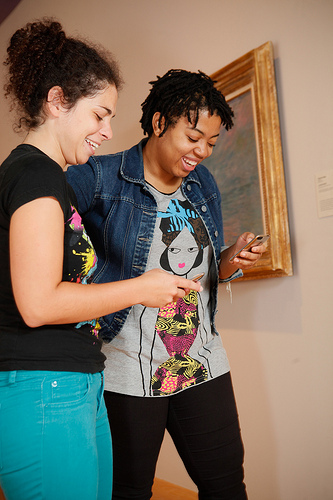
I'm grateful that art musuems have embraced modern technology and now let me whip out my cell phone while in the galleries. What once felt taboo now seems encouraged.

Tara George -

I'm thankful for Spotify this year...totally.

That's all folks - have a happy and safe Thanksgiving!

Pollution and Art, Intertwined

In the world of public policy, change is often quite difficult. Stakeholders are often fearful of abandoning the status quo, reluctant to invest the resources necessary, or ignorant of the need for systemic change. With many economic development issues facing the emerging economies of countries like India, it’s often difficult to make important issues stand out. Sometimes, the most effective way to show the importance of a needed public policy change is through art. With more and more artists using nature as a way to draw attention to policy issues such as climate change and drought, a group of artists are using the Yamuna River, one of the most polluted rivers in the world, to draw attention to the affect that pollution is having on the environment and the people who count on the river for survival.

Located in northern India, the Yamuna is the largest tributary river connected to the Ganges, and serves as the primary water resource for millions of people. There have been numerous attempts over the years to cleanse the river, but to no avail: the Indian government has spent billions of dollars on restoration efforts, an Indian Supreme Court ruling ordered an extensive cleanup, but the river remains severely polluted. The reason for the pollution, many believe, stems from sewage treatment plants that line the river, and the government has done little to impose regulations or shut down plants. With the river currently supplying about 65 percent of the city of New Delhi’s water, this is a significant problem.

This is where the artists come in. Titled Project Y, this public art project is the brainchild of the Ministry of Culture in Hamburg, Germany. As part of the overall 60-year anniversary of diplomatic ties between India and Germany, a series of events, showcases and exhibits are taking place over a 14-month period, and Project Y is one part of that, offering a juxtaposition of two similar rivers under drastically different conditions: the Yamuna, and the Elbe River, located in eastern Germany.

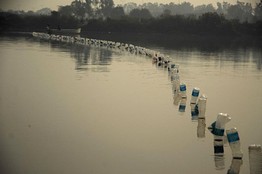
Earlier this month, both exhibits consisted of sculptures, multimedia presentations, and information about the rivers, showing in stark detail the contrasts between the two. At Yamuna, for example, one exhibit showcased rows of dirty plastic bottles as light holders; another simply showed a pig carcass, floating in the river for all to see. One of the technological exhibits of the Yamuna show was a fountain that pumped water from the river, purified it through five levels of filtration technology, and spurted the water in the air above the crowds.

The project also includes screenings of films meant to educate Indians about the Yamuna, and concerts that will be played on the banks of the river itself, featuring artists and performers from both Germany and India.

The idea behind the project is to show how pollution and neglect have left the Yamuna River in a dangerous state, and to raise awareness in the hopes that enough people will see the devastating impact that bad public policy can have on such a crucial part of everyday life. Organizers in Germany are focused on the idea of creating ecologically sustainable rivers in cities and urban areas, and as India grows in size and has to deal with the critical infrastructure and sanitation needs of millions of new people, a look at how governments and citizens in Europe have treated their habitat offers a stark reminder of the challenges ahead.

The co-creator of the project, Ravi Aggarwal, describes the thinking behind the project:

“We need to re-think ecology and rivers in the 21st century where questions about human sustainability and futures have become key. Art is the framework which allows diverse ideas and imaginations to coexist and helps in repositioning ourselves in relation to nature. The river is not ‘polluted’ or ‘clean,’ but is a beautiful landscape of the city, with many layers of aesthetic, social and political meanings.”

Reactions to the project have been mixed. While many have admired the exhibit’s brazenness and honesty, many remain skeptical that such a show can produce the type of change that is needed to purify the river. However, with considerable international media attention focused on the project, it is perhaps sending the right signal to lawmakers and stakeholders that enough is enough, and that the Yamuna, and the dozens of other rivers that make up the Ganges network, are far too important to India’s future to be treated as a dumping ground for sewage and waste.

Much like the intersections of art and technology have brought forth incredible and diverse works of art, it is the intersection of art and public policy that represents an exciting new area of possible change. With so many policy issues present in politics today, it often requires passionate individuals to think of new and exciting ways to raise public awareness. With exhibits like Project Y, one hopes that art can provide the visual nudge needed to start the process of fundamental systemic change.


Green Art, Green Energy

It’s hard to dispute that the United States is in need of more efficient energy solutions, and green energy is an appealing solution. During a November 8th appearance on The Daily Show, former President Bill Clinton predicted solar energy “within five [years] will be competitive in price with coal”. Solar energy undoubtedly has earned the attention of the energy industry, but what about the art world? To recap, solar energy is the energy created by new technologies that converts the energy of light into electricity. This article will focus on the energy created with “solar cells” or “photovoltaic cells”, which are panels that create solar power using the photovoltaic effect.

Which, to be fair, begs the question: If something utilizes solar panel technologies to create energy, therefore has a specific function, can it be art? That’s a high level question that I’m not prepared to get into, so for the sake of this article let us assume architect Louis Sullivan was correct in saying “form ever follows function”.

Upon consideration, it should be quite obvious the form that would be denote the aforementioned function of converting light to electricity: a plant. After all, nature has the best system for converting light into usable energy, why would our own solar-power generating objects assume any other form?

SunFlowers, An Electric Garden as seen at night

SunFlowers, An Electric Garden designed by Mags Harries and Lagos Heder for Austin, Texas answers just that question with 15 giant SunFlower sculptures covering a thousand feet of space along the Interstate 35 Highway. The solar flowers collect energy to power their blue LED lights at night and send the remaining energy to the city’s power grid. At the time of this article, 330,316 kilowatt hours of clean energy have been generated by the sculptures. That’s roughly the equivalent of 10,735 days of electricity usage in an average American house.

If that scale seems a little large, perhaps Darren Saravis’s SolarFlora will appeal to you. These thirteen foot flower sculptures generate solar energy to power its own light as well as outlets at the base of the sculpture that passersby can use for a quick charge. SolarFlora is from the product-development firm Nectar Design, and meant to generate energy from within the heart of a city.

Floralis Generica, open during the day

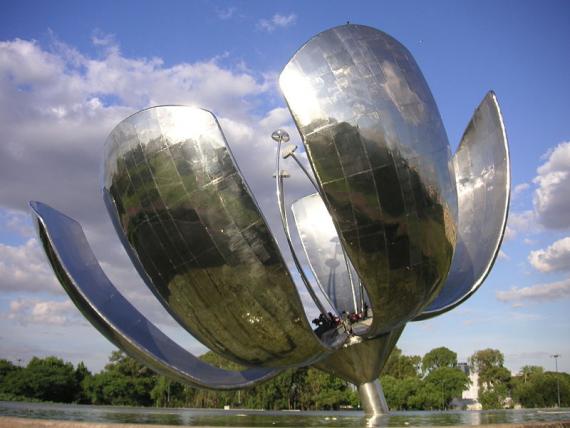
Perhaps the most stunning visualization of this is Floralis Genérica of Buenos Aires, Argentina. Built near the National Museum of Fine Arts, the giant sculpture responds to light and opens its petals during the day and shuts them at night. Four nights a year this stunning piece is lit and remains open after dark. The name, Floralis Genérica, is meant to represent all flowers in the world and its opening daily symbolizes a hope that appears anew each day. All of these solar-powered art pieces personify a future possible with clean energy sources. If creating green energy can be something beautiful, what reasons could we have not to utilize it?

A Visitor's Experience: The Good, the Bad and the Ugly of Smartphone Apps in Art Museums

Having the good fortune of living in Europe for a few years with many of the world’s most beloved fine art institutions in my backyard, I was pleased to test a myriad of their recently launched apps. There is much to be said for the wonderful ways in which mobile devices can enhance the visitor experience. Of course, there are also downfalls attributed to the growing pains associated with mobile. Often I was impressed, entertained, educated, annoyed, and confused – sometimes all simultaneously. Since mobile planning and implementation can be a backend-focused undertaking for museum staff, the following simply offers the perspective of a museum visitor with a smartphone in tow.

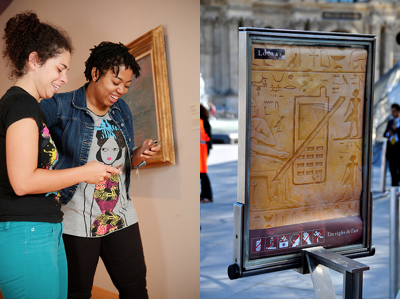
Mobile in Museums Visitors use a Davis Museum digital art museum guide. Photo credit: Dot Diva. No cell phone sign at the Louvre. Photo credit: Tom Arthur.

The Good

  • BYOD (bring your own device): Mobile devices are increasing all-in-ones for just about everything. Visitors can skip the line for an audio guide because with the same (if not more robust) content available on their own familiar device, they have the distinct advantage of being audio and multimedia guide self-sufficient.
  • Deeper connection: With the inclusion of video and other multimedia content, visitors are offered a closer connection to the artists. The Royal Academy of Arts did a wonderful job incorporating video interviews with Academicians in their 2011 Summer Exhibition app. To back it up, a study conducted at the Davis Museum and Cultural Center found that “on average, participants spent about 39 seconds with a work of art when viewing art without the application, and about 3 minutes and 15 seconds viewing art while using the application.”
  • Dialogue: Museums are historically notorious for offering one-way authoritative information. Since most museum mobile apps are outfitted with social media tools such as Facebook and Twitter, visitors are afforded a voice to communicate with the museums (and they actually listen).
  • Save and share: I still bring my sketchbook with me on museum visits for notes and doodles, but museum apps make archiving and sharing objects of interest easier to come back to when they offer a “favorite this” feature. Other mobile tools such Pinterest and Twitter hashtags also make the impact of a visit more enduring and accessible.
  • Off-site relevance: Many museum apps make content valuable off-site as well as during in-person visits. For example, I dashed through Tate Modern’s Miró Exhibition in a rush, but later read about the impact of the Spanish Civil War on Miró’s work via the exhibition app while waiting to board a plane in Pittsburgh. This pared down version of a catalogue is easier to haul around and cheaper.
  • “Edutainment”: Why not learn while being entertained? The Andy Warhol Museum’s DIY Pop app is a great example of experiencing both. We have a frustrated museum education staff member to thank for sparking interest in developing a way to digitally educate the public on Warhol’s silkscreen process while replicating it using our own photos.

The Bad and The Ugly

  • Connectivity: Yes, a visitor may skip the line for the audio guide, but once in the gallery app download capability may be spotty since many institutions do not offer Wi-Fi (the cost of which can be a prohibitive expense). To make matters worse, the thick walls of many museums can make using a cellular network virtually impossible. If a visitor can access their cellular network, many multimedia rich museums apps can be data gluttons, especially for foreign travelers out of their network area.
  • No phone/camera policies: I’ve become a pro at the art of looking like I’m texting someone, when in fact I’m taking prohibited photos and spreading them on Twitter and Facebook. Some museums are finding it difficult to strike a balance between preventing copyright infringement and fully embracing the use of mobile technology. With apps like “Cards,” you can understand the dilemma of wanting to encourage word-of-mouth marketing while not irresponsibly promoting the dissemination of images not in the public domain. But, as a staff member of the Royal Academy of Arts pointed out to me: “If all the 50 people who came through in the last two hours went home to their Facebook and their Flickr, posted photos of this fantastic place with comments, think of the social media publicity. Think of the viral marketing.” Institutions like the RA are well positioned to proactively ask for artists’ permission for visitors to use and spread images of their work online.
  • Slow take-up: Tech savvy visitors who would enjoy a mobile option for museum content consumption are likely a little bummed that art museums tend to lag in mobile innovation. It’s hard to blame museums for not leading the way. Shelley Bernstein, chief of technology at the Brooklyn Museum admits on the museum’s blog that: “[W]e don’t have a large audience for our app.  In the galleries on any given day...you’ll see very few visitors pulling out smartphones.” There is a significant demographic gap between the typical museum goer and smartphone owner. Yet, since it is predicted that mobile web browsing will outpace Web browsing on desktop computers by 2015, expect to see a jolt of further mobile enthusiasm from museums on the horizon.

Around the Corner

For individuals such as myself, who are certain their value as a human is inextricably tied to the use of a smartphone, 2010–2011 was an especially great time to be wondering the galleries of Tate Britain, Tate Modern, The Royal Academy of Arts, The Louvre, and more. These institutions’ fledgling apps are a solid start to their entree into mobile tech. In the near future, (especially with the help of new culturally focused app developers) I’ll be excited to see the use of image recognition (a copyright nightmare), mobile transactions (e.g. tickets, membership, gift shop purchases), and the further adoption of augmented reality. Am I asking for too much, too soon? After all, I’m about a step away from expecting my iPhone to wash my dishes if I throw it in the sink. Isn’t there an app for that?

Author Bio

Ashley Paulisick completed her master’s degree in Art Business at Sotheby’s Institute of Art in London in 2011. Her dissertation, titled “The Impact of Mobile Technology on Art Institution Visitor Experiences,” took her to some of the world’s most prestigious art museums, including Tate Modern and Pittsburgh’s own Andy Warhol Museum.

Ashley has also worked in arts administration and as a painter under the “pen” name Ashley Cecil. You can read about and see her work at www.ashleycecil.com and find her on Twitter at @ashleycecil.

Paddle8: The Next Generation of Art World Experiences

An exhibition opening at a gallery or a museum is a colorful scene; an installation at odds with gravity, a massive video projection, a performance art piece, some marvelous, some questionable paintings, the bubbling and clinking of glasses, erudition with a tiny bit of pretension. And this very scene is re-enacted almost every week in cities around the world, causing one to wonder if the term ‘well-informed of the contemporary art world’ is becoming ever elusive, for a new exhibition signals yet is a new direction in the fast paced art world of today.

Besides the swooping pace, geography and money are limitations for those who would like to keep abreast with the continual and amazingly relentless evolution of the art world. Perhaps you are one of the privileged few who can jet-set across the globe, going from the Frieze Art Fair in London, to the Biennial in Istanbul, followed by a stop at the Venice Biennale, and a final sojourn at the FIAC Art Fair in Paris (this isn’t a fanciful itinerary, I am merely recounting the travels of Lynn Zelevansky, the Director of the Carnegie Museum of Art).

But considering that a mere 1%  hold most of the wealth, chances are, you’re probably missing out on a lot of new and upcoming artists that fall under the categories of the provocative, the obscure, the fascinating, and the truly remarkable.  Yes, you can always read hundreds of exhibitions reviews but art, at its core, is experiential and reviews convey the feelings of the writer; you’re own thoughts and feelings bow down to the constraints of geography, money, time, and a tendency to declare that writer knoweth best.

Yet what if there existed certain exhibitions that featured the work of contemporary artists, and were curated by leading figures in the art world, solely for the purpose of online viewing? And, almost simultaneously, I retract the what if because Paddle8, a new online art market venture, is exactly that which I described above :

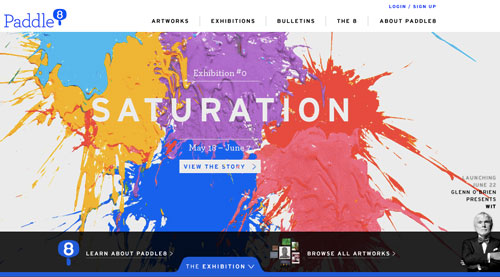
Paddle8 is a new destination for examining, understanding, and acquiring unique artworks. Paddle8 is directed towards a generation of collectors, artists, and gallerists who see the web as a viable space for learning and access.

Since its official launch in June, Paddle8 has hosted an online exhibition every month that features artworks selected by a guest curator. The curator also selects eight “quirky art world influencers” who provide “multifaceted insights on works in each exhibition.”

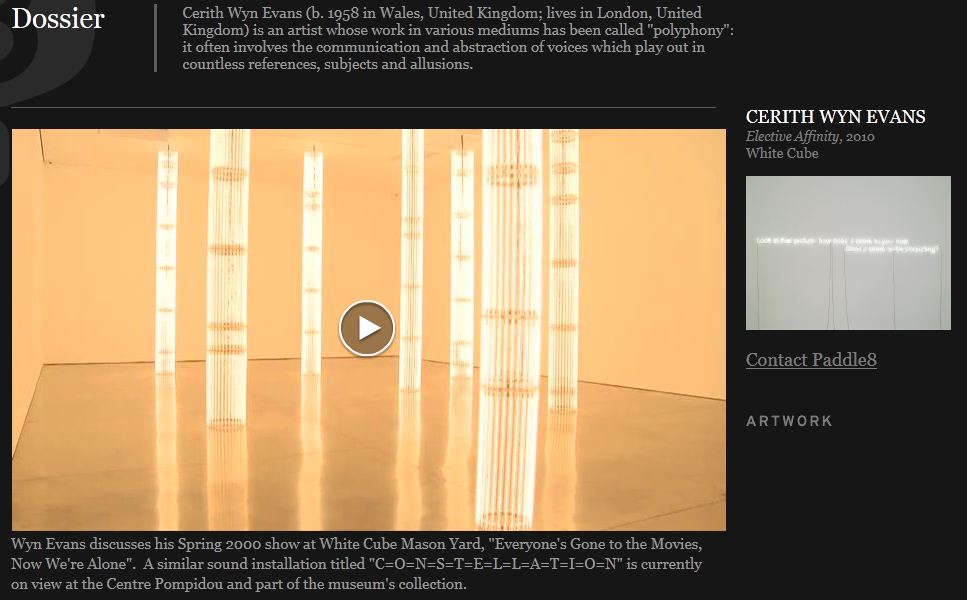
Every artwork in an exhibition is accompanied by a dossier that offers the viewer a deeper understanding of the artist’s inspirations and motivations. These include video interviews, written explanations of a particular piece, other artists that have inspired the artist at hand, and write-ups on related works that have been exhibited elsewhere. As such, the dossier is both textually and visually rich, with some interactive multimedia experiences that are well suited to an online exhibition format.

With the aid of the dossier, an entire context is created around a particular artist or artwork, which is often difficult to accomplish in a physical gallery setting. In fact, it is the dossiers, the curators, and the 8 “quirky influencers”, that make Paddle8 a viable alternative to a physical gallery space. Since its launch, Paddle8 has already had four amazing exhibitions, the most recent of which is titled Immaterial, and is curated by the performance artist, Marina Abramović.

So, if you happen to be a collector, Paddle8 is definitely worth a visit or, more aptly, multiple clicks, some of which may set you back by a few thousand dollars or more. If you happen to be a make-belief collector like me, you can still register to gain access to their virtual exhibitions, and one evening, you may find yourself raising a silent toast to the next generation of art world experiences.


The votes are in: the most popular nonprofit cause on Facebook and Twitter is…

Hold on, hold on! Before the grand reveal, a little contextual information. The Nonprofit Quarterly recently published the article, “Which causes do best on social media? That world according to Craig Newmark,” highlighting Newmark’s research on the United Snewmantates’ top 50 not-for-profits (determined by Charity Navigator), their causes and which “do” social media the best. The leading not-for-profit organizations were grouped into categories of causes. Within these categories, the top 5 organizations were analyzed. The categories of causes include:

  • Animal
  • Children
  • Cultural
  • Disaster Relief
  • Environment
  • Health
  • Veterans and Military
  • Women

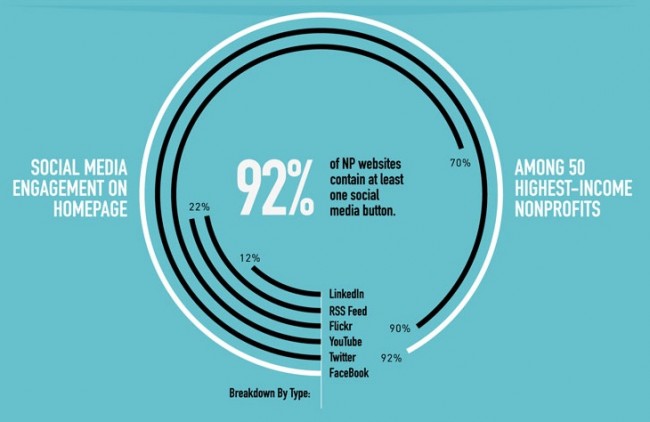
To report his findings and analyses, Newmark and his team at Craigconnects produced two cleverly designed infographics, “Who Rules Social Media? A Look at Social Media Impact by Nonprofit Issues" and "How the Top 50 Nonprofits Do Social Media." In addition to data and nifty graphics, the reports shed light on the staffing of these organizations, revealing that of the 21 not-for-profit organizations Newmark and his researchers personally spoke with, all but one employed either a designated full-time or part-time social media staff person. Furthermore, Newmark's research indicates

...revenue does not increase a nonprofit's visibility and interactions in the social media world. Some of the most social media savvy organizations are in the bottom quarter bracket in terms of revenue, yet they are clearly active on social media. It's about fostering conversations and interactions, not money.

The winners of the most talkative category on Facebook and Twitter (in terms of Facebook posts, Tweets and responses) are the animal and environmental causes, averaging between 88-134 Tweets per week; the loser, the veteran and military category. The winner of the most talked about category on Facebook and Twitter was again, the animal cause and the losing causes, women and veterans. Curiously, though women are the dominant demographic using social media, the “women” cause is talked about the least…

How did the cultural cause fare? The top 5 cultural organizations considered in the report were the Smithsonian Institution, the Metropolitan Museum of Art, the New York Public Library, the Metropolitan Opera and the Lincoln Center for the Performing Arts. Averaging 8 Facebook posts and 32 Tweets a week, the cultural cause social mediaranked 5th and 4th respectively out of the 8 categories of causes. In terms of being talked about, the cultural cause ranked 5th both on Facebook and Twitter. Comparing revenues relative to social media activity of the top not-for-profit organizations, the Metropolitan Museum of Art ranked highly (considering its reported revenue of $319,054,654 is one of the lowest in the study). While the research and reports do not represent the cultural not-for-profit landscape in its entirety, excluding the hundreds of thousands not-for-profit cultural organizations that did not make the top 50 cut, the message is strong:

… the bottom line is that your main concern should be to cultivate conversations, relationships, and interactions within your own specific community, whether it’s 2,000 or 200,000 people. Work to move “your people” up the ladder of engagement, based on their needs. But know it will take an investment of staff time and resources to achieve this. These are the keys to keeping up in the fast-paced arena of social networks.

Who not only maintains, but stimulates social media activity for your Facebook and Twitter account? Do you have a designated staff person or team regularly producing your online content? If not, can you delegate the responsibility to a committed volunteer or intern? How can not-for-profit arts and cultural organizations make their online social media presence stronger and more impactful to move from 5th place to 1st? With a know-how for attracting and retaining wide audiences in playhouses, galleries, museums, halls, theaters and the like, cultural not-for-profits should have a definite advantage when it comes to the same, but online. Take a look back at your own organizations Facebook and Twitter activity over the last few months, then share your thoughts, solutions and impressions of the research with us on Facebook or Twitter.

Is it time to adopt 3D?

Today 3D cameras that deliver a professional grade product can now be bought for as low as $1,500. Most new TVs sold today are 3D ready. Game consoles and playback devices are also 3D enabled.  Is 3D a fad or is it a trend?  We can only speculate, but the fact of the matter is that this technology is now becoming affordable for individual artists and arts organizations.  So is it time for you to start recording in 3D?  Here are some advantages and issues to consider before taking the leap.
Pros:

1)  Market penetration is reaching a critical mass.  3D enabled devices now dominate the market and are poised to become a standard feature of home entertainment. 2)  The cost of buying 3D enabled devices has gone down.  TVs, playback devices (game consoles, dvr devices, etc), and cameras are more affordable than ever. 3)  3D Tech is now making strides into mobile devices with Nintendo, Google, and Motorola notably making devices and content for 3D mobile. 4)  The tech offers solutions to art forms that heretofor were previously poorly served by older 2D imaging technology (aka dance and opera)

Cons:

1)  3D on film has been linked to nausea and headaches and even in video there have been questions about eye strain although these problems only seem to afflict a small portion of audience members.  Evidently the trick is to not focus on out of focus images on the screen if you suffer from these problems. 2)  It will be a couple more years before the majority of TV’s and Mobile devices can run 3D  content.  As with any technology there is only a point to which it will grow as people are reluctant to buy a 3D enabled HD TV (or playback device) a year after they shelled out for a new HD TV set. 3)  There is the possibility that another breakthrough will be made in imaging that will make current imaging technology obsolete.  For now, however, the long-term outlook seems to be favoring the current technology’s dominance for the next 6-8 years. 4) You still need those pesky glasses (for now at least).

One could argue that 3D still has a ways to go.  The cutting edge of the field however offers the potential for much much more spectacular devices.  Now that it is becoming fiscally accessible some artists and organizations have waded in and started experimenting but the potential remains largely untapped. Whatever happens, it will pay to keep a watch on this technology

The Fight over Net Neutrality is Far From Over

Last month, I wrote about what I consider to be the most important public policy issue affecting the arts/technology community, the issue of net neutrality. Since then, a wave of new developments have shifted the playing field and ratcheted up the fight over what is quickly becoming one of the most contentious policy issues in all of Washington. With the new FCC regulations slated to go into effect this Sunday, the legal and political wrangling over the issue is far from over, and the very future of the Internet as we know it is at stake. First, a quick overview: the issue of net neutrality has received a fair amount of coverage recently because a new set of regulations passed by the Federal Communications Commission (FCC) last December are set to go into effect this Sunday, November 20th. The regulations primarily do three things: they prohibit broadband providers from blocking lawful web traffic; require a greater deal of transparency from broadband providers regarding their network practices; and most importantly, require broadband providers to not discriminate in transmitting lawful network traffic over consumers’ internet service.

While not perfect, these regulations are an important step to ensure that the concept of the “open Internet,” or the idea that all internet traffic is treated equally, continues going forward. Simply, it would preserve open Internet access for consumers, and not allow telecommunications companies to discriminate certain types of data as they see fit.

With the new regulations slated to go into effect shortly, Republicans in Congress have sought to overturn the rules, arguing that they go too far and that new government regulations are not necessary. This past Thursday, the Senate failed to round up the votes necessary to pass a resolution overturning the rules, failing on a party line vote of 52-46, with Democrats voting in the majority to stop the bill from going forward. The Republican-controlled House voted in April on a similar bill, which passed by a vote of 240 to 179.

The opposition in Congress stated that they also believe in the concept of an “open Internet,” but felt that such regulations were better written by Congress themselves and not the FCC.

Supporters of the new regulations, including the FCC, claim that the rules bring a degree of certainty to the internet community. In a statement, the FCC stated that “any effort to disrupt or unsettle that certainty, which has been widely supported by industry, will only undermine innovation and investment in this space.”

Even if the Senate had passed the legislation, President Obama had vowed to veto the bill, ensuring that any legislative efforts to roll back the regulations will fall short of success at least through the 2012 election.

The real immediate fight, however, over the regulations will be fought in court. Several telecommunications companies, most notably Verizon, have pending lawsuits seeking to nullify the regulations, claiming the federal government and the FCC do not have the authority to exercise regulatory power over the Internet. Attempts by the FCC to regulate the internet in the past have failed in the courts, so there is legitimate concern that the current case may meet the same fate.

In addition to concerns over potential content discrimination, there are other areas where telecommunication companies may seek to change their business practices if the regulations do not go into effect. The most common concerns are over higher premiums being charged for faster data speeds, or deliberately slowing down speeds for specific websites or services that may compete with the firm providing the internet access.

As I said last month, the issue of net neutrality impacts all communities, and many of the innovative and inspiring new art works and technologies we have highlighted here on the blog in recent months stand to be impacted if efforts to weaken the regulations are successful. Innovation is best achieved when entrepreneurs, artists and managers have the freedom to use technology to share their art with the world, and the openness of the Internet since its inception has facilitated countless new art forms and inspired a new generation of artists. It would be a shame to see that kind of progress stifled at the hands of Congress or the court system.

After the defeat of the Senate bill, the White House released a statement, saying that “it would be ill-advised to threaten the very foundations of innovation in the Internet economy and the democratic spirit that has made the Internet a force for social progress around the world.” As the fight over net neutrality moves forward and the regulations go into effect on Sunday, it’s important to remember that a free and open Internet is in the absolute best interest of the arts community, and is worth fighting for. That’s a bipartisan belief that everyone in the arts community can appreciate.


13 Social Media Infographics Every Marketer Needs to See

Happy Friday! What’s everyone doing this weekend? Perhaps you’re saddling up to head to Louisville for the National Arts Marketing Project Conference. The conference starts tomorrow and goes through next Tuesday the 15th – in which case, enjoy the conference! If you can’t make it to Kentucky this weekend, a lot of the conference will be online. Three sessions will be streaming live and archived as webcasts if you miss them. The conference will also be accessible via twitter with hashtag “#nampc”. The National Arts Marketing Project (NAMP) offers resources year round on their website to help your arts organization be better marketers. One of these is their newest ebook, 13 Social Media Infographics Every Marketer Needs to See.
The first in a series of free publications, 13 Social Media Infographics Every Marketer Needs to See is an accessible and enlightening tool for those interested in social media marketing. The publication covers the history of marketing channels, basic tips for social media usage, and then moves on to more complex topics like the demographics for each social media website. If you're looking for a way to make sense of all the social media out there, this is a great starting point.

Technology in the Arts also has a lot of great social media resources, including how to analyze your success, tap into that prized demographic, and important current trends. How is your organization using social media to be better marketers?

GlacierWorks: A Detailed Look at Climate Change

The glaciers are melting’ is a phrase that we have heard and read, in all its literary permutations and combinations, ad infinitum. And the term “ad infinitum” should raise concern among us because when certain phrases are repeated so often, when they are so widespread, the world becomes inured to them. Ironically, despite of the size and scale of most glaciers, many of us have probably never encountered these sublime bodies of ice. So when we hear about the plight of our glaciers, we shrug and give a slight brrr of concern, for we are not acclimated to contemplate the cold beyonds of planet earth.

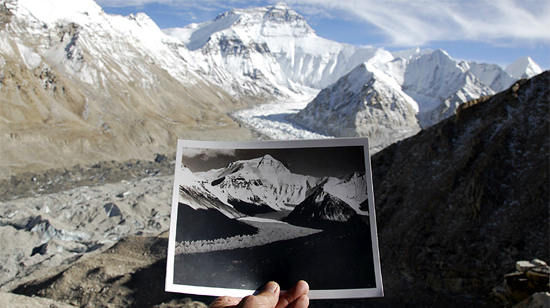
But what if we could visualize our glaciers at different points in time? What if we could see how much they have changed over the past century? Would we finally comprehend the glacial magnitude and urgency of climate change? GlacierWorks certainly thinks so.

“GlacierWorks is a non-profit organization that uses art, science, and adventure to raise public awareness about the consequences of climate change in the Greater Himalaya. By comparing our modern high-resolution imagery with archival photographs taken over the past century, we seek to highlight glacial loss and the potential for a greatly diminished water supply throughout Asia.”

The GlacierWorks team, which is led by “filmmaker, mountaineer, and adventurer”, David Breashears, re-traces the photographic and mountainous footprints of early 19th and 20th century photographers, each of whom dared to explore the Himalayan terrain during the course of their lives.

Among these early pioneers is the famous 19th century Italian mountaineer and photographer, Vittorio Sella, who is best known for his breathtaking images of the mountainous landscapes in Europe, Asia, Africa, and America. Whilst in India, Sella took a series of “awe-inspiring images of the Jannu and Kangchenjunga Glaciers, as well as the Karakoram’s Lower Baltoro Glacier.”

Another eminent photographer, whose images are traced by GlacierWorks, is Sir Edward Oliver Wheeler who was the Surveyor-General of British India from 1941 to 1947, and was knighted as a result of his notable work  in topography for the Indian subcontinent. Other noteworthy photographers of Mount Everest and its surrounding terrain include German filmmaker, Norman Günter Dyhrenfurth, and  George Herbert Leigh Mallory, who was a member of the 1921 British Reconnaissance Expedition, which “explored routes on Mount Everest and produced the first accurate maps of the region.”

In order to provide us with a compelling difference between the masses of our glaciers today as opposed to just a century ago, the GlacierWorks team determines the photographic point or location from where each of the images by Vittorio Sella or Sir Edward Oliver Wheeler were taken. As such, we are able to make a glance-by-glance comparison of the Himalayan glaciers through two images taken from the exact location, but with a century’s worth of time in between them. This visual comparison is sublime, even melancholic, but the overarching message is grim, for these images provide us with the cold, icy truth about our glaciers; not only are they melting, but they are doing so at a devastatingly alarming rate.  

On their website, we are encouraged to do some virtual mountaineering of our own so that  we may become familiar with the majestic but eternally distant Himalayan glaciers. In collaboration with xRex studio, “a visual effects practice which explores the intersection of high-end computer graphics and advances in digital photography”, GlacierWorks has created incredible 180 and 360 degree immersive explorations that re-create the awesome entirety of the Himalayan landscape, all in gigapixel imagery.

And with the use of gigapixel imagery, GlacierWorks has accomplished an uncanny yet astonishing feat: they have placed before our very eyes, the detailed truth on glacial loss; and they have made us confront, the absolute reality about the future our glaciers. GlacierWorks’ photographs incite a sense of loss and the necessity to change our profligate ways, before all that remains is a set of high resolution imagery, before the comparison between the glaciers of the past and those of the present is beyond discernment.

The 2011 UN Climate Change Conference will take place in Durban later this month. Here’s hoping they agree on at least a few environmental measures because inconclusive climate summits is something we have heard and read about ad infinitum.


Deconstructing, Reconstructing and Tidying Up Art

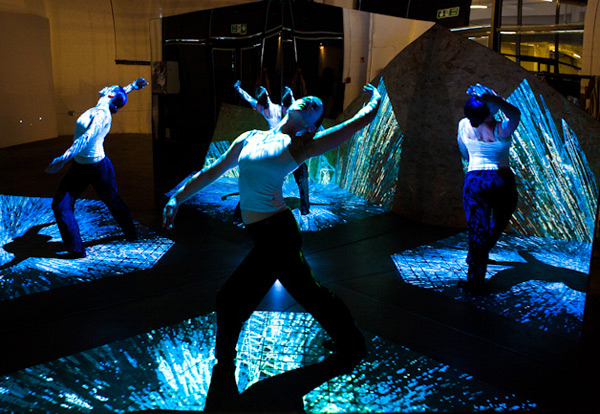
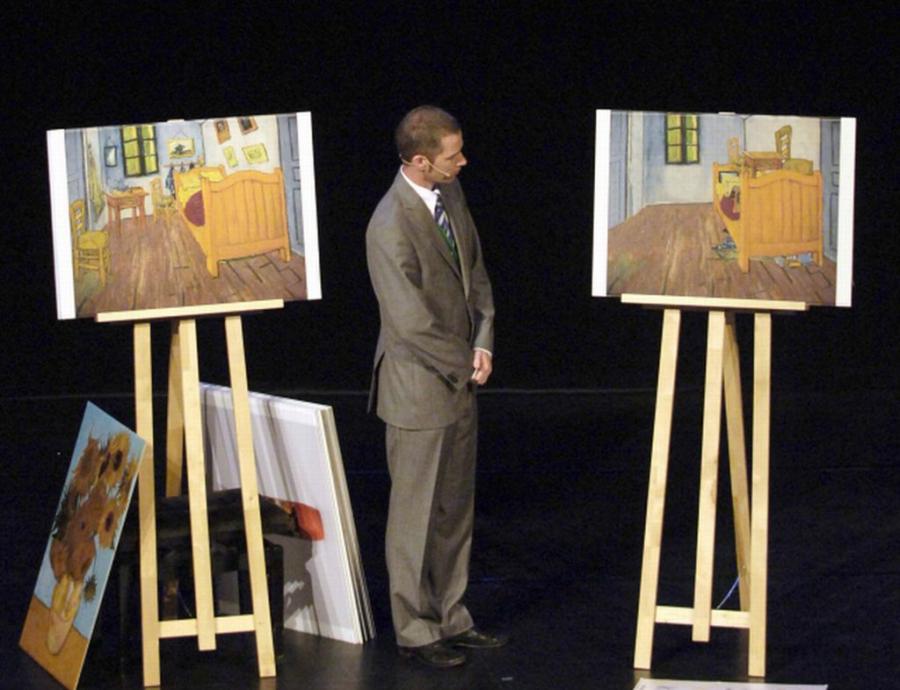
In this Wednesday's post, exhibit viewers re-choreograph Henri Matisse’s Dance II and a Swiss comedian cleans the floor of Vincent van Goh’s Vincent’s Room, Arles. Yes, you read that correctly, what I have to share today is as glorious and odd as it sounds. It has taken me quite some time to settle down long enough to write this post- I have been rather distracted by these projects and videos. I know you will be too…sorry in advance… Let’s first take a look at Intel’s newest project in its Visual Life campaign- “Remastered: A Visually Smart Production from Intel.” Showcasing the work of leading curators and innovative designers, the exhibit on display at London’s One Marylebone explores and pushes the boundaries between art and technology; more specifically, between “old art” and Intel’s newest processing technology. The result, you ask? A sound installation remake of Wassily Kandinsky’s On White II, an online application of Pablo Picasso’s Guernica, a moving image rendering of Salvador Dali’s The Persistence of Memory, a food design and photography adaptation of Leonardo Da Vinci’s The Last Supper, a visual animation of J.M.W. Turner’s Rain, Steam and Speed-The Great Northern Railway, and a stereoscopic, and 3D animation of Casper David Friedrich’s Wanderer Above the Sea of Fog (a special favorite of mine), just to name a few. Collaborating with jotta, Intel’s curatorial and creative partner, the artists “remastered” select classic works of the world’s greatest masters using digital processes to give new meaning to “old art” for a modern audience.

…The exhibition unlocks the creative potential of technology and underlines how visual masterpieces can be created with simply a mouse as a brushstroke or a screen as a canvas.

Exhibitions like these generate much discussion in both the academic and professional art world, as the issue of the digitization of art remains a hot topic of debate. What is most inspiring about these remastered pieces is the beauty in the medium. As an art history student and Italian Renaissance aficionado, I am neither offended nor resistant to the digital world’s claim it can reproduce or master painterly qualities and techniques in its own medium. It is important to view these “remastered” pieces not as competitors of the original work, but as showcases of the power, potential and influence technology has in the modern artistic process.

If you are familiar with Turner’s oeuvre, be sure to view Eric Schockmel’s 3D animation of the painting, Rain, Stream and Speed- The Great Northern Railway. Known for his unsurpassed ability to render light, Turner’s work is an experience of the Sublime, an aesthetic theory originating in the 18th-century. Schockmel’s stunning remastering addresses themes consistent in Turner’s work. But can the advanced technology of 3D modeling, animation software, Adobe After Effects and sound design create an experience of the Sublime, a theory developed in response to a level of advanced and dramatic painterly techniques? Or is it unfair to project such standards and theories on the entirely unique and individual medium of digital art? Do we need to develop a new vocabulary with which to discuss it? The artists featured have contextualized the meanings of the “old art” in today’s modern and digital age. As jotta's head of creative, Ben James stated

The broad range of work and outcomes exhibited within Remastered help demonstrate how technology is being adopted practically and conceptually by artists and designers across all disciplines. The intersection of technology and art has gone far beyond its creation on a computer to a symbiotic relationship -- one where new technology offers new opportunities to the artist or designer who, in return, provides ever-evolving experiences and contexts to our relationship with technology.

If nothing else, each artist’s unique interpretation of the work makes viewing the remastered piece and accompanying videos a worthwhile activity on this midweek, midday Wednesday (Bompas & Parr’s redesign of Da Vinci’s The Last Supper is a good place to begin, it will surely amaze you).tidy up art

Ok, on to my next obsession. Have you heard of Ursus Wehrli? No? It’s okay. I had not either before viewing his TED Talk. Since then, however, I am either always a) re-watching his talk or b) mentally rearranging and reorganizing the components and forms of any given painting into tidy stacks. My new guilty pleasure is the TED Talk “Ursus Wehrli tidies up art” given by Wehrli, a Swiss comedian, cabaret artist and

…the author of Tidying Up Art, a visionary manifesto that yearns toward a more rational, more organized and cleaner form of modern art. In deconstructing the work of Paul Klee, Jasper Johns and other masters into its component parts, organized by color and size, Wehrli posits a more perfect art world

Take your Wednesday lunch break with Wehrli as he taps into your confusions and Type A tendencies when it comes to viewing and understanding contemporary art. The talk will surely elicit laughter; proceed with caution when at work.

And again, my apologies for any drastic drop in productivity at work or school as a result of time spent transfixed by the digitally remastered masterpieces or watching, and re-watching, Wehrli’s convincing contemporary art cleaning spree.


The Arts and the Race Against the Machine

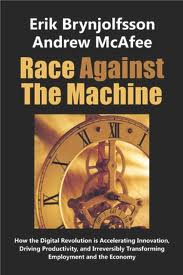
Will art ever be created by a machine? This is the question that is sometimes asked, late at night over a glass of wine. Perhaps it has been already. Authors Erik Brynjolfsson and and Andrew McAfee ask similar questions and explore the answers in their new book “Race Against the Machine: How the Digital Revolution is Accelerating.” Machines are playing an increasingly prevalent role in the work force and millions of jobs have been changed or replaced by computers or automated process. There is now a program called Stats Monkey that is being used to write about sports. Stats Monkey uses pattern recognition to generate summaries about sporting events. Although this program does not seem to be in usage by any major publication, it highlights the progress that has been made in the advancement of technology and the subsequent replacement of millions of workers by automated, computer controlled devices. For now, the arts world can sigh with relief. It seems as though most endeavors which require intuition are safe from encroachment by computerized processes. We can assume that artists of all stripes are considered “high-skilled” and are intuitive in the creation process.  Both of these characteristics make artists of all stripes the safest categories of workers at this point in time. The pursuit of making art isn’t simple. Artists of all kinds exist within a complex cultural context and react intuitively to it. This context also makes it extremely difficult for machines to interact. You could argue that Heather Knight’s Silicon Based Comedy is the first inroad on this front, but it still seems a bit far away. The complex human interactions intrinsic in the performing arts are a distant land from the world of automated tasks and promise to remain that way for quite some time.

Another barrier to program or automaton generation of art in all forms is the fact that there is a plethora of artists who are working in the market for little or no money.   From the standpoint of economics the lack of money in the majority of the arts field gives developers little reason to make inroads artistic process by replacing people with automation. Aside from the rockstar phenomena in the arts world, there simply isn’t the money in it to make it worth the time.

As technology speeds along we can be assured that these advancements will affect the arts. Already kickstarter promises to reshape the field of development in the arts by cutting out the administrative middleman and connecting artists directly to funders. Will increasingly sophisticated templates and design programs begin to make inroads into graphic design? Will marketing in social media be able to be automated? Will marketing in general be able to be automated. Certain facilities tasks are already being monitored by computers. Vacuuming lobby or gallery floors could be taken over by a fleet of roomba robots.

How will the future of technology manifest in the arts world? Surely at some point in time it is conceivable that a computer will generate a work of art and sell to some museum. This will inevitably make the news. This will spark controversy. Will actors be replaced through cgi? Well, the clear answer to that is not yet. Stage actors are even safer from replacement, but how about stage crews?

It is impossible to discern how exactly machines will interact with the arts. Watching the development of cutting edge technologies can gives clues. Possibilities to interact with our patrons lie largely untapped in the areas of 3d, holography, and new software applications. As with other industries, it is incumbent on artists to watch the horizon and harness technology as it comes into being, otherwise we end up being reactive and being blind-sided by change.

Facebook in the Arts: In Honor of Mark Zuckerberg's Visit to CMU

With the announcement that Facebook founder and CEO Mark Zuckerberg will make his first visit to Carnegie Mellon University (CMU) today, the Technology In the Arts team thought it would be appropriate to take a look back on the groundbreaking social media platform and the impact it’s had on how arts organizations engage their audiences. CMU is one of three campuses being visited by Zuckerberg during an East Coast college tour. While here, he will meet with faculty and students and give a talk to an invitation-only audience. He will be joined by Mike Schroepfer, Facebook's vice president of engineering.

Here’s a bit of Facebook Trivia to get us started:

  • More than 800 million active users
  • More than 50% of active users log on to Facebook in any given day
  • Average user is connected to 80 community pages, groups and events
  • More than 350 million active users currently access Facebook through their mobile devices
  • Facebook is also the most popular social network for all age demographics according to a Forrester Research Survey

One of the most interesting studies on how Facebook has affected arts and cultural organizations was conducted this past summer. ‘The Tangled Web of Social Media’ was a study commissioned by Theatre Bay Area in 2011. The study examined the social media habits of 207 diverse nonprofit arts and cultural organizations with the goal of understanding how social media was being used and what best practices emerged as a result. The study found that Facebook was by far the most popular social network used by these arts organizations. Another similar finding was that community members were eight times more active commenting on the Facebook posts made by arts organizations than mentioning those same organizations on Twitter.

Here are a few ways in which Facebook has revolutionized how arts organizations are engaging with audiences:

  1. Sharing Content: Arguably one of the most important ways Facebook has impacted arts organizations is the ability to share and distribute content. Devon Smith recently shared an important comment made by Adam Connor from Facebook during the High Impact Social Media Conference: History of the internet= Browse (Yahoo) –> Search (Google) –> Discover (Facebook). Whether it’s a special Halloween photo from MOMA or a series of intriguing videos from the San Francisco Ballet, arts organizations have the opportunity to share a variety of content with audiences.
  2. Giving Campaigns: Facebook has also impacted the way audiences can contribute financially to their favorite organizations. The Chronicle of Philanthropy recently published an article about a California boy, Paddy O’Brien, whose inspirational story about his struggle with bone cancer resulted in 1,000 donations to the Children’s Hospital who treated him via the Facebook Causes platform.
  3. Advertisement Campaigns: Facebook Ad Campaigns aren’t just for boosting numbers on fan or group pages. Many organizations have had success with attracting new fans to their events through successful ad campaigns. For further reference, Tech In The Arts published an article on best practices for running ad campaigns.
  4. Ticket Buying: Companies like TicketForce have made it possible for many artists and organizations to sell tickets directly through their brand’s Facebook Page. The client operates so that ticket buyers do not have to leave the Facebook Page in order to purchase tickets.
  5. Merchandise Sales: Facebook has also provided the opportunity for artists and organizations to sell merchandise on their pages.
  6. Building Communities through Facebook Groups: Many arts organizations have also been experimenting with hosting group pages as opposed to “regular” pages. Groups can provide an opportunity for fans to interact with each other on a more intimate level. Beth Kanter recently featured a guest post on her blog regarding best practices for nonprofits interested in building a group page.

There’s no doubt that this social media giant has had an incredible impact on the way arts organizations interact with audiences and will continue to do so. Ultimately, many of these organizations are finding creative ways to interact with existing fans and build new audiences in a manner that has never been done before.

How has Facebook impacted your organization, either positively or negatively?

Art Viewed Through the Prism of 3D Technology

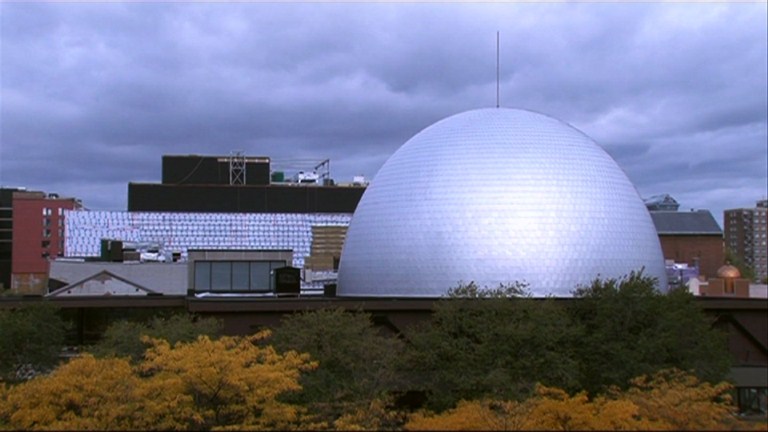
On a typical trip to the American film multiplex these days, you are instantly greeted with the latest 3D films the studios have dreamed up. A market once reserved for the likes of advanced science fiction pictures, the technology has been stretched to now include nearly every major release. Given this barrage of often mediocre films, one would be hard-pressed to not grow tired of a technology still in its relative infancy. 3D technology, however, is not just limited to feature films. In Montreal, a cinema has embraced 3D technology and is using it to provide its audiences with floor-to-ceiling views, advanced speaker systems and a 360-degree view of stunning works of art.

The Satosphere theatre, as reported by AFP, is housed inside a giant silver dome in the city of Montreal, and is offering its audiences a unique way to enjoy the arts. The technology behind the cinema is impressive: measuring 18 meters in diameter, the dome has eight video projectors that display images all along the walls, encircling viewers and creating a truly immersive environment. Along with the projectors, the theatre also includes over 150 speakers, creating a truly cinematic experience.

And the best part of the experience? No bulky 3D glasses are required to enjoy the show.

AFP recently offered a behind the scenes look at the theatre, which you can view here.

The first show to display the technology, “Interior” by Marie-Claude Paulin and Martin Kusch, took place last month and wowed audiences both visually and sensually. With many more performances planned in the months and years ahead, the technology affords artists a new kind of opportunity not yet seen before.

The possibilities here are endless. Imagine an art show where attendees can become part of the experience, interacting with other attendees in a virtual exhibit. Or imagine being lifted to another time period or environment, surrounded by a 360-degree image of an architectural monument, barren deserts or idyllic beaches.

In addition to the opportunities for the arts community, other fields are also taking a look at the technology and seeking ways to possibly integrate it into their industries as well. Developers, hospitals, architects and many others are imagining ways to use 360-degree views to transform the way government officials, tenants, patients and more view planned projects or improvements, offering a way for people to experience a drawing or rendering in a visually immersive way before something is built.

The researchers behind the technology have no plans to just stop at immersive and interactive art shows. One of their current projects is developing a six-lens camera that uses software to merge images together, creating a seamless way to film 360-degree films.

The people behind the theatre are calling the experience “cinema for the 21st century” and “a playground for the next century,” and I’m inclined to agree. As it relates to the arts community, I can only imagine the countless creative ways and uses for a technology such as this; if the technology becomes inexpensive enough to spread worldwide, it’s quite possible it could usher in an entirely new era of artistic expression.

So the next time you leave the movie theater, disappointed with the “3D” technology in films like “Harold and Kumar” or “Puss in Boots,” remember that there are far more innovative uses for the technology being embraced all over the world, often at a significantly higher quality, perhaps headed our way very soon.

The Evolution of Touch

In the 15th century, the Italian renaissance polymath, Leon Battista Alberti, wrote a famous treatise on painting titled De pictura. In his treatise, Alberti praised painting above other art forms such as sculpture because painting often went beyond the act of mere imitation and was able to create an illusion that could persevere through the centuries. Moreover, the art of painting was a uniquely visual experience and, unlike sculpture, it did not incite the desire to touch, for what we saw in a painting remained poetically out of our reach. This treatise postulated by Alberti during the period of the Renaissance is not entirely archaic and arcane to the world of today. We still take pleasure in the transitory ability to escape into the painted world we see before us, and we are in still in favor of preserving the the illusion we see before us. But have we become drawn to what was only considered possible in the realm of sculpture, the desire to touch a painting?

This question of touch is a thought provoking one because of a recent phenomenon that I like to refer to as the “slide to unlock”. Yes, this phenomenon is none other than our increasing desire to avail ourselves of the sense of touch. Apple has gently nudged us along into the wonderful world of touch through iPhones, iPads, and iPods. So, it suffices to say that in the technological realm, we have effectively and decisively entered into the era of the sensory. And this definitive entry into the realm of the sensory has led to the development of apps, some of which have enabled us to explore the world of art at our very fingertips.

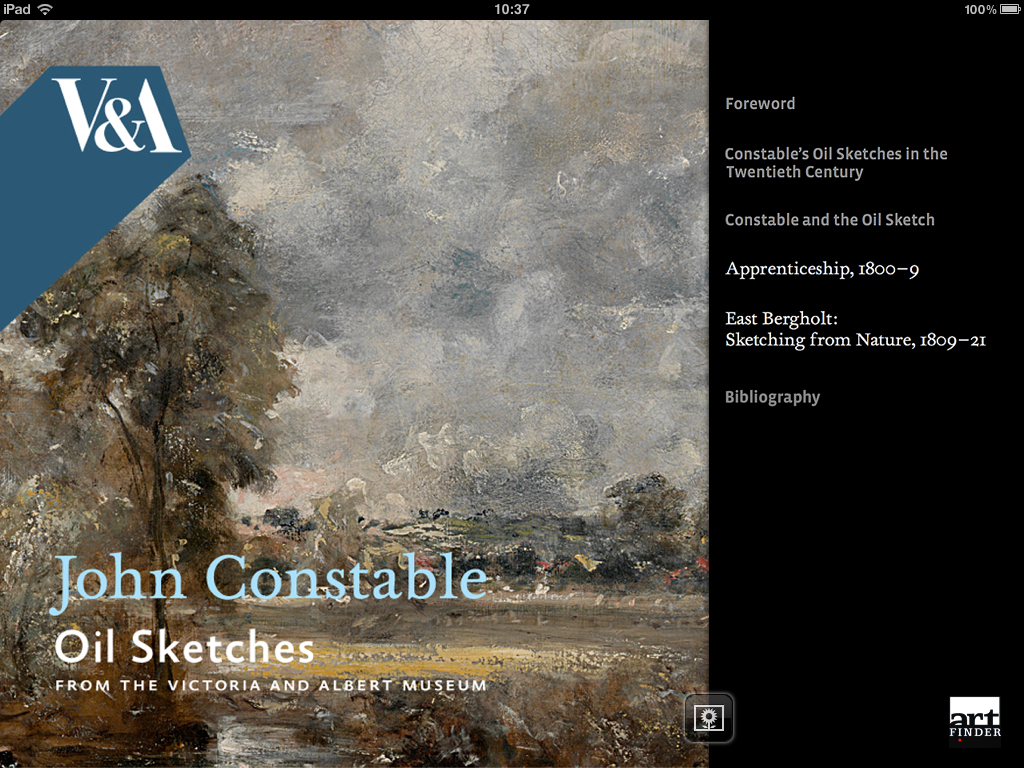
Nowadays, we can explore artworks using our sense of touch without compromising our moral integrity or damaging the artwork, and shattering the illusion before us. For instance, in Artfinder’s app on John Constable’s oil sketches from the Victoria and Albert Museum, we “can zoom to show each of the sketches in their incredible painterly detail, and follow Constable’s progress from Suffolk, to London and Brighton.” Artfinder has also collaborated with various other museums to create apps that augment and physically sensitize the viewing experience. As such, the way we engage with art may be undergoing a paradigm shift; a shift towards the touch.

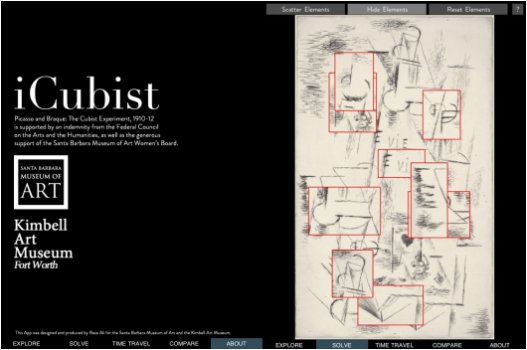
Consequently, more and more museums are now incorporating the sense of touch into what was hitherto seen as predominantly visual and contemplative experience. Earlier this summer, in the exhibition titled “Picasso and Braque: The Cubist Experiment, 1910-1912”, the Santa Barbara Museum of Art provided visitors with iPads that were “equipped with a specially developed iCubist application to scrutinize and delve deeply into four key paintings.” The app also allowed visitors to “deconstruct a cubist composition and attempt to put it back together.” The iCubist app developed for the Santa Barbara Museum of Art demonstrates how the sense of touch, in unison with the sense of sight, can help demystify a movement such as Cubism.

It is also interesting to note how the contemporary art world is evolving with the rise of the touch. For instance, artist David Hockney began painting on his iPhone in 2008 and last year he began using his iPad to create art. Using the Brushes app, Hockney would draw flowers, using just the edge of his thumb, and send them to his friends.  His oeuvre now includes landscapes, still life, and self-portraits all created by a sweeping touch, rather than a stroke, of creativity and ingenuity. Currently, his work is being shown at the Royal Ontario Museum in the exhibition titled “David Hockney’s Fresh Flowers: Drawings on the iPhone and iPad.

So is the art world moving in tandem with the technological world? Is it stepping into the realm of the sensory?

As artists such as David Hockney remain a rare few, the art of painting on tangible mediums such as canvas will most likely survive decades of technological progress. The modern day audience, however, may be more willing and receptive toward the introduction of touch into the viewing experience. This is because, as an audience, we may be drawn towards what can only be termed as a two-part deception; to make tactile, what in reality is untouchable, while reveling in a scene that in essence, is a grand illusion.


Roadside Digital Galleries: Coming to a City Near You

billboardEvery some-odd miles along the highway you zoom past a billboard for Dunkin Donuts seasonal coffees; the local hospital’s most recent, national ranking; a sexy, sleek couple drinking Jose Cuervo and a dramatic advertisement for what can only be described as a less-than-credible attorney. Firms and organizations seek to capitalize on the exposure a billboard provides their brand or service in its commanding position above and along the highway. Hoping to attract potential consumers or clients, the billboard is one of the most prominent and far-reaching means of advertising to a certain geographic location. From the morning commute to the bus ride home, and every moment between, we are inundated with advertisements in one form or another. Though the constant stream of advertisements is admittedly annoying, advertising powers our economy, encourages consumerism and inspires us to try new products and attend performances. But commute after commute, the billboards and their advertisements littered along the highway become nothing more than white noise.

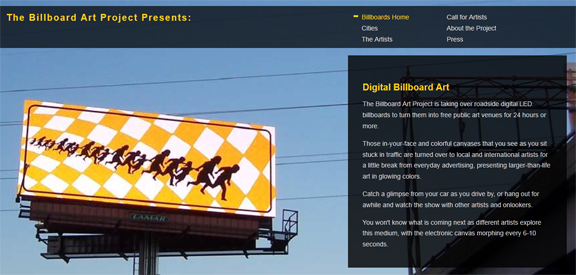
The Billboard Art Project, a Virginia based not-for-profit, is temporarily reclaiming a handful of digital LED billboards in select cities across the country. Repurposing the advertising billboard as an artistic medium and a public art venue, the Billboard Art Project is marketing a different, non-commercial message

Those in-your-face and colorful canvases that you see as you sit stuck in traffic are turned over to local and international artists for a little break from everyday advertising, presenting larger-than-life art in glowing colors…You won't know what is coming next as different artists explore this medium, with the electronic canvas morphing every 6-10 seconds.

While out driving, Billboard Art Project creator David Morrison, was moved by the soothing images displayed during a screen test for one of Lamar Advertising’s (a Louisiana based advertising firm) digital LED billboards. The scrolling images were void of logos, brands, and slogans- images for images’ sake, if you will. In a domain that is typically reserved for corporations, commercial advertising and profit-driven marketing, Morrison found the images refreshing, even humanizing. Deviating from social expectations for exhibiting art and of the function of a billboard, the Billboard Art Project repurposes digital billboards to breathe new life into the daily commute- the epitome of the mundane and the expected, of the everyday and the routine.

The Billboard Art Project launched in October 2010 after Morrison successfully negotiated with Lamar Advertising for use of one of the company’s digital LED screens for 24 hours. Thanks to the digital technology of the billboard, the project promises 24 hours of a continuous stream of vibrant images, without interruption or advertisements. In an open call to doctors; cab drivers; students; clerks; professors; military personnel; hospital workers; the unemployed; designers; mail carriers; New Englanders; Pittsburghers; Texans- anyone- the Billboard Art Project invites submissions to be considered for each show. It is an all-inclusive project in which everyone is invited to participate by either submitting a work or simply driving past it. The medium becomes the message as the digital billboard disseminates art and individuality.

The project is currently showing in New Orleans, with previous exhibits in Chicago, IL; Reading, PA; Duluth, MN; Savannah, GA, Nashville, TN and Richmond, VA. Up next, the Billboard Art Project heads to Baton Rouge, LA then San Bernardino, CA. Each submission is as unique to the individual creator as the final compilation is to the city and billboard. No two shows are alike.

Bringing art to the streets in a free, public and conveniently located show, the Billboard Art Project is challenging the traditional domain for both advertising and displaying art. But is this new manifestation, the roadside digital gallery, a viable venue for art? Let us know what you think. In the meantime, keep one eye on the road and one on the lookout for a roadside electronic gallery, coming to a city near you.