Marketing

Technology as competition for the arts

I recently watched Ben Cameron speak at the Emerging Leaders Conference at American University. He addressed the role of technology in the arts--that the internet was seen as the panacea for marketing but now it brings 6,000 competitors to our patrons' attention every day. (see below for similar address by him at the TEDx Conference) Ben Cameron at TEDx

In the Tech in the Arts blog, Corwin and I often talk about the ways technology can enhance and promote the arts. But we don't talk as much about the competition that arises from technology. As a field, arts professionals tout technology as the future of the business, and some of us embrace it. But as much as it is our friend, it is also our competitor.

I’m not suggesting that database software, mail-merge, and online information-capturing haven’t saved hundreds of hours of work and made life generally less tedious. But it has also made entertainment more accessible and available than ever before.

I've spent my first year in graduate school at Carnegie Mellon researching how arts professionals view and use video footage. There's much concern about video of performances competing the performances themselves, especially amongst the artists themselves. And I suppose there's a way to protect your organization against that--just don't produce video. And that's the route many smaller organizations take, when faced with musician's union fees or the reticence of an artistic director, or even just not being able to get a straight answer from the legal department. But then there’s competition from other arts companies, and entertainment industry. In many ways you can't protect your organization against the wider world.

People are getting used to consuming their entertainment in the comfort of their homes, or accessing it on the fly from mobile devices. They get it on demand. They get it personalized.

I still think the live arts add so much value to society—I wouldn’t be in the Master of Arts Management program or writing for this blog if I didn’t. I feel strongly that live arts have a lot on technology: the uniqueness of audience interaction, connection with large groups of people simultaneously, the shared experience of a story, and so much more.

I know I’m not the only one that feels that way in my generation. But I also feel like I’m in the minority. For every person like me who can recognize a Bach fugue or would much rather go see Il Trittico than Letters to Juliet, I know that there are probably 10, 25, maybe 100 other 26-year-olds out there who are happier consuming their entertainment solely via Glee on Hulu or playing Rock Band.

What is an Arts Organization's "Online Voice"?

On April 29th, Technology in the Arts will present the webinar  "Finding Your Online Voice" featuring renown arts consultant Maryann Devine from smArts & Culture.  We caught up with Maryann to talk about the idea of an arts organization's "online voice" and why it matters. What is an organization or individual’s “online voice”, and why is it important? By "online voice," I mean the tone and style of your encounters with people online. It should be an extension of the organizational voice you use elsewhere -- in your brochures, in your fundraising letters, in your advertising ... Unfortunately, most arts organizations use a bland, impersonal voice for their offline communications that's impossible to tell from their competitor down the street or across town. They mix in a little hype for the marketing writing, but so does everyone else, so everyone ends up sounding alike. How do you stand out?

Why is your online voice important? Because whether it's your web site, or your Facebook Fan Page, we're talking about spaces that have their own social norms and user behavior. It's like taking your board meeting voice into the cocktail party and then to the kitchen table at your neighbor's house. If you don't adjust your tone, people are going to look at you funny! You're not going to connect with people. And that's why you're online in the first place, isn't it?

How can we take stock of our online voice? You can take an inventory of all the places where your organization has an online presence.  For example:

  • your web site
  • your email newsletter
  • your blog
  • your Twitter account(s)
  • your Facebook Fan Page
  • your custom social network
  • forum spaces where your staff or volunteers participate in an official capacity
  • blogs where your staff comments, on behalf of the organization

Then ask yourself:

  • How do your online interactions sound next to your offline communications?
  • Do they all sound like they're coming from the same organization, or do they seem wildly different?
  • How do people online respond to them?

In the webinar, we'll talk about how to sound like YOU (the organization) and still strike the right tone for the online space.

How will this upcoming webinar help artists and arts managers to refine their online voice to better meet their goals? Getting closer with the people who love what you do -- that's a strategy that supports fundraising, ticket sales, awareness building -- just about any goal I can think of that might be on an artist or arts manager's agenda. A distinct and -- dare I say it? -- authentic online voice helps people find YOU and listen to you instead of tuning you out, like they do with most of the other organizations and businesses that are vying for their attention. When they know it's YOU, they'll WANT to pay attention.

April 29 -- 2:00pm-3:30pm Eastern -- "Finding Your Online Voice" -- Register today for $25

SEOoooo....what? Improving your organization's search engine optimization.

<a href=

As promised too-long ago, here is a quick-and-dirty guide to improving your website's search engine optimization.

I certainly couldn't have made sense of this all on my own; I had the great fortune to be able to pick the brain of David Hejduk of River City Studios. He is the man behind the website-optimization curtain for many companies and organizations.

While the various search engines in creation all claim slightly different methods of operating, according to Hejduk there are some hard-and-fast rules that you can follow to make your site as discoverable as possible.

Make it easy

The 'bots that crawl the web, searching for the words that somebody wants to find, are very smart for non-sentient beings. But as people, according to Hejduk, they are like second graders. They can do a surprising amount on their own, but the easier that you make it for them, the better the results that they will return on your behalf.

As with any marketing plan, SEO requires that you think like your audience (or the audience you hope to attract). What would people type (and usually this is a couple-word phrase, as opposed to one single word) if they were looking for your organization? What would people type if they were looking for something that your organization provides?  These are the phrases and words that  should continuously appear from page to page, in title tags, headers, copy, internal and external linking.

From the literal top down, your page should make it easy to figure out what you are about. Your address should include words that are pertinent to your organization--like its name, for example. Your banner should highlight words that are relevant and interesting--the more cryptic your titles (do you call the link where you can buy tickets "buy tickets" or "box office," or do you use a clever and obtuse moniker?) the more difficult it will be to directly access the information that a person seeks when they Google you.

So take a look at your homepage. How clean is it? Where is information placed? The more important stuff should be on the top, should be in bold, should be headings. Do you have captions for your visual and audio content, are you social media sites up to date (and linked from your homepage), and do you link to news articles that are relevant? And what are the keywords that appear throughout your site, indicating to the 'bots and your potential audience what you are about?

Don't assume

Don't assume that you know what your site's keywords actually are:  check here to see what the 'bots consider your site's keywords. Does that list best describe your purpose and mission? Will they attract the audience you WANT to visit your site?
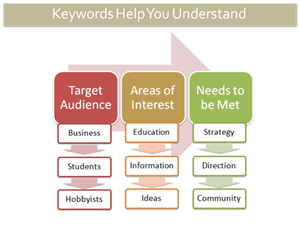
Image from http://www.searchengineguide.com/stoney-degeyter/seo-101-part-8-everything-you-need-to-kn.php

Image originally found here.

If not, it is time to take a moment (or multiple long moments) to work out how you want your organization to be identified online. If the words you think are most relevant are highly competitive (i.e. other websites that naturally generate more traffic use the same keywords), your site still may wind up buried deep in the results pages of a search.  So think about word combinations that may be less popular but more representative of your organization, and which may bring visitors and audience that will be most interested in what you offer.  A more comprehensive keyword  instructional can be found here or here. When you are ready to start placing keywords strategically, check out this reference.

Get analytical

Before you tackle your very own homepage, there are a number of tangential tools that are free and require only that you insert a little code onto your pages. The first is Google Analytics. We've said it before and I am here to say it again: USE THIS TOOL. It is free. It is incredibly useful. Register your website with Google Analytics and copy the code into your page (Analytics gives you a really basic how-to when you sign up).

Analytics tracks how people find you. Do they click on a direct link that they found on someone else's page (did you even know that someone else has linked to you?) or did they find you from a google search or did they track you down from your Facebook page? If your response is, "How could I possibly know where they came from?" my answer to you is "Google Analytics!"

I don't work for Google, Google doesn't give me any kind of incentive for talking about their products (I'm so over Google Chrome, by the way), and yes, they are approaching world wide web domination, BUT...they make great free tools. And you should learn how to take advantage of what they offer.

Over the summer I gave a shout-out to the Google Business Center, and I'm here to do a follow-up cheer. Like Google Analytics, the Local Business Center is free, and provides insight into how people are finding your organization. It can give you diagnoses and provide feedback on your website's traffic.  It also places your organization's physical location on a map that makes your location in real-space clearly apparent for someone who is searching. This means that somebody searching in Boston for information on the Artspace Gallery will be much less likely to get top results of Artspace Gallery on South Ridgefield Rd. in Edison, NV and Artspace Gallery and Coffeeshop in Madison, California, than your Artspace Gallery right there in Beantown.

Keep your site current

A search engine, when it crawls the web, isn't really looking at what is out there RIGHT NOW. It's actually searching the input phrase against pages that were cached in the past--sometimes a month or so ago or longer. (You can find out the last time the 'bot stopped by your site: in the list of search results there is a hyperlink below your site that says "cached" and will tell you when the page was indexed last.)  This means that you want to keep a consistent presence--and it also means that you cannot guarantee that your calendar will be indexed in time for your events, so be sure there are other places that information appears that may register more readily.

Keeping your site current is important, because when you update, the bot notices the next time its crawling out there, looking for sites that are active. You don't want somebody to search for your company and have the top five results be reviews from a play you produced in 2007. You want them to find YOU.  The challenge is that when your local paper is receiving a lot of traffic on a daily basis, even its archived pages are getting more action than your website. So does Facebook, incidentally.

(You say, "If Facebook receives a lot of traffic and therefore scores more highly in the bot's mind, does this mean that I should have a page on Facebook for my organization that also includes information and links to my homepage?"  I say, "YES! (Caveat: don't just use Facebook to say you use Facebook, have a social media plan.)  So, have some pages that have fresh, regularly updated content (this may be a blog, or perhaps a newsletter that you publish on your page once a month).

NOTE: This does not mean your entire site should get a face lift every month. There should be stable pages, with easily identifiable URLS (like www.yourgallery.com/directions  and www.yourgallery.com/home and www.yourgallery.com/artists) that stay consistent.  You may have links from those pages to other pages that do change frequently (your artist page may be about artists that have shown in the past, but have a link to "current show" that takes the visitor to a new page, www.yourgallery.com/lcorwinchristie), but you should have a core of reliable, recognizable pages that your visitors and Google recognize as solid.

Get listed

Alright, good work. The next thing I want you to do is sit down and think about the other search tools that people use that are NOT search engines. I'm talking about sites like Citysearch,Yelp, Yellowpages, ask.com, epinion. You may not be using them to find out something fun to do on a Saturday night, but I have news for you: a LOT of other people are. These are free directories that list businesses and allow users to write reviews and comments about experiences.

The great thing about this resource is that, because these web directories get so much traffic all the time, search engines check them. If your organization is listed with full contact information (THIS INCLUDES YOUR URL--I could rant for hours about how obnoxious it is to find a listing for someone ONLINE without a way to ACCESS THEIR WEBSITE. But I digress.), this gives a search engine more to go from. "Ohhh," it "thinks" in its little second-grade "brain," "The person searching for XYZ company is in Atlanta, and here is a listing on Yelp.com for an XYZ company that has an address in Atlanta!" Voila! A match made in Georgia!

Get linked

Another tip? Links are huge.  Links to both internal and external content will improve your rating when a search engine is looking for you.  As always, however, do not simply compile a list of links for the sake of having them. A search engine will notice if you have a "links" page that is little more than a list of everyone you have met and their blogs (recent or outdated).

It's much wiser, and more interesting, to integrate links into your web design. This can be in blog posts, or side bars on specific pages, definitely in artists' profiles.  The more you link out to places that are both relevant and potentially interested in what you are producing, the more likely they are to link back to you.  What does this mean?  Well, if Google sees that you have a certain amount of popularity, that is, that there are people who think that you are saying things that are worth sharing, it will consider you more important as it indexes your site.  (Yes, it's true--Google judges you.)

So, to sum it up:

  • Your headline, header tag, bold text or text that is a larger font, should be IMPORTANT and RELEVANT (and will thereby improve your searchability).  They should be placed higher on the page and centered whenever possible. There should be a continuity of keywords across your pages.
  • You should have a core of a few pages that have consistent content, and from those pages link to others that are updated and altered regularly.  Your homepage can be current without being overloaded with new content on a monthly basis.  Having the pages link to each other ("artists" from "home," "location" from "artists" and "home") is also crucial for giving the search engines a sense of the overall picture of your site and the information therein.
  • Plan ahead:  If you have an artist who you will be featuring in a few months, publish a page about that artists in advance.  That way the 'bot can find the information before it is outdated. The 'bots only stop by every month or so (and if you were cached long before that, you have some updating to do!)
  • Plug your page in sites where it is kosher to do so: Yelp, Yellowpages, Citysearch, and so forth.  And remember, this also gives people a forum for discussing your work, and this will give you a sense of what the word of mouth is about what your organization is doing.
Anonymous input, please!

We're putting together a webinar on digitizing art, and want to know what YOU want to know.  Please help us make this an experience that benefits you by filling out this 3-question survey. I promise you--it will take less time than it took you to fill out the Census. Even if you are the only person living in your household.

Thanks!

Upcoming Webinar - Putting Social Media Strategy Into Action

rebeccakrausehardie_registernow150pxMarch 23, 2010The Arts & Social Media, Part II: Turning Strategy Into Results 2:00pm-3:30pm Eastern Presenter: Rebecca Krause-Hardie Registration: $25.00

You've dabbled with social media; you've got a general sense of how to think strategically; now what? In this session, we'll go beyond the jargon into the nitty-gritty and practical details of executing a successful social media plan. This is a highly interactive session. As the starting point, we'll explore your goals, questions and your projects and clarify the steps needed to turn them into reality.

In this engaging 90-minute session, you will:

  • Learn how to create a step by step action plan to get you going
  • Look at some great case studies from other arts organizations
  • Identify and define 5 practical steps you can take now to have your project soar
  • Rebecca Krause-Hardie is a project manager, facilitator/trainer, social media strategist, & arts blogger, helping arts and non-profits use the web and social media effectively. Rebecca has over 20 yrs experience in new media, business, marketing, finance and project management. She developed and has been the Executive Producer of the award winning New York Philharmonic's Kidzone website, now in its 10th year. Representative clients include the Boston Symphony, NY Philharmonic, Detroit Symphony, MAPP International, Canadian Museum of Nature, NYS/Arts, Caring.com and the Paul Taylor Dance Company and Dance/USA.

    Please Note: While this session builds upon ideas discussed in The Arts & Social Media, Part I: From Experiment to Strategy, this webinar is a stand-alone session appropriate for all artists and arts administrators.

    Building Audience Diversity Through Social Media, Part Three

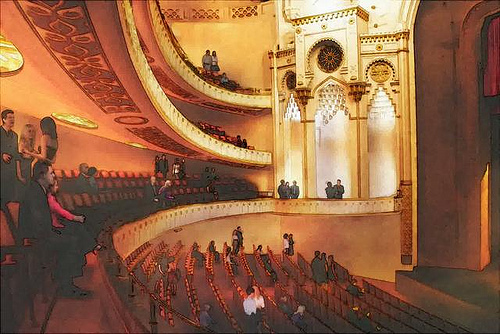
    Watercolor style theater renovation by Gordon Tarpley
    Watercolor style theater renovation by Gordon Tarpley (from flickr)

    In part 2 of this 3-part entry, I interviewed social media managers from different regions, artistic disciplines, and mission focuses about how diversity drives their social media strategy. I found that, for most, online community-building came first and diversity factored in minimally, except in terms of age. When I first came up with the idea for this blog series, my first instinct was to do a quick search of the niche social networking site BlackPlanet.com. It showed groups for black actors, a very large poet group, a few artist groups, etc. Lots of jazz fans. Lots of fans of activities that researchers are constantly associating with arts attendance. But not one LORT theatre is on the site. Not many theatres period, except the stray comedy club.

    In analyzing the responses of the social media managers and the notable absence of non-profit arts organizations on these niche social networks, I was puzzled. Then I thought, “Am I asking the wrong question here?”

    Would most American theatres (most of which produce, on average, about one play by a black playwright a year) have a place on these networks that exist to connect black people to one another and to black culture? Maintaining a profile on one of these sites while you’re promoting Noël Coward’s Blithe Spirit could be a bit of a stretch.

    But even maintaining a tenuous connection to this community, such as an ad, could get a whole new community of people looking at your org, right? I decided to talk to an expert. Gerry Eadens is a media buyer who has worked in advertising for nearly 20 years and now works at Kansas City Repertory Theatre. She specializes in Search Engine Marketing (SEM) and other online media. She did a cursory search and found at least 100 sites through the Google ad network that are meant to serve a specific cultural or ethnic group.

    Research shows, however, that advertising is not a replacement for a social networking presence and vice-versa. Eadens cautioned me, “Typical display ads are not recommended for the best response from social network users since they are often ignored. Research has shown that advertisers garner greater results from more engaging activity with their audience such as posts that appear within news feeds.” Add to that the difficulties that online marketers often have in knowing how to focus an ad toward their intended audience. There’s no ethnicity category on the Facebook ad set-up interface, and I’m guessing that the company probably won’t add one in the near future.

    So what can we do and more importantly, what’s worth our time to do?

    At long last, the diversity question has come around to the classic “old vs. new” debate: When faced with declining arts attendance, is it better to “pick the low-hanging fruit” and focus on maintaining and growing our existing audience demographics ("the more return on investment for less energy" approach) or make a long-term investment in trying to attract new groups of people to our performances?

    In a recent cultural policy article I read, I came across the question, “In our art, we place great value on experimentation and innovation—why not in our management practices?” I thought this was a great question, and I also bought into it, at first. Innovation seems to be the hot buzzword these days, and I think that generally, it’s a great value to have. However, from listening to the reasoning of the social media managers in the previous entry, I would argue it may not always be the most important one, especially from a user’s perspective (as opposed to a developer’s). They have tailored their social media presence to be purpose driven, tailored to their mission statement and aimed toward staying connected with their current audience while gaining new audiences, although not specifically diverse ones. Timothy Platt of the Leukemia and Lymphoma Society writes about purpose-driven marketing on his blog Platt Perspective:

    Good online social networking means sharing value and even paying it forward and taking the initiative in starting that process. But true online communities always carry this greater, synergistic value and are bound together by the cohesion and momentum that it brings. It is in the communities of members and supporters that good nonprofits gain their strength…

    When I interviewed Thomas Cott of Alvin Ailey American Dance Theatre, he spoke about his org’s purpose-driven strategy. “Since social media works best when you don’t try and push sales too directly, we’ve been using Facebook as an outlet to expand our ‘brand awareness’ and we’ve succeeded in attracting fans from many countries.”  For an organization with an international presence, the brand awareness angle is especially valuable.

    More local or regional orgs, on the other hand, value building community locally. Brian Hinrichs of Madison Opera commented, “Our Facebook page very much feels like a community–fans comment and interact, they want more blog posts and photos, etc. Twitter doesn’t yet feel so cohesive: I’m interacting mostly with local media and other opera companies and nurturing those relationships. If our local paper re-tweets a ticket link or production photos, that is extremely valuable, but this is not where most of our fans are…yet.”

    No matter your geographic focus, social networks are fundamentally about forming a community and having conversations. Therefore, having a clear purpose in mind when you choose your networks is essential. We’ve all heard the adage “the medium is the message.” It means that the method by which your audience receives your message becomes an inextricable part of the message itself. The phrase was coined in the 1960’s before the advent of the social media frenzy. But think about what it says to us today. Your show is its logo. Your season is the email blast that announces it. Your theatre is your Facebook fan page. But there’s more to it than that. With social media, the audience becomes both medium and message. Your audience is your identity. Who your fans are says something about who your organization is. If someone chooses to invest themselves in your product or purpose by becoming a fan or making a comment, then they become part of your organization in a way that’s visible. They become a message that your organization is worth following.

    Think about the last think you received a postcard from an arts org. Chances are, they wanted a private, one-way, and perhaps institutionalized response from you (like buying a ticket, perhaps?).  Outside of social media your level of engagement with the organization is determined by those ticket purchases and other statistics available exclusively to the organization. Not so in the world of social media.  Think about how different the message is between a postcard (Buy a ticket!) and a Facebook page (Interact with us!). There are many ways to interact, and many messages a fan can send you. By creating a presence on a specific social networking site, you are signaling that you are open to communication with the people on that network. So what does it say if your organization is not present?

    Building Audience Diversity Through Social Networking – Part Two

    In part 1 of this 3-part entry, I left you with the burning question: What are arts groups doing to build audience diversity through social networking? I decided to ask arts organizations around the country two questions that are relevant to any arts organization with a social networking strategy (and not just during Black History Month):

    1. How is your org are selecting which social networking sites are worthwhile?
    2. Are you taking diversity into account when forming these strategies?

    orch-audience "St Petersburg - Alexandrinsky Theater" by thisisbossi / CC BY-SA 2.0

    This can be a very sensitive issue and I am very grateful to the orgs that chose to take on this question. I contacted organizations of different sizes and different artistic disciplines. The answers I got were very in line with conventional wisdom of creating and streamlining a social media presence. Brian Hinrichs of Madison Opera says that he tries to focus on the two websites with both the most users and the most relevant users to his organization, Facebook and Twitter.

    Facebook has the most users. We do have a MySpace page, which I understand has a more diverse user base, but that was not intentional. MySpace proved to have a large singer community, but I was not finding Madison Opera fans… Most of our MySpace friends, which is very few, also have Facebook accounts. Anecdotally, I find that to be the case in Madison and so for convenience of updating I am focusing most of my efforts to Facebook.

    Thomas Cott of Alvin Ailey American Dance Theater (and the daily arts newsletter You’ve Cott Mail) also advocates focusing on a few sites rather than less coverage on more networks. Ailey boasts the largest Facebook Fan base of any nonprofit arts organization, at over 32,000, and is planning on rolling out pages for other programs like Ailey II and the Ailey School.

    Ailey has focused its attention primarily on Facebook and YouTube (we’re phasing out our MySpace presence), because we feel it’s too hard to be everywhere at once… Of course, maintaining a robust presence on a social media site like Facebook requires a lot of staff time, and even for a big company like Ailey, we don’t have an endless reservoir of staff time to devote to this.  That’s the main reason why we haven’t pursued Twitter or some of the newer outlets like Foursquare.  It’s also why we haven’t put our attention to more ‘niche’ websites like blackplanet.com.  We feel we are reaching a diverse audience on Facebook and YouTube, and since they are the biggest sites out there right now, we felt that was the best place for us to devote our attention.

    Paul Montenegro maintains the social networking sites of GALA Hispanic Theatre in Washington D.C. He chooses to focus on Facebook and Twitter said that he focuses on the website’s functionality in his choice of networks.

    I personally find the sites to be more user friendly when it comes to making events or sharing information. If there are sites out there are can do a better job or similar one, I would be looking into it to ensure that we can contact patrons via the web.

    I contacted several other arts organizations who, like GALA, had mission statements which specifically focused on sharing the artist achievements or preserving the heritage of one ethnic or cultural group. I had hoped that they might be able to tell me how they decided which social networks to create a presence on, but they declined to comment. However, groups who did not have a mission statement that focused on one culture or missions to serve the community-at-large, were willing to talk about their choice of social media sites in the context of diversity.

    Like many of these social media managers, Courtney Perez of Two River Theater Company in New Jersey cited universality of the social networks in her choices.

    In regards to diversity, I must say that was not a direct factor in choosing these sites. I guess you can say these sites were appealing because they seem to be used by all ages & races therefore allowing us to reach a very broad audience. The formats of these sites are also quite uniform so the information we put up isn’t too targeted.

    None of the respondents directly cited diversity as a factor for choosing to advertise or have a social network presence, except in terms of age diversity. Catherine Guarino, Director of Communications & Ticket Sales with Lansing Symphony Orchestra cited ease of use as a reason for her choice of Facebook and, recently, Twitter. But the purpose of social networking, for the symphony, was to find a younger audience.

    I chose the two most popular social networking sites in hopes of reaching a younger, hipper audience. We didn't factor race into the mix at all, and I'm not sure we really ever do. Our goal with social marketing is just to stay in people's brains - to show up on their screen and remind them that we're here… What I found is that more and more older (for Facebook - say, the 50-60's) people were finding us and becoming Fans. We do have a decent college following, but the Fans that interact most with the page (comment, RSVP to events, write on our wall) are older.

    More to come in part 3 of 3 of this article! We'll talk more about how arts orgs choose social media site, I'll chat with a media buyer, and more. Stay tuned...

    St Petersburg - Alexandrinsky Theater

    Shouting it from the grassroots rooftops: Wolf Trap Opera and the digital season launch

    Midnight Launch by Temari 09
    Midnight Launch by Temari 09 (from flickr)

    For arts organizations, February brings with it the final throes of determining next year’s season. Some have renewals out already; others are still mired in scuffles with artistic, production or finance offices over which productions and dates will make next season the best it can be. Regardless of where you are in the process, if you are in marketing or PR, your thoughts have probably turned to how you will get the word out about the new season.  You may have perfected publicizing your season through renewal mailings and paper season brochures, but how do you “shout your season from the rooftops” online? Kim Witman, director Wolf Trap Opera Company (WTOC), has embarked upon an innovative new campaign to launch the company’s season this year. Located just outside of Washington, D.C., Wolf Trap bills itself as the "future of opera", a slogan that the organization seems to have taken to heart both in its programming and in its marketing efforts. As a researcher of how non-profit arts orgs use technology, I have been continually impressed by Wolf Trap’s leadership in online social media, particularly in their creation of a ning (a customized social networking site)—one of the first performing arts orgs to do so.

    This season, Kim aims to get the word out to existing fans and potential audience members with a "digital season launch", combining elements of technology, grassroots campaigns, and social networking. She will celebrate today’s announcement of the WTOC 2010 season by doing guest blog posts and interviews in a few places across the blogosphere (see a complete listing at the WTOC blog).

    I caught up with Kim about a week ago--a busy week for her, as she was returning from the classical Grammys. Wolf Trap was nominated for Best Opera Recording for their 2009 recording of John Musto’s Volpone. As she prepared to launch the season today, February 9, she took the time to answer some questions about launching a season digitally.

    Q. In previous blog entries on Technology in the Arts, we’ve talked about digital season brochures (such as the London Symphony Orchestra) and other ways to publicize your season using technology platforms. What exactly is Wolf Trap’s concept of a digital season launch?

    Kim: Wolf Trap Opera’s season announcement is only a small part of a large kick-off for the entire 2010 season of the Wolf Trap Foundation for the Performing Arts, and within that context we don’t have the chance to provide a whole lot of detail and texture for the opera performances. My guest posts and interviews on colleagues’ blog sites give me a chance to tell many sides of our story while creating a bit of a buzz on our little corner of the web.

    Q. So today is the big day of your season launch online. What is rolling out today and what are you doing today to “shout your season from the rooftops”?

    Kim: The WTOC blog is a spot from which readers and fans can fan out to dig deeper into the parts of our season and the aspects of our company that are of particular interest to them.  In addition to linking to posts on the other blogs participating in today’s effort, we’ve cranked out the news via our Facebook fan page (become a fan!), our Twitter feeds (www.twitter.com/WolfTrapOpera and www.twitter.com/kimpwitman) and the WTOC Hotspot.  Phew.

    Q. You drew inspiration for this campaign from marketing guru Seth Godin, who is publicizing his latest book not through newspapers, TV or any so-called “traditional” means, but instead through blogs and other online outlets. How did you modify this idea to fit Wolf Trap Opera Company’s specific needs for the digital season launch concept?

    Kim: I kept the guts of Seth’s approach intact. (I wrote him before embarking on this project, in the spirit of imitation being the sincerest form of flattery.  He wished me luck.)  I contacted the writers of a few blogs that I read regularly, and I offered to write guest posts or engage in interviews that target the area(s) of interest between my readership and theirs.  My effort isn’t nearly as massive as Seth’s was, but the goal is to focus a critical mass of attention on WTOC for a day!

    Q. I have heard of surprisingly few arts organizations engaging in a digital season launch. Which aspects of your organization and its marketing channels made a digital season launch a good idea? Do you think this sort of effort will become commonplace in the future?

    Kim: Our small company doesn’t typically have a lot of traction with traditional media anyway, so this isn’t a huge shift.    For the last 10 years, our main vehicle has been the website, along with the two direct mail pieces that go out later in the spring (calendar with entire Wolf Trap season, and WTOC brochure mailed to a smaller target audience).  We will continue with those traditional efforts.

    The nerve center of this season announcement is the WTOC blog and its readership. The daily interchange between bloggers and their readers is vital, interactive, dynamic, messy and wonderful – and that’s the kind of energy we need to tap into.  Clearly, I could’ve compiled all of the guest posts and Q&A’s and put them on a web page, but there would be something too clinical and linear about that.

    These types of initiatives are becoming more common, and the trend will undoubtedly continue.  Digital media make it possible to tell your story, no matter your budget.  The challenge is to do it wisely and in a targeted fashion.  All of the social networking initiatives are tremendously time-intensive, and they can rob a small organization of its precious human resources.  We’ve chosen to ride this wave, but we’re constantly weighing its assets and liabilities.

    Q. You mentioned the time-intensive nature of investing in social media and also touched on how different platforms serve your followers differently. WTOC currently has a blog, ning site, and Twitter, Facebook, and YouTube accounts. How do you manage which content goes on which site?

    Kim: It’s an ever-moving target, but this is how we’ve been focusing our various initiatives:

    • Facebook: By becoming a fan, you can get our updates (including my blog posts) through your Facebook feed.  We look at this site as a way to deliver WTOC highlights to FB users without them having to go to a separate site.
    • Hotspot (ning platform): The content is pretty much a clone of Facebook, with the added attraction of a comprehensive calendar.  It exists primarily to inform fans and patrons of our non-ticketed events (artist panel discussions, free concerts, etc) and to provide one-click clearinghouse for non-Facebook-users.
    • The WTOC Blog gives us a distinctive and informal voice.  It allows me to speak in detail (and when appropriate, in industry jargon) to aspiring singers and other opera geeks.  And it allows me to speak more frankly and conversationally than a traditional web page.  (I love that the words “traditional” and “web page” can now exist next to one another!)
    • Twitter still serves a niche audience.  Although (when we’re not in season), both of our Twitter accounts often run the same updates, they are differentiated in the summer.  I view mine as a conversation between me and my arts industry colleagues.  And the WTOC twitter feed is intended to allow us to communicate with fans and patrons.
    • The YouTube account isn’t terribly active because we are still struggling with artist rights and releases in order to be able to post content, and because we don’t have media staff in house to spend the time needed to do the pre-production work on video clips.

    Q. How are you spotlighting the Season Launch through these networks?

    Kim: We’ll simply be putting the WTOC blog link front and center, encouraging folks to link through and start exploring!

    Q. Anything else you would like to tell us in closing?

    Kim: My son is a software programmer, and I get most of my geek fix through him.  He is quick to remind me that all of our technological tools are not effective until they disappear into the fabric of the task at hand.  It takes some energy to ride the wave of the technological flavor of the day, but our goal is to conquer the learning curve and allow the technology not to be an end in itself, but a tool through which our real message is conveyed.

    Kim Witman of the Wolf Trap Opera Company is celebrating today’s announcement of the WTOC 2010 season by doing guest blog posts and interviews in a few places across the blogosphere.

    Link back to Kim’s blog entry at www.wolftrapopera.blogspot.com for a complete list – all of the links should be active by midday on Tuesday, February 9.

    Kim WitmanKim Witman assumed directorship of the Wolf Trap Opera Company in 1997 after having served the Company since 1985 in a variety of roles:  principal coach, assistant conductor, music administrator and chief of music staff.  A graduate of The Catholic University of America (M.M.) and Elizabethtown College (B.S. Music Therapy), she has also been a visiting faculty member in the opera departments of the Peabody Conservatory of Music and the University of Maryland.  In addition, she has been music administrator, chorusmaster and assistant conductor for The Washington Opera, adjudicator for the Metropolitan Opera National Council Auditions and assistant conductor for Washington Concert Opera. Ms. Witman has been active as an opera coach and recitalist in the Washington, D.C. area since 1981.  She has performed at the Kennedy Center, the Philips Collection, the White House, and at New York’s Merkin Hall.  Committed to de-mystifying the opera business for fans and aspiring professional singers, she writes at www.wolftrapopera.blogspot.com.

    Why you want to know what SEO means.

    Last summer I, like much of television-watching America, was bombarded with commercials touting a "decision" engine that promised to cut down on irrelevant and off-the-mark responses to search queries.

    According to the ad, I am not, in my overwhelming frustration at irrelevant search results, as unique as I thought. Evidently, many (most?) of us are accustomed to having to type and refine searches until we actually encounter what we sought. If I am to believe the ad, others also find it irritating to scroll through a list of links that are loosely (or perhaps, completely un-) related to the desired result. So it isn't just me who loathes being forced to navigate unrelated blog entries or archived reviews or the site of a similarly-named beer distributor in Wisconsin!

    My point is: what do you know about SEO?

    SEO stands for "Search Engine Optimization," and it essentially means that if I were to search for your organization you would be one of the top results--ideally THE top result--that appeared on the results page.

    Don't know if your website makes the cut?  Check it out.

    Seriously.  Right now.  Google, Bing, or Yahoo! your organization name.  (Or try all three!)   Now search for the name of your latest show.  What about your organization and the word "gives" or "donate" or "fundraising"?  What about your organization name and "buy tickets"? What about if you search for the name of an artist currently working with or featured by your organization?  Now try "(your city name) (type of venue, e.g. gallery, theater, dance)."

    If your website, and even more specifically, the pages within your site that contain the most relevant information, do not top the list of search results, take note.  SEO is an easily-overlooked element of your organization's presence that should be considered as important as the other steps that you take to stay visible.

    What must you do to accomplish this goal?

    Next week I'll demystify the process of optimizing your website for the search -engine crawler.  I will delve into the nitty-gritty about SEO and what you must do and be aware of to command some of the search engine spotlight.

    Building Audience Diversity Through Social Networking - Part One

    When I was working in the trenches of a theatre company in the Midwest about a year and a half ago, the arts orgs in town got together to have a round-table discussion about social networking. At the time, I had grown my theatre’s social networking from mere presence to full-blown strategy and was seeing our friend numbers grow exponentially. I was proud of my Facebook page and our (at that time) fledgling Twitter site, but the MySpace page was the real shining star of the bunch, with almost twice as many friends as the Facebook page and three times as many as Twitter. Most intriguingly the people on MySpace didn’t feel like the people on the other networks at the time. They were much more diverse in terms of race and age. They didn’t have a professional feel like Linked-In or Twitter (in some cases). It was a network open to everyone, one that didn’t start as a “gated community” catering exclusively to historically white colleges and universities like Facebook. Best of all, they were asking questions through private messages that indicated that they hadn’t heard of the theatre or weren’t sure how to get information on shows.

    At the meeting we went over the popular social networking sites and discussed how MySpace was losing its market share and how some of the orgs had abandoned it. I raised the question "But is MySpace really and truly dead?" to which about five people in unison responded "YES!" and someone said "let's move on". Ok, then...

    Now around the same time, I read that MySpace was still growing, just at a slower pace than Facebook and Twitter, but that it was the social network of choice for African-Americans and other ethnic minorities. (This is referenced in Hispanic Trending and in the below video.) Interesting, huh? But I didn’t speak up again. I figured, the people have spoken. I became disenchanted with the MySpace page, still checking it, but not putting in much effort. Since that time, the very thing that made MySpace a great social network—its openness to all users—also led to its demise in popularity. (Although a study from FSU from July 2009 showed that the ill-favored network was still quite popular with English-preferring Hispanics, preferred more than 2:1 to Facebook.) However, the fact still remains that I gave up on something that at the time, for our org, had brought us close to those elusive “interested, but unaware” prospects that could be tomorrow’s patrons.

    Video from Black Web 2.0

    I didn’t put the two incidents together until Martin Luther King Day last week when I was thinking about diversity in the theatre. We shouldn’t just be thinking about audience diversity on MLK Day, or Hispanic Heritage Month, or when our grant proposal is coming due, but some organizations do. For most orgs, audience diversity is something we might value, but it often isn’t a part of our social media strategy or even a part of the marketing strategy. It’s easy to write off, because it is very difficult to track based on race or ethnicity. Maybe we don’t have the time or staff. Maybe we’re not completely sure how to do it effectively. But, the fact is, the world in which arts orgs operate is changing and not just because of the technology that has revolutionized that way we entertain ourselves or engage with the world.

    The make-up of U.S. culture is changing. The census bureau projects that, by 2050, the Asian and Hispanic populations in the U.S. will have tripled. The percentage of African-Americans in the U.S. population will also continue to rise, at the same time they grow more affluent. Perhaps because of this, the for-profit business community has begun to recognize African-Americans as the hot emerging niche market, even profiling behaviors to help advertisers reach this audience. And, as Dr. Eszter Hargittai prophesied in the video above, the playing field for minorities in social networking is getting more level.

    The past few years have seen the rise of niche social networking sites for African-Americans as well as Hispanic Americans. Additionally, the 2009 study at Florida State University referenced above found that equal percentages of English-preferring Hispanics, Asians, and non-Hispanic whites under the age of 35 now access social media sites 2-3 times a month. The study concludes with the following paragraph:

    "Few marketers are proactively targeting ethnic minorities online and even fewer are leveraging social media to do so. A first mover advantage is available for those that devote the time and resources to engage these critical audiences in ways that they find meaningful. The fact is that we now have an unprecedented ability to reach and interact with ethnic minorities; and companies that deliver value to this segment today will be rewarded with the long term loyalty of this market."

    So what are arts groups doing to build audience diversity in this market? In Part Two, I’ll "take to the streets" and chat with marketing directors (including Thomas Cott of Cott Mail), a media buyer, and more. Stay tuned!


    There's been a vibrant debate going on in the arts blogosphere about diversity, how to best reach new audiences and the relevance of American theatre. Here are a few of the posts:

    'Outrageous Fortune': Playwright book full of whine and din, Chris Jones of  Theatre Loop (Chicago Trib)

    What if we are all wrong?, J. Holtham of 99 Seats

    More on diversity, Greg Sandow (Arts Journal)

    Lyn Gardner: "We Need to Act Now to Save Theatre", Scott Walters of Theatre Ideas

    No history?, Rob Weinert-Kendt of The Wicked Stage (American Theatre)

    Mobile apps and the arts: where we are and where we're going

    Expressway at Night by the Pug Father
    Expressway at night by The Pug Father (from flickr.)

    2009 saw many new technologies first start up (like Google Wave), slowly emerge (mobile apps), or explode with popularity (Twitter). In the past year, we at Technology in the Arts have been writing a lot about the emergence of mobile technologies in the performing arts, particularly the emergence of mobile apps. We’ve highlighted disagreements between artistic and administration staff about the role of phones in the audience, as well as the new and unique ways orgs are promoting the arts through apps. We featured a short video of mobile marketing guru Ron Evans of Groupofminds demonstrating new apps as part of a webinar hosted by the Center for Arts Management and Technology on “Mobile Applications for the Arts: Where Are We” (more on webinars at the freshly made-over CAMT site.) I caught up with Ron again around New Year's to discuss where mobile technology is now and how we might expect it to develop in 2010 and beyond. Amelia: What do you think arts patrons want in a cell phone app? What are the most successful examples that you’ve seen at giving the intended audience what they want?

    Ron Evans: In a study I recently completed for the Artsopolis Network (who is considering building a mobile application to allow patrons to access their arts calendaring portal), of patrons aged 48-64, surprisingly one of the top results to your question is "Parking." People really want to know what parking options are available to them before the event, how much the parking costs, etc. This is a perfect example of some of the answers one might overlook when focusing on the arts organization's presentation of "the art" and is really very practical and useful information to know. Other responses that score high include restaurant information for pre/post show activities, availability of events near the users location (and the event start times), getting directions to the event, and being able to purchase tickets through the app (hopefully with discounts). These are all practical responses, and that's ok right now -- we're in a phase of early adoption, and outside of these functions that they are already familiar with (using Yelp to find restaurants, or using the iPhone's maps to get directions to a location) people don't really know what they want yet. They will be attracted to new phone technologies/capabilities that are cool as they develop.

    iPhone Transparent Screen by edans
    iPhone Transparent Screen by edans (from flickr.)

    A: In the current marketplace, what are these apps useful for? Is it simply audience engagement and a connection with the organization? Is it selling tickets? Or do you think that at this point they serve more as publicity devices—the organization that comes up with a cool app gets written up in papers, and gets a reputation for being forward-thinking?

    RE: I feel that it is all of the above. If your arts organization creates a mobile app, it still feels like magic. Since many groups are local or regional and not national in scope, it doesn't really matter if an arts group in Boston creates an app similar to the one you just created in San Diego -- to your local community, you're cool. You're looked at as a forward-thinking organization with resources to spend on research and development, and I've seen several funders interested in funding new technology like this. Now, there aren't many examples of financial return on investment for the creation of an app. But similar to social networking, there are many examples of a visibility return on investment, and that's of course quite useful in many cases. But some people have to be the pioneers, who build things because they are fun and cool and give a new spin on the experience -- those people are the ones that eventually find the ROI. But to finish your question, apps can be designed to serve a variety of purposes, from deepening audience engagement to simply helping people find events to attend in the first place.

    A: Back in the 90’s, there was a big “everyone needs a website” push for all commercial and non-profit orgs. Now everyone wants their website to be mobile-accessible. Is the next step that everyone needs a mobile app for their organization? In short, are apps right for everyone?

    RE: Let's draw a quick distinction between mobile accessibility and mobile apps. The former is simply having a website that looks good when viewed in a mobile browser, and this is an absolute must-have. The latter is the creation of a new software program that people can download from places like the Apple AppStore, and is not a requirement, but is certainly cool. For a mobile-accessible site, your web designer should create a mobile-friendly version of your site, and you should try it out on various phones. If you use a content management system such as Wordpress or Drupal, there are free plugins that will do this for you automatically -- it's quite easy, and has the advantage of working for any phone with web-browsing capability. Mobile applications however, only work on the phone they were designed for, so you need different applications for the iPhone, the Droid, Blackberrys, Nokia's, etc. New tools are looking to make this a bit easier: for example, there are software coding environments that allow you to code your app in a general way, and then spit out "flavors" of apps that work on different phones. New technologies like this should bring down the cost of creating apps significantly.

    iPhone sunset in the Andes by Gonzalo Baeza Hernández
    iPhone sunset in the Andes by Gonzalo Baeza Hernández (from flickr.)

    A: What type of organization could benefit the most from creating a mobile app? How do you suggest an organization research and decide if a mobile app is right for them?

    RE: I don't think the use of an app would be better or worse for a specific arts genre. If you're doing interesting things, an app would offer a new medium to communicate that information. Before deciding to move forward on any development, I'd do two things. 1. Research what's out there already -- do some searches in the app store of your smartphone for organizations like yours, and see if apps exist already, what they do, and how you might use them if you were to contact the org that made them. 2. Ask your patrons -- send them a survey and tell them you're considering creating mobile access to the arts experience, and ask them what they would like to see, with an open-ended comment option. I've taken arts organizations through this process and answer analysis, and the information received is fantastic in focusing your development, saving you money, and ultimately increasing your chance of "success" in however you define it for your creation.

    A: I’ve been researching streaming video in arts organizations and I have been finding there are many performing arts organizations that are having trouble obtaining the rights to stream video. Similarly, there are many modern museums and galleries that cannot obtain permission from artists to put a photograph of their art on their website, much less a mobile app. Do you see this as a significant barrier to arts organizations developing apps?

    RE: Yes, it is a huge barrier. People that own the rights need to lighten up and realize that capturing the likeness of a piece or an event to share the act of participation isn't the same as being there in person and participating. But this is really only a barrier to apps that are designed to display this sort of content. There millions of other ways an app could augment my arts-attending experience, and many organizations are focusing on those ideas right now.

    Samsung mobile phone by Milica Sekulic (from flickr)
    Samsung mobile phone by Milica Sekulic (from flickr.)

    A: Do you foresee a huge demand for on-demand video on smartphones? How do you think the market reconciles the hi-def video craze with viewing performances on a low-def platform (i.e. tiny screen, tinny sound quality)? What sort of apps do you see emerging in the future, based on current trends?

    RE: Actually, on-demand video, no. You can do it already and that will just become easier. The next big thing is going to be live streaming video -- sharing the experience you're at right now, with yo friends who aren't there with you. The iphone already has this capability (although you can't use it unless you break your contract with Apple and "jailbreak" your phone). AT&T also doesn't want you to have this capability right now, as it will be a huge drain on their mobile network resources. But as 4G speed and more becomes standard in the next couple of years, you're going to see this capability emerge, and instead of asking people not to take pictures, many arts groups will be asking people to not stream capture the entire event on their phones. This is going to be a big battle. But again, I point out that watching a show through a cell phone camera is not the same thing as attending the show in person in all its glory. One should be a "taste" of the other, intended to drive interest and participation. But many rights holders and arts organizations aren't going to see it like that for a long time.

    I also think there will be more and more location-based apps, that know where you are in relation to everybody else, and your friends. For example, it is going to be easy and precise for you to be able to find your friends in a crowded 1800 seat concert hall -- you'll be able to point your phone like a compass to find them, as well as see them represented on a map that includes the walls etc. of the physical space you're in. There are already apps being worked on that help you find friends to attend with, identifying people of similar interests and tastes. And apps will start asking you for permission to do the things you do most -- do you usually go out to dinner before shows? Your phone will know that, and ask you "should I make a reservation at X restaurant for you?" You just give the ok -- the default will be that the phone asks for your approval, not the other way around with you hunting for a restaurant and trying to tell the phone you want to make a reservation. Sound like the stuff from science fiction movies? It's closer than you think, and it will all be based on the continued constant recording of your preferences and actions, in order to try to predict your future behavior. Getting your DNA examined to know your physical traits is pretty commonplace today -- getting your behavioral preferences mapped will be the goal of tomorrow. Sounds potentially Orwellian, I know. But if you can get beyond that, it's pretty exciting stuff, and we are just starting to play around with ways to enhance the arts experience itself using these technologies -- interesting stuff to come!

    Ron Evans of GroupofMinds.comRon Evans is the founder of Groupofminds.com Arts Consultants, and is a leading developer and researcher of arts marketing and audience development using technology. His firm assists arts groups to explore emerging technologies and measure their impact on patron behavior in expanding arts audiences. He can be reached at http://groupofminds.com/contact-us

    Know who you are, be who you are, and have fun figuring out what works: NAMP reflection

    IMG_0930

    I apologize for my delay in getting this up. In the spirit of the subject of this post, I'll be honest: I just wasn't satisfied with it. Repeatedly I tried to write about authenticity, and it was schlock. So I give you the intended post (happily abbreviated), plus an offshoot (bonus!) thought.

    The final reflection on the NAMP Conference, I would like to call attention to the importance of conducting your organization's online presence with authenticity, and of taking a deep breath and just experimenting to see what works for you.

    We can all access information at the touch of a button. Our phones are smarter than we, the internet is pervasive (and invasive?), and finding out the truth is easier than it's ever been. If you are being disingenuous, you can bet that your audience will know.

    Web 2.0 means audiences may instantly learn about organization, the people who make it work, and the reasons behind its existence. Audiences are afforded the opportunity to connect with you in new ways that seem to be personal because they defy "conventional" marketing practice. This means that your organization must speak with a unified voice, with clarity of intention, and with honesty. Web 2.0 transcends the boundary of cover-ups and spin doctoring. Be honest, be real, and your audience will appreciate you all the more. Quick and dirty tip from the NAMP session "Command the Cultural Marketplace": Know who you are, BE who you are, and make others know and understand who you are.

    Audiences will sense this authenticity, and will appreciate the additional things that you do to make your organization accessible (though, of course, they may not understand how very time-consuming it may be!).

    In this vein, the very last NAMP take-away was one that Rich Mintz introduced in his plenary address, and which became a bit of a rallying cry: “Throw spaghetti at the wall and see if it sticks.” Translation? Just try stuff. If it doesn’t work, toss it, but at least give it a shot. You will probably discover things that DO work for your organization, and how exciting is that? I was reminded how important this is when I attended a round-table discussion the other day that was attended by many different individuals from many different types of arts organizations. The purpose of the meeting was, in fact, to reflect on much of what we had learned at NAMP. As we discussed various sessions and reflections, a few of the attendees were visibly alarmed by the daunting prospect of tackling some of the social media and technologies that we were discussing, including developing the sort of e-mail marketing plan that I discussed here, or establishing a YouTube channel or blog. It can be overwhelming, so choose one or two areas you want to work on. E-mail and Facebook, perhaps? But really give it a shot.

    As NAMP presenters Chris Elam, Rich Mintz, Jeffrey Inscho, Gene Carr, and Chad Bauman will tell you—not everything works. But don’t let the fear of failure keep you from trying. If you are being authentic your audience will identify with you and appreciate your efforts. Nobody is going to fault you your failures (sometimes those leave as much of an impression as your successes—look at all the conversation that the Seattle Opera's attempt generated).

    So take a deep breath. Get your staff together and be sure you're on the same page with your online presence. What could you do more of? What social media tools are your friends, staff, audience using that your organization isn't? How do you want your staff voice to be heard--from individual accounts or one overarching organizational account? Will there be different user names? Are you doing things that are working? Are you doing things that aren't? Can you quantify the success or failure? (If not, get analytic tools NOW--Google Analytics is free.) Are you or is someone on staff particularly interested in trying out a particular tool, like building a Flickr account, and willing to work on that and see how it can benefit your organization? Ask these and more questions, and build a plan. Remember--it doesn't have to be a runaway success from the start. But know what it is you want and try things to get that result.

    Now go have some fun.

    Fear not what "They" will say: Relinquishing control and opening up the conversation

    Misnomer Dance Theater's "Breakfast With You"

    Arts organizations, especially in this economy, rely heavily on positive reviews and audience raves to generate ticket sales and interest.  As technology improves, so has the speed and reach of these review: one voice can be heard across an infinite distance, and one individual's bad experience can be heard around the World Wide Web.

    Damage control, clean up in the wake of widely-disseminated destructive commentary, is never as good as the kind of real-time management that is possible when an organization is able to react and engage as the conversation is developing.  Even better when the conversation takes place in a forum that is controlled by the organization and populated by unaffiliated supporters who can voice unsolicited positive defense of the organization.

    This is one of the most powerful elements of Web 2.0, and one that seems to strike the most fear in the hearts of arts managers. The NAMP Conference was an eye-opener: arts managers are really afraid of relinquishing control over the conversation.  From the keynote to the final session three days later, attendees at every Q&A expressed concern about allowing organization-related conversations to publicly occur with outsiders and audience. (For example, allowing user-generated comments on a blog on the organization’s website, comments on the YouTube channel, Twitter conversations, Facebook dialogue.)  The question asked by managers time and again: "What if 'they' say something negative?"

    The reply? “They’re saying it anyway.”  Would you rather they said it behind your back? Imagine that your organization begins to open up the conversation. Great examples of this can be found by looking at the Mattress Factory Museum's Friendship 2.0 page, or Misnomer Dance Theater's blog, which links to a variety of other interactive possibilities (though Misnomer's Chris Elam would like to improve upon this even more, by having an aggregate feed that pulls in the conversations happening in various forums and making them accessible in one place on the site). Perhaps you have a way for visitors to post publicly from the venue, or link to articles that have been written about your organization and allow users to comment. Maybe you have a Flickr page to which your audience can contribute, or a YouTube channel. People start commenting on a piece or an interview, a post or an exhibit.

    Let’s look at the positive outcome of enabling and encouraging audience participation online.

    It is generally accepted that people are more likely to complain than they are to express happiness about something.  That changes as social media and Web 2.0 enable people to easily share thoughts and feelings, and so they do not have to make the same kind of effort to offer praise.  They can take five minutes (and feel good about) publicly expressing to you how good they feel.

    Remember, “everyone wants to be an insider.”  When they can express themselves on your site, or engage in dialogue with your organization and its other supporters, that person feels like they are special.  They are being included and being respected as a participant--which givees them a sense of ownership.  And they will hopefully keep returning to their conversation, see who has responded to their opinions, and continue to engage with your organization and with other supporters.  This builds loyalty, especially when you acknowledge them, and your relationship may lead to this person's friends also getting involved.

    But certainly the fear of negative public feedback is not unfounded.  Along comes a disgruntled patron.  This unhappy patron lambasts your organization for the offenses you have, in his estimation, committed (dirty bathrooms? Offensive scene? Maybe they just thought the work was garbage?).  This person comments angrily on your blog, and complains on your Facebook wall.  Your organization can now fully benefit from the power of Web 2.0.

    If this person posts to your sites, count yourself lucky (if not, you can keep tabs on what is being said about your organization elsewhere with Google Analytics, and respond on your site, thereby directing the traffic to your organization) .  This negative view now can be addressed directly by you—both publicly and personally—and a conversation can occur.  You can find out the real source of this person’s vexation, and you can demonstrate that your organization is invested in the experience of its audience.

    You are also aware of something that has fallen short of an audience member’s expectations.  Sure, maybe that person was just having a bad day, but perhaps there is a greater issue there that you can now work to solve.  If you were not involved, it is possible you never would have known of their dissatisfaction.  You might have missed them renewing their membership, or you might have lost friends of theirs.  But you might never have known why.

    New visitors to your sites will see this dialogue and appreciate your honesty. (Who isn't skeptical about something that NEVER receives negative feedback?  It smacks of censorship, and seems disingenuous.)  Your loyal followers may also have gotten involved and expressed positive opinions in your defense. By endorsing both the positive and negative views, by demonstrating your appreciation and value of both sides of a situation, your organization gains credibility for its honesty and forthrightness.

    Elam urges organizations not to avoid something out of fear that might prove a most powerful tool.  “If you don’t open the floodgates you have zero comments.  If you do open them and you get 100 comments and three are bad, you are building energy around your work.”  But be aware: “If you have 98 that are bad, that tells you something about your organization.”

    Remember, opening the conversation can be incredibly powerful, but you must not just sit back once you have made available the possibility for user-generated content. Your engagement is important to keep the conversations relevant and to connect your organization to the discussions being had.

    Content is King (but a compelling subject line is crucial): Effective E-mail Marketing

    The Crown of the Moon by gilderic The Crown of the Moon by gilderic Organizations too often overlook the hidden powers of e-mail marketing, a relatively inexpensive powertool if used correctly.  As Gene Carr of Patron Technologies will tell you, a strong e-mail marketing plan is a critical component of your online presence.  "Why?  Because the average arts consumer doesn’t. . . go to an arts website to browse around to see what’s happening next Tuesday.  [Now,] when they get an e-mail in their inbox, they say 'OH! That’s happening next Tuesday!' and they forward it to their boyfriend and they send it on.  So I say, get your e-mail marketing program great, you’ll solve half your problems."

    How do you do this?

    I was fortunate to attend a great session at NAMP called "Beyond the Blast: E-Mail Marketing Well-Done" featuring a panel of Playwright Horizons' Bradford Louryk and The Book Report Network's Carol Fitzgerald, and moderated by Carr, who chatted with me for the blog.  Following his "Three B's" I offer you some take-aways.

    • BUILD YOUR LIST

    You must have a strong list to have an effective e-mail marketing campaign. Building a list can be challenging, and is often seen as secondary to other elements of the e-mail or newsletter (design, content, etc.)--but Carr argues that building the list should take 75% of your time.  To collect e-mail addresses and learn what these individuals want to receive takes time and finesse, and involves regular (about thrice-yearly) follow-up surveys to define their interests and ensure that your messages are hitting their appropriate mark.  If you are sending out one blanket e-mail to everyone on your list, you are blasting, and are likely seeing a low return on such messages.  It also may decrease your revenue: "You won’t advertise a $5 ticket lottery to a full-season subscriber.  You really have to think about who is getting what messages," reminds Louryk.

    • BE PROFESSIONAL

    Exercise professionalism when managing your e-mail campaigns: "[p]lan a schedule in advance, get (the e-mail) proofread, get great graphics, send it to outside readers (to look it over before you send it to your lists). All the things that professional publishers do," explains Carr.  "It doesn’t mean that your newsletter can’t be in a personal voice;" you should cultivate a specific tone and feel to make your organization accessible and relatable.  Set the sender's name to appear as a person in the organization rather than the company's name.  "But there better not be any typos in there and it better come on Tuesday if you say it’s going to come on Tuesday."

    And don't underestimate the power of timing: your communication should be timed to coincide with reviews, published profiles, podcasts, etc.  Driving traffic to other locations where your organization receives publicity demonstrates that you are connected and aware of how your organization is being represented and perceived.

    • BE INTERESTING

    Once you have determined who your segmented audiences are and established how your campaign will be structured (once monthly newsletters? event-specific?), remember that every recipient will read the subject line of your e-mail. 100% of them.  Their decision to open the e-mail is based on what they get from that subject line.  So be engaging, intriguing, exciting--but exercise caution.  A "tantalizing" subject may get filtered as spam.

    Within the message, Louryk stresses the importance of representing your organization's mission, expressing its urgency and importance.  Integrate your logo but vary the colors, designs, header graphics to reflect the particular content of each message.  Remind your audience who you are and why they support you.

    Everyone wants to feel like an insider. People want to catch a behind-the-scenes glimpse of the inner workings of an arts organization.  This may take the form of staff blog entries, artist personal stories, backstage video tours, or any number of personal touches that will give your audience a taste of the other side.  Fitzgerald regularly shares personal stories with organizational information, authors of featured books write newsletters, and readers keep reading.  Newsletters are not just about the sale, but about making connections.  The more your audience feels a vested interest in what your organization is doing, the more they are to come around in real life. Give them the opportunity to receive special discounts, participate in lotteries, and get additional details beyond the website--and acknowledge those who open every e-mail with personalized thank-yous.

    • FINALLY

    Don't despair if  your organization already has established an e-mail marketing program that is less-than-effective, Carr is confident that that is not a death knell if you are prepared to put in a little work, figure out what makes you unique, and what your recipients want to read.

    "We have an e-mail newsletter that goes out to seven- or 8000 arts managers every month.  We’ve been doing this for eight years.  And about a year ago we started sending an interview, first it was an interview format, then we switched it to a video format.   And we were spending a lot of time taping the person and then editing it, and the open rates were abysmal.  Terrible, really terrible.  And we were, depressed, we spend all this time, and (each interviewed person) was really excited, and nobody was opening it. So we threw out the interviews, rethought the content, and started writing about things we knew people were interested in: Facebook and Twitter, started putting contests in and quoting from clients and just totally reinvented the content.  And the open rates jumped."  The lesson?  "Basically the reason people are tuning out is because YOU’RE BORING.  The content that you send is what you’re about.  It’s almost like you’re a magazine publisher and you don’t really pay attention to what is in the magazine.  People are not getting your magazine because they like a bound thing showing up in their mailbox.  People are tuning out because you’re not interesting."

    We ask that you now turn ON your phones! Enjoy the show!

    Fail Phone by Rammikins!

    Today on the Technology in the Arts blog, a further investigation of the burning question--mobile phones: good or evil? Last week, we investigated the evils of mobile phone technology in the context of arts audiences. This week, it’s time to turn on your cell phones and explore how mobile phones can help the audience engage with arts organizations on a personal level.

    There are quite a few examples of mobile phones being used quite creatively for marketing and audience development initiatives. I’ve heard of a few different arts orgs twittering backstage during performances.  Most notable is the Broadway show Next to Normal, which tweeted an entire performance in short little 140-character spurts. You can still read the archived tweets here. And by this point, many orgs have mobilized fans through social media via their smartphones or even with texting services offering discounts. The artistic and production staff are harnessing the power of a mobile social network, too. In July, the Old Vic’s invited audiences into the creative process of its 24-Hour Play Marathon, with tweets from followers shaping the direction of some of the plays. During the national staging of The Laramie Project: Ten Years Later, audience members used Twitter from their phones at many theatres to ask questions at post-show forums. In addition to coordinating the Q & A sessions, theatres across America that participated in the project used Twitter to sync their production with the “lead” show at Lincoln Center. For a unique national project like The Laramie Project: Ten Years Later, an application like Twitter that is easily accessible from a cell phone is perfect to coordinate artists, production staff, and audiences.

    If we drift away for a minute from the concept of cell phone use during the show, we see people starting to discover with their inner arts-lover with all kinds of cool apps being developed for smart-phones:

    • There’s the Gustavo Dudamel iPhone app, where you can conduct "March to the Scaffold" or "Dream of a Witches' Sabbath" from Berlioz's Symphonie Fantastique.
    • There’s the bizarre, yet popular ocarina app, which turns the phone itself into a musical instrument. (video footage below)
    • Most of us have now heard of Pandora Internet Radio, which recommends songs based on songs you like.  Pandora apps are available on the iPhone, Blackberry, Palm Pre and a variety of other phones.
    • Zoozbeat, which allows users to compose their own songs with a variety of instruments by simply shaking and moving their iPhone, was recently featured on CNN.com.  
    • If you are more the theatrical type, the complete works of Shakespeare are now available on an iPhone app.
    • In the visual arts arena, your phone can become your canvas with the Brushes app, an iPhone finger-painting tool. (Gallery of Brush app art at the end of the post.)

    Will apps like the ones listed above increase the audience's desire to flock to the theatre? Hard to say. But one thing is certain--show time is still a boundary that none of these apps and few of the organizations using smartphone technology seem willing to cross.

    In pondering last week’s entry on the evils of cell phones in the audience, I began to wonder if proper cell phone etiquette is merely a question of our expectations for the specific venue. For example, I doubt anyone would be bothered by people texting at a broadcast of an opera in a baseball stadium, or perhaps even an outdoor lawn concert. This summer, the National Symphony Orchestra started twittering program notes to audience members in lawn seating. Sure, some people might still be bothered by the LCD lights and the “text-offender”’s inattention to the performance at hand, but outdoor concerts have a different aura about them. It’s like people expect to be distracted by the sights and sounds of nature, especially if they are sitting on picnic blankets with a cooler of beer next to them. But, then again, it’s a sliding scale. When I think of the last two outdoor venues I attended in Kansas City, my reaction to texted program notes would have been quite different. The first is Heart of America Shakespeare Festival, a rollicking good time with a temporary stage and lawn seating. Audiences are encouraged to bring their own picnics and drinks to the show. On the other hand, there’s Starlight Theatre, which brings in touring Broadway productions every year. The performances take place in a large (permanent) amphitheatre with a stage and seating approximating a large indoor performing arts center.  Texted program notes at the Shakespeare Festival? Great. Starlight, I’m not as enthusiastic. It’s too close to an indoor venue and part of me feels like the same rules should apply.

    So maybe it’s a question of societal expectations. As we are often told, social etiquette at the theatre was quite different “back in the day” when, watching the performance was optional and (sometimes they’d seen it multiple times), talking was almost expected. The overture was initially conceived as a signal for all to get to their boxes. In some of the more low-rent houses, audiences would jeer the performers or even throw vegetables. (sometimes they still do…) But today’s cultural values center around respecting the artists on stage. It’s sewn into the experience of going to a live arts performance in America. We’ve experienced a cultural shift in expectations in the opera house since the old days. Perhaps we will again with the advent of these new technologies.

    Bottom line: with great smartphone power comes great responsibility. A responsibility to our audience to engage them on their level, balanced with a responsibility to respect the experience of art for both the audience and artist. These two duties will come into conflict more and more in the coming decades, and it's also our responsibility to wonder--and determine for our own organizations--at what point the two can meet.

    We ask that you now turn off all cell phones and pagers. Enjoy the show!

    Corwin wrote a great post a month or two ago about the new technologies that museums have started to implement to increase interactivity with their patrons. I thought it might be interesting to explore the performing arts side of things. Two things inspired me think about this: cell phones at a concert

    Firstly, an arts professional recently told me about an idea she had about implementing a system where program notes would be sent to audience members’ phones during performances. Great idea to engage audiences, but even texting the audience members prior to curtain was met with a lot of resistance from house management. Second, another theatre company wanted to institute a texting night, where people would be allowed to text in the back section of the theatre, as long as ringers were turned off. As one might expect, this was met with much chagrin by artistic staff.

    Cell phone usage is a big issue for everyone in the theatre world, especially for audience members. At most theatres, it’s house management’s responsibility to keep the peace, and they have good reasons to want the audience trained to turn off their cell phone before curtain (More on texting at the theatre on Arts Journal). At this point we’ve all had an experience, whether it be a movie, church service, class or performance, interrupted by someone’s phone ringing or someone “innocently” texting. (And, although loathe to admit it, many of us have experienced the embarrassment of being “that guy” whose phone serendipitously screeches at the worst possible moment!) In researching this post, whenever I read an article on cell phone distractions in the theatre, there were often 10 or more comments by people voicing their frustration about the rude text-er or Twitter in the row in front of them who ruined their night. And it’s not just the other audience members who get distracted. In the theatre where I used to work, actors would regularly complain of being distracted by the LCD lights when audience members texted. Many of us have seen the now-infamous video of Hugh Jackman and Daniel Craig in “A Steady Rain”, where Jackman berates an audience member whose cell phone went off during the performance.

    Hugh Jackman and Daniel Craig in “A Steady Rain”

    Some arts organizations go to great lengths to achieve cell-phone-free evenings—cell phone use during a performance has been illegal in New York City since 2003. Here in Pittsburgh, we try a more subtle, almost subliminal approach. A friend told me a story this weekend about an arts org that used to play a cell phone ring over the PA system a minute or two before the pre-show announcements. It sounded like it was just some one’s phone in the back of theatre. My friend thought this was sort of a wacky idea, until one night he sat in the balcony and saw everyone whipping out their phones to turn them off.

    But I digress. As texting delivery systems get more commonplace and affordable, arts managers now have the capability to reach out to audiences in new ways about the art that they are experiencing. Some would argue that mobile technology use could be one way to further your mission to reach or unite your local community around art. Unfortunately, this sometimes causes direct conflict with the artistic and house staff. Now, I am not trying to paint these segments of the arts org world as out-of-touch with technology; I’ve seen these departments embrace other technologies in creative and wonderful ways. Ticket scanners save ushers a lot of hassle. And advances in stagecraft technology make for some spectacular productions.

    But they have a point. When you take your personal technology into the performance with you to enhance the performance, it begs the question: shouldn’t the performance be enough? The art has stood on its own for, in some cases, hundreds of years, aided only by program notes and, in the past few years, by supertitles in the case of opera. Perhaps this is the argument for the new technology—that old art must stay current with its audience, who may not know to clap between pieces, but not between movements. Or have their understanding enhanced by knowing that Mahler wrote the song cycle after the death of his two children and perhaps that is why it is so depressing. (Sidenote: does anyone else find it interesting that the endings to operas are nearly always included in the synopsis in the program notes, but never the endings to plays?) Personally I love to read program notes, especially the articles about the lives of the artists. But while I’m watching Troy and Rose Maxson argue in Fences, will a text telling me that August Wilson married three times enhance my theatre experience or merely distract me from the drama onstage?

    Can a performing arts venue add interactivity during performances without distracting other patrons and performers? And without inciting a riot amongst house and artistic staff?

    I’m really interested to know your thoughts, opinions and experiences with this issue; we’re planning on making this a two-parter, discussing ways mobile technology can enhance enjoyment of performances next week.

    What Google Wave means for arts organizations

    Wave, the latest Google creation, was released October 1 to much excitement amongst early-adopter techies. What is Google Wave? As Google puts it: "We set out to answer the question: What would e-mail look like if we set out to invent it today?"

    Three words jump to mind when describing the experience promised: real-time, collaborative communication. Each conversation is a "wave", similar to an email conversation or instant message. Each individual message is call a "blip." Participants can embed video, documents, and apps into a wave, embed the Wave itself on their site or social networking profile and more. It's open-source, so the possibilities are nearly endless. Mashable has a great guide to the new platform.

    Picture from Google

    Google only released about 100,000 invitations to preview Wave and will slowly be rolling out more, but there's already talk of Wave as the death of e-mail. In fact, creators Lars and Jens Rasmussen hope that Wave will one day replace it. There's talk about how Google Wave will change a lot of things, but being an arts management student, I set out to investigate how will Google Wave affect arts organizations. Here are some ideas I came up with:

    On a small scale, Wave can simplify basic projects within arts organizations. Take the annual report, which in most development departments is passed through at least a dozen pairs of hands and even more revisions. Wave serves as a central place for the document to be revised. No more sending out the final proof to 10 coworkers and getting 10 different versions back. No more worrying about saving the wrong version. It’s updated simultaneously. So consider the possibilities. Collaborators on a script could wave on the latest set of edits or the marketing department could wave the season brochure for approval throughout the organization.

    But there’s a larger way Google Wave can connect us. Besides an extension that allows the social-media savvy organization to update all its accounts at once (Hallelujah!), Google Wave can help us accomplish our core mission as arts managers--taking away barriers between artists and audience. Here’s an idea of just a few things that will be possible when Google Wave gains wide usership: Invite potential single-ticket buyers to opt into a public wave and create a rich-media wave for each show in the season—include show descriptions, video interviews/webisodes, discussions with cast members/directors in real time, reviews, and whatever else you want to embed. Once your audience has seen a show, the org can poll audience members with an extension that allows you to poll for yes/no/maybe questions. Google Wave would allow audience members to discuss the show with each other or review it. The education department can effectively crowdsource their learning guide and teachers can discuss with other teachers what worked and didn't work for them. More on Google Wave and its social media implications for non-profits here.

    Another neat feature is the ability to build Wave robots. Robots are automated participants that you can program to respond automatically to questions. (Right now, access to the Sandbox where these robots can be built is open to developers only.) In browsing around some external sites, I found robots that will tweet your blip on Twitter, play roshambo (rock/paper/scissors) with you, translate your wave into 40 languages and more. A simple robot could be programmed with information from an arts orgs website to answer simple questions like “What time is the show tonight?” or “I’m lost, show me a map to the theatre.”

    Additionally, there’s been a lot of talk on what this means for the future of journalism. For an industry that has been (and some would argue, still is) so reliant on reviews and newspaper advertising, arts coverage is a continuing issue. Google Wave has the potential to transform journalism. With stories as waves, the journalist can add and transform stories as more information is available. How relevant that could be to a review of "Coppelia" is hard to say. But opening the Wave to people who can discuss and add to the story with links, videos, and more has potential. However, as more arts organizations are finding with any online journalism, people have to opt in first to read the arts stories, and that will not change with Google Wave.

    I’ve heard from arts administrators who worry about encouraging open discussions or reviews on their website or social networking presence, thus missing out on a prime opportunity to create dynamic, relevant content. It’s my assertion that you can’t worry about people giving your show a bad review online. If you want to encourage positive word-of-mouth, negative word-of-mouth will inevitably occur sometimes. Particularly out-of-line or offensive comments can be deleted. But social networks are about community, and that will not change with Google Wave or any of the emerging technologies that will come along in the near future. Don't worry about people talking about your show. They already are. Worry more about not knowing what they're saying.

    But don’t get me wrong, I haven’t drank the Kool-Aid yet. For now, Google Wave reality for me is how it is for most people. I have about 4 friends on it that Google culled from my Gmail contacts, and only 2 I really talk to, but they are rarely on. I searched the public waves for things that interest me and found some noisy waves and some quiet ones, none related to the arts yet. In writing this blog entry, I actually waved it to one of my contacts and we collaborated on it. The experience was odd--like standing over someone's shoulder as they proof your work. Plus, there's the interesting phenomenon of wanting to instant message about the document while working on the document itself. So, we ended up having instant message exchanges in the document itself. But all in all, pretty successful. Here's a screen shot: screen shot of Google Wave

    Google Wave is not by any means a must-have tool for arts organizations… yet. There’s good reasons to wait (one of them being the difficulty it is to find an invite!) and devote your resources to the social media networks that work for you now. The temptation in the social media universe is always to jump on board the "next big thing" as soon you hear it could be the "next big thing", but doing that could mean spreading yourself too thin or choosing a social network that won't help you in building a community or increasing sales. Right now, the number of people on Wave is simply too small to make it worth consideration for most mid-size or even large organizations. We'll be hearing a lot more about Google Wave in the future as the kinks are worked out and developers create new apps that promise to revolutionize. That's the fun part about this new technology; all we have to do is wait to see if it catches on... and in the meantime, dream about all the possibilities.

    Google Chrome Exposure Tarnished by Brand Names

    Google Chrome's New "Artist Themes" Gallery A few months ago I wrote a post lambasting Google for soliciting artist work without financial compensation.  The situation, to recap, was that Google approached well-known illustrators to design nifty new artist skins for the Google Chrome browser.  The catch: Google offered to compensate the artists with only exposure.  In my mind, the offense was as follows:

    Google chose artists because they were highly-recognizable and then was unwilling to financially compensate them what Google obviously is aware that they are worth. In so doing, Google sent the message that artists, no matter how successful, are not worth paying.  Thus, the undervaluing of the arts (against which artists constantly struggle) was publicly perpetuated by a wealthy company that could have afforded to pay for artists' work.

    A few weeks ago the new Google Chrome skins launched--and the result is underwhelming at best.  Google apparently regards all its "Artists" as brands--and vice-versa--and assembled a page featuring everything from sports cars to architects, from haute couture to hip-hop bands.  The Artist Themes library reads like an advertising pull-out in a magazine: smaller, niche artists vie for attention against the top-billed Porsche, American Apparel,  Mariah Carey, in addition to other such easily-recognized names as Donna Karan, Marc Ecko, Wes Craven, Ocean Pacific and Candies (among others).  Each theme is presented with a button navigating to a one- or two-sentence blurb about the artist/brand/company (including, in many cases, a link to the artist's store where the user can purchase products)  and most of the skins feature a brand logo somewhere in the skin itself.  Artists who are less commercial and have less name-recognition are lost in the shadow of the BIGBRANDNAMES. So what exposure, exactly, is Google offering its skin-designing artists whose names don't ring an immediate bell with the General Public?  I hope that they are receiving more interest from people who might not otherwise have known their art, and ultimately generating more sales and commissioned work.  I hope that they find they are growing their audience and that people unfamiliar with their work before Google Chrome now are interested in what the artist is producing.

    In truth, however, I suspect that one of two things is happening:  they are overshadowed by the highly-recognizable brands, or reach an audience that was already aware of their work.  If Google had not piled these artists into a motley assortment of brands, designers, products, and artists, I believe that those artists with more specialized popularity would have received greater exposure, and thereby reached a broader audience of new followers and potential financial supporters for their work.  (Though of course, I may be erroneously assuming that these artists WANT to add new fans to their audience--perhaps they don't.)

    Operating under the assumption that each designer wants to increase site traffic and popularity, reaching Chrome users who might have otherwise been unfamiliar with their work, I would recommend that Google redesign the Themes page.  Arranging the contributors in alphabetical order, for a start, would give a sense of order and artist equity.  To take it one step further, I think that calling the page an "Artist Gallery" is a misnomer, and Google would have done better to segment its collection of skins into tabs like "Music," "Fashion," etc, thereby bringing more attention to each skin--and reach people who may be more interested in certain artistic genres.  Additionally, Google could have routed skin downloads through the artists' bio page by default, truly offering the opportunity to generate traffic to the individual (or company) site.

    I am interested to know about the arrangement between companies such as Porsche and Google--were there really no financial negotiations?  Did the designer of the skin get paid by Porsche, instead?  I reached out to a couple of the participating artists to learn about their experience working with Google, and whether or not Google ended up financially compensating them after all--but at this time none has responded.  So, Chrome Theme designers, if you read this I'd love to have you weigh in on the matter.

    And, as always, I encourage anyone reading to share your thoughts.

    Prepare ye the way for the digital season brochure

    The season brochure, that bastion of quadruple-proofed specialty paper that brings in a cache of new subscribers every year, has officially gone digital. And not just a PDF with an embedded link to the box office page. Oh no. With sound clips. And conductor interviews. As you may have gathered, I was recently delighted to discover London Symphony Orchestra's online season brochure. When I first saw it, it struck me that this is probably what symphony orchestras have dreamed of doing since the inception of the season brochure—that in the first season brochure meeting, the marketers were essentially thinking, “how can we put the experience of our symphony on paper?”

    Here it is—not on paper. And with all the interactivity that an orchestra marketer dreams about.

    It’s sleek, wonderfully interactive and will certainly grab the reader’s attentionbut will it sell tickets? That’s the new question marketers must ask themselves with every shiny new social media tool that comes along. An online season brochure is something a customer must seek out on the organization website. (Isn’t getting them there half the battle anyway?) The traditional season brochure comes to them through the carefully orchestrated efforts of the marketing department. So, which version will result in more ticket sales? And more importantly, will the time and effort spent on the digital brochure be worth it?

    So here's a funny question to ask on a technology blog: Is direct mail dying? There's more and more evidence that it's not. When I began my career in arts marketing, I thought this was a rhetorical question; my initial impulse was to say yes, letters, postcards, etc. are going the way of the newspaper. But I quickly learned the usefulness of direct mail: the spike in season ticket sales after the renewal mailing went out, the power of a reminder postcard for “pick 3” subscribers, and more. People still respond to direct mail, at least, arts patrons do. Maybe they just like the feel of the specialty paper. But maybe it’s something more.

    In this technology-driven multitasking world, it all comes down to one question: What will keep our patrons' attention?

    Many arts orgs still send renewals/season brochures through the mail, as they have for years. Arts marketers have conditioned them to expect a thick packet or glossy pamphlet in the early part of the year with an incentive deadline. But what if we changed that? If we sent an email directing them online to look at a brochure and/or renew online, would it be as successful? I would think not. They won't have a context for it, and so many of those emails won't be read.

    According to The Non-Profit Times, if a non-profit arts org sends an email, it very optimistically has a 20% chance of being opened. Maybe 5% of total recipients will actually click through to see your wonderful interactive creation. (These stats are older, so if it follows the current trend, we can safely assume it will be lower.) Or, to put it from one individual's perspective, here’s how it works in my inbox: the message enters the daily deluge of emails that I may or may not tag to read. If I have time within the first day I receive it, I read it; otherwise, it slowly makes its way to the netherworld of "older" emails in the inbox, never to be heard from again. I find myself becoming increasingly immune to email appeals, and it seems to be proportionate to the number and length of emails sent by the organization. Same thing with social media "white-noise"--the more I have to read, the less I want to read.

    On the other hand, if the arts org sends a renewal packet or season brochure in the mail, the situation is different. If they have been a subscriber for a while, they know what it is and what to do. The single-ticket buyer or first-year subscriber might think the brochure looks interesting and they'll read it or put it in the mail pile. The difference is, people eventually go through their mail pile, and will probably do so sooner than cleaning out their inbox, when the brochure is still somewhat relevant. Furthermore, so many commercial organizations have gone paperless that, at least for me, it's a treat to get something in the mail that's not a bill, especially if it's cool and artsy-looking. I'm less likely to throw it in the trash.

    Bottom line: A paper brochure is something that sticks around. Something that a single ticket buyer can grab at the theatre to see what's coming up. Something arts marketers can hand out at arts fairs to people who don't even know the organization exists. It is for these reasons that I believe that the season brochure will not go completely paperless for a very long time.

    Feedback, please! I’m interested to hear your experiences with online brochures and renewals.

    (sidenote: Sophie, the online multimedia book publishing software featured at the National Summit for Arts Journalism Friday, releases version 2.0 next Thursday. It might be a tool worth looking in for those considering creating a digital season brochure. There are also several videos of other interesting mergings of technology and arts journalism/publishing on the summit's website.)

    One Route, Two Guides — Part 2: Marc van Bree's "Orchestras and New Media"

    Marc van Bree has published an impressive and free forty-five page (plus bibliography and succinct glossary) ebook called "Orchestras and New Media: A Complete Guide".  I emphatically encourage anyone working with arts and non-profits to read his ebook. Though van Bree's experience is specifically with classical music and orchestras, his ebook is not for that audience alone. Rather, is the most comprehensive and interesting social media guide that I have read. Van Bree does not claim to be a social media expert, despite his long-time successful use of it, and his recommendations and guidelines for social media are supported by research and commentary from others in the field. He does not merely tell you what to do, he writes things like "How has social networking changed our communication?" and then answers this question with evidence from independent studies.

    "Although the number and variety of arts organizations has increased, the percentage of adults participating in the arts has remained flat," writes van Bree.  The first 11 pages of this guide are a fascinating and well-researched analysis of the arts and the arts' representation in printed media, and the struggle that the arts face in generating new audiences.  With excerpts from a variety of studies, publications, others in the field, and projects, he establishes a context in which to place non-profit social media. "If blogs are an alternative to print media, podcasts are the alternative to radio and television."

    Van Bree not only discusses the various forms that social media can take, his guide is part history lesson, part handbook, and completely engaging. He examines all of the major American players, from Facebook to Flickr, and suggests others that might be of use on an international platform. Van Bree also illustrates their use with true anecdotes that are at times cautionary, encouraging, amusing, and most of all show what is possible by NPO arts organizations using social media.

    If you are new to social media, you may want a very basic, "Step One: Do This" approach--but I strongly recommend you take the time to read van Bree's guide. He does not neglect to explain the principles and common practices that users of the social media tools follow, and even discusses how you can measure the results of your efforts.

    This guide has it all, is a pleasure to read, and paints a broader picture of what it is, exactly, that NPOs may accomplish with social media.