

Arts & Technology

NEA Sees Increase in President's 2013 Budget Request

Budget season is upon us. There may be no more exciting time of the year, if you are like me and revel in the workings of our federal government and how policy gets made. Even though Congress is perhaps not the most popular body of work these days (and that may be an understatement), the budgetary season is important because it tends to set the tone for the policy and political arguments for the rest of the year, and in an election year like this one, it becomes even more so. President Obama’s 2013 budget request, released last Monday, contained spending cuts across dozens of federal agencies, including the armed services, health care, and energy. But one area, accustomed to cuts in recent years, received a welcome surprise this year, seeing their funding request increase from 2012: the arts community.

The president’s budget, which clocked in at about $3.7 trillion dollars, included a request of $154.255 million for the National Endowment for the Arts (NEA), which is a slight increase of about $8 million from the funding that the NEA received this year. While still lower than the funding NEA received in 2010 ($167.5 million), it is a step in the right direction.

As the New York Times reported, included in the increase is about $4 million that would go directly to non-profit arts organizations and another $2.7 million for state and regional arts organizations.

As many in the arts community are well aware, the NEA serves a critical role in supporting artists and arts programs around the country. The vast majority of its annual budget goes towards grants that support artists in the communities of music, art, photography, theater, literature, and more. Just as important are the group’s efforts in art education, educating and introducing children to the wonders of the arts.

Not only are the group’s efforts vital to the artistic community; they also help create jobs and boost the economy in a tough economic climate. As NEA Chairman Rocco Landesman said last week, “A dollar invested directly through the NEA is matched by $8 in additional investment and generates $26 of economic activity in the community. In short, art works.”

Now when I say “budget request,” it is specifically that: the President is required by law every year to submit his budget request to Congress. This document is not law, but merely the budget that the president would like to see. It’s more of a wish list, or set of funding appropriation requests, that the president would like to see fulfilled. It is up to Congress to pass appropriations bills for each federal department and send them to the president for approval.

(If you’re interested in hearing me talk about the budget more in-depth, I appeared on the Carnegie Mellon radio program “Policy that Matters” last week to talk about the president’s proposal, and it is now available online.)

The important thing to remember about budgets is they set forth priorities. They help set the president’s agenda and represent a list of what he believes is worthy of investment. The commitment to the NEA, even though the funding increase is minor, represents a commitment to improving the lives of artists everywhere. In a tough economic climate, this commitment has never been more important for the arts community.

I last wrote about protecting federal funding for the arts this past October, and while the president’s budget is an encouraging sign, the calls for budget cuts and austerity measures continue in Washington. There is certainly still a chance that funding for the NEA may decrease when the budgetary bills are passed by Congress later this year.

There are certainly more pressing budgetary topics in the news, and the amount dedicated to NEA is a very small percentage of the overall budget. But for the artistic community, and for those who depend on the programs NEA supports, they remain a vital part of our American psyche and play a huge role in advancing the joys and benefits of the arts. In tough economic times however, and calls for budget austerity by some, there will be an incentive to decrease the budget in as many areas as possible.

The arts are as deserving as ever of our continued commitment to support the NEA and the causes it advances. Seeing the increased budgetary request for the endowment is a welcome sign. Even though it seems like Congress can agree on nothing these days, it is surely our hope that the continued support of NEA and arts programs everywhere will be one area where all sides can agree.

Expanding the Dialogue with the CultureCode Initiative

While the intersection of technology and the arts has always presented a series of exciting opportunities for us here at Technology in the Arts, the reality is many cultural and arts organizations find technology challenging. It can seem especially prohibitive to small organizations and individual artists who may lack expertise. The Arts Council England and Codeworks have developed an interesting forum to increase the dialogue between arts organizations and the developers of this intimidating technology, the CultureCode Initiative.

No definition fits the CultureCode Initiative better than the one straight out of their digital press release,

“The CultureCode Initiative is a series of free events designed to open up new opportunities for highly skilled developers, designers and assorted geeks to work collaboratively with cultural organisations and artists.”

Here’s why I find the idea of the CultureCode Initiative so fascinating: technology often overwhelms people and appears antithetical to cultural organizations that feel that new technology can make them obsolete. The CultureCode Initiative seeks to completely debunk that myth, as Tyneside Cinema Chief Executive Mark Dobson explains, “You don’t need to have any previous experience of digital to attend this event”.

The CultureCode Initiative’s website even states “you don’t need an IT department” to partake and learn from their events, and some are guaranteed to be "jargon-free". The advent of web 2.0 and the current culture of sharing absolutely everything via the internet has democratized information. The CultureCode Initiative, to me, is increasing accessibility and informing arts and cultural organizations know that it is possible and it is easy for them to join this discussion.

Most importantly, perhaps, the discussion is not meant to be in one direction. While most similar opportunities are aimed at instructing arts organizations in utilizing technology, the CultureCode Initiative encourages two-way dialogues, with events showing developers how they can take a new look at cultural organizations and how cultural organizations can reconsider their “digital assets”.

If you’d like to join the discussion live, their first events start early next week (Tuesday, February 21st ) and CultureCode ends with a huge twenty-four hour Hack towards the end of March.

If you don’t happen to live in the North East of England (where these events take place) you can join the discussion digitally by tweeting @Culture_Code.

Any of our readers going? Be sure to let us know your perceptions of the events – you can bet Tech in the Arts will be watching to see what cool solutions come out of the CultureCode Hack.

The future of classical music?

Brahms, Bach, and Beethoven will never know that years into the future, their music would be competing with other forms of entertainment like cinema, television, and Lady Gaga. For the symphonic trio, the world remains a place still captivated by allegro, andante, and capriccio. Yet, the 2008 NEA Arts Participation Survey presents a less than grandioso future for performing arts organizations. The leitmotif being that arts participation continues to decline, and audiences for classical music are both ageing and shrinking. So are there only grey, sonorously thundering skies for future of classical music? Well, perhaps technology can provide little pockets of melodic sunshine. After all, we live in a world of brilliant ideas and constant change. And some musicians are already turning to the next page of notes in classical music’s future.

The harbingers of music’s future can be found in the work of Alexander Chen, an artist and musician who currently works at Google Creative Labs. You may just be familiar with one of Chen’s projects, the LesPaulDoodle, which was so popular that “it became the first Google Doodle to live for an extra 24 hours.” One of his wonderful projects directly pertaining to classical music is titled Baroque.me, a novel visual interpretation of the “first Prelude from Bach’s Cello Suites.”

http://vimeo.com/31179423

Using the mathematics behind string length and pitch, it came from a simple idea: what if all the notes were drawn as strings? Instead of a stream of classical notation on a page, this interactive project highlights the music’s underlying structure and subtle shifts.”

Chen recently created a project titled Mta.me where the New York City’s subway map was transformed into a dynamic string instrument. Using the trains’ real time movements, every interaction between the different train lines evokes a musical pling. As the map gets busier, the underground’s plays an eclectic and staccato tune of thousands of New Yorkers travelling from point A to point B.

http://vimeo.com/19372180

Chen’s work is innovative, interactive, and readable, for those who do not speak the trebled language of sheet music. It also derives music from unlikely places and as he said in Mashable, “I’ve also always liked the idea of inanimate objects generating music, coming alive.”

The visual aspects of music showcased in Baroque.me and Mta.me indicate that live performances can be enhanced by interactive technological components. In fact, at Stanford University, technology itself has become the instrument. Stanford Mobile Phone Orchestra, an initiative for the Center of Computer Research in Music and Acoustics, “is a first-of-its-kind ensemble that explores social music-making using mobile devices (e.g., iPhones and iPads).”

http://www.youtube.com/watch?v=ADEHmkL3HBg&feature=player_embedded

In 2008, MoPho’s director Ge Wang launched Smule, a start-up company that has developed popular music apps such as Ocarina, “which turns the iPhone into the 12,000-year-old wind instrument.” Ocarina literally transforms your phone into a musical instrument; you hold your phone like a flute and blow air into your microphone! And the app has an even greater feature, the ability to share your recordings and listen to other players all over the world. As Wang was quoted as saying in the Stanford Daily, “Software is a good way to express ideas you may have, and it’s easy to get together people around the world to use it. That’s magical.”

At a time when people seem to be giving away pianos for free, (a search on Craigslist for Pianos revealed just that!), instrumental apps are portable, accessible, and most certainly, magical! While apps cannot replace instruments, they can definitely increase interest in the instrument they so dexterously replicate.

Perhaps it will be these very apps, interactivity, and the utilization of technology in music appreciation and comprehension that will make audiences applaud Brahms, Bach, and Beethoven with undulating waves of encores, bravos, and bravissimos. A 21st century Lisztomania of sorts.


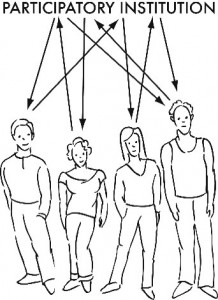
The Participatory Museum: A Must-Read Book for Current and Future Arts Managers

Traveling this weekend, I decided to put aside my school work, leave my laptop at home and finally read Nina Simon’s, The Participatory Museum. As an arts management student, I cannot emphasize enough just how relevant this book is for cultural institution administrators, especially future ones. I have decided procrastinating over the weekend was in the name of the future of museums (at least that’s what I’m telling myself…).

Nina Simon, the author of the book and Museum 2.0 blog, is the Executive Director of the Museum of Art & History in Santa Cruz. Simon shares her own experiences of visiting, working and participating (or not) in museums throughout the book. What I find most critical to the book’s success in discussing participation in the museum setting, and doing so credibly, are the countless examples and case studies ranging from science museums to art museums, and Simon’s personal, professional accounts to events she observed and experienced. The case studies are relevant, contemporary, and thematically and geographically diverse.

The purpose of this post is not to offer a summary of the book, though if it were, I would say this: it is an introduction, resource and guide for cultural institutions on where/when/why/how to engage visitors as “cultural participants, not passive consumers.”

Instead, I will focus on three components of visitor participation and engagement: the different types of participants, the need for constraints and the four models of participation.

Until this weekend, I was under the impression there are two types of museum goers: those who will sit down at a computer screen to video record their reaction to an exhibition as prompted, and those, like myself, who will not. I don’t think I’m alone in that fallacy either. If video-recording or commenting on my experience is the extent of the museum’s participatory program, well then, I’m out of luck. Simon applies research conducted by Forrestor Research to explain the participatory trends and types of audiences in the cultural institution setting. These audiences are:

1.The creators

2.The critics

3. The collectors

4. The joiners

5. The spectators

6.The inactives

Think about YouTube and Flickr. These social media sites encourage participation from all types of audiences, including those who want to post content, share videos and upload photos (the creators); those who want to publicly like, dislike and rate content (the critics); those who like to aggregate the videos and photos they most enjoy in their own profiles (the collectors); those who are members or have an account on social network sites (the joiners); those who consume the videos, photos and blog posts of those who create them (the spectators); and finally, those who have no interaction with online social sites (the inactives).

Ah ha! So those of us who don’t feel comfortable sharing at the video commenting station aren’t lazy museum participants! Rather, the museum has neglected to incorporate a means of participation that engages our type of audience. It is often the case that cultural institutions engage either the creators of user generated content, or the spectators, polarizing the museum audience into those two groups.

Knowing there are critics, collectors, joiners and the inevitable inactives who have what Simon calls, “intermediate participatory behaviors,” a museum must create participatory experiences to discourage participation inequality and to encourage engagement.

Participation inequality leads me to my next point. To encourage participation from all audience types, exhibits must be designed with limitations, constraints and scaffolding. This may seem counter-intuitive if you want open, unrestricted and expressive responses from your audience. However, open-ended questions and activities cause many visitors to run away in fear and self-consciousness. My most favorite art-related quote (by Oscar Welles) so brilliantly addresses this barrier to participation, productivity and creativity: “the enemy of art is the absence of limitation.”

Simon writes

The best participatory experiences are not wide open. They are scaffolded to help people feel comfortable engaging in the activity. There are many ways to scaffold experiences without prescribing the result…A supportive starting point can help people participate confidently – whether as creators, critics, collectors, joiners, or spectators.

Scaffolding and constraints make participating less daunting and audiences feel more confident in themselves and their ideas. Simon provides examples and case studies of successful, constrained projects and activities that engage all types by limiting self-expression and open-ended opportunities. This is brilliant. Is it a completely new idea? No. But Simon provides all the information you need to create quality outcomes for all. She explores what limitations in the cultural institution setting are, how they work, why they work, who they benefit, and how you can implement them in your organization.

Now that we understand the diverse needs and types within the audience and how to scaffold the creative experience, we can now take a look at Simon’s four different models for participation:

1. Contributory

2. Collaborative

3. Co-creative

4. Hosted

The second half of Simon’s text focuses on each model of participation. You can access a handy PDF version of Simon’s matrix that organizes each model according to the organization’s commitment to community engagement, need for control in the participatory process, vision of relationship with the participants, goals for the participants and nonparticipants, etc.

Depending on the organization’s mission, capacity and the situation, different models of participation will be more effective than others. The most critical factor to determine when deciding what model of participation to employ is the extent of control the organization wants over the process and its participants. Once the question of control has been addressed, museums can then determine their vision and desired outcomes for the project, the type of participation activities required to reach those goals and the role of museum staff. The final task  is to measure the success and impact of the participatory project.

I recommend this book to current students and professionals in the museum field. As we enter an age of an increasingly diverse society, it will become even more critical for museums to create opportunities that encourage all audiences to attend, engage and participate.

The Participatory Museum is available in three formats: as a paperback book ($25), a downloadable file ($18), and online (free). I encourage our Technology in the Arts followers to read the book, or simply a chapter of it, and contextualize the material in terms of your own arts organization- be it a museum, community center, arts center or gallery. How do you currently encourage visitor participation? Are you engaging all types of participants? If not, what types of programs, projects or exhibits can your organization support to better engage more visitors?

For further information, check out this previous Technology in the Arts post on a talk given by Simon at the Pittsburgh Children's Museum.

Mobile Fundraising Applications: The Apple policy over one year later

Apple banned fundraising apps for the iPhone, iPad, and iPod over a year ago (to much controversy) just as the first fundraising app hit the market through eBay/MissionFish.  The field of software for fundraising as a result of the ban is anemic. Until this policy is removed it seems unlikely that major fundraising will take place via mobile applications.  As the iPhone is the number one smart phone on the market developers have much less incentive to build software for fundraising purposes.  It can be extrapolated that once the ban is lifted the fund-raising/development world will be playing catch-up for years.

Here are two notable successes/efforts to do fundraising through mobile apps over the last year:

eBay and Missionfish are on the verge of offering donation capabilities through eBay's mobile application for Android (it was originally intended for the iPhone).  These donations should be relatively easy to put through and involves the user downloading the mobile eBay application and then searching for your cause.  On the organization's end the donation item has to be set up as well as the account which will interface with paypal.

In the UK a group called Marie Curie Cancer Care managed to get around the ban by setting up an app that allows users to request donations from friends through text messaging.  The application itself doesn't collect the funds but is party to gathering them.

If you want to take action, you can sign the current petition to overturn the ban here.


Art Meets Tech (and Science!) in London

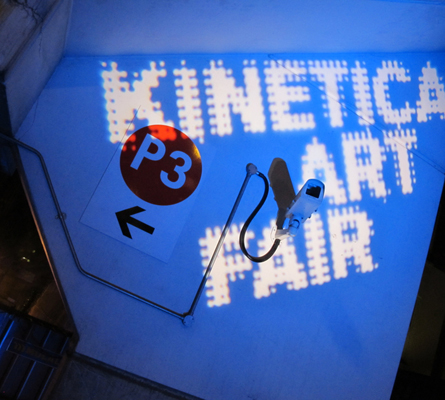
Allow me, for a moment, to add an exhibit to Naina’s post last week about the “Exhibits on our Wish List” here at Tech in the Arts. This one, however, is a little different. Combining stunning artwork with the latest in technological trends, the focus here is on art from a wide variety of interesting fields: artists who focus on kinetic, robotic, electronic, sound, light time-based and multi-disciplinary new media art and technology. Now in its fourth year, the Kinetica Art Fair, produced by the Kinetica Museum in London, held its 2012 fair this past weekend across the pond, bringing together artists, visitors and exhibitors from around the world in a 5-day event. In addition to the art show, the fair also held presentations, live performances, screenings, panels and an awards show. With over 50 exhibitors in place and over 300 works of art, if it sounds like the world’s coolest and nerdiest art show, it just might be.

The theme of this year’s show helps solidify that opinion: titled “Time, Transformation and Energy,” the show will focus on what the organizers call “the shifting of time in the light of cosmological, astronomical, environmental and evolving universal events.” The feature exhibition of the show, centered on this theme, brings together 18 artists from eight countries, which use and display pulsating sound performances, incredible light shows, kinetic energy showcases, and, perhaps best of all, it includes robots.

What’s unique about the show from my perspective is how it uses time and the evolution of technology to advance new styles of art and expression. The founders of the event, Dianne Harris and Tony Langford, recently gave an interview to the Huffington Post where they talked about what makes the show so unique:

“Kinetica ultimately focuses on a current new trend in art that has a strong historical lineage dating back to the '50s. The work essentially makes suggestions and contributions towards human evolution and reaction to scientific and universal exploration. With the ever-increasing scientific and technological advancements in our culture, many contemporary artists have crossed the threshold from 'fine art disciplines' into new media, with artworks that utilize technology to explore, nurture and comment on our evolutionary processes.”

Another interesting facet of the show is how strongly science is interwoven into its DNA. With exhibits and presentations such as “Contemporary Conditions of Temporality in Kinetic Art” and “Architecture, Digital Media and the Kinesthetic Idea,” the show seeks to provide a scientific and theoretical background to some of the artwork on display.

Even the field of astronomy is a part of the fair as well: artist Paul Malone headlines the “Electric Universe” exhibit where he examines the role electro-dynamics play in the forming of objects that make up the world of astronomy, where visitors can hear about the history of the study of electricity.

Not to be outdone, the historical nature of the program is what appeals to me most. Who wouldn’t want to attend a presentation titled, “From Copernicus to Polish Dragons – From Physics to Poetry of Transformations”?

There are some fascinating works of art at the show as well, although none of them involve polish dragons. One of the most unique is called the Xylophone Wheel by artist Alexander Berchert, which takes the plastic clackers from bicycles and molds them together to create a musical instrument: xylophone plates are attached to the wheel and plastic beads bounce off of them, producing a distinct chime sound.

Another unique work of art, and perhaps my favorite, truly incorporates the world of social media: @TweetLamps, by artist Jordan Burnett, contains a set of light bulbs that are controlled by tweets sent through Twitter, where the lights go off when certain pre-programmed words of hashtags are tweeted.

With the 2012 fair ending yesterday (sadly), we’re a year away from the next show. For a taste of the kind of unique art you can see at the exhibit, here’s a compilation of art from their 2011 show last year:

Kinetica Art Fair 2011 from Kinetica Museum on Vimeo.

So while the 2012 show just ended, judging by pasty year’s fairs, next year’s show should be just as exciting. Anybody up for a trip to London?

Exhibitions on our Wishlist!

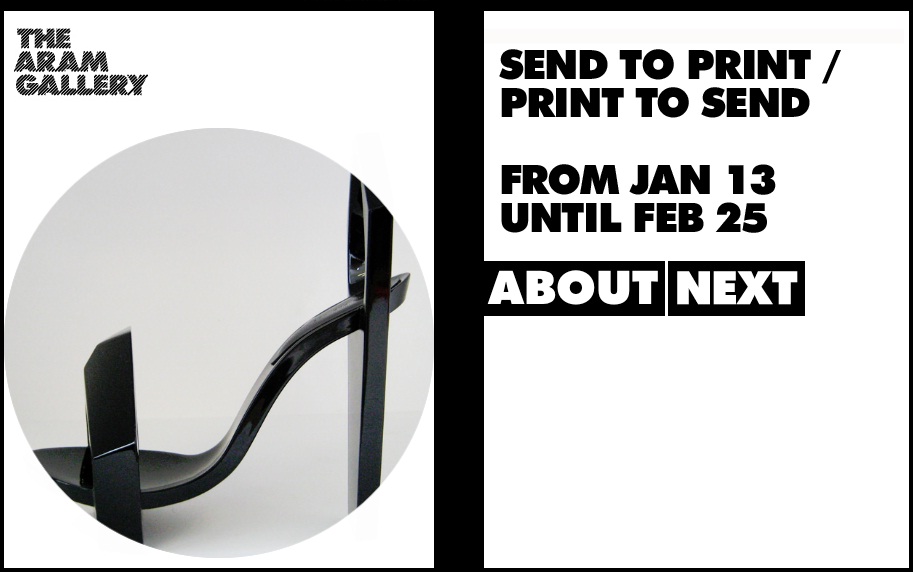
In an exhibit at the Museum of Contemporary Art in Sydney, a series of automatically winding tape measures have left visitors immeasurably intrigued. And across the globe in London, a unique exhibition on 3D printing at the Aram Gallery looks at the impact of this technology on the design and artistic process of fields like architecture, manufacturing, and product design. Upon hearing of these exhibitions, we at Tech in the Arts began to dream a futile dream of summery Australia and chilly London before realizing that geographical restrictions are incredibly...restricting. As such, we propose a vicarious, online experience of these fascinating exhibitions.

http://vimeo.com/33709089

Recorders at the Museum of Contemporary Art (MCA) features the work of Canadian Mexican artist Rafael Lozano-Hemmer and consists of  "a 'crowdsourced' show" where "the content is entirely collected from visitors, using technologies such as heart rate sensors, motion detectors, fingerprint scanners, microphones and face recognition software."

One of the installations is titled Tape Recorders, which is a series of motorized tape measures attached to a wall that respond to a visitor’s movement through the space. As a visitor walks by a particular tape measure, the tape begins to unfold vertically, the yellow scale slowly rising against the wall. If a person pauses in front of a particular tape measure, the tape slowly reaches its maximum length (3 meters), and falls to the floor, only to automatically wind itself moments later.

http://vimeo.com/34533540

The beauty of Tape Recorders lies in the installation’s ability to respond to people’s interaction with the various tape measures and to simultaneously make them aware of the duration of their interaction. An article in Humans Invent reported Lozano-Hemmer’s thoughts on the participatory nature of his work: “My pieces do not exist unless someone dedicates some time to them. Most people, with the exception of children, will opt to not participate in an installation in public space – which may seem strange considering that we live in the age of reality TV and the society of the spectacle.”

Another absolutely brilliant installation is titled Pulse Room, which is a room filled with one hundred incandescent bulbs that light up only when a visitor holds the heart rate sensor present in the space. Once activated, the closest light bulb begins to flash in rhythm with the visitor's heart beat, and once the visitor releases the sensor, the  rhythm advances from one bulb to the next, creating a beautiful space that is pulsating with light. "At any given time, the installation shows the vital signs from the 100 most recent participants."

Meanwhile at the Aram Gallery in London, 3D printing takes center stage in the exhibition titled Send to Print/Print to Send. The exhibit “offers an impression of uses of 3D printing in the design industry today” and “shows work by designers and organizations who are developing the capabilities of this technology.”

But 3D printing isn't as novel as it sounds. An article in The Economist notes that 3D printing has been around for "more than a decade" and was originally used by engineers and designers to “make prototypes quickly and cheaply before they embark on the expensive business of tooling up a factory to produce the real thing.” What is novel is that, of late, this technology is being used by designers and manufacturers to create the end product itself.  Rarely do manufacturing technologies surface in the artistic process and yet, 3D printing’s mass customization abilities have been utilized to create clocks, lampshades, dresses, even shoes!

So feel free to print yourself some shoes, clothes, and oh, a pair of tickets to Sydney via London, because these wonderful exhibitions attest to the ability of artists and designers to redeem objects and technologies from the banal utility of everyday life.

Speaker Series' Spotlight: Chad M. Bauman, Director of Communications for Arena Stage at the Mead Center for American Theater

On February 10th, the Master of Arts Management program at Carnegie Mellon University will welcome Mr. Chad Bauman, Director of Communications for Arena Stage at the Mead Center for American Theater to speak as part of our Speaker Series. His presentation, Confessions from an Arts Marketer – Learning from the Past, Looking Toward the Future, will highlight the worst practices in the field, what can be learned from them, and how to move beyond them. I recently chatted with Chad and talked Tweet Seats, fire in the belly, and what he wished he had known about the field from the very beginning…

Elizabeth @ Technology in the Arts: You’ve held top, senior positions as the previous Director of Marketing and Communications for Americans for the Arts and now as Director of Communications for Arena Stage. You’ve clearly figured it out. But even so, what’s the one piece of advice you wish you had received before entering the field?

Chad Bauman: I am very thankful for my education from CalArts in Producing and Theater Management. But I would have to say…I wish I had learned how to get stuff for free. When you are first starting out, it’s how good are you at convincing people to give you stuff for free- advertising space, promotional opportunities…it’s absolutely critical for smaller companies; you have to do it really well.

E: Now, with all the social media networks out there, it must be easier to get recognized and make connections with those who CAN give you stuff for free.

C: Earlier on, it was super controversial for arts organizations to be on social media; they didn’t understand what the value would be. It also used to be a smaller company could distinguish itself on social media, but now there is a lot more clutter. Being on social media is an exceptional way to get free promotion, but now you have to compete with everyone else out there.

E: So I have to ask, in your opinion, which is the better platform to get a message out and to get attention, Twitter or Facebook?

C: I’m liking Twitter more and more. It’s the most efficient platform. It began with Friendster, then MySpace, then Facebook. I think Facebook use is on the decline and Twitter is on the incline. It’s more of a conversational tool.

E: How about audience members Tweeting during a show? Tweet Seats?

C: You have to be careful; you have to find a balance with Tweet Seats. There was a case where a theater established Tweet Seats for a show, but the resident writers of the production were never consulted and they were not on board with it.

E: What are you more in favor of then, Tweet Seats or post-experience Tweeting?

C: I am more in favor of post-experience Tweeting. You can’t get the full experience if you are on your phone, you’ll miss something. You can miss the most crucial detail, especially in a very nuanced performance. There are many other ways to invite conversation about a production.

E: For those of us logging in hours on online job boards and stalking career services on an daily basis, what are the qualities you look for as Director in a potential employee or intern?

C: Fire in the belly. By that I mean, a person who is internally motivated. I’m not sure you can teach it. They want to do a great job and are motivated by wanting to do a great job. You can teach skills, but you can’t teach internal motivation.

E: In particular to marketing?

C: I look for people who are not afraid to take risks, calculated risks, but risks nonetheless. You have to be willing to take a risk in an entrepreneurial spirit.

E: We, my fellow job and internship seekers, thank you for that advice! I don’t want to take up too much more of your time, so one last question. In a recent blog, I looked at the changing face of America over the next four or five decades and its shift to a minority-majority population. How can visual arts or performing arts organizations expand their audience to reflect this change?

C: First, it’s about programming and community outreach. At Arena Stage, we go out into the community, to churches, to schools, to make personal relationships. You can communicate to younger demographics about your organization’s activity and productions using technology tools. But it’s about programming. Marketers are very good at targeting a specific demographic and figuring out what tools to use. But regardless of the tool, there has to be an interest in the production or the organization’s mission.

You can read more about this Speaker Series event on the Master of Arts Management Speaker Series' website, discuss arts marketing with Chad on his blog, and find further information about the Master in Arts Management (MAM) program on the Heinz College webpage.

Interview with Chad Bauman conducted and condensed by Technology in the Arts contributor, Elizabeth Quaglieri.

Mobile Giving, Where is it now?

Natural disasters gave rise to the phenomena of donating money via text message to causes but where is Mobile Giving today?  Now that this technology is several years old it deserves review of efficacy as well as analysis of best practices in the field.  Mobile giving may be the province of national campaigns for the most part but there are some notable successes with regards to using this technology for regional or local campaigns.

The growth of the mobile market is well documented as is the growth of the smart phone market.  Some recent surveys indicate that over 95% of Americans have mobile phones and that over half of those mobile phones are smart phones.  Likewise the mobile giving market has fleshed out in the the last three years as there are dozens of vendors for this technology offering services for a variety of different types of clients.  Choosing a vendor can make the difference on the margin of the campaign but more to the point the way that you build your strategy around mobile giving can have an even greater impact.

Mobile giving vendors can take a hefty chunk of the income from any given donation.  Other vendors such as the Mobile Giving Foundation remit 100% of a donation to the non-profit to which it is intended within 30 days but require an application service partner to complete the interface with your donors (costing $90-400/month plus per transaction fees) and won't do business with you if you filed a 990 showing less than half a million dollar gross revenue.

Mobile giving seems to be most effective under the media spotlight.  It helps harness the free marketing of celebrity or press attention into a real action that can be taken by a patron or concerned community member.  The immediacy of the mobile medium allows a community to rally around a crisis quicker than any other avenue and as such makes it much easier to make spontaneous action.

Relatively new developments in mobile giving include higher maximum giving amounts, mobile bar-codes (aka QR codes), and application development for smart phones.  Every year more vendors become available for mobile giving which is driving down economic costs and driving better feature development.  One could extrapolate that before long it will become worthwhile even smaller arts organizations to use this tool as part of development strategies.

Artistic Inspiration and the Fall of Kodak

A new exhibit in our nation’s capitol is as breathtaking in its quality as it is in its simplicity: seven world renowned artists offering up private photographs of their daily lives and sharing them with the world, alongside beautiful works of art. The uniqueness of the exhibit, however, lies in its inspiration. Kodak, the company loved around the world for its handheld cameras and impact on the lives of artists everywhere, serves as the inspiration for the exhibit, as all of the photographs taken are from simple Kodak handheld cameras. Given recent events, however, the inspiration is bittersweet: having recently declared for bankruptcy, and fear of liquidation rampant, artists everywhere face the reality of a world without the company that inspired so many of them to take their first photograph.

The exhibition, Snapshot: Painters and Photography, Bonnard to Vuillard, opened this past Sunday and continues until May 6th at The Phillips Collection Museum in Washington, D.C. Organized in conjunction with the Indianapolis Museum of Art and the Van Gogh Museum in Amsterdam, the exhibit features the work of seven dynamic artists: Pierre Bonnard, Maurice Denis, Edouard Vuillard, Felix Vallotton, George Hendrick Breitner, Henri Evenepoel and Henri Riviere.

The idea behind the exhibit is simple: taking their cue from the inspiration of the Kodak handheld camera, first introduced in 1888, all seven artists experimented with the simple device and provided images that captured their daily lives and the world around them. All seven artists captured images of beauty and resonance, and all together compiled over 200 photographs for the exhibit. The artists as a team took over 10,000 photographs with their trusty Kodak cameras, and the great thing about the exhibit is that most of the photos are unpublished and never seen before in public. Most of the images were meant to remain private, and instead of keeping them in their personal collections, the artists have decided to share them with the world.

One of the nice things about the exhibit is how some of the photographs in the collection served as inspirations for later paintings. You can see, side by side, the original photographs next to the paintings. The other parts of the exhibit feature over 70 paintings, drawings and prints from the artists.

The larger point here, at least for me, is how this relates to the recent news of Kodak’s bankruptcy. As reported by the New York Times and others, Eastman Kodak filed for bankruptcy last month, with many in the business world predicting that liquidation may be in its future. Founded over 131 years ago, Kodak has struggled to remain competitive in today’s technological environment, with more and more photographers going digital and leaving the company’s tried and true 35mm cameras behind.

Kodak is not the first company to struggle in the face of new technologies, and it certainly will not be the last. But as it relates to the arts and technology as a whole, this case takes on additional meaning. So many artists and photographers first fell in love with cameras and taking photographs because of Kodak and their simple 35mm cameras. In the age when film was king, Kodak had a near monopoly on the 35mm business, with competition from Fuji in recent decades. Kodak’s efforts were responsible for creating millions of artists and some of the images that have resonated with us for decades.

Kodak’s lessened stature may not have been noticed by many over the past ten years, as digital cameras have boomed and consumers have been more concerned with LCD screen size and optical zoom size instead of remembering what kind of film to buy. But for anyone who has ever bought a Kodak handheld and been introduced to the wonderful world of photography, it stings a little bit.

Even as Kodak sought to expand its portfolio over the past decade, knowing that this moment was going to come, it could still count on people seeking that old fashioned thrill of the disposable camera. But as more and more people turned to digital, and the company failed to do well enough in the other fields it has ventured into in recent years, including printers and digital cameras, it was only a matter of time until the company was in danger of folding.

I still remember taking pictures with a Kodak handheld when I was a kid, eagerly joining my mother as we went to the store to develop pictures of our family vacations. When I worked in retail in high school and college, I worked with Kodak vendors who introduced us to their latest 35mm and digital cameras. I had friends who worked for Kodak, both at their main offices in Rochester and as field representatives.

So as it relates to the exhibit in Washington, it’s refreshing to see a new exhibit that seeks to capture the joy of artists taking simple pictures with their trusty Kodak handhelds. Even as technology changes, ultimately for the better, a nod to the photograph’s past is especially appreciated.

The beauty of technology is that current and future generations will find inspiration from the arts in new and exciting ways. Digital cameras are becoming extremely affordable and are allowing more and more people to experience the joy of photography. Online editing tools are allowing people the tools to create beautiful, dynamic images at resolutions as large as their imaginations.

Twenty or thirty years from now, will museum exhibits look back on the era of our current technology, digital cameras, as society leaves them behind for something else? It’s too soon to tell, but we do know one thing: the beauty and joy of photography will continue to entertain and capture the imaginations of people of every age and background. As we move forward in an era of exciting technological breakthroughs and products, it’s a shame that a company like Kodak may not be around to enjoy it.

(Photo: courtesy of the Phillips Collection)

TechSoup launches Annual Digital Storytelling contest!

Whether they know it or not, every organization has a story to tell. But sometimes, it just so happens that this story is lost amid the frenetic activities of day-to-day work, and soon finds itself sitting quietly in the old forgotten folder of organizational history. Well, the month of February is the time to retrieve that story and subject it to some digital editing. This is because TechSoup, an organization that enables non profits to achieve their mission through technological solutions, has decided that some stories are best told digitally!

Recently, TechSoup launched its Annual Digital Storytelling contest which, “combines professional instruction and friendly competition into a hands-on media-making project.” Over the month of February,“TechSoup Global will host a series of interactive events including Twitter Chats, live webinars, and trainings designed to help nonprofits produce a one-minute video or five-picture Flickr slideshow that tells the story of its organization.” Yes, a minute or five pictures is all you have!

http://www.youtube.com/watch?v=ccCwQeAo4l4

TechSoup will accept submissions through February 29th, and in March, a panel of judges will select the organizations with the very best videos and “take their digital storytelling to the next level.” Another interesting and fun aspect is the Audience Choice Award, where “winning and notable submissions will be screened in San Francisco and live-streamed online through SecondLife as a special “red carpet” event on March 28, 2012.”

TechSoup’s competition is beneficial to not-for-profit organizations because stories are one of the most engaging ways to raise awareness and gather support. If an organization has a compelling story, people will listen. Better yet, if an organization can narrate it digitally, people will not only listen but they will also share it! And if the vast and ever expanding YouTube community is pleased, it might just go viral!

So non profits, make haste! You have a month and at most, a minute!

Connecting to Art with ArtClix

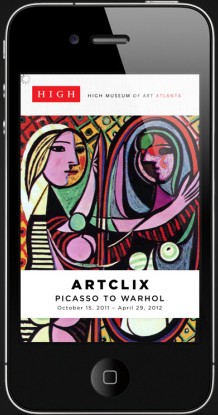
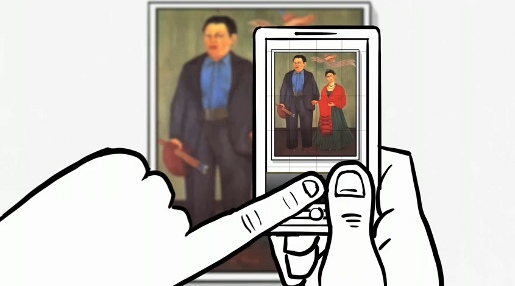
Mobile applications have become the new way to increase interaction between museum visitors and the art hanging on the walls. The High Museum of Art in Atlanta joins this trend with their new mobile app, ArtClix. Produced by Second Story, ArtClix was designed for the High’s modern art exhibition (from the collection of the Museum of Modern Art, New York), “Picasso to Warhol” which runs through April 29th of this year. ArtClix is flexible, however, and content can be updated for future exhibitions.

Check out this video on ArtClix from Second Story on Vimeo:

Much like The Warhol: Art app, ArtClix allows users to unlock new details about the works of art, including curatorial details for art buffs. ArtClix also has tools to allow users to share the piece to their friends on Twitter, Facebook, or email, similar to MoMA’s Talk to Me app.

Then ArtClix gets really cool, employing image recognition technology to allow users to do all this with just a photo of the image, just like Google Goggles at the Met. Users don’t have to be in the museum to enjoy the app, I downloaded it my Droid and played around. Lots of great artworks with little blurbs on each. What really fascinated me was the “Add Your Voice” feature to each work, allowing every user to post a comment on the work. This creates a community within the application, and a unique opportunity for discussion, as opposed to showing your friends on Facebook and receiving their feedback. The potential of interacting with users you may never meet is fascinating to me, and shows the global possibilities of mobile applications .

Image recognition technology could be the future of how every smart phone user attends a museum, and it will be an interesting trend to watch. In the mean time, ArtClix is ahead of the game, and a great addition to the High’s modern art exhibition.

Art Hack Day: A Codification of Coolness!

This past weekend, a warehouse in Brooklyn was home to a 48 hour marathon of technologically derived artistic activity. The two day-long event, titled Art Hack Day, was organized by 319 Scholes, an organization that “supports digital arts and experimentation through exhibitions, lectures, panels, participatory workshops, and live performances.” Art Hack Day’s participants were a contrasting group of “hackers whose medium is art and artists whose medium is technology.”

Notwithstanding the title and the foreboding logo of an animated axe, the event was in fact “dedicated to cracking open the process of art-making, with special reverence toward open-source technologies.” And reverential is all that we can remain, because whether we know it or not, we use open-source technologies such as Mozilla Firefox or the Android operating software on a daily basis. Under the grim and inclement climate of SOPA and PIPA, it would be remiss of us to overlook an event that celebrates open-source through digital creativity and art.

Each project undertaken at Art Hack Day was accompanied by a Twitter hashtag, where online viewers could converse with the artists and hackers. Even though the “part-happening, part-hackathon” event is over, the projects can still be viewed online, though the information provided is brief and leaves one wanting to know more. But in all the fairness of open-source, they did provide a live streaming tour of the event last Saturday.

Anyhow, the results of Art Hack Day range from the quirky to the technologically cool! For instance, there is a project titled Bot Zoo, which is essentially a humorous and sarcastic portrayal of spam bots. While malicious bots are those ridiculous advertisements on the web that entice you with equally ridiculous offers (free iPads), the project portrays them as “‘rare, gentle creatures” that “don’t want to hurt us.” Harmless bots aside, if you were tired of surfing the net, why not dive in and start swimming?

Titled SwimBrowser, the project applies Kinect’s ability to recognize body movements, specifically arm motion, in the navigation of the web. In this aquatic browser, you zoom in by swimming forwards, zoom out by reversing the motion of your arms. Moreover, you can also scroll, click, and open up new tabs through a host of  intuitive arm movements. Flailing your arms around has never been more fun!  But be sure to build up stamina because with SwimBrowser, getting tired of browsing the Internet is no longer in the sea of figurative language.

http://vimeo.com/20255369

The project won the 2011 OpenNI Developer Challenge and its developer, David Solarsky even gave a talk about SwimBrowser at CMU last October for Art+Code 3D.

For those who would like a hand at storytelling, there is Story Wheel, a site where you can narrate stories using Instagram pictures and SoundCloud recordings. Another captivating project is OneHolePunch, "an iphone app that collects circles from your environment and keeps them in your pocket." And the codification of coolness doesn’t stop here. 

Take, for instance, Skippable Rope, a virtual skipping rope created out of a pair iPhones that will have you jumping for joy, at least until you get tired or fall out of sync. Or Bike-in Movie, where the movie speeds up as you speed up on your stationery bike! Star Wars fans might want to take a look at Star Wars Uncut GIFs, which is a collection GIFs made from crowdsourced 15 second reproductions of the Star Wars movie, and finally, a project named Aliens That Look Like Skrillex. Yes, Aliens That Look Like Skrillex. In all, there were 35 projects, all of which are worth exploring, because they will leave you in a state of, to quote Eddie Izzard, "techno-joy!"

So if the world of hacking is as alien to you as aliens that look like skrillex, the projects showcased on Art Hack Day are a neat way to begin familiarizing yourself with what open source technologies can achieve in the field of digital and experimental art.

Videos to make your Wednesday less like Wednesday and more like Friday

It's Wednesday, sigh. To help with your mid-week blues, here are a few humorous and just plain cool videos. Ever wonder… …what it would be like to work for Twitter? We regularly emphasize the benefits of Twitter and other social media networks for arts managers, fundraisers, developers, marketers, PR personnel, etc. So today I offer a break from the usual discussion about Twitter and instead, an “over-budget,” under-informative and comical video highlighting the Twitter office experience featuring Twitter CEO Dick Costolo…

[embed]http://www.youtube.com/watch?v=vccZkELgEsU[/embed]

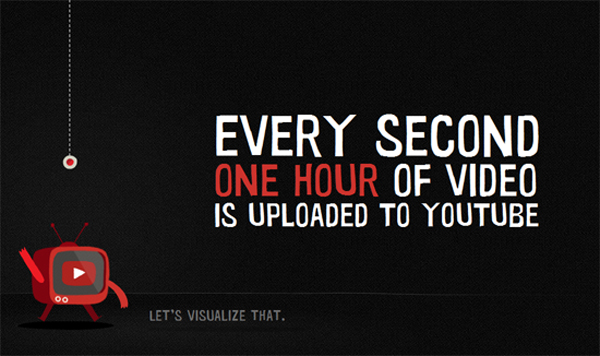
…how much video is uploaded to YouTube a day? Then check out this website that visualizes just how much video it is in comparison to other worldly and environmental phenomena.

[embed]http://www.youtube.com/watch?v=sHPfc6whaSk[/embed]

…about a popuphood? It’s exactly what it sounds like, a neighborhood or block of pop-up stores. But these aren’t your typical, temporary pop-up stores. In an urban initiative to revitalize the historic Old Oakland neighborhood in Oakland, California, popuphood is providing six retail store owners with free rent to occupy vacant storefronts in the neighborhood. The ultimate goal is for the six stores to be successful enough at this location to sign a long term lease upon the close of the first six months. Innovation in economic and urban development at its very best.

[embed]http://vimeo.com/evakolenko/popuphood[/embed]

Hope these ideas make your Wednesday all the more pleasant!

The Rise of Online Philanthropic Contests

Over the past couple of years or so there has been a steady rise in the phenomena of competitive voting contests for not for profit organizations to receive grants for projects or operations.  These contests are run by large corporations as well as not for profit groups.  Examples of corporate contests take different shapes such as Pepsi's with the Pepsi Refresh Project which gives grants ranging from $5k to $50k based on competitive community voting toChase Community Giving which touts donations over $600 million dollars through Facebook contests.  The National Trust for Historic Preservation has similarly put contests into place by granting to various historic restoration projects based on the number of votes they receive online.

Whether these contests sit well with critic's ethical concerns or not, the volume of web traffic generated for the recipients, the donor organizations, and the organizations who compete but do not win is remarkable.  According to Pepsi, the most recent contest in the fall of 2011 garnered more than half a million distinct registrations with over 3.5 million votes counted on the Pepsi site alone.  If you aggregate this number with all of the site visits, social network hits, and emails then you have a truly noteworthy phenomena.

Why are people so invigorated by these contests?  There are less time intensive ways to earn money in aggregate.  One can point to the idea that the contest is a game and the competition itself is what people are engaging in more than the philanthropic cause.  It could also be argued that the community effort of building a team to go online and vote for the cause for multiple days has an intrinsic value as well and that by the simple act of building this team you are building and drawing constituents deeper into the arts community.

As these online contest continue even more organizations are starting to do them. The Humane Society recently used a online photo contest to raise hundreds of thousands of dollars, the Case Foundation has been running a voter based contest for years, and American Express has also run contests in the past.

The following are some tips that have been gleaned from articles and criticism of various contests mentioned previously:

1)  Make sure that the contest aligns with your mission.  By diverting resources for a potential pie in the sky pot of money you can detract from your organization's true work.

2)  Ask what your organization can gain from competing for these pots of money?  Set forward goals of community building and identify volunteers to assist with these aims.

3)  If you are going to market this to your patrons identify your budget for staff time and delegate a reasonably proportional amount of money to pursue getting the word out.

4)  Don't start mid-steam.  Almost all winners of these contests have strong starts and once you are behind in the voting it is hard to keep up.  If you see a contest in progress that you would have liked to take part in simply put it on your calendar for an effort next year as your opportunity may all ready have passed.

Welcome to the World of Old School 3D Photography

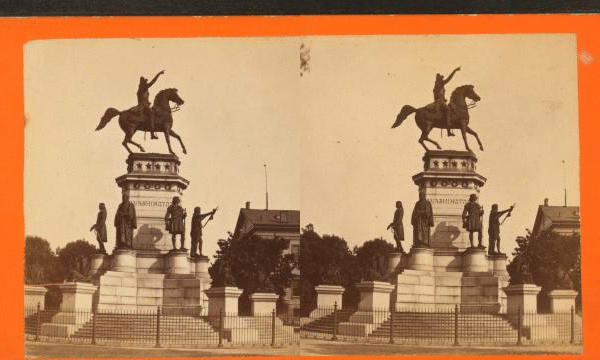
Over a hundred years before 3D technology invaded movie theaters and living rooms, another form of 3D image technology was incredibly popular around the globe. The images were called stereographs, and the technology was quite simple: two pictures of the same image, shot from slightly different angles, were viewed through a narrow device that only let you see one image with each eye, giving the appearance of a 3D image (remember playing with a ViewMaster as a kid? The technology is quite similar). Now, thanks to the work of the New York Public Library, you can view over 40,000 stereographs, most of them over a century old, and create your own animated GIF that offers the illusion of a 3D image. In addition, you can also create modern 3D photos of the same images, viewable through those hokey blue-red 3D glasses. The best part? Sharing your creations with your fellow arts lovers!

As reported by the New York Times last week, the NYPL Lab’s site, called the Stereogranimator, is simple to use. To create an animated GIF, first, you select a pair of similar looking pictures from a collection of over 40,000 images, some of which date back to the nineteenth century. Second, you choose your focal point within the image and the speed of the animation. Finally, you can share the animated GIF on social media sites or embed in your blog. You can see my custom image below!

GIF made with the NYPL Labs Stereogranimator - view more at http://stereo.nypl.org/gallery/index GIF made with the NYPL Labs Stereogranimator
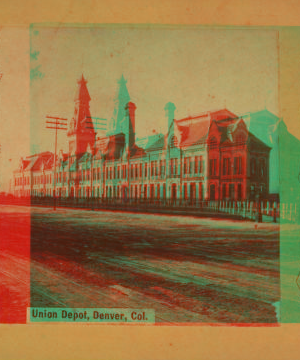

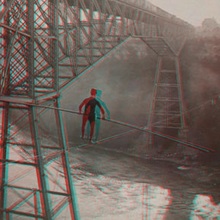
The process for the 3D anaglyph image is similar. After choosing a pair of images, you choose your focal point within the image and hit the create button. You can see my 3D image below, which can be aided just in case you have those old-school blue-red 3D glasses!

ANAGLYPH made with the NYPL Labs Stereogranimator - view more at http://stereo.nypl.org/gallery/index ANAGLYPH made with the NYPL Labs Stereogranimator

As I scrolled through the photographs, it surprised me how many images were taken back then that look so similar. As artist Joshua Heineman, the brains behind the operation, describes on the NYPL Lab site, this was intentional: looking at both pictures, the viewer could be provided with a sense of depth that simply was not possible by looking at one image. With so many of these image pairs being captured, the public would use the stereograph, the ultimate entertainment device of the late 19th century, to see a very early form of 3D technology for themselves. Like video games or movie theaters today, the technology was a hugely popular for several decades.

The New York Public Library’s site is another example of an encouraging trend: more libraries opening up their vast collections to an online audience for free. While some library systems have been hesitant to open up too much of their catalog to online audiences, the NYPL has been a leader in embracing the online community: in addition to their stereograph project, the library also has a project titled “What’s on the Menu?,” where people can help the library transcribe historical restaurant menus to add to its data of food prices and trends.

Even better? Improving the experience through technology, in this case with animated and 3D images. While the technology is far from groundbreaking for today’s audience, it does offer a unique historical look back at a technology that was so popular a century and a half ago.

We here at Tech in the Arts have written before about all the cool things happening today with 3D technology, and none of them have to do with the latest films hitting the movie theater. Through collaboration, open source technology and access to historical materials, the New York Public Library and others are embracing a new movement towards more social interaction between institutions and their patrons, a movement we strongly embrace and encourage.


In Case You Missed It - January 2012

Almost a month in to 2012, and we have had some great articles here at Technology in the Arts. Let’s take a look back at our strong start to the new year as this January comes to a close.
Social media was on the forefront of the minds here, as we covered Pinterest, Percolate, and Instagram but all that social media had us wondering: are you really my friend? We also take our gaming very seriously, and this month the Lourve picked up some cool new toys from Nintendo.

Policy in art dominated the news, and we took a look at SOPA and PIPA  as well as challenges facing public works of art. Of course, none of those cities fell on the list of the top ten most artistic cities in the country – where does your city rank?

All in all, we really enjoyed the beginning of 2012. What was your favorite tech and arts story this month?

New in Sight and Touch: Google Goggles at Met, Renaissance Statuettes at Walters Art Museum

There comes a time in life when you must reach into your pocket, and put on your Google Goggles. This moment often occurs when you see something of interest but are at a loss to search for it; a nameless building in San Francisco that you know is iconic but you’re not sure why, a sculpture in Rome that you are unable to identify since it’s outside of the confines of a museum. In these brief but intense moments of intellectual despair, Google Goggles can help steer you away from a lifetime of questioning.

Well, perhaps not a lifetime of questioning, but it can definitely put you on the fast track to your own personal aha! moment. Google Goggles is an app that uses image recognition software to provide information on objects, buildings, or artworks of interest and can be downloaded on Android phones as well as the iPhone. The app can serve multiple purposes (from recognizing wine labels to translating menus in Italian), but its ability to recognize artworks was one of the reasons that the Metropolitan Museum of Art itself decided to don a pair.

It’s safe to say that the Met was pleased with what it saw, because in collaboration with Google, the museum has made a mighty number of works, precisely 76,000 two-dimensional works of art, accessible on Google Goggles. The app will link to the Met’s website to give a user the information they desire about a particular artwork.

The Google Goggles app can help you see artworks both inside and outside the museum. Suppose you notice a particular work on a banner or in a magazine but, alas, your knowledge of art history is currently on vacation in Crete. Well, Google Goggles can help you locate it in a museum, such as the Met, and provide you with the information that had been eluding you. Or say you’re inside the museum but would like more context or history on a particular piece, Google Goggles can once again leave you much more knowledgeable. According to the Met, the need for Google Goggles may just arise out of the unrequited love between you and a seemingly unidentifiable piece of art (see video below).

http://www.youtube.com/watch?v=jC4d9e3M-x0

As you sharpen your vision of the Met’s collection with Google Goggles, an upcoming exhibition at The Walters Art Museum in Baltimore is letting you experience its collection through touch! Titled Touch and the Enjoyment of Sculpture: Exploring the Appeal of Renaissance Statuettes, the exhibition “explores the implications of tactile perception for enjoying sculpture by melding the research of a Johns Hopkins University neuroscientist studying how the brain reacts to tactile stimuli and a Walters curator interested in the increased appreciation of tactility as an aspect of European Renaissance art.”

The exhibition will showcase 12 artworks along with 22 replicas, which visitors can actually hold in their very hands! Afterwards, visitors can reflect on this opportunity to not only see, but also sense an artwork, and “register their preferences through “touch pads”. The concept of tactility is one that I find interesting and had explored earlier in The Evolution of Touch. Coincidentally, the exhibition at the Walters Art Museum is attempting to gauge whether the draw towards hand-held technologies has its roots in the popularity of Renaissance statuettes, which were “objects apparently made to fit in the hand.”

While I viewed the iPhone or the iPad as our vehicles for tactile appreciation of two-dimensional artworks, the Walters Art Museum posits that our desire for hand-held technology has its roots in art appreciation during the 16th century. A touching twist, I’d say!

Nevertheless, the introduction of Google Goggles at the Met is yet another signal of how our sense of sight, even while viewing art, is supplemented by the devices we carry with us, whereas the exhibition at the Walters demonstrates that at times, we have to return to our art historical past to make sense of the technological present. And we should seize these opportunities to experience the past because, try as they may, the great bankers of 16th century Florence will never know the delight of the iPhone.

Cultivating a More Diverse Audience: The Future of Museums

A 2010 report published by the Center for the Future of Museums, an initiative of American Association of Museums, forecasts the changing face of the United States over the next four decades and the future of museums in light of an increasingly diverse population and “majority minority” society. The report, “Demographic Transformation and the Future of Museums” is a must-read for museum managers and administration- if only for the graphics and statistics projecting the upcoming drastic and rapid shift in demographics in the United States. A concise report, complete with graphics, a call to action, and a list of online resources for demographic information and socio-economic indicators, the American Association of Museums (AAM) analyzes the data on patterns of museum use and trends in societal growth to answer the questions

How will people use museums in the future? And which people will use them?

The forecasted demographic transformation directly affects the museum audience and museum professionals as today’s typical museum goer, a 45-54 year old non-Hispanic white adult, is no longer an accurate reflection of the American public.

Below is a summary of the report’s key findings, surprising statistics, focus group outcomes and suggestions on how to cultivate a diverse, museum audience that’s users reflect the diverse, 'majority minority' communities of America’s future.

Sometime between 2040 and 2050, depending on which projection model is employed, the current U.S. minority groups- African Americans, Latinos (of any race), Asian Americans and Pacific Islanders, Native Americans and others, including those identify as multiracial- will collectively become the new majority in the United States. The proportion of non-Hispanic whites will fall below 50 percent for the first time since the country was founded.

The future of American society is one of “majority minority” in which disparate groups and minorities constitute the collective majority of the population. This compares to the data collected from 2008 on the racial and ethnic composition of the U.S. population in which, by both race and ethnicity, Whites and non-Hispanic whites, made up 74.3% and 84.9% of the population.

The AAM recognizes the imperfections of the monolithic and conventional categories of white, black, Hispanic, and Asian as more and more individuals seek a more multi-racial and ethnic option for classification.

While there are many factors affecting an individual’s decision to attend what the National Endowment for the Arts terms “benchmark arts” (attendance at musical plays, non-musical plays, jazz concerts, theater, opera, classical music performances, the ballet and visual art venues), such as distance, accessibility, cost of admission, income and education, the latter two are most often the major determinants of attendance.

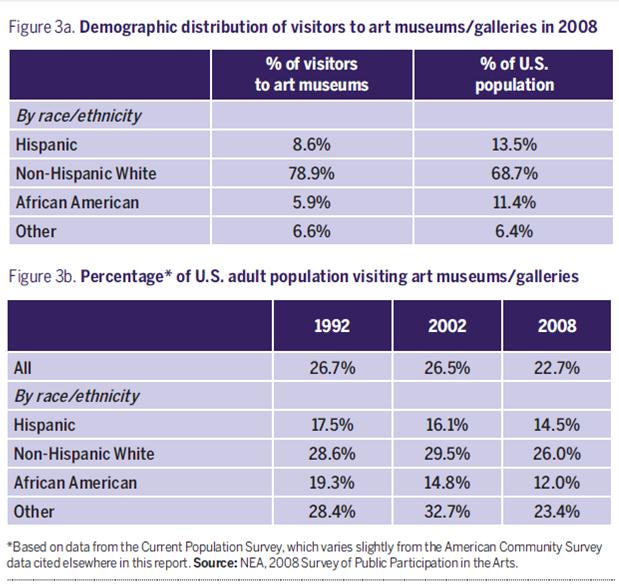
Who has traditionally been the art museum user? And who will it be? While the percentage of the U.S. adult population visiting art museums/galleries declined by 4% between 1992 and 2008, non-Hispanic whites, ages 45-54, are the predominant attendees. Consider this graphic:

If the forecast for the next four decades is correct and the current pattern in museum attendance remains unchanged, art museums and galleries will not serve the majority of the American population. There are economic, cultural, historic, educational, scheduling and interpersonal barriers to entry that affect an individual’s decision and motivation to attend; however, these barriers must be broken in order to create a more inclusive and inviting museum experience for the future America.

What can be done to increase museum/gallery attendance among diverse groups and reduce the great ethnic and racial disparities in museum participation? It is up to the museum administrators, managers, marketers, developers, programmers, educators and front-line personnel.

Know your audience. All of them. Know your neighborhood and community. Read the newest research. Many Urban Studies institutes have published reports on why specific demographics do or do not attend museums or visual art venues. For example,

…studies suggest that African Americans are more likely to attend events characterized by black themes and in which blacks are well-represented among performers, staff and audience members. This has been dubbed the ‘FUBU test’ –for us, by us.

Further research indicates African Americans and Hispanics are

More likely than others to list the desire to ‘celebrate heritage’ and support a community organization’ as a reason to attend arts and cultural events.’

Studies specific to Hispanics found

Hispanics with lower education and income levels tend to seek cultural activities that engage extended families and promote family unity, as well as providing broadly defined educational activities for children

The report features six brief case studies on museums  that have studied the composition of their audience and considered what the future of their audience and community will be. In response to their analysis, museum administrators and managers have implemented unique education programs and outreach activities to address the needs of a growing diverse community. Additionally, youth focus groups have helped to identify what deters younger ages from attending museums and what they would like the museum experience to be- their candid answers are published in the report.

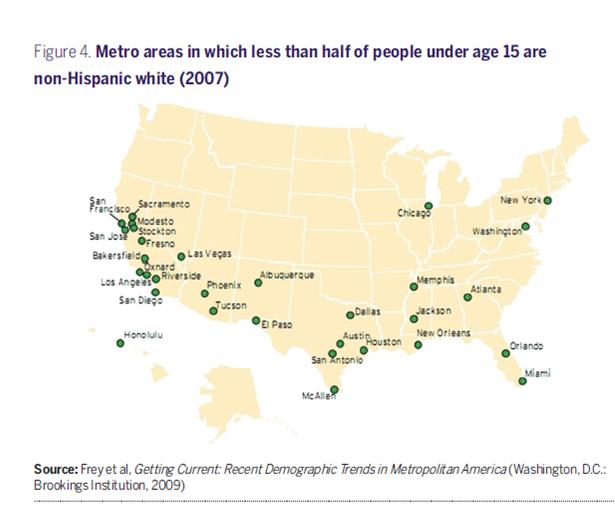
Perhaps the most telling graphic is this map of the United States indicating the metropolitan areas throughout the country in which non-Hispanic white children (defined as younger than 15) are now in the minority:

To quote the infamous Whitney Houston, "...the children are our future," and this map indicates just that- a future of great racial and ethnic diversity. As society's make-up changes, so must the institutions that serve it. Listen to the youth in the community. Not only will they be the future constituents of your museum but they also offer valuable insight as to what will get them to and through the door. And let's not forget the Millennials; a generation that cares more about a global community, participatory experiences (a la Nina Simon’s ‘participatory museum’) and engagement, than making distinctions of race and ethnicity.

As a result, their [Millennial] tastes and motivations may be previews of a future that is already taking shape. In this particular future, race and ethnicity may turn out to be less significant influences….What they [Millennials] want from museums are interactive, immersive, and participatory activities. They want to be more than outside observers looking in.

Still not sure how to address the Millennials' need for an interactive, engaging and participatory experience? Consider this standout suggestion for arts and museum managers: the report cites Jane McGonigal’s theory that museums should take a lesson or two from video games and game designers. Here’s what the report say

…museums can learn a lot from game designers, who know how to design attractive, even addictive experiences…unlike the best games, museums often fail to provide visitors with clear instructions or the feeling of having successfully accomplished something.

Looking forward, racial, ethnic and generational changes will require the museum to encourage new users to attend and to implement programming that is as varied as the community in which it exists. The future composition of the United States is vastly different from that of today. And if museums do not grow in reflection of the changing demographics and population, well, I will leave you with this graphic and you can decide what the future of museums in America will be…

Performing Arts Legacies Online

Recently the Merce Cunningham Dance Company shut down following the death of Merce Cunningham.  The action taken by the founder are somewhat unique in the world of the arts and there have been observations of what this means.  Meanwhile the content of the Merce Cunningham Company, at least in part can still be found online through various video projects and the archive left by the company through the Living Legacy Plan and maintained by the Merce Cunningham Trust.  The continued availability of this content is carrying on the legacy in the true spirit of its founder who frequently wrote of the transitory nature of his performance and was a student of Buddhist philosophy.

Further performances have resided online for years through projects like On The Boards TV which is currently celebrating its two year anniversary with a sale of online content.  The content can be accessed through one time rental, purchase, and through subscription and is high quality, having been shot on 4-5 hi-definition cameras.  Through content providers like On The Boards TV  and do it yourself online venues such as YouTube and Vimeo the amount of online performing arts content has grown significantly.  Artists are gradually recognizing that real content online is critical for accessing new audiences and maximizing market penetration.

Innovation in the field of dance and theater can go deeper than this.   Critics have noticed a trend at fringe festivals of micro-performances and intimate theater.    While artists seem to be taking advantage of physical spaces for the time being, the possibilities for using digital spaces are increasing everyday.  The idea of doing live performances online has certainly received attention.  The growth of services such as Skype make interfacing virtually and therefore using these same services as a performance venue more likely every year.