
Blockchain technology was initially developed by Satoshi Nakamoto in 2008 as the foundation for cryptocurrencies like Bitcoin. However, it has since evolved into a transformative tool across many industries—from finance to supply chain management, healthcare, and increasingly, the art world.
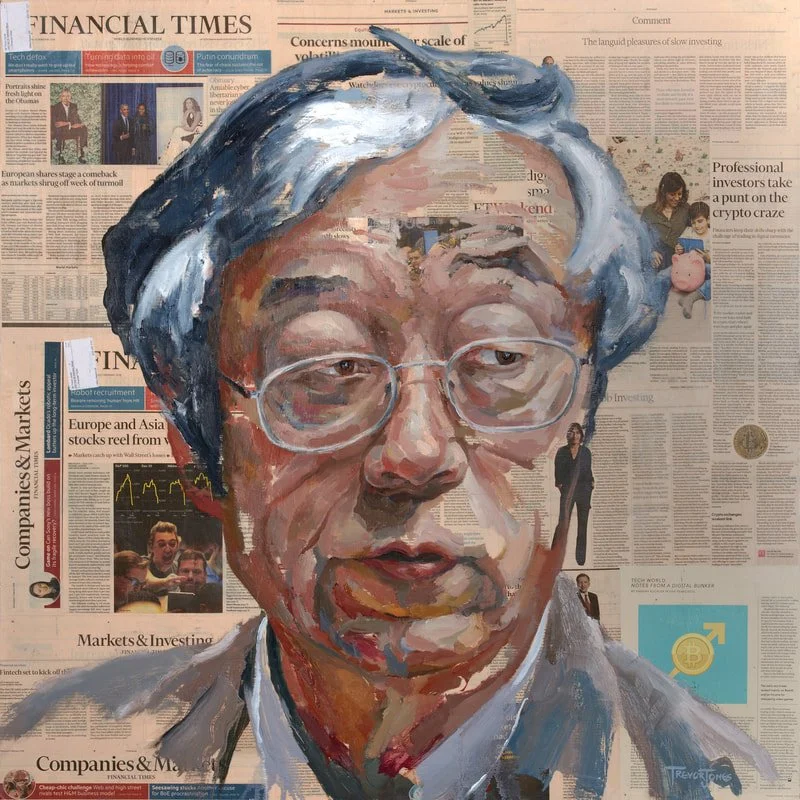
Source: OpenSea, 'The Architect - Satoshi Nakamoto'
At its core, blockchain functions as a decentralized digital ledger that records transactions across a network of computers. Each transaction is:
Grouped into a “block”
Linked to the previous one
Cryptographically secured
This creates an immutable, tamper-proof, and transparent chain of records—making blockchain ideal for applications where trust, verification, and authenticity are crucial.
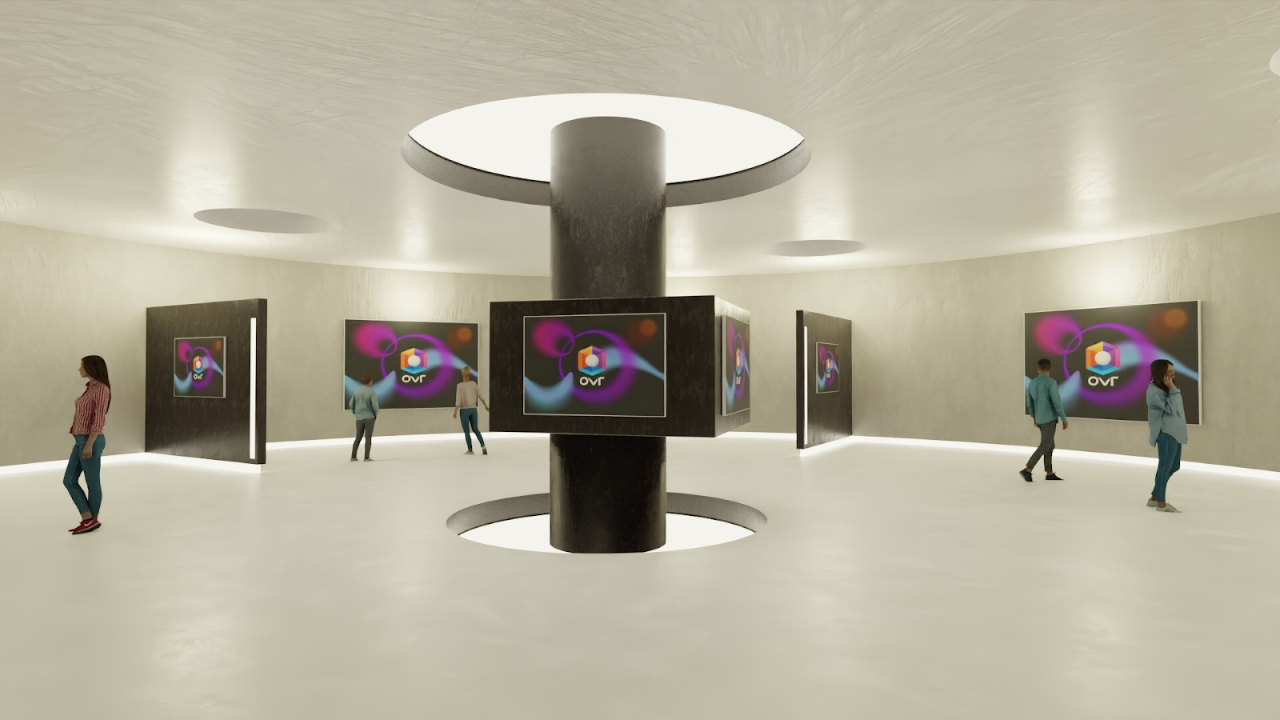
Source: Bitcoin News: “OVR Launches Futuristic Virtual Gallery for NFTs and More”
Blockchain in the Art Industry
Currently, there are two major use cases for blockchain in the art world:
Non-fungible tokens (NFTs)
Management of art ownership, provenance, and authentication
This paper focuses on the second use case, how blockchain helps address long-standing issues in the museum (Richardson).
Challenges in Traditional Art Provenance
Provenance—the documented history of an artwork’s ownership—is essential for determining authenticity, cultural context, and market value. However, traditional methods face several challenges (Batycka).
Key Issues in Traditional Provenance Management:
Paper-based records: Vulnerable to damage, loss, and misplacement
Centralized databases: Controlled by single institutions with limited access
Forgery: Some estimates suggest up to 50% of artworks in circulation may be counterfeit
Ownership disputes: Common in artworks looted during wars or colonial periods
Lack of transparency: Makes due diligence difficult for collectors and museums
These problems reduce trust in the art market and complicate acquisitions, loans, and scholarly research (Smith).
How Blockchain Solves These Challenges
Blockchain offers a compelling remedy by enabling museums to create a transparent, immutable record of an artwork’s journey. Each sale, transfer, or authentication event can be logged on a blockchain, accessible to all relevant parties and resistant to unauthorized alterations. This system could link physical artworks to digital certificates, streamlining authentication and reducing the risk of forgery infiltrating the market. Beyond security, blockchain’s decentralized nature fosters trust among stakeholders—artists, collectors, and institutions—by providing a shared, verifiable source of truth (Codex).
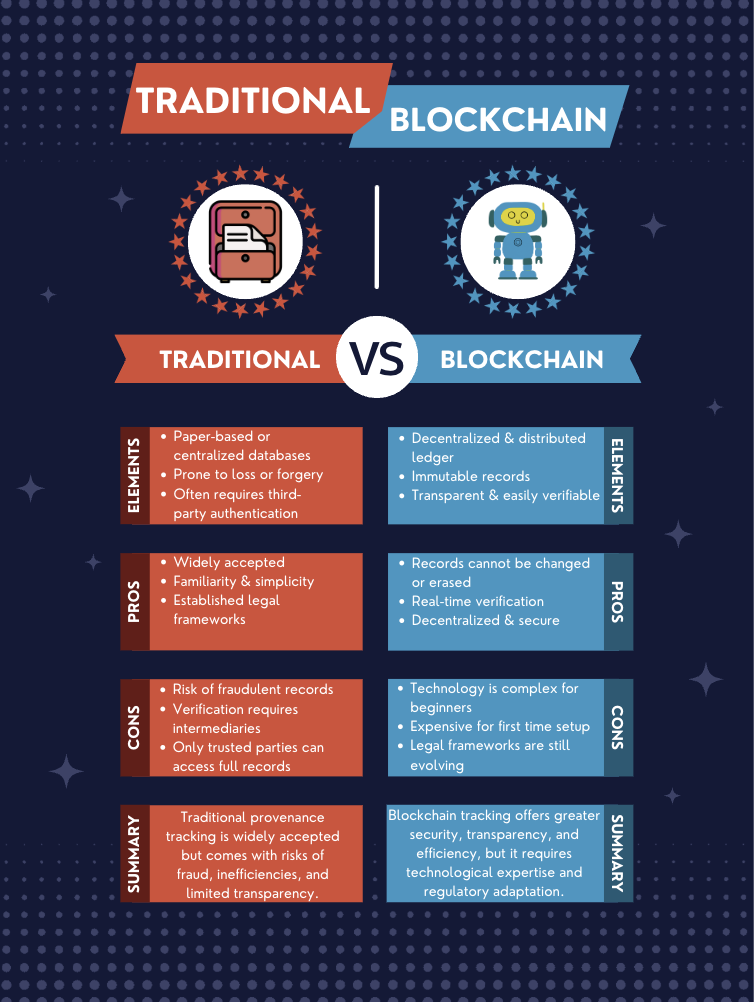
Source: Created by author
Pioneering Platforms in Blockchain Art Provenance (Case Studies)
Several initiatives illustrate blockchain’s potential in the art industry.
Offers blockchain-based certification services
“Create better records which prevent forging activity taking place in the market” - Robert Norton, CEO, Verisart
Used by artists like Shepard Fairey to issue digital certificates of art pieces.
Includes options for:
QR codes
NFC chips
Holographic stickers
Over 100,000 artworks certified as of 2023
Partnered with events like the Affordable Art Fair to certify works in real-time

Source: Verisart: “Fake Banksy NFTs: Why Are Certificates of Authenticity Important?”
Focuses on creating a secure provenance registry
Partnered with Christie’s to document the sale of the Barney A. Ebsworth Collection
Offers access to:
Exhibition history
Sale prices
Descriptive metadata
Acquired Auction Club to integrate decades of historical art sale data
Museums are also experimenting with blockchain technology, using it to create immutable records of provenance and enhance trust in their collections.
Museum Use Cases
The Louvre Museum has explored blockchain applications for documenting the restoration history of valuable paintings, ensuring that each conservation effort is permanently recorded and verifiable. Similarly, the State Hermitage Museum has utilized blockchain to establish a transparent ledger of past ownership and exhibition history for select pieces, reducing the risk of disputes over authenticity. By integrating blockchain, museums aim to combat art forgery, maintain accurate historical records, and facilitate the secure exchange of artwork between institutions and collectors. As more museums embrace this technology, blockchain is set to play a crucial role in preserving the integrity of cultural heritage.
Turning Promise into Practice
At first glance, blockchain seems like a ready-made solution for the art world’s decades-old challenges. With promises of transparency, security, and permanence, it offers museums a way to modernize how they track and manage artworks. But for many institutions, turning that promise into practice is easier said than done.
Most museums simply do not have the technical expertise to build and maintain blockchain systems on their own. That’s where tech-savvy startups like Verisart and Artory step in, offering tools that bridge the gap between tradition and technology. Even so, legal and regulatory hurdles remain. Issues around data privacy, intellectual property, and cryptocurrency compliance make blockchain a complex investment.
Source: Information: “It’s AI! It’s Crypto—It’s Crypto Meets AI!”
Proven Models for Adoption
Nevertheless, successful implementations of blockchain in the art sector offer a blueprint for others to follow. The case of the State Hermitage Museum in Russia is a prominent example. By tokenizing digital copies of masterworks and auctioning them as NFTs, the Hermitage both embraced technological innovation and generated revenue without parting with physical pieces. This approach enabled a transparent, immutable record of ownership, establishing a digital legacy that accompanies the museum’s physical collection. Likewise, the Louvre has investigated blockchain for cataloging restoration efforts, ensuring a permanent and verifiable conservation record—an approach that strengthens scholarly research and public trust.
Expanding Use Cases in the Museum Sector
The previous examples suggest that blockchain’s application in museums extends far beyond ownership verification to include:
Digital preservation
Exhibition documentation
Audience engagement
With tools like 3D scanning and cryptographic tagging, museums can log:
Physical condition data
Exhibition history
Loan and transit records
—all in a single immutable ledger. This improves transparency, collaboration, and access for scholars, collectors, and the public.

Source: CNBC: “Bitcoin retakes $90,000 as investors see it as alternative to diving dollar and turbulent stocks”
Ethical Implications: Repatriation and Restitution
Blockchain also supports museums’ ethical obligations in the repatriation of cultural artifacts. As institutions confront problematic acquisitions, especially those tied to colonial histories, transparent digital records can help identify rightful ownership, verify transaction histories, and support transparent negotiations. While blockchain cannot undo historical injustices, it can help build more accountable and equitable processes moving forward.
Looking ahead, blockchain is poised to play an increasingly central role in how cultural institutions operate. As interoperability improves and museums begin collaborating on shared standards, we may see the emergence of global provenance ledgers maintained collectively by networks of museums, galleries, and certification bodies. These systems could function much like international digital libraries—ensuring artworks are tracked, authenticated, and accessible in perpetuity.
Source: Cointelegraph: “NFT art galleries: Future of digital artwork or another crypto fad?”
Of course, the long-term success of blockchain in the art world will depend on addressing current limitations. Museums must invest in staff training, build partnerships with blockchain experts, and develop robust governance structures to manage these digital systems responsibly. Questions around data privacy, intellectual property, and sustainability must also be navigated carefully. Encouragingly, many blockchain platforms are transitioning to energy-efficient consensus models, and new initiatives are focusing on making the technology more user-friendly and scalable for non-technical users (WAC Lab).
In conclusion, blockchain offers transformative potential for the management of provenance, ownership, and authentication in the art world. While challenges remain, the technology’s ability to provide transparent, immutable, and decentralized records aligns with the values and responsibilities of cultural stewardship. As museums adapt to an increasingly digital and globalized world, blockchain stands out as a powerful tool to reinforce trust, preserve history, and usher in a new era of accountability and accessibility in the cultural sector. With continued innovation, collaboration, and thoughtful implementation, blockchain could become a foundational technology for the preservation and exchange of art in the 21st century and beyond.
-
Aziz, Omer, Muhammad Shoaib Farooq, Adel khelifi, and Mahdia Shoaib. “Archaeometa: Leveraging Blockchain for Secure and Scalable Virtual Museums in the Metaverse.” Nature News, August 23, 2024. https://www.nature.com/articles/s40494-024-01416-w.
Batycka, Dorian. “From Ordinals to Ownership: Christie’s Explores New Frontiers of Blockchain-Based Provenance.” The Art Newspaper - International art news and events, October 11, 2024. https://www.theartnewspaper.com/2024/10/11/from-ordinals-to-ownership-christies-explores-new-frontiers-of-blockchain-based-provenance.
Brossa, Camilla. “How Blockchain Is Transforming Museums - and Making Them More Sustainable.” Medium, May 29, 2024. https://medium.com/@camilla.brossa/how-blockchain-is-transforming-museums-and-making-them-more-sustainable-92e90b4659e2.
Codex. 2022. “How Does Blockchain Help Creators? Robert Norton, CEO, Verisart.” YouTube. October 21, 2022. https://www.youtube.com/watch?v=IEtqATFiEto.
Emillions Art (Blog). “Navigating the Complexities of Art Provenance and Museum Collections.” Emillions Art, January 2025. https://emillionsart.com/navigating-the-complexities-of-art-provenance-and-museum-collections/.
Richardson, Jim. “Museums and Nfts: What’s the Opportunity, Who’s Doing It Best and Why Question Marks Remain.” MuseumNext, December 26, 2024. https://www.museumnext.com/article/museums-and-nfts/.
Smith, Jordan Michael. Inside the biggest art fraud in history | smithsonian. Accessed February 16, 2025. https://www.smithsonianmag.com/arts-culture/inside-biggest-art-fraud-history-180983692/.
WAC Lab - Web3 for the Arts and Culture. “Blockchain and AI in Synergy to Revolutionize the Future of Museums.” Medium, March 14, 2024. https://medium.com/@wac-lab/blockchain-and-ai-in-synergy-to-revolutionize-the-future-of-museums-af34c3b92011.
ChatGPT (OpenAI, 2024) was used to help develop this newsletter entry.