Digital Futures

Building Audience Diversity Through Social Media, Part Three

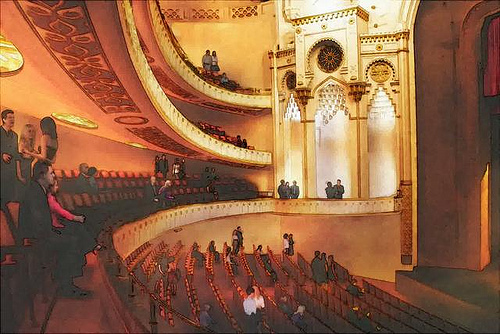
Watercolor style theater renovation by Gordon Tarpley
Watercolor style theater renovation by Gordon Tarpley (from flickr)

In part 2 of this 3-part entry, I interviewed social media managers from different regions, artistic disciplines, and mission focuses about how diversity drives their social media strategy. I found that, for most, online community-building came first and diversity factored in minimally, except in terms of age. When I first came up with the idea for this blog series, my first instinct was to do a quick search of the niche social networking site BlackPlanet.com. It showed groups for black actors, a very large poet group, a few artist groups, etc. Lots of jazz fans. Lots of fans of activities that researchers are constantly associating with arts attendance. But not one LORT theatre is on the site. Not many theatres period, except the stray comedy club.

In analyzing the responses of the social media managers and the notable absence of non-profit arts organizations on these niche social networks, I was puzzled. Then I thought, “Am I asking the wrong question here?”

Would most American theatres (most of which produce, on average, about one play by a black playwright a year) have a place on these networks that exist to connect black people to one another and to black culture? Maintaining a profile on one of these sites while you’re promoting Noël Coward’s Blithe Spirit could be a bit of a stretch.

But even maintaining a tenuous connection to this community, such as an ad, could get a whole new community of people looking at your org, right? I decided to talk to an expert. Gerry Eadens is a media buyer who has worked in advertising for nearly 20 years and now works at Kansas City Repertory Theatre. She specializes in Search Engine Marketing (SEM) and other online media. She did a cursory search and found at least 100 sites through the Google ad network that are meant to serve a specific cultural or ethnic group.

Research shows, however, that advertising is not a replacement for a social networking presence and vice-versa. Eadens cautioned me, “Typical display ads are not recommended for the best response from social network users since they are often ignored. Research has shown that advertisers garner greater results from more engaging activity with their audience such as posts that appear within news feeds.” Add to that the difficulties that online marketers often have in knowing how to focus an ad toward their intended audience. There’s no ethnicity category on the Facebook ad set-up interface, and I’m guessing that the company probably won’t add one in the near future.

So what can we do and more importantly, what’s worth our time to do?

At long last, the diversity question has come around to the classic “old vs. new” debate: When faced with declining arts attendance, is it better to “pick the low-hanging fruit” and focus on maintaining and growing our existing audience demographics ("the more return on investment for less energy" approach) or make a long-term investment in trying to attract new groups of people to our performances?

In a recent cultural policy article I read, I came across the question, “In our art, we place great value on experimentation and innovation—why not in our management practices?” I thought this was a great question, and I also bought into it, at first. Innovation seems to be the hot buzzword these days, and I think that generally, it’s a great value to have. However, from listening to the reasoning of the social media managers in the previous entry, I would argue it may not always be the most important one, especially from a user’s perspective (as opposed to a developer’s). They have tailored their social media presence to be purpose driven, tailored to their mission statement and aimed toward staying connected with their current audience while gaining new audiences, although not specifically diverse ones. Timothy Platt of the Leukemia and Lymphoma Society writes about purpose-driven marketing on his blog Platt Perspective:

Good online social networking means sharing value and even paying it forward and taking the initiative in starting that process. But true online communities always carry this greater, synergistic value and are bound together by the cohesion and momentum that it brings. It is in the communities of members and supporters that good nonprofits gain their strength…

When I interviewed Thomas Cott of Alvin Ailey American Dance Theatre, he spoke about his org’s purpose-driven strategy. “Since social media works best when you don’t try and push sales too directly, we’ve been using Facebook as an outlet to expand our ‘brand awareness’ and we’ve succeeded in attracting fans from many countries.”  For an organization with an international presence, the brand awareness angle is especially valuable.

More local or regional orgs, on the other hand, value building community locally. Brian Hinrichs of Madison Opera commented, “Our Facebook page very much feels like a community–fans comment and interact, they want more blog posts and photos, etc. Twitter doesn’t yet feel so cohesive: I’m interacting mostly with local media and other opera companies and nurturing those relationships. If our local paper re-tweets a ticket link or production photos, that is extremely valuable, but this is not where most of our fans are…yet.”

No matter your geographic focus, social networks are fundamentally about forming a community and having conversations. Therefore, having a clear purpose in mind when you choose your networks is essential. We’ve all heard the adage “the medium is the message.” It means that the method by which your audience receives your message becomes an inextricable part of the message itself. The phrase was coined in the 1960’s before the advent of the social media frenzy. But think about what it says to us today. Your show is its logo. Your season is the email blast that announces it. Your theatre is your Facebook fan page. But there’s more to it than that. With social media, the audience becomes both medium and message. Your audience is your identity. Who your fans are says something about who your organization is. If someone chooses to invest themselves in your product or purpose by becoming a fan or making a comment, then they become part of your organization in a way that’s visible. They become a message that your organization is worth following.

Think about the last think you received a postcard from an arts org. Chances are, they wanted a private, one-way, and perhaps institutionalized response from you (like buying a ticket, perhaps?).  Outside of social media your level of engagement with the organization is determined by those ticket purchases and other statistics available exclusively to the organization. Not so in the world of social media.  Think about how different the message is between a postcard (Buy a ticket!) and a Facebook page (Interact with us!). There are many ways to interact, and many messages a fan can send you. By creating a presence on a specific social networking site, you are signaling that you are open to communication with the people on that network. So what does it say if your organization is not present?
Building Audience Diversity Through Social Networking – Part Two

In part 1 of this 3-part entry, I left you with the burning question: What are arts groups doing to build audience diversity through social networking? I decided to ask arts organizations around the country two questions that are relevant to any arts organization with a social networking strategy (and not just during Black History Month):

  1. How is your org are selecting which social networking sites are worthwhile?
  2. Are you taking diversity into account when forming these strategies?

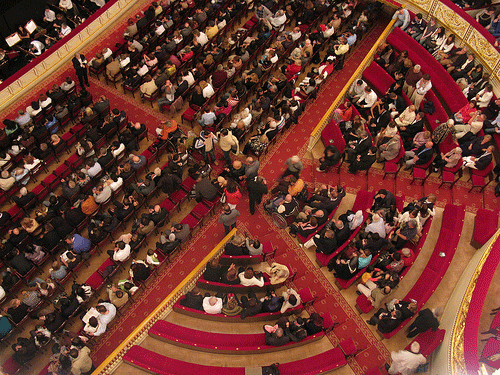
orch-audience "St Petersburg - Alexandrinsky Theater" by thisisbossi / CC BY-SA 2.0

This can be a very sensitive issue and I am very grateful to the orgs that chose to take on this question. I contacted organizations of different sizes and different artistic disciplines. The answers I got were very in line with conventional wisdom of creating and streamlining a social media presence. Brian Hinrichs of Madison Opera says that he tries to focus on the two websites with both the most users and the most relevant users to his organization, Facebook and Twitter.

Facebook has the most users. We do have a MySpace page, which I understand has a more diverse user base, but that was not intentional. MySpace proved to have a large singer community, but I was not finding Madison Opera fans… Most of our MySpace friends, which is very few, also have Facebook accounts. Anecdotally, I find that to be the case in Madison and so for convenience of updating I am focusing most of my efforts to Facebook.

Thomas Cott of Alvin Ailey American Dance Theater (and the daily arts newsletter You’ve Cott Mail) also advocates focusing on a few sites rather than less coverage on more networks. Ailey boasts the largest Facebook Fan base of any nonprofit arts organization, at over 32,000, and is planning on rolling out pages for other programs like Ailey II and the Ailey School.

Ailey has focused its attention primarily on Facebook and YouTube (we’re phasing out our MySpace presence), because we feel it’s too hard to be everywhere at once… Of course, maintaining a robust presence on a social media site like Facebook requires a lot of staff time, and even for a big company like Ailey, we don’t have an endless reservoir of staff time to devote to this.  That’s the main reason why we haven’t pursued Twitter or some of the newer outlets like Foursquare.  It’s also why we haven’t put our attention to more ‘niche’ websites like blackplanet.com.  We feel we are reaching a diverse audience on Facebook and YouTube, and since they are the biggest sites out there right now, we felt that was the best place for us to devote our attention.

Paul Montenegro maintains the social networking sites of GALA Hispanic Theatre in Washington D.C. He chooses to focus on Facebook and Twitter said that he focuses on the website’s functionality in his choice of networks.

I personally find the sites to be more user friendly when it comes to making events or sharing information. If there are sites out there are can do a better job or similar one, I would be looking into it to ensure that we can contact patrons via the web.

I contacted several other arts organizations who, like GALA, had mission statements which specifically focused on sharing the artist achievements or preserving the heritage of one ethnic or cultural group. I had hoped that they might be able to tell me how they decided which social networks to create a presence on, but they declined to comment. However, groups who did not have a mission statement that focused on one culture or missions to serve the community-at-large, were willing to talk about their choice of social media sites in the context of diversity.

Like many of these social media managers, Courtney Perez of Two River Theater Company in New Jersey cited universality of the social networks in her choices.

In regards to diversity, I must say that was not a direct factor in choosing these sites. I guess you can say these sites were appealing because they seem to be used by all ages & races therefore allowing us to reach a very broad audience. The formats of these sites are also quite uniform so the information we put up isn’t too targeted.

None of the respondents directly cited diversity as a factor for choosing to advertise or have a social network presence, except in terms of age diversity. Catherine Guarino, Director of Communications & Ticket Sales with Lansing Symphony Orchestra cited ease of use as a reason for her choice of Facebook and, recently, Twitter. But the purpose of social networking, for the symphony, was to find a younger audience.

I chose the two most popular social networking sites in hopes of reaching a younger, hipper audience. We didn't factor race into the mix at all, and I'm not sure we really ever do. Our goal with social marketing is just to stay in people's brains - to show up on their screen and remind them that we're here… What I found is that more and more older (for Facebook - say, the 50-60's) people were finding us and becoming Fans. We do have a decent college following, but the Fans that interact most with the page (comment, RSVP to events, write on our wall) are older.

More to come in part 3 of 3 of this article! We'll talk more about how arts orgs choose social media site, I'll chat with a media buyer, and more. Stay tuned...

St Petersburg - Alexandrinsky Theater

Fear not what "They" will say: Relinquishing control and opening up the conversation

Misnomer Dance Theater's "Breakfast With You"

Arts organizations, especially in this economy, rely heavily on positive reviews and audience raves to generate ticket sales and interest.  As technology improves, so has the speed and reach of these review: one voice can be heard across an infinite distance, and one individual's bad experience can be heard around the World Wide Web.

Damage control, clean up in the wake of widely-disseminated destructive commentary, is never as good as the kind of real-time management that is possible when an organization is able to react and engage as the conversation is developing.  Even better when the conversation takes place in a forum that is controlled by the organization and populated by unaffiliated supporters who can voice unsolicited positive defense of the organization.

This is one of the most powerful elements of Web 2.0, and one that seems to strike the most fear in the hearts of arts managers. The NAMP Conference was an eye-opener: arts managers are really afraid of relinquishing control over the conversation.  From the keynote to the final session three days later, attendees at every Q&A expressed concern about allowing organization-related conversations to publicly occur with outsiders and audience. (For example, allowing user-generated comments on a blog on the organization’s website, comments on the YouTube channel, Twitter conversations, Facebook dialogue.)  The question asked by managers time and again: "What if 'they' say something negative?"

The reply? “They’re saying it anyway.”  Would you rather they said it behind your back? Imagine that your organization begins to open up the conversation. Great examples of this can be found by looking at the Mattress Factory Museum's Friendship 2.0 page, or Misnomer Dance Theater's blog, which links to a variety of other interactive possibilities (though Misnomer's Chris Elam would like to improve upon this even more, by having an aggregate feed that pulls in the conversations happening in various forums and making them accessible in one place on the site). Perhaps you have a way for visitors to post publicly from the venue, or link to articles that have been written about your organization and allow users to comment. Maybe you have a Flickr page to which your audience can contribute, or a YouTube channel. People start commenting on a piece or an interview, a post or an exhibit.

Let’s look at the positive outcome of enabling and encouraging audience participation online.

It is generally accepted that people are more likely to complain than they are to express happiness about something.  That changes as social media and Web 2.0 enable people to easily share thoughts and feelings, and so they do not have to make the same kind of effort to offer praise.  They can take five minutes (and feel good about) publicly expressing to you how good they feel.

Remember, “everyone wants to be an insider.”  When they can express themselves on your site, or engage in dialogue with your organization and its other supporters, that person feels like they are special.  They are being included and being respected as a participant--which givees them a sense of ownership.  And they will hopefully keep returning to their conversation, see who has responded to their opinions, and continue to engage with your organization and with other supporters.  This builds loyalty, especially when you acknowledge them, and your relationship may lead to this person's friends also getting involved.

But certainly the fear of negative public feedback is not unfounded.  Along comes a disgruntled patron.  This unhappy patron lambasts your organization for the offenses you have, in his estimation, committed (dirty bathrooms? Offensive scene? Maybe they just thought the work was garbage?).  This person comments angrily on your blog, and complains on your Facebook wall.  Your organization can now fully benefit from the power of Web 2.0.

If this person posts to your sites, count yourself lucky (if not, you can keep tabs on what is being said about your organization elsewhere with Google Analytics, and respond on your site, thereby directing the traffic to your organization) .  This negative view now can be addressed directly by you—both publicly and personally—and a conversation can occur.  You can find out the real source of this person’s vexation, and you can demonstrate that your organization is invested in the experience of its audience.

You are also aware of something that has fallen short of an audience member’s expectations.  Sure, maybe that person was just having a bad day, but perhaps there is a greater issue there that you can now work to solve.  If you were not involved, it is possible you never would have known of their dissatisfaction.  You might have missed them renewing their membership, or you might have lost friends of theirs.  But you might never have known why.

New visitors to your sites will see this dialogue and appreciate your honesty. (Who isn't skeptical about something that NEVER receives negative feedback?  It smacks of censorship, and seems disingenuous.)  Your loyal followers may also have gotten involved and expressed positive opinions in your defense. By endorsing both the positive and negative views, by demonstrating your appreciation and value of both sides of a situation, your organization gains credibility for its honesty and forthrightness.

Elam urges organizations not to avoid something out of fear that might prove a most powerful tool.  “If you don’t open the floodgates you have zero comments.  If you do open them and you get 100 comments and three are bad, you are building energy around your work.”  But be aware: “If you have 98 that are bad, that tells you something about your organization.”

Remember, opening the conversation can be incredibly powerful, but you must not just sit back once you have made available the possibility for user-generated content. Your engagement is important to keep the conversations relevant and to connect your organization to the discussions being had.

We ask that you now turn ON your phones! Enjoy the show!

Fail Phone by Rammikins!

Today on the Technology in the Arts blog, a further investigation of the burning question--mobile phones: good or evil? Last week, we investigated the evils of mobile phone technology in the context of arts audiences. This week, it’s time to turn on your cell phones and explore how mobile phones can help the audience engage with arts organizations on a personal level.

There are quite a few examples of mobile phones being used quite creatively for marketing and audience development initiatives. I’ve heard of a few different arts orgs twittering backstage during performances.  Most notable is the Broadway show Next to Normal, which tweeted an entire performance in short little 140-character spurts. You can still read the archived tweets here. And by this point, many orgs have mobilized fans through social media via their smartphones or even with texting services offering discounts. The artistic and production staff are harnessing the power of a mobile social network, too. In July, the Old Vic’s invited audiences into the creative process of its 24-Hour Play Marathon, with tweets from followers shaping the direction of some of the plays. During the national staging of The Laramie Project: Ten Years Later, audience members used Twitter from their phones at many theatres to ask questions at post-show forums. In addition to coordinating the Q & A sessions, theatres across America that participated in the project used Twitter to sync their production with the “lead” show at Lincoln Center. For a unique national project like The Laramie Project: Ten Years Later, an application like Twitter that is easily accessible from a cell phone is perfect to coordinate artists, production staff, and audiences.

If we drift away for a minute from the concept of cell phone use during the show, we see people starting to discover with their inner arts-lover with all kinds of cool apps being developed for smart-phones:

  • There’s the Gustavo Dudamel iPhone app, where you can conduct "March to the Scaffold" or "Dream of a Witches' Sabbath" from Berlioz's Symphonie Fantastique.
  • There’s the bizarre, yet popular ocarina app, which turns the phone itself into a musical instrument. (video footage below)
  • Most of us have now heard of Pandora Internet Radio, which recommends songs based on songs you like.  Pandora apps are available on the iPhone, Blackberry, Palm Pre and a variety of other phones.
  • Zoozbeat, which allows users to compose their own songs with a variety of instruments by simply shaking and moving their iPhone, was recently featured on CNN.com.  
  • If you are more the theatrical type, the complete works of Shakespeare are now available on an iPhone app.
  • In the visual arts arena, your phone can become your canvas with the Brushes app, an iPhone finger-painting tool. (Gallery of Brush app art at the end of the post.)

Will apps like the ones listed above increase the audience's desire to flock to the theatre? Hard to say. But one thing is certain--show time is still a boundary that none of these apps and few of the organizations using smartphone technology seem willing to cross.

In pondering last week’s entry on the evils of cell phones in the audience, I began to wonder if proper cell phone etiquette is merely a question of our expectations for the specific venue. For example, I doubt anyone would be bothered by people texting at a broadcast of an opera in a baseball stadium, or perhaps even an outdoor lawn concert. This summer, the National Symphony Orchestra started twittering program notes to audience members in lawn seating. Sure, some people might still be bothered by the LCD lights and the “text-offender”’s inattention to the performance at hand, but outdoor concerts have a different aura about them. It’s like people expect to be distracted by the sights and sounds of nature, especially if they are sitting on picnic blankets with a cooler of beer next to them. But, then again, it’s a sliding scale. When I think of the last two outdoor venues I attended in Kansas City, my reaction to texted program notes would have been quite different. The first is Heart of America Shakespeare Festival, a rollicking good time with a temporary stage and lawn seating. Audiences are encouraged to bring their own picnics and drinks to the show. On the other hand, there’s Starlight Theatre, which brings in touring Broadway productions every year. The performances take place in a large (permanent) amphitheatre with a stage and seating approximating a large indoor performing arts center.  Texted program notes at the Shakespeare Festival? Great. Starlight, I’m not as enthusiastic. It’s too close to an indoor venue and part of me feels like the same rules should apply.

So maybe it’s a question of societal expectations. As we are often told, social etiquette at the theatre was quite different “back in the day” when, watching the performance was optional and (sometimes they’d seen it multiple times), talking was almost expected. The overture was initially conceived as a signal for all to get to their boxes. In some of the more low-rent houses, audiences would jeer the performers or even throw vegetables. (sometimes they still do…) But today’s cultural values center around respecting the artists on stage. It’s sewn into the experience of going to a live arts performance in America. We’ve experienced a cultural shift in expectations in the opera house since the old days. Perhaps we will again with the advent of these new technologies.

Bottom line: with great smartphone power comes great responsibility. A responsibility to our audience to engage them on their level, balanced with a responsibility to respect the experience of art for both the audience and artist. These two duties will come into conflict more and more in the coming decades, and it's also our responsibility to wonder--and determine for our own organizations--at what point the two can meet.

Post-NAMP 2009 Reflections

It's Wednesday in Pittsburgh, and the information-laden NAMP Conference is still fresh in my mind. I have been pondering the challenge of separating these closely-connected insights, and will do my best to craft them into individual blog entries. I will start here with a quick overview of NAMP 2009 themes, and then delve into how these pervasive truths can be utilized in your emails, in your social media interactions, on your website, and finally, as we work through broader ways to connect beyond our own organizations' networks.

David Court's keynote emphasized that "Content is King" while the "Friendship 2.0" message "access is more important than content," highlighted the power of an organization's online content when controlled, in part, by its audience. Closely related was the undisputed tenet "Everybody wants to be an insider," Rich Mintz's much-tweeted quotation from Saturday's plenary lunch.

I believe that achieving this goal is one of the great strengths of social media well-used, a stance echoed in many of the sessions I attended. A social media strategy (as we have discussed in this blog and webinars) cannot be overemphasized--by establishing a place to start and a reason for so doing, you open up the possibility of experimentation, measuring success and failure, and cultivating a strong organizational identity and relationship with your "posse" (the term that Jeffrey Inscho of the Mattress Factory uses to designate online followers---without relegating them to being beneath and apart from the organization). The implications of embracing your audience and bringing them into the fold are far-reaching, and should color the consideration given to content, presentation, and accessibility. Is your organization asking for feedback and really listening, or simply proclaiming without engaging? Are you perceived as real and authentic, or dictatorial and closely controlling of the information and conversations being had about you? Are you afraid to hear what is really being said, and if so, are you ignoring critical feedback that could alter and improve programming?

Before my post on email marketing, I want to mention a couple of basic guidelines that came up time and again at the conference and which apply across the board.

  • Experimenting and failing (within the strategy your organization has defined) is better than not experimenting and going unnoticed. Increasingly, people's decisions are made in a split second based on what is in front of them, and you want to be a contender for their attention.
  • Testing, and taking note of what is and is not working (Haeben Kim of CAMT attended a session on ROI that she may guest-blog about in the future) will improve your organization's social media efficiency.
  • Authenticity is crucial--you are selling an experience, not just "art," and remembering who you are and who you serve will help you captivate your audience early and often.
  • Including your audience in the discussion is far more effective than talking at them. Yes, this means that you open up the channel for negative feedback as well, but remember: people will say negative things about you anyway, wouldn't you rather it be in a place where you can respond to it and facilitate a dialogue and reaction to it?

I hope that that overview, painted though it is in broad strokes, helps give you a sense of where the conversation will be headed for the next few NAMP-related posts. And if you were in attendance at NAMP, and have additional thoughts, suggestions, questions, or comments, I encourage you to share below!

National Arts Marketing Project Conference - Preconference

Providence, RI was brisk and bright this afternoon as I collected my registration materials for the Americans for the Arts NAMP Conference. I did not attend today's Pre-Conference sessions, but did have an opportunity to get involved in one of the Dine Arounds. There were a few topics to choose from, and I signed up to grab dinner and hear Tegy Thomas' perspective on using technology to inspire and involve creative minorities in the work that we as arts organizations are doing.

The nine of us attending this particular dinner quickly discovered that our particular restaurant was not very conducive to an informal talk from a single person--the result being that I don't have anything to share on that particular topic. Among our immediate table-mates, however, we were able to have some pretty thought-provoking and exciting debates and discussions about the usage of technologies in building audiences, interpreting art, experiencing art, driving organizations to new missions, and much more (including Canadian sports and "The Well").

At one point the hypothesis was posed that technology contributes to younger generations' view of the world as comprised of disposable things. The modern world, it seems, lacks a permanence that the world pre-virtual reality once had. Because technology advances so rapidly, what was once new quickly becomes obsolete (I just experienced that this month with a terrifically ill-timed iMac purchase, but that's another story). Thus, the generations of children and young adults who have come to expect the "relevant" to be fleeting and fickle, may find it difficult to relate to the unchanging reliability of a museum's permanent collection.

This is the thought I leave you with this evening: if we push to integrate technology into the museum experience, are we sending the message that art can no longer endure in and of itself, but must be processed with contemporary mediums that can be relied upon to change as technology advances? (Is this just another way of, for example, setting a Shakespeare play in late-twentieth-century California to "highlight the universality of the work" or "make it relevant"?)

We ask that you now turn off all cell phones and pagers. Enjoy the show!

Corwin wrote a great post a month or two ago about the new technologies that museums have started to implement to increase interactivity with their patrons. I thought it might be interesting to explore the performing arts side of things. Two things inspired me think about this: cell phones at a concert

Firstly, an arts professional recently told me about an idea she had about implementing a system where program notes would be sent to audience members’ phones during performances. Great idea to engage audiences, but even texting the audience members prior to curtain was met with a lot of resistance from house management. Second, another theatre company wanted to institute a texting night, where people would be allowed to text in the back section of the theatre, as long as ringers were turned off. As one might expect, this was met with much chagrin by artistic staff.

Cell phone usage is a big issue for everyone in the theatre world, especially for audience members. At most theatres, it’s house management’s responsibility to keep the peace, and they have good reasons to want the audience trained to turn off their cell phone before curtain (More on texting at the theatre on Arts Journal). At this point we’ve all had an experience, whether it be a movie, church service, class or performance, interrupted by someone’s phone ringing or someone “innocently” texting. (And, although loathe to admit it, many of us have experienced the embarrassment of being “that guy” whose phone serendipitously screeches at the worst possible moment!) In researching this post, whenever I read an article on cell phone distractions in the theatre, there were often 10 or more comments by people voicing their frustration about the rude text-er or Twitter in the row in front of them who ruined their night. And it’s not just the other audience members who get distracted. In the theatre where I used to work, actors would regularly complain of being distracted by the LCD lights when audience members texted. Many of us have seen the now-infamous video of Hugh Jackman and Daniel Craig in “A Steady Rain”, where Jackman berates an audience member whose cell phone went off during the performance.

Hugh Jackman and Daniel Craig in “A Steady Rain”

Some arts organizations go to great lengths to achieve cell-phone-free evenings—cell phone use during a performance has been illegal in New York City since 2003. Here in Pittsburgh, we try a more subtle, almost subliminal approach. A friend told me a story this weekend about an arts org that used to play a cell phone ring over the PA system a minute or two before the pre-show announcements. It sounded like it was just some one’s phone in the back of theatre. My friend thought this was sort of a wacky idea, until one night he sat in the balcony and saw everyone whipping out their phones to turn them off.

But I digress. As texting delivery systems get more commonplace and affordable, arts managers now have the capability to reach out to audiences in new ways about the art that they are experiencing. Some would argue that mobile technology use could be one way to further your mission to reach or unite your local community around art. Unfortunately, this sometimes causes direct conflict with the artistic and house staff. Now, I am not trying to paint these segments of the arts org world as out-of-touch with technology; I’ve seen these departments embrace other technologies in creative and wonderful ways. Ticket scanners save ushers a lot of hassle. And advances in stagecraft technology make for some spectacular productions.

But they have a point. When you take your personal technology into the performance with you to enhance the performance, it begs the question: shouldn’t the performance be enough? The art has stood on its own for, in some cases, hundreds of years, aided only by program notes and, in the past few years, by supertitles in the case of opera. Perhaps this is the argument for the new technology—that old art must stay current with its audience, who may not know to clap between pieces, but not between movements. Or have their understanding enhanced by knowing that Mahler wrote the song cycle after the death of his two children and perhaps that is why it is so depressing. (Sidenote: does anyone else find it interesting that the endings to operas are nearly always included in the synopsis in the program notes, but never the endings to plays?) Personally I love to read program notes, especially the articles about the lives of the artists. But while I’m watching Troy and Rose Maxson argue in Fences, will a text telling me that August Wilson married three times enhance my theatre experience or merely distract me from the drama onstage?

Can a performing arts venue add interactivity during performances without distracting other patrons and performers? And without inciting a riot amongst house and artistic staff?

I’m really interested to know your thoughts, opinions and experiences with this issue; we’re planning on making this a two-parter, discussing ways mobile technology can enhance enjoyment of performances next week.

Musicians Standing Up for Net Neutrality

[Casey Rae-Hunter is the communications director for Future of Music Coalition - a national, nonprofit education, research and advocacy organization for musicians.  He has generously given us permission to republish this article which originally appeared on the Future of Music Coalition website .] NN_GrassrootsIn the almost ten years that the Future of Music Coalition has existed, we’ve seen tremendous changes in the way musicians go about reaching and cultivating fans. Perhaps the biggest development in our decade on the scene is in how artists are using the internet.
It’s safe to say that nearly all of the exciting things that have gone down online are the result of net neutrality — the principle that protects the open internet.

Net neutrality has inspired incredible displays of creativity and entrepreneurship, as musicians adopt and devise new ways to inspire fans and create a buzz. From OK Go’s famous YouTube videos to Erin McKeown’s “Cabin Fever” concerts to bands booking tours and cross-promoting, the internet lets all artists compete on an equal technological footing with the biggest companies.

Today’s artists use their web presence not only to sell music and merchandise, but also an amazing array of innovative content — all without interference from gatekeepers. Contrast this with the traditional music industry, where artists required significant financial backing to reach potential listeners.

But without net neutrality, all this — and many other things we’ve come to take for granted online — could be in jeopardy. Currently, a handful of powerful Internet Service Providers (IPSs) are putting pressure on the Federal Communications Commission to “tone down” its planned introduction of expanded net neutrality principles (and the accompanying public discussions) on the way to possible rulemaking.

Why are the ISPs and their lobbyists in such a tizzy? Well, for one, they want to be able to charge content providers (you, know, people like musicians who put stuff on the web) a higher fee for the faster delivery of their sites and services. Those who couldn’t afford to — or didn’t want to — pay the “toll” would be stuck in the slow lane of the information superhighway.

But that’s not the only reason that net neutrality (ie, the internet as we know it) is so important to preserve.

Last year’s FCC investigation into whether Comcast interfered with users’ ability to send and receive data using the BitTorrent protocol revealed that even the King James Bible was being unfairly blocked. In 2007, AT&T censored political speech by Pearl Jam’s Eddie Vedder during the exclusive webcast of the band’s appearance as part of the Lollapalooza festival. The latter incident indicates the danger of allowing a single carrier to make decisions about what kind of speech it considers “appropriate.”

Clearly, there’s a need for clear and transparent rules about what Internet Service Providers are allowed to do in terms of managing their networks. While there are certainly important discussions to be had about how to ensure a smooth experience for subscribers, any ISP activities that target or discriminate against lawful content in order to establish a marketplace advantage is contrary to what makes the internet the most important communications platform of our time.

Naturally, there are are concerns about protecting copyright and intellectual property online. Keep in mind that FMC supports artists’ rights to have control over their creative expressions, as well as their ability to access potential audiences. Yet any solutions to unlawful filesharing are likely to be the product of a neutral net. (There are currently reports that because of new legal services, filesharing is becoming passé — globally, anyway.) The growth of the broadband marketplace — despite limited competition due to a cable/telecommunications duopoly — has helped lay the cornerstone for a legitimate digital music marketplace. These days, there are tons of exciting, legal ways to experience music online, and more are on the way. To abandon net neutrality is to starve this marketplace of the very oxygen it needs to grow and flourish. Besides, do you really want to hand over they keys to digital music innovation to your phone or cable company?

FMC started its Rock the Net campaign in 2007 because we recognize that musicians are not only America’s cultural ambassadors, but also part of its entrepreneurial backbone. Just about everywhere you look, artists are finding new platforms to turn people on to their music. In the absence of net neutrality, these platforms may be only available to those who could cut big-money deals with the telecom and cable companies — or worse, the platforms may never be built at all due to an “innovation drain” that could result from a lack of open structures.

More recently, we were thrilled to have Senator Al Franken talk about the importance of net neutrality in a speech at the 2009 Future of Music Policy Summit. This year’s conference also saw a keynote from FCC Chairman Julius Genachowski — check out C-SPAN video of both speeches here.

This fight to preserve the open internet has been going on for some time. Now that we’re close to having net neutrality become the law of the land, it’s little surprise that the big telecom and cable companies are pushing back. But that shouldn’t stop you from letting the world know about your support of an internet that’s open to all. Why not write a song or make a YouTube video about it? And if you do, be sure to let us know and we’ll help spread the word!

Google Chrome Exposure Tarnished by Brand Names

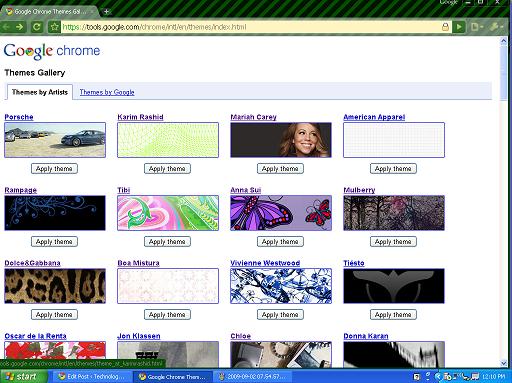
Google Chrome's New "Artist Themes" Gallery A few months ago I wrote a post lambasting Google for soliciting artist work without financial compensation.  The situation, to recap, was that Google approached well-known illustrators to design nifty new artist skins for the Google Chrome browser.  The catch: Google offered to compensate the artists with only exposure.  In my mind, the offense was as follows:

Google chose artists because they were highly-recognizable and then was unwilling to financially compensate them what Google obviously is aware that they are worth. In so doing, Google sent the message that artists, no matter how successful, are not worth paying.  Thus, the undervaluing of the arts (against which artists constantly struggle) was publicly perpetuated by a wealthy company that could have afforded to pay for artists' work.

A few weeks ago the new Google Chrome skins launched--and the result is underwhelming at best.  Google apparently regards all its "Artists" as brands--and vice-versa--and assembled a page featuring everything from sports cars to architects, from haute couture to hip-hop bands.  The Artist Themes library reads like an advertising pull-out in a magazine: smaller, niche artists vie for attention against the top-billed Porsche, American Apparel,  Mariah Carey, in addition to other such easily-recognized names as Donna Karan, Marc Ecko, Wes Craven, Ocean Pacific and Candies (among others).  Each theme is presented with a button navigating to a one- or two-sentence blurb about the artist/brand/company (including, in many cases, a link to the artist's store where the user can purchase products)  and most of the skins feature a brand logo somewhere in the skin itself.  Artists who are less commercial and have less name-recognition are lost in the shadow of the BIGBRANDNAMES. So what exposure, exactly, is Google offering its skin-designing artists whose names don't ring an immediate bell with the General Public?  I hope that they are receiving more interest from people who might not otherwise have known their art, and ultimately generating more sales and commissioned work.  I hope that they find they are growing their audience and that people unfamiliar with their work before Google Chrome now are interested in what the artist is producing.

In truth, however, I suspect that one of two things is happening:  they are overshadowed by the highly-recognizable brands, or reach an audience that was already aware of their work.  If Google had not piled these artists into a motley assortment of brands, designers, products, and artists, I believe that those artists with more specialized popularity would have received greater exposure, and thereby reached a broader audience of new followers and potential financial supporters for their work.  (Though of course, I may be erroneously assuming that these artists WANT to add new fans to their audience--perhaps they don't.)

Operating under the assumption that each designer wants to increase site traffic and popularity, reaching Chrome users who might have otherwise been unfamiliar with their work, I would recommend that Google redesign the Themes page.  Arranging the contributors in alphabetical order, for a start, would give a sense of order and artist equity.  To take it one step further, I think that calling the page an "Artist Gallery" is a misnomer, and Google would have done better to segment its collection of skins into tabs like "Music," "Fashion," etc, thereby bringing more attention to each skin--and reach people who may be more interested in certain artistic genres.  Additionally, Google could have routed skin downloads through the artists' bio page by default, truly offering the opportunity to generate traffic to the individual (or company) site.

I am interested to know about the arrangement between companies such as Porsche and Google--were there really no financial negotiations?  Did the designer of the skin get paid by Porsche, instead?  I reached out to a couple of the participating artists to learn about their experience working with Google, and whether or not Google ended up financially compensating them after all--but at this time none has responded.  So, Chrome Theme designers, if you read this I'd love to have you weigh in on the matter.

And, as always, I encourage anyone reading to share your thoughts.

Technology as the Art

“Molotov Alva and His Search for the Creator,” by Douglas Gayeton, a film made using machinima. Technology and the Arts...it's what we focus on in this blog, on this website, and in our offices. Dictionary.com defines technology first as "the branch of knowledge that deals with the creation and use of technical means and their interrelation with life, society, and the environment, drawing upon such subjects as industrial arts, engineering, applied science, and pure science."

Today, however, I would like to liberate “technology” from its seemingly ubiquitous linkage with other, more concrete and easily definable terms, and examine technology as art.   Technology is about creation, it is creative in its very definition, though it is too often regarded by artist-types as out of our realm of right-brained comprehension. This may be the reason that we consider art and technology, as if those two elements naturally remain separate.  When the first maths-based technology was utilized to create visual imagery, the products were considered not art because they were so often created by scientists.  (That relationship is explored in this piece by Lewis Dartnell.)  In this day and age, however, it is evident that technology can, in fact, be the medium in which the art is created. It can be the palette, the orchestra, the voice, the film.

It is a difficult distinction to make: at what point do we consider technology as an artistic medium?  Eight-track is a technology.  As is infrared film.   For our purposes I will be considering technology as digital, computerized.   I am interested to hear thoughts, because it can be a very difficult determination to make--at what point does technology actually comprise the art rather than merely facilitate it?  Is this a distinction that needs to be made? Is technology ever truly a medium, and if so, does the technology we discuss here necessarily happen with computers? And if so, does the art need to happen on a coding level to be considered created in the medium of technology? If the art can be created without a computer (for example, audio reel-to-reel), can we classify it as relying on (our definition of) technology?

So, without further ado, a few examples of what I would consider technology as the medium in which the below art is produced. (Additionally, the piece at the top of this post.)

There’s digital rotoscoping, mainstreamed in the 2006 feature film ”A Scanner Darkly," which combines digital filmmaking with a computerized version of traditional rotoscoping.

The Rhizome "Tiny Sketch" competition set a 200-character limit for coding to design tiny sketches. This is not unusual, and there are countless areas where code is used to create visual art. It is more clearly obvious in many cases, but is also easily taken for granted with continued computer usage, as it is code that gives us the graphics that we see as computer users.

Toplap, a musical group that performs live by writing code in real-time to produce music. (Video courtesy of the BBC on YouTube.)

Virtual composer Emily Howell, an independently-creating creation of David Cope's.

Watch Information Hunter Gatherer @ Electric Art in Entertainment Videos |  View More Free Videos Online at Veoh.com “Information Hunter Gatherer” by Stephen Belovarich

Prepare ye the way for the digital season brochure

The season brochure, that bastion of quadruple-proofed specialty paper that brings in a cache of new subscribers every year, has officially gone digital. And not just a PDF with an embedded link to the box office page. Oh no. With sound clips. And conductor interviews. As you may have gathered, I was recently delighted to discover London Symphony Orchestra's online season brochure. When I first saw it, it struck me that this is probably what symphony orchestras have dreamed of doing since the inception of the season brochure—that in the first season brochure meeting, the marketers were essentially thinking, “how can we put the experience of our symphony on paper?”

Here it is—not on paper. And with all the interactivity that an orchestra marketer dreams about.

It’s sleek, wonderfully interactive and will certainly grab the reader’s attentionbut will it sell tickets? That’s the new question marketers must ask themselves with every shiny new social media tool that comes along. An online season brochure is something a customer must seek out on the organization website. (Isn’t getting them there half the battle anyway?) The traditional season brochure comes to them through the carefully orchestrated efforts of the marketing department. So, which version will result in more ticket sales? And more importantly, will the time and effort spent on the digital brochure be worth it?

So here's a funny question to ask on a technology blog: Is direct mail dying? There's more and more evidence that it's not. When I began my career in arts marketing, I thought this was a rhetorical question; my initial impulse was to say yes, letters, postcards, etc. are going the way of the newspaper. But I quickly learned the usefulness of direct mail: the spike in season ticket sales after the renewal mailing went out, the power of a reminder postcard for “pick 3” subscribers, and more. People still respond to direct mail, at least, arts patrons do. Maybe they just like the feel of the specialty paper. But maybe it’s something more.

In this technology-driven multitasking world, it all comes down to one question: What will keep our patrons' attention?

Many arts orgs still send renewals/season brochures through the mail, as they have for years. Arts marketers have conditioned them to expect a thick packet or glossy pamphlet in the early part of the year with an incentive deadline. But what if we changed that? If we sent an email directing them online to look at a brochure and/or renew online, would it be as successful? I would think not. They won't have a context for it, and so many of those emails won't be read.

According to The Non-Profit Times, if a non-profit arts org sends an email, it very optimistically has a 20% chance of being opened. Maybe 5% of total recipients will actually click through to see your wonderful interactive creation. (These stats are older, so if it follows the current trend, we can safely assume it will be lower.) Or, to put it from one individual's perspective, here’s how it works in my inbox: the message enters the daily deluge of emails that I may or may not tag to read. If I have time within the first day I receive it, I read it; otherwise, it slowly makes its way to the netherworld of "older" emails in the inbox, never to be heard from again. I find myself becoming increasingly immune to email appeals, and it seems to be proportionate to the number and length of emails sent by the organization. Same thing with social media "white-noise"--the more I have to read, the less I want to read.

On the other hand, if the arts org sends a renewal packet or season brochure in the mail, the situation is different. If they have been a subscriber for a while, they know what it is and what to do. The single-ticket buyer or first-year subscriber might think the brochure looks interesting and they'll read it or put it in the mail pile. The difference is, people eventually go through their mail pile, and will probably do so sooner than cleaning out their inbox, when the brochure is still somewhat relevant. Furthermore, so many commercial organizations have gone paperless that, at least for me, it's a treat to get something in the mail that's not a bill, especially if it's cool and artsy-looking. I'm less likely to throw it in the trash.

Bottom line: A paper brochure is something that sticks around. Something that a single ticket buyer can grab at the theatre to see what's coming up. Something arts marketers can hand out at arts fairs to people who don't even know the organization exists. It is for these reasons that I believe that the season brochure will not go completely paperless for a very long time.

Feedback, please! I’m interested to hear your experiences with online brochures and renewals.

(sidenote: Sophie, the online multimedia book publishing software featured at the National Summit for Arts Journalism Friday, releases version 2.0 next Thursday. It might be a tool worth looking in for those considering creating a digital season brochure. There are also several videos of other interesting mergings of technology and arts journalism/publishing on the summit's website.)

Filtering for Information: The Value in Streamlining Online Presence

We talk a lot about online identity and managing the way in which the world receives you. But what about the way that you receive the world? Establishing and fostering connections and relationships necessitates that channels of information and communication be open. Once you open the door a little, however, the information that once trickled through can quickly become a deluge.

The ideal online presence develops awareness and support for your organization.  You can communicate with people near and far, and hope to transfer your online relationships into strong real-world bonds.  You want a blog that incites conversation and commentary, a Twitter or Facebook following that generates real-life audience, and virtual relationships that are mutually beneficial, creatively stimulating, and further your organization's mission. While building a substantive online presence, however, you may accumulate a lot of clutter that impedes your efforts (and not even realize it). I was surprised to find myself in this position. Once invigorated, I was suddenly overwhelmed by my virtual life. Useful information was lost among irrelevant chatter, and I had unconsciously begun tuning out everything. I went from eager and active online to quiet and uninvolved; I unconsciously stopped acknowledging Twitter or RSS notifications on my cell phone, filed away more newsletters than I read, and was a member of myriad services and sites that I had tested out, found unhelpful or redundant, and abandoned--without cancelling membership.

If you find yourself growing sluggish and disenchanted with your organization's social networking and online communication presence, consider some of the elements that I used to structure my interaction overhaul.

Contacts: Whose input do you value? How do you know this person--virtually or personally, in a business context or as a friend? Do you receive regular updates from them, and are these updates useful? Do they receive regular updates from you, and if so, do they engage? It's ok to set some people free, but do use caution so as to avoid offending anyone.

Social Networking Accounts: Do you use only the accounts on which you are registered? Do you have profiles that are inactive that you should delete? Do you have multiple profiles on the same site (e.g. your organization's Twitter and your personal Twitter)? If so, do you make careful distinction between the two in your interactions, and do you separate your contacts accordingly? Do you remain engaged equally on each, or do you swing between letting your organization account fall silent as you become more chatty on your personal account, and vice versa? If you do not have separate profiles and accounts, are you losing important information among your friends' weekend updates and baby pictures?

Email and Reader: How much spam do you receive at the email account you use for your organization? How many "relevant" newsletters, updates, etc. do you receive but never read? Do you have folders for different subjects, contacts, organizations, and so forth? Do you have a "get-to-it-later" folder that you never get to? Does your reader have dozens of feeds in it, of which you actually read only a fraction? Is there a chance that you will miss something important by deleting some of these feeds? Where do you find your most useful information, and what is making that process most difficult?

It was a surprisingly difficult task, and one on which I am still working, but it has made me feel like my online activity is more streamlined and efficient, my attention is more focused, and the information I now receive through these channels is proportionately more relevant and applicable than before. It is worth remembering that your online activities are an extension of your offline activities, and just as valuable to manage and streamline.

Why Net Neutrality is an Arts Advocacy Issue

I teach a course on “Cultural Policy and Advocacy in the US” each spring for CMU’s Master of Arts Management program.  As I begin prepping for the upcoming spring semester, I find it intriguing that the issue of “net neutrality” has not gained much buzz within the arts advocacy community.  So let’s take a look at what net neutrality is and how the issue of net neutrality impacts the arts. So what is net neutrality?  Here’s a brief breakdown of the issue from Public Knowledge, a Washington DC based public interest group working to defend the public’s rights in the emerging digital culture:

Okay, but why should arts advocates care about net neutrality?

In the last decade, we have seen an explosion in the use of the Internet to create art, promote the arts, advocate for the arts, build community through the arts, and more.  Our sector’s ability to participate in the Web 2.0 cultural shift is due in large part to our ability to access any tool hosted on the Internet with the same ease as any other Web user.  Here are just a few examples of how this neutral access has fostered evolution within the arts community :

  • Artists have been able to choose from a wide array of online tools for distributing their work and reaching new audiences.
  • Artists have explored the use of the Internet as an artistic medium resulting in the genre of art known as net art.
  • Artists and arts organizations have leveraged the use of social media and social networking to further engage audiences before, during and after traditional performances and exhibitions.

Let’s say for example that a theatre company pays Comcast for access to the Internet.  The theatre also has a nonprofit channel on YouTube where they post video interviews with playwrights, directors, actors, designers, etc.  The theatre has successfully used these videos as promotional tools to raise interest in upcoming productions.  What happens if Comcast decides to prohibit the theatre from accessing YouTube because Comcast is launching a video sharing site that competes directly with YouTube?  Suddenly, your Internet Service Provider (ISP) is determining which online tools you may or may not use to pursue your arts organization’s goals and mission.

Does the idea that your Internet Service Provider would prohibit you from accessing certain sites sound preposterous?  It’s not.  On September 21, FCC Chaiman Julius Genachowski presented a speech at the Brookings Institute in which he states, “We have witnessed certain broadband providers unilaterally block access to VoIP applications (phone calls delivered over data networks) and implement technical measures that degrade the performance of peer-to-peer software distributing lawful content. We have even seen at least one service provider deny users access to political content.”

During last month’s National Alliance for Media Arts and Culture (NAMAC) conference, Craig Aaron from Free Press laid it out on the line for the audience, “[The federal government is] going to decide whether or not the Internet remains public and free.”  Does that sound alarmist?  It’s not.

In yesterday’s speech, Genachowski went on to state, “While my goals are clear -- to ensure the Internet remains a free and open platform that promotes innovation, investment, competition, and users’ interests -- our path to implementing them is not pre-determined. I will ensure that the rulemaking process will be fair, transparent, fact-based, and data-driven. Anyone will be able to participate in this process, and I hope everyone will. We will hold a number of public workshops and, of course, use the Internet and other new media tools to facilitate participation. Today we’ve launched a new website, www.openinternet.gov, to kick off discussion of the issues I’ve been talking about. We encourage everyone to visit the site and contribute to the process.”

While this is a wonderful step towards ensuring net neutrality for the United States, we would be foolish to believe that the results of this process are a given.  A stunning statistic that Craig Aaron shared with the NAMAC conference last month is that the telecommunications field currently has 500 lobbyists in Washington, DC.  That is nearly one lobbyist for each member of the House and Senate.  You better believe that those 500 lobbyists are advocating for FCC policies that will allow their telecommunications employers to gain more financially advantageous control of the Internet and consumer usage.

The number of net neutrality lobbyists in Washington, DC is very minor in comparison to the army of 500 telecommunications lobbyists.  That’s why it is so important for us to join the national discussion regarding this issue and add it to our list of arts advocacy priorities.

Here are some easy things you can do today to help ensure net neutrality within the United States:

  1. Send a brief message to your Congressional representative asking them to support the Internet Freedom Preservation Act of 2009 (H.R. 3458).
  2. Contact Americans for the Arts and encourage them to add a net neutrality issue brief to the Congressional Arts Handbook that will be distributed during the 2010 Arts Advocacy Day event.
  3. Engage in the public discussion on www.openinternet.gov.

Why Art? Because it's Not Only For "Us."

Tim Mikulski grabbed my attention the other day with his ARTSBLOG post, asking, "[A]s our public debt deepens and we start to see the proverbial writing on the wall, what is that new argument for funding arts organizations and programs?" Amidst cautious optimism (!?) about economic upturn, We In The Arts are still reading horror stories about everyone from universities to public elementary schools cutting arts funding. Newly-appointed NEA Chairman Rocco Landesman's opinions are already sparking debate, and there have been some thoughtful reactions from opponents, as well as others that send shivers down my spine.

So Mikulski's question is more important than ever. We In The Arts like to say that "the Arts are always the first to go!" and "the Arts are considered fluff!" and "imagine a world without us!" Jan Selman, of Arts Leadership League of Georgia, responds to Mikulski: "I do not debate from a victim mode. I believe that our industry is as viable and important as any other industry." What a brilliant point! In other words, we doth protest too much. And in so doing, lend credibility to those who DO approach the Arts from the very stance we are so convinced "always" result in the Arts getting the axe.

We cannot allow ourselves to play the victim, as much as we may perceive ourselves at the whim of Others Who Don't Understand.

I suggest, as difficult as this may be for many, to remember, for a moment, that Art is not just a tool of the Left.  When arguing on behalf of the Arts, I argue for the right for all Artists to be taken seriously. (No, I'm not saying that I think all "Art" is "Good," but We In The Arts are not only those Bohemian Lefties that Landesman and Laura Collins-Hughes on ARTSJOURNAL's blog, agree are perceived as "a little gay.")

Yes, there is Art that is "obscene" or "offensive" to conservatives, and there is at least some art that is offensive to "the typically outraged" liberals. (And as for the Obama in Joker Whiteface poster, I take this argument to the conclusion that any artist who wants to make a provocative statement should at least take responsibility--or credit?--for it, and engender dialogue.)

Historically, Art has caused outrage as it  evolves with (and sometimes spurs the evolution of) its society.   I say, more power to Artists who question our world, even if they argue against what I believe, as long as they stand behind their work.  There is something refreshing about my getting enraged because a well-done piece argues so passionately for something that I think is wrong.

And so, when I argue to preserve funding for arts organizations and programs, I have something new to say.  I will no longer play the victim.  I will say, because Art gives people another way to communicate, and can spread messages across the boundaries of beliefs.  Art is a different way to dialogue and discuss--it is subjective, it is not RIGHT or WRONG.

Art isn't only the product of the crazy gay liberals.  It can be the product of insane heterosexual conservatives as well.  And everyone in between.

One Route, Two Guides — Part 2: Marc van Bree's "Orchestras and New Media"

Marc van Bree has published an impressive and free forty-five page (plus bibliography and succinct glossary) ebook called "Orchestras and New Media: A Complete Guide".  I emphatically encourage anyone working with arts and non-profits to read his ebook. Though van Bree's experience is specifically with classical music and orchestras, his ebook is not for that audience alone. Rather, is the most comprehensive and interesting social media guide that I have read. Van Bree does not claim to be a social media expert, despite his long-time successful use of it, and his recommendations and guidelines for social media are supported by research and commentary from others in the field. He does not merely tell you what to do, he writes things like "How has social networking changed our communication?" and then answers this question with evidence from independent studies.

"Although the number and variety of arts organizations has increased, the percentage of adults participating in the arts has remained flat," writes van Bree.  The first 11 pages of this guide are a fascinating and well-researched analysis of the arts and the arts' representation in printed media, and the struggle that the arts face in generating new audiences.  With excerpts from a variety of studies, publications, others in the field, and projects, he establishes a context in which to place non-profit social media. "If blogs are an alternative to print media, podcasts are the alternative to radio and television."

Van Bree not only discusses the various forms that social media can take, his guide is part history lesson, part handbook, and completely engaging. He examines all of the major American players, from Facebook to Flickr, and suggests others that might be of use on an international platform. Van Bree also illustrates their use with true anecdotes that are at times cautionary, encouraging, amusing, and most of all show what is possible by NPO arts organizations using social media.

If you are new to social media, you may want a very basic, "Step One: Do This" approach--but I strongly recommend you take the time to read van Bree's guide. He does not neglect to explain the principles and common practices that users of the social media tools follow, and even discusses how you can measure the results of your efforts.

This guide has it all, is a pleasure to read, and paints a broader picture of what it is, exactly, that NPOs may accomplish with social media.

Hey, Choir, Listen Up!

Talking to Myself by FALHakaFalLin and Mlle Franny

I read a lot of blogs. Blogs about arts, marketing, non-profits, arts management, arts education, technology, and so forth. I read great posts on a weekly basis about selling tickets, working within the new economy, raising interest, and strategizing an online presence.

There is a glut of online advice, musings, guidelines, reflections, and discussions about organizations hopping onto the social media bandwagon and embracing Web 2.0. And I can't help but wonder: are we just preaching to the choir?

If you are on here reading this, I suspect that you are already, in some way, connected to this issue. You already browse the web, you probably already have a profile on at least one social media site. Your organization likely has a website, and, I venture to guess, you are already diligent about trying to keep that website presentable, navigable, and current.

You probably frequent the same sites that I do. Your RSS reader might even have a roundup of many similar resources. You are aware of the possibilities that Web 2.0 offers for the new connectivity of organizations. You want to engage people online AND in the real-world, and believe that by strengthening your online position you will experience a positive correlation in the strength of your real-world operations.

I recently read a post from a for-profit marketing perspective, iterating that when we establish our online presence what we want are a small group of strong, loyal supporters, rather than a large number of filler fans. The principle is that these informed, dedicated followers will spread the word personally to their friends, increasing the likelihood that their friends will take their recommendations seriously, and be more likely to check us out as a result.

But it seems to me that in this niche of arts organizations and technology, we are all following, and being followed by, each other. We talk to each other, echo one another's concerns, make suggestions, offer encouragement. We are the ones listening, we are the ones talking, and ultimately it begins to get a little schizophrenic.

I have come across some great bloggers (who are transparent in their affiliation with arts organizations) writing insightful, informative posts--but don't link to their organization's website and aren't linked from there. If an audience member does get online with the hope of learning more about an organization via its website, wouldn't the blog of its communications manager, or artistic director, or someone else on staff, be of interest to them?

If our audiences continue to be people who are unlikely to go online to seek out their arts information, who are comfortable with the ever-smaller blurbs in the papers and the mailings sent to their homes, why are we doing all of this work online? And if we are doing all this work online to find new audiences, but it isn't transferring to our organization's presence in the real world, something needs to change.

We are not going to bridge the chasm between the online and offline supporters if we keep telling people who are already doing what we think they should be doing (because it's what we are doing!) to do what we recommend everyone do.

I love that Project Audience exists precisely to address the best way for arts organizations to attract online media users who may be new to the arts, and to brainstorm ways to stop doing the same things repeatedly simply because it's what is comfortable, or understood, or widely accepted. Additionally, Joe Solomon guest-blogs on Beth's blog, asking the very important question: "How can your online community also support events in the real world?"

I hope that this daunting chasm is a misconception on my part, and that all of what we are saying to ourselves here is really making the leap to the real world, to ticket and art sales, to increased donations and support. I hope that people from outside are plugging in to get more information, and that dialogues are happening among artists and organizations and audiences as never before, facilitated, enabled, by Web 2.0.

But if it isn't a misconception, we need to be open to change and aggressively seek innovation to this model of organization/web interaction.

What You Do IS Worth Paying For, We Just Can't: Non-Profit Organizations and Artists - Part 2

Photo by Greg Andrews

Last week I wrote about the indignation I feel when I see a company like Google wanting to use art without financially compensating the artists. The post and ensuing discussion on Facebook generated some interesting feedback, and many people expressed the concern that perhaps artists have set the bar low themselves.

This got me thinking about how it is that artists begin accepting less than they are worth--and I think, unfortunately, it is because of the close collaboration that artists have with non-profit arts organizations. And this is much more difficult to get irate about. As I rail against Google for devaluing the work that artists do, I can't help but think back on the numerous non-profit arts organizations with which I have either been involved or encountered as an artist.

Non-profit organizations, those bastions of hope, those doers of good, whose belief in the arts propels us through the darkest hours of our economic crises, are they immune to the tirade I so readily unleashed on Google?

Here are a couple of scenarios that I have encountered in the last few years.

A small non-profit theater company hires non-Union designers, actors, and tech staff. Due to budget limitations, the theater pays each a scant stipend, which is realistically hardly more than the cost of gas to get to and from rehearsals and shows. The highest pay goes to designers and directors, the lowest to crew and cast.

A small non-profit gallery holds an open call for artists to be featured in a full-color, glossy catalogue that is then distributed (the gallery paying for postage) to 1000+ other institutions around the country, offering exposure for the artists at no cost to them. The artists whose works are featured do not receive a free copy of the book (they pay a mere $5 less for the publication than the general public). The argument is that their price is exactly the cost of publishing one book.

These two organizations have been around for a decade and just under a decade, respectively. Each is respected in its community and the directors of each organization have cut their own personal income as needed (going a year or more at a time without pay from the organization). Their personal sacrifices demonstrate their belief in the necessity of the arts. Their commitment to producing art trumps their desire to live a cushy life. But they ultimately cannot pay the artists a living wage.

Do NPOs perpetuate the undervaluing of art by expecting to have artists' collaboration without paying them What They Are Worth? Doubtless, if either of the above examples had the funds it would pay its artists more--but both organizations benefit, and arguably only exist because of, artists' willingness to work for little-to-nothing. Though there are actors, designers, painters, who choose not to work with the organization because of the financial sacrifice, there are enough others that the organizations continue to exist.

Obviously there is the striking difference between the net worth of Google and that of a small gallery, but the artists are still working for, ultimately, exposure. Perhaps they are not the heavy-hitting "professionals" like the illustrators that Google solicited, but nevertheless, a standard is being set.

Let us be realistic. Just as we, the underpaid in the arts world, raise our fists against the indignity of artists being asked for work without receiving pay, we are often the first to ask for favors from artists. Because we have no money, we do what we can (trade you free admission to our show, etc.), but maybe this is the crux of the issue.

Yes, artists have options. They can join unions (which may limit their opportunities to work) or decline jobs that don't pay what they feel they deserve. They can choose to do it "for the love of it" and hope that the future will be brighter, more lucrative, just around the bend. But should they have to choose?

I don't know what the answer is. I don't feel good about bringing my indignant wrath against non-profit organizations, the likes of which I have worked for, with, and on behalf of, my entire adult life. I feel that it is fair to say, with some notable exceptions, that those individuals who establish non-profits arts organizations, especially sacrificing their own creature comforts to do so, want the best for the artists and want to produce the best art.

But I have seen too many artists who work with such organizations get caught in the seemingly endless cycle of uncertain paychecks, needing to balance additional temporary jobs in an effort to make ends meet, essentially working two or more full-time jobs to enable them to do their art and fill their refrigerators (not to mention pay rent, etc.). That lifestyle can have a negative influence on the art and the artist, and can make an artist's sparkling potential sputter into mediocrity.

Without art there is silence. Without artists we have no stories, no history. When we talk about social media, about technological advancements, what we are really talking about are ways to communicate. We invest in the people who develop the newest, fastest way to transfer information among individuals. But we cannot forget that this is not the only way communication manifests. What about the people communicating in the same way that early man did in his cave paintings, in dances and performances, weavings and body decorations, storytelling and pottery? Art tells us about our history and our nature.

We are human not just because we can cure what ails us, not just because we can problem-solve or analyze or understand quantitative data. We are human because of those feats (artistic in their own right), certainly, but also, especially, because we can communicate through creations that may not be strictly, quantifiably "practical." Art can be healing, therapeutic, exciting, energizing. Art can make sense of the world or touch an individual. Artists create works that convey pain, sorrow, joy, fear, love, hate, anger, celebration. Artists can reach audiences they have never met with the power of their work.

Art makes us human. Non-profits arts organizations need to be able to employ artists at a rate that is livable. I understand that it is much more easily said than done. But we must demand this of ourselves, this should be the goal. We can be the example. Let those who can pay do so. Please. Art is not a luxury item.

What You Do Isn't Worth Paying For: The Message Google Sends to Illustrators - Part 1

peanuts-important Recently there has been some high-profile buzz about Google's latest endeavor to unite arts and their internet products by having Google Chrome skins designed by prominent illustrators. The catch? Google will pay the artists nothing, offering exposure instead.

Understandably, many illustrators are incensed by the "offer." Though last year's iGoogle artist theme design campaign was highly successful, according to Mark Frauenfelder (an iGoogle artist), in that instance Google donated a significant amount of money in his name to a charity of his choice. This year Google is soliciting prominent illustrators ("prominent" meaning that these are illustrators whose work is already recognized and commissioned by high-profile companies that both pay and provide great exposure) and offering them no compensation. I think this is a slap in the face to the arts world.

Some very good points are discussed by Stan Schroeder at Mashable and Douglas McLennan at Arts Journal. I recommend reading their thoughts about the online community's responsibility for devaluing artists' work, seeing this as an opportunity to encourage higher levels of craftmanship, and the value of a relatively unknown artist to gaining exposure and consequently future work that would pay.

I, however, would like to address two issues that I have when a situation such as this occurs. I will do so in this and a following post.

First of all, I posit that most people who identify themselves as artists wish to make a living producing art. They do not WANT to have a desk job to enable their work. They would, ideally, be able to support themselves by producing work in their medium of choice. I am not talking about the people who happily admit to being designers "on the side," or who create art "as a hobby" and are content so doing. I am not talking about the people who, unasked, flood the web with their work free of charge. I believe that people who IDENTIFY as artists want it to be their vocation, their profession, their primary source of income, and guard it closely, hoping always that someone else will value it equally (and in concrete dollars).

It is offensive that Google, a company whose first-quarter profits saw an 8% increase over last year's (to $1.42 billion, according to the New York Times), would specifically select artists because they are well-known and well-respected and offer to pay NOTHING. It would be a different story altogether had Google held an open call for submissions, explaining at the outset that there would be no pay for the chosen designs, and allowed illustrators to decide for themselves whether they wanted to participate. (Note: even the 12-year-old winner of "Doodle for Google" received a decent-sized award for her winning drawing.) But to carefully hand-pick prominent illustrators and ask that they be a part of the project in return for exposure, shows how little art is respected by big business (and is, in my opinion, condescending). The fact that Google is SELECTING them in the first place suggests that these are artists who no longer need exposure, are at the top of their field, and should be considered valuable enough to earn a standard rate for their work.

Google's new skins are akin to packaging an unexciting product in an appealing way, something that marketing experts get PAID to do. Google would expect to pay someone to spruce up its image. Despite the positive impact these artist skins would have on Google Chrome's marketability (Chrome doesn't make my short list of browser choices), Google doesn't believe that the illustrator's work is worth a financial investment.

And if Google, a company worth billions, isn't willing to pay for top-of-the-line illustrators, what good is exposure? (Not to mention the fact that Google Chrome is not necessarily the best way to reach these illustrators' potential clients, since it depends on an individual's interest in downloading the browser to start with.) If a company knows that an illustrator is willing to work for Google for nothing, why would it want to pay the illustrator?

When Google thinks art isn't worth paying for, it is little wonder that legislators across the country question the value of arts funding.

Incidentally, I considered that this may be Google's reaction to Bing's attractive "decision engine." I contacted the provider of the stock photography that is used by Bing in an attempt to find out if they get paid for Bing's use of photos. The response I got from Jonathan, a representative of Danita Delimont stock photography, wrote: "I'm glad you like our photographers' work! Microsoft does indeed license the images they display on the Bing home page. We applaud Microsoft's decision to provide copyright information for the photos they use on Bing."

Yakkity Yak, Please Talk Back

"COMMUNICATION: LIVE" BY KONRAD WYREBEK AT SAATCHI GALLERY, LONDON

It wasn't long ago that I was your average internet user. More proficient than many, but not nearly as tech-savvy as some, I averaged a couple hours of every day online. I relied on the internet for everything from "catching up" passively with friends through their updated statuses and blogs, reading the news of the world, checking email, updating my blog and Tweets, shopping, and looking up interesting upcoming events. But among all of that, I tended to either ignore or delete the clutter generated by the various organizations that I demonstrably supported via my social networks and email-list affiliations.

Always happy to support by joining a group or becoming a fan, my participation stopped there. I rarely checked the list of updates on my Facebook homepage, or weekly inbox-fillings of "Last Two Weeks of Show! Get Tickets Now!" urgings. Unsolicited updates from these organizations and groups were of little interest to me--if I wanted to know something, I took it upon myself to seek it out.

When my production company established a group on Facebook, our personal friends became our fans--even if they were across the country, unable to attend our shows, and unlikely to donate money. It was, again, a show of support, solidarity, rather than a genuine interest in receiving electronic communication from us. There were no discussions being had, perhaps an occasional "can't come to the show this weekend" or "great performance!" but in general the group seemed little more than a space full of virtual warm bodies.

So why does it surprise (and yes, frustrate) me now that, as administrator of groups on a couple of social networking sites, I see that none of the fans or members seem eager to participate in discussions? The majority of fan- or member-generated content appears to be self-promotion or the occasional specific question (usually going unanswered by other members). Open forums asking for member input to guide administrator-generated content so that it is more pertinent and interesting to the group members have reaped little to no response. One of two comments to a call for feedback included this: "I haven't yet posted because I haven't yet seen anyone with similar interests."

Oh the irony.

Unless this user is sifting through the 640 other profiles of group members, he presumably is waiting for this like-minded stranger to make himself known. How? Probably by starting a discussion or posting a news item.

As I am becoming all too aware, that isn't likely to happen. In the occasional instance when there is a member-posted news item or discussion, the number of views it receives tend toward the single-digits (out of, I remind you, 641 members).

So why do organizations have hundreds of passive fans? Why do groups have thousands of silent members? Are these people hoping to be spoon-fed information in the manner of an RSS reader (and if so, why are they not viewing news items)? Are they overwhelmed by irrelevant postings (e.g. the self-promotional posts that verge on spam)? Intimidated because they are actually not quite clear whether what they have to contribute will be judged as valuable or not?

I can understand those individuals who accepted invitations to join and as a show of support or because they didn't want to turn down a friend and seem rude, but what about the others who find the organization or group of their own accord, request to join, and THEN lie dormant? Are they just individuals who have their own social media product, like a blog, or website, and hope that their affiliation with another group will generate more traffic for their own project?

And what does this lack of interaction mean for the buzz about social media being a non-profit organization's new best friend?

Please, weigh in!

What do we Generate if not Discussion?

There's a lot being said right now about the efficacy of utilizing social networking sites for fundraising efforts.  A. Fine's blog brainstorms some real-world strategies, musing about organization/donor relationships, and how to encourage financial support. She notes that giving circles can be a place for discussion that may generate interest in other causes, raise awareness, and thereby encourage future donations. As social media changes and abets our causes, is our "audience" tuning out? Online, are our attempts to network as organizations being perceived as pitches? Sure, there are innovative ways to raise awareness, but is it just more of the same spiel? Do organizations that simply use the web as a way to market cross a line in our networking expectations that if you lead, you will also follow?

Those are my thoughts...what are yours?

Another thing to consider when using the internet to find money: I came across this article, urging caution when using the internet to find investors.