
Current
Podcasts & Interviews
Reviews
Reports
All Research Tracks
Engagement
Marketing & Social Media
Fundraising
Artificial Intelligence
Augmented & Virtual Reality
Blockchain
Inclusion
Data Collection & Analytics
Management
CRM Systems
Sustainability
About
Mission, Impact & Values
Staff
Current Contributors
Past Staff & Contributors
Tools
Contact

Arts Management and Technology Lab

Current
Podcasts & Interviews
Reviews
Reports
All Research Tracks
Engagement
Marketing & Social Media
Fundraising
Artificial Intelligence
Augmented & Virtual Reality
Blockchain
Inclusion
Data Collection & Analytics
Management
CRM Systems
Sustainability
About
Mission, Impact & Values
Staff
Current Contributors
Past Staff & Contributors
Tools
Contact
TBT: Dance Through the Lens of Tech
August 18, 2022
Data Visualization, Accessibility, News & Announcements
Elizabeth Forrey
TBT: Dance Through the Lens of Tech
Elizabeth Forrey
August 18, 2022
Data Visualization, Accessibility, News & Announcements

TBT: Dance Through the Lens of Tech

Elizabeth Forrey
August 18, 2022
Data Visualization, Accessibility, News & Announcements

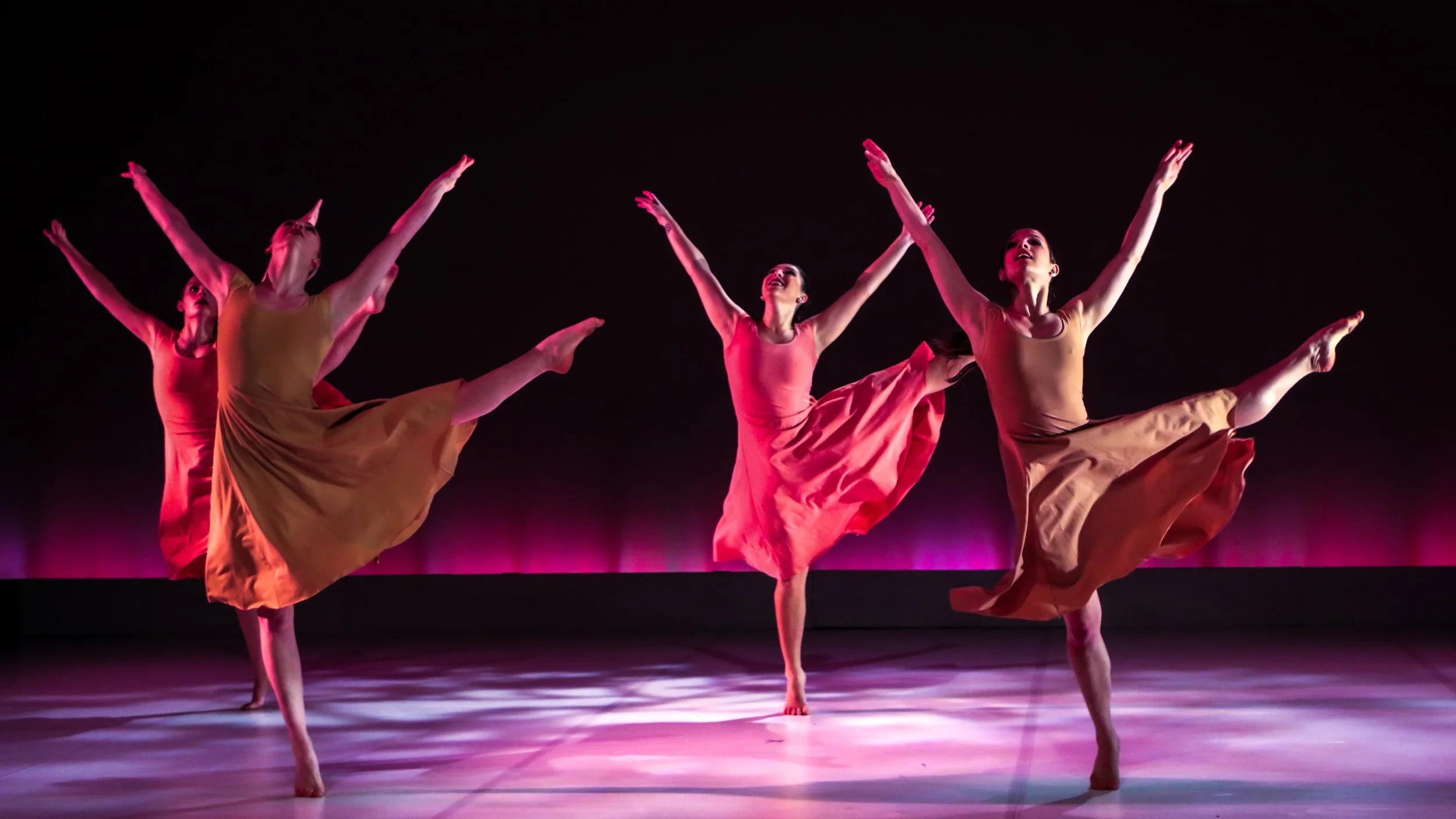
This week, AMT Lab looks back on our Dance research to remember how dance and technology have fueled innovation for both.

Haptics

Haptic Feedback: Feeling the Dance You Cannot See: Dance is a heavily complex art form that relies on visual viewership from the audience. But for dancers, it is a carefully curated physical experience that requires a keen understanding of one’s body and movement. Staff Researcher Gabrielle Di Raddo explores haptic technology and how it can be incorporated with dance to make it a more immersive and accessible experience for a greater range of audiences.

How Haptics Affect Human-Robot Interaction in Dance: Christi Welter explores human-robot interaction in dance through touch. Humans are unique in our mode of physical interaction. This article gleans insight onto the human haptic system and how the sense of touch works, and then applies that to how it facilitates dance performances that present human-robot counterparts.

Technology-based Visualizations

Let’s Get Digital: Visualizing Movement in Dance: In this article, contributor Christi Welter reviews DanceForce, a software created to help choreographers visualize different sequences before implementing them into a routine. Her review gives an overview of the software and its capabilities, and gives a list of pros and cons of using it.

Mapping Movement: Network Mapping in the Dance Industry: Part 2: The second installation of a three-part series about data scraping, mapping and visualizations, focuses on using network mapping to create a broader understanding of the dance industry. Grace Puckett, staff researcher, explains how in dance, students are often hindered in learning great dance influences based on the nature of the practice. This project uses the digital humanities and data to create network maps of historical connections in the dance industry to show how it can be used for greater inclusion and education.

Tagged: dance, data visualization, haptic technology, haptic feedback, haptic cushion, software, #tbt

Newer PostCrypto Philanthropy: Opportunities and Considerations
Older PostArt Restoration Technologies: Renewing Artwork in the 21st Century


Newsletter Block
This newsletter signup form needs a storage option. Edit the block and enter a storage location via the Storage tab.

Subscribe

Sign up with your email address to receive news and updates.

We respect your privacy.

Thank you!

Featured
Venue As A Story: Location-Based Entertainment Models, Part 1
October 7, 2026
Staff Editors
Venue As A Story: Location-Based Entertainment Models, Part 1
October 7, 2026
Staff Editors

The immersive entertainment industry is rapidly expanding, with a projected market growth from $133.6 billion in 2024 to $473.9 billion by 2030. Through research conducted on behalf of Gensler,  the largest global design and architecture firm, this study investigates the problems persisting in the immersive entertainment industry, namely the lack of consensus regarding model distinctions, undefined success metrics, and unclear pathways for scaling projects.

Read more →
October 7, 2026
Staff Editors
Byte-Sized Culture: A.I. Evolutions for Artists and Audiences
September 30, 2026
Julia Srnec
Byte-Sized Culture: A.I. Evolutions for Artists and Audiences
September 30, 2026
Julia Srnec

In this month’s Byte-Sized Culture, lead researcher Julia Srnec examines artificial intelligence (A.I.), and how it is gaining traction in the arts. Legislation, funding for arts and technology research, and ethical museum-centric practices pave a future for how artists and organizations will navigate these significant changes to the industry.

Read more →
September 30, 2026
Julia Srnec
World-Building's Power Through Narrative Dimensions and Audience Immersion: Silence Wang's "One Hundred Thousand Volts"
July 27, 2026
Cosmo Wang
World-Building's Power Through Narrative Dimensions and Audience Immersion: Silence Wang's "One Hundred Thousand Volts"
July 27, 2026
Cosmo Wang

In an earlier article, we explored how live music concerts are evolving beyond mere performances into expansive, immersive storyworlds, using Silence Wang’s One Hundred Thousand Volts tour and its fictional setting of “Romance City” as a pioneering case study. By adapting world-building frameworks traditionally found in film, literature, and gaming—specifically the core principles of invention, completeness, and consistency—Wang transformed his stage into a dynamic socio-ecological system where the audience's emotional participation actively powered the narrative environment. Building upon this foundation of visual and spatial storytelling, this article will delve into the auditory and transmedia expansions of Romance City, examining the strategic role of sound and musical arrangement, the development of one of the world's first XR interactive concert films, and the unique integration of a "Concert Artbook" to deepen audience immersion and IP expansion.

Read more →
July 27, 2026
Cosmo Wang
Immersive Live Music Concerts: How Silence Wang Uses World-Building to Transform the Audience Experience
June 30, 2026
Cosmo Wang
Immersive Live Music Concerts: How Silence Wang Uses World-Building to Transform the Audience Experience
June 30, 2026
Cosmo Wang

How do you create an audience experience that drives not a one time purchase but a fan for life? Live concerts need to consider creating immersive worlds that engage fans before, during, and after their 2 - 3 hours in the space. This article uses a case study to unpack exactly how to to expand IP and build a world that creates a career sustaining model.

Read more →
June 30, 2026
Cosmo Wang
Toward Smarter Opponents: Rethinking AI in Turn-Based Games
June 22, 2026
Raven Fischer
Toward Smarter Opponents: Rethinking AI in Turn-Based Games
June 22, 2026
Raven Fischer

Turn-based games often rely on scripted opponents that are predictable, exploitable, and strategically limited. Through case studies from Final Fantasy X and Pokémon Trading Card Game Live, this article examines how current game AI falls short of creating engaging tactical experiences and explores whether more intelligent, adaptive opponents could improve player enjoyment and game design.

Read more →
June 22, 2026
Raven Fischer
Newsletter Block
This newsletter signup form needs a storage option. Edit the block and enter a storage location via the Storage tab.

Subscribe

Sign up with your email address to receive news and updates.

We respect your privacy.

Thank you!
Back to Top
AMT-Lab @ Hamburg Hall, Carnegie Mellon University, Heinz College, Pittsburgh, PA 15213, USAinfo@amt-lab.org
cmu logo.png
cmu mam logo hi rez.jpg
 

Arts Management & Technology Laboratory

Carnegie Mellon University, John C. Heinz College III

4800 Forbes Avenue

Pittsburgh, PA 15213