

Google Grants...and Google for NPO's

UPDATE: Be sure to read our most recent post on Google resources for arts organizations.

I know this makes two in a row from me on Google.  However, in my defense, I have been meaning to write this post for a few weeks now and, since I just found out (thanks to the Non-Profit Tech Blog) that Google has a launched a new non-profit portal that aggregates all of its services that apply to NPO's, I figured now is a good time to highlight one of Google's services that, I think, totally rocks:

Google Grants.

Google Sponsored LinksTo really explain Google Grants, I first need to explain Google AdWords.  You know those “Sponsored Links” that sometimes appear to the right of your search results on Google?  Those are brought to you by Google AdWords.  I’m not going to explain any more than that since Google has already done that work for me with the detailed information and demos on its site.  Suffice to say, Google AdWords can help increase traffic to your Web site.

And Google Grants is a program that Google has developed to help non-profit organizations have access to free Google AdWords advertising.  Organizations who are awarded Google grants get at least 3 months of AdWords service with cap of $10,000 worth of advertising per month.  Awesome!  Google Grants even goes beyond just giving away free advertising, by helping organizations to define and refine ad campaigns.

Click below for a Q & A with a past Google Grant recipient after the jump.

If your organization wants to learn more about Google Grants, please visit the new non-profit portal that Google has launched and click the Google Grants link.  Or, you may click here.  Google also has developed a Google Grants Blog.

One of the reasons I’m so interested in Google Grants is that one of CAMT’s clients, Art in Context, was a recipient of a Google Grant in late 2007.  I’ve interviewed Teresa Schmittroth, Program Director at Art in Context, about her organization’s experience.

JOSH:  How was the Google Grant application process?

TERESA:  The process was actually pretty easy. The grant application requires standard information about the organization such as nonprofit status, mission statement, contact information, a brief statement on how Google Adwords would contribute to the organization, and a description of the organization's target audience. In addition we were asked to submit a proposed ad campaign and a sample of key words relevant to our organization. We applied for the grant on July 12, 2007. Within 24 hours we received [a confirmation] response. By November 29, 2007 we were notified that our organization was selected for a Google Grants award and our account was activated.

JOSH:  How did you find using AdWords?

TERESA:  I was really impressed with the depth of the ad campaign that the Google Grants Team set up for Art in Context. Upon activating our account there were several 'ad groups' they had developed for us specifically addressing the type of information we provide public access to, e.g., Exhibition Listings, Artist Listings, Image Listings, etc. The ads were slightly commercial-eze for a nonprofit library, but compelling. I spent several days tweaking the language and the key words, but the structure Google set up was really good. By January, when searching for the word "artists" on Google, Art in Context was among the first results in Google's Sponsored Links.

JOSH:  Did you see an increase in your site traffic as a result of your work in AdWords?

TERESA:  We did experience a very noticeable spike in phone calls from researchers after the ad campaign began. Also, the following comparison of page views between February 2007 and February 2008 demonstrates a definite increase in information displayed, which is key to our mission:

February 2007 February 2008
Page Views 1,514,630 2,042,540
Average per Day 54,093 70,432
Average Page Views per visit 4.27 7.09

Here is a snapshot I just put together for our board:

Google Grant activity for Art in Context Dec 1, 2007 to Feb 29, 2008

  • There were 30,188 clicks to Art in Context from Google's Sponsored Links.
  • There were 2,146,880 ad impressions for Art in Context displayed in Google's Sponsored Links.
  • It would have cost us $20,510.48 for this service if this were not a grant!

JOSH:  Any other thoughts/comments about the Google Grants program and Google AdWords?

TERESA:  Thank you, Google!

And thank you to Teresa Schmittroth, Program Director at Art in Context, and Google Grants.

CAMT to Attend Museums and the Web 2008

Picture 1.png CAMT team members will attend Museums and the Web 2008 in Montreal, Quebec, Canada, April 9-12, 2008. The annual conference explores "the on-line presentation of cultural, scientific and heritage content across institutions and around the world." If you are planning to attend MW '08, please email CAMT, as we'd love to connect with you.

Wired.com's Semi-Monthly Photo Contests

The folks at Wired.com have decided to host a series of semi-monthly photo contests for reader-submitted photography. I have been really impressed with the photography that has been submitted. Check out submissions for their current photo contest "Show Us Your Best Night Photo." Maybe I should submit this photo from the 2008 Toronto Winter Festival?

They just wrapped up a contest for reader self-portraits and posted the top photos as determined by Wired.com's photo department as well as the readers' picks for best self-portrait.

Wired.com is using a Reddit widget as the upload mechanism for their readers' photo submissions. Of course, Conde Nast Publications (Wired's parent company) owns Reddit - so they got to use the widget for free; but other organizations could use a simple contact form wherein the applicant places information and a link to their photo on Flickr or Photobucket .

What a great way for magazines, museums, galleries, art centers, and other organizations with a visual art connection to engage their audience and acquire user-generated content!

2008 NTEN Nonprofit Technology Conference

Today kicked off the 2008 NTEN Nonprofit Technology Conference in New Orleans, Louisiana. On my way toward downtown, I took this photo of Jackson Square on my cell phone.

I spent about three hours in the Science Fair (normally called an "exhibit hall" at other conferences) absorbing as much as I possible could about the various technology product and service providers who work with nonprofit organizations. I met some people doing really wonderful work, and I hope to introduce them to you as sponsors for our 2008 Technology in the Arts Conference in October! Click here for a list of companies in residence at this year's Science Fair.

After the Science Fair, I went to dinner with my fellow CAMT teammates Haebin and Guillermo, who wanted to find a place to get seafood and alligator. We ended up at the Cajun Cabin on Bourbon Street. Check out Haebin playing the spoons with the restaurants cajun/zydeco band!

After dinner, we ventured further into the wilds of the French Quarter. It turns out the Haebin has an fun-loving inner rock star who just had to get up onstage at the Cat's Meow to do a karaoke rendition of "Girls Just Want to Have Fun." Cyndi Lauper would have been proud.

On my walk back to the hotel, I passed an interesting gallery on Royal Street and took a photo of this large scale facial sculpture.

Day One - Thumbs up for me.

Considering technology's role...

On Saturday, I participated in the most terrifying and exhilarating acting experience of my life: Bricolage Urban Scrawl (BUS). Bricolage is a Pittsburgh-based theater company, and its annual BUS project is a spin on the play-in-a-day concept. Six playwrights gathered on Friday evening, rode city buses for two hours as inspiration, then spent the night writing 15-minute plays. The following day, a slew of actors, including myself, met at Bricolage's space, were handed our scripts and started rehearsing for that evening's performance. These were full productions... not readings. No scripts, no calling for line. Horrifying.

And what was even more horrifying for me was the fact that I had to learn 12 pages of singing and monologues in a matter of hours. Not to mention the fact that the script called for my character to be in his underwear the entire play. It was like a double-nightmare come true: Standing naked in front of people and forgetting all your lines.

But my point is not that I tore off my clothes or nailed every line of my monologues (which I totally did); rather, my point is that interesting and engaging projects like BUS are made much simpler through technology.

The playwrights were able to write from home and email their scripts to the artistic director, rather than hand delivering them after a sleepless night. Also, the production team was able to send each rehearsal party (director and actors) off to different rehearsal spaces around the city and stay coordinated through mobile text messaging.

Yes, this type of theater has been happening since long before computers and cell phones, but I certainly wouldn't want to try and pull something like this off without them. Maybe I'm just spoiled.

Or maybe an event like this would be even better without all of this technology. Would the acting company grow closer? Would the playwrights gain something by sitting around the same space working out their plots?

Technology also has its limits. When 8 PM hit, it was curtain up and no technology could make me look any leaner in the buff. Also, as far as I know, the brain implant that lets an actor upload lines directly to his/her brain has yet to be invented.

Learn more about Bricolage.

Creative Commons: Not perfect but it works

Thought I'd give a little teaser on our upcoming podcast interview with independent musician Jonathan Coulton, known by millions of geeks as the guy who wrote the song Still Alive for the award-winning console game Portal. Jonathan Coulton

Coulton will be featured in Technology in the Arts Podcast episode 38 (to be published Friday, March 14) talking about how he's used Creative Commons and other online practices to build a rabid and connected fan base.

Creative Commons, Coulton explains, allows an artist to apply a standard copyright and then scale back the restrictions. While many musicians and record executives are trying to find ways to lock down their songs, Coulton has found a way to make money giving his music away for free.*

Coulton, and others like him, understand that once you establish a fan community hundreds of thousands strong who are deeply connected to your work, you'll have no problem paying your bills. And Coulton certainly likes people to pay if they can... After all, he has a family to support.

Check out our upcoming podcast for the full Coulton interview, and check out Coulton's songs here.

So what do you think? Can free work for musicians? Should musicians run their own careers?

*Free is fine, but you can also support Coulton's work. Find out how.

Google Website Optimizer - A Fight to the Best

Like Caesar in the days of yore, you can host your very old gladiatorial games and pit different versions of your Web pages against each other.� With the help of Google's Website Optimizer (unfortunately, as of now, it is a free tool only available to those organizations with Google AdWords accounts), visitors are shown different versions of a particular page, and the choices they make once there are tracked.� You can then view reports detailing the results to help make decisions about your site design and strategy. More information, including walk-thru demos and guides is available at: http://services.google.com/websiteoptimizer/

Gladiator B Gladiator A

Library of Congress Partners With Flickr

The U.S. Library of Congress has formed a partnership with the photo-sharing site Flickr to make more than 3,000 historical photographs from accessible to the public. As reported in a recent issue of Avisio from the American Association of Museums, "The photographs are from two of the Library of Congress's most popular collections, the George Gratham Bain News Service and the Farm Security Administration/Office of War Information. They include high-resolution images—with no known copyright restrictions—of newsworthy events in the 1910s and color photographs from the 1930s and 1940s." The collection is housed in an area of Flickr called The Commons, wherein the site claims, "These beautiful, historic pictures from the Library represent materials for which the Library is not the intellectual property owner. Flickr is working with the Library of Congress to provide an appropriate statement for these materials. It's called 'no known copyright restrictions.' Hopefully, this pilot can be used as a model that other cultural institutions would pick up, to share and redistribute the myriad collections held by cultural heritage institutions all over the world."
It will certainly be interesting which cultural institutions choose to make their photo collections available through The Commons. As many institutions derive revenue from granting permission to use their photographs for a fee, I wonder to what degree this project will take off beyond the Library of Congress...

Shame on You, User!

Interesting little piece on AppScout.com today featuring highlights from Kyle Monson's interview with Google's user experience designer, Jon Wiley. The bit I found most intriguing is that Wiley discussed user feelings related to unintuitive Web user interfaces (UIs). According to Monson, Wiley mentioned that a frustrating UI can make a user feel bad about him/herself. Often in the design phase, there isn't much thought that goes into the psychological effects of a Web page or navigation, and I think this is another layer that deserves consideration.

This is especially true for arts organizations that typically have an aging constituent base. Do you really want to make someone feel ashamed that they can't figure out your online ticketing system?

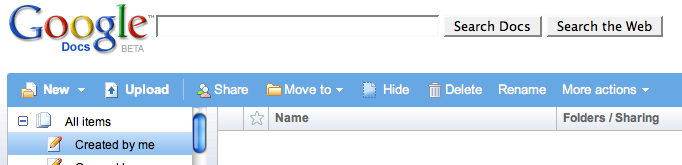
An example Google UI:

All of my options are right in front of me and fairly clear.

An example of a bad UI:

No, I do NOT not wish to NOT unsubscribe... what?

Read the full AppScout entry.

CAMT to Attend Nonprofit Technology Conference

CAMT team members will attend NTEN's Nonprofit Technology Conference in New Orleans, LA, March 19-21, 2008. The theme of this year's conference is "Building Community," and CAMT will be connecting with members of the arts community throughout the week. If you are planning to attend the NTC and wish to meet with a CAMT team member in New Orleans, please email us.

sIFR – Taming Fonts Too Dangerous For The Web

Have a new design for your Web presence that doesn’t use standard Web safe fonts? Tired of boring old Arial, Helvetica, or Times New Roman? In the past, if you wanted to use fonts that weren’t Web safe, you pretty much needed to put the text into an image, like a GIF, to be sure that people would see your text the way that you intended. After that, changing text meant creating a new image.

Then came sIFR – Scalable Inman Flash Replacement – which essentially takes text and uses JavaScript to build it into a Flash movie (where it’s able to apply the font that you want). And, presto! A headline in Matura MT Script Capitals!

sIFR has been around for a while, and has cross-browser and cross-platform compatibility. And the great thing is, if an end user’s browser doesn’t have the tools needed to display the sIFR text, a Web safe font alternative that you specify will be used.

Learn more about sIFR and its implementation.

Other Resources: - sIFR in Action - sIFR Font Libraries

Quick Random Tip

I am a big proponent of having an empty email inbox. There is just something Zen about a clean slate. But what do you do with those items that require follow-up work? I recently set up a free Gmail account along the lines of followup@gmail.com (that's just an example, so don't try to be clever and spam it!). Any time an email requires a lengthy, thoughtful response, I reply with, "I'll let you know by XXXX," and BCC my follow-up account.

I also have a rule set up in my email software that moves all messages sent to the follow-up address to a 'Follow-Up' folder. A few times a day, I review that folder and clear my follow-up items. It saves me time, ink and Post-Its, and it also gives me a Zen-fully clean email inbox!

You Got Served... Digitally

We discussed DanceJam, MC Hammer's new online dance community, in episode 30 of our podcast. Well, the beta version of DanceJam is officially open, and users can start publishing videos of their killer moves.

DanceJam, which self-promotes as the "largest dance floor on the planet," allows users to seek out and learn a specific dance, share their own videos and even engage in online dance battles. Now you can make a fool of yourself to a much wider audience than just your parakeet and life-sized cutout of John Wayne.

DanceJam screenshot

While DanceJam is certainly aimed at the hip-hop dance crowd, this seems to be the first major dance community geared toward learning and sharing. This is another example of a site and concept to which arts organizations should be paying close attention.

Yes, DanceJam cost millions of dollars to design and develop, but there are affordable ways for arts organizations to collaborate, share and educate. For instance, a dance organization could offer tap lessons as an online series through YouTube and link to the videos from their Web site. Or a literary organization could offer online poetry slams and ask visitors to pick the winners, who could then be featured artists in a spotlight section of the organization's Web site. Just some thoughts...

The point is that arts organizations should continually be reviewing the online practices of for-profit ventures and creatively copying whenever possible.

Keeping It Real

For my final post on TitA, I want to highlight two projects by Brooklyn-based media artist Michael Mandiberg. Mandiberg has developed and is currently expanding a pair of Firefox plug-ins that highlight the true environmental costs of the global economy. He looks specifically at consumer products and transportation.

The first project is Oil Standard, a browser plug-in that converts the prices of goods for sale on any web site into their equivalent value in barrels of crude oil. Prices rise and fall in real-time based on the global market rate for oil. Oil Standard provides an interesting shift in vantage point and could be expanded in the future to show the actual fuel costs involved in manufacturing those goods and bringing them to market.

His second project is Real Costs, another plug-in that inserts emissions data into travel-related web sites. The first iteration adds CO2 emission information -- the US is the world's biggest producer -- to airfare websites such as Orbitz, United Airlines, etc. Future versions of the plug-in will interface with driving directions, car rental and shipping web sites. Mandiberg describes it, "think of it like the nutritional information labeling on the back of food... except for emissions."

Food for thought, indeed.

The Good...& Just the Ugly

Online artist registries are ubiquitous nowadays. In lieu of or in addition to a personal web site, they are a great way to make your work as an artist available to the larger world. Some are open to all, while others are curated by discipline, geographic region, quality of work, etc. I participate in several registries as an artist, but my hands-down favorite is the Irving Sandler Artists File offered by Artists Space in NYC. Developed by artist/former staffer Letha Wilson and her colleagues, the registry went online a couple of years ago with great success. It is free, uncurated, and still fulfills its primary mission marvelously: to showcase artists, their work, and ideas. Plus, the user-friendly search interface enables you tag selected artists and add them to your online portfolio for further review.

Other registries, however, are far less successful. A perfect example of what not to do is Saatchi Online. It is poorly designed, an aesthetic disaster really, and attempts to do too many things for too many people. I question if this registry is even really for/about the artist community. Ambition can be good thing, but never mission creep.

Artists: Be selective about the context in which you show your work. Context always has a profound impact on how your work is perceived and understood. Weigh the pros and cons, and choose wisely.

Hazardous Sites

Good news: Alfred Jensen is now posted on Wikipedia. I worked on a new page for him last night. Creating a new "article", as Wikipedia terms it, however, is no easy feat. It took me a good 30 minutes just to figure out how to post new content. Wikipedia's interface could use a major ergonomic overhaul. Interface aside, I learned one critical thing from posting. It takes a lot of TLC to create an accurate, informative artist profile. After an hour, I barely had any content posted on Jensen. More work to come for sure.

Today's project of note is Superfund365, a web site conceived, designed, and produced by NYC digital media artist Brooke Singer. This project is total sensory overload, in the best possible way. Launched on September 1, 2007, it is part data mapping / part alert system and focuses on toxic sites currently active in the Superfund program run by the U.S. Environmental Protection Agency (EPA).

Superfund365 profiles one site per day and is slowly making its way across the country from NYC to Hawaii. Today, for instance, the web site profiles MRI Corp (category: industrial waste), a former tin scrap operation based in Tampa, Florida. Information provided on the site includes geographic location, hazardous ranking relative to other sites, clean-up costs when available, site description, timeline, and a kind of interactive pinwheel of contaminants. This was one of the coolest visualizations. The information is thoroughly immersive and guaranteed to send chills up your spine.

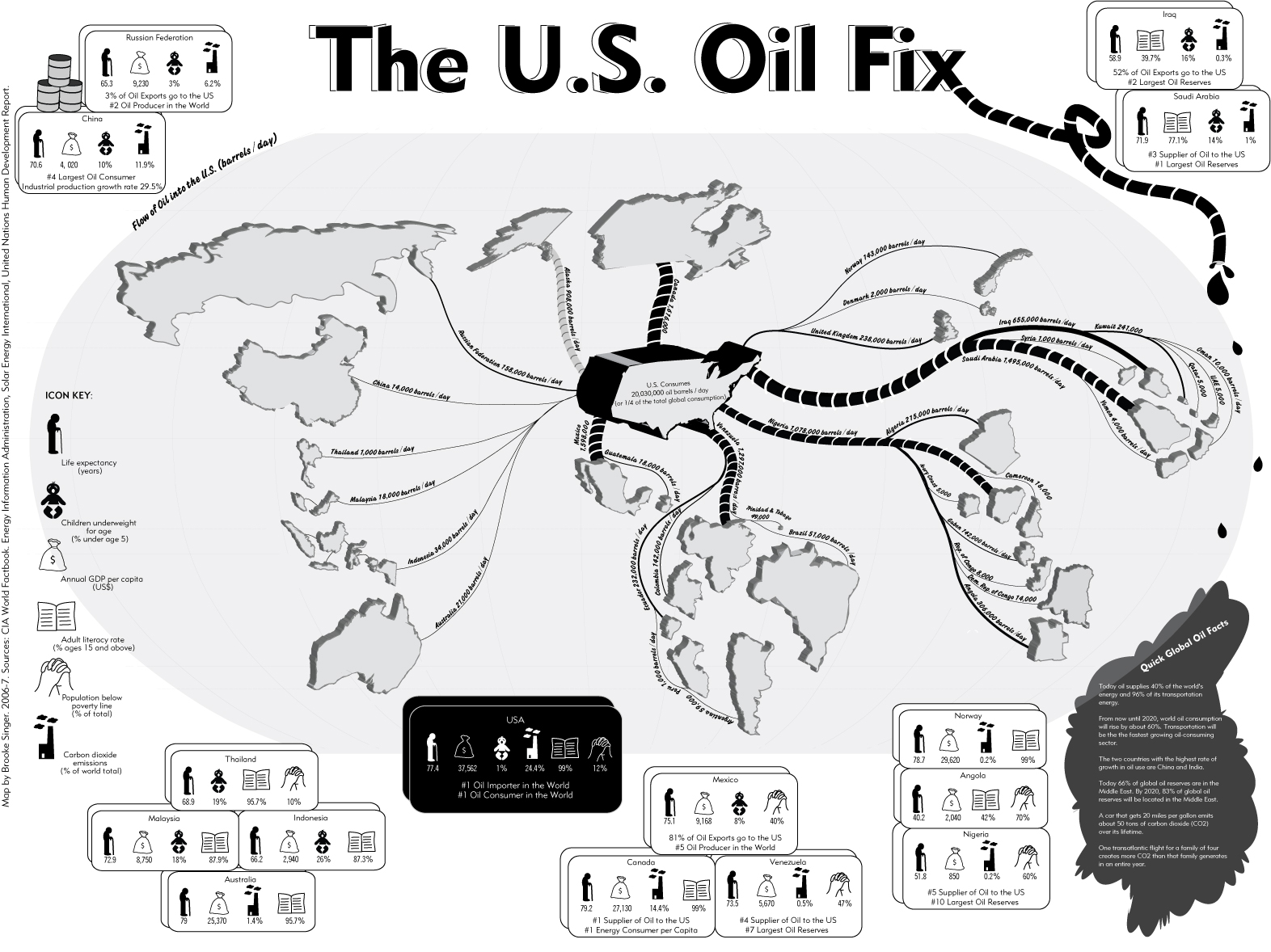
Singer has also confronted other tough issues in previous projects, including post-9/11 clean-up in Lower Manhattan, oil consumption by the United States, and camera surveillance, among others. I admire her seamless merger of the socio-political, aesthetic, and technological. We need more artists like her fighting the good fight.

Drop Serious Knowledge

First off, many thanks to David Dombrosky and the fantastic crew at CAMT for inviting me to guest blog on Technology in the Arts. What a luxury to share my thoughts with you! Lately, I've been thinking about individual artists and how they're often the first to step forward and serve the community of artists. This, of course, is not a new phenomenon, but I've recently seen some compelling projects, some web-based, others enabled by technology, that deserve highlighting. This will be my focus through the end of February.

Artist Steve Lambert Artist Steve Lambert
Here's a cool lead off project. On January 26, 2008, visual artist Steve Lambert (b. 1976, Los Angeles) initiated the first Art WikiMarathon. His goal was to "drop serious knowledge in Wikipedia about art", including information on artists, exhibitions, organizations, etc. For eight straight hours, volunteer collaborators from around the globe sat at their laptops and collectively fed their knowledge into this public resource. More than 90 new entries were posted. Some personal favorites among the new additions include Karen Finley, Paul McCarthy, and John McCracken.

This is a great start, but just the beginning. There are thousands of other artists, especially living ones, that still need to be added. I encourage each of you to continue what Lambert started and add just one more artist to Wikipedia. Who do you find most compelling? I wrote my graduate thesis in art history on painter Alfred Jensen (b. 1903, Guatemala; d. 1981, New Jersey) and his work has captivated me for more than a decade. I just did a search for him on Wikipedia and guess what? He's not in there. And I'm going to get on it asap. We only have two choices here: either drop serious knowledge, or serious knowledge will be dropped.

Let me know if you add anybody to Wikipedia.

Introducing Spotlight Blogger - Matthew Deleget

While I know how much you love reading posts from the Technology in the Arts team, we decided to expand and deepen the dialogue around technology and the arts by inviting colleagues from the arts administration field to share their technology-related thoughts, tips, and discoveries as spotlight bloggers. To kick things off, we are delighted to introduce this month's spotlight blogger -- Matthew Deleget. In his capacity as the Managing Officer of the Information and Research Department at the New York Foundation for the Arts (NYFA), Matthew oversees all of NYFA's information programs, including the NYFA Web site, online classified listings, online artist gallery, biweekly arts magazine, and NYFA Source - the nation's most comprehensive database of programs for artists.

You may remember Matthew from the session he presented at the 2006 Technology in the Arts Conference on "Redefining an Artist Community via the Web," where he discussed MINUS SPACE, an online curatorial/critical project he co-founded with Rossana Martinez to present reductive, concept-based art by international artists.

In addition to his work as an arts administrator, Matthew is a working visual artist who has exhibited his work both nationally and internationally. He has received awards from the American Academy of Arts & Letters as well as the Brooklyn Arts Council. In 2004, he was elected to membership with the American Abstract Artists, and in 2005, to the Artists Advisory Committee of the Marie Walsh Sharp Art Foundation. His work has been reviewed in Flash Art Magazine, Artnet Magazine, The New York Times, The Philadelphia Inquirer, Basler Zeitung, and New York Arts Magazine. His work is included in the collections of the Saint Louis Art Museum, Fidelity Investments, Brown Rudnick and Pratt Institute, and others.

Please, join us in welcoming Matthew to the Technology in the Arts blog!

Hodgepodge - CTC Vista, Mobile Giving, and Net Neutrality

CTC Vista - The deadline for non-profit organizations to apply for the CTC Vista Project is February 22, 2008.  Essentially, this program places IT savvy Americorps*VISTA members in non-profits around the country to help with their technology planning and needs.  I've had the pleasure of talking to and working with one such VISTA member, Morgan Sully, who is currently contributing his talents to the National Alliance for Media Arts and Culture (NAMAC). Mobile Giving - the Mobile Giving Foundation is working with major cell phone carriers in the US to make donations collected by SMS text messaging more feasible and profitable for non-profits.  Read more here. I think larger arts organizations, who might have the resources to mount and support a successful mobile giving campaign, may want to keep an eye on this.

Net Neutrality - Comcast has admitted to purposefully slowing down internet traffic on its network.  For those of you not familiar with net neutrality, you can visit Save the Internet.com or check out the Wikipedia article.  The FCC's investigation into Comcast's network practices is ongoing.