


CAMT team members will attend NTEN's Nonprofit Technology Conference in New Orleans, LA, March 19-21, 2008. The theme of this year's conference is "Building Community," and CAMT will be connecting with members of the arts community throughout the week. If you are planning to attend the NTC and wish to meet with a CAMT team member in New Orleans, please email us.
Quick Random Tip
I am a big proponent of having an empty email inbox. There is just something Zen about a clean slate. But what do you do with those items that require follow-up work? I recently set up a free Gmail account along the lines of followup@gmail.com (that's just an example, so don't try to be clever and spam it!). Any time an email requires a lengthy, thoughtful response, I reply with, "I'll let you know by XXXX," and BCC my follow-up account.
I also have a rule set up in my email software that moves all messages sent to the follow-up address to a 'Follow-Up' folder. A few times a day, I review that folder and clear my follow-up items. It saves me time, ink and Post-Its, and it also gives me a Zen-fully clean email inbox!
You Got Served... Digitally
We discussed DanceJam, MC Hammer's new online dance community, in episode 30 of our podcast. Well, the beta version of DanceJam is officially open, and users can start publishing videos of their killer moves.
DanceJam, which self-promotes as the "largest dance floor on the planet," allows users to seek out and learn a specific dance, share their own videos and even engage in online dance battles. Now you can make a fool of yourself to a much wider audience than just your parakeet and life-sized cutout of John Wayne.

While DanceJam is certainly aimed at the hip-hop dance crowd, this seems to be the first major dance community geared toward learning and sharing. This is another example of a site and concept to which arts organizations should be paying close attention.
Yes, DanceJam cost millions of dollars to design and develop, but there are affordable ways for arts organizations to collaborate, share and educate. For instance, a dance organization could offer tap lessons as an online series through YouTube and link to the videos from their Web site. Or a literary organization could offer online poetry slams and ask visitors to pick the winners, who could then be featured artists in a spotlight section of the organization's Web site. Just some thoughts...
The point is that arts organizations should continually be reviewing the online practices of for-profit ventures and creatively copying whenever possible.
Keeping It Real
For my final post on TitA, I want to highlight two projects by Brooklyn-based media artist Michael Mandiberg. Mandiberg has developed and is currently expanding a pair of Firefox plug-ins that highlight the true environmental costs of the global economy. He looks specifically at consumer products and transportation.

The first project is Oil Standard, a browser plug-in that converts the prices of goods for sale on any web site into their equivalent value in barrels of crude oil. Prices rise and fall in real-time based on the global market rate for oil. Oil Standard provides an interesting shift in vantage point and could be expanded in the future to show the actual fuel costs involved in manufacturing those goods and bringing them to market.
His second project is Real Costs, another plug-in that inserts emissions data into travel-related web sites. The first iteration adds CO2 emission information -- the US is the world's biggest producer -- to airfare websites such as Orbitz, United Airlines, etc. Future versions of the plug-in will interface with driving directions, car rental and shipping web sites. Mandiberg describes it, "think of it like the nutritional information labeling on the back of food... except for emissions."
Food for thought, indeed.
The Good...& Just the Ugly
Online artist registries are ubiquitous nowadays. In lieu of or in addition to a personal web site, they are a great way to make your work as an artist available to the larger world. Some are open to all, while others are curated by discipline, geographic region, quality of work, etc. I participate in several registries as an artist, but my hands-down favorite is the Irving Sandler Artists File offered by Artists Space in NYC. Developed by artist/former staffer Letha Wilson and her colleagues, the registry went online a couple of years ago with great success. It is free, uncurated, and still fulfills its primary mission marvelously: to showcase artists, their work, and ideas. Plus, the user-friendly search interface enables you tag selected artists and add them to your online portfolio for further review.

Other registries, however, are far less successful. A perfect example of what not to do is Saatchi Online. It is poorly designed, an aesthetic disaster really, and attempts to do too many things for too many people. I question if this registry is even really for/about the artist community. Ambition can be good thing, but never mission creep.
Artists: Be selective about the context in which you show your work. Context always has a profound impact on how your work is perceived and understood. Weigh the pros and cons, and choose wisely.
Hazardous Sites
Good news: Alfred Jensen is now posted on Wikipedia. I worked on a new page for him last night. Creating a new "article", as Wikipedia terms it, however, is no easy feat. It took me a good 30 minutes just to figure out how to post new content. Wikipedia's interface could use a major ergonomic overhaul. Interface aside, I learned one critical thing from posting. It takes a lot of TLC to create an accurate, informative artist profile. After an hour, I barely had any content posted on Jensen. More work to come for sure.

Today's project of note is Superfund365, a web site conceived, designed, and produced by NYC digital media artist Brooke Singer. This project is total sensory overload, in the best possible way. Launched on September 1, 2007, it is part data mapping / part alert system and focuses on toxic sites currently active in the Superfund program run by the U.S. Environmental Protection Agency (EPA).
Superfund365 profiles one site per day and is slowly making its way across the country from NYC to Hawaii. Today, for instance, the web site profiles MRI Corp (category: industrial waste), a former tin scrap operation based in Tampa, Florida. Information provided on the site includes geographic location, hazardous ranking relative to other sites, clean-up costs when available, site description, timeline, and a kind of interactive pinwheel of contaminants. This was one of the coolest visualizations. The information is thoroughly immersive and guaranteed to send chills up your spine.
Singer has also confronted other tough issues in previous projects, including post-9/11 clean-up in Lower Manhattan, oil consumption by the United States, and camera surveillance, among others. I admire her seamless merger of the socio-political, aesthetic, and technological. We need more artists like her fighting the good fight.

Drop Serious Knowledge
First off, many thanks to David Dombrosky and the fantastic crew at CAMT for inviting me to guest blog on Technology in the Arts. What a luxury to share my thoughts with you! Lately, I've been thinking about individual artists and how they're often the first to step forward and serve the community of artists. This, of course, is not a new phenomenon, but I've recently seen some compelling projects, some web-based, others enabled by technology, that deserve highlighting. This will be my focus through the end of February.
 Artist Steve Lambert
Here's a cool lead off project. On January 26, 2008, visual artist Steve Lambert (b. 1976, Los Angeles) initiated the first Art WikiMarathon. His goal was to "drop serious knowledge in Wikipedia about art", including information on artists, exhibitions, organizations, etc. For eight straight hours, volunteer collaborators from around the globe sat at their laptops and collectively fed their knowledge into this public resource. More than 90 new entries were posted. Some personal favorites among the new additions include Karen Finley, Paul McCarthy, and John McCracken.
This is a great start, but just the beginning. There are thousands of other artists, especially living ones, that still need to be added. I encourage each of you to continue what Lambert started and add just one more artist to Wikipedia. Who do you find most compelling? I wrote my graduate thesis in art history on painter Alfred Jensen (b. 1903, Guatemala; d. 1981, New Jersey) and his work has captivated me for more than a decade. I just did a search for him on Wikipedia and guess what? He's not in there. And I'm going to get on it asap. We only have two choices here: either drop serious knowledge, or serious knowledge will be dropped.
Let me know if you add anybody to Wikipedia.
Introducing Spotlight Blogger - Matthew Deleget
While I know how much you love reading posts from the Technology in the Arts team, we decided to expand and deepen the dialogue around technology and the arts by inviting colleagues from the arts administration field to share their technology-related thoughts, tips, and discoveries as spotlight bloggers. To kick things off, we are delighted to introduce this month's spotlight blogger -- Matthew Deleget. In his capacity as the Managing Officer of the Information and Research Department at the New York Foundation for the Arts (NYFA), Matthew oversees all of NYFA's information programs, including the NYFA Web site, online classified listings, online artist gallery, biweekly arts magazine, and NYFA Source - the nation's most comprehensive database of programs for artists.
You may remember Matthew from the session he presented at the 2006 Technology in the Arts Conference on "Redefining an Artist Community via the Web," where he discussed MINUS SPACE, an online curatorial/critical project he co-founded with Rossana Martinez to present reductive, concept-based art by international artists.
In addition to his work as an arts administrator, Matthew is a working visual artist who has exhibited his work both nationally and internationally. He has received awards from the American Academy of Arts & Letters as well as the Brooklyn Arts Council. In 2004, he was elected to membership with the American Abstract Artists, and in 2005, to the Artists Advisory Committee of the Marie Walsh Sharp Art Foundation. His work has been reviewed in Flash Art Magazine, Artnet Magazine, The New York Times, The Philadelphia Inquirer, Basler Zeitung, and New York Arts Magazine. His work is included in the collections of the Saint Louis Art Museum, Fidelity Investments, Brown Rudnick and Pratt Institute, and others.
Please, join us in welcoming Matthew to the Technology in the Arts blog!
The Digital Museum - A New Book and Upcoming Webinar Series
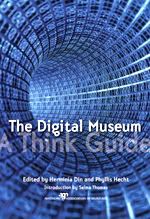 Recently, the American Association of Museums published The Digital Museum: A Think Guide, in which twenty-five leading thinkers in the fields of technology and museums explore the impact of new technology on all aspects of museum operations, from interpretation to conservation. Topics range from the use of handheld devices, websites and digital games to open source technology and real-time learning.
Beginning on Tuesday, February 12, AAM will launch "The Digital Museum: Transforming the Future Now" - a four-part series of monthly webinars further exploring areas identified in the publication and facilitated by leading practioners in the field. According to AAM, "The Digital Museum webinar series will help you explore how recent innovations in technology are transforming museum operations of every kind, from exhibitions and content delivery to education, audience evaluation, and institutional planning."
Recently, the American Association of Museums published The Digital Museum: A Think Guide, in which twenty-five leading thinkers in the fields of technology and museums explore the impact of new technology on all aspects of museum operations, from interpretation to conservation. Topics range from the use of handheld devices, websites and digital games to open source technology and real-time learning.
Beginning on Tuesday, February 12, AAM will launch "The Digital Museum: Transforming the Future Now" - a four-part series of monthly webinars further exploring areas identified in the publication and facilitated by leading practioners in the field. According to AAM, "The Digital Museum webinar series will help you explore how recent innovations in technology are transforming museum operations of every kind, from exhibitions and content delivery to education, audience evaluation, and institutional planning."
For more information on each webinar and to register for the series
Stanford Lively Arts Strikes a Deal with iTunes
 Stanford Lively Arts, Stanford on iTunes U and iTunes have launched a new promotion that will allow Stanford University's faculty, staff, students and Lively Arts patrons to download music by artists featured in the upcoming Lively Arts season using free iTunes gift cards.
From now through March 15, the cards will be made available to patrons at all Lively Arts performances and to customers at the Stanford Bookstore, Tresidder Express, the Track House Sport Shop, the Cantor Arts Center Gift Shop and the Stanford Shop at Stanford Shopping Center. Lively Arts plans to mail the cards to Stanford students, faculty and staff in early February and will make the cards available to its community partners, including the Palo Alto Unified School District and East Palo Alto's educational program College Track.
Stanford Lively Arts, Stanford on iTunes U and iTunes have launched a new promotion that will allow Stanford University's faculty, staff, students and Lively Arts patrons to download music by artists featured in the upcoming Lively Arts season using free iTunes gift cards.
From now through March 15, the cards will be made available to patrons at all Lively Arts performances and to customers at the Stanford Bookstore, Tresidder Express, the Track House Sport Shop, the Cantor Arts Center Gift Shop and the Stanford Shop at Stanford Shopping Center. Lively Arts plans to mail the cards to Stanford students, faculty and staff in early February and will make the cards available to its community partners, including the Palo Alto Unified School District and East Palo Alto's educational program College Track.
The first Lively Arts event where patrons received the iTunes gift cards was the Merce Cunningham Dance Company's performance on Friday, Jan. 25, which featured a new work with music by composer Mikel Rouse titled eyeSpace. During the performance, the audience used iPods distributed at the theater to select and personalize the music that accompanies the dance. Rouse's music is also on the gift card.
In addition, the card will include music of the Jazz at Lincoln Center Orchestra with Wynton Marsalis, Blind Boys of Alabama, Meridian Arts Ensemble, Academy of Ancient Music, Turtle Island Quartet, Rosanne Cash, Kronos Quartet, Rob Kapilow and the Pacifica Quartet. Recipients of the cards will be able to download complete tracks from the artists at no charge until they expire on March 31.
This is iTunes' second such promotion with the performing arts at an educational institution. The first was with the University of Illinois' Krannert Center in September 2007. With all of the performing arts centers located at colleges and universities throughout the nation, I wonder if this is beginning of a new trend in the presenting and touring industry. It strikes me as a great way to use iTunes as an audience development tool.
Sundance: Art Meets Tech in Park City
Brad and I are in Toronto working with our colleagues in the Great North on developing the content for the Technology in the Arts - Canada conference for May 9 & 10 in Waterloo. During a few moments yesterday when I hit the streets with my Visa (aka shopping), Teresa Hollingsworth from the Southern Arts Federation called me to give me her celebrity sightings report from the Sundance Film Festival. Once my petty jealousy cooled down, I wondered what interesting intersections of art and technology were taking place at Sundance this year. Here's what I've learned:
- Last year, Sundance opened a screening room in Second Life with the indie film Four Eyed Monsters. The festival continued using its SL screening room this year with the premiere of Lynn Hershman's new movie Strange Culture featuring Tilda Swinton and Thomas Jay Ryan portraying the true story of Steve Kurtz.Synopsis: In 2004 artist and college professor Steve Kurtz was preparing for a MASS MoCA exhibition that would let audiences test whether food has been genetically modified when, days before the opening, his wife tragically died of heart failure. Distraught, Kurtz called 911, but when medics arrived, they became suspicious of his art supplies and called the FBI. Dozens of agents in haz-mat suits sifted through his home and impounded his computers, books, cat, and even his wife's body. The government held Kurtz as a suspected bioterrorist, and, nearly three years later, the charges have not been dropped. He still faces up to 20 years in prison. Because he is legally barred from comment, the movie uses actors as avatars to tell this story of contemporary art, science, politics and paranoia. � Click here for Variety's review of the film
- Continuing in the Second Life vein, this year the festival premiered "Invisible Threads" by Stephanie Rothenberg, a new media performance artist, and her collaborator, Jeff Crouse, a digital artist and programmer. "Invisible Threads" is a virtual sweat shop that produces real-life, custom-ordered, personalized blue jeans. The project is intended as art, but the creators see it as a window into so-called "telemetric manufacturing methods of the future."“What I think is fascinating about her work is that it is a step towards what our future is going to be,” said Jeffrey Winter, a panel programmer for the Sundance Festival who focuses on media, art and technology. “It’s called art now, but in the future it’s going to be how you get your jeans. It will be daily life. So often what you call art is just people who see the future before the rest of us do.”
- Sundance also premiered a landmark in DIY cinema -- the first solo computer-generated animated feature. M Dot Strange (nee Michael Belmont) -- writer, director, editor, producer and animator of We Are the Strange -- is the first YouTube filmmaker to hit Sundance's big screen.Synopsis: Blue is a young girl navigating the streets of a terrifying, sinister fantasy world all alone. When she meets Emmm, a fellow lost soul, she joins him on a quest for some ice cream. Upon arriving, they realize the ice cream shop has been taken over by dark forces, and the whole city is teeming with evil. Bizarre monsters surround Blue and Emmm on all sides until Rain, a sadistic hero, arrives to rescue them and exterminate the source of the evil. More about the film and filmmaker
Okay, now I am more jealous. Next year, Teresa definitely has to take me with her to Park City!
When href="Links, Links, and More Links"
I stumbled on a great collection of links of artist using technology, hosted by the San Francisco State's Conceptual Information Arts (CIA) program. There's over 4,000 links to artists whose arts melds with disciplines as various as computer media, robotics, virtual reality, and even microbiology. However, after clicking around and encountering some broken links, I started to wonder, "How the heck do they keep track of so many links? How does anyone who has an extensive list of external links avoid frustrating, broken links?" After some searching, I found something interesting. And free. And simple.
There's an add-on for the FireFox browser called LinkChecker that you can use to verify the links on any Web page you browse to. Links are highlighted different colors based on status (green is a valid link, red is a broken link, yellow is a link with an error, and gray is a link that times out before responding). I installed this add-on and put the page of links at the SFS CIA program to the test.
 For the 4,238 links on the page, LinkChecker took about an hour to go through them all, but I just minimized the page and let it run in the background. Once it was done, I knew that I could click with confidence. This is a great tool for the end user, especially someone doing research (on artists using technology, perhaps?). Run the LinkChecker, go have a cup of cocoa, and come back and know exactly which links are valid.
From a site manager's perspective, the add-on is helpful as well. You can test your own site's link pages, see what links are broken, and then clean up your code to remove them. The main downside of this add-on is that it is completely manual. The link checking isn't done automatically or at a regularly scheduled time, and LinkChecker only flags a link as broken (placing the burden of maintenance on the site manager).
I would bet good money that there are link validation software and monitoring services out there that are more robust than LinkChecker, but I've never used or investigated them. Still, LinkChecker is simple, free, and a great resource to have when dealing with loads of links.
Anyone out there struggling to keep their collection of links clean and tidy? Know of any other tools or resources to verify links? Want me to do a little more digging on this subject? Give us some comments!
Related Links: W3.org Link Checker - http://validator.w3.org/checklink FireFox Add-Ons - https://addons.mozilla.org/en-US/firefox/
2008 AAM MUSE Awards - Applications due Jan. 11th
The American Association of Museums (AAM) Media and Technology Committee is accepting online applications for the 2008 AAM MUSE Awards until Friday, January 11, 2008. The cost is $25 per entry. The 2007 Muse Awards competition received nearly 200 applications from a wide variety of museums in North America, Europe, Australia and Asia. Entries included audio, cell phone and interactive handheld tours, interactive kiosks and multimedia installations, podcasts, blogs, games, websites, online collection and image databases, videos and e-mail marketing campaigns. This year AAM is expecting another exciting round of projects that reflect innovation in the museum media community.
Entry categories include:
- Audio and Visual Tours
- Extended Experience
- Games
- Interactive Kiosks
- Interpretive Interactive Installations
- Multimedia Installations
- Online Presence
- PR and Development
- Teaching and Outreach
- Video
MUSE award winners demonstrate outstanding achievement in the following areas:
- Success in meeting the stated educational goals
- Visual design
- Production quality
- Functionality
- Appropriate use of technology
- Overall appeal
Let's Take a Moment to Mourn DRM
According to an article in Business Week, Sony BMG Music Entertainment will start selling songs without copyright protection sometime this quarter, a move that will essentially kill the much-loathed digital rights management, or DRM. Basically, this means that songs you download through iTunes, Amazon, eMusic, or any other service will be completely unprotected.
Naturally, the catalyst for this move is money. A company would never do anything out of the goodness of its collective corporate heart. Sony and other labels realized that DRM was not only restricting the illegal distribution of music; it was also restricting the LEGAL distribution of music. With the canning of DRM, we should begin to see a plethora of new platforms for online music sales.
The irony in this story? Well, apparently the music industry is frustrated by Apple's pricing structure and wants a larger piece of the pie from music sales. The funny thing is that DRM was really what led to Apple's domination in the legal download market. When online music sales started to take off, the iPod was the dominant MP3 player on the marketplace (and still is, really, though there are more options now), and the only way you could buy and play protected music for the iPod was from Apple.
The only way for the music industry to cut into Apple's iTunes dominance is to offer unrestricted mp3 sales to retailers like Amazon.com, as MP3s can be played on any digital audio device.
What does this mean for the arts community? In my opinion, it won't make it less likely that an orchestra's performance will be shared illegally. However, it does level the playing field. If music executives - the people with money - have to deal with unrestricted audio being freely distributed, perhaps the strategies they devise to curb illegal activity will help to inform the nonprofit world.
In other words, we're all in the same boat, so the rowing should get a little easier for us artists.
Read the full Business Week article.
Powered by ScribeFire.
End of Year Tech Lists
As we head into the final stretch of 2007, the time has come for a barrage of "end-of-the-year" lists. Here are a few tech-related lists worth checking out: The 15 Biggest Tech Disappointments of 2007 (PC World)
30 Most Popular Stories of 2007 (PC World)
- Okay, this list contains a plethora of other lists. I apologize for going all "meta" on you.
The Year in Online Video (Wired)
2007 Foot in Mouth Awards (Wired)
Have a safe and happy New Year!
Holiday Guilt Gifts with a Techie Twist
We hope you are having a happy Christmahannukwanzika. This post is for all of you out there who need the dreaded "guilt gift". You know who you are -- you received an unexpected gift from someone and now feel the need to get something for them in return. Here are four holiday "guilt gift" ideas with a techie twist from our friends at ThinkGeek.com.
 USB Plasma Ball - Remember the plasma balls that used to be sold in the mall at Spencer Gifts? Now, they have one that plugs into your computer. The perfect desk accessory for that eccentric friend.
 USB Memory Watch - In addition to displaying the time, this watch helps you carry your valuable data with you at all times. With 2GB of capacity, it has more than ample storage.
 USB Drink Warmer and Chiller - It's perfect and it's simple - a hotplate powered by USB keeps your coffee warm. Flip a switch, and it can keep a cold drink cool. Great for bipolar caffeine addicts.
 Driving LED Emoticon - The Driving LED Emoticon is a battery powered, wirelessly controlled message sign that can be attached to the rear window of your car via the included suction cup. It can display any one of five different messages - smiling face, frowning face, "Thanks", "Back Off" and "Idiot". Isn't it great that technology allows us to communicate more clearly than finger gestures?
Happy Holidays!
The Center for Arts Management and Technology would like to wish the Technology in the Arts community a very happy holiday week! Here's to a safe and prosperous 2008!

Check out someecards.com for hilarious electronic greetings.
Blogfather, We Salute You
As this is a blog, I thought it appropriate to point out that Monday was the 10-year anniversary of the term "weblog." The term was first coined on December 17, 1997, by Jorn Barger, an interesting character, to say the least. Barger is a thing of Internet lore, having spent time as a software programmer, a technology theorist and, most recently, a homeless drifter.
Here's a 2005 photo of Barger:

Eek. He may be a bit Charles Manson-esque, but he's the father of blogging, and he deserves some recognition this week.
If you want to check out Barger's own blog, Robot Wisdom, visit www.robotwisdom.com. As Barger believes a blog should be more a history of Web travels than a journal, you'll notice that he comments very little and mostly offers up links.
And if you'd like to read more about Barger, visit his entry on Wikipedia. Remember, not everything on Wikipedia is true, so take the tales of Barger's travels and trials with a grain of salt.
Powered by ScribeFire.
Nonprofit dance and IT?
The folks at Misnomer Dance just sent me a link to their proposal to IdeaBlob for $10,000 that would allow them to build web-streaming for dance rehearsals, create an online theater where visitors can watch and direct performances and develop tools to display the geographic are of online audiences. Of course, the skeptic in me wants to know how you could possibly do all this for $10,000, even assuming that it will all be done low-cost, mash-up style. On the other hand, the idealist in me wants to get in on that online theater thing right now! Body mounted cameras? Sign me up! I've always wanted to know what it's like to be able to jump as high as dancers, or be lifted up and twirled around over someone's head... Maybe this would be my chance to find out!
If you'd like to vote for Misnomer to win the $10k, click here.
Reporting Live from AFTA’s National Arts Marketing Project Conference
Well, I’m down in sunny, breezy Miami, FL, enjoying the warm weather and the Americans for the Arts NAMC. It’s been a busy two and a half days of conferencing, and I just wanted to take a minute and share a few cool things I’ve learned while here:
- According to a survey conducted this past March by FireSpring (I think), when asked whether they use a particular medium more or less this year than the last, an average of 52% responders indicated that they were using the Internet more. Every other medium (radio, print, newspapers, television) all showed a decrease. Now, more than ever, organizations must put time, money and deep consideration into their Web presence.
- The Philadelphia Orchestra is working in conjunction with Internet2 to stream real time content into educational venues around the world, giving viewers an inside and behind the scenes look into the concert unfolding live before their eyes. The have completed a pilot program, and plan to launch a more wide-spread, sustainable program soon. For more information, you can read their press PDF by clicking here.
- Bijan’s on the River here in Miami makes a HUGE plate of paella (6’ or 7’ wide?) for parties. It was spectacular.
Well, that’s all for me. I’ve got to grab a bite, hop on a flight, and head back to wonderful, but cold, Pittsburgh, PA.
For more information about AFTA's NAMC, please visit: http://www.artsusa.org/events/2007/abc/namc/default.asp