Arts & Technology

Musicians Standing Up for Net Neutrality

[Casey Rae-Hunter is the communications director for Future of Music Coalition - a national, nonprofit education, research and advocacy organization for musicians.  He has generously given us permission to republish this article which originally appeared on the Future of Music Coalition website .] NN_GrassrootsIn the almost ten years that the Future of Music Coalition has existed, we’ve seen tremendous changes in the way musicians go about reaching and cultivating fans. Perhaps the biggest development in our decade on the scene is in how artists are using the internet.
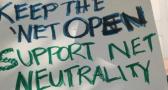
It’s safe to say that nearly all of the exciting things that have gone down online are the result of net neutrality — the principle that protects the open internet.

Net neutrality has inspired incredible displays of creativity and entrepreneurship, as musicians adopt and devise new ways to inspire fans and create a buzz. From OK Go’s famous YouTube videos to Erin McKeown’s “Cabin Fever” concerts to bands booking tours and cross-promoting, the internet lets all artists compete on an equal technological footing with the biggest companies.

Today’s artists use their web presence not only to sell music and merchandise, but also an amazing array of innovative content — all without interference from gatekeepers. Contrast this with the traditional music industry, where artists required significant financial backing to reach potential listeners.

But without net neutrality, all this — and many other things we’ve come to take for granted online — could be in jeopardy. Currently, a handful of powerful Internet Service Providers (IPSs) are putting pressure on the Federal Communications Commission to “tone down” its planned introduction of expanded net neutrality principles (and the accompanying public discussions) on the way to possible rulemaking.

Why are the ISPs and their lobbyists in such a tizzy? Well, for one, they want to be able to charge content providers (you, know, people like musicians who put stuff on the web) a higher fee for the faster delivery of their sites and services. Those who couldn’t afford to — or didn’t want to — pay the “toll” would be stuck in the slow lane of the information superhighway.

But that’s not the only reason that net neutrality (ie, the internet as we know it) is so important to preserve.

Last year’s FCC investigation into whether Comcast interfered with users’ ability to send and receive data using the BitTorrent protocol revealed that even the King James Bible was being unfairly blocked. In 2007, AT&T censored political speech by Pearl Jam’s Eddie Vedder during the exclusive webcast of the band’s appearance as part of the Lollapalooza festival. The latter incident indicates the danger of allowing a single carrier to make decisions about what kind of speech it considers “appropriate.”

Clearly, there’s a need for clear and transparent rules about what Internet Service Providers are allowed to do in terms of managing their networks. While there are certainly important discussions to be had about how to ensure a smooth experience for subscribers, any ISP activities that target or discriminate against lawful content in order to establish a marketplace advantage is contrary to what makes the internet the most important communications platform of our time.

Naturally, there are are concerns about protecting copyright and intellectual property online. Keep in mind that FMC supports artists’ rights to have control over their creative expressions, as well as their ability to access potential audiences. Yet any solutions to unlawful filesharing are likely to be the product of a neutral net. (There are currently reports that because of new legal services, filesharing is becoming passé — globally, anyway.) The growth of the broadband marketplace — despite limited competition due to a cable/telecommunications duopoly — has helped lay the cornerstone for a legitimate digital music marketplace. These days, there are tons of exciting, legal ways to experience music online, and more are on the way. To abandon net neutrality is to starve this marketplace of the very oxygen it needs to grow and flourish. Besides, do you really want to hand over they keys to digital music innovation to your phone or cable company?

FMC started its Rock the Net campaign in 2007 because we recognize that musicians are not only America’s cultural ambassadors, but also part of its entrepreneurial backbone. Just about everywhere you look, artists are finding new platforms to turn people on to their music. In the absence of net neutrality, these platforms may be only available to those who could cut big-money deals with the telecom and cable companies — or worse, the platforms may never be built at all due to an “innovation drain” that could result from a lack of open structures.

More recently, we were thrilled to have Senator Al Franken talk about the importance of net neutrality in a speech at the 2009 Future of Music Policy Summit. This year’s conference also saw a keynote from FCC Chairman Julius Genachowski — check out C-SPAN video of both speeches here.

This fight to preserve the open internet has been going on for some time. Now that we’re close to having net neutrality become the law of the land, it’s little surprise that the big telecom and cable companies are pushing back. But that shouldn’t stop you from letting the world know about your support of an internet that’s open to all. Why not write a song or make a YouTube video about it? And if you do, be sure to let us know and we’ll help spread the word!
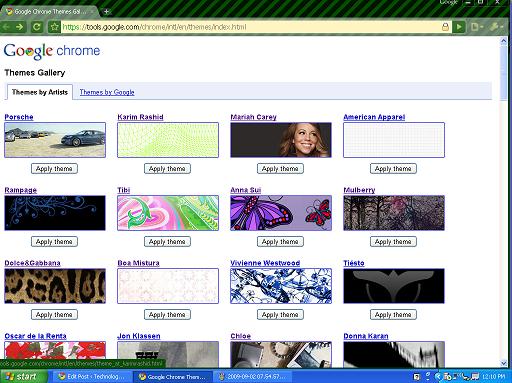
Google Chrome Exposure Tarnished by Brand Names

Google Chrome's New "Artist Themes" Gallery A few months ago I wrote a post lambasting Google for soliciting artist work without financial compensation.  The situation, to recap, was that Google approached well-known illustrators to design nifty new artist skins for the Google Chrome browser.  The catch: Google offered to compensate the artists with only exposure.  In my mind, the offense was as follows:

Google chose artists because they were highly-recognizable and then was unwilling to financially compensate them what Google obviously is aware that they are worth. In so doing, Google sent the message that artists, no matter how successful, are not worth paying.  Thus, the undervaluing of the arts (against which artists constantly struggle) was publicly perpetuated by a wealthy company that could have afforded to pay for artists' work.

A few weeks ago the new Google Chrome skins launched--and the result is underwhelming at best.  Google apparently regards all its "Artists" as brands--and vice-versa--and assembled a page featuring everything from sports cars to architects, from haute couture to hip-hop bands.  The Artist Themes library reads like an advertising pull-out in a magazine: smaller, niche artists vie for attention against the top-billed Porsche, American Apparel,  Mariah Carey, in addition to other such easily-recognized names as Donna Karan, Marc Ecko, Wes Craven, Ocean Pacific and Candies (among others).  Each theme is presented with a button navigating to a one- or two-sentence blurb about the artist/brand/company (including, in many cases, a link to the artist's store where the user can purchase products)  and most of the skins feature a brand logo somewhere in the skin itself.  Artists who are less commercial and have less name-recognition are lost in the shadow of the BIGBRANDNAMES. So what exposure, exactly, is Google offering its skin-designing artists whose names don't ring an immediate bell with the General Public?  I hope that they are receiving more interest from people who might not otherwise have known their art, and ultimately generating more sales and commissioned work.  I hope that they find they are growing their audience and that people unfamiliar with their work before Google Chrome now are interested in what the artist is producing.

In truth, however, I suspect that one of two things is happening:  they are overshadowed by the highly-recognizable brands, or reach an audience that was already aware of their work.  If Google had not piled these artists into a motley assortment of brands, designers, products, and artists, I believe that those artists with more specialized popularity would have received greater exposure, and thereby reached a broader audience of new followers and potential financial supporters for their work.  (Though of course, I may be erroneously assuming that these artists WANT to add new fans to their audience--perhaps they don't.)

Operating under the assumption that each designer wants to increase site traffic and popularity, reaching Chrome users who might have otherwise been unfamiliar with their work, I would recommend that Google redesign the Themes page.  Arranging the contributors in alphabetical order, for a start, would give a sense of order and artist equity.  To take it one step further, I think that calling the page an "Artist Gallery" is a misnomer, and Google would have done better to segment its collection of skins into tabs like "Music," "Fashion," etc, thereby bringing more attention to each skin--and reach people who may be more interested in certain artistic genres.  Additionally, Google could have routed skin downloads through the artists' bio page by default, truly offering the opportunity to generate traffic to the individual (or company) site.

I am interested to know about the arrangement between companies such as Porsche and Google--were there really no financial negotiations?  Did the designer of the skin get paid by Porsche, instead?  I reached out to a couple of the participating artists to learn about their experience working with Google, and whether or not Google ended up financially compensating them after all--but at this time none has responded.  So, Chrome Theme designers, if you read this I'd love to have you weigh in on the matter.

And, as always, I encourage anyone reading to share your thoughts.

Technology as the Art

“Molotov Alva and His Search for the Creator,” by Douglas Gayeton, a film made using machinima. Technology and the Arts...it's what we focus on in this blog, on this website, and in our offices. Dictionary.com defines technology first as "the branch of knowledge that deals with the creation and use of technical means and their interrelation with life, society, and the environment, drawing upon such subjects as industrial arts, engineering, applied science, and pure science."

Today, however, I would like to liberate “technology” from its seemingly ubiquitous linkage with other, more concrete and easily definable terms, and examine technology as art.   Technology is about creation, it is creative in its very definition, though it is too often regarded by artist-types as out of our realm of right-brained comprehension. This may be the reason that we consider art and technology, as if those two elements naturally remain separate.  When the first maths-based technology was utilized to create visual imagery, the products were considered not art because they were so often created by scientists.  (That relationship is explored in this piece by Lewis Dartnell.)  In this day and age, however, it is evident that technology can, in fact, be the medium in which the art is created. It can be the palette, the orchestra, the voice, the film.

It is a difficult distinction to make: at what point do we consider technology as an artistic medium?  Eight-track is a technology.  As is infrared film.   For our purposes I will be considering technology as digital, computerized.   I am interested to hear thoughts, because it can be a very difficult determination to make--at what point does technology actually comprise the art rather than merely facilitate it?  Is this a distinction that needs to be made? Is technology ever truly a medium, and if so, does the technology we discuss here necessarily happen with computers? And if so, does the art need to happen on a coding level to be considered created in the medium of technology? If the art can be created without a computer (for example, audio reel-to-reel), can we classify it as relying on (our definition of) technology?

So, without further ado, a few examples of what I would consider technology as the medium in which the below art is produced. (Additionally, the piece at the top of this post.)

There’s digital rotoscoping, mainstreamed in the 2006 feature film ”A Scanner Darkly," which combines digital filmmaking with a computerized version of traditional rotoscoping.

The Rhizome "Tiny Sketch" competition set a 200-character limit for coding to design tiny sketches. This is not unusual, and there are countless areas where code is used to create visual art. It is more clearly obvious in many cases, but is also easily taken for granted with continued computer usage, as it is code that gives us the graphics that we see as computer users.

Toplap, a musical group that performs live by writing code in real-time to produce music. (Video courtesy of the BBC on YouTube.)

Virtual composer Emily Howell, an independently-creating creation of David Cope's.

Watch Information Hunter Gatherer @ Electric Art in Entertainment Videos |  View More Free Videos Online at Veoh.com “Information Hunter Gatherer” by Stephen Belovarich

Streaming the Arts: ClassicalTV as the past, present and future

I’m a little bit of an opera nut. While other people my age are psyched for the release of Saw VI, I'm anxiously awaiting the Met HD broadcast of Tosca.That’s why I was so excited to find out about ClassicalTV, which makes full-length performances available for free. No more 10-minute-max YouTube clips—just grab a glass of wine, sit back, and watch all 4 hours of Tristan und Isolde! Launched in March of this year, ClassicalTV features opera, ballet, jazz, dance, classical music, and theatre performances. The 1100-hour library includes performances from such classical heavyweights as the Metropolitan Opera, La Scala, Royal Shakespeare Company, and London's Royal Opera House, as well as recitals and concerts from notable performers like Emma Kirby, Felicity Lott and Ramon Vargas and conductors like Kurt Masur, Nikolaus Harnoncourt and Herbert von Karajan. The site also features blogs and informative articles about the videos and the arts in general.

Here's an example of one of their free offerings, a production of Gluck's Orphee et Eurydice at Paris' Theatre du Chatelet (after the opening advertisement):

One of the most fascinating things about the company’s story is its evolution. Its founding and re-emergence chronicles the evolution of streaming video itself. Founder Chris Hunt, a British film and television producer, launched the original site (then named “Online Classics”) in 2000, in the day of the 56k modem and sluggish download times, when the internet was still nicknamed "the information superhighway”.  Hunt describes the site’s early successes and struggles:

Interestingly, even though we had a terribly inadequate offering – users experienced frozen pictures and inadequate audio, among other issues – by the end of the year we had 750,000 people watching our streams.  That was a phenomenal number for the year 2000, since the reach of the internet was much less then.  However, we had to give up at a certain point and agree to wait for the technology and the infrastructure of the web to mature.

So, the demand was there in the early 2000's, but the technology could not yet produce the optimal experience. It makes me wonder how many start-ups were launched at time when the technology and the number of people on the internet simply did not make the business viable, and how many of those start-ups would be viable now. About three years ago, Hunt took up the idea again and after careful market research, decided to launch the site. Pam Meyer, Senior Vice-President of Business Development, thinks performing arts audiences are ready for the site now that they “finally have the technical capability to access long form video content , and are truly tired of watching short form clips of laughing babies and of dogs pretending they are cats on YouTube.”

Many of today's internet media companies face the challenge of how to turn a profit when there is so much free content out there. ClassicalTV handles this cleverly, charging no membership fee and offering the majority of the performances on the site for free, charging only the time it takes to watch a commercial at the beginning of the performance. The site also carries pay-per-view premium performances like Ballet Russes' The Rite of Spring, Royal Shakespeare Company's King Lear and many Met titles. Price range from $5-$10 and are available to the viewer 72 hours after purchase.

In October, six months after the initial launch, there are still a few hitches. The Musicals and Theatre section are underdeveloped, although plans are underway to expand them. For arts organizations interested in having their works shown on ClassicalTV, Meyer had this to say:

We are interested in working with established arts organizations that have the rights to distribute completed videos of their performances. They can contact us through info@ClassicalTv.com if they have a completed and rights-cleared catalogue of video that is television quality. We rarely look at single one-off programs, unless they have exceptionally well known performers in them that we know our audience would enjoy.

As it is, new free and pay-per-view programs are released each week. But ClassicalTV is looking ahead. ClassicalTV perceives arts audiences demanding more from their online experiences. When asked what audiences will be demanding five years down the line, Meyer said:

I can tell you that we already find that performing arts enthusiasts demand high quality, a large library to choose from and are watching longer and longer formats. In the near future I think the introduction of web ready TV sets will be disruptive and one of many "leapfrog" experiences where the consumer leaps right over their PC as a common platform to the TV. Imagine being able to watch, in your living room, a streaming Met Opera in HD with your family on your TV. As well, we expect to see a lot of high end material hitting the mobile phones which are just starting to stream long form material.

Prepare ye the way for the digital season brochure

The season brochure, that bastion of quadruple-proofed specialty paper that brings in a cache of new subscribers every year, has officially gone digital. And not just a PDF with an embedded link to the box office page. Oh no. With sound clips. And conductor interviews. As you may have gathered, I was recently delighted to discover London Symphony Orchestra's online season brochure. When I first saw it, it struck me that this is probably what symphony orchestras have dreamed of doing since the inception of the season brochure—that in the first season brochure meeting, the marketers were essentially thinking, “how can we put the experience of our symphony on paper?”

Here it is—not on paper. And with all the interactivity that an orchestra marketer dreams about.

It’s sleek, wonderfully interactive and will certainly grab the reader’s attentionbut will it sell tickets? That’s the new question marketers must ask themselves with every shiny new social media tool that comes along. An online season brochure is something a customer must seek out on the organization website. (Isn’t getting them there half the battle anyway?) The traditional season brochure comes to them through the carefully orchestrated efforts of the marketing department. So, which version will result in more ticket sales? And more importantly, will the time and effort spent on the digital brochure be worth it?

So here's a funny question to ask on a technology blog: Is direct mail dying? There's more and more evidence that it's not. When I began my career in arts marketing, I thought this was a rhetorical question; my initial impulse was to say yes, letters, postcards, etc. are going the way of the newspaper. But I quickly learned the usefulness of direct mail: the spike in season ticket sales after the renewal mailing went out, the power of a reminder postcard for “pick 3” subscribers, and more. People still respond to direct mail, at least, arts patrons do. Maybe they just like the feel of the specialty paper. But maybe it’s something more.

In this technology-driven multitasking world, it all comes down to one question: What will keep our patrons' attention?

Many arts orgs still send renewals/season brochures through the mail, as they have for years. Arts marketers have conditioned them to expect a thick packet or glossy pamphlet in the early part of the year with an incentive deadline. But what if we changed that? If we sent an email directing them online to look at a brochure and/or renew online, would it be as successful? I would think not. They won't have a context for it, and so many of those emails won't be read.

According to The Non-Profit Times, if a non-profit arts org sends an email, it very optimistically has a 20% chance of being opened. Maybe 5% of total recipients will actually click through to see your wonderful interactive creation. (These stats are older, so if it follows the current trend, we can safely assume it will be lower.) Or, to put it from one individual's perspective, here’s how it works in my inbox: the message enters the daily deluge of emails that I may or may not tag to read. If I have time within the first day I receive it, I read it; otherwise, it slowly makes its way to the netherworld of "older" emails in the inbox, never to be heard from again. I find myself becoming increasingly immune to email appeals, and it seems to be proportionate to the number and length of emails sent by the organization. Same thing with social media "white-noise"--the more I have to read, the less I want to read.

On the other hand, if the arts org sends a renewal packet or season brochure in the mail, the situation is different. If they have been a subscriber for a while, they know what it is and what to do. The single-ticket buyer or first-year subscriber might think the brochure looks interesting and they'll read it or put it in the mail pile. The difference is, people eventually go through their mail pile, and will probably do so sooner than cleaning out their inbox, when the brochure is still somewhat relevant. Furthermore, so many commercial organizations have gone paperless that, at least for me, it's a treat to get something in the mail that's not a bill, especially if it's cool and artsy-looking. I'm less likely to throw it in the trash.

Bottom line: A paper brochure is something that sticks around. Something that a single ticket buyer can grab at the theatre to see what's coming up. Something arts marketers can hand out at arts fairs to people who don't even know the organization exists. It is for these reasons that I believe that the season brochure will not go completely paperless for a very long time.

Feedback, please! I’m interested to hear your experiences with online brochures and renewals.

(sidenote: Sophie, the online multimedia book publishing software featured at the National Summit for Arts Journalism Friday, releases version 2.0 next Thursday. It might be a tool worth looking in for those considering creating a digital season brochure. There are also several videos of other interesting mergings of technology and arts journalism/publishing on the summit's website.)

Filtering for Information: The Value in Streamlining Online Presence

We talk a lot about online identity and managing the way in which the world receives you. But what about the way that you receive the world? Establishing and fostering connections and relationships necessitates that channels of information and communication be open. Once you open the door a little, however, the information that once trickled through can quickly become a deluge.

The ideal online presence develops awareness and support for your organization.  You can communicate with people near and far, and hope to transfer your online relationships into strong real-world bonds.  You want a blog that incites conversation and commentary, a Twitter or Facebook following that generates real-life audience, and virtual relationships that are mutually beneficial, creatively stimulating, and further your organization's mission. While building a substantive online presence, however, you may accumulate a lot of clutter that impedes your efforts (and not even realize it). I was surprised to find myself in this position. Once invigorated, I was suddenly overwhelmed by my virtual life. Useful information was lost among irrelevant chatter, and I had unconsciously begun tuning out everything. I went from eager and active online to quiet and uninvolved; I unconsciously stopped acknowledging Twitter or RSS notifications on my cell phone, filed away more newsletters than I read, and was a member of myriad services and sites that I had tested out, found unhelpful or redundant, and abandoned--without cancelling membership.

If you find yourself growing sluggish and disenchanted with your organization's social networking and online communication presence, consider some of the elements that I used to structure my interaction overhaul.

Contacts: Whose input do you value? How do you know this person--virtually or personally, in a business context or as a friend? Do you receive regular updates from them, and are these updates useful? Do they receive regular updates from you, and if so, do they engage? It's ok to set some people free, but do use caution so as to avoid offending anyone.

Social Networking Accounts: Do you use only the accounts on which you are registered? Do you have profiles that are inactive that you should delete? Do you have multiple profiles on the same site (e.g. your organization's Twitter and your personal Twitter)? If so, do you make careful distinction between the two in your interactions, and do you separate your contacts accordingly? Do you remain engaged equally on each, or do you swing between letting your organization account fall silent as you become more chatty on your personal account, and vice versa? If you do not have separate profiles and accounts, are you losing important information among your friends' weekend updates and baby pictures?

Email and Reader: How much spam do you receive at the email account you use for your organization? How many "relevant" newsletters, updates, etc. do you receive but never read? Do you have folders for different subjects, contacts, organizations, and so forth? Do you have a "get-to-it-later" folder that you never get to? Does your reader have dozens of feeds in it, of which you actually read only a fraction? Is there a chance that you will miss something important by deleting some of these feeds? Where do you find your most useful information, and what is making that process most difficult?

It was a surprisingly difficult task, and one on which I am still working, but it has made me feel like my online activity is more streamlined and efficient, my attention is more focused, and the information I now receive through these channels is proportionately more relevant and applicable than before. It is worth remembering that your online activities are an extension of your offline activities, and just as valuable to manage and streamline.

Why Net Neutrality is an Arts Advocacy Issue

I teach a course on “Cultural Policy and Advocacy in the US” each spring for CMU’s Master of Arts Management program.  As I begin prepping for the upcoming spring semester, I find it intriguing that the issue of “net neutrality” has not gained much buzz within the arts advocacy community.  So let’s take a look at what net neutrality is and how the issue of net neutrality impacts the arts. So what is net neutrality?  Here’s a brief breakdown of the issue from Public Knowledge, a Washington DC based public interest group working to defend the public’s rights in the emerging digital culture:

Okay, but why should arts advocates care about net neutrality?

In the last decade, we have seen an explosion in the use of the Internet to create art, promote the arts, advocate for the arts, build community through the arts, and more.  Our sector’s ability to participate in the Web 2.0 cultural shift is due in large part to our ability to access any tool hosted on the Internet with the same ease as any other Web user.  Here are just a few examples of how this neutral access has fostered evolution within the arts community :

  • Artists have been able to choose from a wide array of online tools for distributing their work and reaching new audiences.
  • Artists have explored the use of the Internet as an artistic medium resulting in the genre of art known as net art.
  • Artists and arts organizations have leveraged the use of social media and social networking to further engage audiences before, during and after traditional performances and exhibitions.

Let’s say for example that a theatre company pays Comcast for access to the Internet.  The theatre also has a nonprofit channel on YouTube where they post video interviews with playwrights, directors, actors, designers, etc.  The theatre has successfully used these videos as promotional tools to raise interest in upcoming productions.  What happens if Comcast decides to prohibit the theatre from accessing YouTube because Comcast is launching a video sharing site that competes directly with YouTube?  Suddenly, your Internet Service Provider (ISP) is determining which online tools you may or may not use to pursue your arts organization’s goals and mission.

Does the idea that your Internet Service Provider would prohibit you from accessing certain sites sound preposterous?  It’s not.  On September 21, FCC Chaiman Julius Genachowski presented a speech at the Brookings Institute in which he states, “We have witnessed certain broadband providers unilaterally block access to VoIP applications (phone calls delivered over data networks) and implement technical measures that degrade the performance of peer-to-peer software distributing lawful content. We have even seen at least one service provider deny users access to political content.”

During last month’s National Alliance for Media Arts and Culture (NAMAC) conference, Craig Aaron from Free Press laid it out on the line for the audience, “[The federal government is] going to decide whether or not the Internet remains public and free.”  Does that sound alarmist?  It’s not.

In yesterday’s speech, Genachowski went on to state, “While my goals are clear -- to ensure the Internet remains a free and open platform that promotes innovation, investment, competition, and users’ interests -- our path to implementing them is not pre-determined. I will ensure that the rulemaking process will be fair, transparent, fact-based, and data-driven. Anyone will be able to participate in this process, and I hope everyone will. We will hold a number of public workshops and, of course, use the Internet and other new media tools to facilitate participation. Today we’ve launched a new website, www.openinternet.gov, to kick off discussion of the issues I’ve been talking about. We encourage everyone to visit the site and contribute to the process.”

While this is a wonderful step towards ensuring net neutrality for the United States, we would be foolish to believe that the results of this process are a given.  A stunning statistic that Craig Aaron shared with the NAMAC conference last month is that the telecommunications field currently has 500 lobbyists in Washington, DC.  That is nearly one lobbyist for each member of the House and Senate.  You better believe that those 500 lobbyists are advocating for FCC policies that will allow their telecommunications employers to gain more financially advantageous control of the Internet and consumer usage.

The number of net neutrality lobbyists in Washington, DC is very minor in comparison to the army of 500 telecommunications lobbyists.  That’s why it is so important for us to join the national discussion regarding this issue and add it to our list of arts advocacy priorities.

Here are some easy things you can do today to help ensure net neutrality within the United States:

  1. Send a brief message to your Congressional representative asking them to support the Internet Freedom Preservation Act of 2009 (H.R. 3458).
  2. Contact Americans for the Arts and encourage them to add a net neutrality issue brief to the Congressional Arts Handbook that will be distributed during the 2010 Arts Advocacy Day event.
  3. Engage in the public discussion on www.openinternet.gov.

The Future of Arts Journalism is Here... Maybe

Worried about your local arts critics being cut? How about the impending demise of your local paper? Don’t worry; the future is here! Last week the USC Annenberg School for Communication announced five projects that will present at The National Summit on Arts Journalism. The School put out an open call for projects that represent the future of arts journalism. The five winning projects will be announced at the conference on October 2 and another five made the cut to present:

  • Sophie: A new authoring tool for multimedia developed by the Institute for Multimedia Literacy that suggests new possibilities for presenting critical response.
  • The Indianapolis Museum of Art: With its Art Babble and Dashboard, the IMA is an example of a cultural institution extending its reach into areas that have traditionally been the province of journalism.
  • InstantEncore.com: An example of an aggregator attempting to gather up everything about an art form (in this case classical music) and making it accessible in one place.
  • NPR Music: An example of a traditional big media company that is reinventing itself across platforms. NPR Music blurs the lines between journalism, curation, presenting and producing.
  • Gazette Communications, Cedar Rapids Iowa: An example of a local media company trying to reinvent the idea of what it considers news and how it might be gathered and presented to a local community.

I, for one, find it incredibly encouraging that journalists are finding new paths to write about the arts in the face of the layoffs and budget cuts. As the newspaper industry struggles, the first cost-cutting measures always seem to involve pulling more things from the wire and less local reporting.  Many of us in the arts industry have felt the burn from the epidemic of local arts critic firings from major papers, or conversion to a part-time or freelance status. In turn, people find it less satisfying to read the paper as these local writers are cut and circulation decreases further as more people choose to go online to read wire reporting rather than pay for it in paper form. In an effort to save themselves, it seems as though the papers are cutting the very thing that makes them a viable business model.

So how does this decrease in arts journalism affect your local arts organizations? Arts orgs lose out in two major ways: 1) One of their advertising mainstays becomes less effective as less potential performance /exhibit-goers see the orgs' ad in print and 2) as more critics are cut from newspaper payrolls, coverage of arts events is decreased. Since reviews and articles are typically a great revenue generator, arts orgs find themselves hurting for objective reporting and distribution that their own blog doesn’t quite cover. But through the Summit, the search is on for the new model of profitability in this brave new paperless, everything-free-and-now world.

However, the Summit is tellingly vague on what that could mean. Especially interesting was the note about viable business models on the USC site:

"We had noted on the submission form that we were interested in viable business models. Admittedly, the definition of what constitutes a business model these days is unclear. Strictly speaking, an operation that relies on donated labor and sweat equity has yet to find a sustainable business model. A project that relies solely on philanthropic contributions also has no business model in a strict sense. What we're looking for, therefore, is not so much a commercial business plan but some indications of long-term operational viability."

I’d like to echo that question above-- what is a viable business model anymore? The situation with newspapers has gotten so desperate, some are saying non-profit status is the way to go.  But companies like Facebook are relying more on “ownership” of the social media market to determine their company’s value, rather than real revenue.  So what hope does that leave these start-ups? Can they hope to go national, or international? It seems like a near-impossible task to take “ownership” of the information of thousands of arts organizations. Unlike many other forms of journalism, arts journalism seems confined to being primarily local, because of the limitations of a performance or an exhibit. To report on a play, the writer has to be at a theatre at a specific time. There’s not really a good way to get around that. Because of this, many of the projects are confined to a specific city or state. The national sites face the additional problem of collecting these local voices into one comprehensive site (InstantEncore seems to do an impressive job with this).

No matter which sector of the arts you work in, this is definitely an area to keep an eye on. On October 2, you can stream a satellite summit live and participate via text or Twitter if you contact summitinfo@najp.org or register here.

A Social Network Apart

Last week Ning announced its new platform for apps. If you are unfamiliar with Ning, it's a service that allows users to create new social networking sites. And, as the white noise generated by the rapidly growing mass of internet users threatens to overpower the individual voice, this may be just the change that an organization needs to break out of the Facebook Group Box. Where is your target audience, and how can your organization stand out when everything that seems most popular is very formulaic? Twitter? Facebook? LinkedIn? Somewhere else? Can you really tell how effective it is, or is your voice getting lost with all the others chattering away on those networks?

As I grow weary of the same-old same-old, I am finding Ning to be very refreshing. It does, however, pose its unique challenges.

The great thing about Ning is that it is customizable, interesting--all the personality of a website with all of the interactivity of a social network! It's like Wordpress, but with members in a community at large. It feels more encouraging, urging members to communicate with one another without as much moderation.

There are downsides, though. A Ning site is one more thing to maintain, and one more place that your audience (fans/followers) has to go. They must be cultivated more actively because the Ning community is not as widespread as that of Facebook. And, if your "people" are hanging out on Twitter or Facebook, do they want to join another community? Will they be less likely to interact because they are already consumed with their activities on the sites that Everyone Else is on?

I am on Ning, and am beginning to delve into the vast array of social networks afforded by my free membership. I find it takes a little more attention and investment than my Facebook time, but I also think that my Ning social networking experience is more varied and engaging. I keep thinking of ways that organizations, artists, could bond together by region on a social network, sharing upcoming events, sharing audiences, and generally cross-pollinating. I'd love to hear about your thoughts and experiences.

Technology in the Museum: Turning Visitors On or Off to Art?

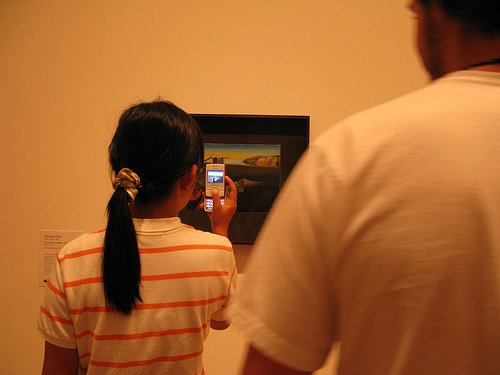
There was a queue to photograph the DaliPhoto caption on Flickr: "There was a queue waiting to photograph this little Dali painting." Photo by moirabot.

On the Technology in the Arts LinkedIn group a member, referencing this blog post, asked: "Will Tech Engage or Distract a Museum Visit?"

This simple question led me down a rabbit-hole of tangential questions and topics (internal vs. external technology, technology for information vs. dialogue, and so forth) that made it impossible for me to compose a post that contained any rhyme or reason. And so I return to that most basic question here.

Technology: does it engage or distract the visitor? A friend of mine remarked, "I hate cameras for daily documentation. I think cameras detract from the authenticity of an experience, because you filter that experience through a lens." Certainly, I have photographs of experiences that I was a step removed from because I was so concerned with DOCUMENTING events that I didn't participate as fully as I could have. The flip side is that I have proof that indeed, I was there, it was awesome, and now I own it--forever.

This "ownership" issue arises when we debate photography policies in a museum. Often the photographers are people who take pride in having the experience, and want to have something by which to remember, share, and "keep" it. But as my friend said, in many cases they are likely removed from the immediacy of the art by the act of taking photos. Of course, the experience to them could be less about the art than it is about the "been-there-done-that" element of going to the museum, but is it fair to judge that person as being irreverent, or "missing the point?" At least they were there, and cared enough to take a picture, right?

Alternately, there is technology that is provided by some museums for the visitor to utilize. This technology is arguably nothing more than updated versions of the visitor's guidebook, later the VHS playing in the corner of a gallery, showing a documentary (available for purchase in the gift shop!) about an artist, or the walking audio-handsets. In some places a visitor may use his iPhone to scan a barcode and learn more information about a given piece. In others there are iPods set up that visitors can use to view a short movie about a work. And, of course, the curious smartphone user might use his own technology to visit wikipedia while standing in front of a piece. I argue that, in so doing, that visitor distills the experience of art into something that requires explanation, rather than a communication to be received by the viewer without others' interpretation.  Of course, I also argue that that sense of curiosity shows a degree of interest on some level, and should not be condemned.

Technology removes the necessity for personal, visceral interpretation of a piece; as quickly as a viewer can form an impression he can access a wealth of information that competes with (or "legitimizes") his instinctive understanding. While I am a testament to the fact that background information can completely sway the experience of viewing a certain piece, and I have grown to love certain pieces because of what I have later learned about the artist, historical context, and so forth, I don't know that I think the museum experience should necessarily be a lesson ABOUT the art.

Shouldn't the learning be a supplement to the going? I think about the symphony, or ballet, or opera, or theater--the audience may have some information in their program to lend insight into plot, composer, musicians, and so forth, but I would be surprised if I were surrounded by audience members simultaneously listening to a recording that said, "Now, this movement here represents..."

By techologizing the experience of visual art, are we pandering to a society that wants experience for the sake of having done it, wants to know what to think without forming a decision, that needs to have as much information as possible in as little time as possible? Are we leading people to experience art the same way they experience a trip: interpreted by GPS rather than orienting themselves in their world, figuring it out from a map, appreciating the journey?

Or are we addressing the fact that museums are expected by many to be intimidating places, off-putting and cold, sterile and quiet, where disliking something makes the viewer feel as if he just doesn't "get it?" Is technology the antidote, a way to inject the familiarly contemporary into an institution that is perceived as unchanging and never-aging?  Are we introducing a new way to experience art, and it fair to value one experience above another?

Addendum: The Brooklyn Museum's blog post about successful and unsuccessful uses of technology in the museum.

Tech Planning for Arts Managers: A Nuts and Bolts Webinar on Implementing Technology at Your Organization

On September 2nd Brad Stephenson, host of the popular monthly Technology in the Arts podcast, will lead a new webinar entitled ”Technology Planning for Arts Managers”. Designed to meet the needs of today’s arts managers, this workshop will focus on ways in which arts managers can use technology to best meet their missions and goals. Stephenson, the former Director of Projects and Marketing for the Center of Arts Management and Technology, worked closely with numerous organizations who wanted to find the best technological tools to improve their efficiency.  He "helped these organizations with a number of things, including the evaluation of technology vendors, the design and development of web-based marketing and development tools and the selection of software and hardware products."

Organizations commonly make some mistakes that actually impede the organization/technology synergy.  Too often Stephenson witnessed organizations either failing to align their technology with strategic plan, or worse, failing to develop a strategic plan at all.  Without a plan, there is no way to guide technological decisions in a way that will best serve an organization.  Additionally, organizations often failed to do research--such as calling similar organizations to get thoughts on the tech tools that were of most use to them.

Stephenson strongly believes that an organization that fails to plan for technology is "committing a major arts management sin," one which may compromise the organization's mission and unwisely drain resources: "Everyone on staff doesn't get an iPhone just because they're cool."  Stephenson has designed this workshop to coach organizations through the process of integrating technology into an organization's operations.  "Tech projects are really no different from other projects within an organization.  You still use the same basic project management approach to building a new website as you would producing a new play.  One of the best ways to start any new tech planning process or technology project is to ensure that you have buy-in from everyone on your staff."  Meeting resistance?  Stephenson will discuss ways to address such resistance during the September 2 webinar.

In today’s climate it is necessary for arts managers to understand technology and its application within their organizations. While it’s easy to say “integrate technology into your organization,” in practice it can be overwhelming. This workshop provides a step-by-step examination of an effective technology planning process, coupled with an overview of the major technology concepts with which arts managers should be comfortable. Participants will gain an understanding of three key concepts:

1. Creating a technology plan for your organization or project 2. Analyzing your current environment to make efficient use of existing technology and effectively target resources 3. Making the right technology choices through proven evaluation methods

To register for the webinar, and for more information, please visit the link below. Technology Planning for Arts Managers September 2, 2009 2:00pm – 3:30pm Eastern Register today for $25.00

Non-Technical Difficulties: Unions Block Online Stream of Live Theater Performance

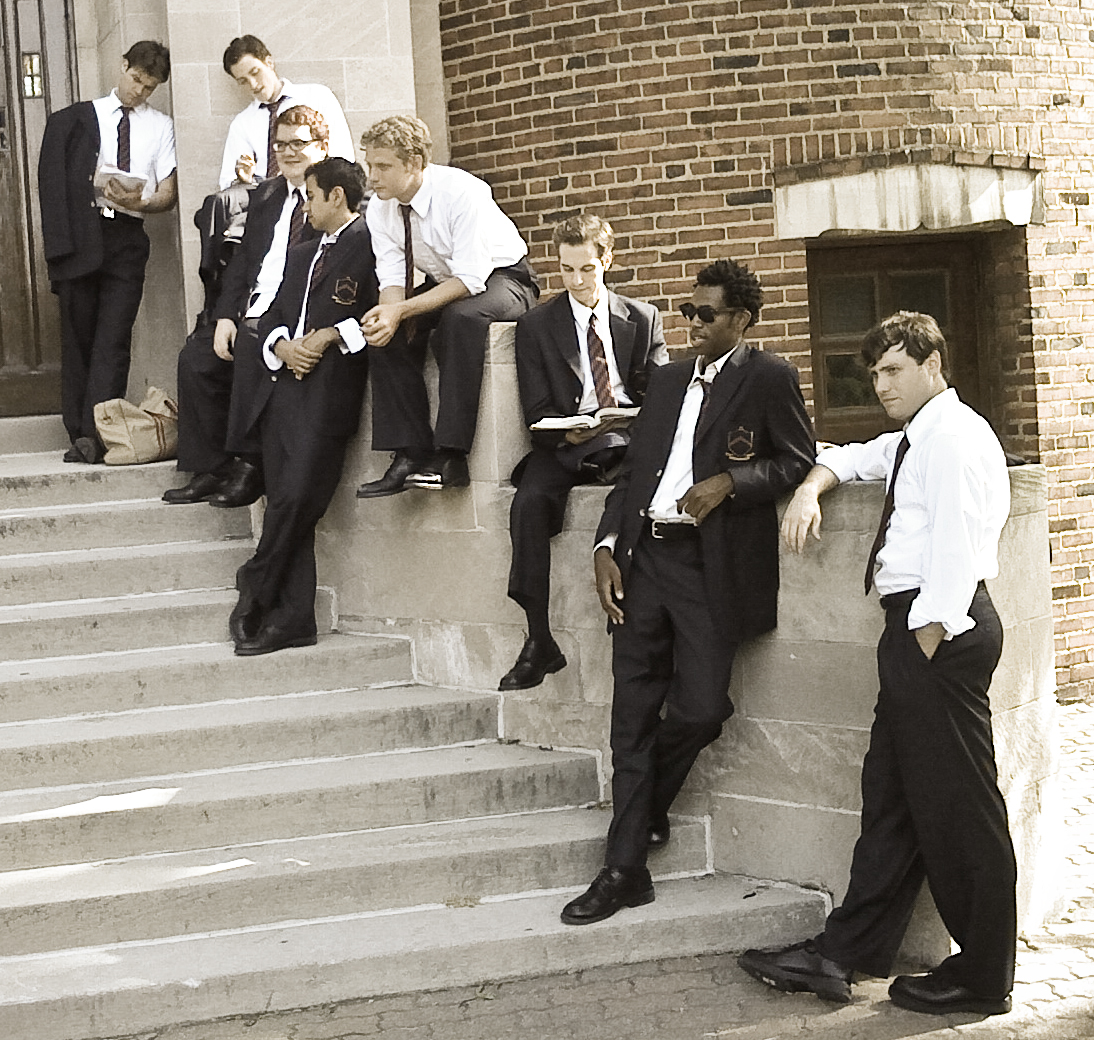
Cast of PICT's "The History Boys."

The "boys" of PICT's "The History Boys."  Photo courtesy of PICT.

In 2006 Stephanie Riso, Operations Director of the Pittsburgh Irish and Classical Theater (PICT), recognized the limitations that performance space imposed on ticket sales for her popular Cabaret Pittsburgh project. She considered ways to expand the audience of the musical revue without finding a new location or having to take the show on the road, and landed on the possibilites afforded by internet streaming.

Riso discovered that, with the exception of the Kennedy Center's free online performances of Millennium Stage musical acts, there was no precedent for streaming live performance online. With fellow Carnegie Mellon alumnus Alex Geis, and his company 21 Productions, Riso developed a live stream for Pittsburgh Cabaret.   Upon seeing that "the (sound and video) quality was amazing, "  she determined that she could use this technology to live stream PICT's theater productions.

“PICT’s long-term goal is to create a new revenue stream that will help to sustain the organization and live theatre into the future," explains Riso. Like so many theaters, PICT is small, limited by region and budget, and cannot tour under the Actors Equity SPT contract. So Riso conceived LIPLO™ (for "Live In Person and Live Online"), a hub where tickets could be sold to online streams of live performances and watched in real time.  What was once just a dream of live theatrical streaming is -- almost -- a reality.

"Online presents great promise to theatres, but only if there is something worth watching; no one goes to a theatre website to ‘hang out’ and read about the upcoming shows. They go to the website simply to get the necessary information so they can attend a performance if they happen to live in that city. But, if there is a place online where a person can go and be entertained with a high quality experience – that changes the conversation and opens up potential ad revenue and customers/patrons,” explains Riso.

Last Saturday was to be PICT's inaugural, open-to-the-public, free  LIPLO™ test stream (of PICT's production of Alan Bennett's "The History Boys").  Unfortunately, with less than a week to go, AEA and AFTRA could not agree on contract terms, and Riso had to pull the plug on the stream.   "[W]e had secured the rights from Alan Bennett (the author) plus Fox, who owns the film, new media and broadcast rights – which was a very big deal. . . .Knowing that Actors Equity would be the biggest obstacle, I approached them in February 2009 to start the conversation.  Their initial email response was that at the time they were not giving permission for actors to participate in live streaming.  However, upon further conversations with their filming and taping department they encouraged me to talk with AFTRA (American Federation of Television and Radio Artists) and were completely open to the possibility – although Actors Equity kept stating they would likely expect 2 weeks contractual salary for the actors plus rehearsal which seemed out of sorts with the proposed free trial project.  When AFTRA finally negotiated a favorable conclusion and all actors agreed, Actors Equity backed off and was not willing to move forward."

Riso is now caught in a Catch-22 in which she cannot have a bargaining conversation with the unions about money without data collected from test runs--which cannot proceed until the unions agree to allow the stream.

Provided the unions agree to allow LIPLO™ to proceed, theaters around the world may be able to implement this technology to expand their audiences. This may prove a popular method for watching theater, and precisely the tool that performing arts need to find new ways to make money and raise awareness of the art. Once the unions can get on the same page, "the only thing that stands in the way from any organization using LIPLO™ is whether or not the organization has the permission or right from the author, actor, designer, etc to live stream the work."  If organizations are interested in implementing LIPLO™, the LIPLO™ team would "adjudicate the organizations and their work prior to acceptance within LIPLO™ to ensure there is a level of expertise and quality for the LIPLO™ audience."  Following that, LIPLO™ has an all-inclusive team that would work with the organizations to put their work online.

Though Riso is confident that the technical components of the stream are dependable (it has undergone at least 15 trials without a hitch, and Geis will be online for every stream to troubleshoot viewers' problems via messenger), additional details rely on feedback from viewers of what were to have been three practice streams (including "The History Boys," PICT has streams planned for each of their season's final productions).  For example, would viewers prefer a single or multiple camera feed?  Is Paypal the best way to sell tickets to online streaming?  Would the tickets be priced lower than in-life tickets?  How will advertisers most effectively be placed during the stream? Will advertisers be local or could they be national and international?  And most importantly, will this truly reach a new viewing demographic?

It is this writer's hope that the unions recognize the need to update contracts to open the possibility of alternative methods of viewing live theater.  It increases exposure for all the artists involved in a show, and greater exposure could lead to greater demand for the artists.  The  tools are in place to expand audiences beyond the Baby Boomers, and hits the Millennials, and even Gen-Xers, where they live--online.  In theory LIPLO™ is the perfect marriage of technology and art, and could do what simply expanding or altering marketing approaches may not: it could get new people watching live theater.

To view Riso's Quicktime community address, and to read additional information, including her request for supporters to contact these unions, visit the LIPLO™ website and follow the simple log-in procedure.

Update: AEA refused to discuss the matter with me.  Spokesperson Maria Somma replied, "As you may have read in the media, Actors' Equity Association will not comment on the situation in question."

Perform a Digital Identity Self-Exam

3778408_ecdaec0daePhoto by Fazen.

Digital Identity is a topic that, like Digital Identity itself, cycles through period of seeming quite important (take the Twitter hack) and others when it seems like something toward which a person can take a very hands-off approach. It is easy to fall into the false sense of security offered by social media's seeming self-management; it can appear harmless to just allow it to so do. As individuals and representatives of organizations, it is valuable to periodically take stock of what the organization and its employees are doing to represent themselves online. One of the first posts I wrote for this blog was about the blurry line between professional and personal identities--and that gets even blurrier across the online/offline divide. Additional posts covered social media handbooks that urge organizations to come up with an identifiable plan; these handbooks touch on the importance of digital identity, but none exclusively addresses the matter as Nancy White does in her "This is Me" Digital Identity workbook.

As social media handbooks encourage dialogue (including being open to negative comments and interactions), White urges users to consider that an overly-groomed online identity may be just as detrimental as one left to morph, unfettered, into an amalgamation of unflattering photos, inappropriate comments, and obvious political affiliations. There is a balance, and the first order of business to achieve this is considering what your offline identity is, and what you want to convey via social media.

Ultimately, for both organizations and individuals, I think that social media--and any web presence--needs to take into consideration this post on the Social Media Today blog: know yourself before you start reflecting it online. Just as you do when you get dressed in the morning, or attend a public event, or a private house party, rent office space or write a grant proposal, you must stop and consider with great care what it is that you will be saying with your clothes, conduct, conversations, location, shared information and goals. Figure out who is looking for you online, and what it is they will find--try searching for yourself, your organization's name, and see what "just anyone" can find out about you. Remember--you may not be leaving a "paper" trail, but often the items that you post to the web have an even longer shelf-life, and the fingerprint that you develop digitally grows more comprehensive over time.

Just because you have begun to move your organization firmly into the world of social media doesn't mean that you can step back and let it run itself. Do regular searches for yourself and your organization, perform routine maintenance on your personal and organization's profiles, and don't get lulled into the sense that, simply because you've built it, it's good enough. Your online identity will grow, but remember that its growing pains may be as accessible as those photos of you when you were thirteen that your parents insist on keeping framed on their mantel. Proceed with honesty and integrity, and consider the long-term impact that your choices may have. Approach your Digital Identity with a critical eye, and imagine how it may be perceived and received.

Remember: if you put your name on it, you must be willing to own it, even if it's "only online."

One Route, Two Guides — Part 2: Marc van Bree's "Orchestras and New Media"

Marc van Bree has published an impressive and free forty-five page (plus bibliography and succinct glossary) ebook called "Orchestras and New Media: A Complete Guide".  I emphatically encourage anyone working with arts and non-profits to read his ebook. Though van Bree's experience is specifically with classical music and orchestras, his ebook is not for that audience alone. Rather, is the most comprehensive and interesting social media guide that I have read. Van Bree does not claim to be a social media expert, despite his long-time successful use of it, and his recommendations and guidelines for social media are supported by research and commentary from others in the field. He does not merely tell you what to do, he writes things like "How has social networking changed our communication?" and then answers this question with evidence from independent studies.

"Although the number and variety of arts organizations has increased, the percentage of adults participating in the arts has remained flat," writes van Bree.  The first 11 pages of this guide are a fascinating and well-researched analysis of the arts and the arts' representation in printed media, and the struggle that the arts face in generating new audiences.  With excerpts from a variety of studies, publications, others in the field, and projects, he establishes a context in which to place non-profit social media. "If blogs are an alternative to print media, podcasts are the alternative to radio and television."

Van Bree not only discusses the various forms that social media can take, his guide is part history lesson, part handbook, and completely engaging. He examines all of the major American players, from Facebook to Flickr, and suggests others that might be of use on an international platform. Van Bree also illustrates their use with true anecdotes that are at times cautionary, encouraging, amusing, and most of all show what is possible by NPO arts organizations using social media.

If you are new to social media, you may want a very basic, "Step One: Do This" approach--but I strongly recommend you take the time to read van Bree's guide. He does not neglect to explain the principles and common practices that users of the social media tools follow, and even discusses how you can measure the results of your efforts.

This guide has it all, is a pleasure to read, and paints a broader picture of what it is, exactly, that NPOs may accomplish with social media.

Where There's Hope, There's Profit

We got pretty excited over here today about the launch of the new Facebook Actions Application by Grassroots Enterprises. Just think! An application for your cause that does the following: -Your visitors can instantly email Legislators from your FB page -You can promote a fast way to "Take Action" on your page or in other emails and status updates -Your visitors can quickly pass the word on to their friends -And more.

This application could be invaluable to organizations (like all those here in PA waiting, with bated breath, to find out whether or not Arts funding will be completely eradicated from the state budget) to urge their followers to quickly and easily contact their legislators.

As you can imagine, I was disappointed to learn (via other Twitterers sad lamentations of it being "sadly out of our range") that an organization wishing to add this exciting innovation to their Facebook page would pay $3000 to start, with a monthly charge of $250.*

As you know, I am all for people profiting from their hard work. In earlier posts I have railed against organizations expecting work for free, companies wanting art at no charge, and the pressure to enter into that trading system. BUT--that's a LOT of money to most of us. Especially when you consider this is AIMED at non-profits and organizations, most of whom are using Facebook precisely to try to cut some of our online operating costs.

I was really looking forward to talking up a great new low-cost addition to getting the word out about non-profits arts causes. Sorry 'bout that.

*Caveat: I have contacted Grassroots Enterprises and perhaps they will inform me that there are different pricing structures for various sized organizations. I look forward to bringing you further news about this.

Hey, Choir, Listen Up!

Talking to Myself by FALHakaFalLin and Mlle Franny

I read a lot of blogs. Blogs about arts, marketing, non-profits, arts management, arts education, technology, and so forth. I read great posts on a weekly basis about selling tickets, working within the new economy, raising interest, and strategizing an online presence.

There is a glut of online advice, musings, guidelines, reflections, and discussions about organizations hopping onto the social media bandwagon and embracing Web 2.0. And I can't help but wonder: are we just preaching to the choir?

If you are on here reading this, I suspect that you are already, in some way, connected to this issue. You already browse the web, you probably already have a profile on at least one social media site. Your organization likely has a website, and, I venture to guess, you are already diligent about trying to keep that website presentable, navigable, and current.

You probably frequent the same sites that I do. Your RSS reader might even have a roundup of many similar resources. You are aware of the possibilities that Web 2.0 offers for the new connectivity of organizations. You want to engage people online AND in the real-world, and believe that by strengthening your online position you will experience a positive correlation in the strength of your real-world operations.

I recently read a post from a for-profit marketing perspective, iterating that when we establish our online presence what we want are a small group of strong, loyal supporters, rather than a large number of filler fans. The principle is that these informed, dedicated followers will spread the word personally to their friends, increasing the likelihood that their friends will take their recommendations seriously, and be more likely to check us out as a result.

But it seems to me that in this niche of arts organizations and technology, we are all following, and being followed by, each other. We talk to each other, echo one another's concerns, make suggestions, offer encouragement. We are the ones listening, we are the ones talking, and ultimately it begins to get a little schizophrenic.

I have come across some great bloggers (who are transparent in their affiliation with arts organizations) writing insightful, informative posts--but don't link to their organization's website and aren't linked from there. If an audience member does get online with the hope of learning more about an organization via its website, wouldn't the blog of its communications manager, or artistic director, or someone else on staff, be of interest to them?

If our audiences continue to be people who are unlikely to go online to seek out their arts information, who are comfortable with the ever-smaller blurbs in the papers and the mailings sent to their homes, why are we doing all of this work online? And if we are doing all this work online to find new audiences, but it isn't transferring to our organization's presence in the real world, something needs to change.

We are not going to bridge the chasm between the online and offline supporters if we keep telling people who are already doing what we think they should be doing (because it's what we are doing!) to do what we recommend everyone do.

I love that Project Audience exists precisely to address the best way for arts organizations to attract online media users who may be new to the arts, and to brainstorm ways to stop doing the same things repeatedly simply because it's what is comfortable, or understood, or widely accepted. Additionally, Joe Solomon guest-blogs on Beth's blog, asking the very important question: "How can your online community also support events in the real world?"

I hope that this daunting chasm is a misconception on my part, and that all of what we are saying to ourselves here is really making the leap to the real world, to ticket and art sales, to increased donations and support. I hope that people from outside are plugging in to get more information, and that dialogues are happening among artists and organizations and audiences as never before, facilitated, enabled, by Web 2.0.

But if it isn't a misconception, we need to be open to change and aggressively seek innovation to this model of organization/web interaction.

Tech + Art + Mobile + Money = A New Hope for Artists and NPOs?

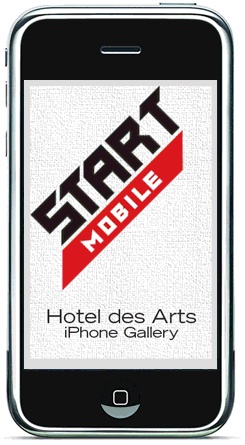
<a herf=http://startmobile.net>Start Mobile</a> offers 18 Mobile Art GalleriesSTART Mobile offers 18 Mobile Art Galleries

Wouldn't it be great if you could spend a small amount of money to get something cool, and at the same time both support an artist AND the non-profit that supports them?

For example, you could hop on iTunes and look up your favorite museum, your alma mater, your child’s school, your favorite ballet company, and download a gallery of images relating to or by the organization. You could purchase it for less than a buck, and pat yourself on the back for making a donation (when really you were just buying something for yourself).

Thanks to START Mobile, that possibility is rapidly becoming a reality.

Started in 2005, START Mobile’s mission, as described by founder and CEO John Doffing, is to bring “NEW ART to the mobile medium. From the beginning, our vision was one of 'Art for Everyone & Art for Everywhere.’” At the moment, START Mobile is "a bootstrapped startup" that has launched 18 mobile galleries for the iPhone, including one which contains Shepard Fairey's now-controversial Obama image, and promises to launch applications for other platforms in the next few months.

“Technology can facilitate a lot of outside the box thinking relative to the marketing, ownership and appreciation of fine art, and this is a significant part of what START Mobile is trying to accomplish," says Doffing. "[I]t introduces a decidedly egalitarian ethos into an art world that has become inaccessible to the vast majority of potential art lovers.”

A longtime advocate of the arts, Doffing also founded San Francisco's START SOMA Gallery and the Painted Rooms at the Hotel des Artes. He is fierce in his conviction that artists retain the rights to the work that START Mobile licenses, and that they be paid for their work. "There is no charge to the artists that we work with to 'mobilize' their content," explains Doffing. "ALL our artists receive the same commission (and this goes for ALL our art projects): 50% of our net. Or about 10 times what is typically paid to artists to license their work. How much can they make? Depends entirely on how many are sold!"

Apple charges 99¢ for an individual to download one of START Mobile’s artist galleries (a gallery contains multiple images) onto an individual’s iPhone. Apple makes 29¢ off the sale, and the remaining 70¢ is equally split between START Mobile and the artist. Thus, the artist is paid every time anyone, anywhere, downloads the gallery.

Doffing again stepped "outside the box" when he approached Kathy Hanlon Sampon, art teacher at his alma mater, Wisconsin’s Catholic Memorial High School, whose art department was struggling for funds. “During our talks, we discussed [the CMHS art] department’s progress in digital media,” explains Hanlon Sampon. “Since [Doffing] was already developing the program for the app, it would be easy (relatively speaking) to drop our students' work into one of his programs and make it available to the general public – worldwide.”

Hanlon Sampon chose the work that would be included in the CMHS Gallery, digitized the pieces, sent them to Doffing, and START Mobile did the rest--including donating all revenue to the CMHS art department (CMHS is a Catholic non-profit organization). But Hanlon Sampon appreciates more than financial benefits, and says her students now "understand much more about marketing of artwork, the prospect of global visibility, PR, and how technology can be used to not only create art but also to share it.”

START Mobile subsequently released the Pride Gallery by artist Samala (START Mobile Creative Director Christina Samala), who donated her work to raise money to NPO The Courage Campaign. As with CMHS, START Mobile gives 100% of revenue to the Courage Campaign. Though in neither case do the artists directly profit from their work being used, the implications of START Mobile undertaking a project like this are huge.

At this time START Mobile would not be able to sustain itself if every gallery operated like the CMHS and Pride mobile galleries. But perhaps there are artists that would collaborate with non-profits for an equal share of the traditional revenue of 35¢ (after START Mobile takes its cut). START Mobile could become the go-to company for arts organizations wishing to make some money for themselves, the artists, and increase exposure. Galleries could have mobile shows, private schools around the world could have a program like CMHS’s (perhaps public schools could get in on the action if the profits went toward the Booster Club, or were differently packaged). Doffing's long-term goal is "to get our business stable enough that we can do a few dozen apps each month for non-profits that our team supports."

Doffing is optimistic about the potential for artists and organizations to really profit from the galleries, though START Mobile doesn't release sales figures. "If we can manage to crack the top 100 apps in our category on iTunes, sales numbers increase by an order of magnitude. . .There are currently quite a few iPhone wallpaper applications available via iTunes that are selling several thousand units globally per day at 99¢ each - generating several thousand dollars a day in revenue."

"When the CMHS iphone app started getting some press, we received inquiries from around the world wanting to do something similar, representing everything from art museums to non-profits to high school and college art departments. We don't have the resources to do them all, and I have been talking to some folks about automating the process so we can just launch as many of these things as possible [in the future]."

His enthusiasm is contagious, and his positive outlook gives me hope for all of us who have been lamenting the sacrifices that both artists and non-profits make daily. When I told him that I believe many people, like myself "would love the opportunity to support favorite organizations AND get nice wallpaper AND support artists," his reply made me smile:

"Mobile + small-dollar transactions + application model for content delivery enables this for the first time EVER. Pretty exciting."

Yes, it is.

Make Thee a Social Media Handbook, Organization!

"Point" by <a href=http://www.flickr.com/photos/dm-set/>Sarah G.</a>Photo by Sarah G.

The American Red Cross has issued a comprehensive Social Media Strategy Handbook, which Beth Kanter rightly lauds as excellent.

The ARC's slideshow notes that the Handbook "is not just for communicators and marketers it's for anyone who: spends online and is a Red Crosser." To make that transition, the Red Cross encourages its associates to play around with social media personally, and then make the leap to representing the ARC online. It's telling that the ARC social media page says, "The Red Cross belongs to the American people. You fund it, you donate your blood, you prepare for and respond to disasters, you take and instruct first aid classes. You make the Red Cross what it is today, and you hold the keys to its future."

So for the ARC, an organization that defines itself as being BY and FOR you, it makes sense that social media would be the same. Is this a practice that more non-profits should adopt? An 87-slide presentation (with additional links), the Handbook contains a complete outline of the who, how, what, and why of the ARC's social media presence. It strongly emphasizes serious contemplation and hard work developing a solid, organization-wide social media strategy. It then goes on to outline how the most popular tools can best be employed, and what interacting with (on? through?) them looks like. It also, very explicitly, gives "fundamental principles" and states in no uncertain terms that, "we’re a 501(c)(3) organization, so you must not join any political or religious advocacy groups."

I think that what the ARC's Handbook does so well is that it combines the practical advice that newbies might need as they venture forth into the world of social media while still including solid, program-specific information that more advanced users will need when creating sites that conform to the ARC standards. I think it very clearly addresses issues that I raised before about the fuzzy area between a personal and professional online presence, and the importance that a person managing social media to be invested in the NPO's mission. It leaves very little wiggle room on the basics, but encourages individuals to find ways to be creative within the ARC's expectations.

One thing that could be emphasized at greater length, however, is the time commitment that such a project can be, and what this might mean for someone who already has a full plate. (Slide 85: have someone dedicated to checking your photos once/day.)

As anyone who spends a portion of their workday dealing in social media knows, social media can be fun, engaging, and has an uncanny ability to sucks hours out of a day. It is both constantly, easily accessible (on your phone, iPod touch, laptop, home computer, work computer...) and, sometimes, frighteningly inescapable. It becomes easy for things to slip through the cracks (an email checked on the fly, a couple of days working on the road, a misplaced note-to-self to update a page and approve new fans), and, conversely, easy to get pulled into in such a way that suddenly half the workday has gone by and your non-social-media responsibilities have suffered. I found this out firsthand, when I took a self-imposed four-day Independence Day Holiday from my technological tether, and felt both refreshed and vaguely alarmed that there were discussions, tweets, articles, emails and so forth that I wasn't getting to. Just because I took a break didn't mean that there wasn't someone, somewhere, expecting a response.

Thus, I would recommend that any organization pursuing a guide like the ARC's consider what I feel to be the two most fundamental components to social media presence: WHY (see slides in the 30s) and WHO. Who is going to do this? And what are the time commitments and expectations are of those developing their presence? If you are going to build it, you need to maintain it, and you must have a clear idea of what that maintenance looks like. I find few things as frustrating as outdated NPO sites, or unmonitored NPO-associated accounts. It can be difficult to separate your personal social media activity from your professional, and a person's social media presence can become inextricably connected to their professional work, meaning that s/he can no longer just "pop on Facebook" for a minute to check in on friends without getting caught up in page maintenance. How many people are going to contribute to the online presence, and how much communication will they have with one another?

As the Handbook cautions, there is a lot that is out of your control, but what is within your control is something you must be willing to keep up with. Creating a clear, written-out guideline can be a great help for getting everyone on the same page and enabling constructive social media growth.

And Now for Something Completely Different

I thought I'd share some of the interesting, and hopefully heartening, things that I have come across recently and wanted to share. (Please note, I am not endorsing any of the services or products herein.) Talenthouse, an online networking tool for artists from many disciplines, encouraging exposure, collaboration, and audience engagement globally. (Thanks to Dana Oshiro at ReadWriteWeb for the tip)

Start Mobile whose Art for Everyone iPhone wallpaper art has been used to benefit non-profit organizations. (A more in-depth story to come)

Tele_Trust, a piece by artistic duo Lancelmaat (with the technical development of V2_ Institute for the Unstable Media), uses technology to analyze real-life socialization (instead of moving socializing onto a virtual platform). Though authorities have been alarmed by the full-body cloak, filled with sensors and circuitry, it's a neat reminder of how "in our changing social eco-system we increasingly demand transparency; while at the same time we increasingly cover our vulnerable bodies with personal communication-technology."

And much thanks to NTEN for highlighting this: iWith's third annual photo competition, "Documenting the Digital Divide."