

 In this episode of Technology in the Arts, Brad chats with CAMT's executive director David Dombrosky and CAMT's web and social media assistant Amelia Northrup about Google Wave, Google Buzz and the iPad.
Cool Sites of the Episode
[display_podcast]
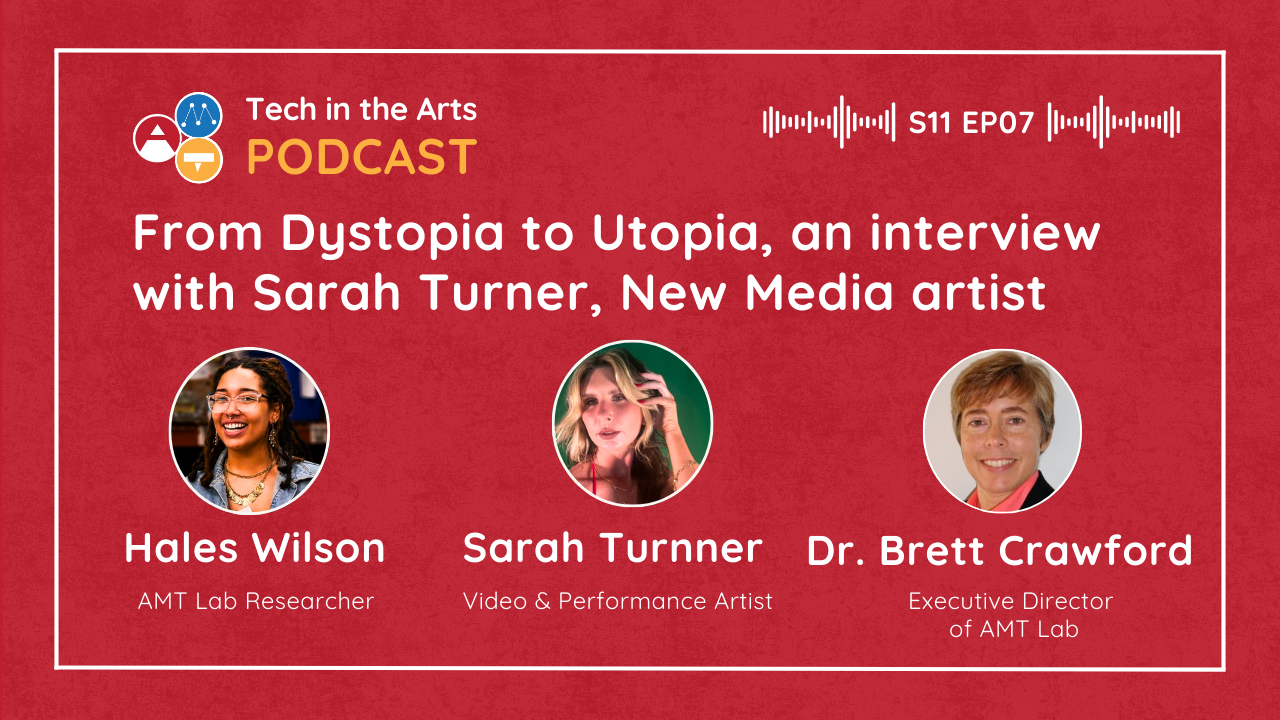
In this episode of the Arts Management and Technology Podcast: Tech in the Arts, Dr. Brett Ashley Crawford and Hales Wilson speak with media artist Sarah Turner about her interdisciplinary practice at the intersection of emerging technology, performance, digital culture, and arts administration. Turner reflects on how her background in history, arts management, and experimental video informs her work critiquing platforms such as Zoom, blockchain, and AI, as well as her long-term exploration of censorship, NSFW online spaces, and alternative distribution models. The conversation traces her experiences balancing administrative and artistic roles, building DIY communities through projects like mobile public projections, and navigating institutional boundaries around funding and content. Turner also discusses her recent AI-focused work—particularly her playful yet critical “Dolphins” series—as a way to interrogate utopian fantasies, oracle-like knowledge systems, and the absurdities of human–AI interaction. The episode closes with reflections on adapting to rapidly changing technologies and Turner’s advice to emerging digital artists: embrace experimentation, break tools intentionally, and treat media art as a space of play, critique, and collective making.
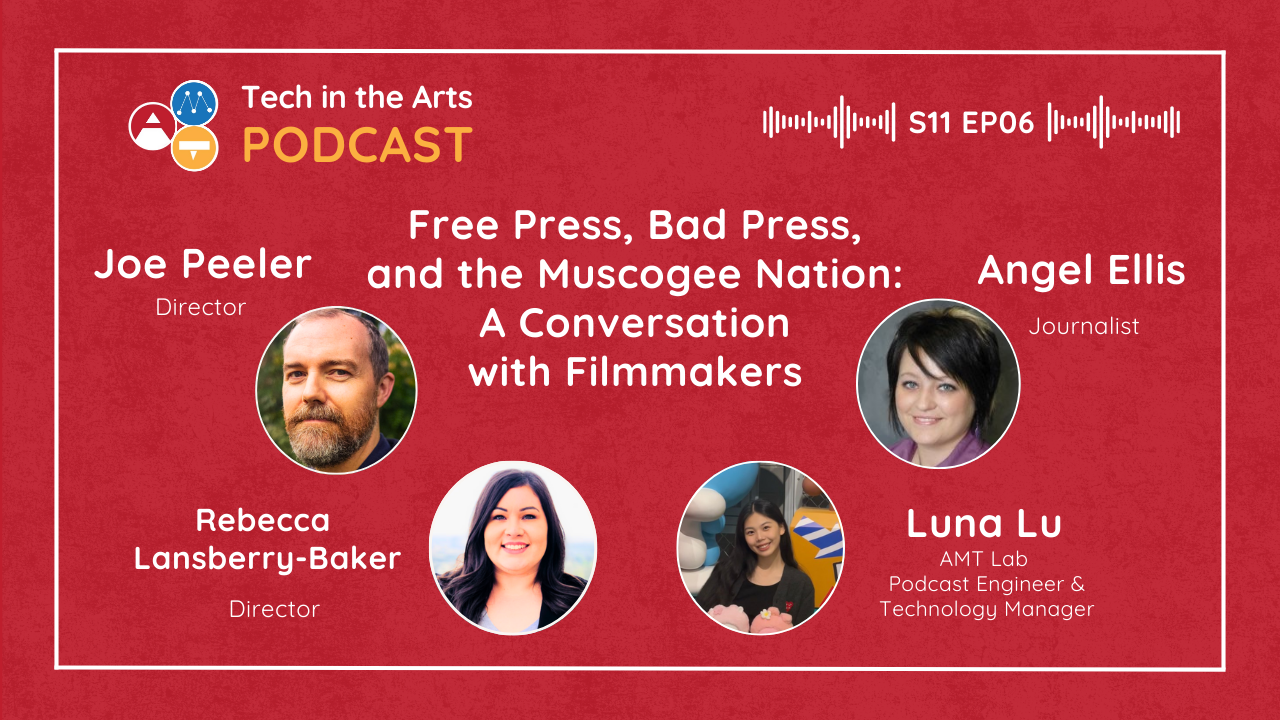
In this episode of the Arts Management and Technology Lab, host Luna Lu speaks with Bad Press co-directors Rebecca Lansberry-Baker and Joe Peeler, alongside journalist and film subject Angel Ellis, about the making of their Sundance 2023 award-winning documentary. The conversation explores how the team came together, the ethical and creative challenges of documenting press censorship within the Muscogee (Creek) Nation, and the tension between tribal sovereignty and press freedom. Through Angel Ellis’s experience as a journalist turned whistleblower, the episode highlights the vital role of independent Indigenous media, transparency, and civic participation, while also reflecting on trust, community-based storytelling, and the power of individuals to effect democratic change.
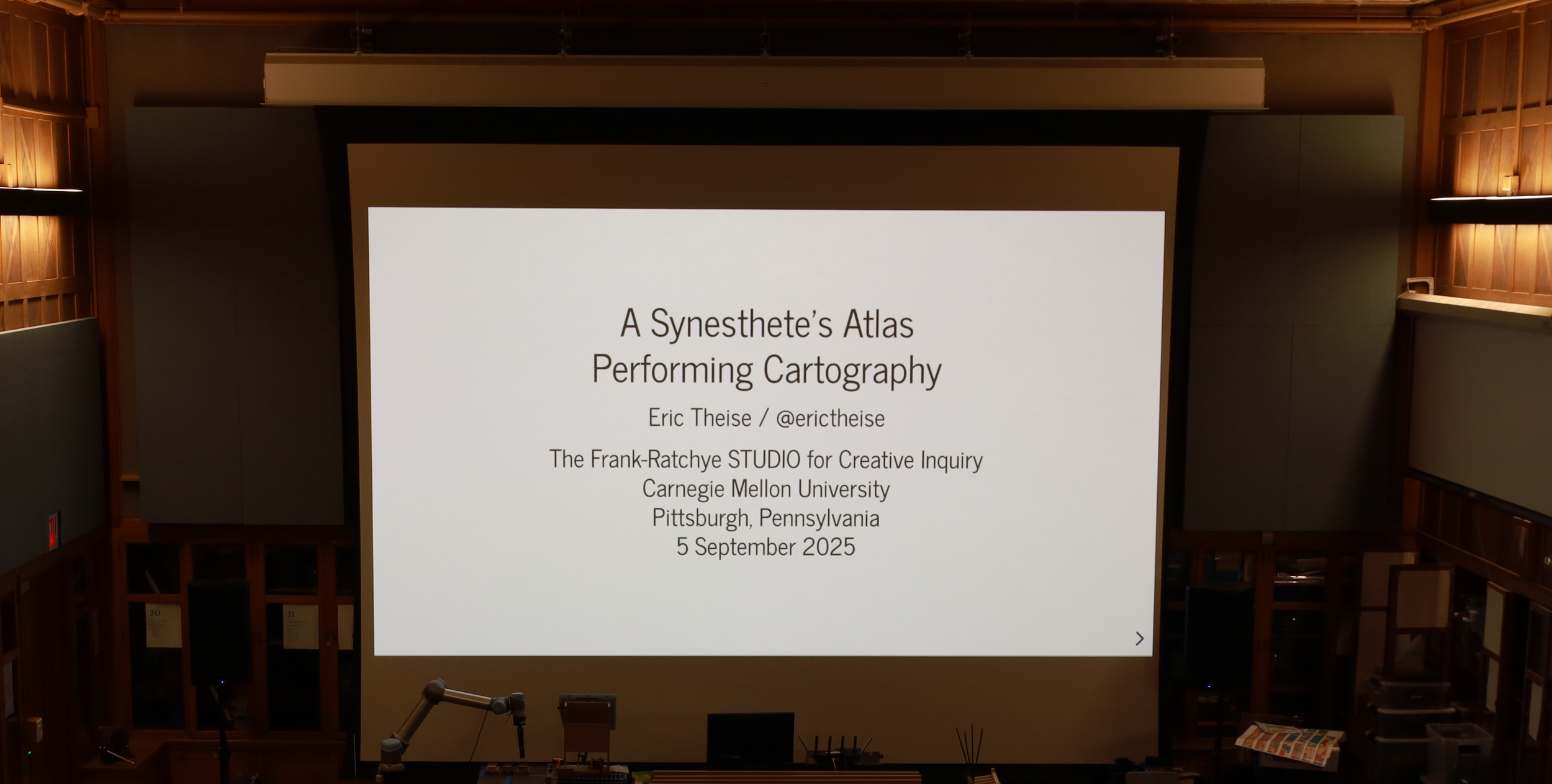
Eric Theise is a geospatial engineer, filmmaker, and performance artist. On September 5, 2025, he shared “A Synesthete’s Atlas” Performing Cartography, in an artist talk at the Frank-Ratchye Studio for Creative Inquiry at the College of Fine Arts. The following is a joint effort by Nate Xiang, who attended the artist talk, and an interview with Eric afterwards.
In this episode of the Arts Management and Technology Lab, Samantha Childers explores why so many songs recommended by streaming platforms like Spotify, Apple Music, Amazon Music, and YouTube Music sound strikingly similar. She breaks down the inner workings of music streaming algorithms—how metadata, collaborative filtering, content-based filtering, and continuous feedback loops collectively shape the “perfect playlist.” Childers also examines Spotify features such as Discover Weekly and Discovery Mode, uncovering how these tools influence music discovery, artist visibility, and even compositional trends as musicians increasingly write with algorithms in mind. Alongside these technical insights, she raises critical ethical questions about data privacy, algorithmic bias, pay-to-play practices, and the shrinking role of human curation. Ultimately, the episode invites listeners to rethink how algorithm-driven platforms shape not only what we hear but also how we discover, value, and experience music.
In this episode of the Arts Management and Technology Lab, Andrew Wolverton and Zachary Collins explore how arts-focused technology can transform nonprofit ticketing and operations, tracing Ludus’s journey from a side project for a single high school musical to a nationwide platform serving more than 4,000 organizations. Collins explains how Ludus was built from the ground up around the real needs of drama teachers and community theaters, growing into an end-to-end system for ticketing, fundraising, marketing, volunteers, and concessions—while staying anchored in a people-first culture summed up by the company’s core value, “Give a Shit.” He reflects on navigating the COVID-19 shutdown through livestreaming and social-distancing tools, choosing the right growth equity partner, and why he believes AI shouldn’t replace arts workers but instead act as a “superpower” that frees them to focus on human-centered work and shared live experiences.
In this episode of Technology in the Arts, Brad chats with CAMT's executive director David Dombrosky and CAMT's web and social media assistant Amelia Northrup about Google Wave, Google Buzz and the iPad.
Cool Sites of the Episode
[display_podcast]
 In this episode of Technology in the Arts, David interviews Marc Kirschner, the founder and General Manager of TenduTV, which delivers high-quality concert dance, documentaries, original programming and screendance to over 20 million US televisions, and to every household with a broadband internet connection.
TenduTV is making a special announcement today at the Association of Performing Arts Presenters Conference in New York City.
(Photo: Flickr, CC by Grzegorz Chorus)
[display_podcast]
 In this episode of Technology in the Arts, Brad interviews Matt Lehrman of Alliance for Audience and ShowUp.com. Lehrman and Dwight Gee of ArtsFund and TakePartinArt.org were the leaders of the first stage of Project Audience, a Mellon Foundation funded project focused on envisioning the next generation of audience development.
(Photo: Flickr, CC by cybaea)
[display_podcast]
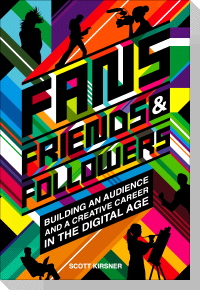 In this episode of the Technology in the Arts podcast, the Center for Arts Management and Technology's executive director David Dombrosky talks with Corwin Christie, a Heinz College Master of Arts Management student. Poor Corwin, a social media assistant for CAMT, was forced to do David's reading, and she provides her thoughts on the book Fans, Friends & Followers by Scott Kirsner.
The episode also features David's interviews with Kirsner, author of the aforementioned book, and Ed Halter, a staff writer for Rhizome.org. Rhizome is a site "dedicated to the creation, presentation, preservation, and critique of emerging artistic practices that engage technology."
[display_podcast]
In this episode of Technology in the Arts, Brad interviews Hannah Leatherbury.
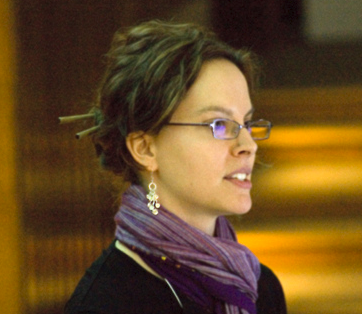 Hannah is the E-Services Manager for Southern Arts Federation (SAF) and the project lead for ArtsReady, is a forthcoming, web-based, continuity planning application for performing arts organizations. The Andrew Mellon Foundation is providing funding and support for this project.
ArtsReady uses the definition of "continuity planning" provided by SAF's project collaborators at the Office of Continuity Planning at the University of California – Berkeley: Putting in place NOW the things that will enable us to continue serving our constituents and maintain our viability following a catastrophic event of any size or type.
[display_podcast]
In this episode of Technology in the Arts, Jason takes a break while Brad interviews arts marketing consultant Erik Gensler.
 Erik is the president of Capacity Interactive Inc., a consultancy that specializes in e-marketing for the arts. Current projects include overseeing New York City Opera's electronic marketing strategy, project management and strategy for Alvin Ailey American Dance Theater's Doris Duke Foundation Leading for the Future grant focused on increasing on-line patron engagement, managing web advertising and analytics for Nextbook.org, and implementing and advising on web analytics for Pacific Northwest Ballet as part of their Wallace Foundation grant. Erik was a Senior Marketing Officer at New York City Opera where he oversaw electronic marketing activities including the redesign of nycOpera.com as well as implementing a text message club, a blog, and podcast series.
He served as Director of Sponsorship for TMG-The Marketing Group where he secured over $3 million in corporate sponsorships and strategic marketing partnerships for non-profit arts clients including Roundabout Theatre Company. He spent four years at NBC Universal in various roles in sales, marketing, production, and business development and is a graduate of the NBC Page Program and NBC Sales Associates Program. Erik began his career at Marakon Associates an international strategy consulting firm that works with top executives of Fortune 500 companies to help them maximize shareholder value. Erik holds a dual degree in Economics and Communication Studies from Northwestern University.
[display_podcast]
In this episode of Technology in the Arts, Jason takes a break so the Center for Arts Management and Technology’s Josh Futrell can vent. He’s furious that the Pennsylvania Senate voted 30-20 in favor of a budget that includes ZERO dollars for arts and culture funding. Again... that’s ZERO dollars. Hey Senators... we're mad as hell, and we're coming for you!
 (Photo: CC by amy.kay)
PS: The angry man in the photo above is not Josh. But you can follow Josh on Twitter at @jfutrell.
Also, Brad interviews Mollie Alexander Speer from Chicago’s About Face Theatre. The company recently saved itself with a fundraising campaign that was driven largely by social media.
Use the following handy-dandy links to follow along with the episode:
[display_podcast]
This episode is dedicated to the addictive, ridiculousness that is TWITTER!
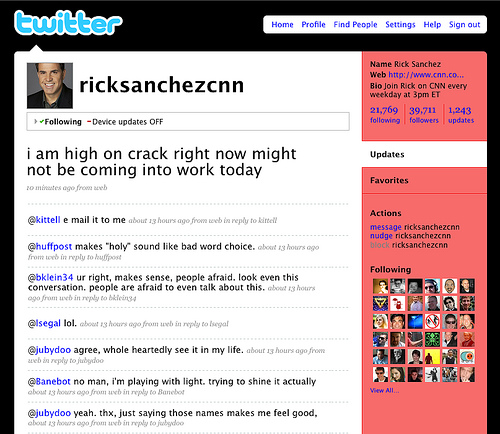 (Photo: CNN's Rick Sanchez's Twitter feed was hacked in January 2009. And it was hilarious.)
Some Additional Suggestions for Twitter
Here are a few suggestions for using Twitter that we don't mention in the episode:
Tweeps You Should Follow
You can follow Brad's Tweets at twitter.com/bstephenson. Here are some more artists and arts organizations you should be following on Twitter:
Cool Site of the Episode
Current TV's YouTube Channel - "Current is the global TV network all about what's going on in your world, from your perspective, in your voice." Includes the hilarious weekly animated show Supernews!
Reminder - If you have any questions or interesting discussion items, please send them to podcast@technologyinthearts.org.
[display_podcast]
Look out behind you... it's Friday the 13th! In honor of the frightening day, Brad and Jason take a bone-chilling look at some of the SCARIEST TECHNOLOGIES EVER!
 (Photo: CC by loganz)
Use the following handy-dandy links to follow along with the episode:
Cool Sites of the Episode
Jason... is lame and has no cool sites this week. He promises to bring you two next month.
Reminder - If you have any questions or interesting discussion items, please send them to podcast@technologyinthearts.org.
[display_podcast]
We're back at long last! Brad recently accepted a position as Web Content Manager for Carnegie Mellon's Heinz College. He's in the same building as CAMT but no longer an employee of the Center. However, he and Jason will continue to host Technology in the Arts as part of his duties for the college. It's all a confusing way to say that if you keep downloading, we'll keep recording! Use the following handy-dandy links to follow along with the episode:
Cool Sites of the Episode
Brad: Gigapan Jason: YouTube Photo Hunt
Again, special thanks to composer and sound designer Joseph Fosco for providing our new theme song. Learn about Joseph and his work at www.JosephFosco.com.
Reminder - If you have any questions or interesting discussion items, please send them to podcast@technologyinthearts.org.
[display_podcast]