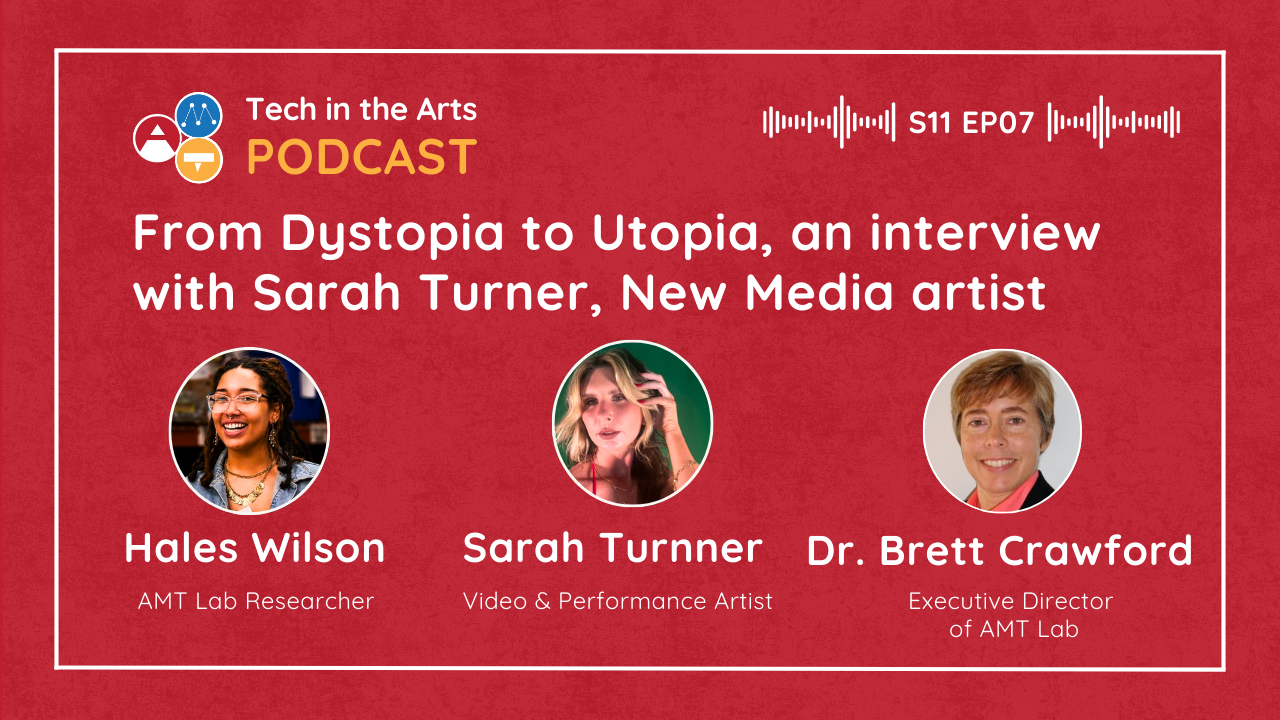
In this episode of the Arts Management and Technology Podcast: Tech in the Arts, Dr. Brett Ashley Crawford and Hales Wilson speak with media artist Sarah Turner about her interdisciplinary practice at the intersection of emerging technology, performance, digital culture, and arts administration. Turner reflects on how her background in history, arts management, and experimental video informs her work critiquing platforms such as Zoom, blockchain, and AI, as well as her long-term exploration of censorship, NSFW online spaces, and alternative distribution models. The conversation traces her experiences balancing administrative and artistic roles, building DIY communities through projects like mobile public projections, and navigating institutional boundaries around funding and content. Turner also discusses her recent AI-focused work—particularly her playful yet critical “Dolphins” series—as a way to interrogate utopian fantasies, oracle-like knowledge systems, and the absurdities of human–AI interaction. The episode closes with reflections on adapting to rapidly changing technologies and Turner’s advice to emerging digital artists: embrace experimentation, break tools intentionally, and treat media art as a space of play, critique, and collective making.
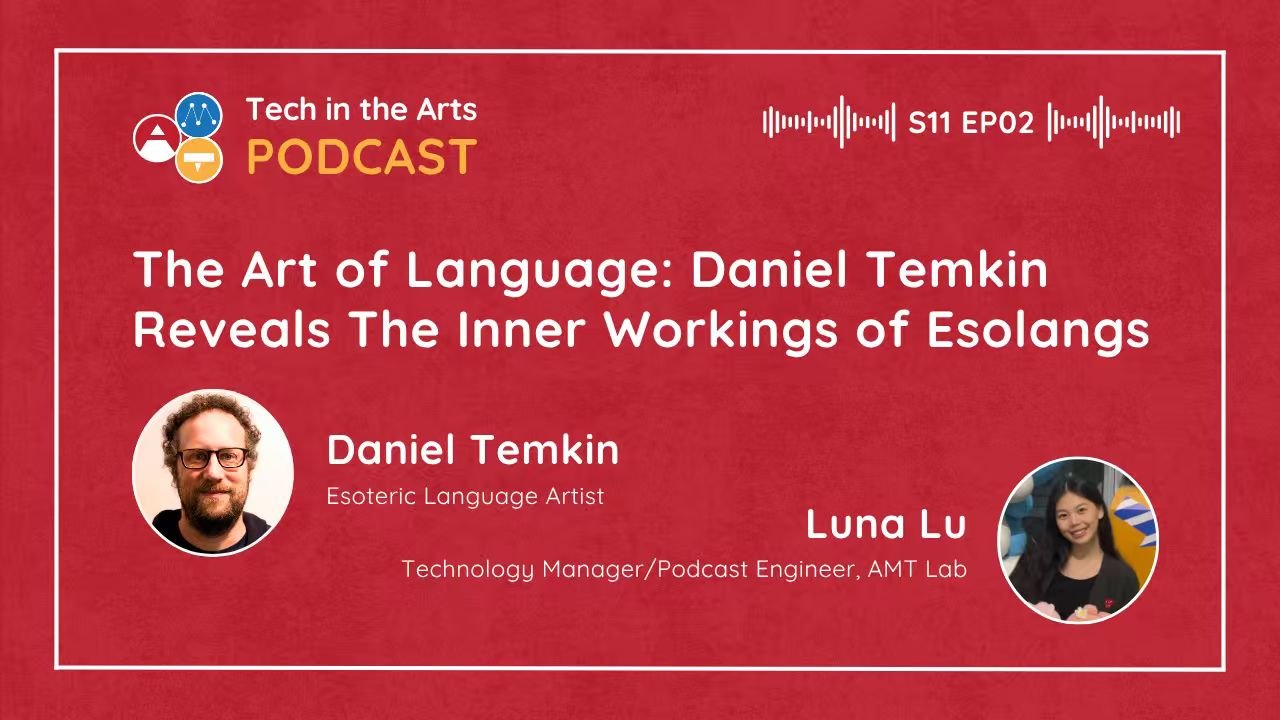
The Art of Language: Daniel Temkin Reveals The Inner Workings of Esolangs
In this episode of the Arts Management and Technology Lab, Daniel Temkin and Luna Lu discussed the artistic possibilities of code, focusing on esoteric programming languages (esolangs) and how they can function as a medium for art and human expression. Temkin explained that his interest began with experimenting in existing esolangs (like Brainfuck) around 2007-2008, leading him to create his own and document them conceptually, moving away from overly technical documentation. The conversation highlighted how giving up on the idea that programming must be practical allows for artistic exploration, connecting esolangs to idea art, constraint-based work (such as the Oulipo Group), and performance art. Temkin detailed the structure of his book, which presents programming languages as idea-based art, containing both realized works and conceptual prompts inspired by artists like Yoko Ono, and described how his languages — such as Fat Finger, which inspired code poetry, and Folders, which manipulates file system hierarchy — explore themes of collaboration, human irrationality, and the extreme constraints of logical systems. Listeners were also encouraged to explore existing esolangs on the Esolang Wiki before trying to design their own.
Crafting Immersive Art with Amber Johnson at SONA Festival
In this episode of Tech in the Arts, AMT Lab’s Social Media Manager, Sofia Akhmanaeva, sits down with Amber Johnson, an Associate Professor of Simulation and Game Development at Wake Tech Community College. A presenter at Carnegie Mellon’s SONA Immersive Storytelling Festival, Johnson shares about the technology and inspiration behind her work.