Digital Futures

What You Do Isn't Worth Paying For: The Message Google Sends to Illustrators - Part 1

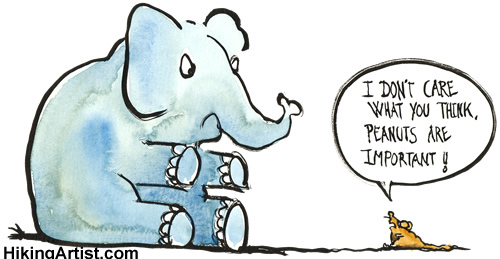
peanuts-important Recently there has been some high-profile buzz about Google's latest endeavor to unite arts and their internet products by having Google Chrome skins designed by prominent illustrators. The catch? Google will pay the artists nothing, offering exposure instead.

Understandably, many illustrators are incensed by the "offer." Though last year's iGoogle artist theme design campaign was highly successful, according to Mark Frauenfelder (an iGoogle artist), in that instance Google donated a significant amount of money in his name to a charity of his choice. This year Google is soliciting prominent illustrators ("prominent" meaning that these are illustrators whose work is already recognized and commissioned by high-profile companies that both pay and provide great exposure) and offering them no compensation. I think this is a slap in the face to the arts world.

Some very good points are discussed by Stan Schroeder at Mashable and Douglas McLennan at Arts Journal. I recommend reading their thoughts about the online community's responsibility for devaluing artists' work, seeing this as an opportunity to encourage higher levels of craftmanship, and the value of a relatively unknown artist to gaining exposure and consequently future work that would pay.

I, however, would like to address two issues that I have when a situation such as this occurs. I will do so in this and a following post.

First of all, I posit that most people who identify themselves as artists wish to make a living producing art. They do not WANT to have a desk job to enable their work. They would, ideally, be able to support themselves by producing work in their medium of choice. I am not talking about the people who happily admit to being designers "on the side," or who create art "as a hobby" and are content so doing. I am not talking about the people who, unasked, flood the web with their work free of charge. I believe that people who IDENTIFY as artists want it to be their vocation, their profession, their primary source of income, and guard it closely, hoping always that someone else will value it equally (and in concrete dollars).

It is offensive that Google, a company whose first-quarter profits saw an 8% increase over last year's (to $1.42 billion, according to the New York Times), would specifically select artists because they are well-known and well-respected and offer to pay NOTHING. It would be a different story altogether had Google held an open call for submissions, explaining at the outset that there would be no pay for the chosen designs, and allowed illustrators to decide for themselves whether they wanted to participate. (Note: even the 12-year-old winner of "Doodle for Google" received a decent-sized award for her winning drawing.) But to carefully hand-pick prominent illustrators and ask that they be a part of the project in return for exposure, shows how little art is respected by big business (and is, in my opinion, condescending). The fact that Google is SELECTING them in the first place suggests that these are artists who no longer need exposure, are at the top of their field, and should be considered valuable enough to earn a standard rate for their work.

Google's new skins are akin to packaging an unexciting product in an appealing way, something that marketing experts get PAID to do. Google would expect to pay someone to spruce up its image. Despite the positive impact these artist skins would have on Google Chrome's marketability (Chrome doesn't make my short list of browser choices), Google doesn't believe that the illustrator's work is worth a financial investment.

And if Google, a company worth billions, isn't willing to pay for top-of-the-line illustrators, what good is exposure? (Not to mention the fact that Google Chrome is not necessarily the best way to reach these illustrators' potential clients, since it depends on an individual's interest in downloading the browser to start with.) If a company knows that an illustrator is willing to work for Google for nothing, why would it want to pay the illustrator?

When Google thinks art isn't worth paying for, it is little wonder that legislators across the country question the value of arts funding.

Incidentally, I considered that this may be Google's reaction to Bing's attractive "decision engine." I contacted the provider of the stock photography that is used by Bing in an attempt to find out if they get paid for Bing's use of photos. The response I got from Jonathan, a representative of Danita Delimont stock photography, wrote: "I'm glad you like our photographers' work! Microsoft does indeed license the images they display on the Bing home page. We applaud Microsoft's decision to provide copyright information for the photos they use on Bing."

Yakkity Yak, Please Talk Back

"COMMUNICATION: LIVE" BY KONRAD WYREBEK AT SAATCHI GALLERY, LONDON

It wasn't long ago that I was your average internet user. More proficient than many, but not nearly as tech-savvy as some, I averaged a couple hours of every day online. I relied on the internet for everything from "catching up" passively with friends through their updated statuses and blogs, reading the news of the world, checking email, updating my blog and Tweets, shopping, and looking up interesting upcoming events. But among all of that, I tended to either ignore or delete the clutter generated by the various organizations that I demonstrably supported via my social networks and email-list affiliations.

Always happy to support by joining a group or becoming a fan, my participation stopped there. I rarely checked the list of updates on my Facebook homepage, or weekly inbox-fillings of "Last Two Weeks of Show! Get Tickets Now!" urgings. Unsolicited updates from these organizations and groups were of little interest to me--if I wanted to know something, I took it upon myself to seek it out.

When my production company established a group on Facebook, our personal friends became our fans--even if they were across the country, unable to attend our shows, and unlikely to donate money. It was, again, a show of support, solidarity, rather than a genuine interest in receiving electronic communication from us. There were no discussions being had, perhaps an occasional "can't come to the show this weekend" or "great performance!" but in general the group seemed little more than a space full of virtual warm bodies.

So why does it surprise (and yes, frustrate) me now that, as administrator of groups on a couple of social networking sites, I see that none of the fans or members seem eager to participate in discussions? The majority of fan- or member-generated content appears to be self-promotion or the occasional specific question (usually going unanswered by other members). Open forums asking for member input to guide administrator-generated content so that it is more pertinent and interesting to the group members have reaped little to no response. One of two comments to a call for feedback included this: "I haven't yet posted because I haven't yet seen anyone with similar interests."

Oh the irony.

Unless this user is sifting through the 640 other profiles of group members, he presumably is waiting for this like-minded stranger to make himself known. How? Probably by starting a discussion or posting a news item.

As I am becoming all too aware, that isn't likely to happen. In the occasional instance when there is a member-posted news item or discussion, the number of views it receives tend toward the single-digits (out of, I remind you, 641 members).

So why do organizations have hundreds of passive fans? Why do groups have thousands of silent members? Are these people hoping to be spoon-fed information in the manner of an RSS reader (and if so, why are they not viewing news items)? Are they overwhelmed by irrelevant postings (e.g. the self-promotional posts that verge on spam)? Intimidated because they are actually not quite clear whether what they have to contribute will be judged as valuable or not?

I can understand those individuals who accepted invitations to join and as a show of support or because they didn't want to turn down a friend and seem rude, but what about the others who find the organization or group of their own accord, request to join, and THEN lie dormant? Are they just individuals who have their own social media product, like a blog, or website, and hope that their affiliation with another group will generate more traffic for their own project?

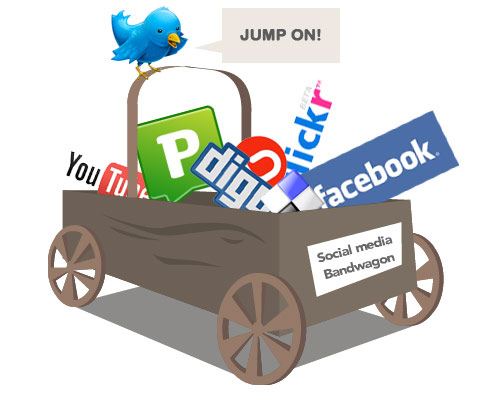
And what does this lack of interaction mean for the buzz about social media being a non-profit organization's new best friend?

Please, weigh in!

What do we Generate if not Discussion?

There's a lot being said right now about the efficacy of utilizing social networking sites for fundraising efforts.  A. Fine's blog brainstorms some real-world strategies, musing about organization/donor relationships, and how to encourage financial support. She notes that giving circles can be a place for discussion that may generate interest in other causes, raise awareness, and thereby encourage future donations. As social media changes and abets our causes, is our "audience" tuning out? Online, are our attempts to network as organizations being perceived as pitches? Sure, there are innovative ways to raise awareness, but is it just more of the same spiel? Do organizations that simply use the web as a way to market cross a line in our networking expectations that if you lead, you will also follow?

Those are my thoughts...what are yours?

Another thing to consider when using the internet to find money: I came across this article, urging caution when using the internet to find investors.

Social Media Intern: A Risk?

As social media gains momentum, both non- and for-profits are encouraged to give their web presence more attention and employ an Online Community Manager in their offices, thereby freeing up other employees whose job descriptions do not include "Update Blog," "Monitor LinkedIn Group Activity," and "Tweet." Image by Matt Hamm Image credit by Matt Hamm

In this economy, however, hiring for a new position is a financially daunting concept for non-profits. The name of the game is simplicity, streamlining, and enabling the most efficient, cost-effective business model.

Solution? Putting interns and volunteers to the work of managing an organization's online presence.

Ahh, internships. I remember my first summer internship as an undergraduate, with a very successful Chicago-based theater company. I was given stacks of brochures, testimonials, subscription forms, and shown "the right way" to put them all together. For three months I assembled press kits and marketing folders, cleaned up the files and archives, and ran menial errands. Had I been somehow incompetent, irresponsible, or destructive, there was little damage I could have done with my limited responsibilities.

But an intern charged with maintaining the online community of an organization, or managing social media--that intern has a LOT of power. For organizations lacking a strong online presence, there are great guidelines for making the most of a social media intern. If you do a quick search for the position online, job descriptions, in addition to managing Facebook pages and blogs, include "providing copy for our website," "developing the online marketing of a new documentary," and often seek an individual who is "self-motivated," and "works with little direction."

One concern about entrusting this responsibility to an intern is explored here by Heather Gardner-Madras. While Gardner-Madras questions whether "social media [will] become so important that current experimental forays will come to haunt their organizations...[will they] regret not making a serious investment in this part of their communications now or will they be glad that they were smart enough to take advantage of the skills and smarts of low budget resources while getting under way?"

In my mind, this is secondary to what I believe is a more immediate concern: who are we letting behind the wheel when we allow an intern with a short-term investment manage the direction of our organization's social media development? A non-profit's mission and goals are often shared by its long-term employees. The carefully-selected hires who toil over databases and grant-writing efforts, one hopes, are working for a mission in which they believe on a personal level. But an intern, eagerly snapped up by an organization looking for enthusiastic, cheap labor (and there's nothing wrong with that) may seek experience over idealism, want to find new, funky ways to use the tools of the web, and build a resume, rather than save the world or promote the arts. Is this student acting with your organization's best interest in mind?

I don't think it's a stretch to assume that a theater's intern is less likely to identify himself by his internship than the theater's Artistic Director--the intern's personal identity is stronger than his or her professional identity. The longer that intern holds the position, or the more s/he is paid for it, the greater his or her committment to the organization rather than simply the work.

So, this intern, who is less concerned about professional identity, is entrusted to represent your organization across the internet, and is associated with the operations of the organization. When s/he posts a blog, or updates a group, s/he is attributed with ownership, and the connections between your organization and that intern's online presence (personal blog, flickr account, Facebook page, etc.) are forged. S/he fields the discussions and questions that come through these social channels, and is the point of contact for your online audience. If that intern doesn't feel the same connection to your organization, are you missing out on the power of social media by not being represented by someone as deeply committed as you?

What if your organization is devoted to preventing animal cruelty, and your intern has a public photo album of a weekend hunting trip? Or your organization targets a more conservative, moneyed audience, and your intern has borderline-explicit photos and comments posted to his or her Facebook page? Certainly, these may be extreme examples, but what happens in this case? Are these grounds for giving ultimatums (block your profile while employed here)? What if that intern is not getting paid? If there is not a direct and obvious link between the intern's personal online identity and the work done on behalf of the organization, does it matter what the intern does online on his or her own time?

I don't know if there's an answer to the risks involved in intern-sourcing social media, and I certainly can't say that this is necessarily going to be the case with every intern. I am, after all, an intern myself.

Who I Am...or, Who Am I?

As summer commences (and let's face it, it's difficult to pretend it's still spring in these temperatures) I am here to introduce myself as your newest blogger. I could tell you about myself, my work history, and so on. You could proactively seek out online articles about or by me, or see my connections on LinkedIn, or, with my "permission," follow @Corwin82 on Twitter. Or, if your RSS feeder has just the right combination of words, you may already be following my "personal" blog.

Leading me to muse about the blurred relationship between online personal and professional identities. I am aware that this is not some groundbreaking topic, but the regular complexities of managing our personal/professional identities include unique challenges when the job in question is in the non-profit sector. Nobody, truly, can ever act with complete impunity.  Yet somehow, when acting in cyberland, the user is instilled with a sense of anonymity and security while simultaneously exposing him/herself to EVERYONE else online.

Historically, people have always had to worry about the affect of out-of-office behavior on their professional life. The degree of real-world self-disclosure or choice of actions might take into account the place, time, and audience. An individual bitching about a coworker might choose to do so to her husband, or a close friend over coffee. Likely not in an inter-office memo, or a radio broadcast, or to the coworker's best friend. Similarly, a person dealing with an addiction might discretely go to a support group 25 miles from home and not have to fear being exposed on the front page of the corporate newsletter.

But now we are provided the internet.

You may believe that your blog will only be viewed by trusted friends (so you can vent about your job, boss, financial situation, custody battle, and so forth). You can choose to allow certain people to see your Facebook page, follow your Tweets, and access the photo album of your latest trip to Vegas. You "control" your channels of self-expression, and thus, you feel safe communicating as indiscriminately as you would face-to-face with close friends.

Conversely, you may feel safely anonymous online, believing that your clever handle, pseudonyms and codes for people and places, and cryptic profile ensure your blog will only be viewed by strangers (so you can confess infidelity, "secret" desires, the self-gifted bonus you finagled by skimming a little off the top). After all, in the tangled web of the wide world of cyberspace, what are the chances that someone you know in REAL life will learn anything more about you than what you would disclose face to face? There's no danger in your tennis partner learning about your secret loathing for him, or your boss finding out that you want her job at all costs, or your recent, devastating prognosis that could impact your insurance eligibility or ability to find work. Because you feel safe, you don't feel the need to censor your thoughts.

The internet isn't your bosom buddy, nor is it the complete stranger you meet while traveling and share many shots of ouzo, too much information, and nothing else. It's not the privacy of your bedroom, and it's not your cubicle. It's not strictly personal, nor strictly anonymous. There's no clear delineation of where "you" in your secret, most personal self ends and "you-as-representative-of-your-work" begins. The internet is a sphere that conflates all representations of ourselves into a strange new beast that is, ultimately, accessible by anyone, anywhere. There are entire companies devoted to managing how we come across online, new tools to decide who is allowed to know what, and a lot of very interesting discussions being held (online!) about this conundrum.

I would argue that people who work in academia and politics, for the most part, have long been cautious about what is documented and where. But as younger, more web-reliant generations enter the workforce, and an online presence supplements, and replaces, other media outlets, the question of how we present ourselves (and are perceived) online becomes increasingly imperative. Web expression is no longer dominated by angst-ridden teenagers blogging about broken hearts. Those former teenagers are now working online on behalf of corporations like Domino's Pizza (to counteract the damage done by angst-ridden teenagers), the Pope, and the White House.

As artists, or professionals in the arts, who use the internet to muse, pronounce, declaim, advertise, and in other ways reach out, what are we to do to delineate who we are as professionals from who we are as people? Is there a difference? Must there be? How does this influence how our work is perceived/received? There are the channels that we identify as more "professional," like LinkedIn, an organization's own website with its own blog, podcast, etc. What about the ones we identify as mainly "personal," such as Facebook (increasingly used by organizations, companies, and causes)? And the ones that are something of a crossover, like Twitter? Must we always be conscious of representing our organization? What if I am employed by an organization that is involved in practices which are in conflict with my personal beliefs? What if as an individual I engage in activities which conflict with the mission of the organization for which I work? And, as we, as arts non-profits, look for ways to cut costs and bring in more outside help to manage our organization's online presence, are we taking a risk by entrusting this job to volunteers and interns, whose online power may equal (or surpass) our own?

Each question leads to additional questions, so I will do my best to approach these over the next few posts.

(And it's nice to meet you!)

All the news that's fit to Tweet

It seems that over the past week Twitter has made it into the headlines for both being an amazing new communication tool, and how ridiculously it is being used.  This past Monday on the Daily Show John Stewart pointed out some of the effects that Twitter has on our perception of both the news media and congress.  While many members of Congress were Twittering through Obama’s most recent speech, the inane messages seemed to detract from the gravity of the event. As John Stewart said, “..these messages don’t enlighten or inform, it’s a gimmick that actually lessens the credibility of institutions in desperate need of authority." Regardless of the method of communication, why should we care unless you have something meaningful to say. Both the London Times and The Washington Post have tried to address the question as to why we twitter, only to come to the conclusion that we have a terribly underdeveloped sense of self and need to be reassured that we exist. From the London Times...

The clinical psychologist Oliver James has his reservations. "Twittering stems from a lack of identity. It's a constant update of who you are, what you are, where you are. Nobody would Twitter if they had a strong sense of identity."

"We are the most narcissistic age ever," agrees Dr David Lewis, a cognitive neuropsychologist and director of research based at the University of Sussex. "Using Twitter suggests a level of insecurity whereby, unless people recognise you, you cease to exist. It may stave off insecurity in the short term, but it won't cure it."

This is generally why I can't stand most Twitter feeds.  Yes it is a new and powerful means of communication, but it seems to me that right now it is primarily being used as a posturing mechanism to help aging organizations appear youthful and with it.  The majority of the Twitter feeds out there are either devoid of content, incredibly trivial or mundane.  They only communicate that someone exists and not much more.

That being said, there are some really amazing ways that Twitter is being used.  Organizations that understand the importance of real time communication with their audiences are pushing the boundaries with Twitter and capitalizing on the unique ways that they can receive audience feedback.

The Twitter Art feed at the Brooklyn Museum is part their new 1stfans program, and allows members access to tweets by contemporary artists every month, and has featured works by artists such as Mary Temple and An Xiao that utilize the social feedback aspect of Twitter.   An Xiao's piece was about Morse code and the history of instant communication in which 1st fans were asked to feed to tweet using Morse code, while Mary Temple's piece Currency provides a daily link to a drawing made from current news articles about important world leaders in the media.

Conferences are also beginning to utilize Twitter Back Channels to allow their audiences to discuss the content of a presentation in real time without disrupting the event.  This is in essence what we tend to get scolded for in school, passing notes, making fun of a presenter's overuse of the word "nascent," and whispering to a neighbor about the content of the presentation.  More often than not, these conversations are being spurred on by the speaker, and Twitter is creating a real-time avenue for discussion that is centered around the speaker's presentation.  This is creating a non-invasive avenue for audience participation and places the focus of these events back on the community of people attending instead of just sitting at the feet of the keynote speaker.

These organizations are utilizing Twitter feeds for audience engagement and a way for inducing a flattened level of communication.   The Brooklyn Museum also seems to be using the Twitter feed as an interesting source of revenue, as 1stfans membership costs $20 a year.

I can't help to think that it might be useful way to get instant feedback on the progress of projects and tasks at work, especially if certain employees are telecommuting or out of the office.  And the fact that updates can be sent by phone, allows updates to happen when access to a computer is limited.

Share what you think about Twitter, and some of the possible real world applications of using Twitter for audience (or employee) engagement in the comments below.

Surviving the Economic Meltdown as a Nonprofit

Several posts from around the arts blogging community have addressed the issue of fundraising in financially tough times. ("Tough" is an understatement, I know.) TechSoup recently posted an entry that pulls together some of the posts, and I thought it was important to share the link here. Obviously, there are no silver bullets, but it's helpful to see an overview of other organizations' strategies for fundraising when wallets are light. If nothing else, it's good to know that all nonprofits are sharing in this struggle.

So what technology tools are important for surviving the economic downturn (aka: recession, depression, slowdown, bump in the financial road)?

Social Media - Facebook, MySpace, Flickr and other online social resources are still the best way to use the Web to create community and investment in your organization. And if someone is truly invested in you, they will continue to support you regardless of their financial situation. Activate your network and get others to spread the news about how great you are.

Donation Buttons, Links and Widgets - (Please note: This post is not intended to endorse Barack Obama. Rather, this is an endorsement of his fantastic digital asset team. I feel there are valuable lessons to be learned by the nonprofit world from Obama's online campaign strategies.) Barack Obama's digital campaign efforts have been astounding. Even if he doesn't win the upcoming election, his campaign's online fundraising success has been extraordinary. One thing that has led to this success is the sheer number of times the campaign asks for money. In every message I receive from them, be it via Web, email or mobile device, there is a donation link or button. And because of the way their communications have been tailored and carefully crafted, I don't think of them as spam. In my opinion, if someone has opted into your lists, they're telling you they're interested in your work. As any fundraising pro will tell you, the secret to success is not being afraid to ask for money over and over and over again. Also, the Obama team hasn't asked me to give large gifts. Typically they're asking for $25-50. It's much easier and more likely for me to give $25 a few times a year than it is for me to give $250 in one lump sum. This may sound odd, but why not nickel and dime your supporters?

Online Fundraising Events - Rather than dishing out tons of money for artist travel, catering and rental fees when you want to offer fundraising events, why not try to host a few fee-based online opportunities? For instance, an arts organization could team up with a local band to offer an online concert followed by a chat session. You could require a donation in order for a user to access the concert and followup chat. Obviously, there is no virtual replacement for a live gala, but you may be overlooking some valuable opportunities for providing donors additional online content.

An important thing to remember is that in times of financial distress, it is more important than ever to make sure you have a clear and measurable communication strategy. For more information on establishing clear and effective communication goals, check out the Spitfire Strategies Smart Chart 3.0. This doesn't focus exclusively on digital communications, but it can be easily tailored for any type of message.

Save the Museum, Save the World

Today not only marks the return of "Heroes" (for super-hero fans like me), it also marks the beginning of Superstruct, a multi-player online game from the Institute for the Future (IFTF) in collaboration with the Center for the Future of Museums, an initiative of the American Association of MuseumsSuperstruct is the first Massively Multiplayer Forecasting Game—designed to help solve real-world problems by harnessing the collective wisdom of participants to create a collaborative, open source simulation of a possible future.

Based on projections culled from forecast research conducted by IFTF, the following extreme scenarios are proposed for museums as part of the game:

"It’s 2019. Your museum is informed that an international group currently touring your building was exposed to the latest deadly strain of Respiratory Distress Syndrome. You are instructed to lock down the museum and shelter staff and visitors in place while authorities determine whether anyone is infected. Are you prepared to deal with this?"

Other snapshots from 2019:

  • Is your museum ready to help your community cope with an influx of refugees fleeing climate change, food shortages and political upheaval?
  • How will your operations change in the face of soaring energy prices or collapse of the food production and distribution system?
  • Your museum depends on its website to deliver information and attract visitors, but your content has been corrupted repeatedly in the past few months by hackers attempting to undermine your credibility. How do you adapt?"

To read more about the game, visit www.iftf.org/node/2098.

The Center for the Future of Museums intends to use the content contributed by museums as a jumping-off point for further planning and discussion within the museum field. To receive e-mail alerts from the Center for the Future of Museums about the museum-specific storyline in Superstruct, contact CFM.

One Man Enters, Two Men Leave (Kinda)

It's not quite Mad Max Beyond Thunderdome -  there are no chainsaws, no axes, and no high pitched whistles - but the recently developed and now-on-the-market Aguru Dome does make things interesting. The Aguru DomeA person enters the dome. Bright lights flash. A cornucopia of photos are taken. Many, many computers think. And, Bob's your uncle! A digital, 3D model of their face is created. A rendering so good, it can be then used to create incredibly realistic digital effects in film (think action sequences), video games, and so on.

Now, I'm not a CGI expert, so you can get better details from the BBC article I read (thanks to artsJournal), this DV.com article, and the Aguru Images Web site. However, I have been known to be an actor from time to time. The Aguru Dome makes me feel just a wee bit uncomfortable. Why in the world would I step into that thing? (Not that anyone would want a 3D model of my face.) I get in, and you get a digital copy of my face that, theoretically, can replace me so well that people won't notice the difference. And you have it forever.

There has been debate about whether CGI could replace live actors for some time now. There have been cases of actors and their performances being digitized, but facial rendering has been one of the weak suits of CGI. This technology seems to get us closer to technicians being able to animate the human face, without needing a live actor to do anything other than sit still for a few minutes.

I wonder if the actors' unions have started talking about this yet.  The Aguru Dome ships out to customers in September 2008.

Building a Web App in Four Days for $10,000

TechCrunch has a really interesting piece by Ryan Carson about building a Web application in just four days. Naturally, arts organizations don't have the human resources and $10,000 to throw around, but the read really drives home how quickly new apps can be deployed given current technologies. Meet Matt

The result of Carson's team's efforts is Matt (Multi account twitter tweeting). Useful? Maybe. Beside the point? Absolutely.

What I Learned at the Americans for the Arts Convention...

Remember those essays you had to write in elementary school - e.g. "What I did for summer vacation"?  That's sort of what this post feels like since Brad chastised me for being remiss in my blogging duties.  Of course, I fired him - again.  I do that a lot.  It just never seems to stick. AFTA held this year's convention in Philadelphia - the city of brotherly love (and sisterly affection).  The hotel sold out long before I climbed out of my procrastination long enough to book a room.  Thankfully, I found a room at a nearby hotel - directly across the street from where they were filming Transformers 2.  If only I hadn't gotten bored and walked out of Transformers, then I might have been more starry eyed.

After three days in Philly with Americans for the Arts, I return to the Burgh with three essential take-aways:

1.  Affirmation -- In a recent (soon to be published) environmental scan of the arts community conducted by Americans for the Arts, it has been determined that, "The influence of technology, unconstrained access, and the new immediacy of communication on traditional and new and evolving production/delivery mechanisms is not yet entirely understood."  While the influence of technology on production/delivery may not be fully understood, the impact of technology on the arts community has been seismic.  Between AFTA and the NPAC conventions this month, I come back to the Burgh knowing that our Technology in the Arts conference, blog, podcast, and site resources are truly useful tools for the field to assist them in navigating unfamiliar terrain.

2.  Futurists Rock -  The Keynote Address was given by futurist Andrew Zolli, founder of Z+ Partners and organizer of the PopTech conference, in the manner that I've yearned for at all of the conferences I have attended throughout my professional life:  highly engaging, provocative and witty.  He touched on a multitude of issues - from innovation and "the tyranny of choice" to experiential economics, "the Long Tail" and "Citizen Brand." I think it was the first time that I went to a conference where the keynote speaker talked for 45 minutes, and I wanted to hear more!  For those of you who were not able to attend AFTA this year (or for those of you who just want to hear more of what Andrew has to say), check out these video clips on YouTube.

3.  The RenGen is Here - On Friday, I had the pleasure of listening to Patricia Martin talk about the premise behind her book RenGen: Renaissance Generation - The Rise of the Cultural Consumer and What It Means to Your Business.  Here's a brief bit from Patricia about the event that inspired her to do the research for this book:

I tried to run out to the AFTA bookstore to buy RenGen - but of course, it was already gone.  Amazon, here I come!

My two favorite concepts that she talked about during her session are:

  • RenGen is a psychographic NOT a demographic. What characterizes this psychographic?
    • Lifelong learners
    • Time-starved idealists
    • Sensualists
    • Eco-conscious
    • Fusionists
    • Inner-directed creatives
  • Collective Creativity - a post on the concept from her blog.

Okay, folks, I have blogged enough today to keep the Brad at bay.  I pinkie-swear to do better!

Who wants to be a curator?

Many arts organization Web sites offer users the opportunity to contribute to their online programming in some way, but it's typically an artificial engagement practice. Rarely do users ever offer up anything truly artistic, and it's even rarer still for the organization to showcase the work in a meaningful way. However, the Brooklyn Museum is taking the idea of "you" as the online curator to a new level and letting Web visitors select the pieces for an upcoming exhibit in its physical space. Its upcoming photography show Click! A Crowd-Curated Exhibit lets users register and adjudicate work that was accepted as part of a March 2008 open call. The submitting photographers were asked to "consider Brooklyn's transformation over the years, its past and its present, and submit a photograph that captured the 'changing face(s) of Brooklyn.'"

The Brooklym Museum\'s crowd-curated exhibit

Now that the call for submissions has closed, the Museum has launched a Web interface that walks users through the registration and evaluation process. Rather than just showing images and asking users to vote for their favorites, though, the Brooklyn Museum offers evaluation guidelines. This is a real exhibit, and the Museum wants thoughtful consideration from its curators.

The Click! curator interface presents the image, its title and a description. Clicking the "Viewing Size" functions will increase or decrease the image size for those who wish to adjust for their screen resolutions or who wish to scrutinize the photo's detail. Users can also see thumbnails of the next images to be evaluated.

When the "curator" is ready to evaluate an image, he or she needs only to adjust the evaluation slider between "Most Effective" and "Least Effective" based on two questions presented by the Museum:

  1. How well does the image illustrate or express the theme "The Changing Faces of Brooklyn"?
  2. Do you consider this an exceptional image, given the technique and aesthetics?

"Curators" have until May 23, 2008, to submit their evaluations, and the exhibit will run from June 27-August 10, 2008, at the Brooklyn Museum.

While it's true that the crowd-curated approach doesn't work for all types of exhibits, the Brooklyn Museum has chosen a medium and theme that works well with an audience evaluation process. They ask about "technique and aesthetic," but the primary question is about Brooklyn's transformation.

So I guess my questions are:

  1. Though it certainly isn't necessary to be an art expert to be qualified to evaluate the Click! submissions, should one at least be fairly familiar with Brooklyn?
  2. Is this type of non-expert evaluation - as one recent blog reader mentioned - contributing to the dumbing down of art?
  3. If enough people evaluate the work, does the group consensus validate that piece for a public show?

I'd be most interested to hear what formally educated curators have to say about the crowd-curated concept.

...And in the old-fashioned tradition of eating words...

Maybe we do get some extras out of the deal, too! A piece I just saw in today's NYT describes new research that suggests musicians (specifically conductors) are able to simultaneously process sound and sight more effectively than the average person. So there ya go. The benefit of art is art. And the benefit of training musically is heightened senses. (Who woulda thought?)

Art for art's sake

[Writers note: apologies are given in advance for the blatant lack of technology talk in this post.] A couple weeks ago, I was a panelist at an Americans for the Arts "Creative Conversation" here in San Francisco. We were hosted at the lovely Brava Theater Company in the Mission. A group of passionate arts administrators, we sat in a circle on the stage and discussed a wide range of topics including collaboration, community engagement, grass roots initiatives, lobbying and activism.

And, of course, we discussed obtaining funding for the arts. How do you make a compelling case? How do you get people on board? How do you educate folks about your programming? And, inevitably... the question that is always raised when we talk about raising money for our field: what are the ACTUAL benefits of the arts?

Technology in the Service of Art

Lately I’ve been experimenting with Ableton’s Live software, which allows me to create interesting arrangements, construct new pieces from scratch, and generally play with music. Live lets me lay down every single layer within a track… by myself… fast… with thousands of different sounds at my disposal. It’s fantastic. Best of all, the anal retentive freak in me is able to go back and revise music I record to make sure that in the “saved” version of the piece, I hit the note smack dab at the beginning of the third thirty-second of the beat, rather than the hairs-breadth off that I actually played. Far from weaning me off traditional music making, Live has deepened my respect and love for the craft of artistry. I find that when I’m fiddling around with the digital manifestation of the music, trying to bring down the volume on the pedal point tones, or simply arrange the notes into a harmonic minor scale with just the mouse, I’m incredibly impatient with a task that should just HAPPEN under my finger tips.

Don’t get me wrong. Technology is wonderful. With Photoshop I can manipulate my images without investing in a full dark-room setup. With Illustrator I can create versatile graphics that can be used just about anywhere. With Live I can be an entire orchestra without leaving my home. And technology is especially wonderful when it enhances rather than detracts from art. When it allows me to do things that aren’t otherwise feasible. When it lets me experience things I can’t normally access.

Like the use of technology in Lois Greenfield and the Australian Dance Theater’s new performance, Held. For this work, Greenfield photographs the dancers mid-movement and the images are instantly projected onto a screen. This is a perfect exemplification of the Technology in the Service of Art principle. Greenfield notes in the Telegraph that in these images “you are seeing something you couldn't without the benefit of the photograph. I capture 1/2,000th of a second and our brains can't register that. But we can see it on a picture."

Held uses technology to intensify our ability to cherish and appreciate the craft of the artists. It’s a beautiful marriage of media because it respects the strengths and limitations of every component involved, from the camera to the artists to the audience.

Is Art and Shopping the new Art and Entertainment?

In our Strategic Planning class last night, our professor and CEO of the Pittsburgh Symphony Orchestra, Larry Tamburri, made mention of the current trend to link art with entertainment. On city websites and in tourist guides, "Arts & Entertainment" abounds- correlating performance and visual arts spaces with movies, bowling alleys and roller rinks. While these sectors, along with sports, are competitive for the use of our leisure time, one has to ponder whether the arts is becoming diluted or just marginalized by efficient marketing. This discussion, however, becomes completely moot as a whole new space and concept has presented itself in Winston-Salem, NC.

Wal-mArt

It's mildly disturbing and yet I can't help to acknowledge that it might just be another form of corporate sponsorship. There is also the chance that it was just a clause of the negotiation that allowed Wal-Mart to set up shop there.

A true test would be to see if the sculptures are "Public Art" or "Art in a Public Space." Without having a good picture to make reference, I would be really interested to see if Wal-Mart finally designed a building that reflected the community architecture, and by extension, contracted a sculpture that reflected its environs. �

Interpreting Culture, Part 2

As the shelf life of “new” continues to be defined by smaller and smaller time increments, how do we as arts administrators help artists to do their jobs – ask the timeless questions – in a timely fashion? I’m a big fan of John Seabrook’s 2001 book NoBrow: the Culture of Marketing and the Marketing of Culture, a series of essays that illustrate how these two phenomena work in contemporary American society. In one essay, Seabrook compares his own life to that of his father’s, noting the evolution of high-brow/low-brow distinctions are made through clothes: his father had a suit for every occasion, whereas “a Chemical Brothers T-shirt will get me further in many places than my father’s suit.”

One implication of Seabrook’s message is that in order to communicate effectively in a time when identity is defined by taste, arts organizations must realize that an artist’s message will be read in the specific context of a highly customized, consumption-driven life. People filter “high art” messages through the same lens they use to see billboards, print advertising, television commercials, product placements, movie trailers, product jingles…

What tools can we use to deliver artists’ content quickly and effectively? What role do we play in making sure their voices are heard clearly, and on time (particularly on a day like today)? How do we “buy in” to all the exciting two-way communication technology tools available to us now without “selling out”?

Music on the Brain...

I read a great article on Wired.com today about a new book by neuroscientist Daniel Levitin called This is Your Brain on Music: The Science of a Human Obsession. The book discusses our neurological reaction to music and examines why humans have loved music since cavemen were banging stones together. (Okay, I'm just assuming cavemen banged stones together for musical entertainment... that's not necessarily scientific fact.)

Read the full WIRED article.