
In this episode, Angela Johnson interviews Professor Rahul Telang, author of the book "Streaming, Sharing, Stealing: Big Data and the Future of Entertainment." They discuss the role of streaming in the entertainment and arts industries.
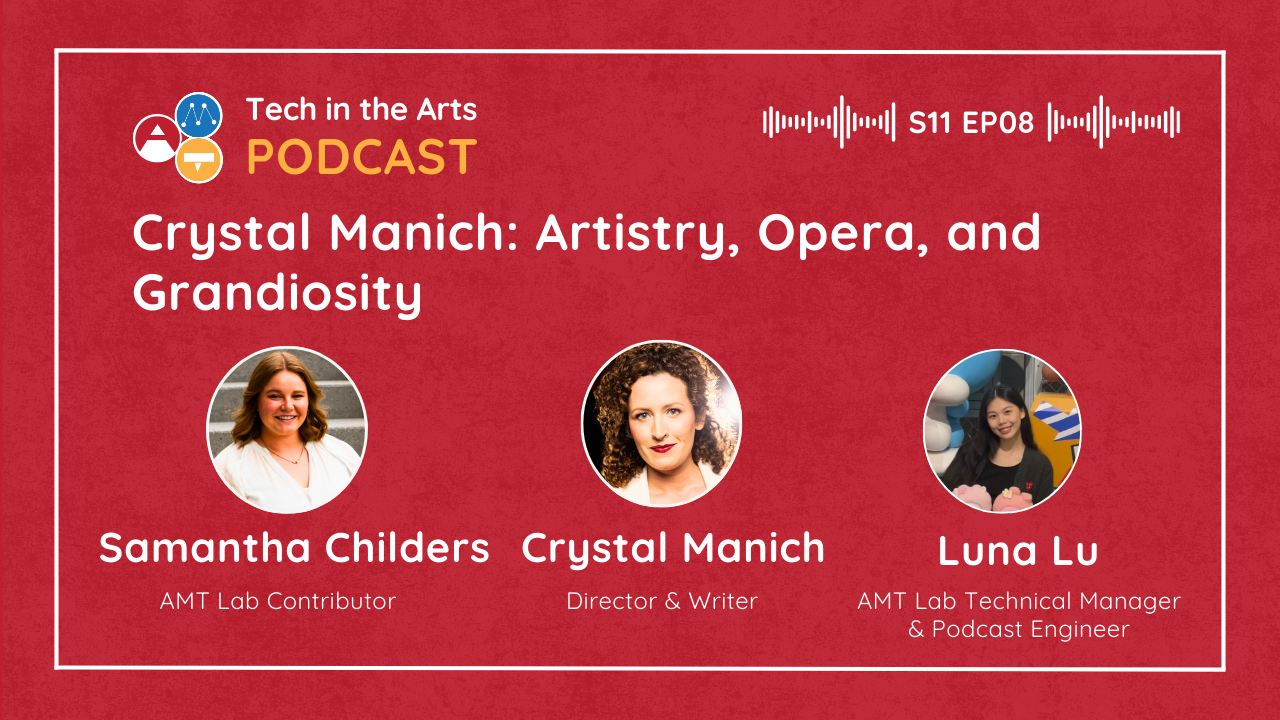
In this episode of the Arts Management and Technology Podcast: Tech in the Arts, Samantha Childers and Luna Lu speak with Emmy-nominated director and librettist Crystal Manich about her international career across opera, theater, and Cirque du Soleil, the development of her new opera Time to Act, and how emerging technologies like AI are reshaping creative work in the arts. Crystal reflects on storytelling in opera, directing large-scale productions around the world, and the importance of preserving human creativity while responsibly integrating AI as a tool for research, organization, and artistic production.
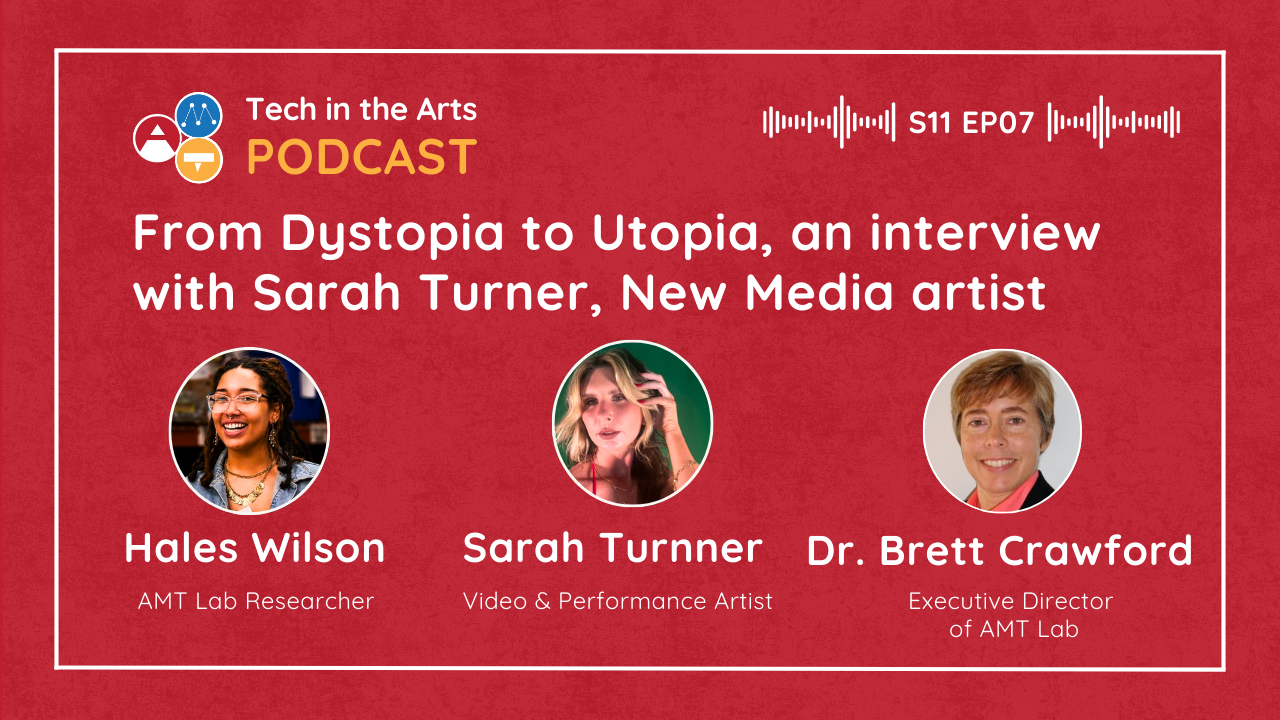
In this episode of the Arts Management and Technology Podcast: Tech in the Arts, Dr. Brett Ashley Crawford and Hales Wilson speak with media artist Sarah Turner about her interdisciplinary practice at the intersection of emerging technology, performance, digital culture, and arts administration. Turner reflects on how her background in history, arts management, and experimental video informs her work critiquing platforms such as Zoom, blockchain, and AI, as well as her long-term exploration of censorship, NSFW online spaces, and alternative distribution models. The conversation traces her experiences balancing administrative and artistic roles, building DIY communities through projects like mobile public projections, and navigating institutional boundaries around funding and content. Turner also discusses her recent AI-focused work—particularly her playful yet critical “Dolphins” series—as a way to interrogate utopian fantasies, oracle-like knowledge systems, and the absurdities of human–AI interaction. The episode closes with reflections on adapting to rapidly changing technologies and Turner’s advice to emerging digital artists: embrace experimentation, break tools intentionally, and treat media art as a space of play, critique, and collective making.
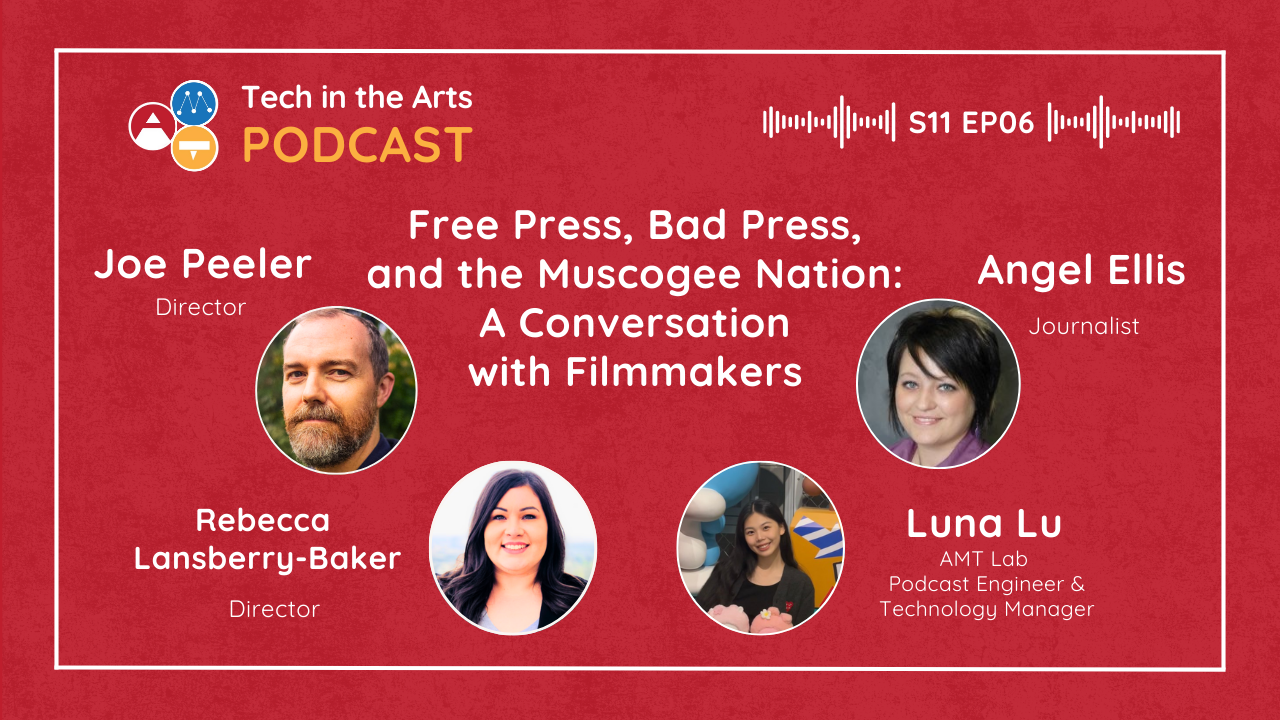
In this episode of the Arts Management and Technology Lab, host Luna Lu speaks with Bad Press co-directors Rebecca Lansberry-Baker and Joe Peeler, alongside journalist and film subject Angel Ellis, about the making of their Sundance 2023 award-winning documentary. The conversation explores how the team came together, the ethical and creative challenges of documenting press censorship within the Muscogee (Creek) Nation, and the tension between tribal sovereignty and press freedom. Through Angel Ellis’s experience as a journalist turned whistleblower, the episode highlights the vital role of independent Indigenous media, transparency, and civic participation, while also reflecting on trust, community-based storytelling, and the power of individuals to effect democratic change.
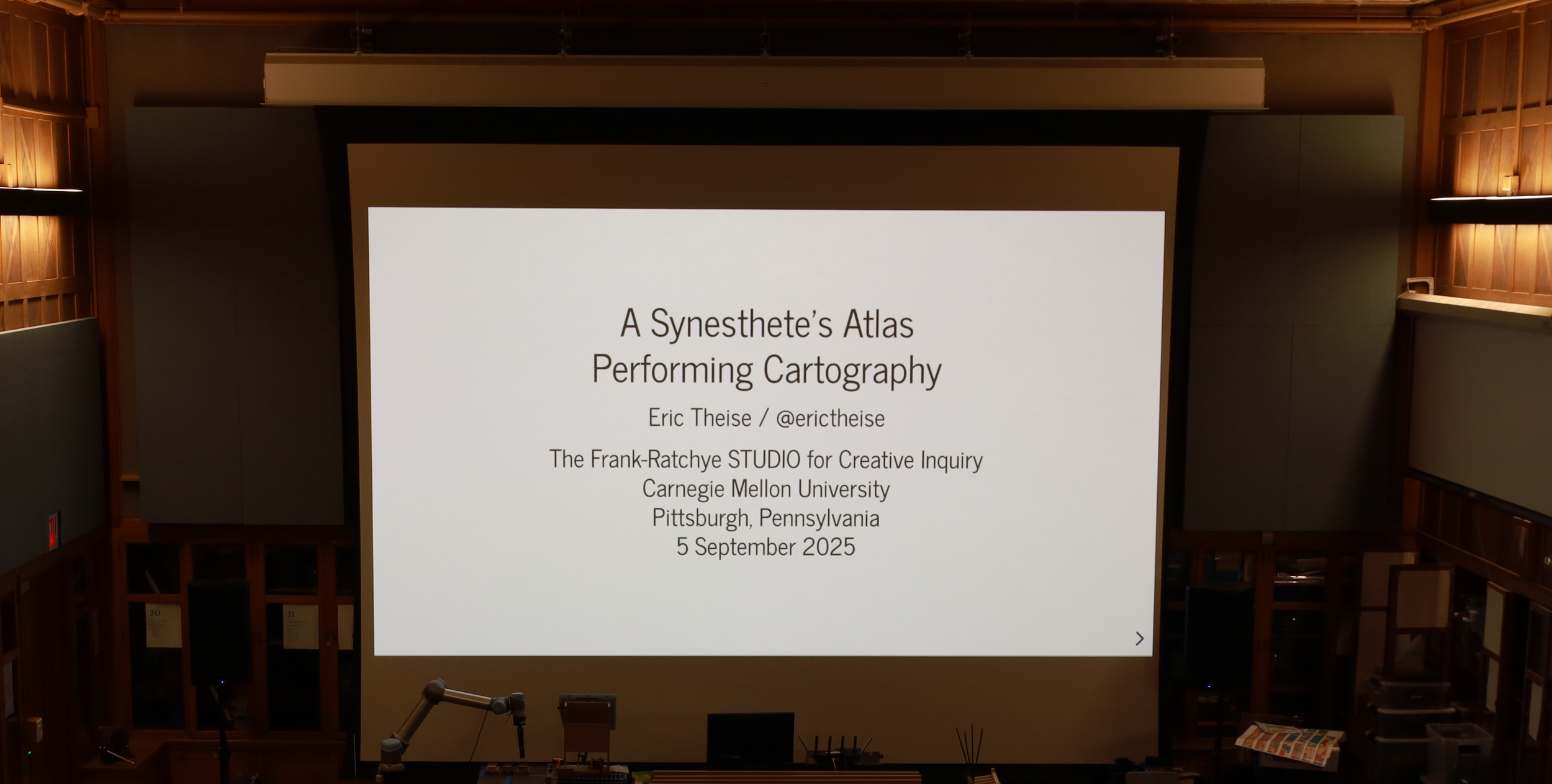
Eric Theise is a geospatial engineer, filmmaker, and performance artist. On September 5, 2025, he shared “A Synesthete’s Atlas” Performing Cartography, in an artist talk at the Frank-Ratchye Studio for Creative Inquiry at the College of Fine Arts. The following is a joint effort by Nate Xiang, who attended the artist talk, and an interview with Eric afterwards.
In this episode of the Arts Management and Technology Lab, Samantha Childers explores why so many songs recommended by streaming platforms like Spotify, Apple Music, Amazon Music, and YouTube Music sound strikingly similar. She breaks down the inner workings of music streaming algorithms—how metadata, collaborative filtering, content-based filtering, and continuous feedback loops collectively shape the “perfect playlist.” Childers also examines Spotify features such as Discover Weekly and Discovery Mode, uncovering how these tools influence music discovery, artist visibility, and even compositional trends as musicians increasingly write with algorithms in mind. Alongside these technical insights, she raises critical ethical questions about data privacy, algorithmic bias, pay-to-play practices, and the shrinking role of human curation. Ultimately, the episode invites listeners to rethink how algorithm-driven platforms shape not only what we hear but also how we discover, value, and experience music.