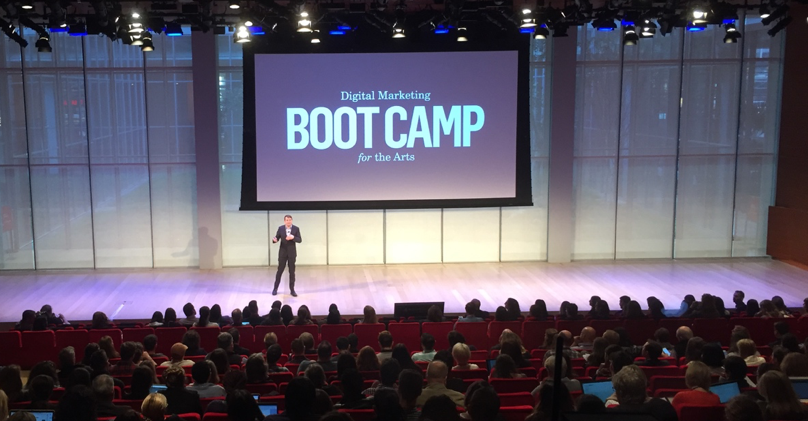
This year’s Digital Marketing Boot Camp for the Arts had a ton to offer. Every year Capacity Interactive, a digital marketing consulting firm for the arts, brings together digital experts and arts marketers to share, learn and have fun along the way. Digital marketing is a world that changes every single day, so it can be difficult to keep up. Amidst all of the powerful presentations at Boot Camp, here are the top 10 takeaways (in no particular order) every arts marketer needs to know:
1. Sports and the arts are not all that different.
Arts marketers should take note of sports marketing’s ability to build the brand and the players. Use behind the scenes footage. Things that are uninteresting to you are almost definitely interesting to your audiences. Former Marketing Director of Houston Dynamo and Dash Amber Cox dazzled the Boot Camp crowd as the closing speaker. Amber shared how her team took advantage of “behind the scenes” locker room pep talks by taking video footage to share on social media, as well as embracing National “Whatever” Day. A personal favorite was the way Houston Dynamo shared their love for tacos with this soccer-taco embrace.
2. Stop saving thousands for website overhauls every 5 years.
Start now by making a user-tested, mobile-focused website, and then set aside small portions of your budget to A/B test and optimize each year. Instead of spending $250,000 every 5 years, spend $50,000 every year. This idea of iterative website design was mentioned by multiple Boot Camp experts, especially by Yosaif Cohain, Senior Director of Analytics at Capacity Interactive.

3. Video is king.
Mark Zuckerberg said that within 5 years our Facebook newsfeeds will be dominated by video, and many of 2016’s Boot Camp speakers would agree. A panel led by Christopher Williams proved that video doesn’t have to break the bank. Steppenwolf’s Joel Moorman discussed how he stretches his limited budget to create a trailer, creative staff interview and audience reaction video for every show in the season. Caramoor’s Morgan Boecher scrappily pulled together an impressive video and suggested other arts organizations should follow his lead and use the resources available to them. Shoot your footage in your executive director’s house, use your staff as your actors and invest in good quality equipment that will pay for itself once your campaigns start taking off.
4. Digital is where marketers and fundraisers should be living in harmony.
Digital isn’t just a space for marketers. Development teams need to join forces with their marketing teams to reach wider audiences on social channels. Even better? Collaborate on inspirational videos like Jazz at Lincoln Center and Theater Development Fund did to drive fundraising campaigns.
5. You must be taking advantage of free money.
One of the most motivational presentations of the conference? Capacity Interactive’s Kathleen McFarlane’s contagious excitement about search engine marketing. Yup, that’s right- search engine marketing. If your organization hasn’t done so already, apply for a Google Grant. You’ll get $10,000 a month to spend on SEM. Still afraid of SEM? Hit up Kathleen, she’ll come to your rescue.
6. Focus on keeping your social posts topical. Say more with less.
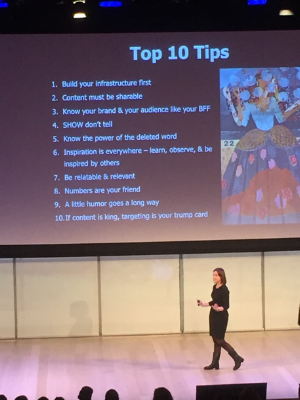
A high point of the conference was Erica Fortwengler sharing her team’s digital transformation at The Art League. Erica and her team have seen incredible results by ripping apart their marketing budget to focus more on digital and less on traditional marketing methods. Running social media campaigns is often a team effort. The Art League’s success is a product of their timely and topical content and thoughtful targeting methods. We’re talking 2,679% ROIs, folks.
7. Email still pays the bills.
The “inbox” is still a comfort zone for many. While your arts organization should be expanding its social presence on Facebook, YouTube and Instagram, don’t forget about your email campaigns. Michael Barber of Barber & Hewitt presented on creating personalized, easily scroll-able email content that doesn’t require your audience to pinch and zoom. In Mathew Sweezey of Saleforce’s words “use email as the key to social media.” And once you’ve mastered that, move on to email automation.
8. You must find a way to get executive buy-in.
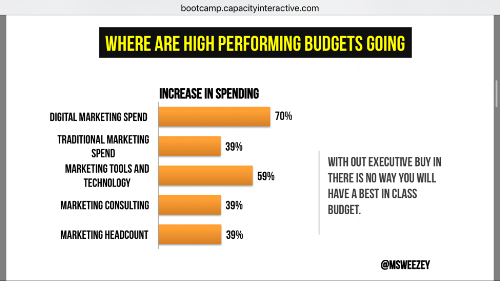
Digital is essential, but it isn’t cheap. You need to convince your leadership teams and boards that digital is worth the investment. Mathew Sweezey of Salesforce shared what some of the highest performing marketing teams out there are doing. They start with getting executive buy-in and properly distributing their budgets. Wondering how to convince your executive team and board? Look to your data- chances are it holds the key to begin your digital awakening.
9. It’s all about your mobile purchase path.
Everywhere you go, you see people attached at the thumb to their phones. People now expect to do just about anything with their phones, including buying tickets to shows. We as an industry must design our mobile user experiences with the goal of allowing our audiences to easily purchase on mobile. Let’s meet our audiences where their eyes (and thumbs) are.
10. Radical Change is essential for success.
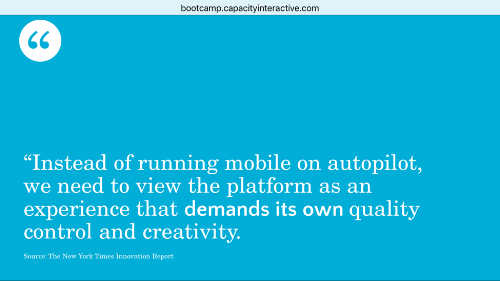
Erik Gensler’s session on takeaways from the leaked New York Times Innovation Report showed how the NYT began embracing social and digital channels in order to become a stronger company. And arts organizations must do this too. This week, there are only 590,000 New York Times weekday print copies in circulation. In the same week, Jacob’s Pillow had an organic reach on Facebook of 1 million. If your organization isn’t embracing change, you aren’t going to survive. Being a small organization doesn’t excuse you from investing in digital. Start small if you need to, but start now. If there’s one thing all Boot Camp attendees now know as a truth: digital marketing pays off.