Some Additional Thoughts on Kickstarter and Arts Funding

Last Friday we had the pleasure of welcoming Stephanie Pereira, Art Program Director for Kickstarter, a site that we have profiled, examined and analyzed a number of times here on the blog, to Carnegie Mellon for a speaker series event for our Master of Arts Management program. Her presentation and Q&A session talked about how projects are started, the rules for the site, and a look at some of the more interesting projects the site has seen as of late. As a policy student, I am always fascinated by numbers and what trends are driving the dynamic changes we are seeing in the arts community. Before I go back to my usual beat of looking at how the worlds of art, technology and policy intersect, I wanted to pause this week and examine some of the statistics that were presented at Friday’s event, and what they say about the nature of giving in the art world.

As anyone who is familiar with Kickstarter can tell you, their growth in recent years has been nothing short of astounding. I recently looked at how their estimated funding level for 2012 is set to eclipse the entire annual funding for the National Endowment for the Arts (NEA), a federally funded arts program. That kind of grassroots energy, passion and dollar commitment is a testament to a real market for substantive funding for art projects at the national level.

Why has it taken this long for large scale arts funding to reach the national stage? Technology would certainly be one answer, as the world of social media has opened up other industries to new funding mechanisms and audience participation. And while there are other excellent crowdfunding resources on the web, Kickstarter remains the most visible, offering artists the best potential opportunity to ultimately create their projects.

Anytime you have a site like Kickstarter that changes the way the arts are funded here in the U.S., a look behind the curtain at some of the statistics is a welcome way of analyzing what exactly is responsible for its success.

One important stat to point out about Kickstarter: while the recent projects that eclipsed the $1 million mark receive most of the attention, the vast majority of successful projects fall in the $1,000-$5,000 range. The rewards offered for these projects pale in comparison to those of the more ambitious projects, but having such a low threshold naturally entices more people to commit dollars in the hope that a project they admire and want to see is successful.

Another important stat to point out: the average pledge amount is not, as I would have expected, in the $10-20 range. According to Kickstarter, it is actually $71, which shows people who are pledging money to these projects are donating more than a couple cups of coffee: these are real dollars being committed here, and it is of little surprise that with the thousands of projects being featured on the main page of the site over any given week, that so much money is being pledged to the wide variety of projects on display.

Perhaps the most interesting statistic, however, is what Kickstarter refers to as the “tipping point” for project success: once a project reaches pledges totaling 30 percent of its funding goal, it has about a 90 percent chance of reaching its target. This puts a lot of pressure on artists and project leaders to get their main support system at the outset (i.e., their friends and family) to commit funds in an effort to pass that threshold. While not a guarantee, it is fascinating to see how often projects reach their end goals when they pass a common threshold.

Finally, it may surprise you to learn that the three categories that receive the most pledges do not include paintings, or public art pieces, or video games: the top three categories consist of film, music, and design (with film being the winner by a large margin; dozens of films are now being released each year that were funded through Kickstarter, with many of them debuting at SXSW a few weeks ago).

These are just a few of the hundreds of statistics that Kickstarter has provided over the years. Their blog is a great resource for a look at the trends and figures that help explain the quantitative success behind the site, and is definitely worth bookmarking.

We love writing about Kickstarter here at Tech in the Arts, and as the site continues to grow in future years and brings to life thousands of art projects, we can’t wait to see what kind of ideas and projects come our way.

In Case You Missed It - March 2012

March was a delightful month, and I hope you also enjoyed that brief taste of summer we got here in Pittsburgh. We featured some great posts here, and if you missed them the first time around, here’s a brief recap:

We took a dive into the world of QR codes with QRpedia, then headed to Wikipedia with part one and part two of our interview with Lori Byrd Phillips, a Wikipedian in Residence. Not yet satiated, we took on Pinterest in a mini-nar and a work of art that will Tweet back at you.

There’s also a theoretical side to technology and the arts, and we heard from a Millennial about the death of telemarketing. However, people love to give to the arts through Kickstarter, and we had a great discussion on the role of the arts in economic development. Not all is well, and we took a look at the loss of public funding for the arts in Europe.

Carnegie Mellon hosted a lovely TED event, TEDxCMU, which had some artistic implications.

We have another installment to our speaker series today (March 30), starting at 12:30 EST – with the Art Program Director of KICKSTARTER, Stephanie Pereira. Hit us up on Twitter to follow along with the conversation @TechInTheArts

Dang, what a great month! Here’s hoping April is just as awesome. Enjoy your weekend, folks!

The Hello Cube at the Tate Modern: A Tweetable Installation

An interactive installation at the Tate Modern caused a wave of twittering and tweeting this past weekend. People often tweet about artworks but can one tweet at an artwork? And will the artwork tweet back? The Hello Cube, an interactive installation at the Tate, answered all of the above in no more than 140 characters. Even more twitterrific was how the dynamic installation continually changed its patterns and colors in response to individual tweets. The Hello Cube was the centerpiece for the Infinite Kusama Project, which  centered on engaging younger audiences (ages 16-25) with Kusama’s work.  Described as “a day of the immersive, the hallucinatory, and the expansive,” the project consisted “of a range of workshops designed to take you closer to Kusama's distinctive visual universe.”

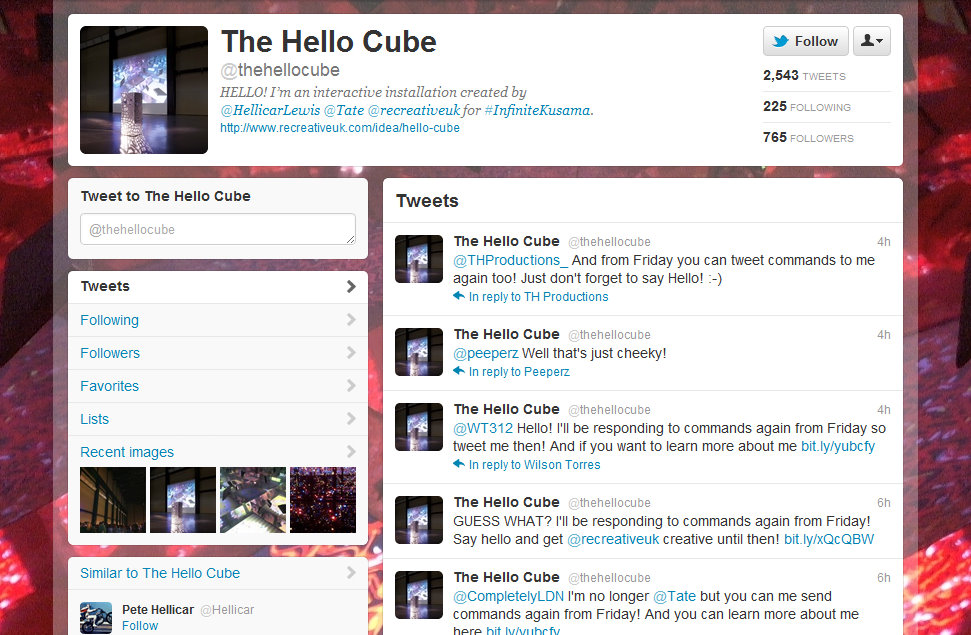
The installation got its very own twitter account where users were prompted to tweet at it with commands such as “red love pixelate” or “blue cells faster." I got a tweet response from The Hello Cube within seconds, accompanied by an image of the compositional changes that had occurred in its mirrored inside due to my somewhat imperative commands! Over the course of the weekend, The Hello Cube obliged several thousand tweeters/Kusama enthusiasts, always replying with additional commands that they could try, and created a sense of involvement regardless of, say, the number of miles between Pittsburgh and London!

For those at Tate Modern, the experience was far more insightful; not only did they get to see an amazing Kusama exhibition but they were in physical proximity of The Hello Cube! Besides being able to view the installation's constantly changing interior dynamics that were projected onto an adjacent wall, visitors could also interact with The Hello Cube by saying their hellos or anything else they thought fit to share with the cube (besides tweets, it was programmed to respond to external stimuli such as sound or voices).Visitors could even place their hands inside the cube and see their arm reflected unto infinity!

HelloCube

Hellicar and Lewis, the creators of The Hello Cube, describe it as “an installation that exists as a sculptural object that you can look inside, see patterns, and an infinity of reflections.” It takes inspiration from Kusama’s work titled The Passing Winter, but as noted by its creators, it differs from Kusama’s work in that it is capable of responding to people and to its environment.

The work of Hellicar and Lewis has been featured at The Creators Project and the duo are “interested in creating groundbreaking experiences that use art, technology and design to take people into the moment and impart lasting memories.” In an interview, they noted how they had undertaken a similar project in the past called The Hello Wall, a dynamic outdoor installation where users could control the projections on an external wall in Wembley by tweeting at it.

While Hellicar and Lewis have used Twitter's real time capabilities to foster a dynamic perpetuity and engagement that is both brilliant and unprecedented, the creation of Twitter personas for artworks in itself is intriguing. On Twitter, the inanimate, the intangible, and even the immortal can all lay claim to accounts; San Francisco’s Fog, the Bronx Zoo Cobra, and Voldemort are all suspiciously active! So why can’t art transcend notions of the self, at least on social media? Thus, not only was The Hello Cube an incredibly interactive installation, but its presence on Twitter essentially transformed it into an anthropomorphic object, increasing its accessibility in both a literal and psychological sense.

It would surely make an interesting experiment to see how people interacted with a painting were it to have a twitter account. Wouldn't it be fun if museums created Twitter personas around special exhibitions? What would Rembrandt tweet? How about an account for Abstract Expressionism? Of course, these accounts may have to be temporary but a lot could be learned in a series of short bytes of information. One sees a considerably twitterable future.

For now, we have the delightful The Hello Cube, which having been removed from the Tate, bade farewell to its visitors and declared that it was ‘time for a cube to enjoy the sunshine...” Of late, it was tweeted that The Hello Cube will once again start taking commands this Friday, but as the installation politely requests: "Just don't forget to say Hello!"

Engaging Technology: uCurate and uExplore at the Clark

What’s going on at the Sterling and Francine Clark Institute in Williamstown, Massachusetts? Let’s see, there are iPads, tablets, interactive digital programs, touchscreens and kiosks throughout the galleries, the new exhibition, Clark Remix, and oh yes, new curators- YOU. In a February press release, the Clark announced its exciting new initiative to encourage visitor interaction and participation in its galleries. According to the press release, Clark Remix is "a dynamic salon-style installation featuring some 80 paintings, 20 sculptures, and 300 of the institute’s finest examples of decorative arts."

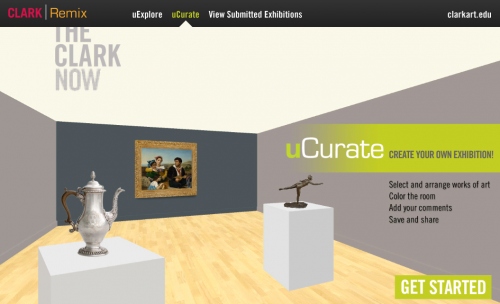
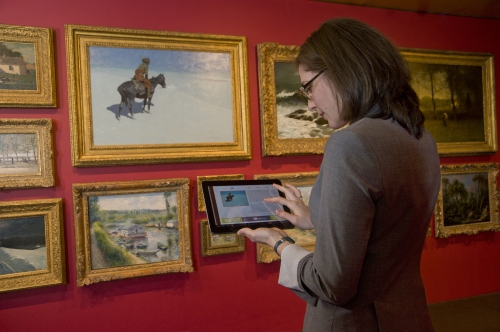
As part of the exhibit, the Clark has introduced the interactive, digital programs uExplore and uCurate. Both programs are accessible online, on the visitor’s own personal device, on touchscreens and kiosks throughout the gallery and on iPads and tablets provided by the Clark for use in the museum. Basically, the programs are EXTREMELY accessible and user friendly- I myself have spent all afternoon here in Pittsburgh exploring the Clark’s collection and building my own exhibition, instead of reading for class (ahh priorities).

The Director of the Clark, Michael Conforti explains the premise of Clark Remix,

Clark Remix represents one of many programs that the Clark is developing to engage audiences in exciting ways. Clark Remix allows us to present our permanent collection in an installation that is both beautiful and innovative. Our salon-style presentation provides a very different and intriguing perspective on many of the works that have become familiar favorites for Clark visitors. Adding virtual components to the exhibition allows us to reach new audiences and invite them to discover and interact with our collection.

It works like this. uExplore allows the visitor to learn more about the Clark’s collection in a visually stimulating, highly organized, and digitally oriented way. Items are grouped into categories (paintings, sculpture, glass silver and ceramics) to allow the user to navigate with ease through the extensive collection. Selecting an image of the desired object, a more detailed, but not overwhelming, explanation of the item becomes available. When appropriate, audio and video clips accompany the information.

It is a beautifully designed and easily navigable interface. uExplore’s presence in the gallery encourages visitors to delve more deeply into the history of the collection, while they are on-site.

The second digital application to accompany the exhibit, uCurate, gives visitors the opportunity to participate in the curatorial process. As the name implies, YOU, aka the visitor, plan and design a 3D virtual exhibition with the Clark’s collection. The participant makes all decisions, from what to include and how to arrange

the objects, to wall color selection and wall text. Users of the program have the option to submit their designs for consideration by Clark’s curatorial team AND to share their designs through social media channels (promoting the museum and the digital program). Submissions to the Clark will be reviewed regularly. Why submit your design for professional review by Clark curators? Because if selected, the virtual design will be transformed into an actual exhibition! The lucky designers will be invited to assist in their exhibition’s installation, in the decision-making process, in the creation of wall text and in writing the curator’s statement.

uCurate and uExplore were designed by the Clark in collaboration with Swim Design Consultants and Virtual Gallerie to afford the public a voice and role in the museum’s exhibition planning process. Allowing the public to suggest actual designs for implementation challenges what has been the accepted and traditional decision-making process in the museum. That is, all decisions are made internally; the public only receives, not contributes. But the Clark is trying something different. In a recent New York Times' article on the Clark’s innovative crowd-sourcing approach, Conforti said,

For generations, curators ran the show and told you what to believe. In a world of blogging and Wikipedia, we realized that we can learn from our audience, and from multiple interpretations.

This is Museum 2.0 in action. Where visitors become users and museums become, as Nina Simon explains, “dynamic platforms for content generation and sharing.”

So Kudos to you, Clark Museum. This is an engaging and relevant use of technology where the user AND museum win.

PIPS:lab Diespace, Interactive Multimedia Experience

PIPS:lab recently made its US debut during a festival featuring Dutch artists here in Pittsburgh.  The Amsterdam group has been performing together for about a dozen years.  The work that they performed was categorized as absurdist media theater and was a short evening length work without intermission.  The use of technology for this performing group is integral.  The performance itself was noteworthy for its innovation on a number of different levels.  It is worth noting, however, the problems that PIPS:lab had in functionally executing the performance due to glitchy technology. The performance, Diespace, was essentially an introduction to a fictional new social network site that audience members were encouraged to visit after they die (or die in order to visit).  The actors polled the audience about their opinions regarding whether or not there is life after (or before, humorously) death.  These polls were conducted with a cool audience participation tool of light capture setup where the audience essentially wrote on a screen upstage.

The other insertion of tech into the performance involved video/audio remixes of various clips taken of audience member during and before the show.  These clips were then edited in real time into the performance.  This, in turn, served to engage the audience but through a pretty controlled format.  The display of the video and audio taken from the audience drew laughter and made the audience excited and was a high point of the performance lending to greater investment from the collective.  Additional audience participate was to be had through a lottery during the show where the faces of the audience were put into a virtual tumbler on the screen upstage.  Three audience members won prizes with the grand prize being a premium account for Diespace (which included significant stage time for the audience member who won it).

The performance unfolded at a relatively brisk pace with musical interludes to cover moments where the technology and content was being prepped.  The problem with this was that the performers ended up being a bit un-invested in the music and as a result it was hard to be carried away by the performance.  It was easy to check out during these scenes through the distractions on stage.  It was the sense of this reviewer that there was only one true musician on stage, a fact that was born out by the program notes about the artists backgrounds.

At least three times during the performance there were loud warnings of a computer crash each time forcing the performers on stage to repeat a few moments to a few minutes of the action.  This in turn lent to a stutter stop feel to the performance.  Execution of Diespace did not look like it was easy and to be certain what PIPS:lab is trying to do is not easy in general.  They deserve applause for attempting to stitch together so many constituent elements in the moment.  It was fascinating at times to see the failures of the technology and there was rarely a moment where the audience did not have something that they could try to be engaged in.  The relative successes and failures of this performance reinforce the point that some technologies have a ways to go before they are both accessible to independent performing artists.

The innovation of groups like PIPS:lab hopefully will be the wave of the future and it is gratifying to see media artists take the stage with musicians and actors.  The combination of talents of stage was a rich soup and Diespace was a valuable experience for the insights that it gave with regards to generation of true multi-disciplinary live work.


Public Financing for the Arts in Europe Takes a Hit

Tell me if you have heard this one before. In the midst of an economic downturn, a country desperately searches for cuts in spending anywhere it can, as calls for budget austerity grow louder. In the end, it’s the more vulnerable programs that are hit the hardest, which often includes education programs, safety net measures, and the arts community.

While that above paragraph would describe the arts community in the United States in recent years, the trend is now playing out across Europe as debt-ridden countries turn to austerity measures in the face of the European debt crisis. While European countries spend significantly more on the arts than we do in the United States, the dangers of budget austerity in the coming years for the arts community in several European countries are very, very real.

I have been thinking a lot about this issue of arts funding in Europe vs. the United States over the past week, and two events in particular heightened my interest. First, this past Friday, we sponsored a Carnegie Mellon Master of Arts Management Speaker Series event with the Consulate of the Netherlands, who were in town for the annual Dutch Festival in Pittsburgh. We started talking about the difference in the way the arts are funded in a country like the Netherlands versus the way it is funded here at home. More on that in a minute.

The other item that caught my interest was a front page story in the New York Times yesterday about the fate of public financing for the arts in Europe. As I mentioned above, Europe is now going through the same kind of austerity measures that rocked the United States in 2009: debt is growing, calls for fiscal restraint are getting louder, and every program is being measured for its return on investment and how important it is going forward.

The numbers are striking: as the New York Times reports, in the Netherlands, the budget for arts and culture is seeing a decrease of roughly $265 million, or 25 percent. In addition to those cuts, the public is being asked to pay more to see shows and events, with increased taxes on tickets.

These cuts are hitting smaller venues, troupes, and companies the hardest: with less funding to go around, existing expenditures are being targeted at more established performers, forcing more unique acts, which may be struggling for audiences, to face an uncertain future.

And while some may feel that cuts to the arts in Europe would have little effect on the arts here in the United States, one of the expenses artists in Europe are cutting back on are trips and performances overseas, to countries like the United States. Artists are cancelling trips and forcing festivals to find alternative performers.

Another effect this is going to have on the American arts community is over the issue of fundraising. As we discussed with the Consulate of the Netherlands on Friday, there are different views towards art funding in Europe than there are here. In a country like the Netherlands, a resident pays higher taxes to pay for additional services like health care, transportation, and safety net measures. Another element of those increased taxes is funding for the arts; with the government taking a higher percentage out of every paycheck, many Dutch residents feel they are less inclined to donate their own money to the arts because they feel like the government is already doing it for them.

Here in the United States, the opposite is true: the National Endowment for the Arts (NEA) receives such a small percentage of overall government revenue (usually in the range of $150-160 million, compared to billions of dollars in several European countries) that the vast majority of funding for the arts comes from donations from individuals. Since Americans are taxed at a much lower rate, they have more disposable income, and thus more free to donate it to the art of their choosing. There are issues of whether a lot of this money is really going to where it is needed, but that is a discussion for another day.

With European governments cutting back on their arts funding, this is naturally going to lead to artists in Europe to seek alternative sources of revenue. As the New York Times explains, this includes going after their descendents currently living in America – who may be already donating to arts organizations in their communities.

So this presents a problem: a global recession and austerity measures in dozens of countries, all leading to a shift in the way arts are funded worldwide. It will lead to more uncertainty, a greater dispersion of artistic funding and increased competition for the individuals who provide a sizeable percentage of giving.

Is the current model, where American artists rely mostly on private donations and European artists rely on government grants, sustainable? For the United States, absolutely. With calls from some politicians to cut and even eliminate funding for the NEA and other culture programs, there is certainly little chance of seeing an increase in federal funds for the arts.

As for Europe? That is a different story. As the story goes, as the pond gets smaller (in this case, the pond symbolizing the amount of funding), the fish will get nervous, and perhaps seek refuge elsewhere, in the form of spending more of their time fundraising, at the expense of the very same art they are seeking to promote. With artists now having to listen to potential funders, who may have a different vision for what kind of art they want to see, the impact on what kind of art is made and performed is bound to be substantial.

In the short term, the effect is obvious: less festivals, traveling art troupes, and shows. Fewer jobs for artists in countries like Italy, Hungary, Netherlands and Greece. Fewer opportunities for tourists and residents to see the best of what each of these countries has to offer.

It really is sad, but perhaps unavoidable. As I have written before, we seem to find ourselves in the era of budget austerity, and even while the economy has shown signs of improvement in recent months, the desire to increase funding for the arts pales in comparison to support for other existing programs.

The promise and benefit of increased funding for the arts, both at the private and federal level, is well known to all readers of this blog. The New York Times piece describes Europe as the place “where art is life,” and while that is certainly true to anyone who has visited, the newfound austerity measures being put in place represent a significant threat to that very same life going forward.

iPad Retina Display and Art Apps

Not unlike the neutrinos that were scurrying through the mountains in Europe in hopes of undermining Einstein’s Theory of Relativity, the mountainous expectations for Apple’s new iPad had been travelling the tech circles at astonishing speeds. There was much speculation about the iPad’s features, which included, but were not limited to, Siri for iPad, the absence of a home button, faster processors, higher resolution, and the faint possibility of time travel. Like the neutrinos that were mistakenly recorded at speeds faster than those of light, false assumptions regarding some of the capabilities of the new iPad were quickly discarded with its release in March. There may not be a Siri to guide us through life’s uncertainties but even so, the device is something to behold!

The incredible retina display, with its 3.1 million pixels, truly makes it something “you really have to see.” And seeing is exactly what the art world loves to engage in through the various art apps that have been developed over the past few years! The increased display performance means that as pixels dissolve into digital oblivion, artworks can be viewed in crisp detail and in their entirety.

In fact, Art Authority, one of the top apps for viewing artworks, has already upgraded its resolution to match that of the new iPad. The app claims that with retina display, seeing art on the iPad is “as good as in a museum.” That, of course, is questionable since no app can truly replace a museum experience, and in our quest for high definition, one often forgets that life itself is free of pixels. We do not need an iPad to see the world, let alone artworks. Nevertheless, the increased resolution can only serve to improve the quality of apps such as Art Authority.

As for the apps that have not yet upgraded, the results are mixed. In an article in PC Magazine, the author stated that with the higher resolution screen, the New York Times app “appeared noticeably crisper” but the Wall Street Journal was somewhat distorted. The same sentiment was echoed in Mercury News; “Not everything looks better. Apps designed for the lower-resolution screen on the old iPad look less sharp on the new one.” Thus apps designed specifically for the older iPad will most likely need to be upgraded for a seamless, pixel free viewing experience.

So does the new iPad truly create a window of opportunities for art apps? Not necessarily, because the higher resolution doesn't augment the in-museum experience; one need only look up at the artwork displayed in the gallery to see it in all its detail. As such, apps for smart-phones, (where pixilation is besides the purpose) will remain the primary area of research when it comes to creating an active and participatory museum experience. What could, however, benefit from the new iPad is the in-home experience. With the higher resolution, apps such as Artfinder’s George Inness in Italy could be explored with a touch of retinal magnificence. Additionally, sites such as the Google Art Project would be even more staggeringly detailed! It’s a pity that there isn't an app for Google Art Project as yet!

With more and more app developers upgrading to the newer resolution, the digital world of the iPad will surely emerge as sharper, clearer, and more inviting. But let’s hope we won’t lose ourselves, along with our sense of sight, in its stunning display, and will remember to look up at the world, at real life, from time to time. Maybe give our retinas a glimpse of the horizon or better yet, a piece of art!

Facebook, Alternative Bands and Acoustic Sessions @ the MFA

To me, this just about sums up the 21st century Millennial: Facebook invitations, exclusive access to acoustic sessions, alternative bands, behind the scenes privileges, access granted only through social media and a little culture via the fine arts. To what pray tell could I be referring? Why, Boston’s Museum of Fine Arts’ (MFA) partnership with radio station WFNX, of course. Since May 2011, the MFA Boston has been showcasing nationally acclaimed acoustic bands in its galleries. Each month, an alternative band and 35-50 lucky winners are selected to participate in the exclusive Acoustic Sessions series.

How does one get selected to attend? Here’s where the Millennial wins. The concerts are announced on the MFA’s Facebook page and live on WFNX Radio (tune in on 101.7 FM in the Boston area). Interested followers can submit an entry form on the MFA’s Facebook page or call in to the radio station to be selected.

How does it work? The MFA’s upcoming Acoustic Series concert on March 27th is advertised on its Facebook page in the following post:

The MFA and WFNX have teamed up to present some of the best alternative bands, live in the galleries and Kasabian plays next on March 27. You can only see them by “liking” us and entering to win tickets here or listening to WFNX.

According the program’s press release, the artists perform in various galleries- from the European Paintings to the Contemporary American Art room. Their performances are sound and video recorded. They are then shared online, both on the MFA’s Facebook page and WFNX’s webpage.

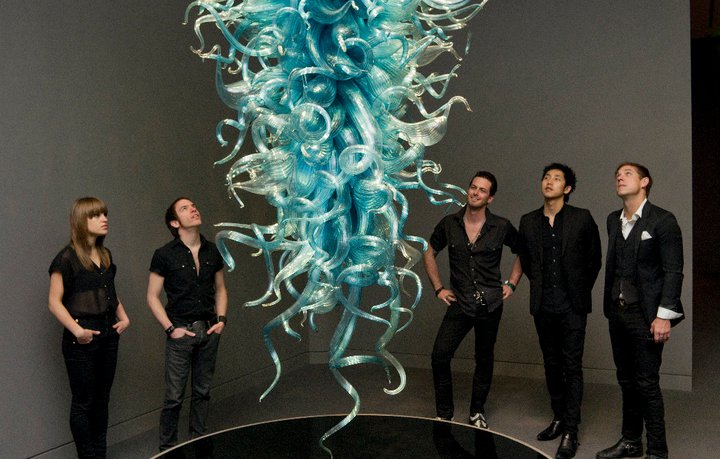
Just when you thought it couldn’t get any more Millennial friendly, the MFA throws in this added exclusive- the performing musicians’ participate in the Museum’s “Art We Love”

program. The musicians select their favorite work of art in the museum, explain why they chose it or its significance to them and are then photographed beside the work. The photographs are uploaded to the MFA’s Facebook page for all to enjoy

and explore, providing unique insight and exclusive information on the musicians.

It is a perfect example of how the collaboration between social media, the visual and the performing arts can enhance the public's artistic experience and engage even those difficult Millennials. Originally from the Boston area, I am proud to share the MFA’s innovative programming with those from away. But I am sure other museums and galleries are up to similar projects. What other museums and galleries have similar, or completely unique, social-media driven, collaborative programs?

Creators Project in San Francisco

Last weekend the Creator's Project garnered significant attention from national media.  From the mission statement on the website "The Creators Project is a global celebration of art and technology." and "The Creators Project is a new kind of arts and culture channel for a new kind of world."   As an intersection between art and tech it seems appropriate that the blog weigh in and take a look at what they did, how they did it, and the implications.  The Creator's Project has major sponsorship from Intel Corp and VICE with significant online free content focusing on mostly short form interview of Creator associated artists.  This Project offers similar promise to other ventures to offering culture and arts online to ideas such as On The Boards TV and Jacob's Pillow Virtual Pillow but is already operating on a much larger scale than either of these.

The Creators Project offers arts and culture online at a scale that is extraordinary for such a young institution.  The levels of participation on information sharing that is happening through their website looks unparalleled and should be looked towards as a model for successful integration of technology and the arts.   The Creators Project was started in May of 2010 by VICE and seems to have two major interfaces with the public.  There is a exhibit/show that has toured around the world each year and an expanding web presence that now counts video downloads in the millions.  The content is broken out into six different categories:  Music, Film, Art, Design, Gaming, and Fashion and has engaged with artists from all of these areas to provide content online and for the annual festival.  They will be rolling out content collected from the event last weekend (March 17-19, 2012) in the coming weeks.

Current content on the website is a mind blowing array of new directions taken by artists in each of the fields.  One of the standout artists at the event last weekend was a new work from visual multidisciplinary artist Chris Milk.  The installation called the Treachery of Sanctuary incorporated user interaction with digital transformation to look at elements of flight.  Visuals of this can be found here.

Anther fascinating example that was found on the Creator's Project website was the Electronic Shadow from France.  Electronic Shadow uses imaging technology and software to generate interactive 3D maps of people places and objects.  These images then can be used and manipulated in artistic fashions.  The implication for this technology would, for instance, be a game changing one for other art forms such as dance.

Exchange of ideas such as Creator's Project bring together the bleeding edge of Technology and the Arts and as such should be a point of engagement for institutions that are looking to modernize and include new audiences (and younger audiences).  The artists involved have obviously successfully engaged these audiences already and by following the lead of these success stories arts leaders at more conventional organizations can find hope in a new direction in reshaping structure and content to address the demands of a more complex world.


The Role of the Arts in Economic Development

As it pertains to funding for local arts projects, the past few years have not been too kind to the arts community. Budget cuts, austerity measures and changing priorities have meant less funding, and with it less jobs for artists and fewer arts opportunities and events for communities all across the country. As the economy starts to grow (slowly) and optimism about future growth increases, state and local budgets are facing smaller budget deficits and the increasing likelihood of budget surpluses in future years. With these new resources comes the decision over how to spend resources in the best possible way to stimulate growth.

In recent years, the National Endowment for the Arts (NEA) and other groups have given out millions of dollars in grants to local arts groups to help foster economic growth and assist arts communities in struggling areas of the country. As the money available to these groups continues to grow, and cities and states pondering the decision to invest again in the arts, the question is: what role do the arts play in economic development, and how vital is it to future growth?

I have written before about the tough budget constraints that governments are dealing with at the local level and the pressure this is putting on existing arts programs. Unlike the federal government, cities, counties and states are often required to balance their budgets on an annual basis; if sales tax receipts or other forms of revenue are down from the year before, as has often been the case during this economic downturn, governments have to turn to existing programs for cuts or outright abolition. With tax increases politically unfeasible, it’s often the most vulnerable programs that face the chopping block, and this includes the arts community.

Those of us who study public policy and urban planning are cognizant of the effect the arts can have on a city or neighborhood. As much as art enriches our lives and provides a sense of culture, the economic impact is minimal; this is not to take away from the arts community, but is rather meant to illustrate the larger forces that are required for long term economic growth, like housing, higher education, health care and free trade.

The Next American City recently looked at an example of a rust belt city facing tough economic times, Detroit, and how the arts community is helping bring the city back. Through the help of groups like the NEA and ArtPlace America, Wayne State University launched the Detroit FAB Lab, a hub that provides artists with access to equipment and tools for their artwork, like metalworking and woodworking, as well as mentoring services like business coaching and networking. In essence, it provides a community for artists to come together and share their work, their advice and their love for the arts, all with the backing of community grants and support.

Few cities are in need of support like this more than Detroit. Designed to help support the struggling manufacturing base in the Motor City, the grants provide a small step in the overall push to diversify and grow Detroit’s economy as it starts to come back from the recession that took such a toll on the city’s population and well being.

The millions of dollars in funding that are being given out by groups like NEA and ArtPlace also present a series of questions: is this money well spent? If the goal of the money is to spur economic development and growth, is it better spent elsewhere?

We can all agree that funding the arts is crucial to fostering community and culture in cities all across the country. But is absolutely crucial to long term economic growth? That’s where it gets tricky: the list of public policy measures that rank above the arts community is quite long. If given the choice between an artistic redevelopment project and a new hospital or transit station, the physical and transportation needs of the city will win out.

But, as cities and municipalities invest in infrastructure, public services and needed resources, it’s always important to remember how the arts can add to the benefits being accrued. A city with no culture, no life, and no sense of vitality is vulnerable to losing out on the same kind of economic benefits that were desired when public officials decided how to spend resources in the first place. Investing in roads, schools and infrastructure is absolutely essential to an area’s long term economic growth; however, without a vibrant and committed arts scene, the desire of residents and tourists to experience the best of what the area has to offer will be diminished.

There are numerous examples of cities and local governments taking the time to invest in areas of their community and developing art districts. In my home town of Phoenix, the burgeoning Roosevelt Row district is home to First Friday art walk events and galleries showcasing the vibrant culture alive in the city. Other districts in Miami, Pittsburgh, and New York have also popped up in recent years to add vibrancy to formerly struggling areas of their respective cities.

As a policy priority, you will get no argument from me that the arts community ranks behind the essential public services that so many people rely upon on a daily basis. However, good public policy recognizes that the right balance, which involves providing those services and setting aside funding for arts programs that encourage innovation and creativity, along with providing a sense of culture for a given community, is preferable.

As ArtPlace America states, “art creates vibrancy and increases economic opportunity. It is all about the local.” We could not agree more.

Sweet Pantone Tarts

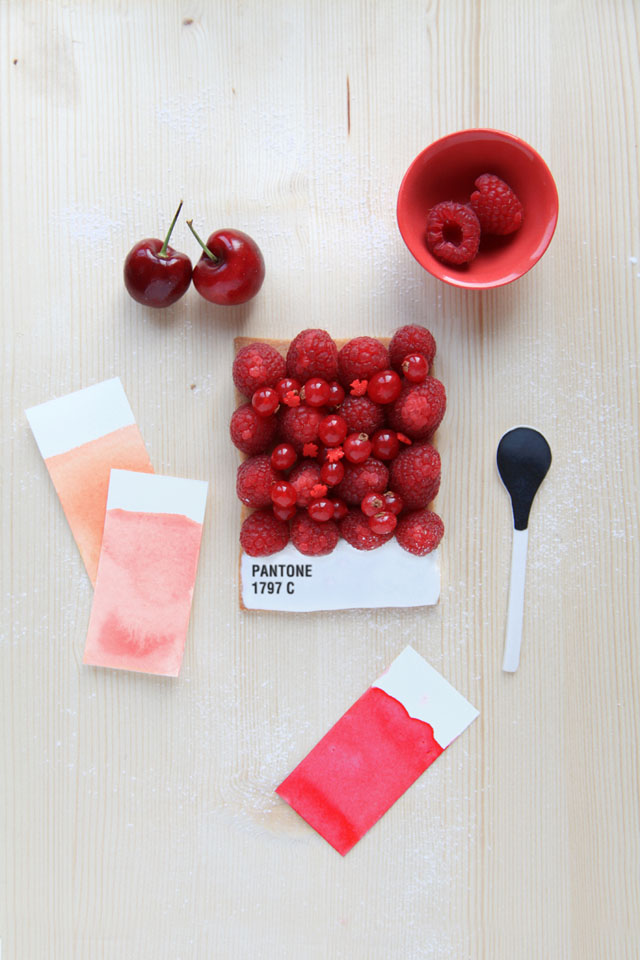
Spring seems to have sprung here in Pittsburgh, and having a week off on spring break makes everything seem lovely. It is under that guise I present this post to you purely for aesthetic reasons. Emilie Guelpa is a French artist/blogger/chef who has created these masterful (et très mignon) tarts inspired by Pantone colors. While I can totally imagine eating them in the café of an art museum, they were created for the magazine Fricote and posted on her blog Griottes. While the blog is currently French only, Guelpa promises an English translation version very soon. In the mean time, you can check out her Pinterest and dream about delightfully colorful tarts.

Well, that’s all I’ve got. I hope you have a great weekend planned and nice weather to enjoy it!


Cowbird, Balloons of Bhutan: Jonathan Harris and Real Life Storytelling

In the mountainous kingdom of Bhutan, nestled between China and India, happiness is no small measure and it’s surely not immeasurable. While its neighbors are under constant scrutiny for economic growth, the kingdom of Bhutan has opted, among other factors, to measure its growth in the well being of its people. As early as 1972, erstwhile King Jigme Singye Wangchuck introduced the concept of Gross National Happiness (GNH), and in 2005, the Royal Government of Bhutan “made the decision to develop GNH indicators in order to move the concept of GNH from the point of academic discourse to a measurable one.”

The government “developed a detailed questionnaire that measured key areas such as “psychological well-being, health, time use, education, culture, good governance, ecology, community vitality and living standards.” The results of this survey can be found on their website, but it suffices to say that the prayer flags in Bhutan flutter with the happiness of its peoples!

A few years later, in 2007, Jonathan Harris, an artist who combines “elements of computer science, anthropology, visual art and storytelling” set out to measure Bhutan’s happiness not in percentages, but in balloons!

Balloons of Bhutan chronicles his two week journey through Bhutan where he interviewed a 117 people and asked them how happy they were on a scale of one to ten. He would then proceed to give them the number of balloons corresponding to their happiness level, and thus increasing that happiness, if only temporarily. Harris’ interviews  provide an insight into the stories of each of these individuals; their identities, their happiest memory, their favorite jokes, and their wishes. In the end, he wrote down each person’s wish on a balloon in a color of their choice. Each of those balloons was “strung up at Dochula, a sacred mountain pass at 10,000 feet, leaving them to bob up and down in the wind, mingling with thousands of prayer flags.”

The website for Balloons of Bhutan, wherein lie a 117 short stories, provides a glimpse into moments of happiness and into the life and culture of Bhutanese people.

Stories rooted in reality and “collected in some unconventional ways” have always held Harris' fascination. In a TED talk in 2007, Harris spoke of his desire to eliminate the role of the narrator in his stories. One such example is his project titled The Whale Hunt, where he “spent nine days living up in Barrow, Alaska, the northern most settlement in the United States, with a family of Inupiat Eskimos, documenting their annual spring whale hunt.” The entire story-line can be divided into sub-stories based on context, characters, color, and moments of excitement and lull (a timeline akin to a heartbeat graph).

Another, more recent, of his projects centered on the idea stories from life and even crowd-sourced journalism is Cowbird, a place where people can “keep a beautiful audio visual diary” of their lives through stories.

Our short-term goal is to pioneer a new form of participatory journalism, grounded in the simple human stories behind major news events. Our long-term goal is to build a public library of human experience, so the knowledge and wisdom we accumulate as individuals may live on as part of the commons, available for this and future generations to look to for guidance.

On Cowbird, these stories can be categorized and read in numerous ways; by sagas or major news events, topics, cities, countries, tags, and people. If you enjoy creative writing, Cowbird is a neat way to share stories with the world and transform the site into a collective “witness to life.” Many will agree that social media content on sites such as Twitter or Facebook can, at times, lack forethought, even originality. (Yes Facebook ask us what’s on our mind, but if the posts on Facebook are indeed indicative of humanity’s contemplative tendencies, we may just be in trouble). Thus Cowbird is different in that it encourages thoughtful sharing of personal musings and ideas.

Jonathan Harris is an undoubtedly novel storyteller, but he desires more than an audience that will listen, he desires one that will engage in storytelling. He has built the foundations of a world that can be interconnected through stories that are his own and more importantly, theirs, the worlds. It is through these stories that we can listen in on a Bhutanese shop keeper talking about her love for Korean television or experience the melancholic evocation of an Islamic prayer call in old Jerusalem while overlooking the Great Dome of the Rock.

The Cloud

Moving your organization's data to a cloud server might be a good idea at this time.  There are several advantages to working off of a cloud server and a few drawbacks. Some advantages to going to cloud computing:

Accessibility is generally improved through cloud storage.  You can access data from anywhere that you have internet access.

Security on cloud storage services is up to the standard of where ever you have your cloud.  Google and Amazon have some of the best experts on digital security in the world for instance and using a cloud operated by them gives you a greater degree of safety for your data.

The Capacity of cloud storage is very flexible and is expandable with comparative ease.  The fact that cloud storage servers will never need to be upgraded or replaced does save you capital expenses as well as man hours.

The downside:

You don't own it and you have to play by someone else's rules.  If you are using a smaller company, please, make sure to check out their backup plans, security measures, and records regarding downtime and maintenance schedules.

It may be hard to use cloud servers with certain types of databases or other programs and as such may present an integration issue (ticketing systems, development programs, etc).  Make sure you have a plan to get the information from point A to point B if necessary.

In event that you don't have access to the internet you are completely cut off unless you back up to a physical source onsite.  It can be distressing for obvious reasons if your internet service goes sideways and you end up with multiple idle employees until it is restored.


Festivals Galore!

As the month of March rolls on, and the weather starts to warm up, two things immediately come to mind: vacation, and festivals. The gang here at Tech in the Arts is on spring break this week, so expect a lighter posting schedule as we take a (well deserved!) break from our studies. Having said that, I wanted to briefly check in and point out two festivals happening this week that are highlighting some of the best and most creative technology and arts projects occurring from across the country.

The first, South by Southwest, or SXSW for short, is currently underway down in Austin, Texas, as anyone with a Twitter account is well aware of by now. Having grown massively in size over the years, the show is divided between three festivals: film, music, and interactive. The interactive portion, including keynotes, speakers, presentations, shows, parties, events and so much more (it really is a sight to behold) is taking place this weekend and ends tomorrow, the 13th.

Tech in the Arts is live down in Austin covering the action; you can follow our Twitter feed (@techinthearts) for live updates and recaps of SXSW events, including the big bash that Carnegie Mellon held this weekend, along with one of our staffers, Terry Boyd, who is tweeting from his personal account (@boydleservice). We all wish we could be there this weekend, but those two accounts are representing us well!

We’ll also have a wrap-up of all the great action at SXSW following the conclusion of the festival, so stay tuned for that.

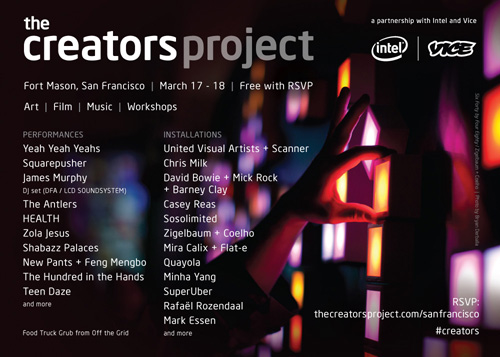
I’m typing this from beautiful San Francisco, California, and the second festival I wanted to mention is the 3rd Annual Creators Project, taking place this upcoming weekend (March 17th-18th) here in the Bay Area. Sponsored by Intel and VICE, the festival seeks to bring together the best of art, music and is “dedicated to supporting artists in realizing their creative visions through technology.” In addition to the works of art on display, there will be performances by the Yeah Yeah Yeahs, James Murphy, and Squarepusher.

The best part of the festival? It’s free with an RSVP! So if you’re in the Bay Area this weekend, definitely check it out.

Even if you can’t make it to either Austin or San Francisco this week, stay tuned as we’ll be posting follow ups to both exciting festivals and highlighting the best art and technology trends coming from both.


Pinterest 101 for Arts Organizations [mini-nar]

Pinterest is the latest and greatest in social media, we've talked about it before, and it just reached 10 million unique hits in a month, the fastest independent website to ever attain this lofty title. Every blogger with access to a data set out there is looking at the demographics of Pinterest, but what can a visually based social media do for your organization? This Mini-Nar is going to take a look at some of the basic functions of Pinterest, as well as how some arts organizations are maintaining and utilizing their Pinterest accounts. http://youtu.be/JZKgsWlU6Uk

Check out these Pinterests from the video: the San Francisco Museum of Modern Art, the San Francisco Ballet, the Arts and Business Council of Greater Philadelphia, and Lionsgate Be Fit. Some of the demographic data I referred to came from Tech Crunch.

What do you think? Is Pinterest something you'll consider using - or do you already utilize it? Comment on this post and let us know!

TEDxCMU: Ideas for the Arts!

The premise of a TED talk is wonderfully simple; an idea, a good idea, can be captivating, inspiring, and even revolutionary! At CMU, this past Sunday, it was the reinterpretation of an idea that took center stage at the independently organized TED event. There were a total of 12 speakers who gave talks on everything from sodium ion batteries to self-love manifestos, from neuroscience and classical music to the history of comic strips! It may have been snowing outside, but within the auditorium, there was neither a flake of disinterest nor a gust of sighs.


And as serendipity would have it, many of the speakers addressed (even performed!) topics that directly related to the performing and visual arts!

The talks began with Matthew Manos, the founder of the social graphic design firm, a verynice design studio. Manos spoke of about his desire to help not-for-profits through design services but knew that his company would need a sustainable business model; not necessary a for-profit model (thus becoming like all the other design firms), and neither a not-for profit model (he would need help to help!).

It was the idea of social entrepreneurship that helped him realize a model where he would operate as a for profit design firm that would “dedicate over 50% of its services to pro-bono design". As of now, the firm states that it has “provided $250,000 worth of pro-bono design and consulting services in 6 continents to 125+ clients thanks to our team of 60+ international volunteers.”

According to Manos, organizations that rely on fundraising would fare much better were they to operate on the model of a social enterprise. This would help free up time spent in areas such as grant writing and development, allowing an organization to focus on its mission and core activities. As you may have read, Telemarketing was swiftly killed by one of my colleagues, perhaps the entire field fundraising needs some re-interpretation?

But apart from fundraising, a product that clearly requires some re-thinking is powerpoint! Bohannan’s talk is intriguingly titled A Modest Proposal: Dance vs. powerpoint.  Although John Bohannan’s talk was filmed in Brussels, it was shown to the audience via video, and it was absolutely compelling!

According to him, it’s time powerpoint was replaced by interpretive dance. And no, he did not use any slides, pointers, or smart art graphics to make his case. If you haven’t seen it already, see it! See an idea gracefully unfold itself in 18 minutes! For words are static, devoid of the essence of rhythm. They cannot explain what Bohannan so clearly demonstrates using dancers, using the “human body in motion”!

Bohannan is also the creator of Dance your PhD, a contest where PhD students in the field of science present their research using dance. On the contest’s website, a dance inspired by the roaring twenties explains the “Plant Community and Ecosystem Effects of Drought in the Pinon/Juniper Ecosystem” Or how about “Cosmological Simulations of Galactic Disc Assembly” where the “dance starts with a bang, a Big Bang.”

But let’s saunter back to TEDxCMU, and to the talks, where it was the fields science and music that had been dancing to a complicated waltz, and at times, a three step cha cha cha!

One of the inspiring speakers at the event was Stephen Neely, “an Artist Lecturer of Dalcroze Eurythmics” at CMU. According to Neely, the physicality of music appreciation is more important than its cerebral aspects. He compared the feelings experienced when listening to music as those of a child sitting on a swing; an undulating movement between moments of heaviness and moments of weightlessness.

Furthermore, Neely spoke about the difference between what is considered to be art vs. that which is artful. In music, the performance only becomes artful when the audience interacts with the performer, identifies the move from weightlessness to heaviness. And the success of a musical piece depends on its ability to enable the audience to experience an “authentic forward motion” through these phases.

To continue on the complexities of music appreciation, the comprehension of classical music was the core focus of Ardon Shorr’s talk. Shorr is “currently pursuing a PhD in Biology” at CMU and he spoke wonderfully about his idea of “unlocking classical music with neuroscience.” Shorr said that classical music is inherently difficult to follow but it could become easier, and more enjoyable, if we were to visualize “how music is organized” and learn the “shape of symphonies.”

According to him, there is inherent structure in compositions and instead of trying to memorize each and every phrase, it would be easier to group them. He plans to build an interactive website where people can come together and begin to appreciate the virtuosity of Mahler’s symphonies.

In all, TEDxCMU was a great day for the re-interpretation of ideas. Among the audience, many a light bulb of inspiration flickered, eventually becoming brighter as the event progressed.


An Artistic Revision of the American Dream

The American Dream, which for many Americans is the prospect of owning your own home, is dying. Or, at the very least, it is in danger of being lost to a sea of forces, which include overbuilding, overbuying and the economic downturn. With single family suburban homes becoming plentiful over the past decade, and the inevitable housing bubble that devastated so many suburbs around the country that followed, the thought naturally turns to whether this model is sustainable moving forward. What does the future hold for suburban living, and where do we go from here?

A new exhibit at the New York Museum of Modern Art seeks to rethink suburban living and the design of the communities themselves. Taking unique and sometimes radical approaches, five design teams each took a community ravaged by the housing crisis and came up with their own architectural and artistic solution to improve the affected areas and introduce more density, retail stores and sustainable practices. The results need to be seen to be believed, as they provide a completely new and interesting way to look at American housing.

The exhibit, titled “Foreclosed: Rehousing the American Dream,” looks at five suburbs around the country that have been hit hard by the foreclosure crisis: The Oranges, a New Jersey community twenty miles outside New York City; Temple Terrace, Florida, located just outside of Tampa; Cicero, Illinois, a suburb of Chicago; Keizer, Oregon, a suburb of Portland; and Rialto, California, located outside of San Bernardino.

Looking through the five exhibits, one sees a pattern: all five areas under study feature the now commonplace suburban single family homes that have come to dominate the suburbs of American cities, with the design teams seeking to fundamentally change the way we see suburban housing. Gone are the 1,500 square feet or larger single family homes with large backyards and wide spaces between properties; all five proposals call for much more density, shared spaces, and retail and dining options often inside the communities. In essence, what the design teams are trying to do is replicate some of the best features of urban living and transport them to the suburbs.

Even though single family suburban living has proved to be incredibly popular over recent decades, it has always had its share of critics from urban planners, policy makers and sustainable growth advocates. The effect on the environment, through increased automobile use and higher energy use, is widely mentioned. The separation from the community, through isolated properties and less interaction with others, is mentioned as well.

What is so fascinating about the exhibit is the way the design teams take all of these criticisms to heart and seek to remedy the problems of overbuilding and density through five architectural designs that really are about as different as they are similar. As to be expected, they all feature people living closer together and becoming more sustainable, but they differ enormously in how the communities are designed from an aesthetic level. I took a look at all five exhibits (virtually, of course, until I can make the trip to New York), and came away impressed with some of the projects and more skeptical of others. The five exhibits are broken down below:

The Oranges, New Jersey: Located twenty miles outside of New York City, the Oranges is a unique community that is, in the words of the design team, “more urban than suburban,” with close proximity to major roads and transportation options. The Oranges approach is perhaps the most radical of all five designs: it seeks to remove the car from the city by adding multi-level housing to the roads themselves, with occupants using mass transportation options instead. The designs of these new housing complexes are jagged in design and feature different kinds of housing, including multi-family housing units and shared public spaces. My favorite design element is transforming the roofs of the buildings into public places, where energy can be produced and green spaces can be added, helping to make the buildings more sustainable. Of the five exhibits, this one is the least practical, but earns praise for the unique artistic design to the housing units.

Temple Terrace, Florida: Located just outside of Tampa, the Temple Terrace project looks to re-develop 2.2 miles of the community’s downtown area through adding additional housing units and public spaces. This one is perhaps the least controversial of the five designs, as it splits the development between more conventional smaller housing units and another space for multi-family housing and duplexes.

Cicero, Illinois: This one is my favorite, as it seeks to take existing abandoned structures and re-develop them into housing and community areas. Cicero, a suburb of Chicago, grew up as a railroad town, then became a town full of factories in the mid-20th century; as the factories left in the 1980’s, the town started losing jobs and became an economically depressed area. The foreclosure crisis hit Cicero hard, and only worsened the situation. In recent years, the immigrant population of the town has boomed, leading to an increasingly diverse community.

What the Cicero project seeks to do is bring living and working together, and they do this through taking over existing abandoned factory sites and turning them over to housing. After the requisite environmental process, the design team takes these abandoned factories and converts them to high rise housing complexes, featuring shared living areas along with shared community spaces. Living units are on different floors, with each building featuring a community floor that can include shared kitchens, shared living rooms and more. The design team also seeks to change the way houses are financed, through innovative ideas like equity co-op’s and building trusts where people can buy and sell shares of their homes.

My favorite idea of the design was to take garage space and convert alleyways into stores, restaurants and community spaces where residents could earn additional money for themselves through land on their own property.

Keizer, Oregon: Located just outside of Portland, the design team for Keizer sought to combine the best of the town and the best of the country, and their design is striking in terms of how much of nature is included in the very dense living spaces created.

The Keizer design has a massive multi-level apartment complex look to it, but it also does its best to include plants and nature into the design. While there are multiple levels of housing, the nature elements are located at ground level, and include abundant supplies of green space, forest, exotic gardens, plant life and even exotic animals as well. Bridges connect the different complexes and include retail stores, and the series of courtyards that are included feature different nature activities like rock climbing and spelunking.

This design perhaps does the best job of creating a living, sustainable, all-encompassing community within its borders. The designers point out that the project achieves five times as much density and provides three times as much space as the existing Keizer community.

Rialto, California: The final project, looking at the community of Rialto located outside of San Bernardino, seeks to not so much radically change the suburban housing structure as it does to modify it around the edges. The biggest design departure from current practices is the “relaxation of boundaries,” where existing plots of lands are converted into row houses, duplexes and apartments. This means that while you can have a regular single family home on one plot of land, right next to it you could have a row of apartments or smaller homes on the same block. One rationale for this is that if a family residing in an apartment wanted to move up into a single family home, they could do so without having to leave the complex. The design team also adds retail and mass transportation options to the complex, again seeking to create a more complete community within its boundaries.

Current zoning laws and restrictions prevent most if not all of the above changes in each of the five designs from taking place, and the architects and planners associated with each would need changes in the laws if the designs were ever implemented. This is part of a larger concern for neighborhood revitalization and renewal, and as the housing crisis showed us, the current model of larger single family suburban homes is not sustainable in some areas. Changes need to be made, and these five designs seek to identify the best ways to do so.

I encourage everyone to take a look at the five designs online if you can’t make it to New York for the exhibit. It runs through July 30th.

(Photo credit: NY Museum of Modern Art)

Telemarketing is Dead - and I killed it

Fundraising for nonprofit organizations is considered an art, not a perfect science, and it's clear that techniques must be tailored to each individual organization. One of the common pieces of wisdom is that “telephone appeals” (read: telemarketing) consistently work as a fundraising tool for nonprofit arts organizations. I’m not saying random cold calls, but calling people who have funded you before, have a history with your organization and would likely donate again. Nearly one out of every five people will respond and donate to your organization calling and asking for money. As a Millennial consumer, I cannot fathom this.

I, and perhaps you, dear Reader, belong to a generation simply called “Millennials”. Spell check doesn’t know that word yet, but soon it will. We are defined not by high technological competency, which is given to the generation directly before us, but by technological connectedness. I've had a series of experiences which have lead me to create these conclusions about the relationship between Millennials and telemarketing. Millennials, who by the way love to donate, have been raised in a society where everything is connected electronically.

With that connectedness comes with a degree of anonymity. While relationships formed over the web can become as close and as intimate as the penpals of old, they take time. They are cultivated with mutual respect and friendship and while our messages may travel instantly from one to the other, the relationship is built up more slowly.

In this age of instant communication, I think the telemarketing approach is dead to those arts organizations that wish to solicit donations from Millennials. My telephone is reserved for my parents and my grandma, and for calling Renee to let her know I’m outside her building and would she please let me in.

I have had organizations, which I have supported in the past, call me on the phone and ask for donations. It never works.

They always follow a certain pattern. The telemarketer introduces themselves, and asks your name - here again, trying to build up a relationship. But I, the Millennial consumer, am used to long exchanges on Tumblr before ever learning anything than the other person’s username, so that tactic falls short. I thrive in the anonymity of the internet, and this direct and sudden confrontation with a stranger frightens me like a deer in headlights.

Then the telemarketer will try to tell me about the organizations hardships this year; how an economic recession has set them back, or how government legislation has made their work more difficult, could I please help with their annual fund? I, the Millennial consumer, just watched a video of the violence in Syria this morning - you’re trying to tell me you have problems? The problems I care about are the ones involving life and death - and I will negate your ask at every turn.

Finally, the telemarketer has been instructed to ask three times before respectfully hanging up. Are you kidding me? I, the Millennial consumer, tweet, reblog, and share on Facebook all while drinking my caramel latte and finishing an accounting assignment. Your long phone call is wasting my time. Why didn’t you understand when I first said ‘no’? Are you trying to guilt me into this? This is ridiculous. I will never give to this organization again, and their number is now blocked on my phone.

In truth, this all could have been avoided if this organization, who clearly have a record on me, had just emailed me their ask with a direct link, explaining that they need help with their annual fund. The anonymity is intact, I no longer have an individual I don’t know trying to force me into the intimate donor relationship. They haven’t insulted me with blowing their issues into hyperboles (while important to the organization, meaningless to me). And it took all of two seconds to click the link and another to type in my credit card number.

What I’m saying here is, if you’re catering to a mature audience, use telemarketing. Statistically, it works. And probably you’re already using online direct asks in some form, whether its email or otherwise. What I’m hoping you’ll do is pay more attention to who gets what message. If you’re reaching for the Millennials, those fun-loving young kids, maybe tweet them. Email them. Ask them when they attend your next party.

For the love of art, though, do not call.


Art, Games, Art Games!

A curious reversal of roles will take place this March when the world of museums will open its grandiose doors to the realm of video games. While interactive games have often been used to ease visitors into contemplating works of art, the exhibition titled The Art of Video Games at the Smithsonian will, for the first time, display gaming as an art form in its own right. An interesting development, since the art world is known lesser for its playfulness, and more for its profundity.

But before we hit escape and quit on finding common ground, let’s not forget that in our era of interactivity, the profound can be playful! And while it is true that the line between games and art once seemed faint, even non-existent, technology has repeatedly defined it anew.

Art Hack Day in Brooklyn was one such example of the blurring between art and technological, idiosyncratic, fun. Scott Garner, recently featured in the Huffington Post, is yet another artist incorporating an irreverent amount of fun into his practice. His work titled Still Life is anything but still; the painting’s seemingly immovable subject matter tumbles to the side when the painting is titled.

http://vimeo.com/35109750

Still Life “involves a motion-sensitive frame that feeds real-time tilt data to a 3D scene.” With all those expectantly gleaming fruits and vases, it’s so tempting to disrupt the quiet order, balance, and meticulous composition!

Beyond all the fun and interactivity, the idea that artists too have been developing games (the kind that will most certainly puzzle you), is often overlooked. Early in the 20th century, it was the Dadaists that actively embraced games, more specifically games of chance (a concept they found liberating), in their art making process. One famous visual game developed at the time of Dada was Exquisite Corpses, where a piece of paper was folded up and artists drew on their respective folds without context and without limitations. This lead to the creation of a final image that was at times absurd, but always random. Exquisitely random.

Since the daring Dadaists, one contemporary artist incorporating the games of chance into his work is Christian Boltanski. His installation titled Chance was displayed at the 54th Venice Biennale, and more recently at the Nederlands Fotomuseum. The museum writes that “Chance deals with the themes that are characteristic for Boltanski’s work: chance, luck and misfortune.”

One of the components of his installation is an image matching game, where a series of portraits divided into three differing sections are continuously projected onto a screen. The visitor is invited to stop the shuffling of the images on a complete portrait. Chance is one of the few artworks that is most like a game in that users can actually win a portrait if they happen to pause on a complete picture. The game can also be played on Boltanski’s website, so take a chance!

While works such as Chance and Still Life hint at the influence of gaming and interactivity on contemporary art and artistic practices, the Smithsonian explores the exact opposite in The Art of Video Games. One of the areas it delves into is the progressive aesthetic and emotional influence of art and the increasing number of artists involved in the development and advancement of video games.

As the Smithsonian writes on its website, “In the forty years since the introduction of the first home video game, the field has attracted exceptional artistic talent. An amalgam of traditional art forms—painting, writing, sculpture, music, storytelling, cinematography—video games offer artists a previously unprecedented method of communicating with and engaging audiences.”

One such amalgam that will be featured at the museum is the PlayStation 3 video game, Flower. What is unique about Flower is that the game is not about impossibly high scores and series of never-ending levels, rather it is centered on an emotional journey through sweeping landscapes and rolling meadows. A scenic meditation whilst on your PlayStation.

In an interview by the Smithsonian, the curator of the show, Chris Melissinos, talked about gradual artistic development of video games, from the use of an isometric perspective to create depth in Marble Madness, to the influence of  jungle landscapes of Raiders of the Lost Ark on the game Pitfall.

The common thread between artists using games and developers using art is most definitely interactivity. With the amazing technical capabilities of designers and developers, both worlds have become more engaging and meaningful for their respective audiences. But whose team would you play for; the Dadaists or the Developers?


The Best of Both Worlds: QRpedia.

While scanning a quick response (QR) code on the back of a cereal box only to find it directs you to the cereal’s web site is, how can I put this politely, fun (that’s my attempt at sarcasm), it neither reflects the appropriate usage nor does it maximize the potential of those nifty little black and white squares. There's the cereal box QR code, and then there's QRpedia. QRpedia is a program announced by the Wikimedia Foundation in September 2011. It is currently competing in Barcelona at the Mobile World Congress for the title of the United Kingdom’s “most innovative mobile company.” Today, on February 29th, the winner of the award will be announced. The reward? The United Kingdom Trade and Investment’s (UKTI) support to expand the company internationally.

But enough about the competition. What exactly is QRpedia and how does it work in the museum setting? It functions just as an ordinary QR code does, except for its whole language-detecting brilliance. A Polish speaking viewer walks up to, let’s say, Claude Lorrain’s Seaport at Sunset (1639) hanging in the Louvre in Paris. In front of the text panel, the visitor whips out his/her smartphone and snaps a photo of the QRpedia code. The QRpedia code instantly detects the phone’s language and the browser opens to a Wikipedia article on the painting or related topic in that written language. If an article on Claude Lorrain’s Seaport at Sunset isn’t available in Polish, the QRpedia code will direct the user to the next most closely related topic available in that language, perhaps an article on the French, 17th-century landscape painter, Nicolas Poussin.

QRpedia’s language-detecting technology makes it truly unique. For foreign visitors, this eliminates the expense of an audio guide from museum visits (if there is a guide even available in their preferred language) and replaces it with the ease of snapping a photo, the interactivity of a QR code and the straight-forward, mobile-formatted information of a Wikipedia article.

[embed]http://www.youtube.com/watch?feature=player_embedded&v=aXCUOpBytxA [/embed]

Terence Eden, the lead developer of QRpedia, says

QRpedia is the perfect way to get access to massive amounts of cultural information. A typical museum display has less than a paragraph of text, often just in one language – QRpedia can give encyclopedic information in hundreds of languages. Recently, in Derby Museum, a painting by Joseph Wright was taken away for cleaning. The Museum staff have put a QRpedia code in its place so that visitors can still see a high quality image of the painting, and read information about the painting and its creator.

The program was created at the Derby Museum and Gallery in England. Today it is available online for any and every museum, gallery, library, public park, archive, historic landmark and so on. QRpedia has been implemented at numerous prestigious museums and galleries worldwide, including the United Kingdom’s National Archives and Spain’s Fundació Joan Miró. How about the United States, you ask? Why yes! It has been implemented at the Children’s Museum of Indianapolis. But why stop there? Its usage is not limited to arts and cultural institutions. Fun fact- the Occupy movement uses QRpedia codes on its posters and publications to disperse information to a wide and diverse audience.

What’s in it for the museum? A lot, actually.

1) You can create your own, online, as often and as many as you want.

2) For museums with multilingual audiences, a text panel can become cluttered and overwhelming with various translations. Additionally, the space allotted to provide relevant information becomes increasingly limited with numerous translations, causing you to cut-back even further on relevant information.

3) Because Wikipedia is editable, a curator, exhibition director, museum official or artist can translate articles to various languages and create articles if there is a void. That being said, so can anyone else. But be brave. Be bold. Be confident in the power of the public intellectual collective.

4) According to Roger Bamkin, the co-creator of QRpedia and the chair of Wikimedia UK, “We see e-volunteers giving thousands of hours to support museums... Hundreds of new articles have been created in dozens of different languages.” Beyond printing the codes, I’d say the work is done almost entirely for you.

5) QRpedia codes are not limited to paintings and items in your collection. Incorporate them in museum signage, directionals, cafe menus, etc.

6) QRpedia also records usage analytics. Museums, galleries, whoever, can track the number of QRpedia users, the paintings with the most QR code action, the most common languages, etc. In my humble opinion, it offers a rather innovative way to get to know your audience.

Accessible, innovative, interactive (for those inside the museum and those elsewhere translating Wikipedia articles without any intent to ever visit the museum…), and FREE. For museums and cultural institutions looking to expand into the QR code realm, this is the place to start. The Wikipedia articles are already written, online, and translated. Why not offer your visitors a more complete museum experience in their preferred language?