Museum crowd-curation and the way we live now

Split Second

Should more museums follow the Brooklyn Museum’s lead?

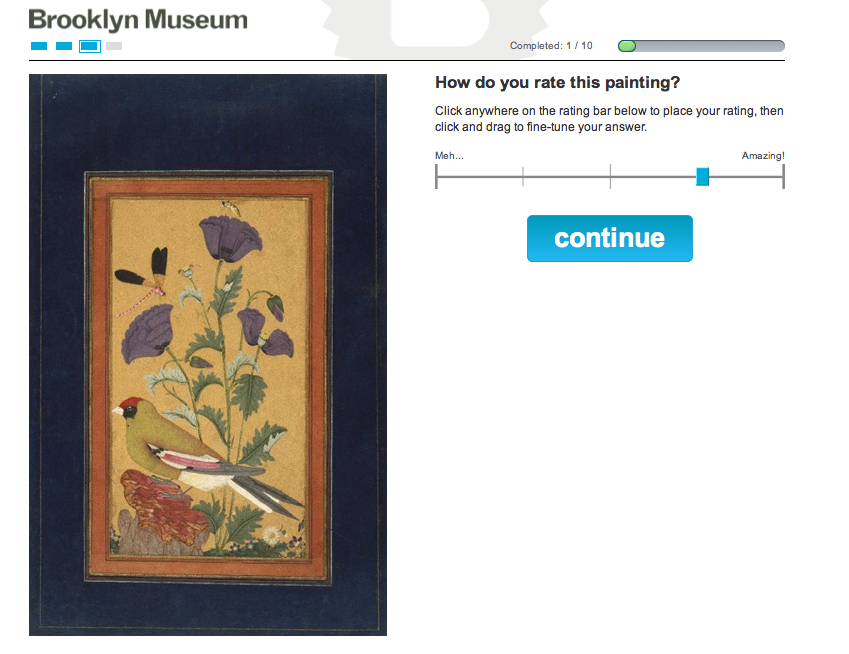
Recently, I helped curate Split-Second: Indian Paintings, a show for the Brooklyn Museum.  To do so, I simply visited their website and participated in an online activity.  It took me about ten minutes, and it involved briefly looking at images, clicking on those paintings that I found most intriguing and rating other paintings on a sliding scale.

My participation in this process got me thinking not only about Indian art, but also about how my own perceptions of art in general might be shaped, and how my aesthetic tastes might compare to the sensibilities of the general public.  Even more interesting to me was that this experiment in crowd-curation felt like the inevitable extension of the movement towards a more participatory culture.

What is it?

Museum crowd-curation enables the general public to become a part of the curatorial process by helping to determine, through an online platform, the artwork to be included in a physical exhibition displayed in a museum’s gallery.

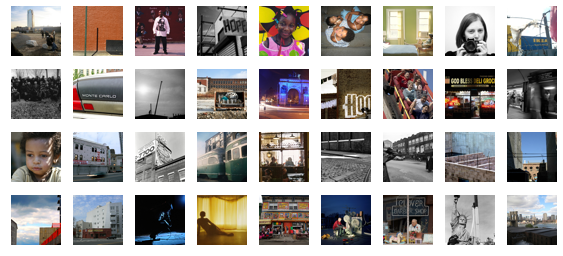
The Brooklyn Museum pioneered crowd-curation three years ago with its photography exhibition Click! . First launched through an open call for artists to submit photos related to the theme of “The Changing Faces of Brooklyn”, the artwork was then made available online for anyone to curate.   Perhaps most interestingly, the Brooklyn Museum staff took a transparent and scientific approach to the experiment, publicly sharing data and thoughtful analysis every step of the way.  Check out Brad's Technology in the Arts podcast with Shelley Bernstein from 2008 to learn more about Click!

Selection of photographs from Click! by the Brooklyn Museum

Now, Bernstein and the folks at the Brooklyn Museum are offering a new spin on crowd-curation by injecting theories of connoisseurship to Split-Second: Indian Paintings. Based on ideas from the book Blink by Malcolm Gladwell, Split-Second seeks to explore how our first impressions might affect our perceptions of art as well as the production of a museum exhibition.  In the end, we’re left with an engaging viewer/curator experience that subtly mixes the professional with the amateur.

Why is crowd-curation so intriguing?

Increasingly, we are becoming a culture of curators, especially in the virtual world.  We spend our time organizing media according to preference, grouping our memories into online photo and video databanks, and “liking” and commenting on things that other people share.  What this means is that arts audiences are coming to the gallery with a newly emboldened sense of organizing and presenting content.  Arts organizations therefore need to play an active role by creating opportunities for meaningful engagement.

Screen shot of Split-Second's crowd-curation process by the Brooklyn Museum

Organizations that are at the forefront of online audience engagement are presenting ideas that go beyond simply offering information about programming.  Instead, they are experimenting with different ways that audiences can become co-creators of content, which can then lead to a sense of ownership in the institution.  But crowd-curation should not be simply a matter of presenting art works and having a voting contest in the sense of American Idol.  Rather, arts managers need to envision a place of meaningful dialogue between their organization and their audience.

Crowd-curation is exciting because it is a clear illustration of the changing dynamics of the audience/museum relationship.  It takes creative online participation and literally translates the collective online vision into physical space.  Along the way, it can stimulate creative thinking by:

  • Getting the participant/curator to think about her own internal perceptions of art, and perhaps inspire her to dig even deeper through self-reflection. What struck me most in my experience as a curator of Split-Second was how successful the exercise was in getting me to think about not only the art in the show but also my own understanding of visual culture.
  • Creating discussion, based upon the collective decisions of the audience, about big-picture questions, like: How is artistic value determined? Is general consensus achievable in determining artist merit?

By putting the internal and collective processes together, crowd-curation has the potential to achieve multiple levels of meaningful contemplation.  Of course, arts managers may feel like they are taking a significant risk.  They may fear that the artistic content chosen by the masses will not constitute a “quality” exhibition in the traditional sense.  And, perhaps worse, if crowd-curation IS able to produce a quality exhibition, then what is the point of having all of these professionals around?  However, as sites like Wikipedia or perhaps the “comments” section of any website have shown, opening up the production of content to crowds is precisely the time when professional, articulate viewpoints are needed most.

This is not to argue that crowd-curation methods should or will replace traditional curatorial models.  In fact, it doesn’t make sense for all art museums to try it (based on a number of factors such as the nature of the audience, resources available, the nature of the exhibit, etc.)  Even so, crowd-curation is an innovative approach to breaking down the barriers between art museum and audience, and it’s a fascinating reflection of the way we live now.

Social Media Spotlight: Crowdsourcing Archives with Richard McCoy

Welcome to the sixth installment of the Social Media Spotlight, our monthly feature focusing on arts organizations’ social media strategies.

Richard McCoyMaking the arts a more participatory experience is an exciting idea being developed by many arts organizations across the globe. Visitors to some institutions can now digitally tag artwork with their own unique descriptions or add photos of themselves to a community Flickr pool. Taking the role of participation even further, some organizations are turning to crowdsourcing, inviting the audience to help in the creation and documentation of art.

I recently had a chance to chat with Richard McCoy, Associate Conservator of Objects & Variable Art at the Indianapolis Museum of Art, about his use of crowdsourcing and public access tools to get the public involved in documenting public art.

I

How did you get interested in documenting artwork online?

By 2008 basic versions of all of the tools that cultural institutions use to create, store, and share documentation about their artworks were freely available online (Wikipedia, Flickr, and YouTube), so I’d say my interest really got serious around this time.  I know it’s a bit nerdy, but I keep a pretty good record of my interests in documenting artworks online over on my Wikipedia User Page.  My basic thought was why not do it?  The investment is low and the potential for return is enormous.

I

Why involve the public in the process?

To properly care for an artwork you have to care about an artwork; you have to recognize its existence within your community.  Many public artworks on display around the world are overlooked, their context and meaning forgotten on daily basis.  So to have the public involved is an important aspect of this project.  The more people that are involved in caring about and for public art and helping to document it, the better.

I think Clay Shirky has done a good job over the years explaining how the participatory web is radically different from our traditional notion of information sharing and collaboration.  His 2005 Ted Talk is still ahead of its time.  I agree with him in that we are just waking up to the notion of a large-scale participatory process that involves broad audiences using their “cognitive surplus” productively.

My interest has been more in community than public, though.  Documenting public art should be a community effort.  While it’s not the easiest thing to do, it’s a process that we have taught and developed with more than 40 IUPUI students.

We’re at a point where we can begin seeing that this is a project that should be operating on a global scale.  Right now there could be folks documenting a mural in L.A. and a small town in India.

I

Where did the choice to use wikipedia as a teaching tool come from?

I first started using Wikipedia as a teaching tool in the fall of 2009 when professor Jennifer Mikulay invited me to co-teach an IUPUI Museum Studies Program graduate-level course, Collections Care and Management.

We created a project for our class to document all of artworks on and around IUPUI’s campus.  That semester our students created 42 new Wikipedia articles and uploaded 375 new images of the IUPUI artworks into Flickr. The result culminated in the creation of the IUPUI Public Art Collection and the beginning of WikiProject Public Art, which was first called Wikipedia Saves Public Art.

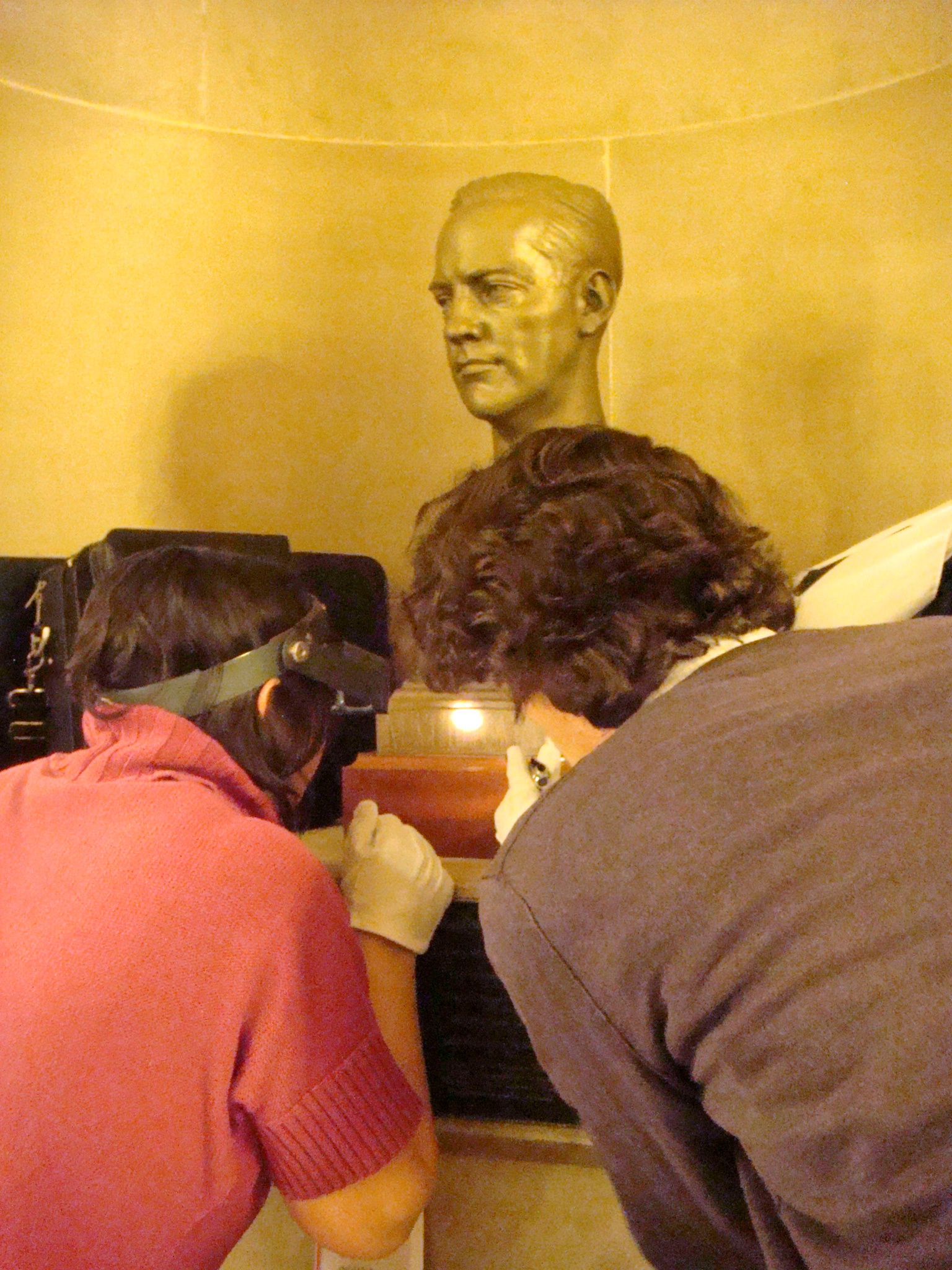
This year I taught the course by myself. I used WikiProject Public Art as a final project to document the artworks inside and around in the Indiana State House.  My students made 37 new Wikipedia articles and uploaded 272 images into Flickr.  We did all of the work within the confines of Wikipedia.  My hope was to model a project that could and should be repeated all over the country.

IUPUI Jennifer Skiba and Richard McCoy

In addition to creating the Indiana State House Public Art Collection, I assembled all of the articles into in an easy-to-download book.  I wrote a summary of all of this documentation work in the article New Systems for Documenting Public Art on Liam Wyatt’s blog.

I

I understand you and the class were recently recognized by the State of Indiana for this work.  What was that like?

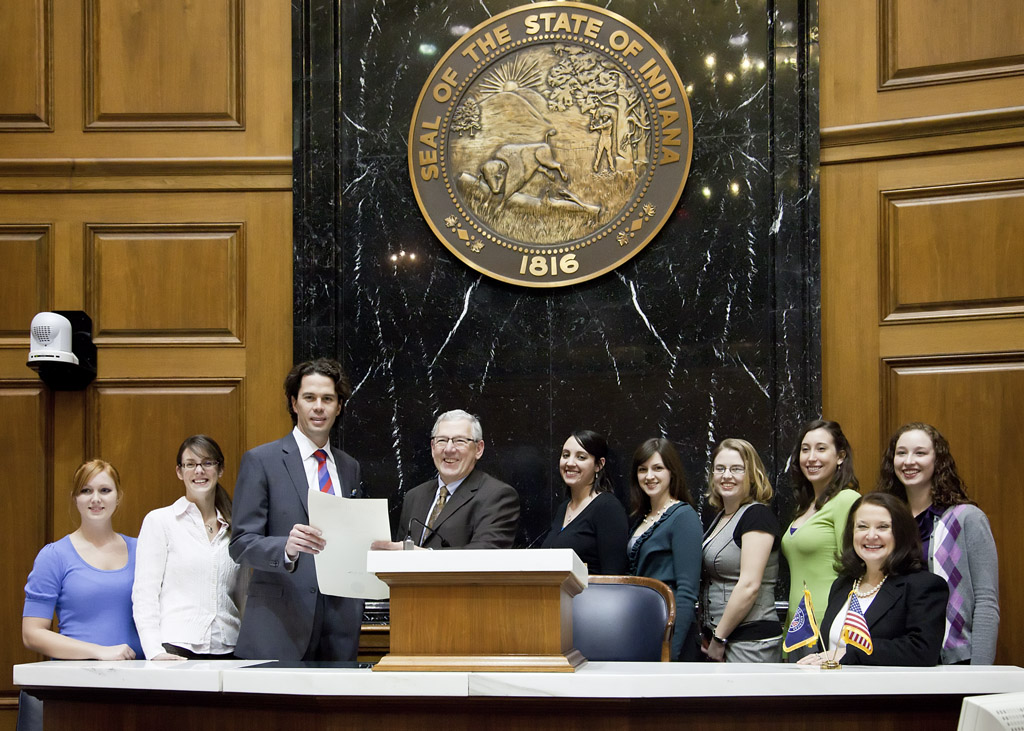
Representative Saunders presents the House Concurrent Resolution to instructor Richard McCoy and students of the IUPUI Museums Studies Program. Photo by Tad Fruits

We were tremendously honored to have both the House of Representatives and the Senate of the State of Indiana recognize our work with Concurrent Resolutions.  I’m most pleased about this recognition because it furthers the mission of the project: to raise awareness about the artworks at the Indiana Statehouse.

While  this recognition can be personally gratifying, the project is designed with the hope that the students will take ownership of it and its outcomes, as they are the ones who did the lion’s share of the documentation.

I

Can you talk about the Public Art Documenter Project? How does it work and what are your goals for the project?

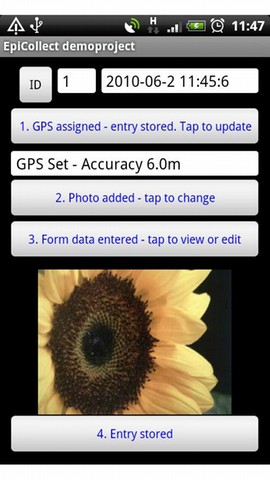
For a long time, I’ve wanted a mobile app that would allow for the easy documentation of public art.  The most basic component of any kind of documentation involved three components: location, photography, and the basic tombstone information about an artwork.  This would seem fairly easy to do with a mobile app.

Image via appbrain.com

Image via appbrain.com

When I found the mobile app creator, EpiCollect, which was developed at the Imperial College London, I was pretty excited.  With this tool I was able to quickly make the Public Art Documenter.  There are some down sides to this app, mainly in that it was developed with Google Apps, so it works really well on Droid phones, but not so well on the iPhone.  It’s also pretty tech-heavy, so it’s not all that easy to use.   I’ve been in conversation with the folks at Imperial College London who are in the process of creating the next version of this app which apparently will improve a lot of the iPhone bugs.

Also, with a number of friends, I’ve experimented with the potential for location-based applications such as Gowalla and Foursquare to serve this function.  With Gowalla, I’ve made a couple of “Trips” including the “Top 10 Public Artworks in Indianapolis” (http://gowalla.com/trips/557).

I

I

I

Was there a specific reason you chose not to go through process of building an app of your own?

We’re really in an experimental stage with a mobile app.  We’ve considered applying for grants to develop and expand the project, including creating a mobile app.  But more than money, what the project really needs is a few institutional partners that are interested in using current technologies to document public art, or artworks in general.  While we’ve explored this with what would appear to be a few natural partners, including the Smithsonian Institution, who holds the archives for the important project Save Outdoor Sculpture!, we’ve yet to get anyone to directly support any aspect of the prospect.

I

Crowd-sourcing archives is an exciting idea, but I can see some people arguing that it cannot compare to traditional documentation methods. How do you view your projects fitting in with current and past archival and documentation techniques?

This is a really interesting point to consider, and it goes not only to the storage of information, but the ownership of information and data.  When you work in Wikipedia you are applying a Creative Commons license to the information you create.  Also you are working collaboratively with a shared goal in a system that can be updated instantly by anyone in the world.  Because the information is built with this structure, it’s then actually owned by everyone and really no one.  This is a fantastic notion to consider vis-a-vis traditional documentation and sharing methods.

For example, compare our project to Philadelphia’s MuralFarm.org, Indianapolis’ Public Art Locator, or the Save Outdoor Sculpture! data. While this is all good data and information about public art, it’s stuck behind a website that is controlled by a very small handful of people.  All of these systems were designed to increase access to information about public art, but none are able to offer the kind of inclusion that’s possible with Wikipedia.

Plus in using Wikipedia you are actually invited to download the whole data set and keep it for yourself.  In fact, the information is licensed such that if you wanted to, you could use their book creator tool (the one I used to make the book about the Indiana State House Public Art Collection), create a book and then sell it for a profit, or just print it and have it on hand.  This is what the State House did with our information, so now they have the most complete records of their artworks in the more than 100 year history of the State House.

I

Your projects all focus on primarily documenting public art, do you see these ideas and methods working well for other areas of the arts?

Of course! I recently had an intern working for me at the museum that developed an e-volunteer program that invites people to create Wikipedia articles about artworks in cultural instituions.  While we have a pilot underway at the IMA, we hope that other cultural institutions follow suit and invite their patrons to help document their collections.

Not only do many institutions lack the resources to basically document their collections, but few have recognized the value of incorporating a participatory audiences in the process.

The lack of cultural institutions with decently documented collections was famously spelled out in the Heritage Health Index Results, and reinforced in the 2009 Salzburg Global Seminar, “Connecting to the World’s Collections: Making the Case for Conservation and Preservation of our Cultural Heritage”, but few have recognized the need to open the doors and encourage a broad spectrum of participation.

Philanthroper: A New Daily Deal Site for Non-Profit Donations

philbird2_reasonably_smallA new daily deal site launched this past month, but this site doesn’t offer a deal for a spa trip or half off dinner at some posh restaurant. New site Philanthroper offers a non-profit story a day, a daily solicitation for a non-profit doing some good, and asks visitors to give just one dollar. Launched by Mark Wilson, reporter for Gizmodo and Esquire, Philanthroper aims to make donating a daily habit for the internet culture. The idea behind Philanthroper is very similar to dynamite daily deal sites like Groupon and Living Social. Each non-profit gets front-page realty on the site, but just for 24 hours. Instead of a daily discount, Philanthroper shares the stories of non-profits, from local to global, and gives visitors the opportunity to donate a dollar. When the 24 hours come to an end, a new non-profit goes up and the previous day’s organization receives their funds within about a week.

Why just a dollar? As the site states:

So you can donate another $1 tomorrow. And another the next day. Use Philanthroper daily, and we guarantee, you'll donate more over time than you would have otherwise plus it won't sting your bank account so badly. Use Philanthroper every day and you'll be on the right track to give more, more easily. If you're compelled to make a larger donation, fantastic. We always link their site. So go for it.

Philanthroper restricts the amount you can donate to just that one dollar and limits visitors from donating more than once a day. The idea here isn’t to solicit a major gift, but to create a culture of daily giving. Donating a single dollar can be a pretty tempting request. Personally, I spend more on a cup of coffee or downloading an app that will make my phone sound like an air raid siren.

The financial cut Philanthroper takes from each donation is the biggest thing setting them apart from other crowdfunding sites like Kickstarter and USA Projects. That’s because the amount Philanthroper retains is zero – you read that right, zero. Philanthroper states right out that they will never take a cut of your donation, although the site’s payment service mPayy will take a whopping 1% of each donation – a penny.

Screen shot 2011-02-25 at 11.43.32 AM

This is how Philanthroper can offer that minimum donation level of $1, whereas other non-profits are often forced to ask for a minimum of around $10 due to the processing rates of current payment services. Support for the site comes from advertising, so as website Arstechnica puts it “…only your eyeballs, and not your charitable gifts, are paying to keep things going.”

How does a non-profit get a daily deal? The site selects only official 501(c)3 organizations, with a special interest in those that bring in less than $1 million per year. The main focus is on those non-profits that are young and growing and could use every single extra dollar. Religious non-profits are not promoted on the site and individuals raising funds will not make the cut. Think you know a non-profit that’s perfect for the site? Philanthroper invites site visitors to suggest tips for non-profits out there worthy of their own daily deal.

Creating a habit of daily giving in our current internet culture is a pretty exciting idea. Philanthroper is taking advantage of the impulsive nature of users of sites like Groupon and Living Social. If the popularity of the site can continue to grow, there is a possibility to make a huge difference for many small non-profits. Visit the main site here and check out what today’s daily cause is that you can throw a dollar towards.

Instant Encore: Classical Music goes Mobile

Margo Drakos, co-founder and COO of InstantEncore
Margo Drakos, co-founder/COO of InstantEncore

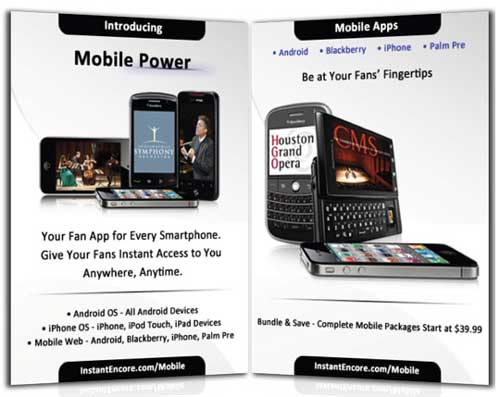
Margo Drakos is a woman on a mission. The co-founder and COO of InstantEncore wants to take classical music directly to its audience via a host of online services, including a digital strategy package for powering custom websites for organizations, a website builder for artists and the development of mobile apps. Recently, the company has been busy building custom mobile apps for Android, iPad, iPhone and all smartphones. InstantEncore’s mobile apps have previously been featured on this blog in Tom’s article 10 Arts and Culture Mobile Apps from 2010.

apple-interface-250wInstantEncore currently powers about 100 iPhone apps and 50 Android as well as hosting mobile web apps, which make an organization's website functional on a mobile phone. Their platform powers the app for the popular YouTube Symphony Orchestra, which, at over 125,000 downloads, and beats both the Taylor Swift and Linkin Park apps by about 90,000. Instant Encore also hosts the apps of notable organizations like the NY Philharmonic, Chamber Music Society of Lincoln Center, Cleveland Institute of Music and Houston Grand Opera.

I talked with Margo recently to catch up on Instant Encore's latest endeavors.

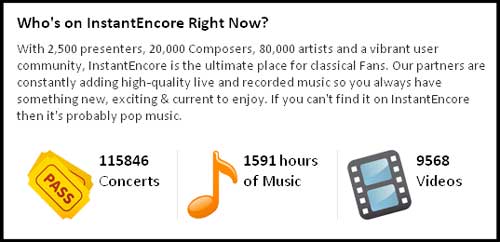
What is InstantEncore? InstantEncore.com is a classical music platform that enables artists and arts organization to harness the power of technology to connect with their fans anywhere, any time. We are the infrastructure! We have created the only classical music-specific digital asset management system that essentially allows our Partners from a broad spectrum of the performing arts world to enter digital content – event listings, ticket selling, audio recordings (streaming, download, public or private), video (live or on-demand), news, blogs, and photos - one time, and have all of their content published in real time to their own website, mobile apps, Facebook or Twitter accounts.

instantencore1 How did the idea for InstantEncore come about? Two things happened: I was playing cello for a living and I had sort of grown frustrated with the disconnect between musicians and the audience, where the field was going, and how technology was disrupting the traditional models. I felt passionate about re-personalizing the concert experience without losing artistic integrity.

An InstantEncore concert card offering a music download.

An InstantEncore concert card offering a music download.

Meanwhile, I had the pleasure of meeting some wonderful engineers and they had a really powerful search engine specific for classical music that resulted in a high-end jukebox called Maestro. It had originally been created to help catalog vast CD collections, like that of our chairman/CEO. I was talking to them about how sometimes as a performer you would go to a live event and afterwards people would say “I loved the concert. How can I hear it again? How can I get a recording?” And of course I was always trying to sell some unrelated CD. So I talked to these engineers about this predicament that a lot of musicians always find themselves in, and so we actually created this concept of the “Instant Encore”—where you can take a card at the concert, go home, and download the content that you just heard.

How has InstantEncore evolved from the days of concert cards to now? Instant Encore started with a very powerful search engine that had organized and standardized all classical music meta data, and our objective was to build the tools that would enable fans to connect with the music and artists they love, in a personal, immediate way. We wanted to leverage technology to extend and enhance every aspect of the live concert experience. We are committed to providing the 21st century tools that will save organizations time and money by automatically or quickly powering their digital assets to connect with fans and engage sponsors.

mobile_api_release-mobile-onlyw

How does the Instant Encore component fit in with an organization’s existing social media presences and organizational website? Our goal is to streamline redundancies and save resources. Right now, you have a lot of people that are trying to update their website, spending a great deal of time developing a content management system internally instead of spending development time and resources on the front end. Then there is the mobile space--if an organization does not have a good web-browsing experience from a smartphone, people will close the site. Then organizations are manually pushing content that is often a PR push to Facebook and then to Twitter as well. So there’s a great amount of time and effort in trying to maintain all these very necessary social network platforms.

Obviously details about classical music can be a nightmare to organize or for data entry. We have a very standardized way—unless it’s a world premiere, it’s all in our search engine’s system. For example, if you start to type in “Beethoven Symphony No. 5”, it’s going to have the opus number and the key and all the movements and you just click on that and it’s automatically transferred. So, you’re never entering all that information yourself, which is 1) time-saving and 2) tagged at the most specific level, which allows people that are not looking specifically for you to find you and you that already know you and want to find you to customize their experience.

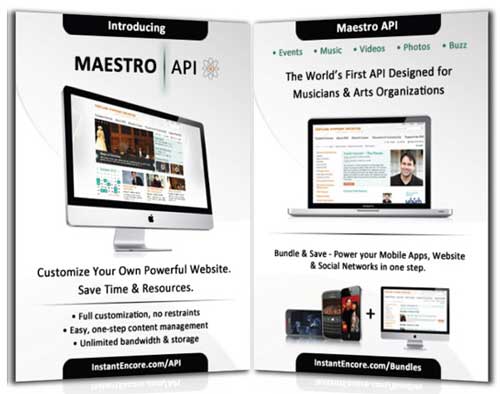
Our system is set up so that you as a Partner can enter an event listing in moments in our secure Control Panel. By that one simple event creation in our content management system, it updates in your website with our webbuilder or more advanced API (Application Programming Interface—see the end of this entry for more information). posts to the partner’s social networks, mobile apps, etc. You can do a host of different things—tag your YouTube channel. You can manually upload music for streaming or download purchase. Or you can create a private download code campaign for donors or concertgoers. One of our most valuable features is this web crawler that goes through hundreds of RSS feeds and finds articles specific to arts organizations and tag any article from newspapers or blog. This can automatically appear in your app or website as the latest news, so you’re not having to physically manage your app or site but your content is current.

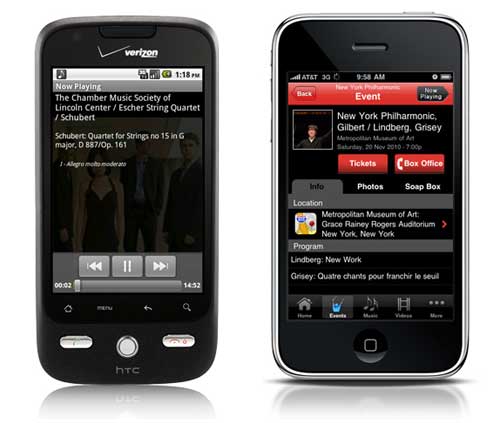
The music player feature on InstantEncore's Android app (left) and the events feature on InstantEncore's iPhone app (right).The music player feature on InstantEncore's Android app (left) and the events feature on InstantEncore's iPhone app (right).

So basically it’s just a one-stop shop. It’s a digital asset management system where you come to enter your content in one place and it goes to all the platforms that you’re using. We’re just an aggregator and publisher of that content… Our concept was that it should be something that a two-person organization can use our tools and manage and have a very robust, beautiful integrated social media presence or an organization with a budget over 10 million can use the same tool.

Regardless of all the features you offer, many organizations might have trouble getting the rights to use pieces of music or convincing players that a mobile app is somewhere the music should be. What are some of the arguments you can make to convince them that this is something worth doing? I come from the musician/recording side of things, am a current member of the AFM and as a child was a member of AFTRA and SAG, so I certainly appreciate where the musicians are coming from. What I think is important is that, fortunately or unfortunately (however you want to perceive it) we’re in a new period that is such disruptive change, brought on in part by technology and change is always painful. There are new great opportunities but the existing models and the days of residuals in the way that we used to know it, at least right now, are not there. I think it’s really important to actually be very upfront about this. Artists are highly intelligent people and creative people and have wonderful ideas to bring to the marketing and development side of the business. I think it is so important that everyone be a stakeholder charting this new world together.

I think part of this is taking a holistic approach and saying that there are certainly a group of people that are going to want a physical CD’s and there’s people that are going to want to download content. But there’s a certain group of people know who just want what they want, when they want it. We see from our stats that music or videos are increasingly having a very short shelf life. People will often want to hear a new live recording over and over and then they move on and that is it. I often say to my friends and colleagues that you have to have some faith and work together to try things. Every community and every audience is different, but if you don’t have the tools to even explore or try things, that’s very challenging. I think mobile is so essential. People will be accessing the internet via their mobile devices more than from a computer within the next few years. If you don’t have a good user experience to access your content via mobile or any content in it, in my opinion, I think it will be very, very challenging.

You mentioned that you are focusing your research efforts on return on investment in digital media and how orgs can get sponsorship for their technology initiatives. Can you tell me more? Why should anyone care about social media and an integrated digital strategy? Why should anyone care about having a mobile app? I’m a very “nuts and bolts”, frugal person. When I look at some of the organizations that I work with and see how much they’re spending on print material and yet they don’t want to spend a few thousand on a mobile presence, or want to wait a few years to see where this mobile thing goes, I think it is quite alarming. Showing people the return on investment is critical for them to care.

Many arts organizations' apps are sponsored by corporations or foundations.

Many arts organizations' apps are sponsored by corporations or foundations.

Many organizations we are working with have packaged a digital or mobile sponsorship package and in many cases, new donors or people who were not previously interested in sponsorship at a significant level, are excited to be part of new technology, sponsoring live video streaming on websites and mobile platforms and much more.

It’s built into our platforms—ways for people to feature sponsors, going through their audience to create new audiences, etc. What I’ve found is that I’ve been pushing organizations to think outside of their printed program with a printed logo and think, how can we think outside of the box and take the old ways that we used to monetize and seek corporate sponsors and take this into the digital space? Some organizations have come up with some fabulous things. Whether it’s embedded streaming announcements featuring sponsors, ad spots with sponsors, getting grants to cover new educational and audience development initiatives—various things. They’ve been able to monetize this in new ways, from new sponsors (not cutting out of other things).

I am very excited that Telstra, the telecom company in Australia, hired us to create a premium custom app for the Sydney Symphony that will include live video streaming of ten concerts in their mobile apps and website. This is a win-win for everyone.

How should arts organizations approach technology? There are so many platforms out there, there is so much information and everything’s changing so rapidly. I remember launching the app with the New York Phil and at that time, apps were still—people thought “what the heck is that?” So, the most important thing is to integrate digital media strategy into organizational strategy—into every aspect of decision-making across all departments. It involves PR, it involves marketing, it involves development, it involves operations, the audio recording department, musicians—absolutely everyone. I think that buy-in is essential. I think one of the most important things is just to start small and get permission to try something. If it doesn’t work, don’t let it validate that “this is never going to work” and if it’s a home-run, that doesn’t mean that it’s going to work the next time. It’s important to look at just getting started but with a clear, integrated strategy approach. And really, actually, there’s a lot of fear sometimes when it comes to technology and I think part of what’s been fun to see is that oftentimes, it’s a lot more fun than people necessarily anticipate and I think that that’s been a really rewarding part of what we’re doing.

When Thomas Hampson made his recital available for download and Performance Today, Minnesota Public Radio, and European Public Broadcasting Union announced it on air. We read the comments from people from around the world—from United Arab Emirates, to Germany to California to Wisconsin—about how that music impacted them and how grateful they were for that. I was very honored and proud that some of our tools could be helping to connect the power of his voice and his artistry globally in a way that’s never happened before. I think that’s really what it’s about and instead of feeling more protectionist, as scary as it feels, to embrace democratized access in this engaged age.

More info on Maestro API:

mobile_api_release-api-onlyw

A Guide to Mobile Marketing, Pt. 2: Check-In Platforms

In part 2 of this Mobile Marketing Series, let's examine the value of two mobile-based check-in platforms: Facebook and Foursquare. We'll take a look at how to properly set up your organization on these platforms and explore some creative ways to run check-in campaigns. Foursquare

As of December 2010, Foursquare reported over 5 million registered users worldwide. These users often use the platform to see what their friends are up to and discover nearby businesses and organizations that may interest them. Foursquare allows users to "check-in" via their mobile phones, collect points, let friends know where they are, and earn badges.

Foursquare Screenshot

Here's how to get your organization setup properly on Foursquare:

  • To register with Foursqaure, visit: http://www.foursquare.com/businesses.
  • Registering with Foursquare allows you to edit venue information, view analytics, activate and deactivate specials, and add employees.
  • One of the most valuable benefits to registering your organization is the ability for venue owners to view real-time stats like: total daily check-ins over time, your most recent visitors, your most frequent visitors, gender breakdown of your customers, what time of day people check in and the portion of your venue's check-ins that are broadcast to Twitter and Facebook
  • Bonus Tip: Just as with Google Places, your check-in campaign will be most effective if you ask customers to check-in. During the registration process, a business may request for Foursquare to mail them a free promotional sticker that invites users to check in.

Make sure to claim your FREE sticker when you register!

Facebook Places

Another popular mobile check-in platform is Facebook Places. A recent Merchant Circle survey (the largest online network of local businesses owners) suggested that Places is gaining popularity over other check-in services like Foursquare and Gowalla.

Facebook Places Screenshot

Here's how your organization can get setup in Facebook Places:

  • To claim your Place, search for your business name on Facebook via the normal Search bar.  If your business’s Place already exists on Facebook, click on it to  visit its page. At the bottom left side of your Place there will be a  link that says "Is this your business?" Click on the link and you will  be directed to a claiming flow.
  • By claiming your Facebook Place page, you can manage your place’s address, contact information, business hours, profile picture, admins and other settings.
  • Facebook also allows you to merge this Place page with any existing Facebook Fan Pages you may have. To do this, visit a place that you have successfully claimed, and scroll to the "Merge with existing Page" link in the left side navigation menu. Click this link, and a prompt will appear to walk you through the process.
  • Bonus Trip:  Facebook offers a fantastic resource on offering deals after you set up a Place page.

How Arts Orgs Are Using Check-In Platforms

Here are a few examples of how arts organizations are currently using check-in platforms:

  • Austin-based film and music festival South By Southwest decided to turn this process into a game.  The festival's website lists what types of badges users can compete for. In addition to competing for badges, points are also awarded to users who check in at unusual places or at early hours of the morning.
  • The Whitney Museum recently partnered with FourSquare on creating a custom badge. Users who unlock this badge can present their smartphones to the front desk and redeem a $5 admission to the museum. This is a great example of how organizations can offer deals to customers.
  • Brooklyn Museum      offers great incentives for customers who unlock the coveted 'Mayor' badge. Foursquare mayorships are awarded to customers with the most days checked into a venue over the last 60 days. If a customer is Mayor on their Target First Saturdays events, they can receive a 1st fans membership for one year. Brooklyn Museum's community page also utilizes      FourSquare's API to show who has recently checked in, what badges their customers are unlocking, and who has obtained the title of 'Mayor'.
  • These types of services could also be used for arts events like gallery crawls or for arts organizations to partner with local restaurants. A gallery crawl could provide a similar type of adventurous environment where users could compete for special badges and earn points based on how many organizations they check-in with during the span of the crawl.

So what about your organization? Are you registered with location-based social media sites?  If so, how are you using your presence there?  (Please, share your thoughts and experiences in the comments area below.)

In the upcoming parts of this series, we'll take a look at QR Codes, SMS, and mobile app creation!

Upcoming Webinar - Google Analytics - Boot Camp for Beginners

google-analyticsGoogle Analytics - Boot Camp for BeginnersTuesday, March 8, 2011 2:00pm - 3:30pm Eastern Register today for $25 Presenter: David Dombrosky

Google Analytics is by far the most widely used website analytics software, and it's free.  Yet many artists and arts managers pay little attention to what the analytics data is telling them about their websites.  Very few of us actually use the data to inform decisions about the design of our sites and the content that we post on our sites.

In this 90-minute webinar, we will:

  • Explore the various types of data captured by the Google Analytics service
  • Review methods for charting traffic to your site driven by your social media accounts
  • Discuss what the numbers actually mean and their implications for your site and your visitors
  • Articulate strategies for utilizing Google Analytics to make decisions regarding website design and content

David Dombrosky is the Executive Director of the Center for Arts Management and Technology (CAMT), an applied research center at Carnegie Mellon University investigating ways in which arts organizations can use online technology to more effectively meet their goals. He frequently presents technology and social media workshops for arts conferences – most recently for The Association of American Cultures, Performing Arts Exchange, Chorus America, Opera America, College Art Association, and Grantmakers in the Arts.

Opera by You: How to crowdsource a production

By this point we’ve all heard about crowdsourcing. It's a way to outsource a project and let a large group of people create it online. (See video at the end of the post for a fuller explanation, complete with animated fish.) We’ve heard about crowdsourcing logo designs, requests for proposals (RFP's) or even determining which paintings to show in an exhibition. But how about an full-length opera? Well, one company is crazy enough to try it.

The Savonlinna Festival in Finland has been developing an opera through the collaboration platform wreckamovie since 2010. The Opera by You initiative has been developed in five phases, some of which overlap. First, the crowd collaborated on a plot and name for the opera in July 2010. They decided on the title Free Will and the following plot, as described by Paivi Salmi, Project Manager of Opera by You:

God has had enough of all the misery that people are suffering from and calls a meeting with the angels. They decide to send a few dead geniuses back to Earth to make things better. They are supposed to make a huge difference in science and art and create world peace. The geniuses are Joan of Arc, Oscar Wilde and Wolfgang Amadeus Mozart.

Second, writers began work on the libretto (or script) to the opera. The process is halfway completed and is set to be done in May. Third, the composers in the group began setting the words to music in September. Fourth, the project coordinators launched the visualization plan. Salmi described the process.

Visualization means to us creating the concept of “environment” on the stage: the era of the opera, stage sets, wardrobe, lightning etc. We have decided together with the community that the story of Free Will will take place in our modern time and now we proceed on deciding how the different scenes look like visually.

Visualizations of Hell from Opera by You
Visualizations of Hell in the year 2012 from Opera by You

The libretto, composing and visualization plans are set to be ready at the end of May 2011. In the last phase, the whole concept will be moved to the hands of the Savonlinna Opera Festival for production, and that is where the crowdsourcing will end when it comes to the live opera production. The opera will be produced during Savonlinna’s 2012 summer festival season. The crowdsourcing will continue in that the existing community within the wreckamovie platform will work with the current plot, creating an animated movie version of the live opera. To see the opera creation in action, visit http://operabyyou.wreckamovie.com.

Paivi Salmi manages the web community creation process as well as the marketing and community partnership initiatives. I caught up with Salmi and asked her about the collaborative process of crowdsourcing the opera.

How did this idea originally come about? The Savonlinna Opera Festival has been frontrunner in developing opera genre in Finland. We have had several projects for instance for creating operas for kids. This spring we will again launch this kind of project where kids create opera as part of their normal school work. The Savonlinna Opera Festival has had several Finnish world premieres with quite unusual productions. We are actively searching new ways of reaching new audiences for the opera and also new ways of creating the opera. So in the spirit of “Web 2.0,” we decided to try the collaborative product development or crowdsourcing in the web also in the field of the opera.

How did you choose wreckamovie as the platform to create the opera? The wreckamovie platform provides the basic tools for collaborative discussion and working. It is also well-known in the Europe at least and already has lots of members interested in collaborative working on the web. We also plan to create an animated movie about the plot of our opera and for that second phase of the project, wreckamovie will the best available tool.

With so many people collaborating on one project, how do you select the best ideas? How do you deal with differing opinions on the direction the project should take? We have five operatives in the team who are experienced opera creation professionals (a script writer, a stage director, a composer, a production specialist and a visualization expert) who will guide the creative process in the web. Their task is to select best ideas, give the "developing” tasks for the community.

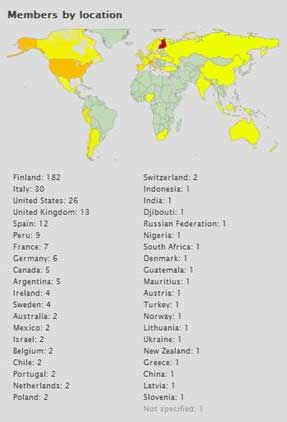
Opera by You Community Members by Country
Opera by You Community Members by Country.

Who are the people collaborating on the project? Do you know the make-up as far as country, age, and profession? Do most have an artistic background and collaborate on areas of the project they specialize in? When it comes to age, they are average 35 years old, mostly motivated by composing and visualizing. We don't collect any information about their profession or education, so we do not know if they already are professionals in the field of opera or classical music.

How do you plan to distribute the opera once it is produced at the festival in 2012? Will the footage be available online, recorded or streaming? The opera will be performed 3 times during summer 2012 in the Savonlinna Opera Festival. If some opera house is interested in the project, we will naturally export the production. We plan to make footage available and also animated movie which will be distributed online. The project was launched at the Opera America annual meeting in L.A. last June.

How are you addressing intellectual property issues for the contributors to the project? Every member has to sign user agreement and accept Wreckamovies terms of use where the member gives all rights to the project. So there will be no intellectual property issues.

What has been the response from the online community and the opera community at large? The community has been growing steadily, but only certain members are active in all "production lines". It goes so that some are writers, some others composers and some only interested in the visualization part. But mainly people are very excited and willing to work "for free". We also want make it easy to just anyone without any classical music or opera experience to participate to the collaborative work. We have reached a very good visibility to our project in the internet. For instance in the launch phase of the project there were lots of articles in online media for instance in Latin America, India and Europe. The larger opera community has been very interested and curious. We have been asked to present the project in several conferences and seminars. People are also very interested in the process itself--how has it been ”structured” etc. within opera community but also in the larger community of art, theatre and even social media.

Here's a more detailed answer to the question "What is crowdsourcing?"

Do You Have Trust Issues? - Data Sharing and the Arts

This post also appears as a featured article on artsmarketing.org, hosted by Americans for the Arts.

TrustIssues

I recently had the privilege of facilitating a roundtable discussion in New York City focusing on issues related to data sharing among arts organizations. As Tiffany Bradley, Development and Marketing Specialist for Fractured Atlas, recently wrote:

As more organizations lead collaborative efforts, the implications of sharing data come to the forefront. Data sharing – whether for marketing, ticketing, fundraising purposes – raises a host of issues. Does pooling information about patrons lead to greater revenues for all parties? Or do organizations risk a negative response from patrons?

Hosted by Fractured Atlas as part of their “Issue Brunch “series and streamed live on the Internet via Ustream, the conversation featured the thoughts and voices of six arts professionals working with arts organizations, including NAMPRadio’s Maris Smith. While the roundtable covered a lot of ground surrounding the benefits and challenges of sharing data between arts organizations, the issue of trust emerged as the bonding force at the heart of all data sharing relationships.

Let’s face it. The idea of giving our data to someone else is anxiety-producing for most organizations. How do we know that they will abide by our agreement and use the data ethically? Yet, if we never place our trust in others, thereby initiating the relationship-building process, then we will never reap the benefits that may come from a data sharing relationship.

Now before someone out there becomes paralyzed with data sharing anxiety, relax. You already engage in data sharing relationships based upon trust. For example, many of us utilize Google Analytics to track visitor interactions with our websites. When we agreed to use Google’s service, we also agreed to share our data with Google. We acquiesce that Google will use our data to contribute to the web traffic data they have aggregated over time and for particular types of websites. However, we trust that Google will never give our websites’ specific data to anyone else without our permission.

Okay, I can hear some of you out there saying, “But that is an example from a service provider; it’s different to talk about sharing data with another arts organization.” No, it’s not. Data sharing relationships between arts organizations should have clearly articulated agreements detailing the data to be shared, the limits of what may be done with that data, and what contributors of the data will receive in return. Yes, these should be written agreements – or at least electronic agreements executed with digital signatures.

And just in case you skimmed over the last item of things to be detailed in data sharing relationships, I’ll rephrase myself. Data contributors should receive something in return for contributing their data. We are talking about data sharing relationships, not data giving relationships. Now, the quid pro quo of a data sharing agreement may simply be that the data collecting organization will provide contributors with overall or customized reports. That’s fine as long as the data contributors have a clear understanding of what they will receive in exchange for adding their data to the larger pool. Far too often, organizations may feel pressured to participate in data collection initiatives and surveys. One of the most important ways that you can maximize your data sharing relationships is to make certain that it is mutually understood by all parties what you will be receiving as a result of contributing your data.

While trust must be given, it must also be earned and respected in order for any data sharing relationship to grow. For example, Elliott Marketing Group has been working on two data sharing projects with numerous arts organizations in Pittsburgh, PA. In 2004, they worked with the Pittsburgh Cultural Trust to establish the SmArt database linking patron files for arts organizations in the city’s downtown cultural district for targeted marketing campaigns. In 2007, they partnered with the Greater Pittsburgh Arts Council to launch the STAR Direct Marketing Database, which allows smaller and mid-sized arts organizations in the Pittsburgh region to pool their patron data and utilize consulting services as well as “best prospect” lists for more efficient, targeted promotions.

The success of these data sharing programs did not happen overnight. The arts service organizations, the organizations contributing data, and the marketing group have spent years developing trust relationships with each other. Now, they have years of collaborative data, and the participating organizations clearly understand what they must contribute to the project and what they will receive in return. With each successive year, the data deepens. Correspondingly, the level of trust each of the contributing organizations has with the arts service organizations and the marketing group also deepens.

A final note on trust in data sharing relationships – don’t break it. Once trust is broken in any relationship, it rarely, if ever, regains its previous depths. For many of us, our data is a precious resource not to be taken lightly. So when a partner breaks our trust with them, our instinct is to take our data and end the relationship. When you negotiate the agreements for your data sharing relationships, always be certain to include an exit clause.

As I mentioned at the top of the article, the issue of trust is just one of many areas that we discussed during the roundtable on data sharing. To learn more about the roundtable, check out the preview video below or view the full discussion at Fractured U.

Three days left to complete the Ticketing Software Satifaction Survey!

Click to access the 2011 Ticketing Software Survey.

Click here to take survey. Photo: Gyorgy Kovacs via Flickr.

The 2011 Ticketing Software Satisfaction Survey is closing Friday, February 18!

Now in its second year, we designed this short survey to see how satisfied arts and cultural organizations are with the ticketing software products they are currently using. Many ticketing software vendors have used the results of last year’s survey to find out what is important to arts and culture managers. This survey is your chance to tell them, and the field at large, how satisfied (or not) you are with your current system.

If you are a box office manager or staff member, house manager, business manager, executive director, board member, marketing staff, or anyone else who has contact with a box office software system, then this survey is for you! Results will be sent to survey participants in April 2011.

Fill out the survey today!

If you have already filled out the survey, please share with colleagues by clicking the "ShareThis" icon below.

The State of the Mobile - The 2011 Museum & Mobile Survey

Image via intomobile.com

Image via intomobile.com

This past month the results came in for the 2011 Museum & Mobile survey. The survey is part of an ongoing research project focused on the uses and trends of mobile technology in museums.

The survey launched last September and had more than 700 responses, with professions ranging from museum employees to mobile technology vendors and researchers.  The effort was international, but the majority of responses (80%) were from the United States, with the United Kingdom (5%) and Canada (4%) as the next largest group of respondents.

The survey points to some interesting trends that are cropping up with mobile development for museums. There is a ton of information in the survey, but here are some of the interesting things I pulled from the presentation:

  • Of the 738 survey respondents, 30% already have some form of a mobile program in place and 23% planned to develop one. 36% of institutions had no plans to go mobile and the remaining 11% were responses from vendors and researchers.
  • When asked which terms best described their current or planned mobile program, the most common responses were: Some sort of audio tour, free for visitors, and visitors were expected to provide their own hardware (i.e. smartphone, iPod).

  • The goals for the mobile programs were most commonly described as providing supplementary information and diversifying the visitors’ experience. Personally, I loved that the next two most common goals were an emphasis on experimentation and creating an interactive experience.
  • What was most challenging for museums with mobile programs in place? Encouraging adoption among visitors, producing the content, and keeping that content up to date.
  • The largest challenge for those planning to develop a mobile plan? The implementation costs.
  • Looking ahead five years, most institutions said that implementing in-house content development was a definite goal.
  • What I found promising was that respondents to the survey had a strong desire to see more research done, even among those who had no mobile plans at all.  The most requested areas of research were: Guidelines for user experience design, methods for conducting visitor evaluations and analysis of different technology systems.

So beyond these points, what are some of the larger takeaways from the survey? Well, for one, the survey goes to show that mobile technology is more than a fad. Mobile programs are becoming more common and less of an anomaly among museums. The survey also provides a snapshot of some of the concerns about development and adoption of a mobile program.

It was a little disappointing to see that among the technology being definitely implemented in the next five years, new tech like RTLS and augmented reality were the bottom two. Personally, I would not underestimate the possibility of this technology becoming an expectation among visitors, even within the next few years.

Also, the survey pointed out that 50-55% of respondents consider having a mobile-friendly website as something that should be definitely implemented in the next five years. An organization’s website will often be the first portal of entry for a mobile user, and having a website that is optimized for mobile platforms should be a higher priority.

Overall, I think the biggest takeaway of the survey is that the future of mobile technology in museums will not be just some flashy app. Throughout the field, serious thought is being put into how these programs can be developed in a way that are both substantial and engaging for the user. It was awesome to see institutions describe the goals of their current or planned mobile programs as experimental and interactive.

There were a lot of interesting results from thus survey, the above points were only a few that jumped out at me. For the more in-depth results of the survey visit Museum & Mobile’s website to view the full presentation.

Livestream, Ustream, We all stream: A practical guide to streaming platforms

So many options...
With so many choices when it comes to streaming video, what's an arts organization to do?

A few weeks ago, I highlighted some emerging trends in arts marketing for 2011.  One of the trends was “changing media consumption”, part of which includes arts organizations streaming performances live, whether to ballparks or online.

So let’s say that your organization is interested in streaming a performance live as it is happening or streaming a pre-recorded performance at a scheduled time. What are your options as far as platforms for streaming that video? And which organizations are out there using these platforms?

YouTube: The Non-option for Live Streaming

YouTube is the big name for online video, but livestreaming on YouTube will only be available for content partners. YouTube has not announced when livestreaming capabilities will go live. Approved by YouTube, content partners are people and companies that post regularly to the site and so that they can monetize their content with ads and rentals, obtain better digital quality for their uploads, and use YouTube’s Insight analytics tools.

You can apply to become a YouTube content partner to gain the above benefits. They have a special program specifically for nonprofits that currently includes arts organizations like Anaheim Ballet, MOMA, and Pilobolus Dance.

So when should you use YouTube? As of now, it’s the most mainstream choice for video, and therefore the easiest platform on which to build a community. YouTube has also streamed major events involving the arts community, like the Guggenheim’s YouTube Play Event. You might use it to post clips of the streaming event after the event is over and to host videos long-term; but right now, don’t depend on YouTube to release streaming capability any time soon.

Brightcove/Ooyala: The Gold Standard

Brightcove is the high-end gold standard for streaming. Many major corporations use it, as well as arts organizations like San Francisco Ballet and the Royal Opera House. It’s best for larger companies with highly valuable and highly demanded content as well as companies who want to fully integrate their streaming efforts with other components of their technology portfolio, via APIs, SDKs and other programming tools. Ooyala has a similar high-end set up used by companies like TicketMaster and ElectronicArts. Brightcove and Ooyala are great for larger companies with a lot of resources at their disposal. However, the price may not be affordable for organizations likely to use livestreaming once a year and only intend to stream to computers or existing mobile platforms—as opposed to a projector that would require higher quality video or a customized mobile platform that would require extensive development.

Livestream, Ustream, and Justin.tv: The mainstream for livestreaming

You may be thinking, “Okay, Brightcove sounds great, but my organization is not nearly as big as the Royal Opera House.” The most popular choices for streaming video amongst American arts organizations are livestream.com and ustream.tv. Both platforms offer mobile integration, easy interfaces and most any other feature you would want. Livestream even offers monetization opportunities.

Justin.tv appears to be gaining market share, but fewer arts organizations are on it, and its audience tends to skew younger and more male than the other platforms. Organizations like Wolf Trap have streamed pre-recorded events on livestream, a necessity when subtitles must be entered. Last summer the organization’s opera company streamed a cabaret performance of two world premiere operas Bastianello by John Musto and Lucrezia by William Bolcom.

Lee Anne Myslewski, Administrative Director, described the opera’s choice to use Livestream. “We chose Livestream because the interface was the most intuitive and it seemed to work the most consistently on all platforms/browsers. (Intuitive is important!) We were also specifically looking for an integrated chat function so that the audience and the artists could interact in real time during the broadcast. The process was smooth – easy for even a non-video person to create. We did have some viewers struggle with the speed of the file and intermittent pauses, but that could have been due to any number of causes - file size, their connection speed, or traffic on the site. If we go forward with the project we’ll likely use them again.”

One of the most notable successes on Livestream was Misnomer Dance Theatre’s stream of a performance in April 2010, which reached 2,000 viewers in 19 countries. Organizations are not only using LiveStream and Ustream to broadcast perform footage, though. They are also using it for production diaries like Second Wind Productions, press conferences like the Detroit Symphony Orchestra and educational initiatives like the Orange County Public Schools Orchestra Programs.

DaCast: No fuss monetization

Increasingly, companies want to monetize online content, and a recent Pew study (good summary here by ReelSEO) shows that people will pay for it.  Monetizing content can basically be done in two ways: generating revenue through advertising, or having the consumer directly pay for online content (pay per view), which can be on a one-off or subscription basis.

LiveStream requires $350 a month for their premium service, which includes opportunities for monetization. However, if you want to monetize your content with less financial commitment up front, DaCast is a sensible option.

DaCast describes itself as self-service model. In a way, all streaming services are self-service, but DaCast allows companies to monetize their content in the same self-service way that you can upload a video to YouTube. The only fees that you pay are for bandwidth, with a minimum $5 commitment. (The first 10GB are free, too.) Most excitingly, DaCast has developed a plug-in for Flash which allows users to pay directly on their video screens, rather than clicking through to another page.

The question is: could a paid model be right for your organization? As DaCast CEO Stephane Roulland said, “This is an excellent question.” Aggregated sites like classicaltv.com and Ovation are already monetizing content. Classicaltv uses the pay-per-view model while Ovation uses the ad-based revenue model. The Metropolitan Opera’s Met Player might be one of the one of the only single-organization streaming sites. The key is figuring out if your organization will break even on the fees to secure the rights and the fees to stream.

More resources:

Data Sharing & Arts Organizations - Take Part in the Conversation

Data SharingOur friends at Fractured Atlas are relaunching their Issue Brunch series and have asked me to facilitate a discussion on the benefits and challenges of data sharing among arts organizations. As Tiffany Bradley, Development and Marketing Specialist for Fractured Atlas, recently wrote:

As more organizations lead collaborative efforts, the implications of sharing data come to the forefront. Data sharing - whether for marketing, ticketing, fundraising purposes - raises a host of issues. Does pooling information about patrons lead to greater revenues for all parties? Or do organizations risk a negative response from patrons? Integrating the range of software that arts organizations use is also a problem in its own right.

This panel discussion will be streamed live on February 11, 2011 at 1:15 pm EST via UStream at http://www.ustream.tv/channel/fracturedatlas. Online participants will be able to engage one another in discussion and submit questions for the panel.

Panel participants include:

  • Deborah M. Abramson - The Pew Charitable Trusts
  • Joe Harrell - Alliance for the Arts
  • Adam Huttler - Fractured Atlas
  • Barbara Janowitz - Theater Subdistrict Council/City of New York
  • Chrisopher J. Mackie, Ph.D - Open Health Tools
  • Maris Smith - Situation Interactive

So what has your experience been like with data sharing among arts organizations?  What benefits have you received?  How did you approach the organizational and technological challenges?  Leave a comment below and be sure to join us on Friday for what is certain to be an engaging conversation.

Putting New Work on the Map

The ways in which we interact with maps and geography has changed dramatically in the past two decades. The use of interactive, online maps has become a commonplace activity, especially since the advent of Google Maps. The ability to visually discover and explore information is greater now than ever before. The technology of interactive mapping is now being applied to the arts. Two new projects are presenting exciting ways to visually explore and discover new works: With the New Play Map, visitors can visualize where new theatrical works are being produced in the United States and the ways in which they are connected. The website Hitlantis has created a sort of ‘heat map’ that lets users visually explore the new music being produced around the world. Both projects are fun to play with and the technology makes them extremely accessible and easy to use. Here is a little closer of a look at both these projects:

Screen shot 2011-02-07 at 12.36.21 PM

The New Play Map

Launched this past month, the New Play Map is a pilot project created by the American Voices New play Institute at Arena Stage. The institute began collaborating with web development company Quilted last spring to create a map that allows users to visually explore new theatrical works in the United States. The map gives visitors a visual snapshot of the new play sector and acts as a resource for those seeking out collaborators.

How it works

The New Play Map’s content is user-generated and visitors can explore and track new plays being developed throughout the US from information uploaded by the playwrights themselves.  The New Play Map is free to use and navigating the site will come naturally to anyone who has even a basic experience with a site like Google Maps.

To use the map, zoom in on a region of interest and click on one of three icons. Clicking an icon will bring up a sidebar with additional info and connections. The icons that look like people link to the playwrights, the calendar icons are the plays, and the building icons are the theatres themselves. Each icon’s sidebar includes a short bio of the playwright or synopsis of the new play. The sidebar also contains a list of related projects and affiliated organizations.

Screen shot 2011-02-07 at 12.37.37 PM

An example of the connections and sidebar menu that pop up when an icon is selected.

Red, dotted lines will also appear when an icon is clicked, showing the links between that specific work/playwright and how it is connected across the country. Each connection is numbered and corresponds to a description offered in the sidebar.

Filters can be applied on the map, and what sets this apart from something like Google Maps, is that the filters are not limited to geography alone. The filters are specific to the theatrical community with parameters such as operating budget, organization type and national membership affiliations. The ability to filter by special interest is also available, giving visitors a custom map of plays that are contemporary, experimental or focused on a specific multicultural group, for example.

Version one of the New Play Map is up and running with new plays being added everyday. Head over and check it out at newplaymap.org.

Screen shot 2011-02-05 at 10.40.37 PM

Hitlantis

Hitlantis, an internet startup from is a Helsinki, Finland, wanted to create an easier way for music lovers to wade through the multitude of new music online. Their solution is a sort of ‘heat map’ that visually groups and displays new bands based on their popularity. Users of the site can zoom in to their favorite genre and get a visual snapshot of what the hottest new bands are.

Movement on the map is based on a band’s popularity in the built-in social network of the site.  A band cannot just buy their way to the center of Hitlantis, they have to earn their visibility from the fans.

How it works

Popularity on the map can be read in two different ways, the proximity of a band to the map’s center and the relative size of that band’s icon. The closer a band is to the center, the 'hotter' they are, and this proximity determined by how often a song is played, ‘liked’, or purchased.  The better the music a band makes, the faster they move to the center of the map.

The band icons vary in size and the larger the icon on the map, the greater the overall visibility. The band’s icon size is determined by their number of fans, how much revenue has been generated by song purchases and the amount of audio the band uploads.

Screen shot 2011-02-07 at 12.33.29 PM

A closeup view of a band on Hitlantis and a typical sidebar menu.

All visitors can register with the site and set up a basic profile, but only the bands will appear on the map. A band’s profile contains biographical info, a comments section, a list of their fans, and most importantly, their music. Songs are played through a built in music player along the bottom of the map and the ability to create playlists is built into the player.

It’s important to note for bands that for all of the music they upload, they must retain 100% of the copyright. In addition to that, the music cannot have been previously published or be involved with any copyright agencies.

Registration is free or visitors can log in using their Facebook ID, but is not required if you just want to check out the site.  Hitlantis is free to everyone, but a monthly charge is required if bands wish to sell their music through the site. Try the map out for yourself at Hitlantis.com.

x

These maps are fun to play with and aid in the process of discovering new work. The New Play Map may shape up to be a powerful tool because it offers many in the theatre community a easy-to-navigate resource for discovery of new works and sources for collaboration. Hitlantis is great because it aids up and coming bands with a free way to share their music and grow a fan base. Personally, I see the bigger takeaway from both projects being that both groups took advantage of a widespread and commonly understood visual format and utilized it in a unique way to fit their own missions. It's an interesting use of a tool and just begs the question, what other platforms are out there that we can leverage for the arts?

A Guide to Mobile Marketing, Part One

This is the first in a multi-part series of articles exploring various tools and tactics for promoting and marketing on the mobile web.

From museums and opera companies using QR Codes to festivals using Foursquare to launch a musical scavenger hunt, it's becoming apparent that designing a mobile marketing campaign can be one of the more challenging, creative and rewarding ways to engage customers.

Consider some of these recent findings:

  • Mobile campaigns are capturing an increasing level of consumers' attention across key metrics:  mobile ad awareness reached 31% in 2010, up from 14% in 2009 and 16% in 2008.

Smartphone Use On the Rise!

As smartphones increase in popularity, users are often utilizing this technology to discover local events and local businesses that may interest them. This has resulted in an increased demand for businesses wanting to implement effective mobile marketing campaigns. In this blog series, I want to examine what tools and strategies arts organizations can use to implement effective campaigns.

Location Based Tools

One of the most popular uses for smartphones is generating directions to and/or information about local businesses. Here are two tools that organizations can use to elevate their visibility to smartphone users.

1. Google Places:

With the recent launch of a Google Places App for both the iPhone and Android platforms as well as a scheduled Google Maps update for the Android smartphone, the importance of having an up-to-date listing in Google Places is extremely relevant for an effective mobile marketing campaign. Below is a screenshot of the Google Places app in action:

To ensure that your organization appears in a Google Places mobile search, you must first make sure that you register with Google Places online. Here's a quick overview of how to get started

  • Claim your business by verifying your listing
  • Add pictures and videos to make your Place Page more compelling
  • Review the Google Places Getting Started Guide for any other questions
  • Bonus Tip: If your organization receives a certain amount of positive reviews, Google will mail a window decal with a personalized QR Code. 200,000 businesses have already received these decals.
  • Bonus Tip #2: An easy way to boost your rankings in a Google Places Search is to make sure your business is properly listed in online directories like Yellow Pages and City Search. Google indexes these "citations" in order to determine what is most appropriate to a user's search query
  • Bonus Tip #3: According to a recent article on Mashable.com, Google Hotpot - recommendation engine and ratings/reviews system for places - has "officially gone worldwide."  Hotpot integrates with Google Places and also appears in Google search results.  Here's a brief overview of how Hotpot works:

2. Yelp Another popular app for smartphones is the local search platform, Yelp.  The company has reported that more than 41 million people visited Yelp within the past 30 days (as of December 2010). Yelp also reports that 27% of its searches come from its iPhone application. Businesses can setup free accounts to post pictures, special offers and send out messages to customers.

Just like Google Places, businesses owners must first register their organization on Yelp's website. Login to Yelp for Business Owners in order to create a listing for your business. One of the major challenges with maintaining a Yelp and Google Places profile is encouraging patrons to leave positive reviews. The easiest way to receive reviews, is simply to ask for them.

In upcoming posts, we will be examine: effective 'check-in' campaigns on services like FourSquare and Gowalla, how to set up QR codes, developing mobile applications, and how to run effective short code (SMS) campaigns.

Tumblr Is Headed For The Creative Community, Should Arts Organizations Follow?

A vast repository of pop culture memes & internet humor, the blogging service Tumblr has grown significantly since its launch in 2007. With over 12 million blogs and with the recent raising of $30 million in funding, some see Tumblr's future as taking on blogging services like WordPress and Blogger. The site’s hallmarks are its streamlined posting dashboard and reblogging feature. Add on likes and short replies, and this gives the site a familiar feel to social networks like Flickr, Facebook and Twitter.

So this is all well and good, but how does Tumblr relate to the arts? As mentioned on mashable.com recently, Tumblr is going to focus more on developing the growing creative communities on the site.  As Tumblr’s founder David Karp stated:

“You look in fashion, creative writing, photography, music, so many of these creative circles,” said Karp, “and we have these really substantial communities that now live on Tumblr.”

Should arts organizations take advantage of Tumblr’s new direction and add it to their group of social networks? Before getting into that, take a look at Tumblr’s differences when compared to blogging platforms like WordPress or Blogger. I’ve used tumblr myself for a personal blog and here are a few of the features that stood out to me and made it feel more like a social media site:

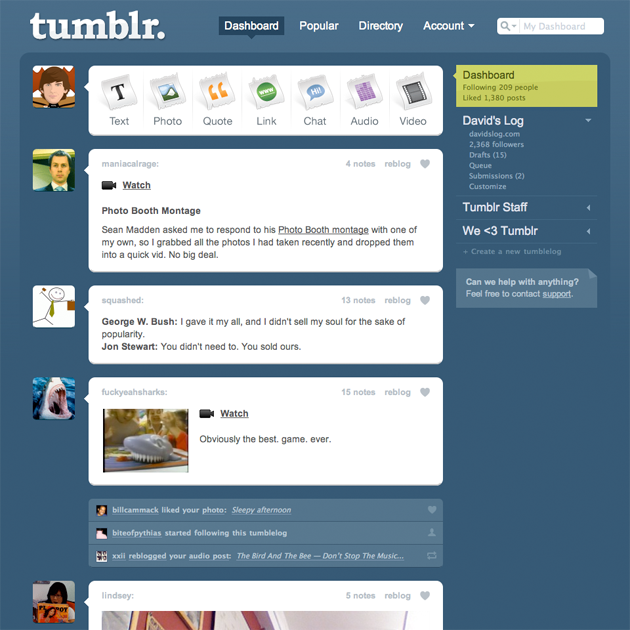
The posting dashboard. Image via tumblr.com

  • The Dashboard Streamlined for different types of media, the dashboard contains buttons that takes bloggers to posting forms customized for the content. This speeds up the posting process and makes posting media content such as audio, video and photos, a lot faster than traditional blog platforms.

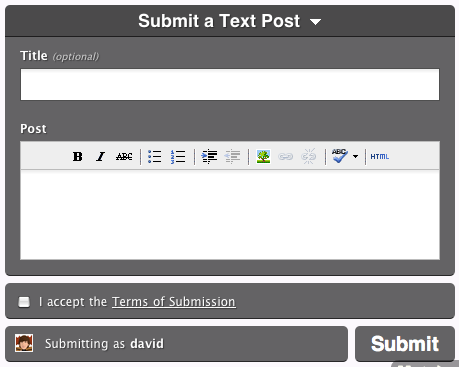
A typical submission form on tumblr. Image via tumblr.com

A typical submission form on tumblr. Image via tumblr.com

    • The Submission Feature: This feature is especially driven towards community-oriented blogs, where the author can invite his community to write and contribute their own content. Posts can be submitted by followers to their favorite blog through a built-in form and since the posts are automatically formatted, all the author of has to do is hit publish. This is probably the feature I feel would be most attractive to arts organizations, since it asks the constituents to not only read and comment on the organization's blog, but be a driver of content as well. x
    • Reblogging: Probably my favorite feature of Tumblr. This works almost the exact same way that a re-tweet does on Twitter. Pressing the reblog button will instantly re-post someone’s post onto your blog. The feature is impulsive and probably the number one reason content spreads so quickly through the site.x

    An example of the tumblr dashboard. via tumblr.com
    An example of the tumblr dashboard and update feed. Image via tumblr.com

    • The Update Feed Imagine the feed of updates on Facebook or Blogger, Tumblr operates in the same way, aggregating all the Tumblr blogs you follow into one stream. All of the posts appear in a uniform format with the options to like, short reply or reblog.

    Tumblr’s features make it easy and accessible for the individual blogger, but that doesn’t necessarily make it great for organizations. Here are a few issues I saw with how the site operates that might be irritating for some arts organizations:

    • Tumblr is a Clique: While a Tumblr blog can be viewed by anyone, features like reblogging and replies are only available (and visible) to someone signed into a Tumblr account. This is true of many social networks, but since Tumblr is essentially a blogging platform, there is an expectation that the level of engagement should be available for all visitors. Organizations can lose out on connecting with non-Tumblr visitors who cannot “like” or comment on a post that really engages them. x
    • Kept Out of the Conversation: Another problem for engagement on the site is the system for comments - it's extremely difficult to create a conversation. Tumblr users can leave short replies, but there are no systems in place to let authors and other bloggers reply to that comment. What follows is a mess of reblogs and screen captures of comments in an effort to make a threaded conversation. Some Tumblr bloggers have tried to solve this problem using a service like Disqus, but then a problem is created for the Tumblr community. Visitors outside Tumblr can engage, but the comments will not show up in the regular feed or be accessible for Tumblr users through their accounts, and the two communities remain disconnected from one another. x
    • Customization on the site can be tough: The options are limited and those options change completely based on which theme you have installed. Some themes severely limit your options for color choice and background image, making branding difficult. Other themes do not allow for visitors to have a reply option, even within Tumblr. x
    • Remember all those reblogs, short replies, and likes? While these show up in your update feed, there is no built-in way to track them. It’s an exciting experience to see a post go viral and get re-blogged multiple times, but tracking that effect through Tumblr over time is extremely difficult. x
    • Managing the Archive: Managing past posts is difficult and while a mass editor exists, this just gives a visual overview of your posts over time. It’s hard to track a post from more than a few months back and there is no way to export your archives.

    So should an arts organization take advantage of Tumblr anyway? If you have an existing, integrated social media strategy and primary blog in place, it may be worth a shot. Tumblr has a fairly clean interface with Facebook and Twitter, and could be a good way to provide content to an ever-growing community of bloggers.

    If your organization is thinking of making this their main blog, I would hold off since it will be harder to manage in the long run and success metrics would be a pain. It will be interesting to see how Tumblr is going to improve the site to focus on the creative community and what effect it may have on how people interact with blogs in the future.

    Want to Reach [insert ethnic minority group here]? Try Being Relevant

    Perhaps one of the most difficult and sensitive topics in the arts community is that of building audience diversity. As national celebrations like Black History month approach, artists, arts managers and arts organizations often brainstorm for ways to reach out to and include minority communities in their organizations, especially if there is special programming during these celebrations. As the Pew Research Study indicates,  minority groups do have a strong presence on Twitter, with 13% African  American and 18% Hispanic. There are also a host of groups within the LinkedIn and Meetup platforms that are exclusively for minority professionals. Many arts marketers are concerned that targeting groups of people based upon their ethnic background can come across as unethical or forced.

    An example of one such social media marketing tactic popped up in my Inbox earlier this week courtesy of Thomas Cott's clipping-service "You've Cott Mail."  In this Clickz article, Giovanni Rodriguez suggests that using hashtags is an effective way to reach the Latino population on Twitter.  While the article appears on a website with general marketing advice that is not necessarily specific to the arts,  its inclusion in an arts-related clipping service suggests that this practice should be considered by arts managers.

    The screen shot below shows one of these hashtag-driven discussions in action.

    Hashtags in Action

    The bottom of the screenshot shows a promotion for the Broadway musical Women on the Verge of a Nervous Breakdown using the hashtag "#latism."  An important thing to note is that the user promoting this event is NOT the Belasco Theater or the musical's production company, it is another person promoting Latino Events in general. While this musical is certainly relevant to the Latino community, the message is especially relevant coming from a community insider.

    As an African American female who frequently uses Twitter to discover cultural events in which I may be interested, I can see how "community insiders" could either be offended or altogether ignore this type of "hashtag marketing" from someone outside of their community.  A random #Black or #BlackHistory tag from an organization I'm not familiar with would probably be ignored.

    Reaching out to a key influencer or community-recognized group is a more genuine and relevant approach for social media campaigns.  One possible workflow might be:

    1. Define the target audience (young professionals, African American women, Hispanic youth, etc.)
    2. Pick an appropriate social media platform (Twitter, LinkedIn, Meetup)
    3. Find and connect with a key influencer on the platform (for example: @LatinoEvents or @ElementsofJazz on Twitter)
    4. Find and connect with relevant niche groups on the platform (for example: minority professional networking groups on LinkedIn and Meetup.
    5. Offer Value.  A great example of this is to host a special pre- or post-event gathering exclusively for these new community members whom you targeted.

    This type of strategy boosts an organization's credibility within the communities to which they want to develop connections. It is also a more genuine way to build relationships.  As my colleague Amelia Northrup pointed out in a previous article on this topic:

    At long last, the diversity question has come around to the classic “old vs. new” debate.  When faced with declining arts attendance, is it better to “pick the low-hanging fruit” and focus on maintaining and growing our existing audience demographics (”the more return on investment for less energy” approach) or make a long-term investment in trying to attract new groups of people to our performances?

    Cultivating new audiences may be a daunting and often challenging task, but it is one of the most worthwhile investments that any organization can make.  A relevant and genuine outreach campaign is the first step in this important process.

    Technology Adoption and Implementation in Arts Organizations

    ArtsIT

    Technology in the Arts has just published the results of a  survey regarding technology adoption and implementation in the arts and cultural field. (Access the PDF publication here).

    In order to uncover emerging trends and differences in the use of technology amongst arts and cultural organizations, we asked arts managers to provide us with baseline information as well as a self-assessment of the role of technology in their organizations.  Respondents shared information about where they are now, which technologies they hope to adopt in the coming year, and how they find the resources they need to implement and maintain technology.

    This report, which includes responses across a broad spectrum of arts and cultural organizations representing a variety of disciplines in the United States and Canada, reveals a snapshot of how the field approaches technology.

    What did we discover?  Here is a small sampling of the findings that emerged:

    • Over three-quarters of organizations with annual budgets of less than $500,000 spent under $5000 on technology in the past year, while half of organizations with budgets of $5 million or more spent over $100,000.
    • Nearly half of organizations with budgets between $2.5 million and $5 million have no full-time technology staff, and that figure jumps to 82% for organizations with annual budgets of less than $500,000.
    • Organizations with annual budgets of less than $500,000 currently use static websites at a higher rate than dynamic websites, while all larger organizations are more likely to have already moved away from static websites.
    • A large percentage of respondents, regardless of organizational budget size, did not respond with any specific technology plans for the next year--which may indicate an overall lack of planning for future technology.

    Want to find out more?  Check out our report and see how your organization compares.

    Social Media Spotlight: The ToonSeum

    Welcome to the fifth installment of the Social Media Spotlight, our monthly feature focusing on arts organizations’ social media strategies.

    How to allocate time and money towards both social media engagement and online marketing is different for every arts organization. To get a different perspective Technology in the Arts decided to talk with a smaller organization, the ToonSeum, about how they achieve their social media and online marketing goals with a limited staff. I had a chance to chat with Joe Wos, Executive Director of the ToonSeum, about his approach:

    joespic

    So Joe, what is the ToonSeum?

    The ToonSeum is Pittsburgh’s Museum of Cartoon Art. It is one of only three museums in the country dedicated to the cartoon and comic arts. We offer rotating exhibitions covering all aspects of cartoons and comics, from animation and anime, to comic strips, comic books, editorial cartoons, illustration and much more. We also offer ongoing workshops, screenings and lectures.

    It really is one of the most unique museums in Pittsburgh. Every city may have a version of a children’s museum or traditional art museum, but there are only three cartoon art museums! New York, San Francisco and Pittsburgh. We take great pride in our unique place in Pittsburgh.

    What kind of marketing and PR challenges does the ToonSeum face?

    Our number one challenge as with any small non-profit is budget. We are a small museum up against juggernauts! We are up to the challenge.  If anything, budget limitations have led to creative thinking. You aren’t going to see us investing a lot in “traditional” advertising.  Being a smaller museum also eliminates a lot of the fear of change you see from larger venues. We don’t have a huge investment in outmoded technology or ideas, so we are more inclined to let go and move forward to embrace new ideas in both marketing and tech.

    We have been very lucky, the media both locally and nationally has been very supportive.  Part of that attention is because of our approach to marketing. We use online marketing to create interest in “real world” experiences. We innovate new ways of reaching out. How many museums can say they had their own beer? Illustration Ale was a great success. We didn’t mail out postcards we used facebook.

    In February we will launch our own themed hotel room in partnership with the Wyndham Grande downtown. It’s all about immersive experiences, translating virtual experiences we enjoy in gaming and through cartoons into the real world. That’s the kind of creative thinking we embrace.

    A limited budget forces truly creative thinking.

    Why did you choose to go with social networks/online marketing as a solution?

    We are a fan-based museum. It’s a new approach to museum management, marketing and even exhibitions. Comic and cartoons by their very nature, are a fan-based medium. We embrace that. Just look at San Diego Comic Con, why is every major movie launching there? Because of the power fans have via social networks. We tap into those same fans. We are a geek museum, and proud of it. Our audience is very tech savvy, early adopters who can market virally better than anyone.

    We know that the ToonSeum is a real world extension of a fan based virtual world. We are a museum of characters, icons and avatars. We want to become a real hub for comic and cartoon fans, and the only way to do that now, is through creating online connections and then inviting them to join us at the ToonSeum. Once we get them here, we know, they will tell their friends, strangers, tweet, blog, post, and tell the world about us.

    We also recognize that it can’t be just virtual, you have to take it to the fans! We have booths at major Comic Cons, from San Diego to New York. We also host Blogger events and Tweet Parties at the ToonSeum. If we can get the word out to them about our exhibits and programs they will help us spread the word.

    Beyond the standard social media efforts, such as a Facebook page and a twitter account, what other types of online efforts are the ToonSeum trying?

    I worked for twenty years with a museum that had a real aversion to technology, it took a decade for them to come around. The ToonSeum is the opposite. We want to be the first. We were the first museum in Pittsburgh to have an I-Phone App. We may still be the only one! MailChimp, EventBrite, every new social marketing tool that comes out we give it a try. We were among the first to participate in KickStarter (we were even featured in the New York Times in an article about it.) I attend the Consumer Electronic Show in Las Vegas just because I know we need to stay at pace with the public. The technology in most museums is outdated, kids can do more advance and exciting interactions at home. So we reach out, we are a Beta Test museum. We put ourselves out there to new technology and say, let us try this out first!
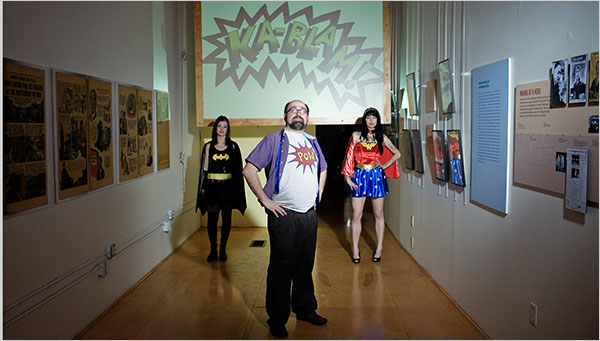
    Image via the New York Times

    We have an ipad docent at the entrance. Any guests who wants to experience more online while in the gallery can use it as a tool.

    For light up night we launched lights in our windows that can be controlled from the outside via an iphone. The guest has control over their experience before they even enter the door.

    I am a self-professed geek and nerd, I attend the Consumer Electronic Show in Vegas every other year, I attend the Toy Fair in New York. I bring those innovations and ideas back to the ToonSeum and find ways to integrate them. So the ToonSeum has a giant screen projection in the center of our ceiling that loops cartoons. It is of course blu-ray 3d as well.

    We have worked with Behar-Fingal to integrate QR codes into all our exhibitions. This allows guest with smartphones to link to additional content online. Whether it is a wikipage entry on the artists, or video we provide of the cartoonist at work. This is a great tool to take our exhibits beyond our walls and is also cost effective. People are walking around with access to all the information they need. In the future museums won’t need placard after placard of explanatory text. They will just need to provide a link. Their curiosity will take them beyond your walls. Each and every work of art is a potential jumping off point to a world of discovery in the world wide virtual museum.

    We know that the traffic has to flow in both directions. A museum should be a destination from those on the web looking for real world experiences, but a museum must also be a gateway to curiosity that can be infinitely explored in new and exciting ways online.

    Despite our using technology in so many ways, the ToonSeum is still ultimately about art on the walls. Because we have integrated ways to put the technology in your hands we don’t have to use a lot of monitors and computers. It makes it an individual experience, which is something we learned from social marketing. Everyone wants to interact on their own terms.

    I know you operate on a small staff, how does this affect how you manage your various online efforts?

    We have a social marketing intern whose only job is to tweet and post. That’s a must! The museum has to have a presence online that allows for immediate interaction. So we respond to every tweet that mentions us, every facebook post. It’s time consuming but it is the most important aspect of social marketing… being social!

    All of our staff also has access to post to our various accounts. So we are updating daily. More important though is the fact that our fans are out there, retweeting and posting everything for us. It gives us a much bigger presence.

    They also know to speak with the ToonSeums voice. It’s always connected to our mission and not personal. I have seen top-notch museums whose official facebook page has post about their kids getting the flu! Unless there is an epidemic of every kid visiting your venue getting the flu, how does a museum have kids that get sick? It doesn’t. Your venue has to have a virtual identity, a voice that your fans can interact with and it has to be consistent.

    This is all easier to accomplish with a small staff. There are no committees, no approval process, no budget meeting, we identify what needs done and do it!

    Does your staff size affect how you track the success of all of your online projects?

    Every guest that comes in is asked how they heard about us, and their zipcode. We track every single opened email and clicked link. That data is all placed into a matrix we use to measure our success. It doesn’t take a big marketing firm, it just takes a commitment of a few minutes each day.

    Can we talk about the Bloggers Blast? What is the event and why focus on bloggers?

    I was at the Consumer Electronics Show in Vegas and attended about 5 after parties. What impressed me was they were all geared toward bloggers and social media. I knew this was something the ToonSeum had to do in Pittsburgh.

    Traditional press is great, we love them! But today even they are pulling content from bloggers. Bloggers have fans, just like we do. It comes back to embracing a fan-based culture. So we wanted to let those bloggers get a sneak preview at our upcoming exhibitions and programs for 2011. We have special guests, a preview of the art, prizes and every single blogger will get a flash drive filled with all our press releases, promo art and more. If you are reading this and are a blogger, contact joe@toonseum.com for your invite.

    We will be following this with tweet parties, where everyone is admitted free if they tweet about the exhibits.

    You have mentioned that the ToonSeum was one of the first Pittsburgh museums to develop an iPhone app. What does the app do and what was the development process like? Has there been a good response?
    A screen shot of the ToonSeum App

    Going to back to my previous experience with another museum, I was often frustrated by the phrase “we’ll look into it.” I began to realize that phrase meant, we don’t know how to do it and aren’t willing to learn. Forget the yellow pages, the phone book is dead. It’s all about web and apps. We knew we needed an iphone app. It provides immediate access to enhance the guest experience. It also goes a long way to legitimizing you to tourist. It’s one of the first things I do when I visit a venue in a new city, I check them out online and then download their app.

    Creating an app can be an expensive prospect, thousands of dollars. That was out of the question for our budget. So, I just learned to do it myself. I applied for an apple developer license, found a great site that would allow me total control over the creation of the app, submitted it for approval and that was it. Total process took about five hours, not counting waiting for approvals, which took three weeks. I used rss feeds so that info on our hours and events could be changed on the fly. I created a framework that would allow our youtube videos to be viewed from within the application. As a cartoonist it was easy to do most of the graphic design work myself and there you go. It’s done. Our social marketing intern can update it from anywhere. I can even update from my iphone when I am out of town.

    If I am going to run a museum I should know how to do every job. I better know how to market, run the register, curate an exhibition and even mop the floors. I can then have a better understanding of how difficult a task is and more important I can lend a hand when it is needed.

    I am working on an android app right now and we are doing a complete web overhaul in spring.

    We are geeks, we love this stuff.
    Rise of the Masters

    As the controversy surrounding internet piracy continues brewing, music industry officials and musicians continue to find new ways to promote and profit from their work. Digital downloads are one tool that make it easier for musicians to connect with and cultivate a fan base globally. The Recording Industry of America reports that there are more than 400 authorized digital music services worldwide offering more than 12 million songs. Digital sales compromise nearly one half of total revenues for the music business in the United States.

    Digital downloads aren’t just for "current musicians", however. Apple’s recent acquisition of The Beatles music catalog resulted in 450,000 copies of Beatles albums and two million individual songs being sold in the first week alone.

    Another exciting entry into the digital download market is Europe's leading digital label, X5. The label licenses music, acquires various catalogs and refines the material for high end products. This process has allowed them to form exclusive partnerships with and distribute music to companies like iTunes, Amazon, Rhapsody, Napster and Spotify. Since their formation in 2006, X5 has become the best selling classical label in the United States, with a product portfolio of over 200,000 titles. Spotify's principal owner, Northzone Ventures, is also investing 7 million Euro in the label.

    In December of 2010, the company launched their latest classical music series entitled Rise of the Masters. Rise of the Masters is unique in that it highlights the works of twelve of history’s greatest composers, including Mozart, Beethoven and Bach. The recordings feature some of the world’s greatest orchestras including the City of London Simfonia and the Amsterdam Sinfonietta as well as soloists Freddy Kempf, Torleif Thedeen and Monica Hugget. The downloads are available via the iTunes Store and all other major online retailers. X5 has also launched a Twitter account, Facebook page and iPhone app to promote the series.

    While digital downloads are certainly helping the music industry to regain a bit of financial ground, series like Rise of the Masters seeks to accomplish a more important goal. The music label aims to "animate the digital custom base and reinvent digital  music worldwide." X5's use of social media, modern artwork and mobile apps to promote the series are engaging a new generation of listeners and hopefully encouraging these new listeners to patronize their local arts organizations.

    Make your Voice Heard!

    Click to access the 2011 Ticketing Software Survey.

    Click here to take survey. Photo: Gyorgy Kovacs via Flickr.

    The 2011 Ticketing Software Satisfaction Survey is now live! Now in its second year, we designed this short survey to see how satisfied arts and cultural organizations are with the ticketing software products they are currently using. The survey will close on February 18, and results will be sent to survey participants in April 2011.

    Many ticketing software vendors have used the results of last year’s survey to find out what is important to arts and culture managers. This survey is your chance to tell them, and the field at large, how satisfied (or not) you are with your current system.

    If you are a box office manager or staff member, house manager, business manager, executive director, board member, marketing staff, or anyone else who has contact with a box office software system, then this survey is for you!

    Fill out the survey today!

    And please share with colleagues by clicking the "ShareThis" icon below.